‘Planning & Development’ Lecture
              Friday 21 September, 2012

  Commercial and philanthropic opportunities for
enhancing wildlife conservation through ecotourism

         Angus M Robinson, Adjunct Lecturer
        School of Marketing, Tourism & Leisure


             CaringCaring for Australia’s Natural and Cultural Heritagesince 1970
                    for Australia’s Natural and Cultural Heritage since 1970
Lecturer – Angus M Robinson

Certified ecotourism operator.
Board member, Foundation for National Parks
& Wildlife (FNPW.
Chair, Geotourism Sub Committee, Geological
Society of Australia.
Varied career background in a range of
industries, including in tourism, executive
roles at Taronga Zoo, Earth Exchange
Museum, and Mt Hotham Alpine Resort.
Lecture Points

A question of definitions and principles
Foundation for National Parks & Wildlife
Current Ecotourism related partnerships
Australian National Landscapes
Philanthropy Opportunities and Vision
Summary of Lecture Points
National Estate

The term (‘National Estate’) was incorporated into
the Australian Heritage Commission Act and is used
to describe a collection of buildings and sites that
are worthy of preservation for a variety of reasons.
It covers natural environments as well as European
history and Aboriginal culture.
The National Estate includes national parks and
other lands reserved for public usage i.e.
‘protected areas’.
Understanding Natural Heritage


Natural heritage is the legacy of natural objects
and intangible attributes encompassing the
countryside and natural environment, including
flora and fauna, scientifically known as
biodiversity, and geology, landforms and soil
landscapes i.e. geodiversity.
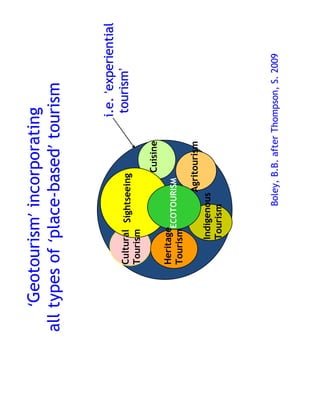
‘Geotourism’ incorporating
all types of ‘place-based’ tourism


                                          i.e. ‘experiential
         Cultural Sightseeing              tourism’
         Tourism
                                Cuisine
         Heritage
                 ECOTOURISM
         Tourism
                           Agritourism
              Indigenous
              Tourism


                     Boley, B.B. after Thompson, S. 2009
A Question of Definitions
Recreation activities:
   Nature tourism – involves travel to unspolied places to
   experience and enjoy nature
   Wildlife tourism involves travel to observe animals,
   birds and fish in their native habitats.
   Adventure tourism is nature tourism ‘on steroids’


   Ecotourism – responsible travel to natural areas that
   conserves the environment and improves the well-being
   of local people, defined by a set of principles

Source: Honey, 2008: Ecotourism and Sustainable Development and The International
   Ecotourism Society, 1990
Seven Principles of Ecotourism

1.   Involves travel to natural destinations
2.   Minimises impact
3.   Builds environmental awareness
4.   Provides financial benefits and empowerment for
     local people
5.   Respects local culture
6.   Supports human rights and democratic movements,
     AND
7.   Provides direct financial benefits for conservation

Source: Honey, 2008: Ecotourism and Sustainable Development
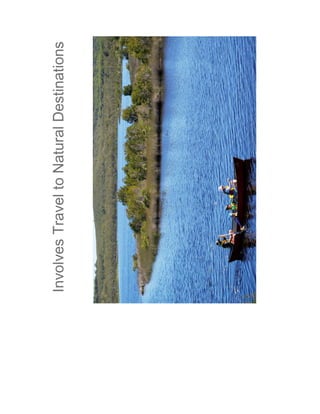
Involves Travel to Natural Destinations
Seven Principles of Ecotourism

1.   Involves travel to natural destinations
2.   Minimises impact
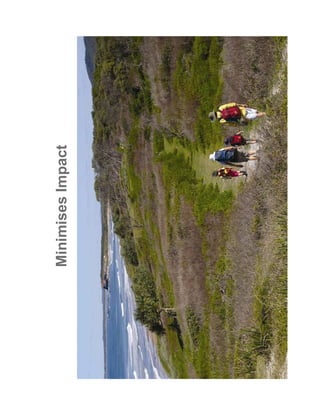
Minimises Impact
Seven Principles of Ecotourism

1.   Involves travel to natural destinations
2.   Minimises impact
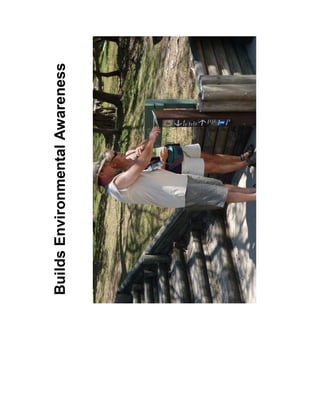
3.   Builds environmental awareness
Builds Environmental Awareness
Seven Principles of Ecotourism

1.   Involves travel to natural destinations
2.   Minimises impact
3.   Builds environmental awareness
4.   Provides financial benefits and empowerment for
     local people
Borneo Ecotours


For every tour that is purchased, travellers will
help make a difference to the local community
and natural environment in North Borneo.
A portion of tour revenue is set aside to fund
various projects in Kudat, Kinabatangan and
Kundasang through a non-profit organisation,
Borneo Ecotourism Solutions and Technologies
Society.
A sister company, Sukau Rainforest Lodge also
contributes RM4.00 since 2000 for every
international guest who stays at the lodge.
Seven Principles of Ecotourism

1.   Involves travel to natural destinations
2.   Minimises impact
3.   Builds environmental awareness
4.   Provides financial benefits and empowerment for
     local people
5.   Respects local culture
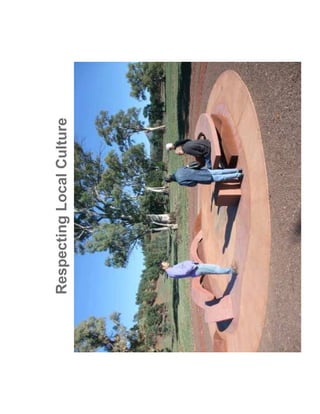
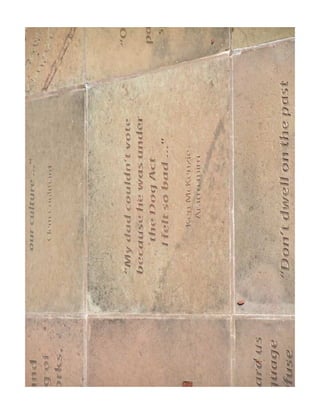
Respecting Local Culture
Seven Principles of Ecotourism

1.   Involves travel to natural destinations
2.   Minimises impact
3.   Builds environmental awareness
4.   Provides financial benefits and empowerment for
     local people
5.   Respects local culture
6.   Supports human rights and democratic movements
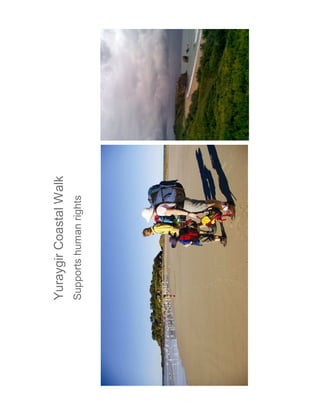
Yuraygir Coastal Walk
Supports human rights
Seven Principles of Ecotourism

1.   Involves travel to natural destinations
2.   Minimises impact
3.   Builds environmental awareness
4.   Provides financial benefits and empowerment for
     local people
5.   Respects local culture
6.   Supports human rights and democratic movements
7.   Provides direct financial benefits for conservation

Source: Honey, 2008: Ecotourism and Sustainable Development
Australian Definition of Ecotourism
Ecotourism is ecologically sustainable tourism with a
primary focus on experiencing natural areas that
fosters environmental and cultural understanding,
appreciation and conservation.
Ecotourism Australia believes that the ultimate
definition of ecotourism is compliance with the core
criteria stated within the Eco Certification Program.
Eco Certification Criteria


In Australia, ECO Certification has three levels of
achievement which have been developed to
accommodate for a range of businesses and,
 • their level of commitment to sustainability,
 dedication/applicability to social and cultural
 responsibilities, and
 • the level of interpretation and education involved
 in the product(s).

Currently no specific focus on philanthropy and
funding of wildlife conservation research.
Definition of Philanthropy

    the desire to promote the welfare of others,
    expressed especially by the generous
    donation of money to good causes.

    a philanthropic institution; a charity.


Source: Oxford Dictionary
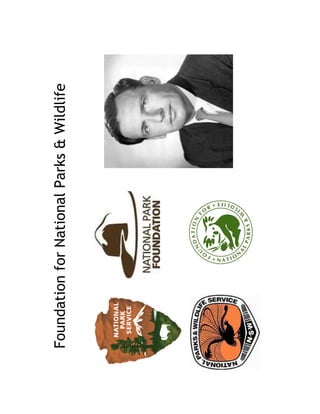
Foundation for National Parks & Wildlife
The Foundation

When then Premier of NSW, the Hon Tom Lewis MP, first
established the NSW National Parks & Wildlife Service,
he had a vision of establishing a complementary
organisation, constituted mainly from the corporate
sector, to acquire parks for the Service. Hence the birth
of the Foundation for National Parks & Wildlife in 1970.

Today the Foundation continues the tradition of growing
parks and caring for them and the species that inhabit
them.
Foundation achievements
Volunteering Land for Conservation


The Foundation for National Parks & Wildlife is
the only organisation in Australia whose
philanthropy is an investment in our public
estate, for all to enjoy.

There are tax incentives for landholders
donating land but the real value is the growth
of our national parks and the protection given
to our plants and animals cared for under their
management.
1. Foundation Achievements


Over its history the FNPW has added over
500,000 hectares to Australia’s national
reserve system, for the enjoyment of all.

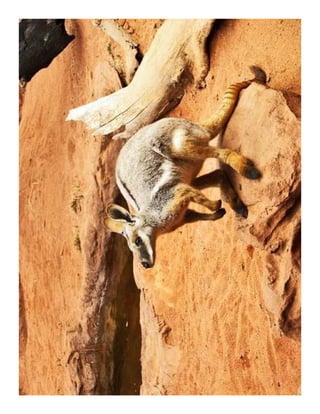
The FNPW funds threatened species recovery
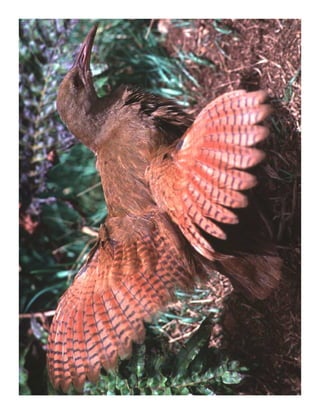
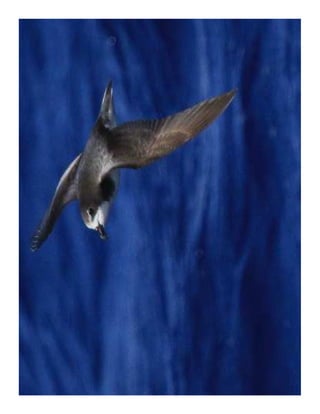
programs. The FNPW has saved animals such
as the Lord Howe Island woodhen, Gould’s
Petrel and the Yellow-footed Rock-wallaby
from extinction.
2. Foundation Achievements

The Foundation protects our heritage icons as
sources of inspiration for future generations of
Australians and visitors from across the world.
Some examples of cultural heritage FNPW has
helped protect include the World Heritage Old
Great North Road, Kosciuszko Historic Huts,
Fort Denison, and Mungo.

Finally, the FNPW involves the community in
the conservation of Australia's native plants and
animals through environmental education.
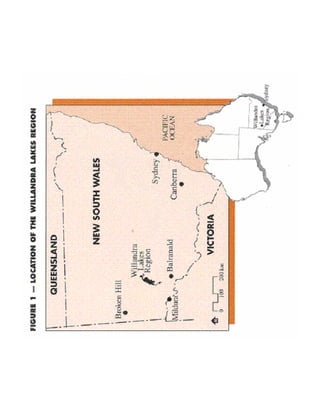
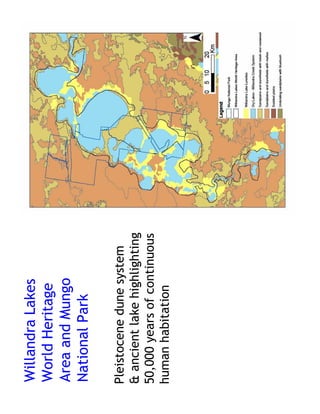
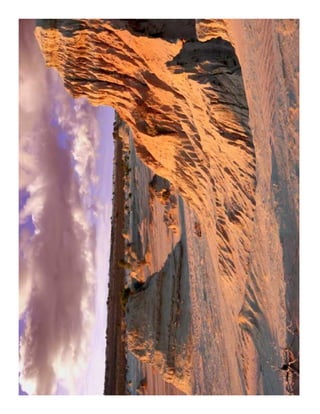
Willandra Lakes
World Heritage
Area and Mungo
National Park

Pleistocene dune system
& ancient lake highlighting
50,000 years of continuous
human habitation
FNPW and Philanthropy


Since its inception in 1970, the Foundation
has been funding scientifically based projects
for the benefit of Australian native species.

To date the Foundation has saved four species
from extinction and funded projects to
research and conserve over 30 other
Australian plant and animal species.
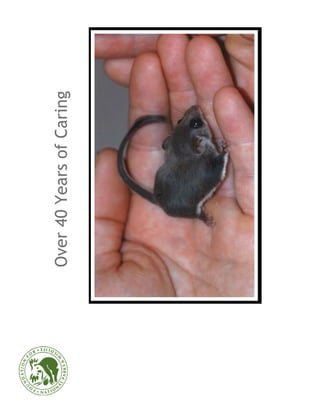
Over 40 Years of Caring
Foundation achievements
Growing Our National Parks

Growing our parks is essential to safeguard
our natural heritage for future Australians.

National Parks remain the core of our
protected land system.

The Foundation continues to purchase
suitable land to add to and extend our
national reserves for future generations.
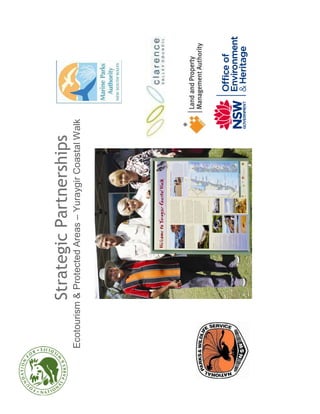
Strategic Partnerships
Ecotourism & Protected Areas – Yuraygir Coastal Walk
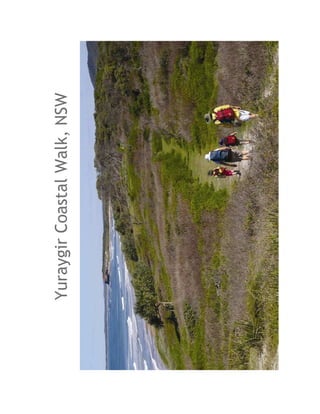
Yuraygir Coastal Walk, NSW
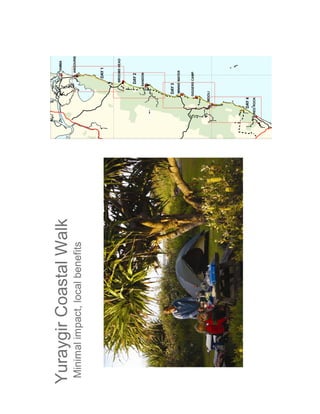
Yuraygir Coastal Walk
Minimal impact, local benefits
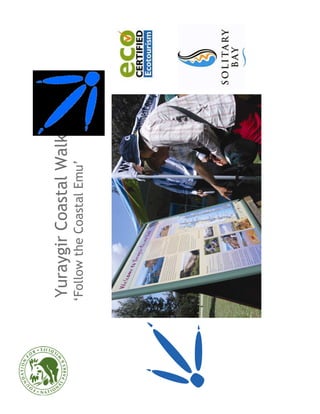
Yuraygir Coastal Walk
‘Follow the Coastal Emu’
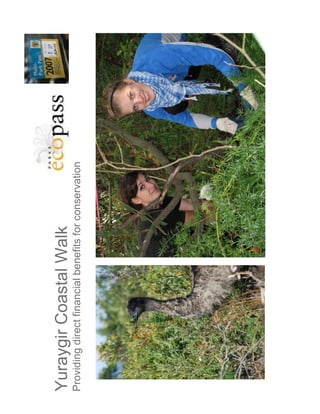
Yuraygir Coastal Walk
Providing direct financial benefits for conservation
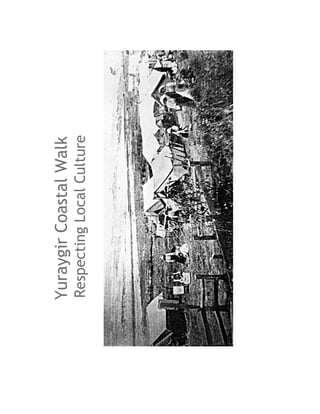
Yuraygir Coastal Walk
Respecting Local Culture
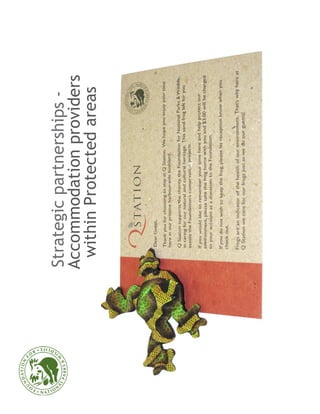
Strategic partnerships -
Accommodation providers
 within Protected areas
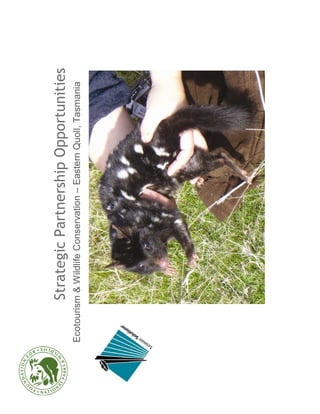
Strategic Partnership Opportunities
Ecotourism & Wildlife Conservation – Eastern Quoll, Tasmania
Philanthropy Vision

Now:
  To act ‘on call’ as an interested sponsor of threatened
  species wildlife conservation projects which have as
  their principal objective, the maintenance and/or
  regeneration of wildlife habitat. These projects can be
  located either within national parks or within public or
  private lands in any location in Australia.
Future:
  To undertake these projects in the area in which the
  ecotour is being undertaken.
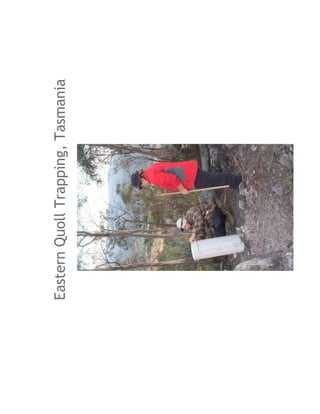
Eastern Quoll Trapping, Tasmania
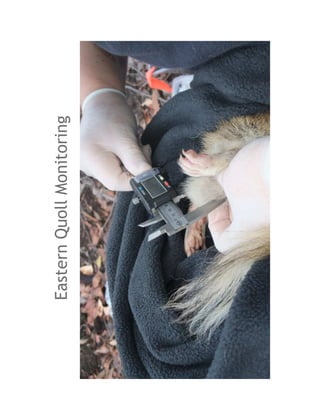
Eastern Quoll Monitoring
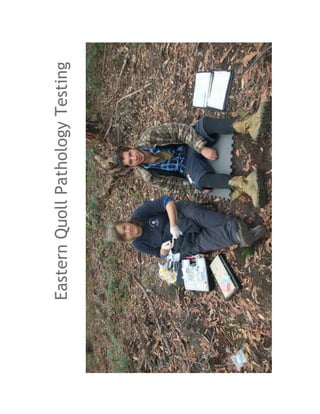
Eastern Quoll Pathology Testing
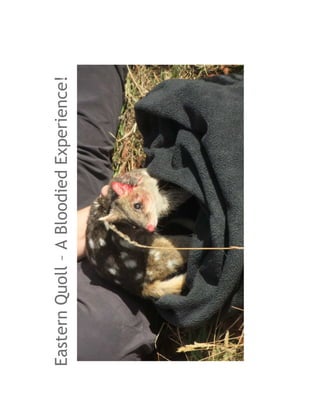
Eastern Quoll – A Bloodied Experience!
Earthwatch Great Otway NP, Victoria
     Koala Research Program for Volunteers


Help scientists study the response of koalas to climate
change to conserve their habitats and population.
Traverse the Great Otway NP while conducting valuable
research on koala habitats to understand the impact of
climate change on population and behaviour.
During organised expeditions, volunteers will get the
chance to work closely with koalas and be involved in
all aspects of the research.
Leisure Solutions® is a current year sponsor.
Koala ‘Tree Choice’ Gunnedah, NSW
          Wildlife Conservation


Koalas are dependent on selecting the right
tree in the right place at the right time.
The project seeks to explore the direct effect
of climate change on koalas by examining which
parts of the landscape and which tree species
koalas use, and what condition they are in
during a heat wave.
Koala Tree Choice Participants

National Parks & Wildlife Service
Gunnedah Research Centre
Landcare NSW Inc
University of Sydney School of Biological
Sciences & Veterinary School
Foundation for National Parks & Wildlife
Gunnedah Natural Heritage
 Gunnedah Basin Permian Coal Measures and covered by
Triassic sediments and rich volcanic derived soils –
broad flood plains with class 1 to 5 soils.
 Mixed dry land eucalypts and Pilliga Scrub varieties
e.g. Cypress Pine, Casuarinas etc.
Macropods, koalas, profilic birdlife common – Koala
Capital of Australia!
European farming settlements, Dorothy Mackellar, and
indigenous culture (Kamilaroi peoples etc.)
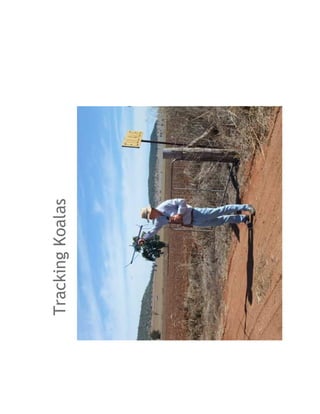
Tracking Koalas
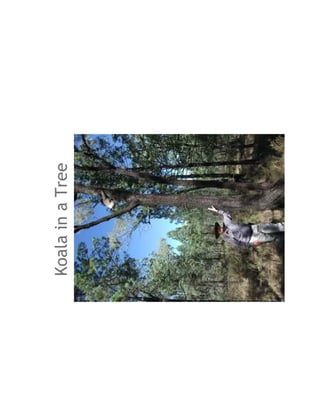
Koala in a Tree
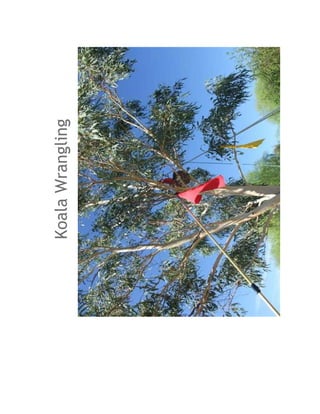
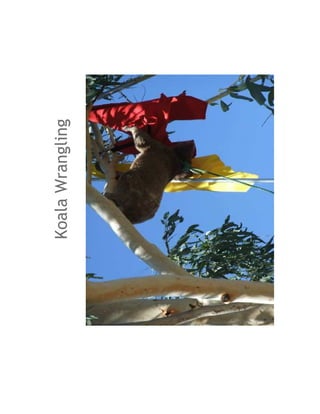
Koala Wrangling
Koala Wrangling
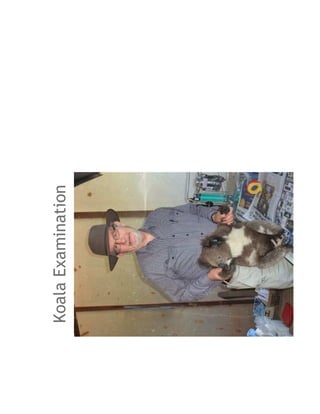
Koala Examination
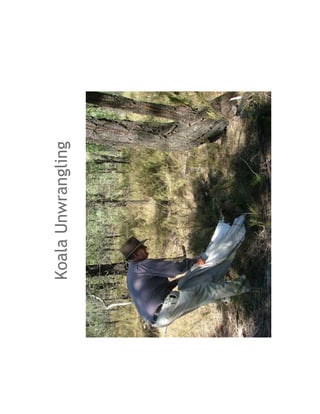
Koala Unwrangling
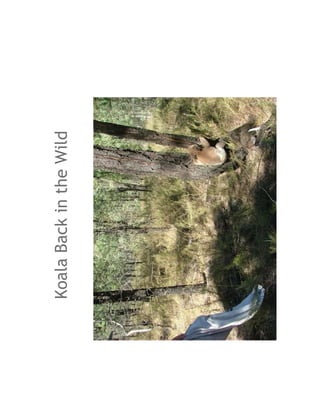
Koala Back in the Wild
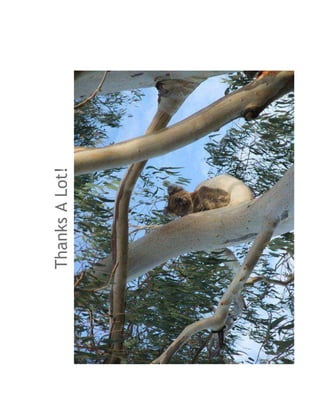
Thanks A Lot!
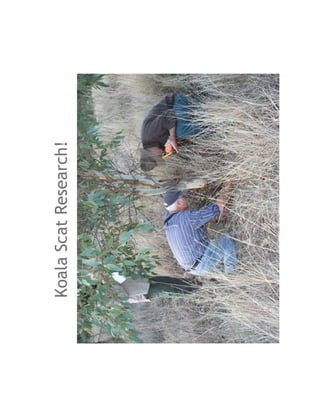
Koala Scat Research!
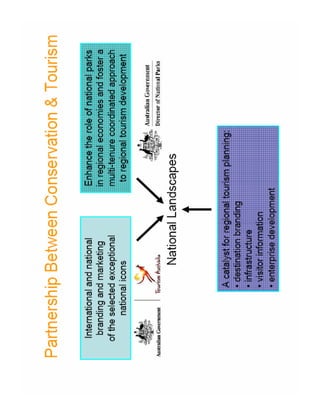
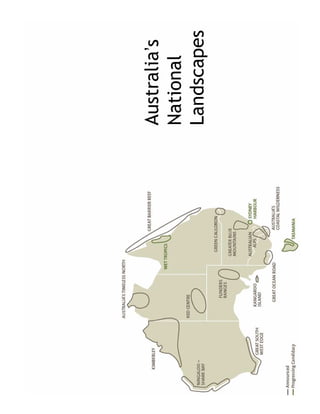
Australia’s
National
Landscapes
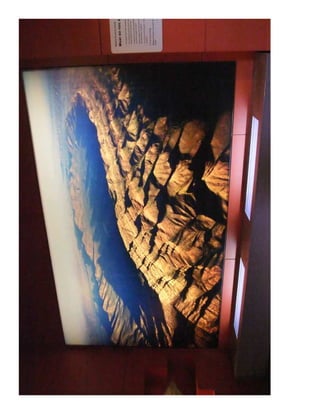
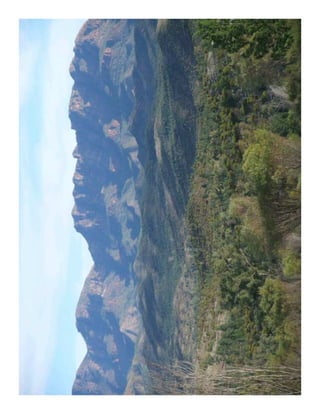
Flinders Ranges National Landscape
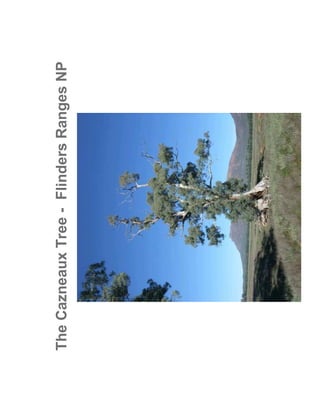
The Cazneaux Tree - Flinders Ranges NP
National Landscape/GSA Protocol

The Geological Society of Australia and Parks
Australia have recently concluded a protocol to
enable the input of geoscience information into
National Landscapes programs.
This protocol has already seen the inclusion of a
geotrail project as an endorsed program of the
Experience Development Strategy (EDS) for the
Green Cauldron National Landscape.
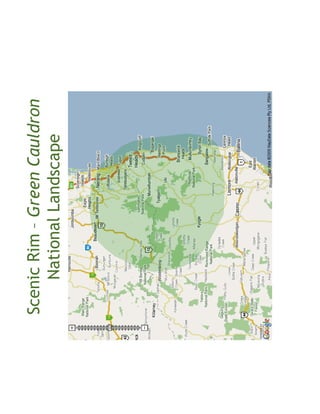
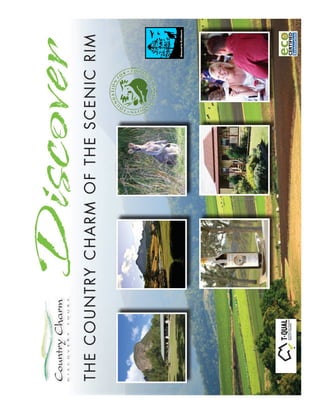
Scenic Rim – Green Cauldron
    National Landscape
Travelers Philanthropy - Ethiopa

The USAID-funded Ethiopia Sustainable Tourism Alliance,
with support from Sustainable Travel International, is
proud to introduce the Ethiopia Travelers Philanthropy
Fund.
The fund opens the door for travelers to give back to
Ethiopia, ensuring their visits leave a positive impact.
The program supports sustainable tourism development
by connecting travelers to projects that improve the
environment, boost local incomes, and enhance the
destination for future visitors.
Travelers Philanthropy - Ethiopa

Tour operators are including visits to conservation and
community development projects in their itineraries.
Travelers can donate to and visit local communities that
are working hard to protect their forests and rehabilitate
degraded land. Visitors can book a trip through one of
their partnering tour operators and request that the
itinerary includes a visit to one/both of the project sites.
There are two ways to give – directly to the responsible
non-profits that have been vetted through the fund or on
the Global Giving website. e.g. plant a tree in a village
or provide an energy saving stove to a family.
Philanthropy Opportunities linked to Ecotourism

    Royalty payments from tour operators on prorata
    basis.
    Corporate sponsorship of part or full project costs.
    Per unit donations for research costs e.g. pathology
    tests, GPS collars.
    Sponsorship of vehicle leases.
    ‘voluntourists’ e.g. Earthwatch, Conservation
    Volunteers Australia, World Expeditions etc.
    http://www.ecotourism.org/voluntourism-guidelines

    Field Research ‘experiential’ tourism - ‘ecotourists’.
Tauern National Park, Austria and the Endangered
            Rock Partridge Case Study
        The 'two-edged' effect of ecotourism, whereby visitors provide
        revenues for costly conservation efforts, whilst at the same time
        potentially affecting endangered species, can be managed to
        ensure species' population levels are not affected.
        Three types of measures were specifically highlighted by the
        mathematical model:
              visitor control limiting visitors
              habitat conservation measures, i.e. expanding buffer zones
              or creating quiet zones with the help of signposts, and
              species conservation measures, such as species restocking.

Source: Bednar-Friedl, B., Behrens, D.A. and Getzner, M. (2012) Optimal Dynamic Control of Visitors
        and Endangered Species in a National Park. Environmental and Resource Economics. 52: 1-
        22. DOI 10.1007/s10640-011-9515-5.
Lecture Points Summary

By definition, ecotourism requires a commitment by tour
operators and accommodation providers to contribute to
providing direct financial benefits for conservation.
Demonstrated opportunities are now readily available for
industry participation.
With an increasing level of promotion of ‘nature based’ tourism
into both established protected areas and National Landscapes,
more opportunities will arise.
In time, it is predicted that eco-certification will directly
embrace wildlife conservation support.
The FNPW is one leading ‘not for profit’ NGO which can provide
a vehicle for ecotourism driven philanthropy.
For more Information about FNPW

 Visit our website
 www.fnpw.org.au and sign up for our newsletter!

 Become our friend on Facebook
 www.facebook.com/fnpw.1970
 www.facebook.com/backyardbuddies

 Follow us on twitter
 http://twitter.com/fnpw

 Call us
 (02) 9221 1949

 Email
 arobinson@fnpw.org.au
 angus@leisuresolutions.com.au

Ec ulecture 21_september2012

  • 1.
    ‘Planning & Development’Lecture Friday 21 September, 2012 Commercial and philanthropic opportunities for enhancing wildlife conservation through ecotourism Angus M Robinson, Adjunct Lecturer School of Marketing, Tourism & Leisure CaringCaring for Australia’s Natural and Cultural Heritagesince 1970 for Australia’s Natural and Cultural Heritage since 1970
  • 2.
    Lecturer – AngusM Robinson Certified ecotourism operator. Board member, Foundation for National Parks & Wildlife (FNPW. Chair, Geotourism Sub Committee, Geological Society of Australia. Varied career background in a range of industries, including in tourism, executive roles at Taronga Zoo, Earth Exchange Museum, and Mt Hotham Alpine Resort.
  • 3.
    Lecture Points A questionof definitions and principles Foundation for National Parks & Wildlife Current Ecotourism related partnerships Australian National Landscapes Philanthropy Opportunities and Vision Summary of Lecture Points
  • 4.
    National Estate The term(‘National Estate’) was incorporated into the Australian Heritage Commission Act and is used to describe a collection of buildings and sites that are worthy of preservation for a variety of reasons. It covers natural environments as well as European history and Aboriginal culture. The National Estate includes national parks and other lands reserved for public usage i.e. ‘protected areas’.
  • 5.
    Understanding Natural Heritage Naturalheritage is the legacy of natural objects and intangible attributes encompassing the countryside and natural environment, including flora and fauna, scientifically known as biodiversity, and geology, landforms and soil landscapes i.e. geodiversity.
  • 6.
    ‘Geotourism’ incorporating all typesof ‘place-based’ tourism i.e. ‘experiential Cultural Sightseeing tourism’ Tourism Cuisine Heritage ECOTOURISM Tourism Agritourism Indigenous Tourism Boley, B.B. after Thompson, S. 2009
  • 7.
    A Question ofDefinitions Recreation activities: Nature tourism – involves travel to unspolied places to experience and enjoy nature Wildlife tourism involves travel to observe animals, birds and fish in their native habitats. Adventure tourism is nature tourism ‘on steroids’ Ecotourism – responsible travel to natural areas that conserves the environment and improves the well-being of local people, defined by a set of principles Source: Honey, 2008: Ecotourism and Sustainable Development and The International Ecotourism Society, 1990
  • 8.
    Seven Principles ofEcotourism 1. Involves travel to natural destinations 2. Minimises impact 3. Builds environmental awareness 4. Provides financial benefits and empowerment for local people 5. Respects local culture 6. Supports human rights and democratic movements, AND 7. Provides direct financial benefits for conservation Source: Honey, 2008: Ecotourism and Sustainable Development
  • 9.
    Involves Travel toNatural Destinations
  • 10.
    Seven Principles ofEcotourism 1. Involves travel to natural destinations 2. Minimises impact
  • 11.
  • 12.
    Seven Principles ofEcotourism 1. Involves travel to natural destinations 2. Minimises impact 3. Builds environmental awareness
  • 13.
  • 14.
    Seven Principles ofEcotourism 1. Involves travel to natural destinations 2. Minimises impact 3. Builds environmental awareness 4. Provides financial benefits and empowerment for local people
  • 15.
    Borneo Ecotours For everytour that is purchased, travellers will help make a difference to the local community and natural environment in North Borneo. A portion of tour revenue is set aside to fund various projects in Kudat, Kinabatangan and Kundasang through a non-profit organisation, Borneo Ecotourism Solutions and Technologies Society. A sister company, Sukau Rainforest Lodge also contributes RM4.00 since 2000 for every international guest who stays at the lodge.
  • 16.
    Seven Principles ofEcotourism 1. Involves travel to natural destinations 2. Minimises impact 3. Builds environmental awareness 4. Provides financial benefits and empowerment for local people 5. Respects local culture
  • 17.
  • 18.
  • 19.
    Seven Principles ofEcotourism 1. Involves travel to natural destinations 2. Minimises impact 3. Builds environmental awareness 4. Provides financial benefits and empowerment for local people 5. Respects local culture 6. Supports human rights and democratic movements
  • 20.
  • 21.
    Seven Principles ofEcotourism 1. Involves travel to natural destinations 2. Minimises impact 3. Builds environmental awareness 4. Provides financial benefits and empowerment for local people 5. Respects local culture 6. Supports human rights and democratic movements 7. Provides direct financial benefits for conservation Source: Honey, 2008: Ecotourism and Sustainable Development
  • 22.
    Australian Definition ofEcotourism Ecotourism is ecologically sustainable tourism with a primary focus on experiencing natural areas that fosters environmental and cultural understanding, appreciation and conservation. Ecotourism Australia believes that the ultimate definition of ecotourism is compliance with the core criteria stated within the Eco Certification Program.
  • 23.
    Eco Certification Criteria InAustralia, ECO Certification has three levels of achievement which have been developed to accommodate for a range of businesses and, • their level of commitment to sustainability, dedication/applicability to social and cultural responsibilities, and • the level of interpretation and education involved in the product(s). Currently no specific focus on philanthropy and funding of wildlife conservation research.
  • 24.
    Definition of Philanthropy the desire to promote the welfare of others, expressed especially by the generous donation of money to good causes. a philanthropic institution; a charity. Source: Oxford Dictionary
  • 25.
    Foundation for NationalParks & Wildlife
  • 26.
    The Foundation When thenPremier of NSW, the Hon Tom Lewis MP, first established the NSW National Parks & Wildlife Service, he had a vision of establishing a complementary organisation, constituted mainly from the corporate sector, to acquire parks for the Service. Hence the birth of the Foundation for National Parks & Wildlife in 1970. Today the Foundation continues the tradition of growing parks and caring for them and the species that inhabit them.
  • 27.
  • 28.
    Volunteering Land forConservation The Foundation for National Parks & Wildlife is the only organisation in Australia whose philanthropy is an investment in our public estate, for all to enjoy. There are tax incentives for landholders donating land but the real value is the growth of our national parks and the protection given to our plants and animals cared for under their management.
  • 29.
    1. Foundation Achievements Overits history the FNPW has added over 500,000 hectares to Australia’s national reserve system, for the enjoyment of all. The FNPW funds threatened species recovery programs. The FNPW has saved animals such as the Lord Howe Island woodhen, Gould’s Petrel and the Yellow-footed Rock-wallaby from extinction.
  • 30.
    2. Foundation Achievements TheFoundation protects our heritage icons as sources of inspiration for future generations of Australians and visitors from across the world. Some examples of cultural heritage FNPW has helped protect include the World Heritage Old Great North Road, Kosciuszko Historic Huts, Fort Denison, and Mungo. Finally, the FNPW involves the community in the conservation of Australia's native plants and animals through environmental education.
  • 32.
    Willandra Lakes World Heritage Areaand Mungo National Park Pleistocene dune system & ancient lake highlighting 50,000 years of continuous human habitation
  • 34.
    FNPW and Philanthropy Sinceits inception in 1970, the Foundation has been funding scientifically based projects for the benefit of Australian native species. To date the Foundation has saved four species from extinction and funded projects to research and conserve over 30 other Australian plant and animal species.
  • 35.
    Over 40 Yearsof Caring
  • 36.
  • 37.
  • 38.
  • 39.
    Growing Our NationalParks Growing our parks is essential to safeguard our natural heritage for future Australians. National Parks remain the core of our protected land system. The Foundation continues to purchase suitable land to add to and extend our national reserves for future generations.
  • 40.
    Strategic Partnerships Ecotourism &Protected Areas – Yuraygir Coastal Walk
  • 41.
  • 42.
    Yuraygir Coastal Walk Minimalimpact, local benefits
  • 43.
  • 44.
    Yuraygir Coastal Walk Providingdirect financial benefits for conservation
  • 45.
  • 46.
    Strategic partnerships - Accommodationproviders within Protected areas
  • 47.
    Strategic Partnership Opportunities Ecotourism& Wildlife Conservation – Eastern Quoll, Tasmania
  • 48.
    Philanthropy Vision Now: To act ‘on call’ as an interested sponsor of threatened species wildlife conservation projects which have as their principal objective, the maintenance and/or regeneration of wildlife habitat. These projects can be located either within national parks or within public or private lands in any location in Australia. Future: To undertake these projects in the area in which the ecotour is being undertaken.
  • 49.
  • 50.
  • 51.
  • 52.
    Eastern Quoll –A Bloodied Experience!
  • 53.
    Earthwatch Great OtwayNP, Victoria Koala Research Program for Volunteers Help scientists study the response of koalas to climate change to conserve their habitats and population. Traverse the Great Otway NP while conducting valuable research on koala habitats to understand the impact of climate change on population and behaviour. During organised expeditions, volunteers will get the chance to work closely with koalas and be involved in all aspects of the research. Leisure Solutions® is a current year sponsor.
  • 54.
    Koala ‘Tree Choice’Gunnedah, NSW Wildlife Conservation Koalas are dependent on selecting the right tree in the right place at the right time. The project seeks to explore the direct effect of climate change on koalas by examining which parts of the landscape and which tree species koalas use, and what condition they are in during a heat wave.
  • 55.
    Koala Tree ChoiceParticipants National Parks & Wildlife Service Gunnedah Research Centre Landcare NSW Inc University of Sydney School of Biological Sciences & Veterinary School Foundation for National Parks & Wildlife
  • 56.
    Gunnedah Natural Heritage Gunnedah Basin Permian Coal Measures and covered by Triassic sediments and rich volcanic derived soils – broad flood plains with class 1 to 5 soils. Mixed dry land eucalypts and Pilliga Scrub varieties e.g. Cypress Pine, Casuarinas etc. Macropods, koalas, profilic birdlife common – Koala Capital of Australia! European farming settlements, Dorothy Mackellar, and indigenous culture (Kamilaroi peoples etc.)
  • 57.
  • 58.
  • 59.
  • 60.
  • 61.
  • 62.
  • 63.
    Koala Back inthe Wild
  • 64.
  • 65.
  • 68.
  • 69.
  • 70.
  • 71.
    The Cazneaux Tree- Flinders Ranges NP
  • 72.
    National Landscape/GSA Protocol TheGeological Society of Australia and Parks Australia have recently concluded a protocol to enable the input of geoscience information into National Landscapes programs. This protocol has already seen the inclusion of a geotrail project as an endorsed program of the Experience Development Strategy (EDS) for the Green Cauldron National Landscape.
  • 73.
    Scenic Rim –Green Cauldron National Landscape
  • 75.
    Travelers Philanthropy -Ethiopa The USAID-funded Ethiopia Sustainable Tourism Alliance, with support from Sustainable Travel International, is proud to introduce the Ethiopia Travelers Philanthropy Fund. The fund opens the door for travelers to give back to Ethiopia, ensuring their visits leave a positive impact. The program supports sustainable tourism development by connecting travelers to projects that improve the environment, boost local incomes, and enhance the destination for future visitors.
  • 76.
    Travelers Philanthropy -Ethiopa Tour operators are including visits to conservation and community development projects in their itineraries. Travelers can donate to and visit local communities that are working hard to protect their forests and rehabilitate degraded land. Visitors can book a trip through one of their partnering tour operators and request that the itinerary includes a visit to one/both of the project sites. There are two ways to give – directly to the responsible non-profits that have been vetted through the fund or on the Global Giving website. e.g. plant a tree in a village or provide an energy saving stove to a family.
  • 77.
    Philanthropy Opportunities linkedto Ecotourism Royalty payments from tour operators on prorata basis. Corporate sponsorship of part or full project costs. Per unit donations for research costs e.g. pathology tests, GPS collars. Sponsorship of vehicle leases. ‘voluntourists’ e.g. Earthwatch, Conservation Volunteers Australia, World Expeditions etc. http://www.ecotourism.org/voluntourism-guidelines Field Research ‘experiential’ tourism - ‘ecotourists’.
  • 78.
    Tauern National Park,Austria and the Endangered Rock Partridge Case Study The 'two-edged' effect of ecotourism, whereby visitors provide revenues for costly conservation efforts, whilst at the same time potentially affecting endangered species, can be managed to ensure species' population levels are not affected. Three types of measures were specifically highlighted by the mathematical model: visitor control limiting visitors habitat conservation measures, i.e. expanding buffer zones or creating quiet zones with the help of signposts, and species conservation measures, such as species restocking. Source: Bednar-Friedl, B., Behrens, D.A. and Getzner, M. (2012) Optimal Dynamic Control of Visitors and Endangered Species in a National Park. Environmental and Resource Economics. 52: 1- 22. DOI 10.1007/s10640-011-9515-5.
  • 79.
    Lecture Points Summary Bydefinition, ecotourism requires a commitment by tour operators and accommodation providers to contribute to providing direct financial benefits for conservation. Demonstrated opportunities are now readily available for industry participation. With an increasing level of promotion of ‘nature based’ tourism into both established protected areas and National Landscapes, more opportunities will arise. In time, it is predicted that eco-certification will directly embrace wildlife conservation support. The FNPW is one leading ‘not for profit’ NGO which can provide a vehicle for ecotourism driven philanthropy.
  • 81.
    For more Informationabout FNPW Visit our website www.fnpw.org.au and sign up for our newsletter! Become our friend on Facebook www.facebook.com/fnpw.1970 www.facebook.com/backyardbuddies Follow us on twitter http://twitter.com/fnpw Call us (02) 9221 1949 Email arobinson@fnpw.org.au angus@leisuresolutions.com.au