BY: SAEED S. ALSMANI
M.Sc. Biotechnology
B.Sc. Microbiology
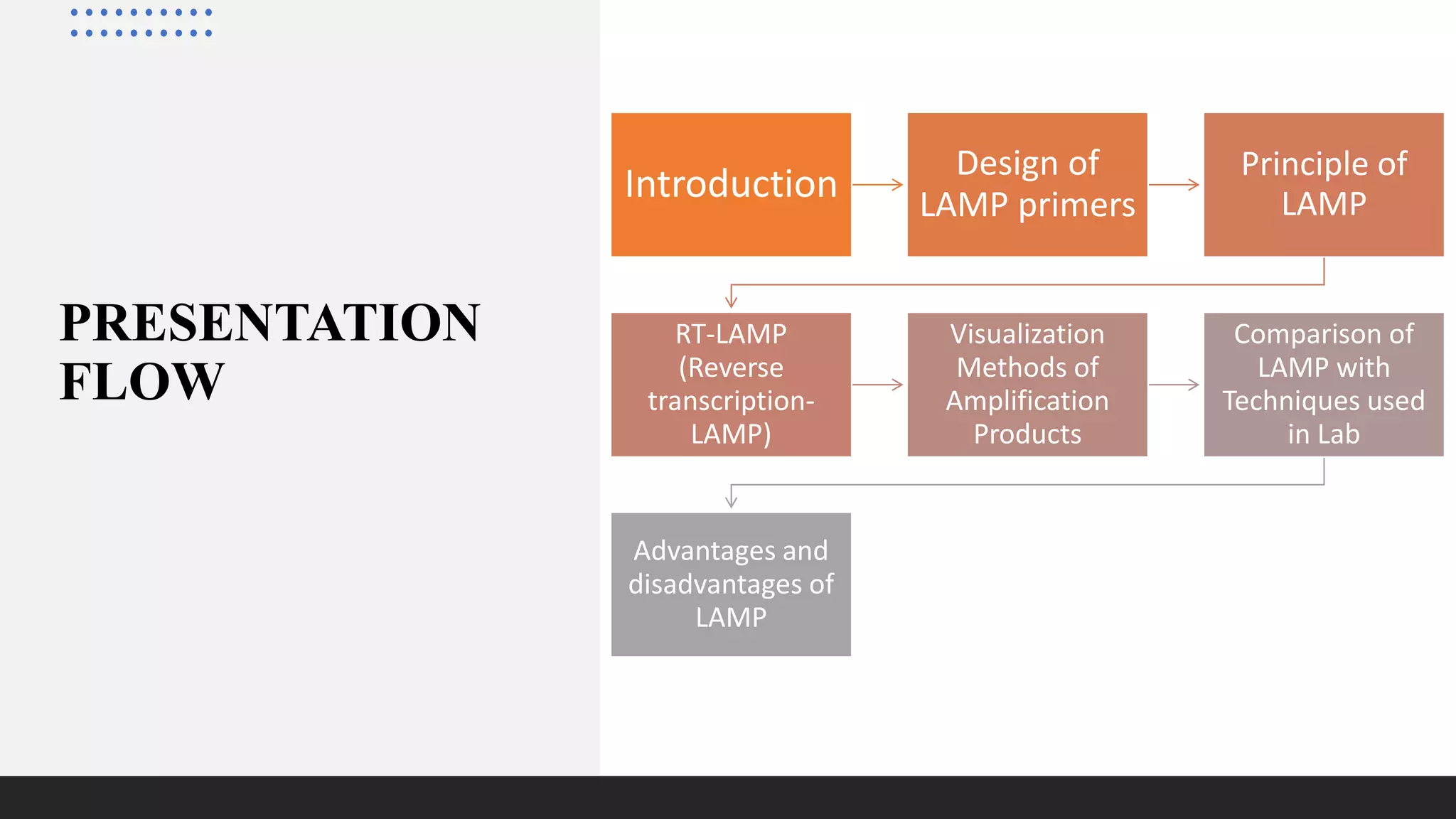
PRESENTATION
FLOW
Introduction
Design of
LAMP primers
Principle of
LAMP
RT-LAMP
(Reverse
transcription-
LAMP)
Visualization
Methods of
Amplification
Products
Comparison of
LAMP with
Techniques used
in Lab
Advantages and
disadvantages of
LAMP
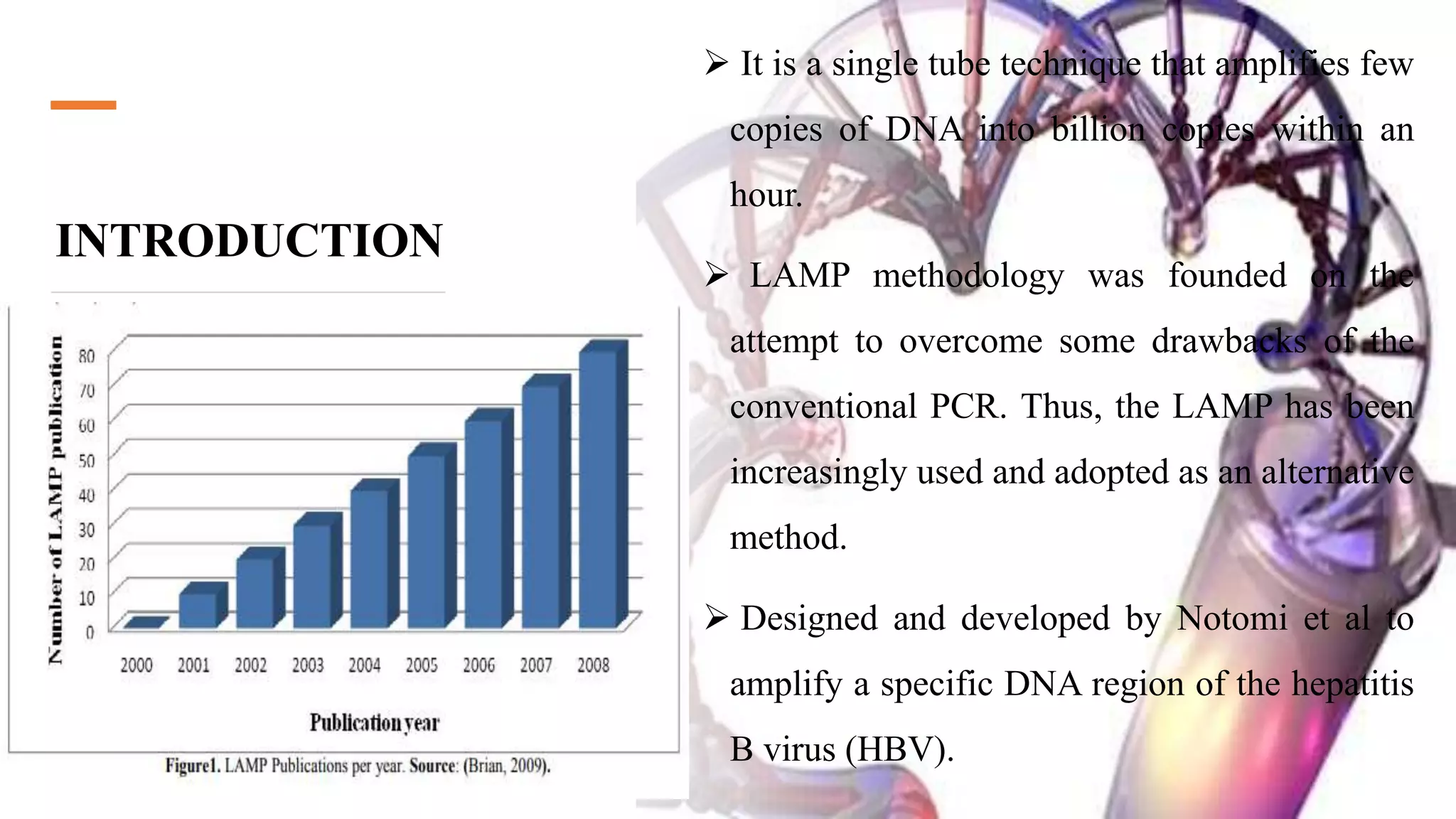
INTRODUCTION
 It is a single tube technique that amplifies few
copies of DNA into billion copies within an
hour.
 LAMP methodology was founded on the
attempt to overcome some drawbacks of the
conventional PCR. Thus, the LAMP has been
increasingly used and adopted as an alternative
method.
 Designed and developed by Notomi et al to
amplify a specific DNA region of the hepatitis
B virus (HBV).
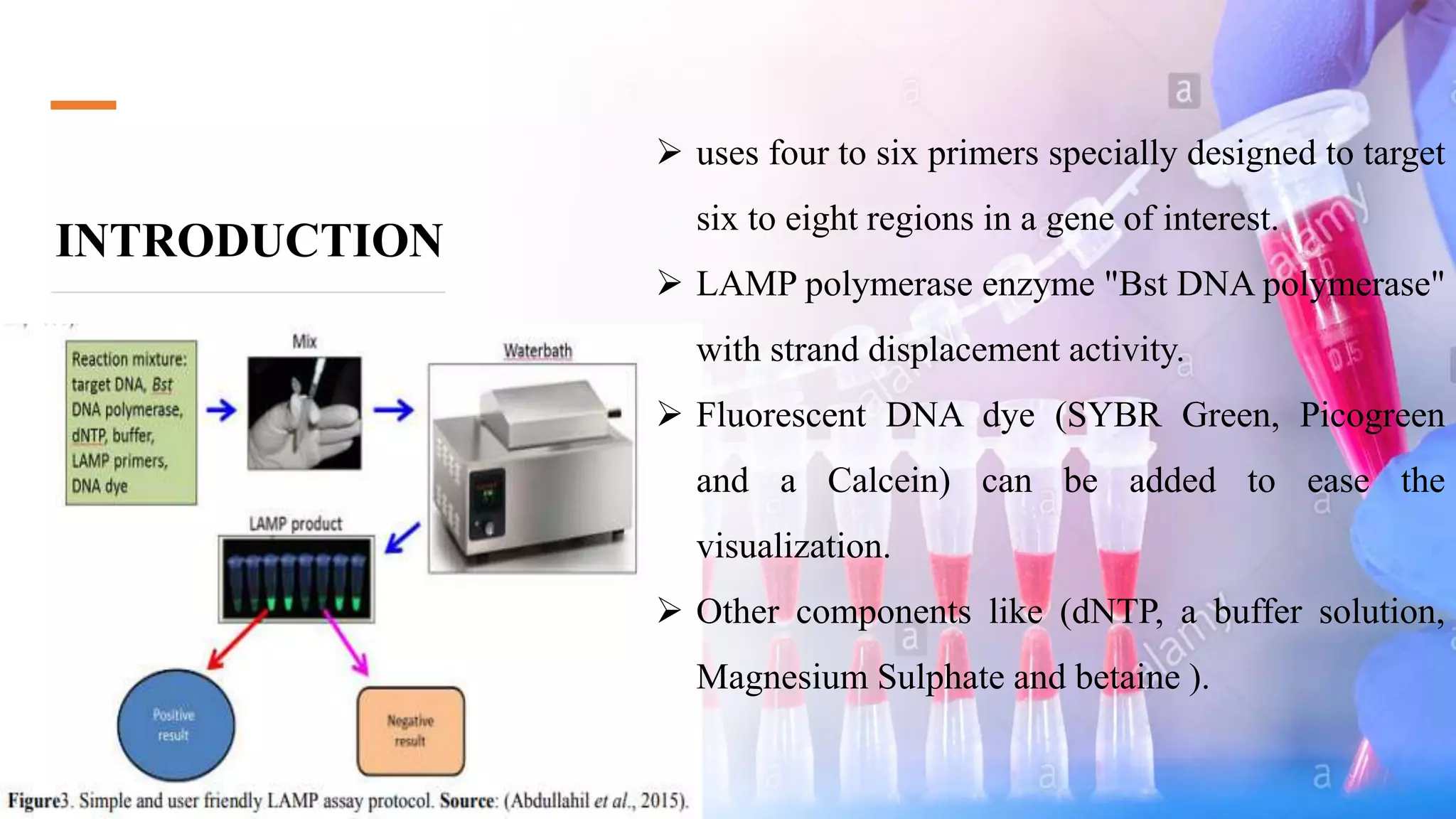
INTRODUCTION
 uses four to six primers specially designed to target
six to eight regions in a gene of interest.
 LAMP polymerase enzyme "Bst DNA polymerase"
with strand displacement activity.
 Fluorescent DNA dye (SYBR Green, Picogreen
and a Calcein) can be added to ease the
visualization.
 Other components like (dNTP, a buffer solution,
Magnesium Sulphate and betaine ).
Design of LAMP primers
 The four primers used are as follows:
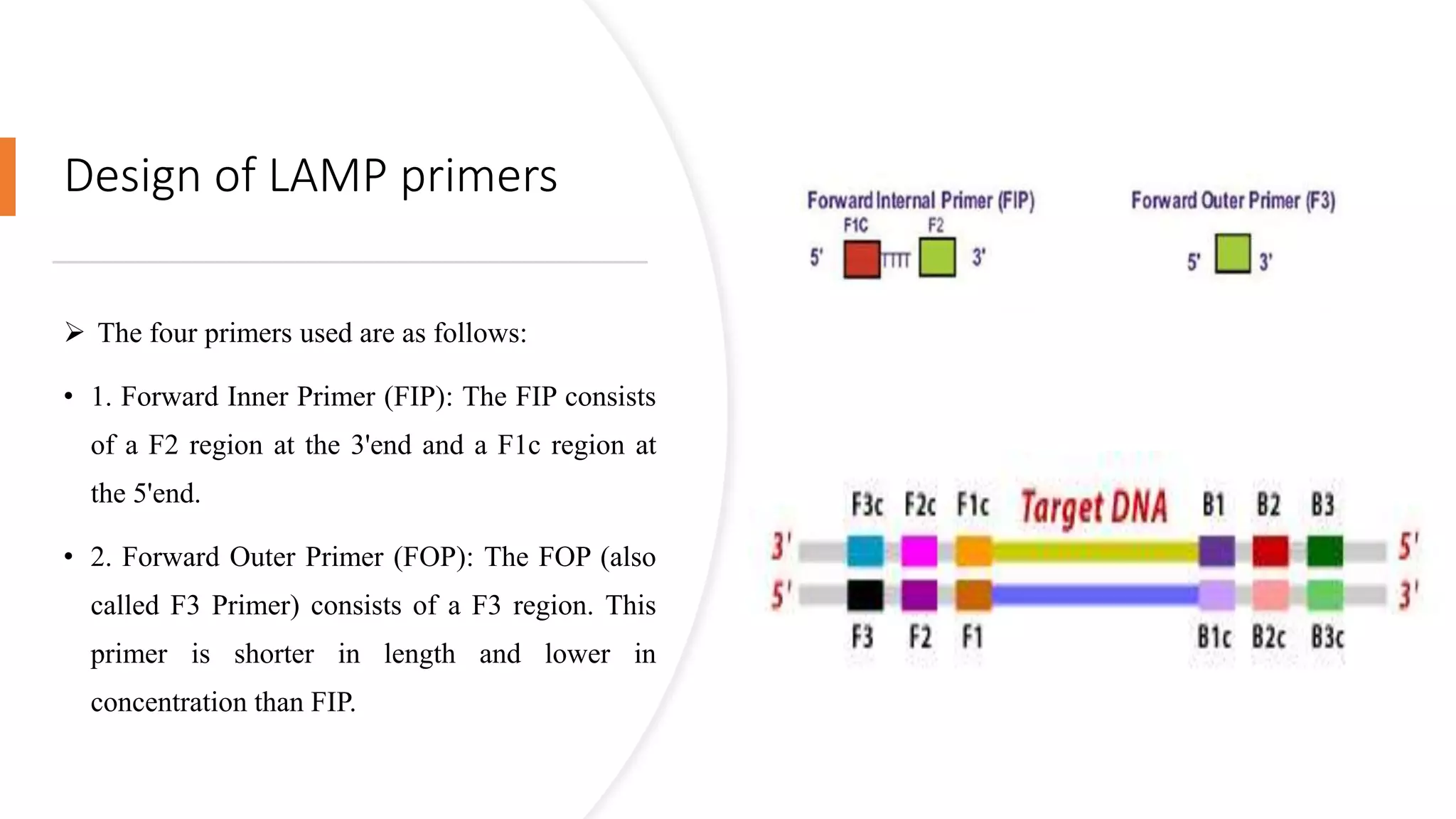
• 1. Forward Inner Primer (FIP): The FIP consists
of a F2 region at the 3'end and a F1c region at
the 5'end.
• 2. Forward Outer Primer (FOP): The FOP (also
called F3 Primer) consists of a F3 region. This
primer is shorter in length and lower in
concentration than FIP.
Design of LAMP primers
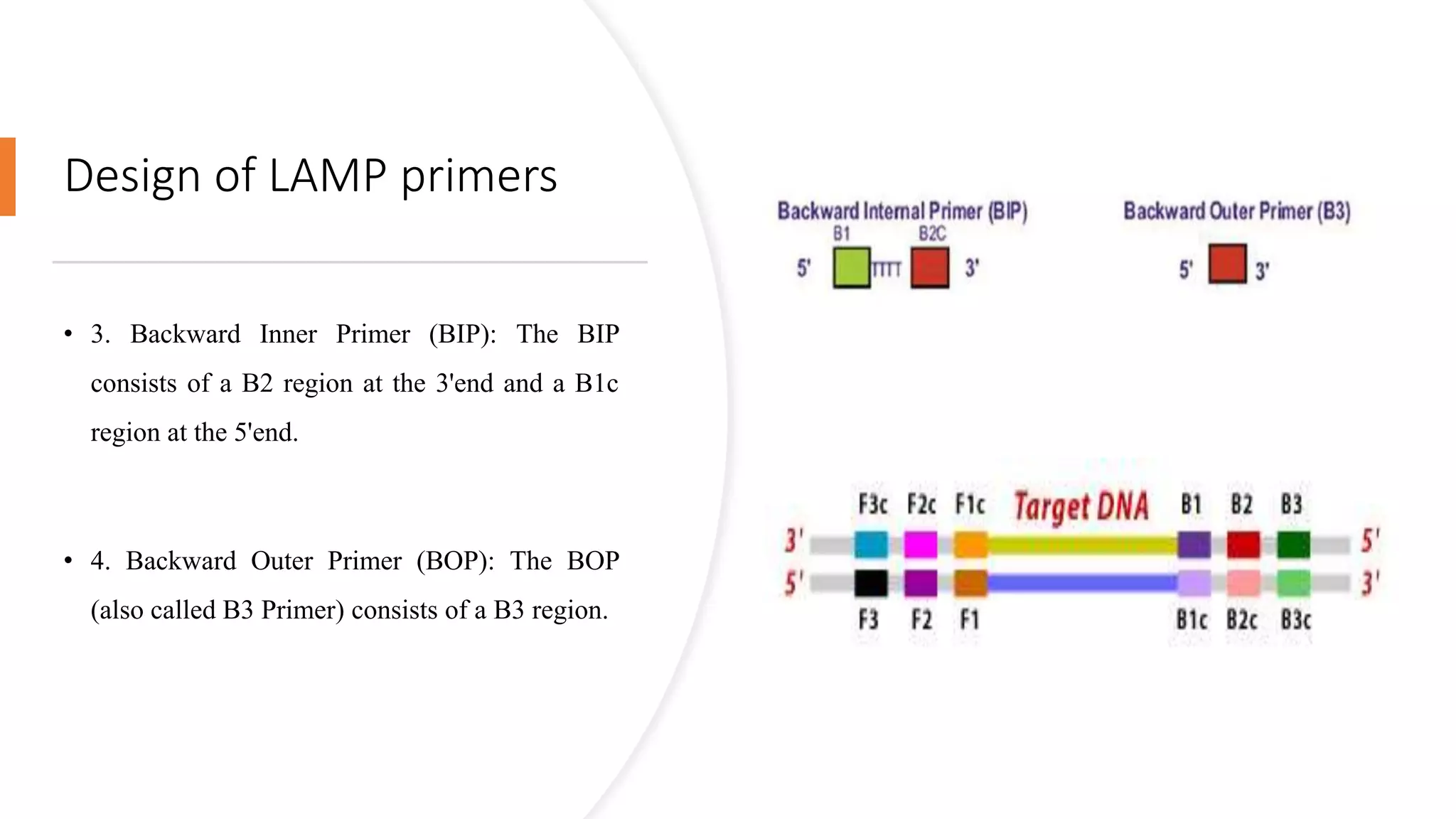
• 3. Backward Inner Primer (BIP): The BIP
consists of a B2 region at the 3'end and a B1c
region at the 5'end.
• 4. Backward Outer Primer (BOP): The BOP
(also called B3 Primer) consists of a B3 region.
LAMP Acceleration
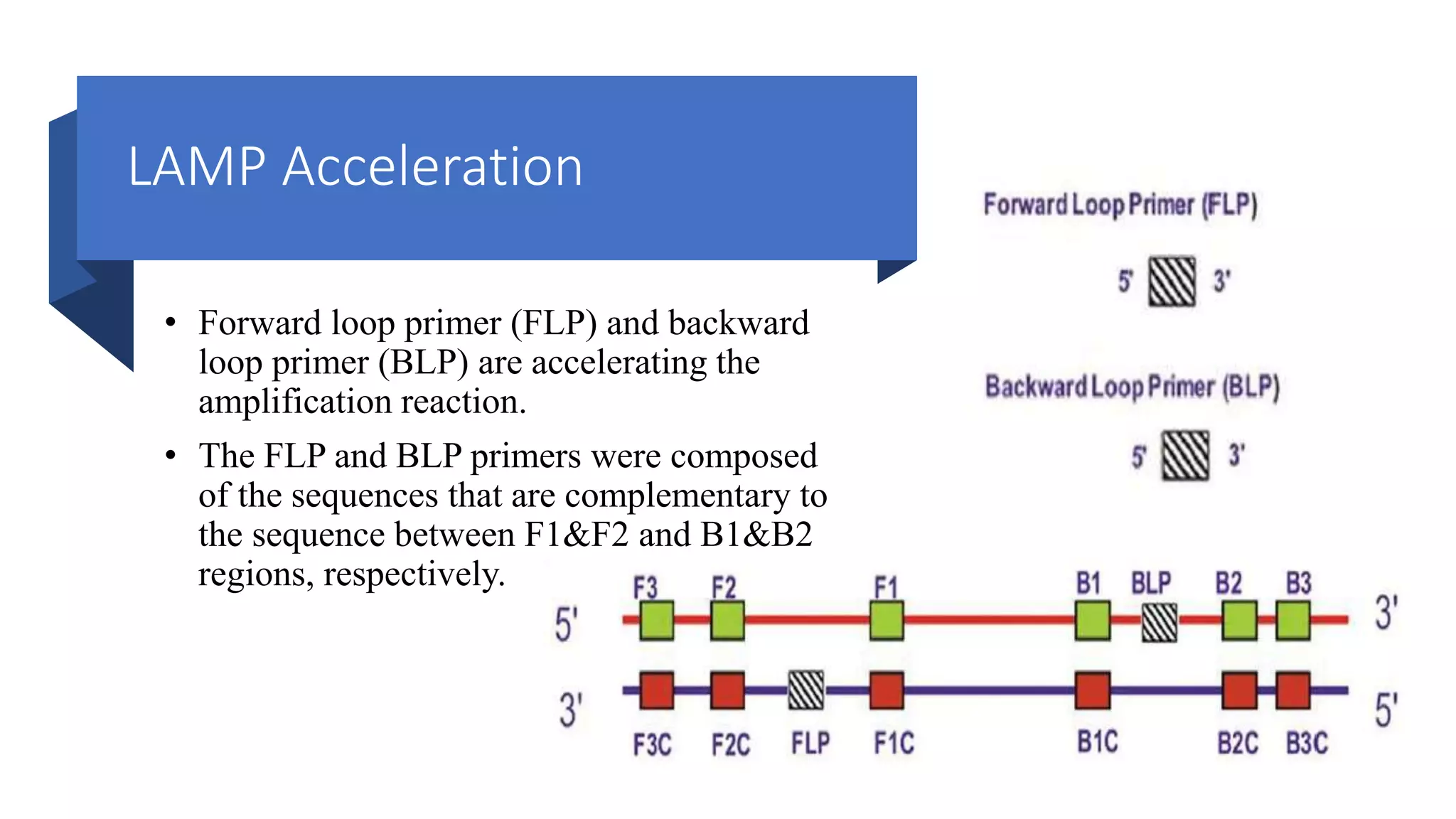
• Forward loop primer (FLP) and backward
loop primer (BLP) are accelerating the
amplification reaction.
• The FLP and BLP primers were composed
of the sequences that are complementary to
the sequence between F1&F2 and B1&B2
regions, respectively.
Principle of LAMP
Non-
Cyclical
phase
Cyclical
phase
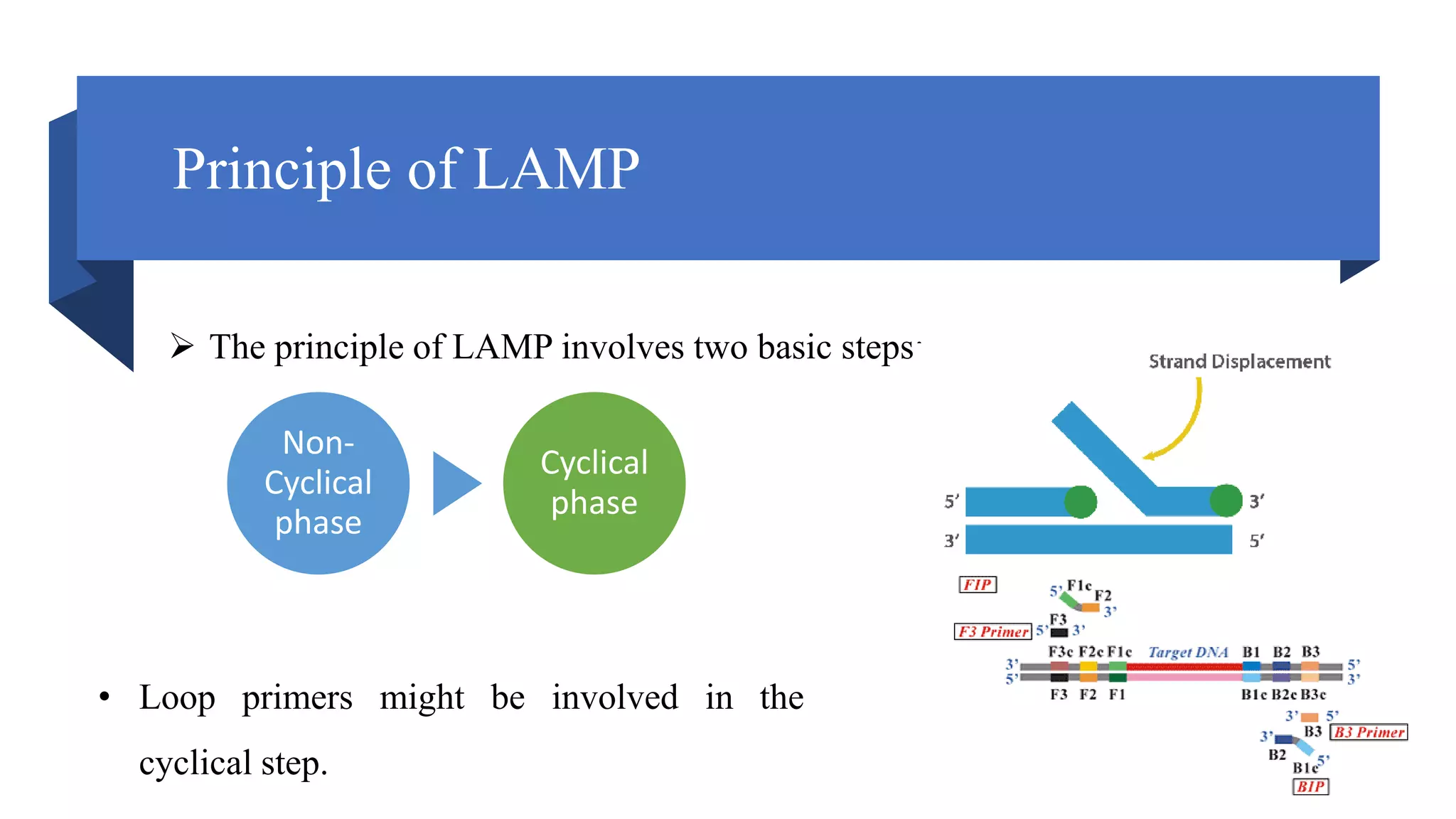
 The principle of LAMP involves two basic steps:
• Loop primers might be involved in the
cyclical step.
Non-Cyclical Phase
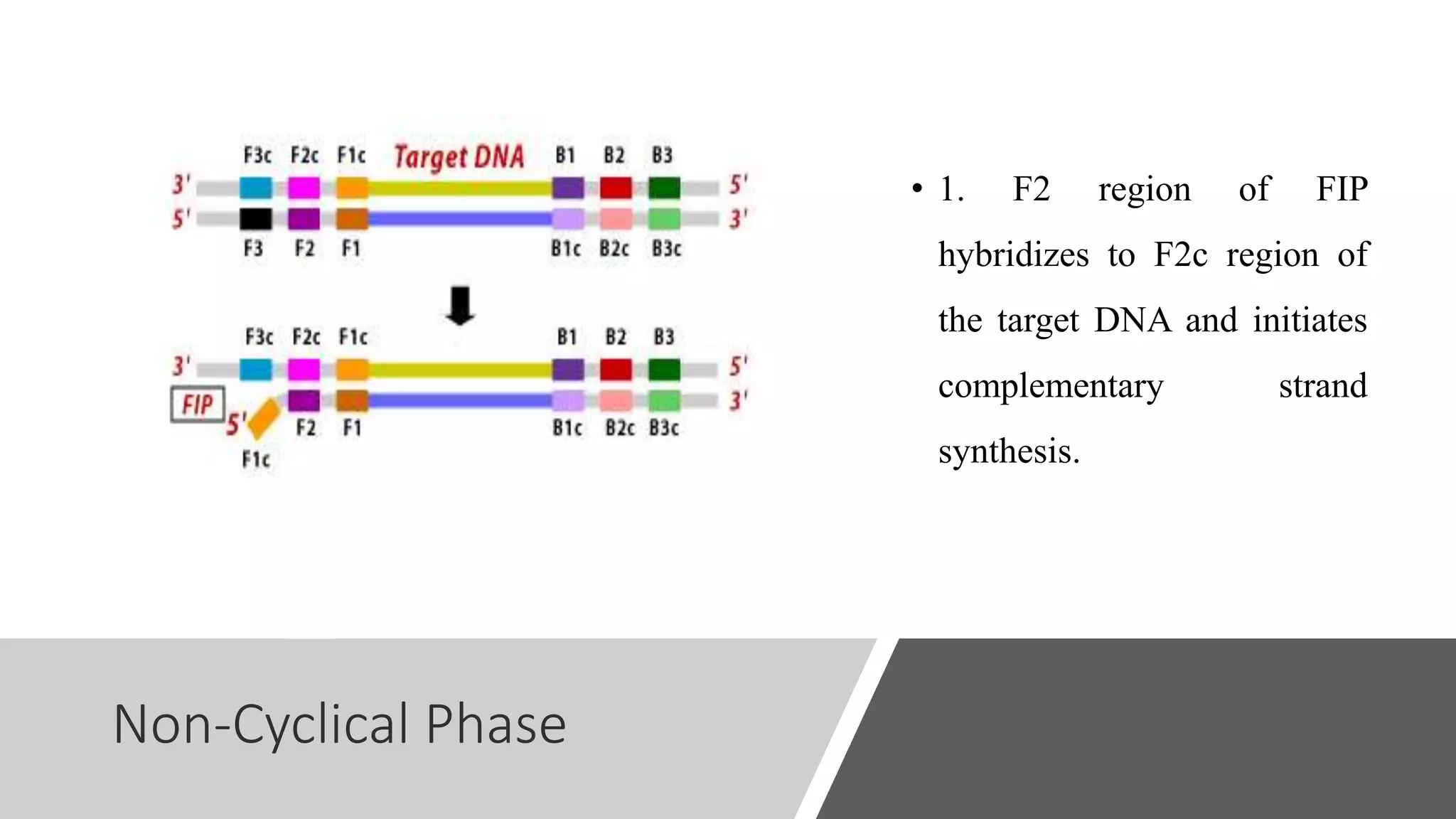
• 1. F2 region of FIP
hybridizes to F2c region of
the target DNA and initiates
complementary strand
synthesis.
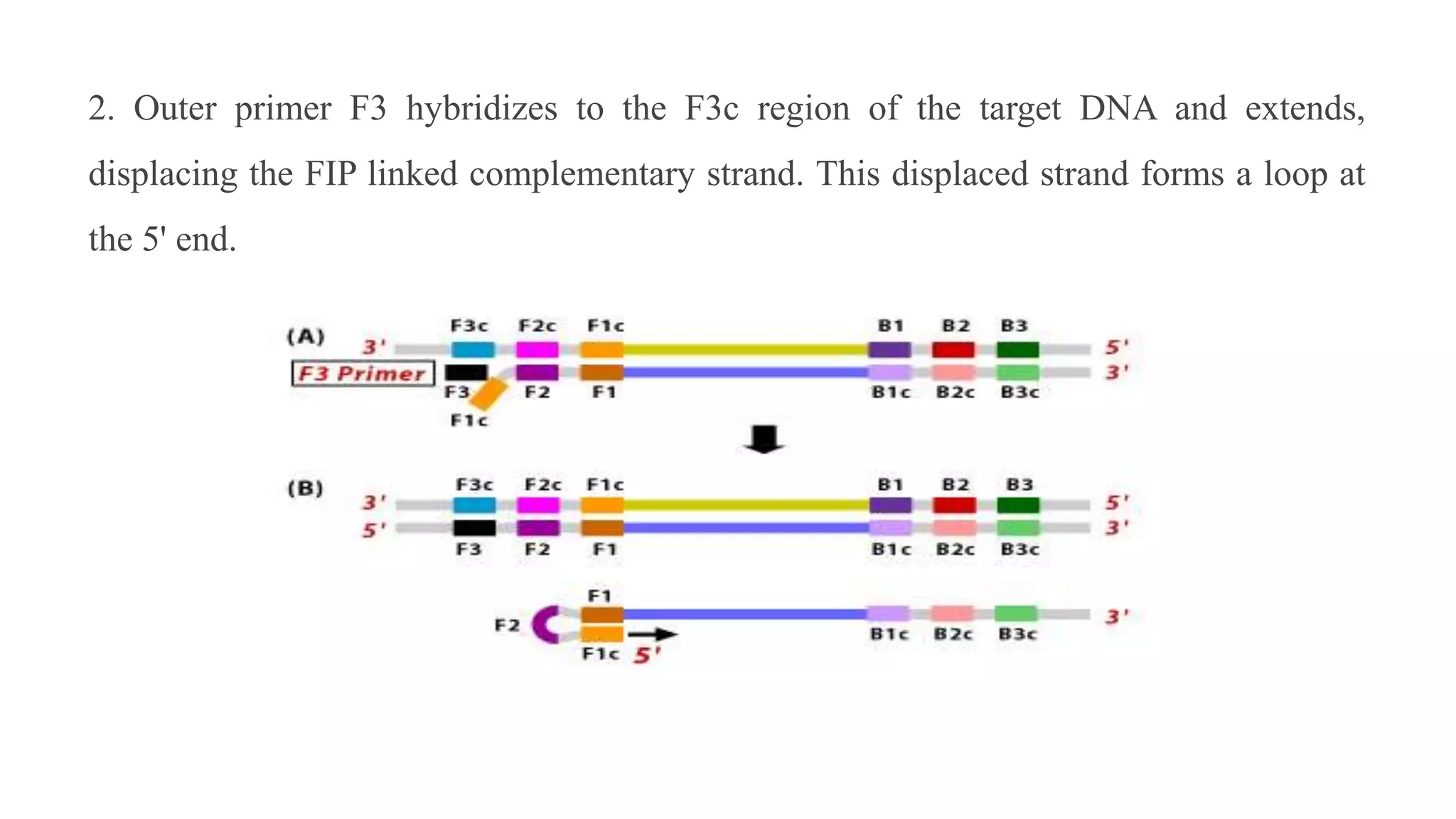
2. Outer primer F3 hybridizes to the F3c region of the target DNA and extends,
displacing the FIP linked complementary strand. This displaced strand forms a loop at
the 5' end.
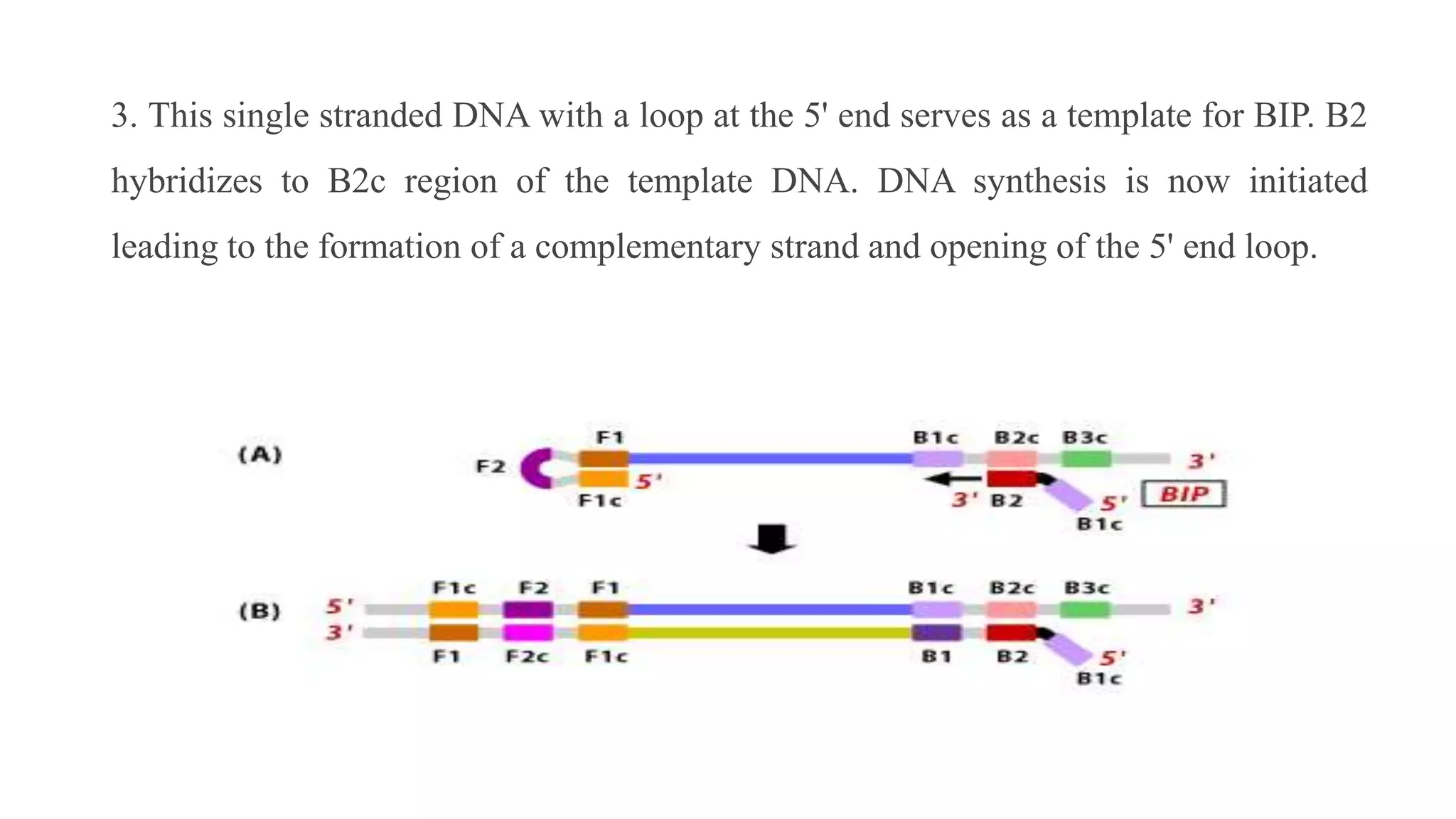
3. This single stranded DNA with a loop at the 5' end serves as a template for BIP. B2
hybridizes to B2c region of the template DNA. DNA synthesis is now initiated
leading to the formation of a complementary strand and opening of the 5' end loop.
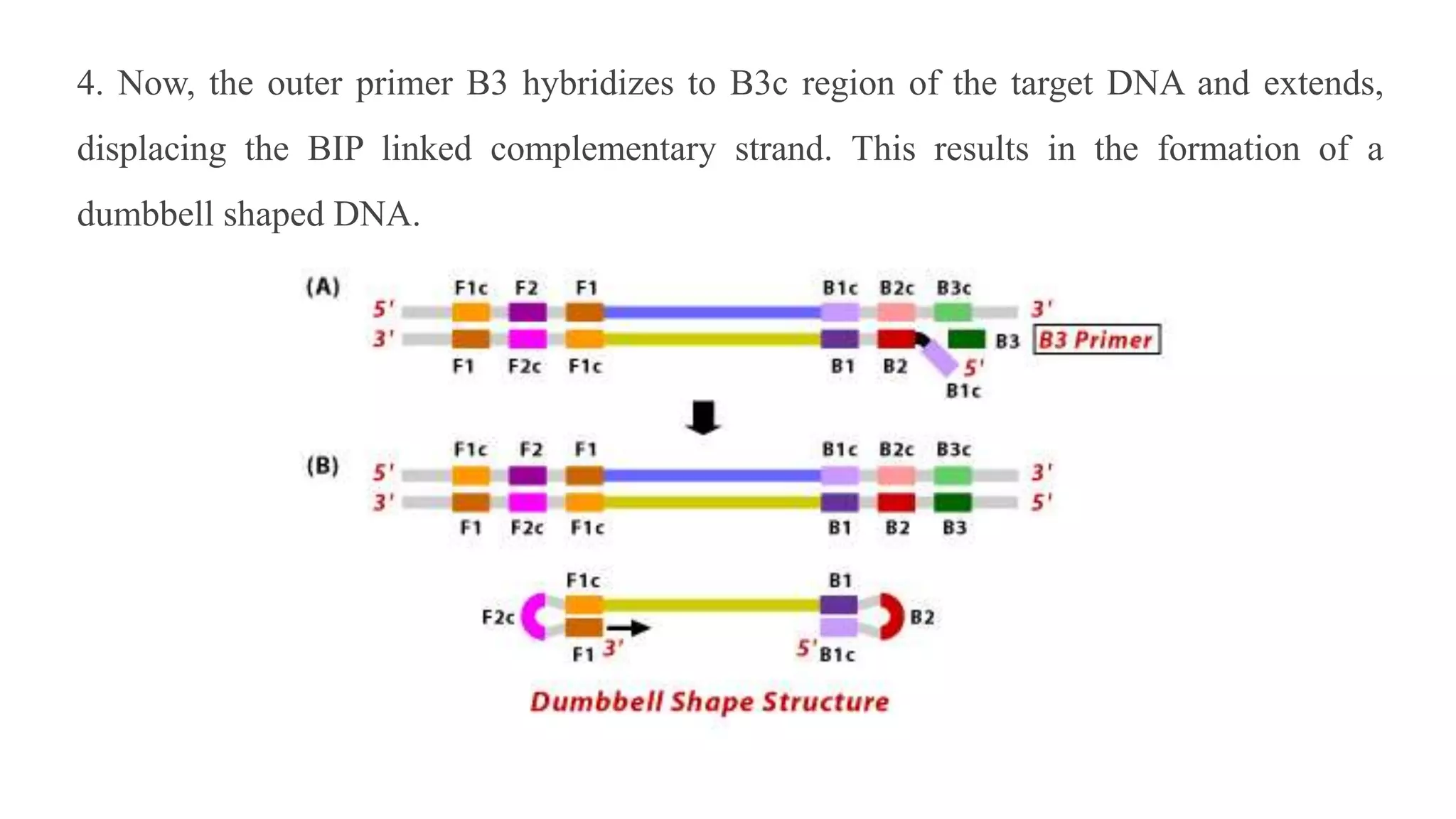
4. Now, the outer primer B3 hybridizes to B3c region of the target DNA and extends,
displacing the BIP linked complementary strand. This results in the formation of a
dumbbell shaped DNA.
Cyclical Phase
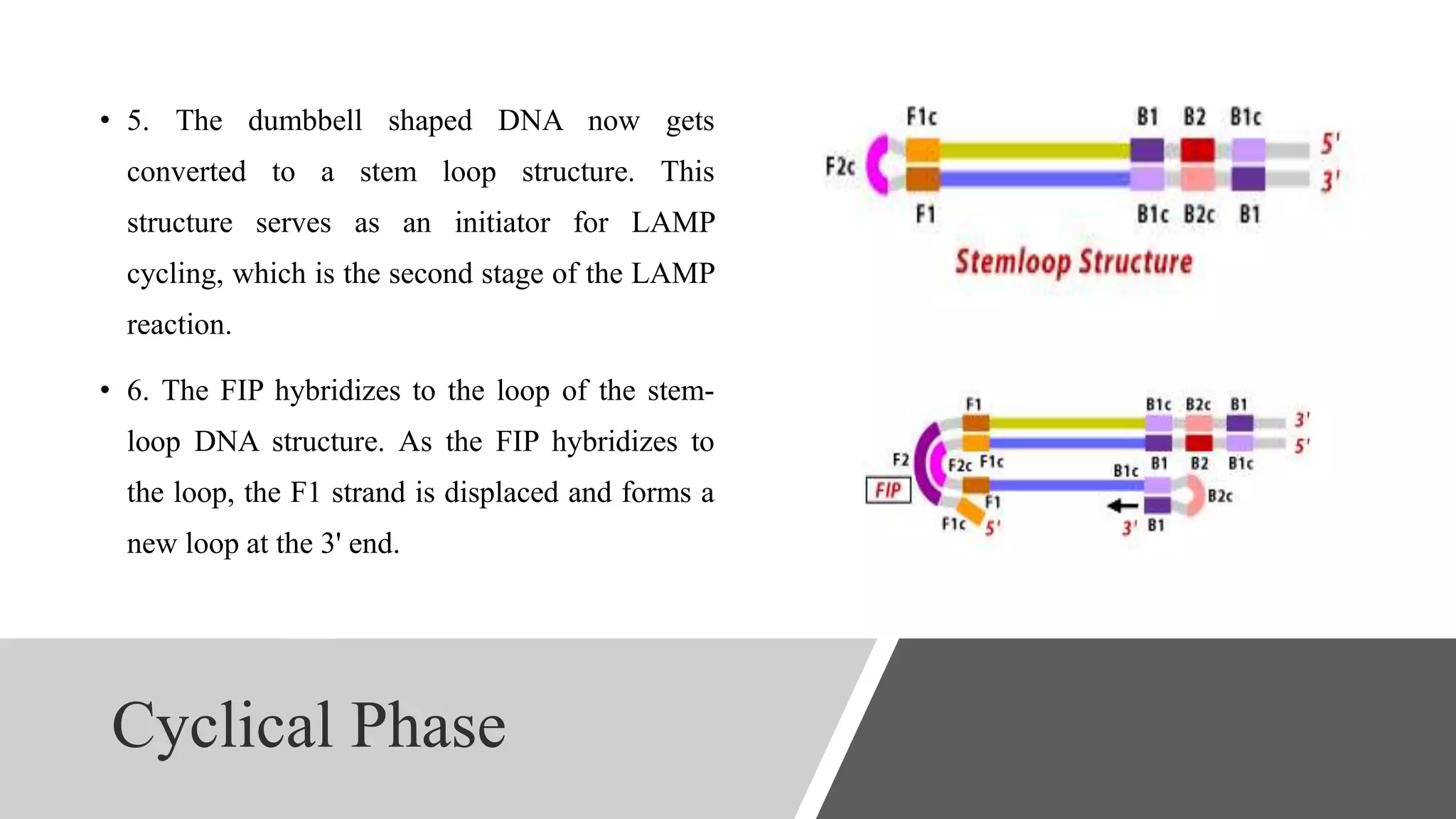
• 5. The dumbbell shaped DNA now gets
converted to a stem loop structure. This
structure serves as an initiator for LAMP
cycling, which is the second stage of the LAMP
reaction.
• 6. The FIP hybridizes to the loop of the stem-
loop DNA structure. As the FIP hybridizes to
the loop, the F1 strand is displaced and forms a
new loop at the 3' end.
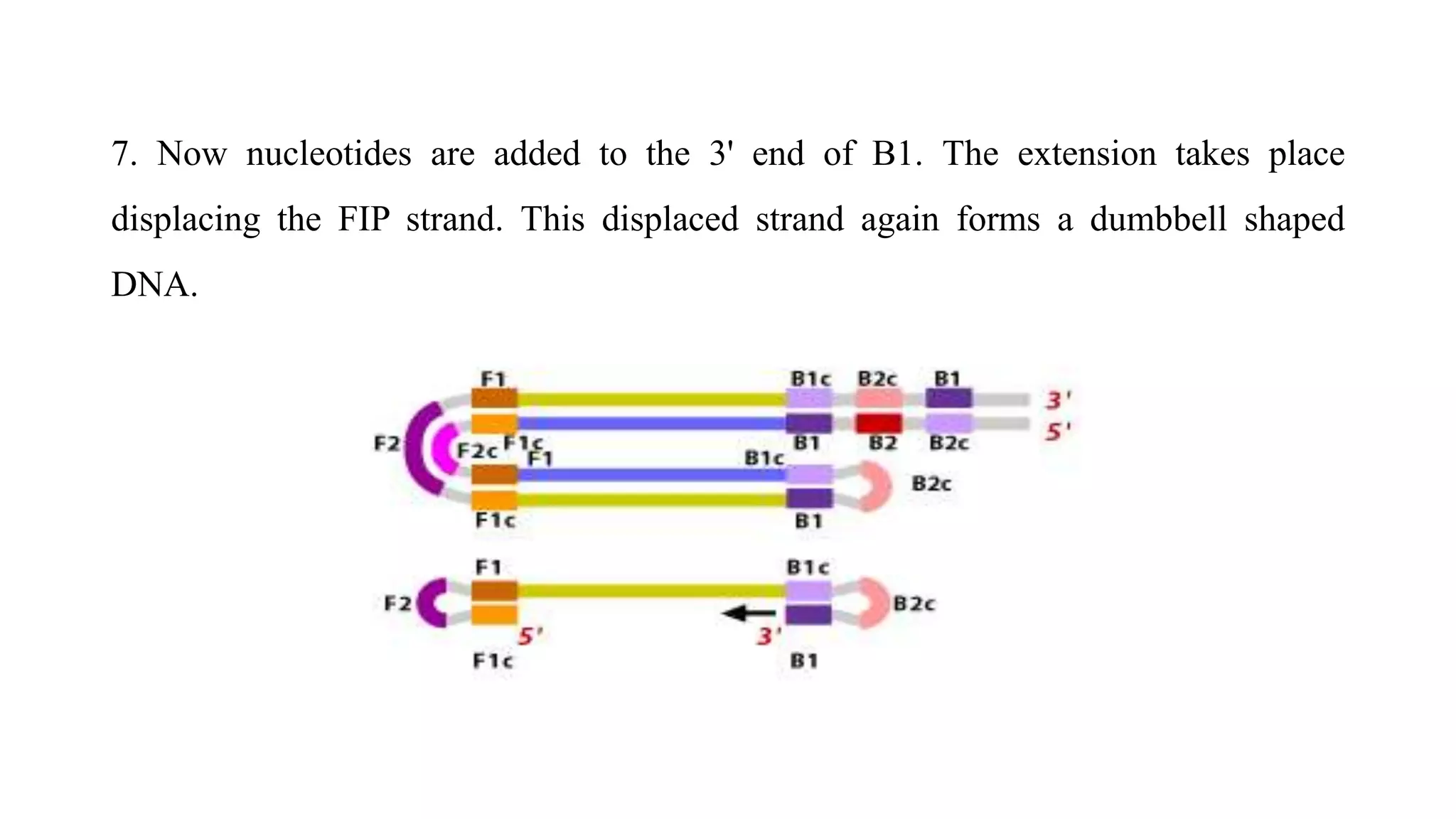
7. Now nucleotides are added to the 3' end of B1. The extension takes place
displacing the FIP strand. This displaced strand again forms a dumbbell shaped
DNA.
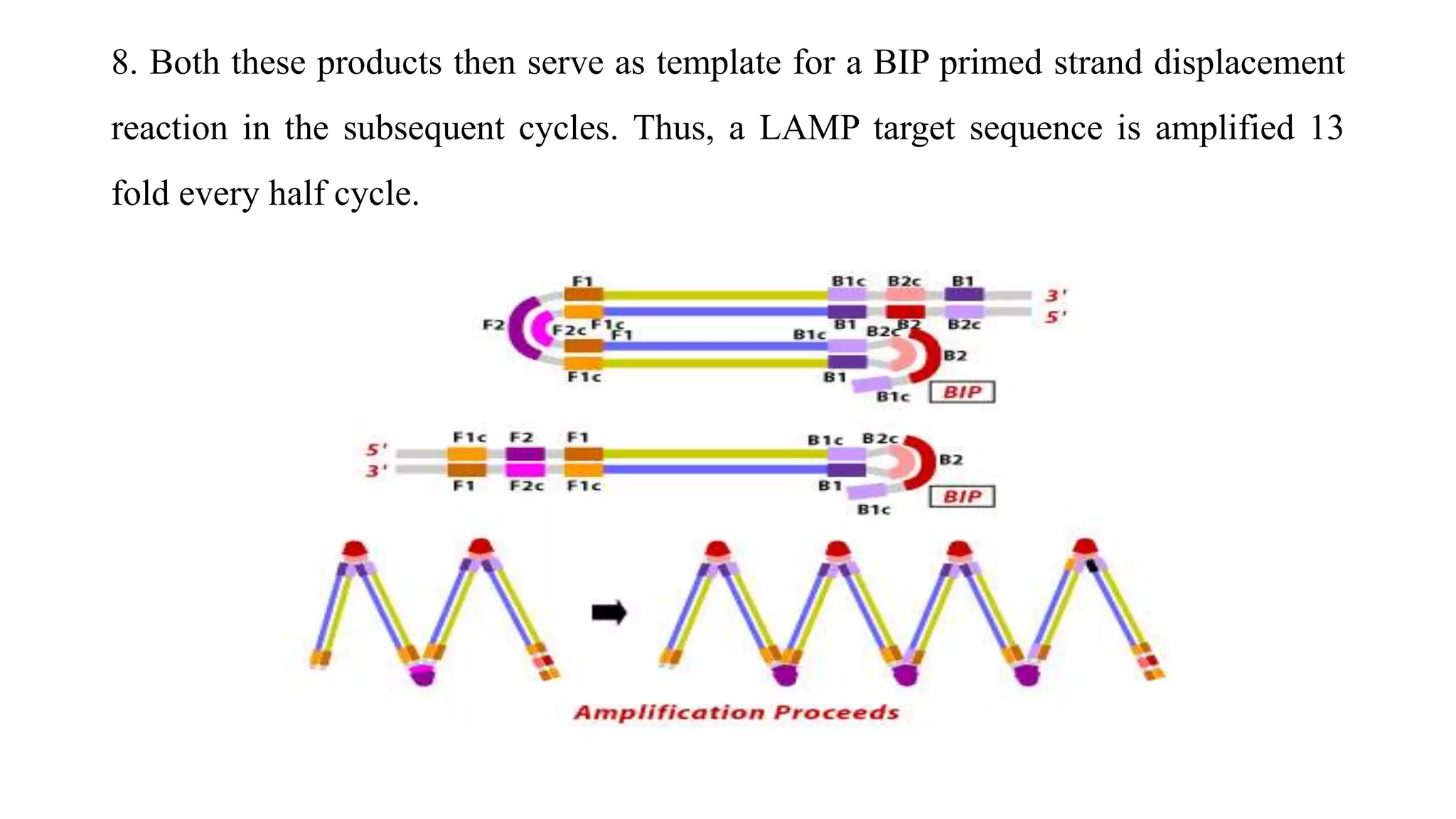
8. Both these products then serve as template for a BIP primed strand displacement
reaction in the subsequent cycles. Thus, a LAMP target sequence is amplified 13
fold every half cycle.
RT-LAMP (Reverse
Transcription-LAMP)
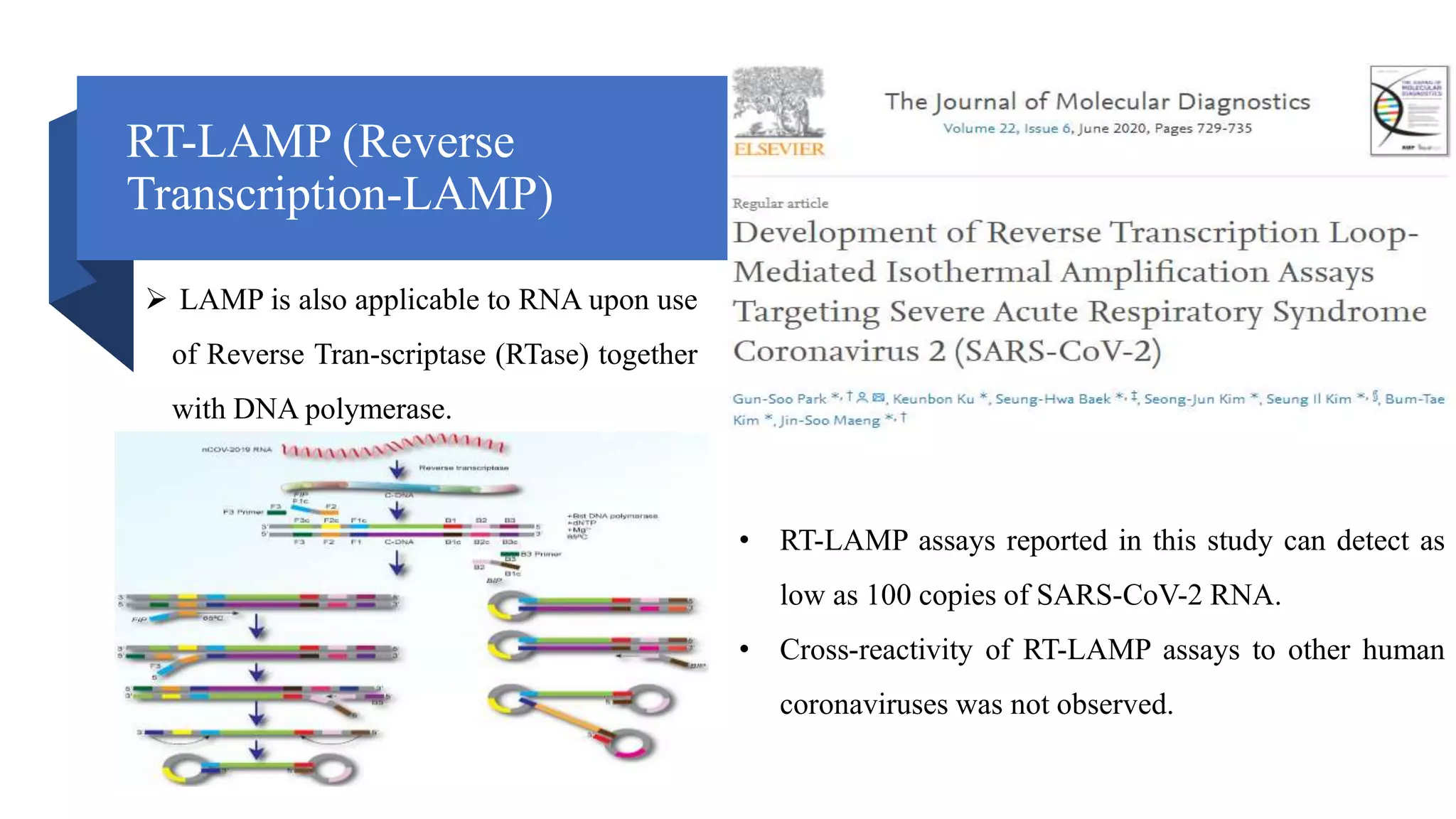
 LAMP is also applicable to RNA upon use
of Reverse Tran-scriptase (RTase) together
with DNA polymerase.
• RT-LAMP assays reported in this study can detect as
low as 100 copies of SARS-CoV-2 RNA.
• Cross-reactivity of RT-LAMP assays to other human
coronaviruses was not observed.
Visualization
Methods of
Amplification
Products
 There are two methods of visualization
result:
• endpoint-based methods (reading
results at the end of the amplification
process)
• real-time-based methods (reading
results during the process)
End Point-Based Methods
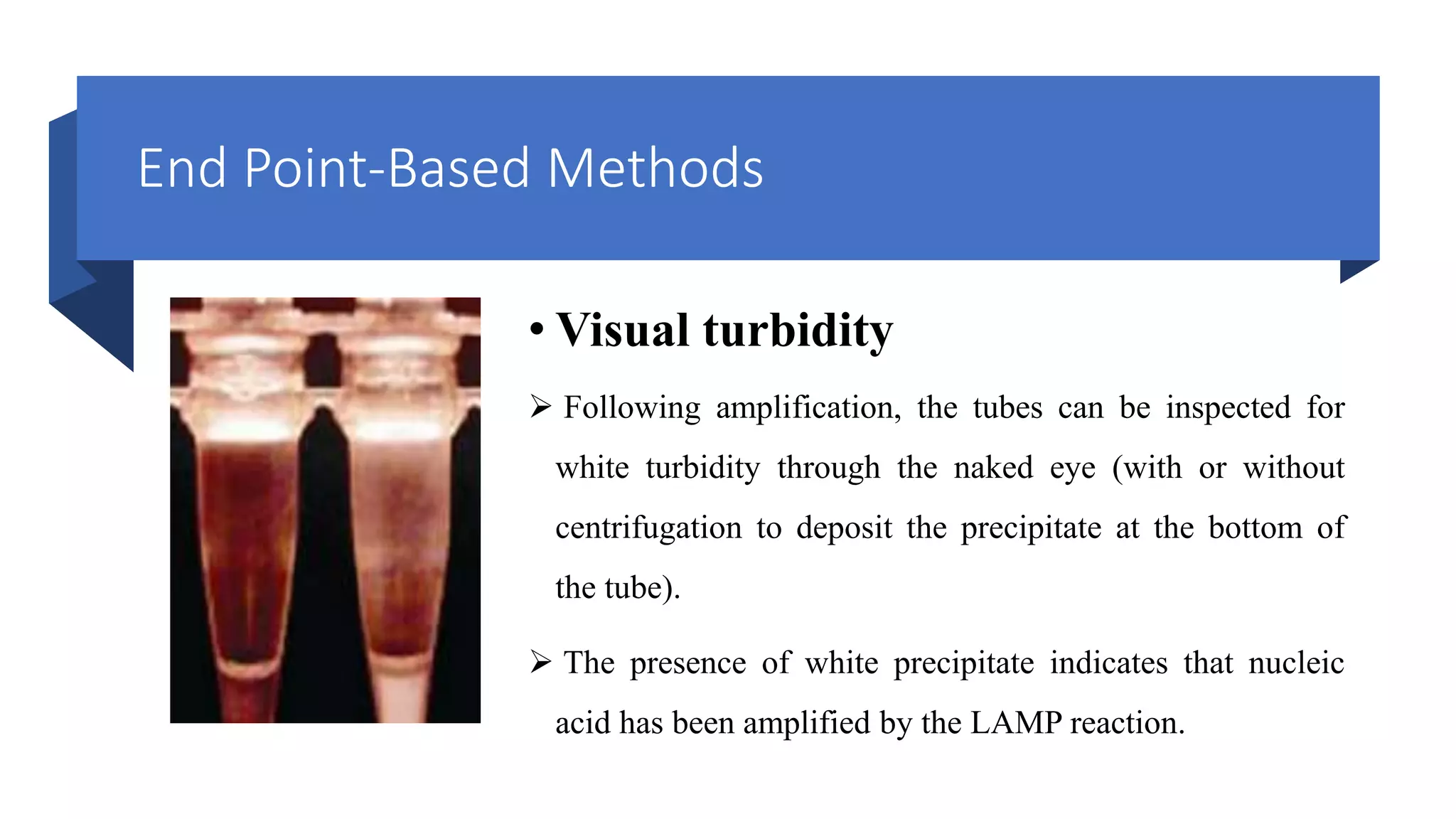
• Visual turbidity
 Following amplification, the tubes can be inspected for
white turbidity through the naked eye (with or without
centrifugation to deposit the precipitate at the bottom of
the tube).
 The presence of white precipitate indicates that nucleic
acid has been amplified by the LAMP reaction.
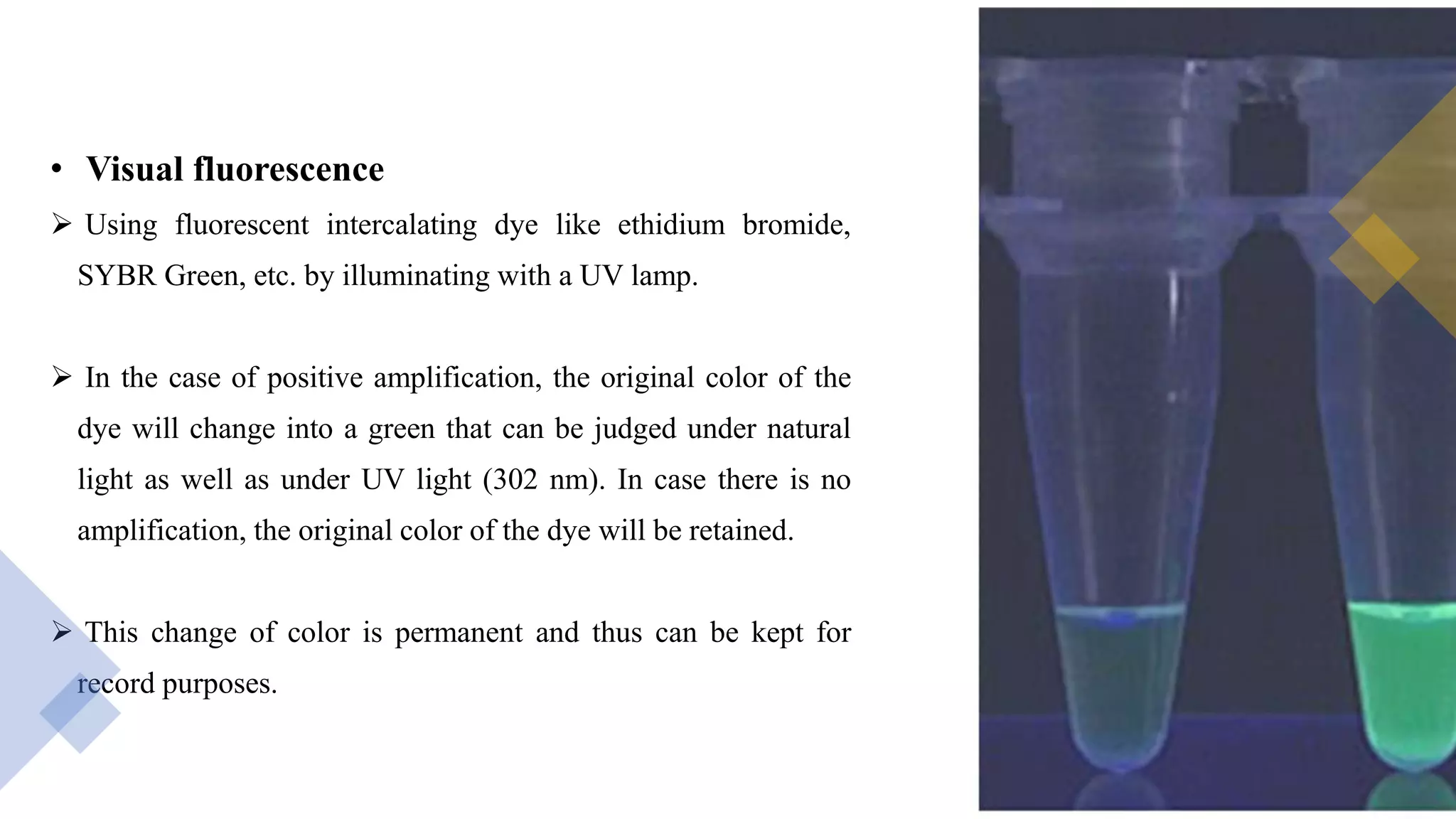
• Visual fluorescence
 Using fluorescent intercalating dye like ethidium bromide,
SYBR Green, etc. by illuminating with a UV lamp.
 In the case of positive amplification, the original color of the
dye will change into a green that can be judged under natural
light as well as under UV light (302 nm). In case there is no
amplification, the original color of the dye will be retained.
 This change of color is permanent and thus can be kept for
record purposes.
• Agarose Gel Electrophoresis
 LAMP products can also be visualized by
agarose gel electrophoresis (2%–3%
agarose gel).
 The result is represented by a ladder-like
pattern on the gel, caused by the formation
of stem-loop DNAs of varying stem length
and cauliflower-like structures with
multiple loops.
Figure. Lane M: 1 kb ladder (Nippon Genetics); lanes 2–
6: positive LAMP reaction samples; lane C+: positive
control; lane C−: negative control. (Dukes et al).
Real-Time-Based Methods
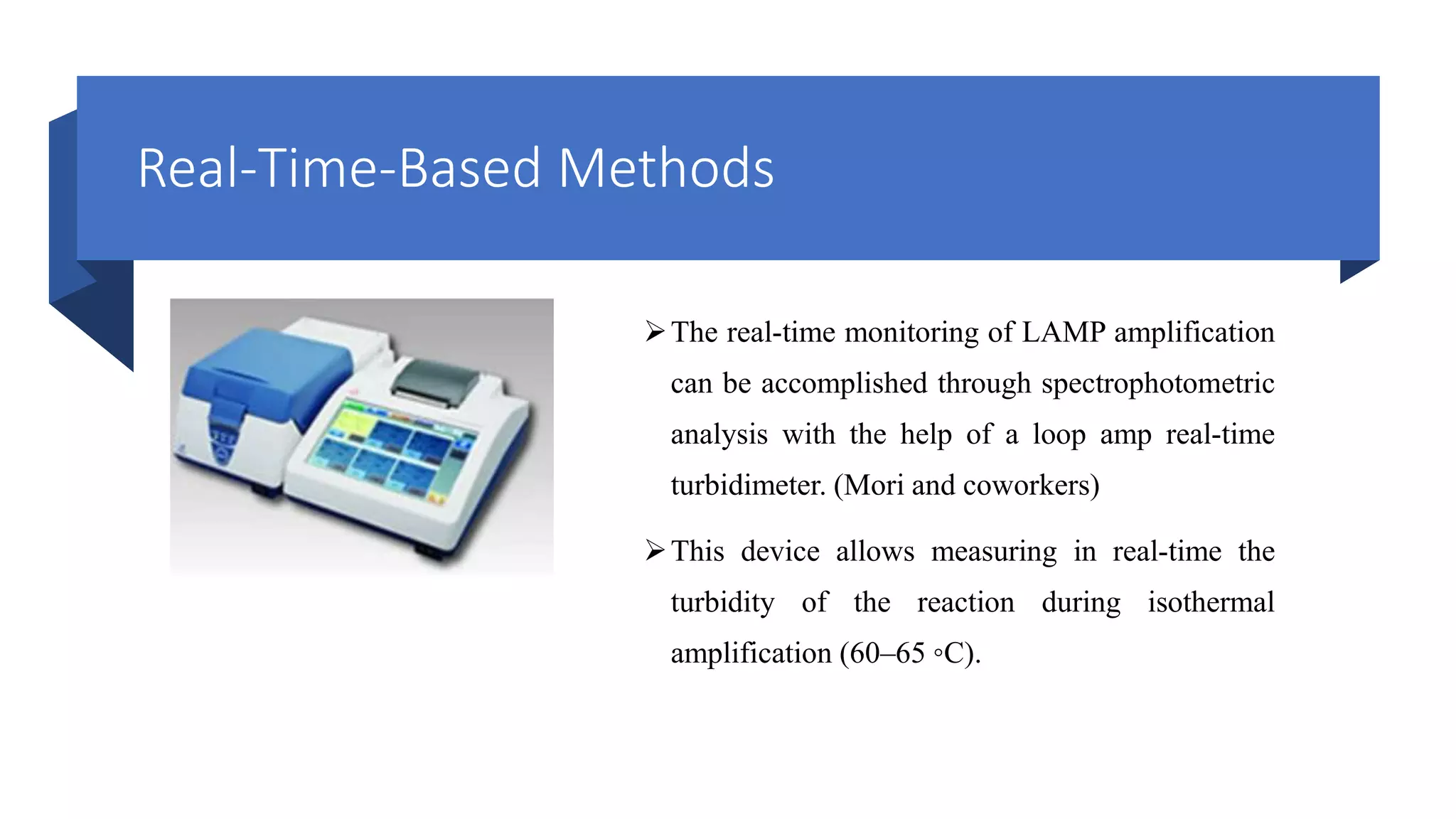
The real-time monitoring of LAMP amplification
can be accomplished through spectrophotometric
analysis with the help of a loop amp real-time
turbidimeter. (Mori and coworkers)
This device allows measuring in real-time the
turbidity of the reaction during isothermal
amplification (60–65 ◦C).
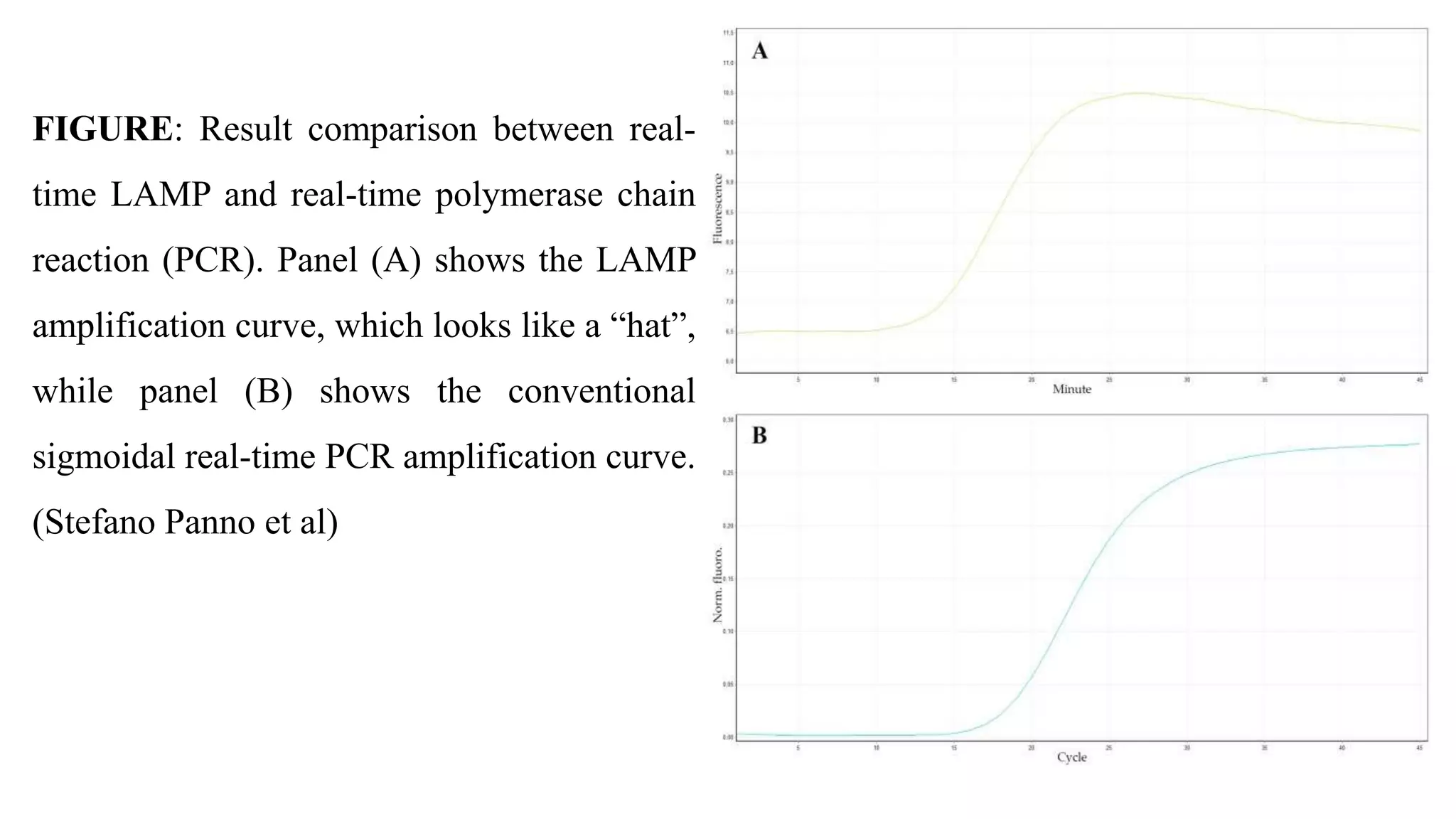
FIGURE: Result comparison between real-
time LAMP and real-time polymerase chain
reaction (PCR). Panel (A) shows the LAMP
amplification curve, which looks like a “hat”,
while panel (B) shows the conventional
sigmoidal real-time PCR amplification curve.
(Stefano Panno et al)
Comparison of LAMP
with Techniques used in
Lab
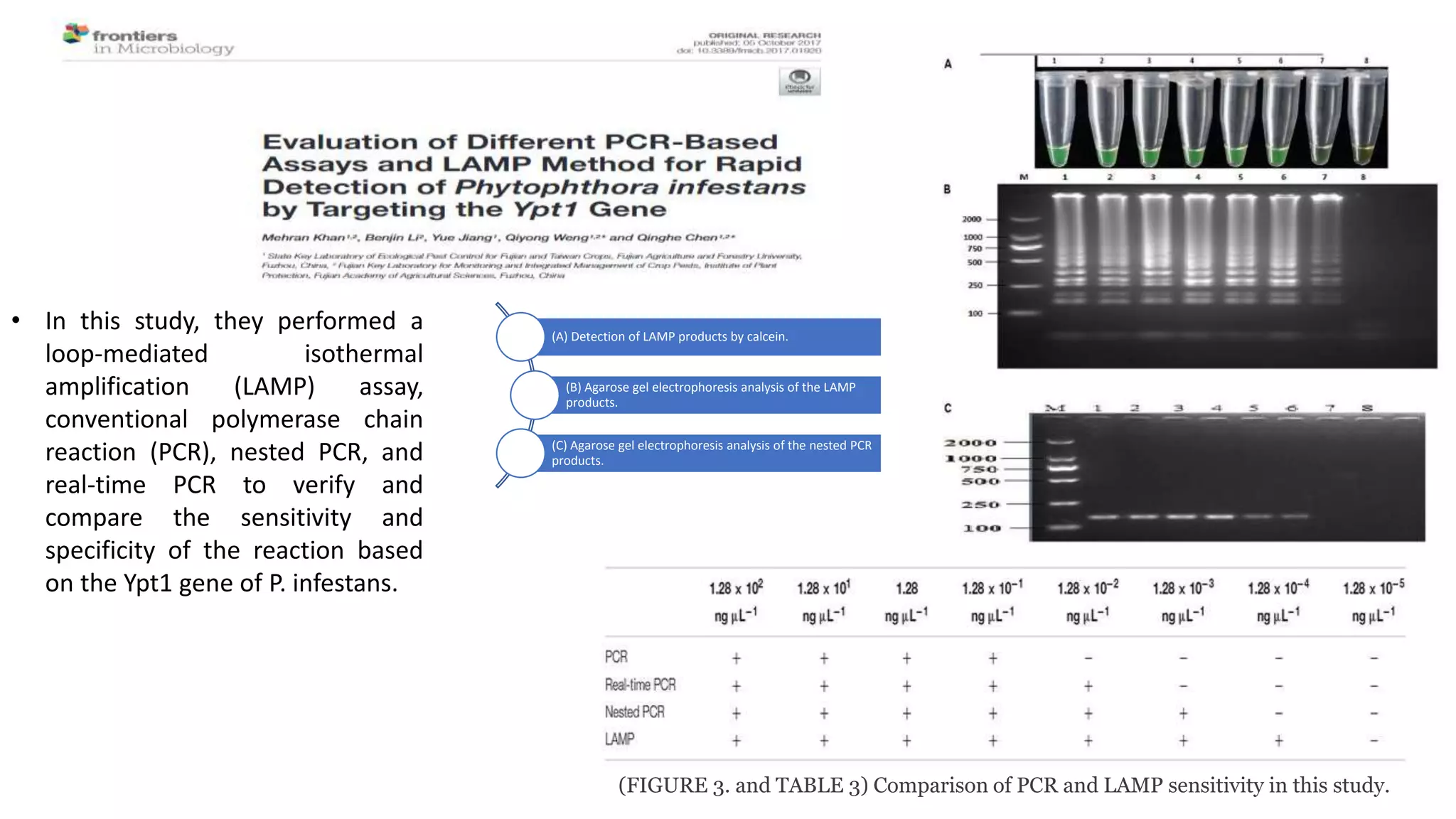
• In this study, they performed a
loop-mediated isothermal
amplification (LAMP) assay,
conventional polymerase chain
reaction (PCR), nested PCR, and
real-time PCR to verify and
compare the sensitivity and
specificity of the reaction based
on the Ypt1 gene of P. infestans.
(FIGURE 3. and TABLE 3) Comparison of PCR and LAMP sensitivity in this study.
(A) Detection of LAMP products by calcein.
(B) Agarose gel electrophoresis analysis of the LAMP
products.
(C) Agarose gel electrophoresis analysis of the nested PCR
products.
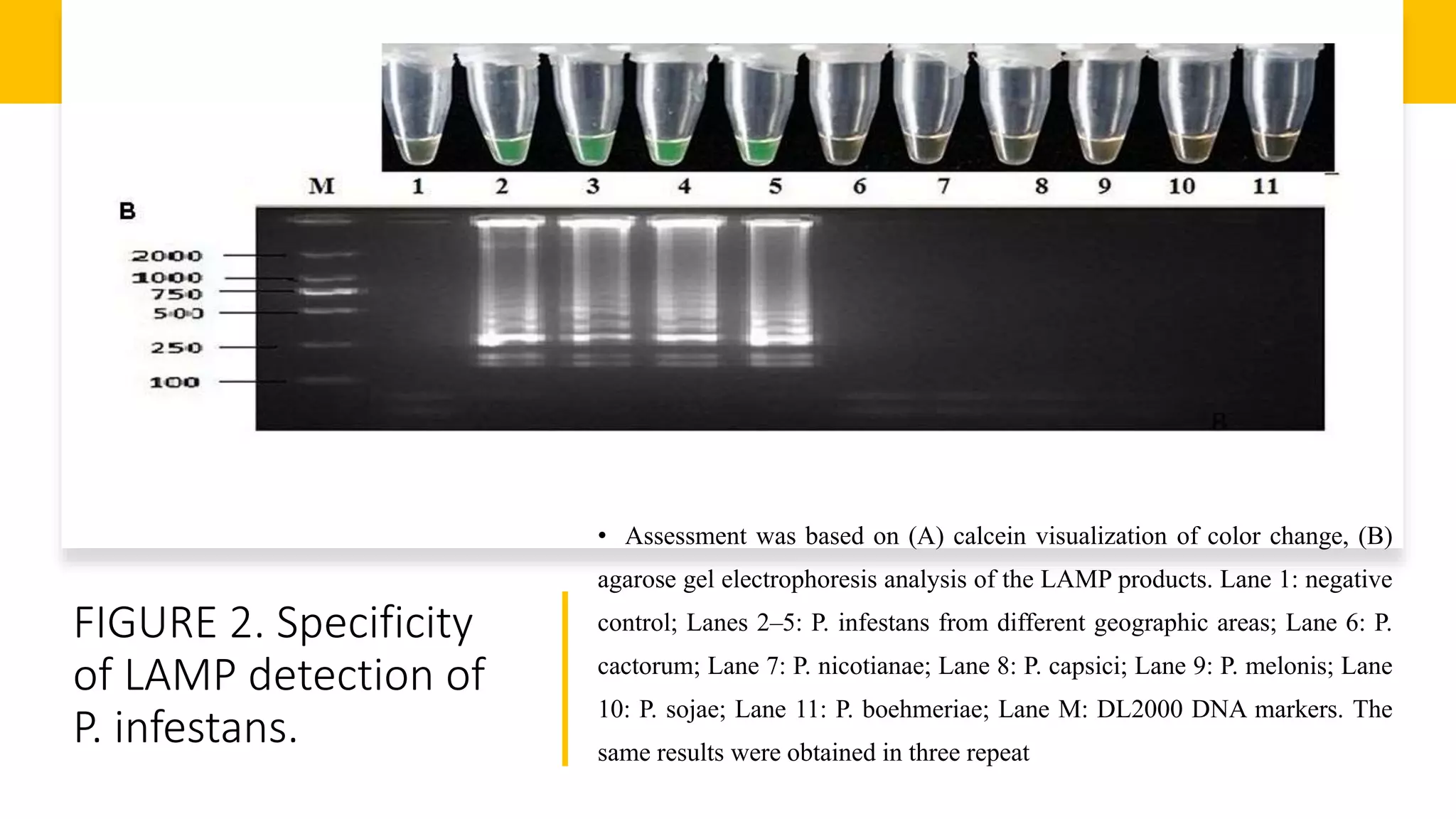
FIGURE 2. Specificity
of LAMP detection of
P. infestans.
• Assessment was based on (A) calcein visualization of color change, (B)
agarose gel electrophoresis analysis of the LAMP products. Lane 1: negative
control; Lanes 2–5: P. infestans from different geographic areas; Lane 6: P.
cactorum; Lane 7: P. nicotianae; Lane 8: P. capsici; Lane 9: P. melonis; Lane
10: P. sojae; Lane 11: P. boehmeriae; Lane M: DL2000 DNA markers. The
same results were obtained in three repeat
Advantages of
LAMP
• As suggested by WHO, the criteria for an
ideal diagnostic test must comprise
sensitivity, specificity, low‐cost, simplicity,
rapidity, adaptability to all kinds of
climatic changes, and the availability of
instruments (Mabey et al. 2004).
• Among the amplification techniques,
LAMP stands out as an effective diagnostic
test. (Notomi et al. 2015)
Advantages
FASTNESS (30 MIN
_ 1H)
WORKS AT A
CONSTANT
TEMPERATURE
SIMPLICITY IN
PERFORMANCE
(WATER BATH OR
HEATING BLOCK)
SIMPLICITY IN THE
METHOD OF
ANALYZING THE
RESULTS
advantages
RT-LAMP (HIGH EFFICIENCY
FOR RNA)
ITS HIGH SPECIFICITY (KANEKO
ET AL. 2007; LIN ET AL. 2012)
STABLE AGAINST SOME PCR
INHIBITORS (SUCH AS BLOOD).
Limitations of
LAMP
 The visual determination of the LAMP reaction
is subjective.
 Possibility of primer–primer hybridizations
(false‐positive results (Watts et al. 2014)).
 The multiplexing approaches of LAMP is still
considered less successful than PCR (Dhama et
al. 2014).
 The identification of a target by the size of the
band on a gel is not possible with LAMP
(Wastling et al. 2010).
CONCLUSION
LAMP is a highly sensitive and specific DNA/RNA amplification
technique.
LAMP's advantages such as cost-effectiveness, simplicity, sensitivity,
and specificity make it a preferable diagnostic method.
LAMP has been increasingly used and adopted as an alternative
method to those based on PCR.
LAMP was further developed over the years which involved the
combination of this technique with other molecular approaches,
such as reverse transcription and multiplex amplification for the
detection of infectious diseases caused by micro-organisms.
Characteristics of Loop Mediated Isothermal Amplification Technique

Characteristics of Loop Mediated Isothermal Amplification Technique

  • 1.
    BY: SAEED S.ALSMANI M.Sc. Biotechnology B.Sc. Microbiology
  • 2.
    PRESENTATION FLOW Introduction Design of LAMP primers Principleof LAMP RT-LAMP (Reverse transcription- LAMP) Visualization Methods of Amplification Products Comparison of LAMP with Techniques used in Lab Advantages and disadvantages of LAMP
  • 3.
    INTRODUCTION  It isa single tube technique that amplifies few copies of DNA into billion copies within an hour.  LAMP methodology was founded on the attempt to overcome some drawbacks of the conventional PCR. Thus, the LAMP has been increasingly used and adopted as an alternative method.  Designed and developed by Notomi et al to amplify a specific DNA region of the hepatitis B virus (HBV).
  • 4.
    INTRODUCTION  uses fourto six primers specially designed to target six to eight regions in a gene of interest.  LAMP polymerase enzyme "Bst DNA polymerase" with strand displacement activity.  Fluorescent DNA dye (SYBR Green, Picogreen and a Calcein) can be added to ease the visualization.  Other components like (dNTP, a buffer solution, Magnesium Sulphate and betaine ).
  • 5.
    Design of LAMPprimers  The four primers used are as follows: • 1. Forward Inner Primer (FIP): The FIP consists of a F2 region at the 3'end and a F1c region at the 5'end. • 2. Forward Outer Primer (FOP): The FOP (also called F3 Primer) consists of a F3 region. This primer is shorter in length and lower in concentration than FIP.
  • 6.
    Design of LAMPprimers • 3. Backward Inner Primer (BIP): The BIP consists of a B2 region at the 3'end and a B1c region at the 5'end. • 4. Backward Outer Primer (BOP): The BOP (also called B3 Primer) consists of a B3 region.
  • 7.
    LAMP Acceleration • Forwardloop primer (FLP) and backward loop primer (BLP) are accelerating the amplification reaction. • The FLP and BLP primers were composed of the sequences that are complementary to the sequence between F1&F2 and B1&B2 regions, respectively.
  • 8.
    Principle of LAMP Non- Cyclical phase Cyclical phase The principle of LAMP involves two basic steps: • Loop primers might be involved in the cyclical step.
  • 9.
    Non-Cyclical Phase • 1.F2 region of FIP hybridizes to F2c region of the target DNA and initiates complementary strand synthesis.
  • 10.
    2. Outer primerF3 hybridizes to the F3c region of the target DNA and extends, displacing the FIP linked complementary strand. This displaced strand forms a loop at the 5' end.
  • 11.
    3. This singlestranded DNA with a loop at the 5' end serves as a template for BIP. B2 hybridizes to B2c region of the template DNA. DNA synthesis is now initiated leading to the formation of a complementary strand and opening of the 5' end loop.
  • 12.
    4. Now, theouter primer B3 hybridizes to B3c region of the target DNA and extends, displacing the BIP linked complementary strand. This results in the formation of a dumbbell shaped DNA.
  • 13.
    Cyclical Phase • 5.The dumbbell shaped DNA now gets converted to a stem loop structure. This structure serves as an initiator for LAMP cycling, which is the second stage of the LAMP reaction. • 6. The FIP hybridizes to the loop of the stem- loop DNA structure. As the FIP hybridizes to the loop, the F1 strand is displaced and forms a new loop at the 3' end.
  • 14.
    7. Now nucleotidesare added to the 3' end of B1. The extension takes place displacing the FIP strand. This displaced strand again forms a dumbbell shaped DNA.
  • 15.
    8. Both theseproducts then serve as template for a BIP primed strand displacement reaction in the subsequent cycles. Thus, a LAMP target sequence is amplified 13 fold every half cycle.
  • 16.
    RT-LAMP (Reverse Transcription-LAMP)  LAMPis also applicable to RNA upon use of Reverse Tran-scriptase (RTase) together with DNA polymerase. • RT-LAMP assays reported in this study can detect as low as 100 copies of SARS-CoV-2 RNA. • Cross-reactivity of RT-LAMP assays to other human coronaviruses was not observed.
  • 17.
    Visualization Methods of Amplification Products  Thereare two methods of visualization result: • endpoint-based methods (reading results at the end of the amplification process) • real-time-based methods (reading results during the process)
  • 18.
    End Point-Based Methods •Visual turbidity  Following amplification, the tubes can be inspected for white turbidity through the naked eye (with or without centrifugation to deposit the precipitate at the bottom of the tube).  The presence of white precipitate indicates that nucleic acid has been amplified by the LAMP reaction.
  • 19.
    • Visual fluorescence Using fluorescent intercalating dye like ethidium bromide, SYBR Green, etc. by illuminating with a UV lamp.  In the case of positive amplification, the original color of the dye will change into a green that can be judged under natural light as well as under UV light (302 nm). In case there is no amplification, the original color of the dye will be retained.  This change of color is permanent and thus can be kept for record purposes.
  • 20.
    • Agarose GelElectrophoresis  LAMP products can also be visualized by agarose gel electrophoresis (2%–3% agarose gel).  The result is represented by a ladder-like pattern on the gel, caused by the formation of stem-loop DNAs of varying stem length and cauliflower-like structures with multiple loops. Figure. Lane M: 1 kb ladder (Nippon Genetics); lanes 2– 6: positive LAMP reaction samples; lane C+: positive control; lane C−: negative control. (Dukes et al).
  • 21.
    Real-Time-Based Methods The real-timemonitoring of LAMP amplification can be accomplished through spectrophotometric analysis with the help of a loop amp real-time turbidimeter. (Mori and coworkers) This device allows measuring in real-time the turbidity of the reaction during isothermal amplification (60–65 ◦C).
  • 22.
    FIGURE: Result comparisonbetween real- time LAMP and real-time polymerase chain reaction (PCR). Panel (A) shows the LAMP amplification curve, which looks like a “hat”, while panel (B) shows the conventional sigmoidal real-time PCR amplification curve. (Stefano Panno et al)
  • 23.
    Comparison of LAMP withTechniques used in Lab
  • 24.
    • In thisstudy, they performed a loop-mediated isothermal amplification (LAMP) assay, conventional polymerase chain reaction (PCR), nested PCR, and real-time PCR to verify and compare the sensitivity and specificity of the reaction based on the Ypt1 gene of P. infestans. (FIGURE 3. and TABLE 3) Comparison of PCR and LAMP sensitivity in this study. (A) Detection of LAMP products by calcein. (B) Agarose gel electrophoresis analysis of the LAMP products. (C) Agarose gel electrophoresis analysis of the nested PCR products.
  • 25.
    FIGURE 2. Specificity ofLAMP detection of P. infestans. • Assessment was based on (A) calcein visualization of color change, (B) agarose gel electrophoresis analysis of the LAMP products. Lane 1: negative control; Lanes 2–5: P. infestans from different geographic areas; Lane 6: P. cactorum; Lane 7: P. nicotianae; Lane 8: P. capsici; Lane 9: P. melonis; Lane 10: P. sojae; Lane 11: P. boehmeriae; Lane M: DL2000 DNA markers. The same results were obtained in three repeat
  • 26.
    Advantages of LAMP • Assuggested by WHO, the criteria for an ideal diagnostic test must comprise sensitivity, specificity, low‐cost, simplicity, rapidity, adaptability to all kinds of climatic changes, and the availability of instruments (Mabey et al. 2004). • Among the amplification techniques, LAMP stands out as an effective diagnostic test. (Notomi et al. 2015)
  • 27.
    Advantages FASTNESS (30 MIN _1H) WORKS AT A CONSTANT TEMPERATURE SIMPLICITY IN PERFORMANCE (WATER BATH OR HEATING BLOCK) SIMPLICITY IN THE METHOD OF ANALYZING THE RESULTS
  • 28.
    advantages RT-LAMP (HIGH EFFICIENCY FORRNA) ITS HIGH SPECIFICITY (KANEKO ET AL. 2007; LIN ET AL. 2012) STABLE AGAINST SOME PCR INHIBITORS (SUCH AS BLOOD).
  • 29.
    Limitations of LAMP  Thevisual determination of the LAMP reaction is subjective.  Possibility of primer–primer hybridizations (false‐positive results (Watts et al. 2014)).  The multiplexing approaches of LAMP is still considered less successful than PCR (Dhama et al. 2014).  The identification of a target by the size of the band on a gel is not possible with LAMP (Wastling et al. 2010).
  • 30.
    CONCLUSION LAMP is ahighly sensitive and specific DNA/RNA amplification technique. LAMP's advantages such as cost-effectiveness, simplicity, sensitivity, and specificity make it a preferable diagnostic method. LAMP has been increasingly used and adopted as an alternative method to those based on PCR. LAMP was further developed over the years which involved the combination of this technique with other molecular approaches, such as reverse transcription and multiplex amplification for the detection of infectious diseases caused by micro-organisms.