 Long-Distance Communication
 Sending signals over long distances
 Types of Modulation
 Modems
 Other types of modems
 Leased serial data circuits
 Optical, radio and dialup modems
 Carrier frequencies and multiplexing
 Time division multiplexing
• Encoding used by RS-232 cannot work in all situations
 Over long distances
 Using existing systems like telephone
• Different encoding strategies needed
• Line coding
• Modulation
• Send an oscillating carrier wave and then modulate it in some
way
• Technique originated with radio and TV (stations use different
carrier frequencies)
• Transmitter generates carrier and modulates according to
data, receiver discards carrier
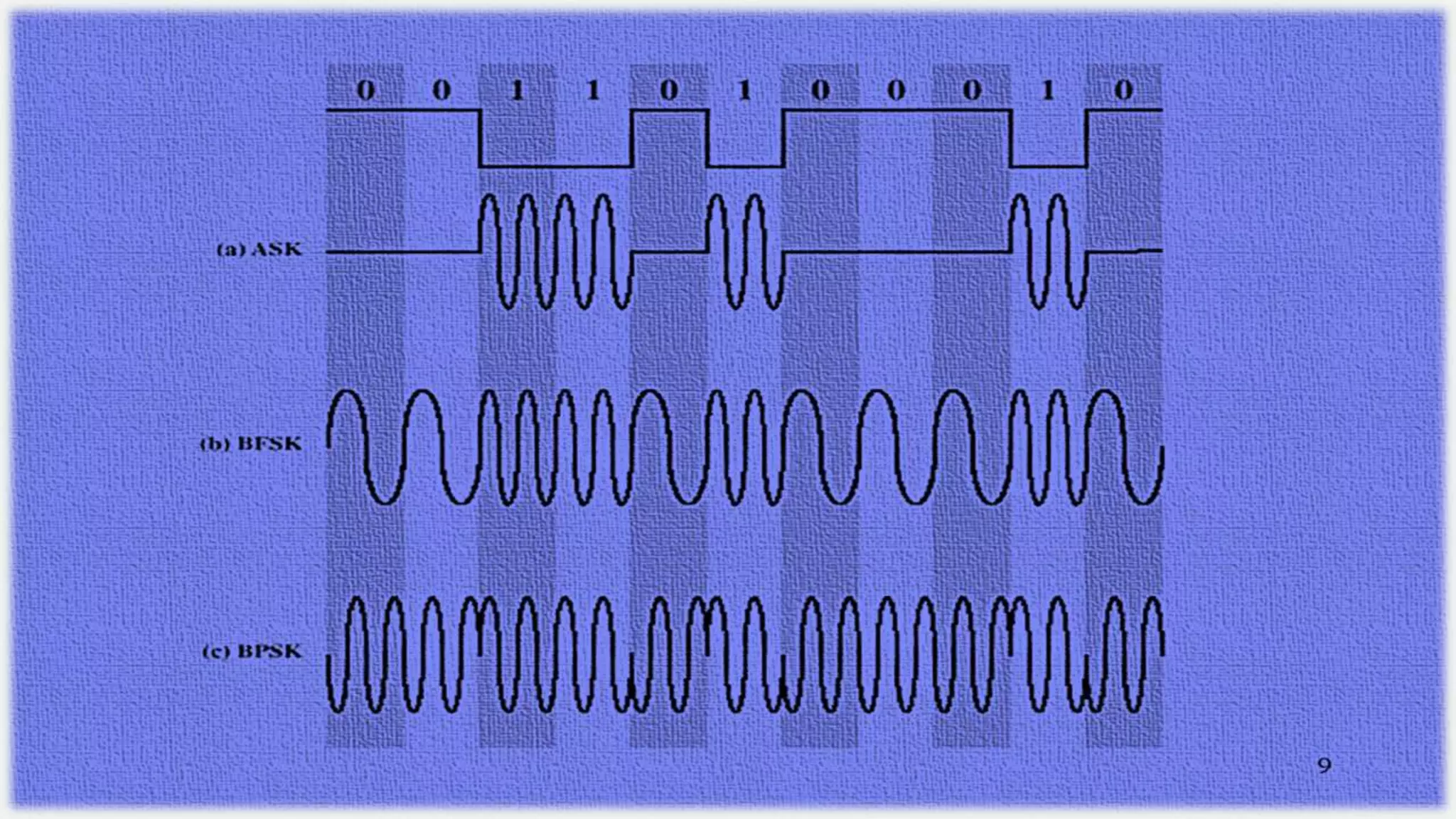
• Two approaches from radio are frequency modulation (FM) and
amplitude modulation (AM)
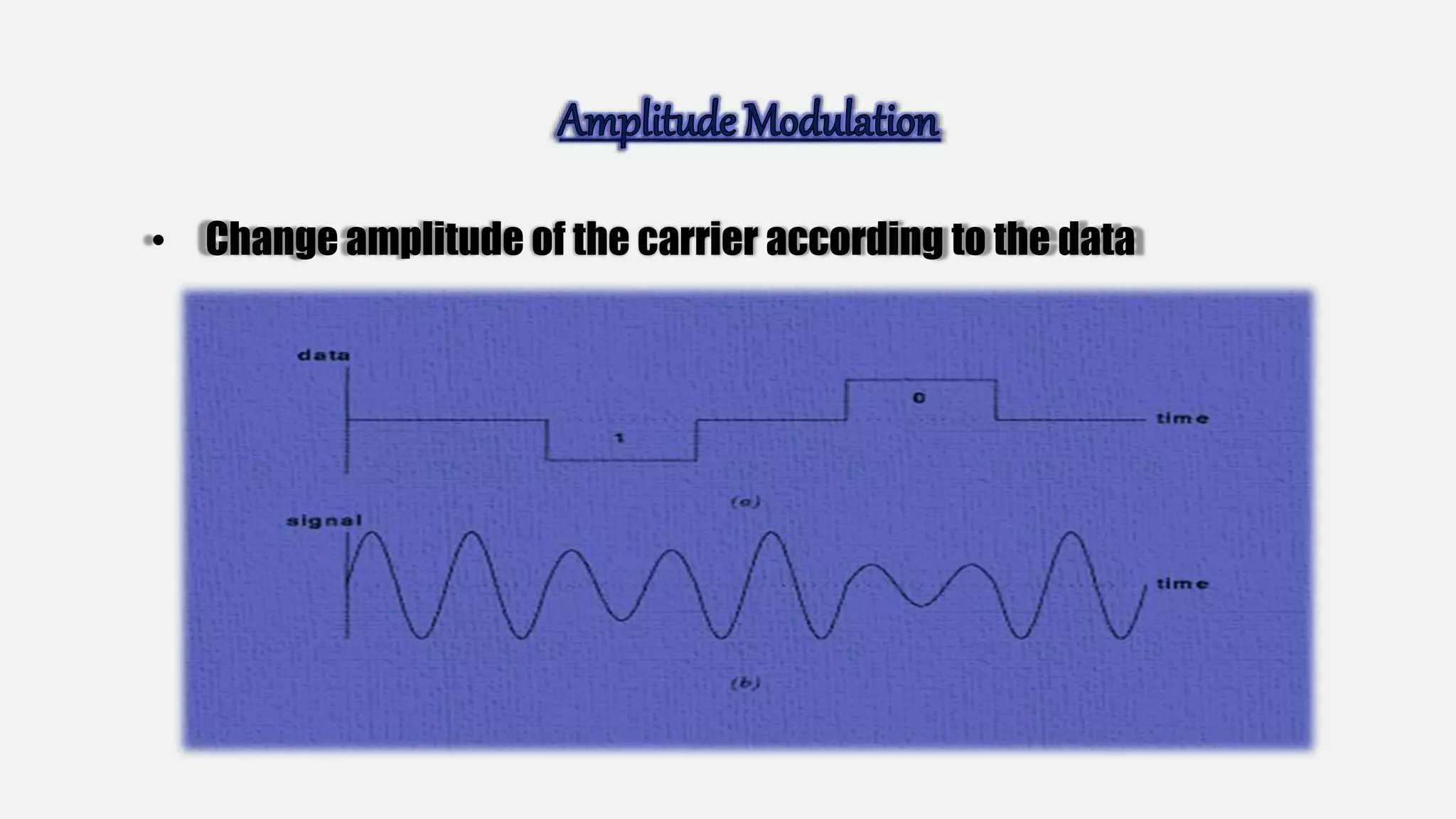
• Amplitude modulation – strength, or amplitude of carrier is
modulated to encode data
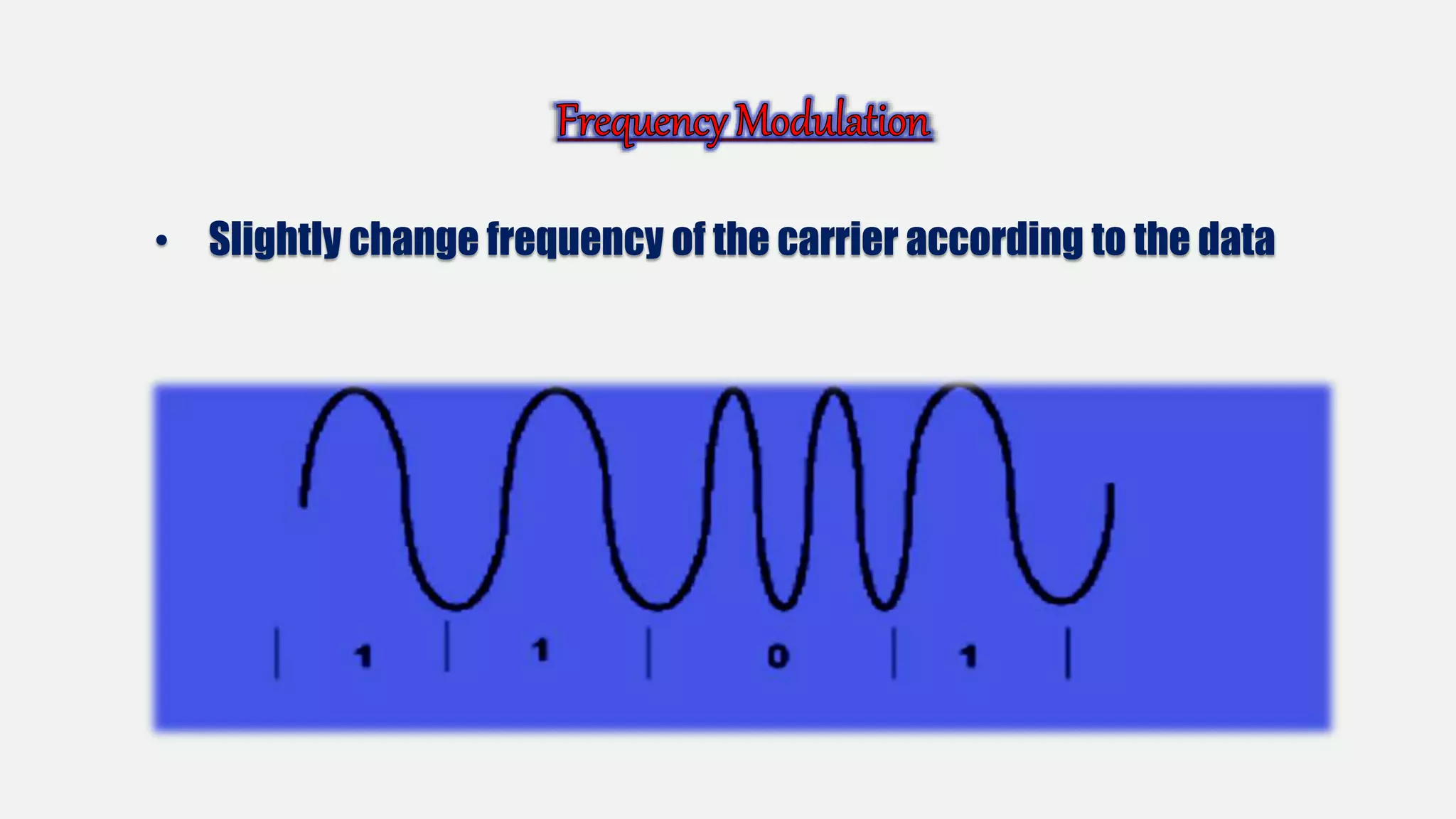
• Frequency modulation – frequency of carrier is modulated to
encode data
• Phase shift modulation – changes in timing, or phase shifts
encode data
• Change amplitude of the carrier according to the data
• Slightly change frequency of the carrier according to the data
• FM and AM require at least one wave cycle to send a bit
• Phase shift changes the timing of the carrier and can send
several bits per cycle
• Amount of phase shift can be measured
• How much of sine wave is "skipped"
• Example shows 1/4, 1/2 and 3/4 cycle
• Each phase shift can be used to carry more than one bit. In
example:
• 00 - no shift
• 01 - 1/4 phase
• 10 - 1/2 phase
• 11 - 3/4 phase
• Thus, each phase shift carries 2 bits
• Hardware that takes bits and applies modulation is a modulator
• Hardware that takes a modulated wave and extracts bits is a
demodulator
• Full duplex communication requires a combined modulator-
demodulator (MODEM) at both ends
• ISDN modem
• Cable modem (Front)
• Cable modem (rear) with coax connector for cable and
10Base-T connector
• Long distance four wire circuits can be leased from a phone
company (spare circuits are often included in trunk cables for
expansion purposes)
• Often called a serial line or serial data circuit
• Modems also used with optical fibre, radio and conventional
phone connections
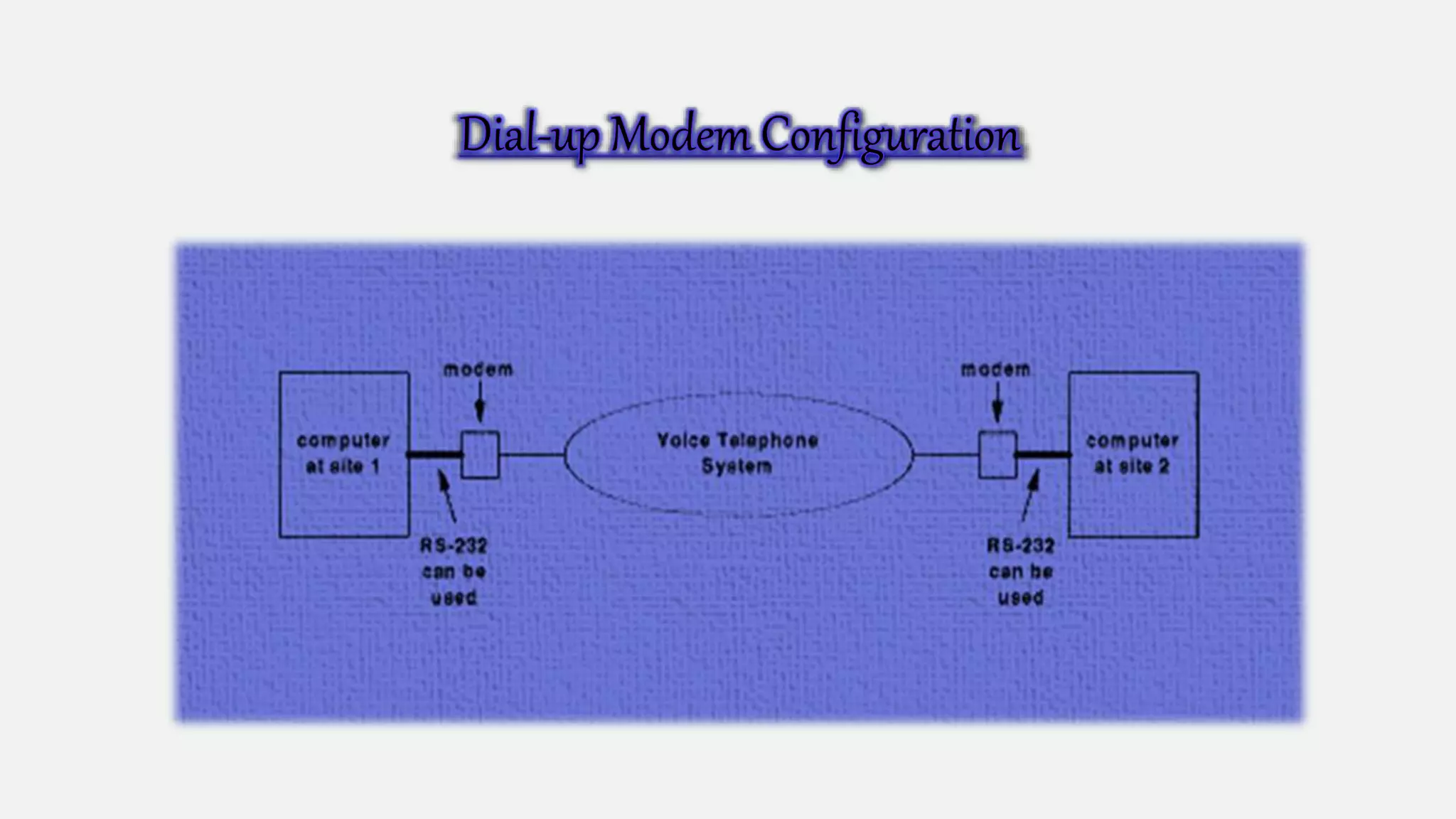
• Dial-up modems work with the existing phone system
• mimic telephones
• use a carrier that is an audible tone
• use a single voice channel (2 wire circuit) and co-ordinate to
achieve full duplex communication
• Two or more signals with different carrier frequencies
transmitted over one medium
• Several logical connections share a single physical
connection - Frequency Division Multiplexing (FDM)
• Minimum frequency separation => requires high bandwidth
connection
• Spread spectrum - use of multiple carriers to improve
reliability
• Also, single logical channel may simultaneously use multiple
carriers to improve performance
• TDM is an alternative to FDM where the sources sharing the
medium take turns (e.g., round robin)
• Example:-
 How fast data can be sent across a voice telephone system?
 Telephone system:
 Bandwidth = 3000 Hz
 S/N = 30dB
 decibels (db) = 10log10S/N
 Maximum data rate on a noisy medium is:
 D = B log2 (1 + S/N)
 D =3000 x 10 ~30000bps
• Signals degrade over distance
• Oscillating waves propagate further
• Modulation - FM, AM and phase shift
• Modems, including dial-up modems
• Multiplexing - FDM and TDM

Long Distance Communication PPT.pptx

  • 2.
     Long-Distance Communication Sending signals over long distances  Types of Modulation  Modems  Other types of modems  Leased serial data circuits  Optical, radio and dialup modems  Carrier frequencies and multiplexing  Time division multiplexing
  • 3.
    • Encoding usedby RS-232 cannot work in all situations  Over long distances  Using existing systems like telephone • Different encoding strategies needed • Line coding • Modulation
  • 5.
    • Send anoscillating carrier wave and then modulate it in some way • Technique originated with radio and TV (stations use different carrier frequencies) • Transmitter generates carrier and modulates according to data, receiver discards carrier • Two approaches from radio are frequency modulation (FM) and amplitude modulation (AM)
  • 7.
    • Amplitude modulation– strength, or amplitude of carrier is modulated to encode data • Frequency modulation – frequency of carrier is modulated to encode data • Phase shift modulation – changes in timing, or phase shifts encode data
  • 8.
    • Change amplitudeof the carrier according to the data
  • 9.
    • Slightly changefrequency of the carrier according to the data
  • 10.
    • FM andAM require at least one wave cycle to send a bit • Phase shift changes the timing of the carrier and can send several bits per cycle
  • 11.
    • Amount ofphase shift can be measured • How much of sine wave is "skipped" • Example shows 1/4, 1/2 and 3/4 cycle • Each phase shift can be used to carry more than one bit. In example: • 00 - no shift • 01 - 1/4 phase • 10 - 1/2 phase • 11 - 3/4 phase • Thus, each phase shift carries 2 bits
  • 12.
    • Hardware thattakes bits and applies modulation is a modulator • Hardware that takes a modulated wave and extracts bits is a demodulator • Full duplex communication requires a combined modulator- demodulator (MODEM) at both ends
  • 13.
    • ISDN modem •Cable modem (Front) • Cable modem (rear) with coax connector for cable and 10Base-T connector
  • 15.
    • Long distancefour wire circuits can be leased from a phone company (spare circuits are often included in trunk cables for expansion purposes) • Often called a serial line or serial data circuit
  • 17.
    • Modems alsoused with optical fibre, radio and conventional phone connections • Dial-up modems work with the existing phone system • mimic telephones • use a carrier that is an audible tone • use a single voice channel (2 wire circuit) and co-ordinate to achieve full duplex communication
  • 20.
    • Two ormore signals with different carrier frequencies transmitted over one medium • Several logical connections share a single physical connection - Frequency Division Multiplexing (FDM) • Minimum frequency separation => requires high bandwidth connection • Spread spectrum - use of multiple carriers to improve reliability • Also, single logical channel may simultaneously use multiple carriers to improve performance
  • 21.
    • TDM isan alternative to FDM where the sources sharing the medium take turns (e.g., round robin) • Example:-  How fast data can be sent across a voice telephone system?  Telephone system:  Bandwidth = 3000 Hz  S/N = 30dB  decibels (db) = 10log10S/N  Maximum data rate on a noisy medium is:  D = B log2 (1 + S/N)  D =3000 x 10 ~30000bps
  • 22.
    • Signals degradeover distance • Oscillating waves propagate further • Modulation - FM, AM and phase shift • Modems, including dial-up modems • Multiplexing - FDM and TDM