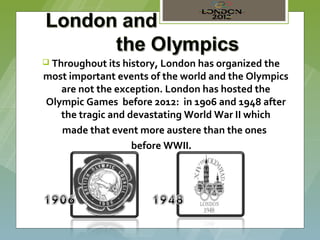
 Throughout its history, London has organized the
most important events of the world and the Olympics
   are not the exception. London has hosted the
Olympic Games before 2012: in 1906 and 1948 after
   the tragic and devastating World War II which
   made that event more austere than the ones
                   before WWII.
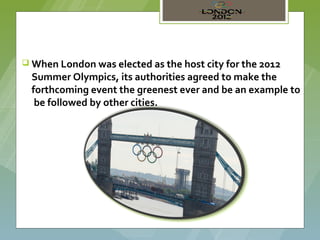
 When London was elected as the host city for the 2012
  Summer Olympics, its authorities agreed to make the
  forthcoming event the greenest ever and be an example to
   be followed by other cities.
Venues


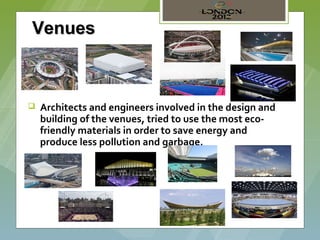
   Architects and engineers involved in the design and
    building of the venues, tried to use the most eco-
    friendly materials in order to save energy and
    produce less pollution and garbage.
 Venues will not be used only for the games. In fact, it is
  planned that after them, they will be used as sporting
  centers where ordinary people will be able to practise
  sports, to socialize with their neighbours and have a
  healthy life.
The Olympic Park
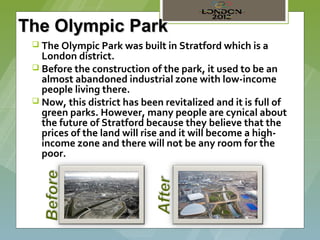
  The Olympic Park was built in Stratford which is a
   London district.
  Before the construction of the park, it used to be an
   almost abandoned industrial zone with low-income
   people living there.
  Now, this district has been revitalized and it is full of
   green parks. However, many people are cynical about
   the future of Stratford because they believe that the
   prices of the land will rise and it will become a high-
   income zone and there will not be any room for the
   poor.
The Active Travel
Programme

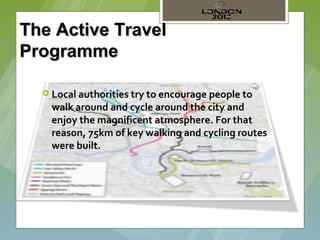
   Local authorities try to encourage people to
    walk around and cycle around the city and
    enjoy the magnificent atmosphere. For that
    reason, 75km of key walking and cycling routes
    were built.
Recycling

 Since the election of London as the host city of the
  Olympic Games, the city has encouraged Londoners to
  recycle and preserve the environment.
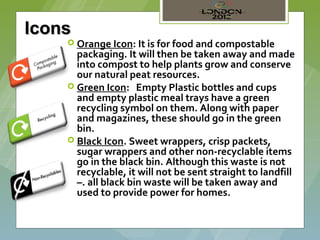
 Food and drink packages have some recycling icons which
  show you where you have to throw it.
Icons
     Orange Icon: It is for food and compostable
      packaging. It will then be taken away and made
      into compost to help plants grow and conserve
      our natural peat resources.
     Green Icon: Empty Plastic bottles and cups
      and empty plastic meal trays have a green
      recycling symbol on them. Along with paper
      and magazines, these should go in the green
      bin.
     Black Icon. Sweet wrappers, crisp packets,
      sugar wrappers and other non-recyclable items
      go in the black bin. Although this waste is not
      recyclable, it will not be sent straight to landfill
      –. all black bin waste will be taken away and
      used to provide power for homes.
Setting new standards for
sustainability
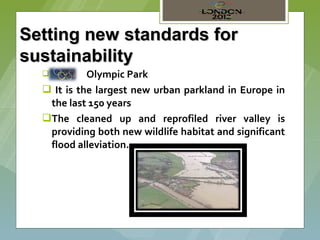
   1)      Olympic Park
   It is the largest new urban parkland in Europe in
   the last 150 years
  The cleaned up and reprofiled river valley is
   providing both new wildlife habitat and significant
   flood alleviation.
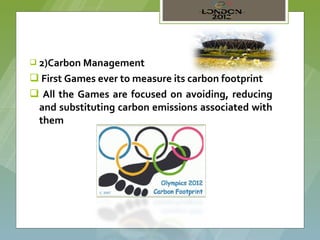
 2)Carbon Management

 First Games ever to measure its carbon footprint
 All the Games are focused on avoiding, reducing
 and substituting carbon emissions associated with
 them
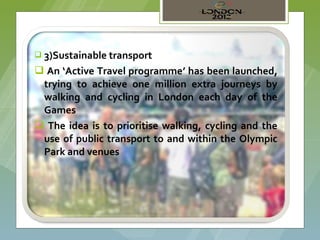
 3)Sustainable transport

 An ‘Active Travel programme’ has been launched,
 trying to achieve one million extra journeys by
 walking and cycling in London each day of the
 Games
 The idea is to prioritise walking, cycling and the
 use of public transport to and within the Olympic
 Park and venues
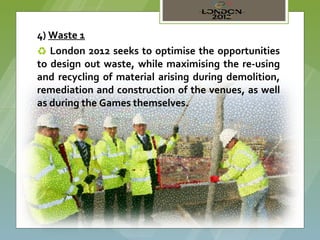
4) Waste 1
♻ London 2012 seeks to optimise the opportunities
to design out waste, while maximising the re-using
and recycling of material arising during demolition,
remediation and construction of the venues, as well
as during the Games themselves.
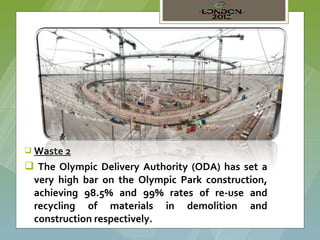
 Waste 2

 The Olympic Delivery Authority (ODA) has set a
 very high bar on the Olympic Park construction,
 achieving 98.5% and 99% rates of re-use and
 recycling of materials in demolition and
 construction respectively.
 5)Water

 One of the goals has been to optimise
 opportunities for efficient water use, re-use and
 recycling

 6)Enviromental impacts

 These Games will optimise positive and minimise
 adverse impacts on land, water, noise and air
 quality
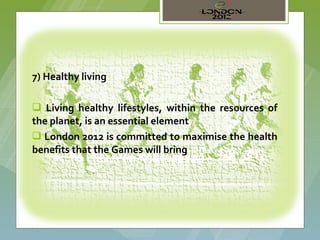
7) Healthy living

 Living healthy lifestyles, within the resources of
the planet, is an essential element
 London 2012 is committed to maximise the health
benefits that the Games will bring
Conclusion
 We  think that London Olympics will introduce a
  change in people's minds in terms of ecology and
  environmental issues.
 London is now an example to be followed and its
  eco-friendly policies should be put into practice in
  many countries, encouraging people across the
  world to walk and cycle more often and inspiring
  them to make changes in their lifestyles.
 In conclusion, the Games have become an
  inspiration to make a real and lasting change.
   Karina Traverso
          Julio Frateschi
          Agustina Allois
          Rodrigo Landa
          Natalia Borsella


2012                   Buenos Aires, Argentina.

London2012 advanced

  • 2.
     Throughout itshistory, London has organized the most important events of the world and the Olympics are not the exception. London has hosted the Olympic Games before 2012: in 1906 and 1948 after the tragic and devastating World War II which made that event more austere than the ones before WWII.
  • 3.
     When Londonwas elected as the host city for the 2012 Summer Olympics, its authorities agreed to make the forthcoming event the greenest ever and be an example to be followed by other cities.
  • 4.
    Venues  Architects and engineers involved in the design and building of the venues, tried to use the most eco- friendly materials in order to save energy and produce less pollution and garbage.
  • 5.
     Venues willnot be used only for the games. In fact, it is planned that after them, they will be used as sporting centers where ordinary people will be able to practise sports, to socialize with their neighbours and have a healthy life.
  • 6.
    The Olympic Park  The Olympic Park was built in Stratford which is a London district.  Before the construction of the park, it used to be an almost abandoned industrial zone with low-income people living there.  Now, this district has been revitalized and it is full of green parks. However, many people are cynical about the future of Stratford because they believe that the prices of the land will rise and it will become a high- income zone and there will not be any room for the poor.
  • 7.
    The Active Travel Programme  Local authorities try to encourage people to walk around and cycle around the city and enjoy the magnificent atmosphere. For that reason, 75km of key walking and cycling routes were built.
  • 8.
    Recycling  Since theelection of London as the host city of the Olympic Games, the city has encouraged Londoners to recycle and preserve the environment.  Food and drink packages have some recycling icons which show you where you have to throw it.
  • 9.
    Icons  Orange Icon: It is for food and compostable packaging. It will then be taken away and made into compost to help plants grow and conserve our natural peat resources.  Green Icon: Empty Plastic bottles and cups and empty plastic meal trays have a green recycling symbol on them. Along with paper and magazines, these should go in the green bin.  Black Icon. Sweet wrappers, crisp packets, sugar wrappers and other non-recyclable items go in the black bin. Although this waste is not recyclable, it will not be sent straight to landfill –. all black bin waste will be taken away and used to provide power for homes.
  • 10.
    Setting new standardsfor sustainability  1) Olympic Park  It is the largest new urban parkland in Europe in the last 150 years The cleaned up and reprofiled river valley is providing both new wildlife habitat and significant flood alleviation.
  • 11.
     2)Carbon Management First Games ever to measure its carbon footprint  All the Games are focused on avoiding, reducing and substituting carbon emissions associated with them
  • 12.
     3)Sustainable transport An ‘Active Travel programme’ has been launched, trying to achieve one million extra journeys by walking and cycling in London each day of the Games  The idea is to prioritise walking, cycling and the use of public transport to and within the Olympic Park and venues
  • 13.
    4) Waste 1 ♻London 2012 seeks to optimise the opportunities to design out waste, while maximising the re-using and recycling of material arising during demolition, remediation and construction of the venues, as well as during the Games themselves.
  • 14.
     Waste 2 The Olympic Delivery Authority (ODA) has set a very high bar on the Olympic Park construction, achieving 98.5% and 99% rates of re-use and recycling of materials in demolition and construction respectively.
  • 15.
     5)Water  Oneof the goals has been to optimise opportunities for efficient water use, re-use and recycling  6)Enviromental impacts  These Games will optimise positive and minimise adverse impacts on land, water, noise and air quality
  • 16.
    7) Healthy living Living healthy lifestyles, within the resources of the planet, is an essential element  London 2012 is committed to maximise the health benefits that the Games will bring
  • 17.
    Conclusion  We think that London Olympics will introduce a change in people's minds in terms of ecology and environmental issues.  London is now an example to be followed and its eco-friendly policies should be put into practice in many countries, encouraging people across the world to walk and cycle more often and inspiring them to make changes in their lifestyles.  In conclusion, the Games have become an inspiration to make a real and lasting change.
  • 18.
    Karina Traverso  Julio Frateschi  Agustina Allois  Rodrigo Landa  Natalia Borsella 2012 Buenos Aires, Argentina.