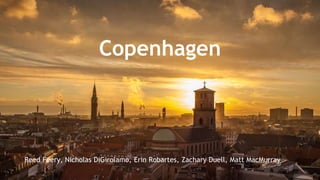
Copenhagen 
Reed Feery, Nicholas DiGirolamo, Erin Robartes, Zachary Duell, Matt MacMurray
S-Train
The Finger Plan
Copenhagen Metro 
● ~14,200,000 passengers 
per quarter in 2014. 
● About 1 million per week 
● CityCircle Line 
● M3 and M4 to be 
completely usable by 
2018 (17 new stations) 
● 22 metro stations 
currently
Jan Gehl 
● Born in 1936 in Denmark 
● Royal Danish Academy of Fine Arts 
● Research Grant - form and use of public 
spaces 
● “Life Between Buildings” - 1971 
● Observe and study existing conditions - 
make small incremental changes - Observe 
and study new conditions - Repeat 
● Gehl Architects - founded in 2000 
● “Cities For People” - 2010 
“Gehl emphasizes the importance of gradual transformation in 
urban redevelopments, in order to make changes sustainable 
and to give people time to adapt to physical changes, adjust 
their lifestyles, and experiment with the new ways of using the 
city. Gradual transformation allows for greater flexibility in the 
design process and facilitates attitude changes through public 
involvement and positive experiences.”
Pedestrianization 
Strøget 
1.1 km 
~¾ mile
Blue-Green Initiative
Bicycling Success
Bicycling Success
Bicycling Success
Carbon-Neutrality Plan 
Carbon Neutrality Plan
What Does This Mean About 
Copenhagen? 
• Copenhagen is a model city in terms of 
developing a sustainable transportation system 
• Focusing mostly on making the transportation 
system more green
Transportation Modal Share of Various Cities Around the World 
City Walking Cycling Public 
Transportation 
Private Motor 
Vehicle 
Copenhagen, 
Denmark (2010) 
7% 35% 32% 26% 
Barcelona, Spain 
(2012) 
35% 12% 33% 20% 
Berlin, Germany 
(2012) 
29% 15% 26% 30% 
NYC, New York 
(2009) 
10% 1% 55% 29% 
Tokyo, Japan 
(2009) 
23% 14% 51% 12% 
Shanghai, China 
(2011) 
27% 20% 33% 20%
Percentage of Green Space in Various Cities 
Around the World (Parks & Gardens) 
City Green Space 
Copenhagen, Denmark 25% 
Vienna, Austria 51% 
Berlin, Germany 14.40% 
NYC, New York, USA 19.70% 
Tokyo, Japan 3.44% 
Shanghai, China 2.60%
Sustainable? 
• Due to: 
– Intricate and well used public transportation system 
(metro, finger plan, bicycling, etc.) 
– Measures for land use/green space 
– Carbon Neutrality Plan (2025) 
– European Green Capital of 2014 
• …Yes!!! 
• Copenhagen boasts one of the most sustainable 
transportation systems in the world
Questions?
Sources 
• http://en.wikipedia.org/wiki/Modal_share 
• http://www.skyscrapercity.com/showthread.php?t=1660203 
• http://ec.europa.eu/environment/europeangreencapital/wp-content/ 
uploads/2012/07/Section-3-green-urban-areas_Copenhagen.pdf 
• http://kk.sites.itera.dk/apps/kk_pub2/pdf/1034_pN9YE5rO1u.pdf 
• http://kk.sites.itera.dk/apps/kk_pub2/pdf/1135_OlhinEvp0h.pdf 
• http://kk.sites.itera.dk/apps/kk_pub2/pdf/823_Bg65v7UH2t.pdf
More Sources 
everything you could ever want for copenhagen-cycling stuff 
http://www.sutp.org/en-news/en-sutp-articles/2777-copenhagen-a-modern-transport-policy-for-a-sustainable- 
city 
more cycling stuff 
http://transportpolicy2013.blogspot.com/2013/04/copenhagen-transportation-policy.html 
charts, graphs, policies to make people bike and use public transit more 
http://ec.europa.eu/environment/europeangreencapital/wp-content/uploads/2012/07/Section-2- 
Local-transport_Copenhagen.pdf
To what extent has your city been successful in 
meeting the goals of sustainable transportation? 
● Background of Copenhagen- geographic location, map, etc. 
● History of pre-”jan gehl” transportation system in copenhagen 
● Design Ideas of Jan Gehl- background of jan gehl, plans for copenhagen, etc. 
● Green-Blue 
● Macroscopic System: 
○ Finger Plan 
○ Metro System 
● Microscopic System: 
○ Pedestrianization 
○ Biking 
● Carbon Neutrality 
● Policies implemented to apply gehl’s ideas 
● Infrastructural Changes to Copenhagen transportation- metro, s train, finger plan 
● Why policies and infrastructure were altered and how effective 
● Conclusive overview on the current entire transportation network and why its successful

Copenhagen presentation 3

  • 1.
    Copenhagen Reed Feery,Nicholas DiGirolamo, Erin Robartes, Zachary Duell, Matt MacMurray
  • 5.
  • 6.
  • 8.
    Copenhagen Metro ●~14,200,000 passengers per quarter in 2014. ● About 1 million per week ● CityCircle Line ● M3 and M4 to be completely usable by 2018 (17 new stations) ● 22 metro stations currently
  • 9.
    Jan Gehl ●Born in 1936 in Denmark ● Royal Danish Academy of Fine Arts ● Research Grant - form and use of public spaces ● “Life Between Buildings” - 1971 ● Observe and study existing conditions - make small incremental changes - Observe and study new conditions - Repeat ● Gehl Architects - founded in 2000 ● “Cities For People” - 2010 “Gehl emphasizes the importance of gradual transformation in urban redevelopments, in order to make changes sustainable and to give people time to adapt to physical changes, adjust their lifestyles, and experiment with the new ways of using the city. Gradual transformation allows for greater flexibility in the design process and facilitates attitude changes through public involvement and positive experiences.”
  • 11.
  • 12.
  • 13.
  • 14.
  • 15.
  • 16.
  • 17.
    What Does ThisMean About Copenhagen? • Copenhagen is a model city in terms of developing a sustainable transportation system • Focusing mostly on making the transportation system more green
  • 18.
    Transportation Modal Shareof Various Cities Around the World City Walking Cycling Public Transportation Private Motor Vehicle Copenhagen, Denmark (2010) 7% 35% 32% 26% Barcelona, Spain (2012) 35% 12% 33% 20% Berlin, Germany (2012) 29% 15% 26% 30% NYC, New York (2009) 10% 1% 55% 29% Tokyo, Japan (2009) 23% 14% 51% 12% Shanghai, China (2011) 27% 20% 33% 20%
  • 19.
    Percentage of GreenSpace in Various Cities Around the World (Parks & Gardens) City Green Space Copenhagen, Denmark 25% Vienna, Austria 51% Berlin, Germany 14.40% NYC, New York, USA 19.70% Tokyo, Japan 3.44% Shanghai, China 2.60%
  • 20.
    Sustainable? • Dueto: – Intricate and well used public transportation system (metro, finger plan, bicycling, etc.) – Measures for land use/green space – Carbon Neutrality Plan (2025) – European Green Capital of 2014 • …Yes!!! • Copenhagen boasts one of the most sustainable transportation systems in the world
  • 21.
  • 22.
    Sources • http://en.wikipedia.org/wiki/Modal_share • http://www.skyscrapercity.com/showthread.php?t=1660203 • http://ec.europa.eu/environment/europeangreencapital/wp-content/ uploads/2012/07/Section-3-green-urban-areas_Copenhagen.pdf • http://kk.sites.itera.dk/apps/kk_pub2/pdf/1034_pN9YE5rO1u.pdf • http://kk.sites.itera.dk/apps/kk_pub2/pdf/1135_OlhinEvp0h.pdf • http://kk.sites.itera.dk/apps/kk_pub2/pdf/823_Bg65v7UH2t.pdf
  • 23.
    More Sources everythingyou could ever want for copenhagen-cycling stuff http://www.sutp.org/en-news/en-sutp-articles/2777-copenhagen-a-modern-transport-policy-for-a-sustainable- city more cycling stuff http://transportpolicy2013.blogspot.com/2013/04/copenhagen-transportation-policy.html charts, graphs, policies to make people bike and use public transit more http://ec.europa.eu/environment/europeangreencapital/wp-content/uploads/2012/07/Section-2- Local-transport_Copenhagen.pdf
  • 24.
    To what extenthas your city been successful in meeting the goals of sustainable transportation? ● Background of Copenhagen- geographic location, map, etc. ● History of pre-”jan gehl” transportation system in copenhagen ● Design Ideas of Jan Gehl- background of jan gehl, plans for copenhagen, etc. ● Green-Blue ● Macroscopic System: ○ Finger Plan ○ Metro System ● Microscopic System: ○ Pedestrianization ○ Biking ● Carbon Neutrality ● Policies implemented to apply gehl’s ideas ● Infrastructural Changes to Copenhagen transportation- metro, s train, finger plan ● Why policies and infrastructure were altered and how effective ● Conclusive overview on the current entire transportation network and why its successful