Logistics Warehousing in the North West:
Current Position and Future Trends
Place North West Logistics Conference
Science and Industry Museum, Manchester
13 June 2019
Michael Hatfield
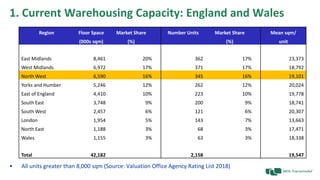
1. Current Warehousing Capacity: England and Wales
• All units greater than 8,000 sqm (Source: Valuation Office Agency Rating List 2018)
Region Floor Space Market Share Number Units Market Share Mean sqm/
(000s sqm) (%) (%) unit
East Midlands 8,461 20% 362 17% 23,373
West Midlands 6,972 17% 371 17% 18,792
North West 6,590 16% 345 16% 19,101
Yorks and Humber 5,246 12% 262 12% 20,024
East of England 4,410 10% 223 10% 19,778
South East 3,748 9% 200 9% 18,741
South West 2,457 6% 121 6% 20,307
London 1,954 5% 143 7% 13,663
North East 1,188 3% 68 3% 17,471
Wales 1,155 3% 63 3% 18,338
Total 42,182 2,158 19,547
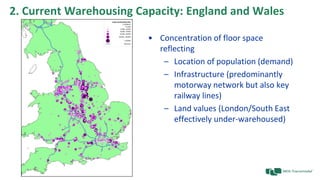
2. Current Warehousing Capacity: England and Wales
• Concentration of floor space
reflecting
– Location of population (demand)
– Infrastructure (predominantly
motorway network but also key
railway lines)
– Land values (London/South East
effectively under-warehoused)
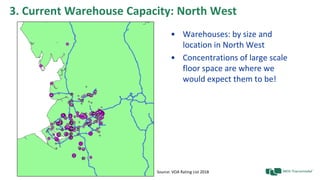
3. Current Warehouse Capacity: North West
• Warehouses: by size and
location in North West
• Concentrations of large scale
floor space are where we
would expect them to be!
Source: VOA Rating List 2018
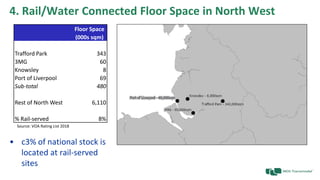
4. Rail/Water Connected Floor Space in North West
• c3% of national stock is
located at rail-served
sites
Floor Space
(000s sqm)
Trafford Park 343
3MG 60
Knowsley 8
Port of Liverpool 69
Sub-total 480
Rest of North West 6,110
% Rail-served 8%
Source: VOA Rating List 2018
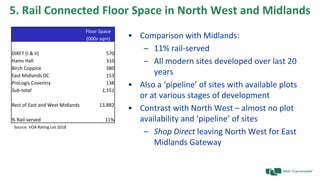
5. Rail Connected Floor Space in North West and Midlands
• Comparison with Midlands:
– 11% rail-served
– All modern sites developed over last 20
years
• Also a ‘pipeline’ of sites with available plots
or at various stages of development
• Contrast with North West – almost no plot
availability and ‘pipeline’ of sites
– Shop Direct leaving North West for East
Midlands Gateway
Floor Space
(000s sqm)
DIRFT (I & II) 570
Hams Hall 310
Birch Coppice 380
East Midlands DC 153
ProLogis Coventry 138
Sub-total 1,551
Rest of East and West Midlands 13,882
% Rail-served 11%
Source: VOA Rating List 2018
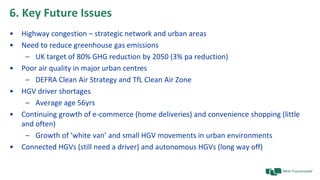
6. Key Future Issues
• Highway congestion – strategic network and urban areas
• Need to reduce greenhouse gas emissions
– UK target of 80% GHG reduction by 2050 (3% pa reduction)
• Poor air quality in major urban centres
– DEFRA Clean Air Strategy and TfL Clean Air Zone
• HGV driver shortages
– Average age 56yrs
• Continuing growth of e-commerce (home deliveries) and convenience shopping (little
and often)
– Growth of ‘white van’ and small HGV movements in urban environments
• Connected HGVs (still need a driver) and autonomous HGVs (long way off)
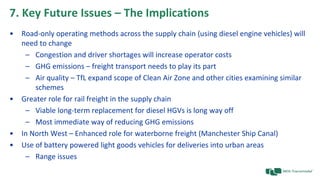
7. Key Future Issues – The Implications
• Road-only operating methods across the supply chain (using diesel engine vehicles) will
need to change
– Congestion and driver shortages will increase operator costs
– GHG emissions – freight transport needs to play its part
– Air quality – TfL expand scope of Clean Air Zone and other cities examining similar
schemes
• Greater role for rail freight in the supply chain
– Viable long-term replacement for diesel HGVs is long way off
– Most immediate way of reducing GHG emissions
• In North West – Enhanced role for waterborne freight (Manchester Ship Canal)
• Use of battery powered light goods vehicles for deliveries into urban areas
– Range issues
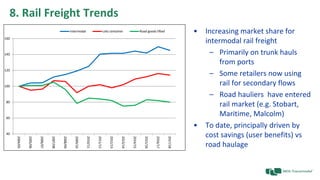
8. Rail Freight Trends
• Increasing market share for
intermodal rail freight
– Primarily on trunk hauls
from ports
– Some retailers now using
rail for secondary flows
– Road hauliers have entered
rail market (e.g. Stobart,
Maritime, Malcolm)
• To date, principally driven by
cost savings (user benefits) vs
road haulage
40
60
80
100
120
140
160
2004/05
2005/06
2006/07
2007/08
2008/09
2009/10
2010/11
2011/12
2012/13
2013/14
2014/15
2015/16
2016/17
2017/18
Intermodal Lolo container Road goods lifted
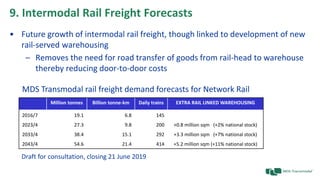
9. Intermodal Rail Freight Forecasts
• Future growth of intermodal rail freight, though linked to development of new
rail-served warehousing
– Removes the need for road transfer of goods from rail-head to warehouse
thereby reducing door-to-door costs
Million tonnes Billion tonne-km Daily trains EXTRA RAIL LINKED WAREHOUSING
2016/7 19.1 6.8 145
2023/4 27.3 9.8 200 +0.8 million sqm (+2% national stock)
2033/4 38.4 15.1 292 +3.3 million sqm (+7% national stock)
2043/4 54.6 21.4 414 +5.2 million sqm (+11% national stock)
MDS Transmodal rail freight demand forecasts for Network Rail
Draft for consultation, closing 21 June 2019
10. Land and Property Implications
• Given the continual need to build new capacity:
– Deliver a much larger proportion of new-build warehouses at rail-served sites
(water connections an added advantage)
– North West – ‘up our game’ and create a genuine ‘pipeline’ of sites
• Large sites
– Appropriate plot sizes for modern distribution centres
– Generates sufficient baseload traffic for viable rail freight services
• Located on the urban fringe
– Overcome range issues associated with battery powered ‘white vans’
– Labour supply
• Space for a modern intermodal terminal
• Where suitable railway lines coincide with motorway junctions
11. Land and Property Implications
• Rail-road cross-dock facilities
– Express e-commerce/parcels traffic transfer into appropriate urban freight
vehicles (battery powered light goods vehicles) for the ‘final mile’
– Parcel operators working with Network Rail to identify locations for such facilities
in London
• Use of main line stations been mooted
– Not suitable facilities due to capacity and range of practical issues
• Sites will need to be flexible in design/configuration to accommodate
– Traditional large distribution centre buildings
– Smaller rail-road cross docking facilities
12. Land and Property Implications
• The North West ‘pipeline’
– Port Warrington
– Port Salford
– Parkside (St Helens)
– Kingsway Business Park, Rochdale (could it be served from close by
Calder valley line?)
– Seaforth (Port of Liverpool)
– Where next - Risley, Fiddlers Ferry, Heywood, Wigan?
• Take rail freight growth away from congested Piccadilly-Deansgate rail
corridor
– Passenger benefits
13. Barriers to Development
• Planning system
– Large sites, road and railways coinciding, urban fringe – few in number, often
Greenbelt or similar designation
– Planning consents difficult to obtain
– Development Consent Order process for sites >60ha does appear to be working
(DIRFT III and East Midlands Gateway)
– At least 3 years
• Railway network capacity and capability
– Rail freight growth may be stalling due to lack of capacity
– Trans-Pennine upgrade: what will it provide for freight?
– ETCS, HS2 and NPR long term
– Potentially further restricts number of sites available; developers will need to be
satisfied that capacity is available.
Thank You
Email: mike.hatfield@mdst.co.uk
Web: mdst.co.uk
Twitter: @mdstransmodal

Logistics, Industrial & Infrastructure - MDS Transmodal

  • 1.
    Logistics Warehousing inthe North West: Current Position and Future Trends Place North West Logistics Conference Science and Industry Museum, Manchester 13 June 2019 Michael Hatfield
  • 2.
    1. Current WarehousingCapacity: England and Wales • All units greater than 8,000 sqm (Source: Valuation Office Agency Rating List 2018) Region Floor Space Market Share Number Units Market Share Mean sqm/ (000s sqm) (%) (%) unit East Midlands 8,461 20% 362 17% 23,373 West Midlands 6,972 17% 371 17% 18,792 North West 6,590 16% 345 16% 19,101 Yorks and Humber 5,246 12% 262 12% 20,024 East of England 4,410 10% 223 10% 19,778 South East 3,748 9% 200 9% 18,741 South West 2,457 6% 121 6% 20,307 London 1,954 5% 143 7% 13,663 North East 1,188 3% 68 3% 17,471 Wales 1,155 3% 63 3% 18,338 Total 42,182 2,158 19,547
  • 3.
    2. Current WarehousingCapacity: England and Wales • Concentration of floor space reflecting – Location of population (demand) – Infrastructure (predominantly motorway network but also key railway lines) – Land values (London/South East effectively under-warehoused)
  • 4.
    3. Current WarehouseCapacity: North West • Warehouses: by size and location in North West • Concentrations of large scale floor space are where we would expect them to be! Source: VOA Rating List 2018
  • 5.
    4. Rail/Water ConnectedFloor Space in North West • c3% of national stock is located at rail-served sites Floor Space (000s sqm) Trafford Park 343 3MG 60 Knowsley 8 Port of Liverpool 69 Sub-total 480 Rest of North West 6,110 % Rail-served 8% Source: VOA Rating List 2018
  • 6.
    5. Rail ConnectedFloor Space in North West and Midlands • Comparison with Midlands: – 11% rail-served – All modern sites developed over last 20 years • Also a ‘pipeline’ of sites with available plots or at various stages of development • Contrast with North West – almost no plot availability and ‘pipeline’ of sites – Shop Direct leaving North West for East Midlands Gateway Floor Space (000s sqm) DIRFT (I & II) 570 Hams Hall 310 Birch Coppice 380 East Midlands DC 153 ProLogis Coventry 138 Sub-total 1,551 Rest of East and West Midlands 13,882 % Rail-served 11% Source: VOA Rating List 2018
  • 7.
    6. Key FutureIssues • Highway congestion – strategic network and urban areas • Need to reduce greenhouse gas emissions – UK target of 80% GHG reduction by 2050 (3% pa reduction) • Poor air quality in major urban centres – DEFRA Clean Air Strategy and TfL Clean Air Zone • HGV driver shortages – Average age 56yrs • Continuing growth of e-commerce (home deliveries) and convenience shopping (little and often) – Growth of ‘white van’ and small HGV movements in urban environments • Connected HGVs (still need a driver) and autonomous HGVs (long way off)
  • 8.
    7. Key FutureIssues – The Implications • Road-only operating methods across the supply chain (using diesel engine vehicles) will need to change – Congestion and driver shortages will increase operator costs – GHG emissions – freight transport needs to play its part – Air quality – TfL expand scope of Clean Air Zone and other cities examining similar schemes • Greater role for rail freight in the supply chain – Viable long-term replacement for diesel HGVs is long way off – Most immediate way of reducing GHG emissions • In North West – Enhanced role for waterborne freight (Manchester Ship Canal) • Use of battery powered light goods vehicles for deliveries into urban areas – Range issues
  • 9.
    8. Rail FreightTrends • Increasing market share for intermodal rail freight – Primarily on trunk hauls from ports – Some retailers now using rail for secondary flows – Road hauliers have entered rail market (e.g. Stobart, Maritime, Malcolm) • To date, principally driven by cost savings (user benefits) vs road haulage 40 60 80 100 120 140 160 2004/05 2005/06 2006/07 2007/08 2008/09 2009/10 2010/11 2011/12 2012/13 2013/14 2014/15 2015/16 2016/17 2017/18 Intermodal Lolo container Road goods lifted
  • 10.
    9. Intermodal RailFreight Forecasts • Future growth of intermodal rail freight, though linked to development of new rail-served warehousing – Removes the need for road transfer of goods from rail-head to warehouse thereby reducing door-to-door costs Million tonnes Billion tonne-km Daily trains EXTRA RAIL LINKED WAREHOUSING 2016/7 19.1 6.8 145 2023/4 27.3 9.8 200 +0.8 million sqm (+2% national stock) 2033/4 38.4 15.1 292 +3.3 million sqm (+7% national stock) 2043/4 54.6 21.4 414 +5.2 million sqm (+11% national stock) MDS Transmodal rail freight demand forecasts for Network Rail Draft for consultation, closing 21 June 2019
  • 11.
    10. Land andProperty Implications • Given the continual need to build new capacity: – Deliver a much larger proportion of new-build warehouses at rail-served sites (water connections an added advantage) – North West – ‘up our game’ and create a genuine ‘pipeline’ of sites • Large sites – Appropriate plot sizes for modern distribution centres – Generates sufficient baseload traffic for viable rail freight services • Located on the urban fringe – Overcome range issues associated with battery powered ‘white vans’ – Labour supply • Space for a modern intermodal terminal • Where suitable railway lines coincide with motorway junctions
  • 12.
    11. Land andProperty Implications • Rail-road cross-dock facilities – Express e-commerce/parcels traffic transfer into appropriate urban freight vehicles (battery powered light goods vehicles) for the ‘final mile’ – Parcel operators working with Network Rail to identify locations for such facilities in London • Use of main line stations been mooted – Not suitable facilities due to capacity and range of practical issues • Sites will need to be flexible in design/configuration to accommodate – Traditional large distribution centre buildings – Smaller rail-road cross docking facilities
  • 13.
    12. Land andProperty Implications • The North West ‘pipeline’ – Port Warrington – Port Salford – Parkside (St Helens) – Kingsway Business Park, Rochdale (could it be served from close by Calder valley line?) – Seaforth (Port of Liverpool) – Where next - Risley, Fiddlers Ferry, Heywood, Wigan? • Take rail freight growth away from congested Piccadilly-Deansgate rail corridor – Passenger benefits
  • 14.
    13. Barriers toDevelopment • Planning system – Large sites, road and railways coinciding, urban fringe – few in number, often Greenbelt or similar designation – Planning consents difficult to obtain – Development Consent Order process for sites >60ha does appear to be working (DIRFT III and East Midlands Gateway) – At least 3 years • Railway network capacity and capability – Rail freight growth may be stalling due to lack of capacity – Trans-Pennine upgrade: what will it provide for freight? – ETCS, HS2 and NPR long term – Potentially further restricts number of sites available; developers will need to be satisfied that capacity is available.
  • 15.
    Thank You Email: mike.hatfield@mdst.co.uk Web:mdst.co.uk Twitter: @mdstransmodal