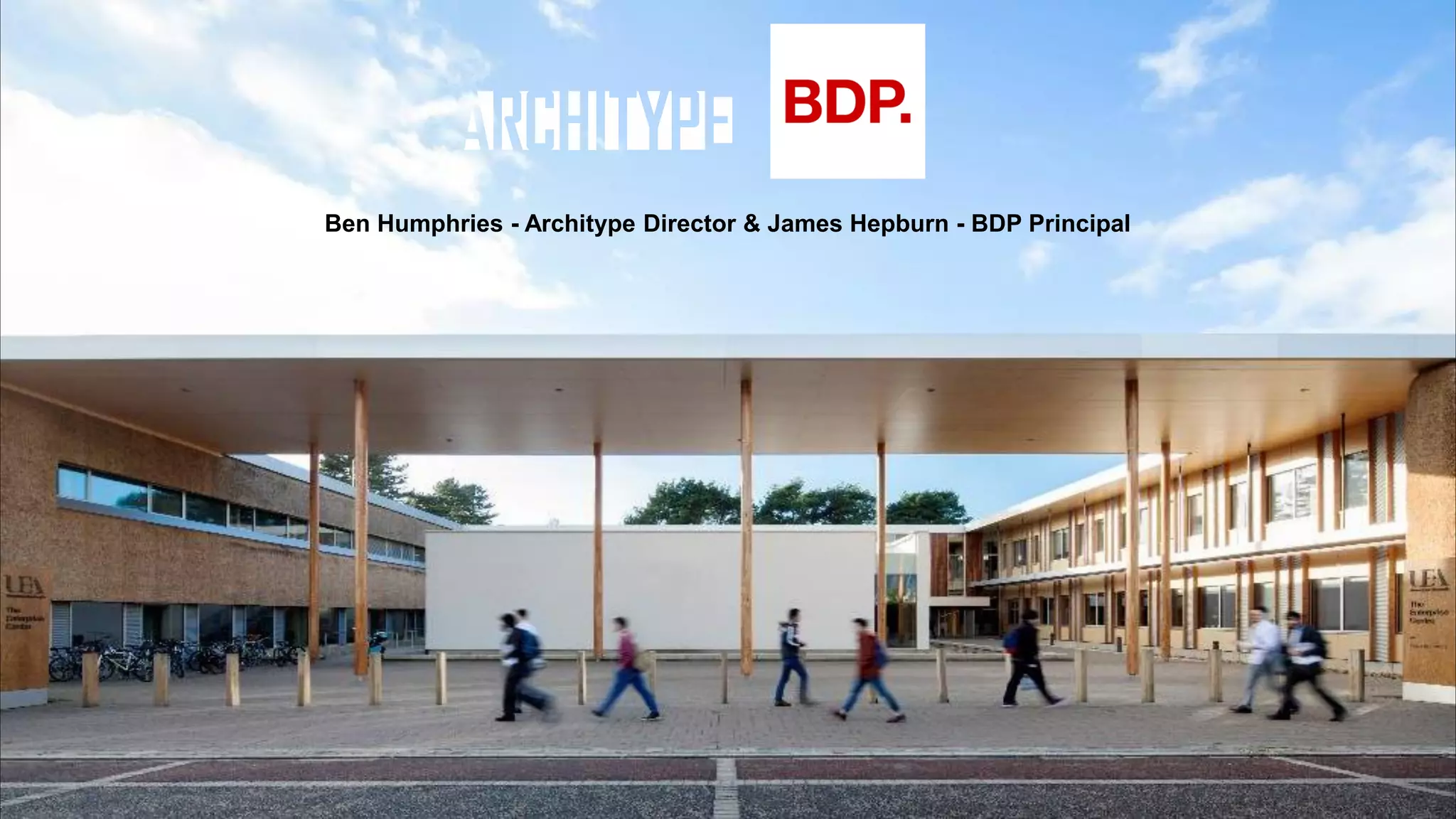
Ben Humphries - Architype Director & James Hepburn - BDP Principal
Architype and BDP
• 10 years experience of successful project delivery
• The Enterprise Centre - PassivHaus
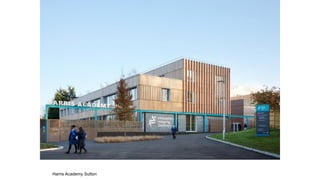
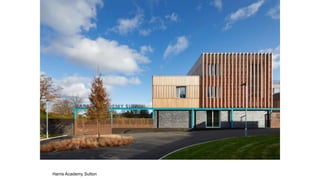
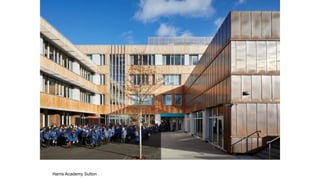
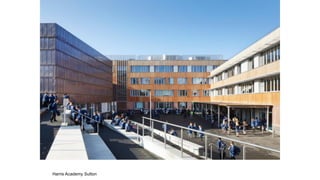
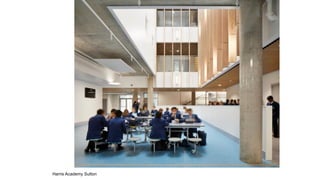
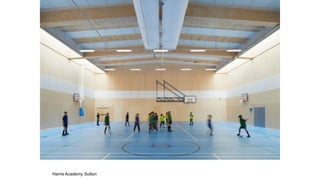
• Harris Sutton Academy - MassivHaus
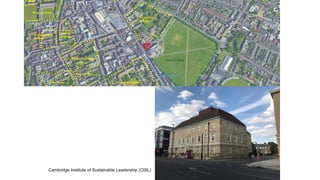
• Cambridge Institure of Sustainable Leadership – EnerPHit
• Route to Net Zero Carbon
SAP 10.1
The Government’s Standard Assessment
Procedure for Energy Rating of Dwellings
Version 10.1
This version is not currently to be used for any official purpose.
It is for consultation purposes only.
SAP 2012 should continue to be used for Building Regulations
compliance and the production of EPCs until further notice
This document describes SAP version 10.1 (10-10-2019). Information relating to this version of
SAP and any updates will be published on the website below.
Correction made: compared to the version of this document issued on 01-10-2019, the U-values
for rooflights given in Appendix R have each been increased by 0.3 W/m²K (page 107).
Published on behalf of BEIS by:
BRE Garston, Watford, WD25 9XX
Enquiries to https://bregroup.com/sap/sap10
© Crown copyright 2019
October 2019
Ministry of Housing, Communities and Local Government
The Future Homes Standard
2019 Consultation on changes to Part L (conservation
of fuel and power) and Part F (ventilation) of the
Building Regulations for new dwellings
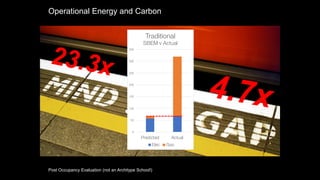
Operational Energy and Carbon
Post Occupancy Evaluation (not an Architype School!)
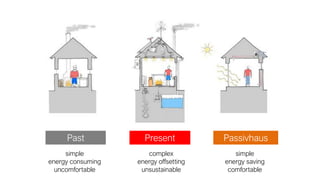
Past
simple
energy consuming
uncomfortable
Present
complex
energy offsetting
unsustainable
Passivhaus
simple
energy saving
comfortable
PassivhausPresentPast
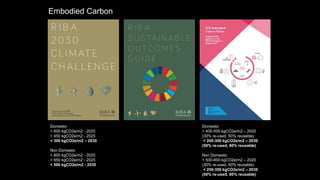
Embodied Carbon
Domestic
< 600 kgCO2e/m2 - 2020
< 450 kgCO2e/m2 - 2025
< 300 kgCO2e/m2 – 2030
Non Domestic
< 800 kgCO2e/m2 - 2020
< 650 kgCO2e/m2 - 2025
< 500 kgCO2e/m2 - 2030
Domestic
< 400-500 kgCO2e/m2 – 2020
(30% re-used, 50% reusable)
< 200-300 kgCO2e/m2 – 2030
(50% re-used, 80% reusable)
Non Domestic
< 500-600 kgCO2e/m2 – 2020
(30% re-used, 50% reusable)
< 250-350 kgCO2e/m2 – 2030
(50% re-used, 80% reusable)
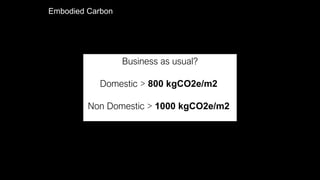
Embodied Carbon
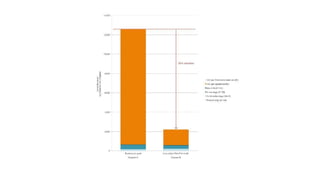
Business as usual?
Domestic > 800 kgCO2e/m2
Non Domestic > 1000 kgCO2e/m2
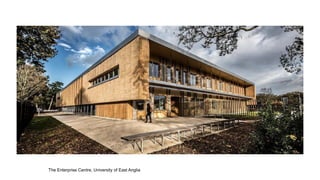
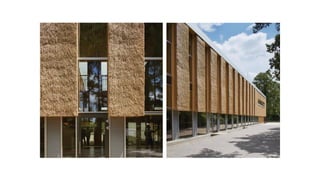
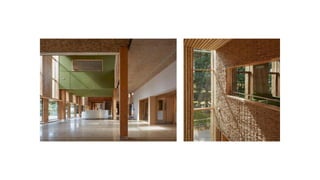
The Enterprise Centre, University of East Anglia
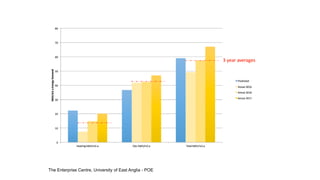
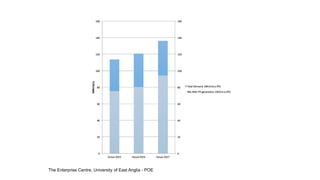
The Enterprise Centre, University of East Anglia - POE
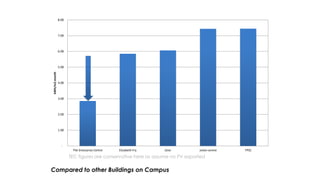
Compared to other Buildings on Campus
-
1.00
2.00
3.00
4.00
5.00
6.00
7.00
8.00
The Enterprise Centre Elizabeth Fry Zicer Julian centre TPSC
kWh/m2.month
TEC figures are conservative here as assume no PV exported
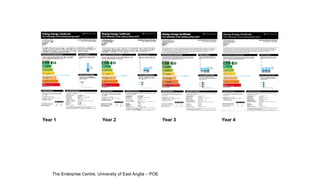
Year 1 Year 2 Year 3 Year 4
The Enterprise Centre, University of East Anglia – POE
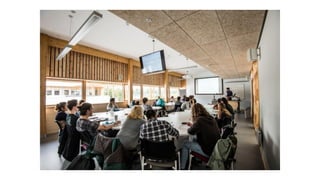
User Engagement
The Enterprise Centre, University of East Anglia
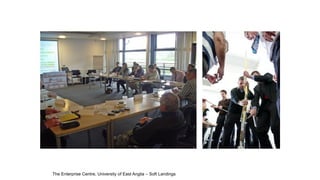
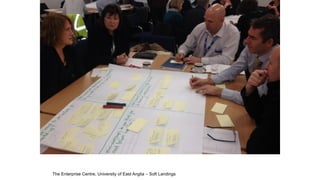
The Enterprise Centre, University of East Anglia – Soft Landings
The Enterprise Centre, University of East Anglia
The Enterprise Centre, University of East Anglia – Soft Landings
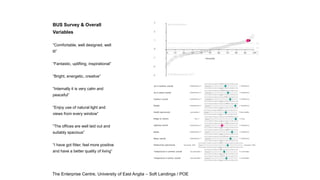
BUS Survey & Overall
Variables
“Comfortable, well designed, well
lit”
“Fantastic, uplifting, inspirational”
“Bright, energetic, creative”
“Internally it is very calm and
peaceful”
“Enjoy use of natural light and
views from every window”
“The offices are well laid out and
suitably spacious”
“I have got fitter, feel more positive
and have a better quality of living”
The Enterprise Centre, University of East Anglia – Soft Landings / POE
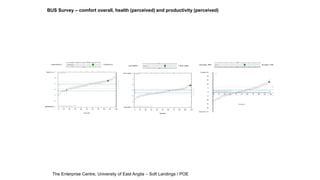
BUS Survey – comfort overall, health (perceived) and productivity (perceived)
The Enterprise Centre, University of East Anglia – Soft Landings / POE
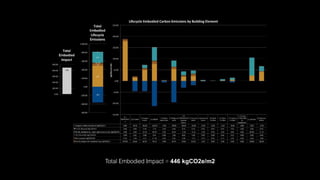
Embodied Carbon
Total Embodied Impact = 446 kgCO2e/m2
Harris Academy Sutton
More Sutton Images
Harris Academy Sutton
More Sutton Images
Harris Academy Sutton
More Sutton Images
Harris Academy Sutton
More Sutton Images
Harris Academy Sutton
More Sutton Images
The Enterprise Centre, University of East Anglia - POE
Harris Academy Sutton
New Sutton Secondary School
Pembroke College
Corpus
Christi
College
St Catherine’s
College
King’s College
Emmanuel
College
Parker’s Piece
Cambridge
University
Cricket Club
Downing College
College
Peterhouse
Peterhouse
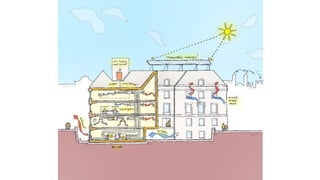
Cambridge Institute of Sustainable Leadership (CISL)
Boilerflue
Gasriseshere
Chiller
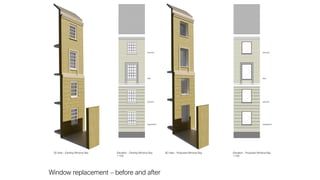
Measure typical window dimensions on each floor.
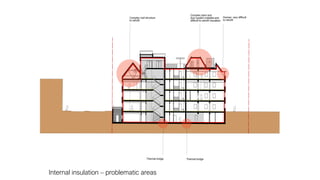
Thermal bridge
Complex plant and
duct system installed and
difficult to retrofit insulation
Dormer: very difficult
to retrofit
Complex roof structure
to retrofit
Thermal bridge
Internal insulation – problematic areas
Window replacement – before and after
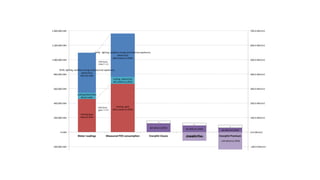
Heating demand 190.6 kWh/m2 Cooling demand 37.3 kWh/m2 PER demand 681.0 kWh/m2 PE dem
targets: targets: targets: targets
TFA measured from plans Passivhaus 15.0 kWh/m2 Passivhaus 15.0 kWh/m2 Enerphit Classic 60.0+ kWh/m2 Enerph
Enerphit 25.0 kWh/m2 Enerphit 15.0 kWh/m2 Enerphit Plus 45.0+ kWh/m2
TFA 2395 m2 Enerphit Premium 30.0+ kWh/m2
hea ng (gas)
456,547 kWh
cooling (electricity)
89,312 kWh
DHW, ligh ng, auxilliary energy and electrical appliances
(electricity)
550,741 kWh
hea ng (gas)
333.6 kWh/m2 (PER)
cooling (electricity)
48.5 kWh/m2 (PER)
DHW, ligh ng, auxilliary energy and electrical appliances
(electricity)
298.9 kWh/m2 (PER)
60 kWh/m2 (PER) 45 kWh/m2 (PER) 30 kWh/m2 (PER)
+
+
+
-60 kWh/m2 (PER)
-120 kWh/m2 (PER)
-100.0 kWh/m2
0.0 kWh/m2
100.0 kWh/m2
200.0 kWh/m2
300.0 kWh/m2
400.0 kWh/m2
500.0 kWh/m2
600.0 kWh/m2
700.0 kWh/m2
-200,000 kWh
0 kWh
200,000 kWh
400,000 kWh
600,000 kWh
800,000 kWh
1,000,000 kWh
1,200,000 kWh
1,400,000 kWh
Meter readings Measured PER consump on Enerphit Classic Enerphit Plus Enerphit Premium
PER factor
(gas) = 1.75
PER factor
(elec) = 1.3
Route to Zero Carbon
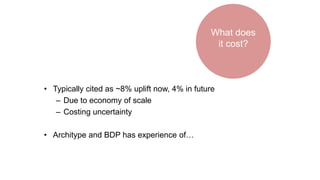
• Typically cited as ~8% uplift now, 4% in future
– Due to economy of scale
– Costing uncertainty
• Architype and BDP has experience of…
What does
it cost?
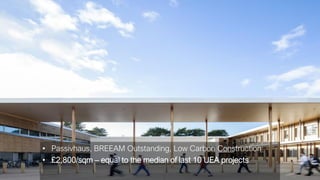
• Passivhaus, BREEAM Outstanding, Low Carbon Construction
• £2,800/sqm – equal to the median of last 10 UEA projects
BDP Manchester Net Zero Carbon Summit - BDP + Architype

BDP Manchester Net Zero Carbon Summit - BDP + Architype

  • 1.
    Ben Humphries -Architype Director & James Hepburn - BDP Principal
  • 2.
    Architype and BDP •10 years experience of successful project delivery • The Enterprise Centre - PassivHaus • Harris Sutton Academy - MassivHaus • Cambridge Institure of Sustainable Leadership – EnerPHit • Route to Net Zero Carbon
  • 5.
    SAP 10.1 The Government’sStandard Assessment Procedure for Energy Rating of Dwellings Version 10.1 This version is not currently to be used for any official purpose. It is for consultation purposes only. SAP 2012 should continue to be used for Building Regulations compliance and the production of EPCs until further notice This document describes SAP version 10.1 (10-10-2019). Information relating to this version of SAP and any updates will be published on the website below. Correction made: compared to the version of this document issued on 01-10-2019, the U-values for rooflights given in Appendix R have each been increased by 0.3 W/m²K (page 107). Published on behalf of BEIS by: BRE Garston, Watford, WD25 9XX Enquiries to https://bregroup.com/sap/sap10 © Crown copyright 2019 October 2019 Ministry of Housing, Communities and Local Government The Future Homes Standard 2019 Consultation on changes to Part L (conservation of fuel and power) and Part F (ventilation) of the Building Regulations for new dwellings
  • 6.
    Operational Energy andCarbon Post Occupancy Evaluation (not an Architype School!)
  • 7.
  • 8.
    Embodied Carbon Domestic < 600kgCO2e/m2 - 2020 < 450 kgCO2e/m2 - 2025 < 300 kgCO2e/m2 – 2030 Non Domestic < 800 kgCO2e/m2 - 2020 < 650 kgCO2e/m2 - 2025 < 500 kgCO2e/m2 - 2030 Domestic < 400-500 kgCO2e/m2 – 2020 (30% re-used, 50% reusable) < 200-300 kgCO2e/m2 – 2030 (50% re-used, 80% reusable) Non Domestic < 500-600 kgCO2e/m2 – 2020 (30% re-used, 50% reusable) < 250-350 kgCO2e/m2 – 2030 (50% re-used, 80% reusable)
  • 9.
    Embodied Carbon Business asusual? Domestic > 800 kgCO2e/m2 Non Domestic > 1000 kgCO2e/m2
  • 10.
    The Enterprise Centre,University of East Anglia
  • 11.
    The Enterprise Centre,University of East Anglia
  • 13.
    The Enterprise Centre,University of East Anglia
  • 14.
    The Enterprise Centre,University of East Anglia - POE
  • 15.
    The Enterprise Centre,University of East Anglia - POE
  • 16.
    Compared to otherBuildings on Campus - 1.00 2.00 3.00 4.00 5.00 6.00 7.00 8.00 The Enterprise Centre Elizabeth Fry Zicer Julian centre TPSC kWh/m2.month TEC figures are conservative here as assume no PV exported
  • 17.
    Year 1 Year2 Year 3 Year 4 The Enterprise Centre, University of East Anglia – POE
  • 18.
    User Engagement The EnterpriseCentre, University of East Anglia The Enterprise Centre, University of East Anglia – Soft Landings
  • 19.
    The Enterprise Centre,University of East Anglia The Enterprise Centre, University of East Anglia – Soft Landings
  • 20.
    BUS Survey &Overall Variables “Comfortable, well designed, well lit” “Fantastic, uplifting, inspirational” “Bright, energetic, creative” “Internally it is very calm and peaceful” “Enjoy use of natural light and views from every window” “The offices are well laid out and suitably spacious” “I have got fitter, feel more positive and have a better quality of living” The Enterprise Centre, University of East Anglia – Soft Landings / POE
  • 21.
    BUS Survey –comfort overall, health (perceived) and productivity (perceived) The Enterprise Centre, University of East Anglia – Soft Landings / POE
  • 22.
  • 23.
    Total Embodied Impact= 446 kgCO2e/m2
  • 24.
  • 25.
  • 26.
  • 27.
  • 28.
  • 29.
  • 30.
    The Enterprise Centre,University of East Anglia - POE Harris Academy Sutton
  • 31.
  • 32.
    Pembroke College Corpus Christi College St Catherine’s College King’sCollege Emmanuel College Parker’s Piece Cambridge University Cricket Club Downing College College Peterhouse Peterhouse Cambridge Institute of Sustainable Leadership (CISL)
  • 34.
    Boilerflue Gasriseshere Chiller Measure typical windowdimensions on each floor. Thermal bridge Complex plant and duct system installed and difficult to retrofit insulation Dormer: very difficult to retrofit Complex roof structure to retrofit Thermal bridge Internal insulation – problematic areas
  • 35.
    Window replacement –before and after
  • 37.
    Heating demand 190.6kWh/m2 Cooling demand 37.3 kWh/m2 PER demand 681.0 kWh/m2 PE dem targets: targets: targets: targets TFA measured from plans Passivhaus 15.0 kWh/m2 Passivhaus 15.0 kWh/m2 Enerphit Classic 60.0+ kWh/m2 Enerph Enerphit 25.0 kWh/m2 Enerphit 15.0 kWh/m2 Enerphit Plus 45.0+ kWh/m2 TFA 2395 m2 Enerphit Premium 30.0+ kWh/m2 hea ng (gas) 456,547 kWh cooling (electricity) 89,312 kWh DHW, ligh ng, auxilliary energy and electrical appliances (electricity) 550,741 kWh hea ng (gas) 333.6 kWh/m2 (PER) cooling (electricity) 48.5 kWh/m2 (PER) DHW, ligh ng, auxilliary energy and electrical appliances (electricity) 298.9 kWh/m2 (PER) 60 kWh/m2 (PER) 45 kWh/m2 (PER) 30 kWh/m2 (PER) + + + -60 kWh/m2 (PER) -120 kWh/m2 (PER) -100.0 kWh/m2 0.0 kWh/m2 100.0 kWh/m2 200.0 kWh/m2 300.0 kWh/m2 400.0 kWh/m2 500.0 kWh/m2 600.0 kWh/m2 700.0 kWh/m2 -200,000 kWh 0 kWh 200,000 kWh 400,000 kWh 600,000 kWh 800,000 kWh 1,000,000 kWh 1,200,000 kWh 1,400,000 kWh Meter readings Measured PER consump on Enerphit Classic Enerphit Plus Enerphit Premium PER factor (gas) = 1.75 PER factor (elec) = 1.3
  • 40.
  • 41.
    • Typically citedas ~8% uplift now, 4% in future – Due to economy of scale – Costing uncertainty • Architype and BDP has experience of… What does it cost?
  • 42.
    • Passivhaus, BREEAMOutstanding, Low Carbon Construction • £2,800/sqm – equal to the median of last 10 UEA projects