LOADS
CONSIDERED WHILE DESIGNING A BUILDING
A building has to perform many functions satisfactorily.
Amongst these functions are the utility of the building for
the intended use and occupancy. structural safety, fire
safety; and compliance- with hygienic. sanitation, ventilation
and daylight standards. The design of the building is
dependent upon the minimum requirements prescribed for
each of the above functions.
TYPES OF LOADS :-
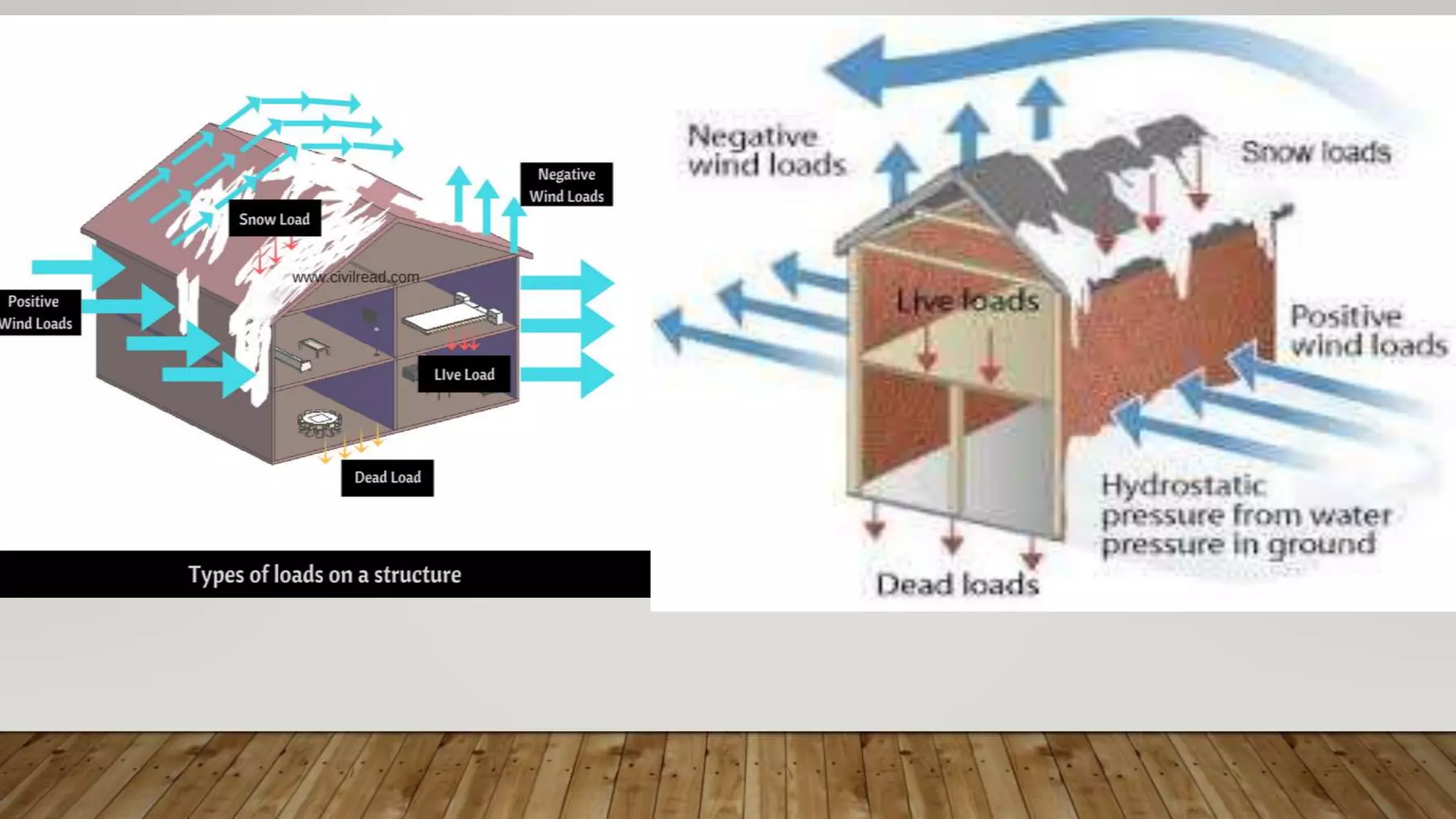
1. DEAD LOAD (IS 875.1.1987)
2. IMPOSED LOAD (IS 875.2.1987)
3. WIND LOAD (IS 875.3.1987)
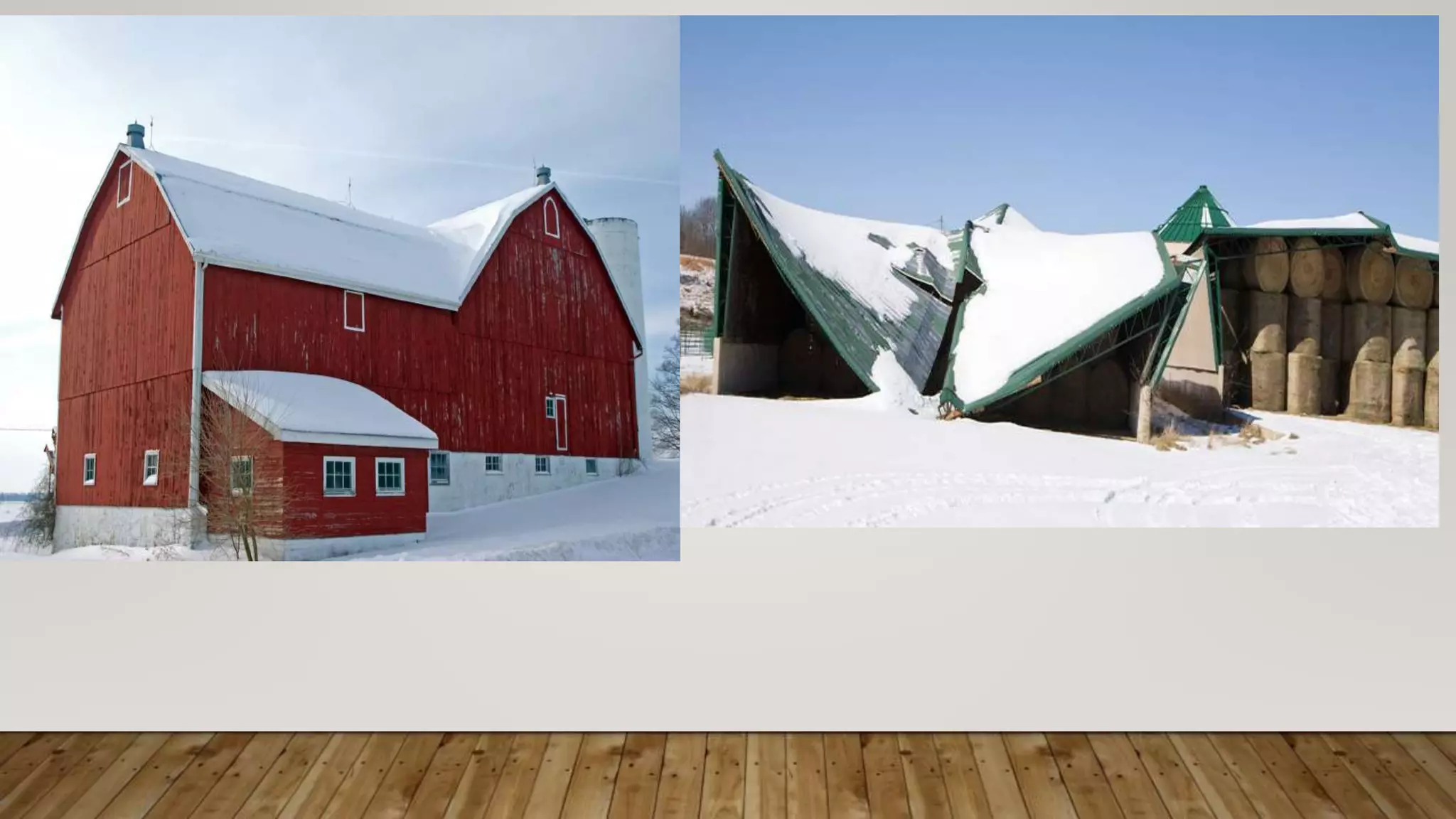
4. SNOW LOAD (IS 875.4.1987)
5. SPECIAL LOADS AND LOADS COMBINATION ( IS 875.5.1987)
6. EARTH QUAKE LOADS ( IS 1893.1984)
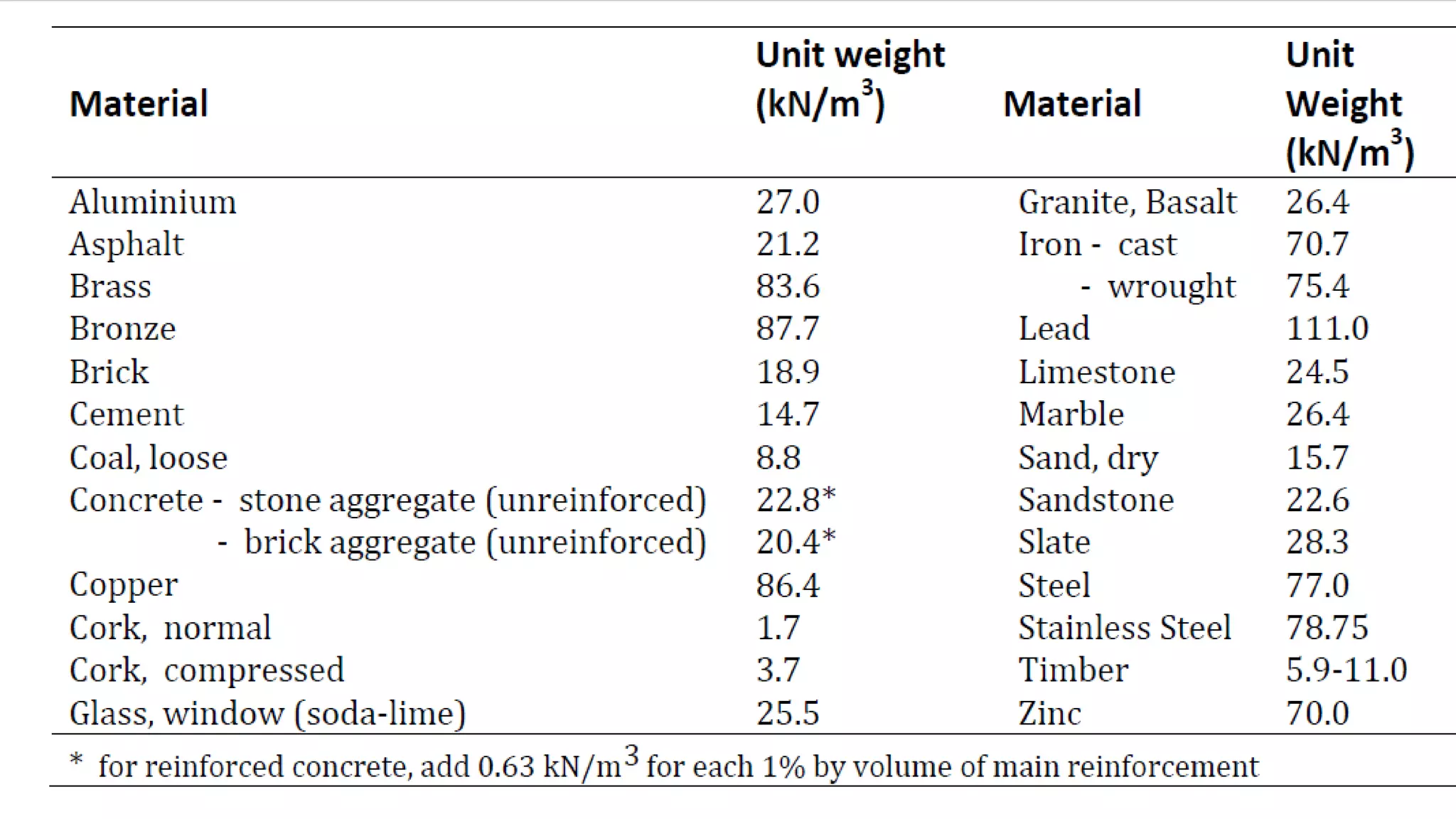
1.DEAD LOAD (IS 875 PART1-1987)
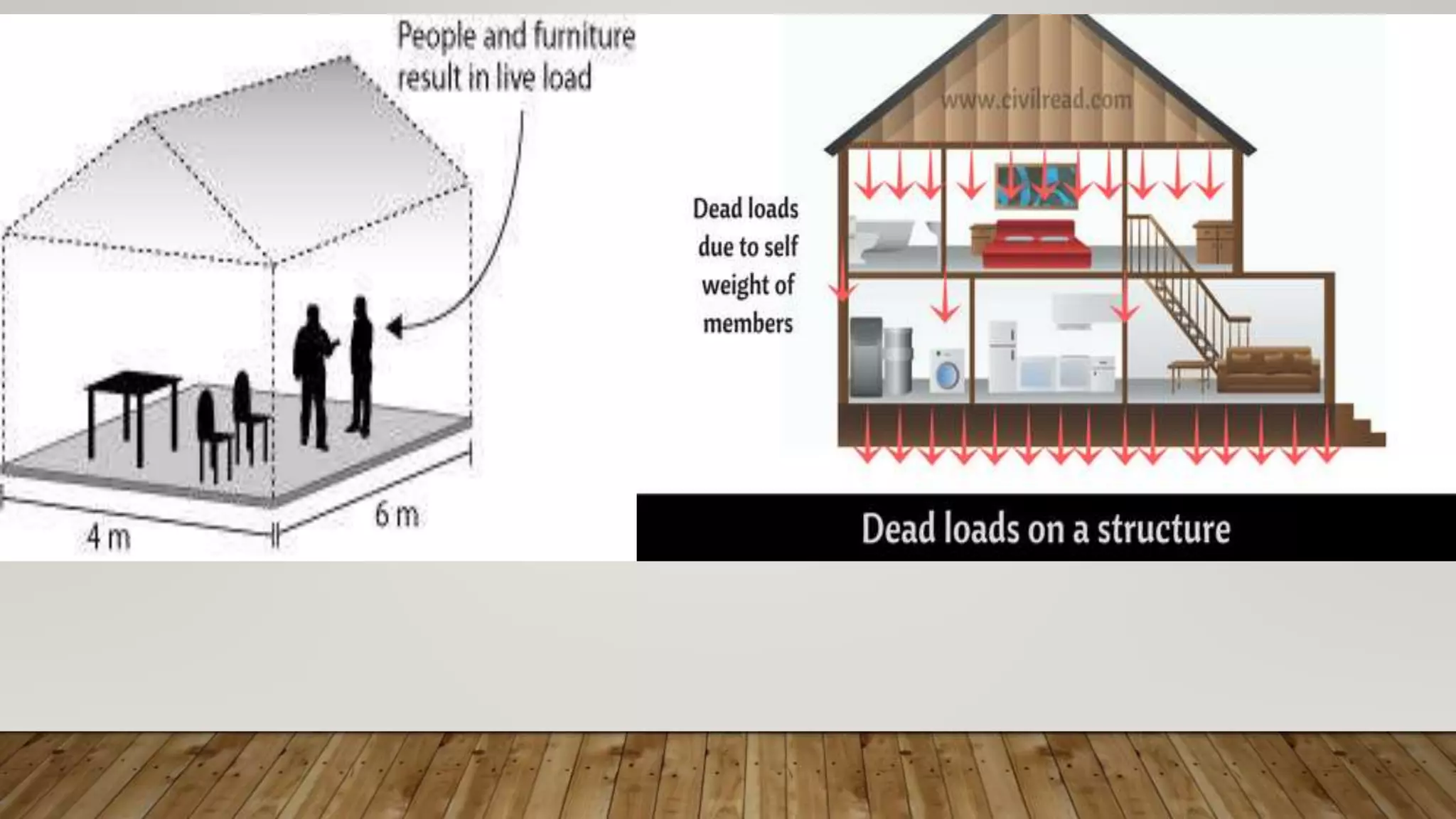
โ€ข Dead load consists of weight of various structural members and the weights of
any object that are permanently attached to the structure . Hence for a building,
the dead load includes the weights of columns, beams, girders, floor slab, walls,
windows, plumbing, electrical fixtures, and other miscellaneous materials
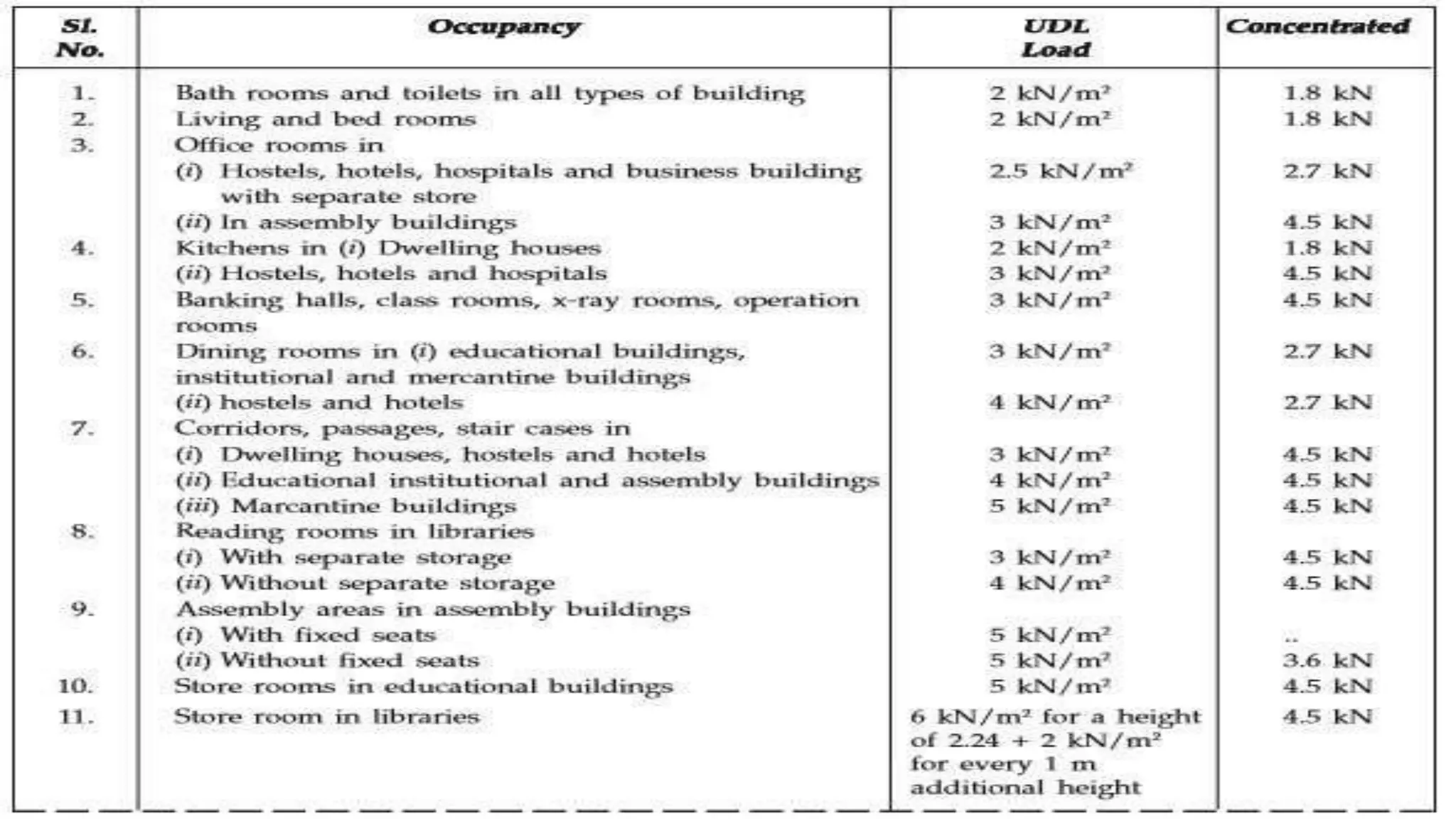
2. IMPOSED LOAD (IS 875 PART 2-1987)
โ€ข The load assumed to be produced by the intended use or occupancy of a
building. including the weight of movable partitions distributed.
โ€ข Imposed load varies from time to time.
โ€ข These are suitably assumed by the designer.
โ€ข It depends upon the intended use of the building.
VALUES OF IMPOSED LOADS ARE GIVEN BASED ON FOLLOWING
OCCUPANCY
I. Assembly Buildings
II. Business Buildings
III. Office Buildings
IV. Educational Buildings
V. Institutional Buildings
VI. Mercantile Buildings
VII. Residential Buildings
VIII. Storage Rooms
3.WIND LOAD ( IS 875 PART 3- 1987)
โ€ข When the structure blocks the flow of air , the winds kinetic energy
is converted into protential energy of pressure, which causes a wind
loading
โ€ข The effect of wind load depends upon the density and velocity of
air, the angle of incidence of wind, shape and stiffness of structure.
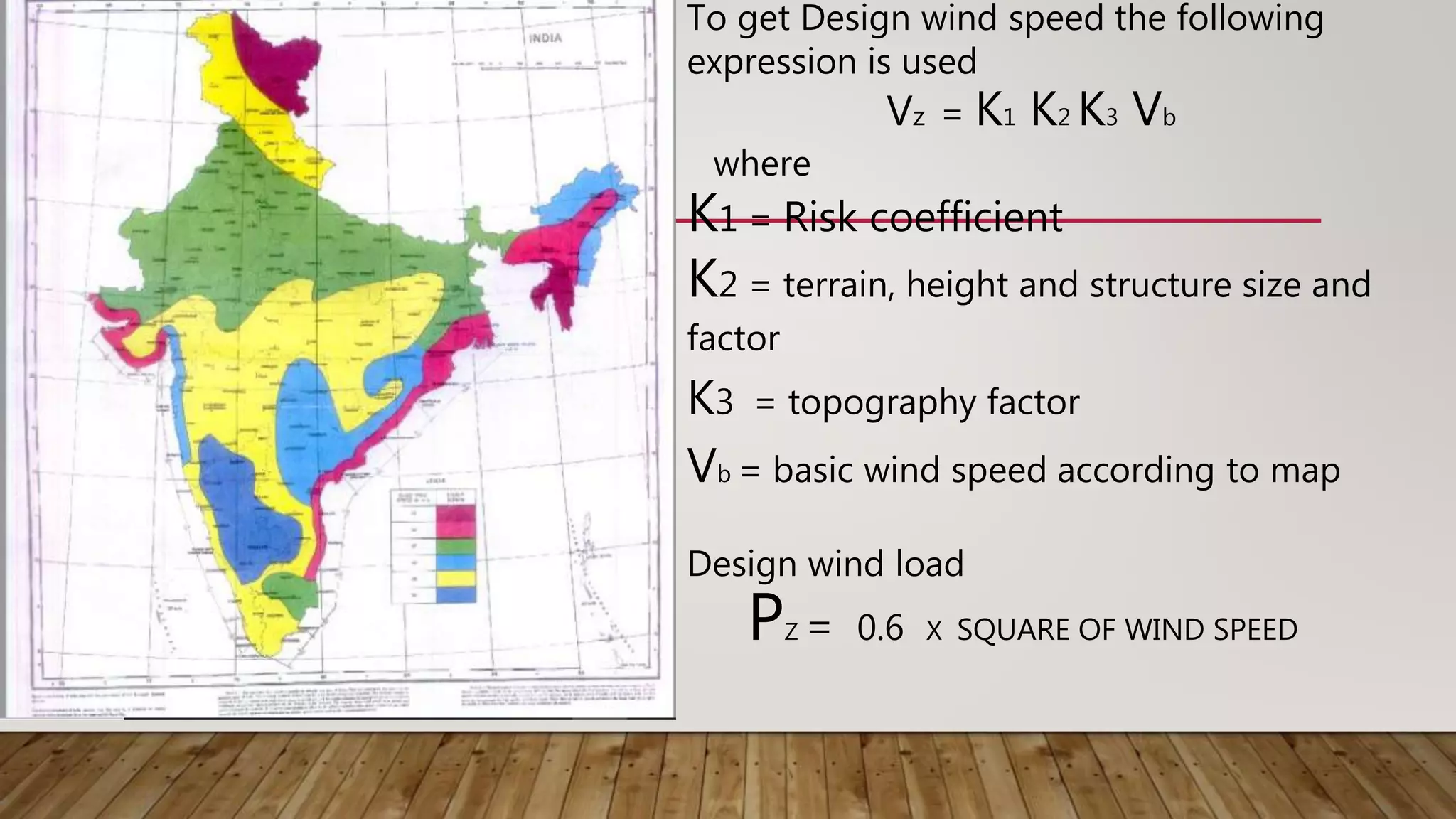
To get Design wind speed the following
expression is used
Vz = K1 K2 K3 Vb
where
K1 = Risk coefficient
K2 = terrain, height and structure size and
factor
K3 = topography factor
Vb = basic wind speed according to map
Design wind load
PZ = 0.6 X SQUARE OF WIND SPEED
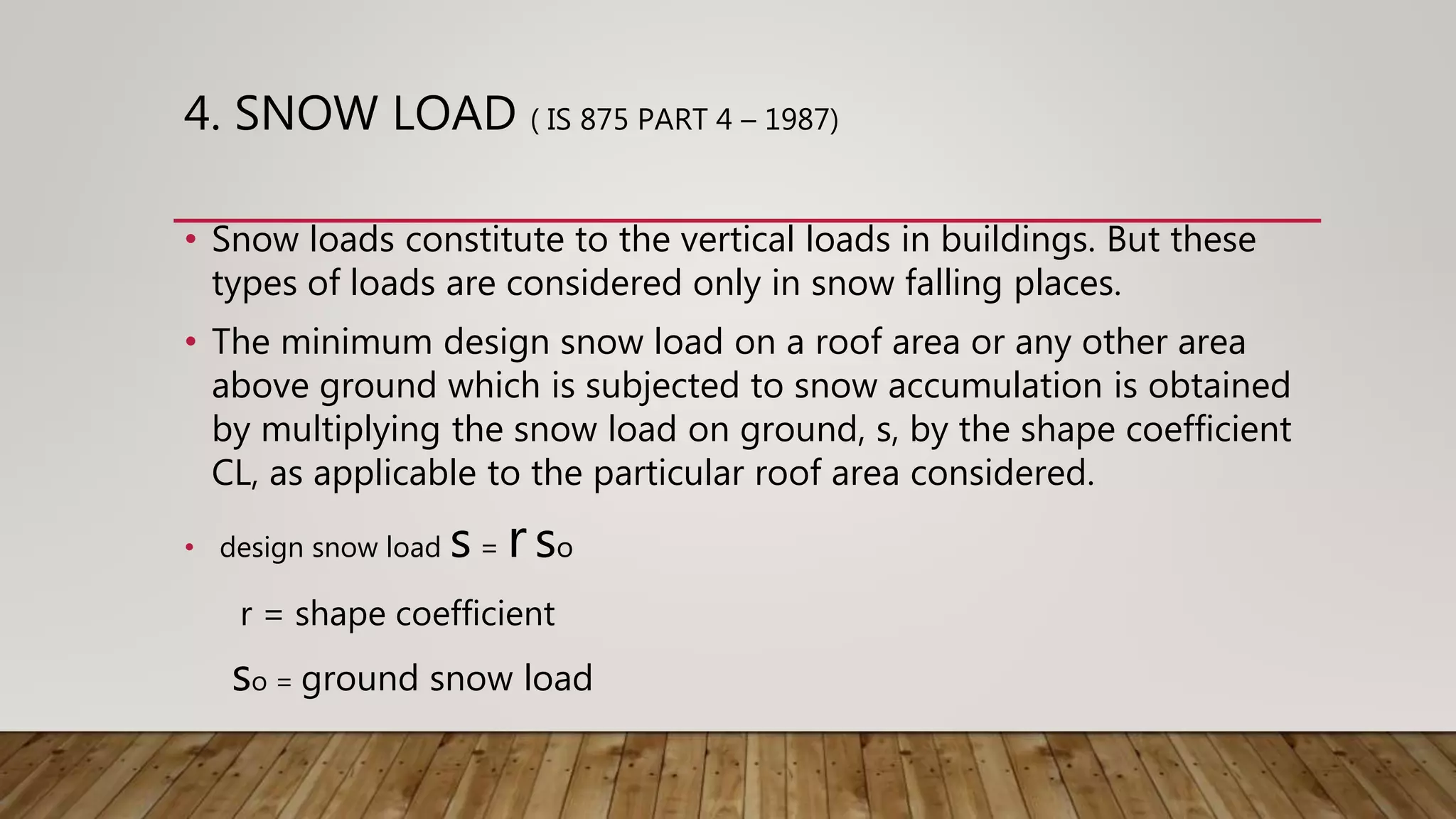
4. SNOW LOAD ( IS 875 PART 4 โ€“ 1987)
โ€ข Snow loads constitute to the vertical loads in buildings. But these
types of loads are considered only in snow falling places.
โ€ข The minimum design snow load on a roof area or any other area
above ground which is subjected to snow accumulation is obtained
by multiplying the snow load on ground, s, by the shape coefficient
CL, as applicable to the particular roof area considered.
โ€ข design snow load s = rso
r = shape coefficient
so = ground snow load
5.SPECIAL LOADS AND LOADS COMBNATION
( IS 875 PART 5 โ€“ 1987)
โ€ข This code ( Part 5 ) deal. with loads and load effects (other than covered in Parts
1 to 4, and seismic loads) due to temperature changes, internally generating
stresses (due to creep, shrinkage. differential settlement, etc.) in the building. and
its components, soil and hydrostatic pressure. accidental load., etc. This part also
includes guidance on load combinations.
SPECIALS LOADS ARE :-
I. Temperature stresses
II. Hydrostatic and Soil Pressure
III. Fatigue
IV. Structural safety during Construction
V. Accidental loads
1. Impacts and Collisions
2. Explosions
3. Fire
LOAD COMBINATION
โ€ข DL
โ€ข DL+IL
โ€ข DL+WL
โ€ข DL+EL
โ€ข DL+TL
โ€ข DL+IL+WL
โ€ข DL+IL+EL
โ€ข DL+IL+TL
โ€ข DL+WL+TL
โ€ข DL+EL+TL
โ€ข DL+IL+WL+TL
โ€ข DL+IL+EL+TL
(DL == dead load, 1L - imposed load, WL- wind load,
EL - earthquake load, TL - temperature load ).
Loads considered while designing a building according to Indian standars

Loads considered while designing a building according to Indian standars

  • 1.
  • 2.
    A building hasto perform many functions satisfactorily. Amongst these functions are the utility of the building for the intended use and occupancy. structural safety, fire safety; and compliance- with hygienic. sanitation, ventilation and daylight standards. The design of the building is dependent upon the minimum requirements prescribed for each of the above functions.
  • 3.
    TYPES OF LOADS:- 1. DEAD LOAD (IS 875.1.1987) 2. IMPOSED LOAD (IS 875.2.1987) 3. WIND LOAD (IS 875.3.1987) 4. SNOW LOAD (IS 875.4.1987) 5. SPECIAL LOADS AND LOADS COMBINATION ( IS 875.5.1987) 6. EARTH QUAKE LOADS ( IS 1893.1984)
  • 4.
    1.DEAD LOAD (IS875 PART1-1987) โ€ข Dead load consists of weight of various structural members and the weights of any object that are permanently attached to the structure . Hence for a building, the dead load includes the weights of columns, beams, girders, floor slab, walls, windows, plumbing, electrical fixtures, and other miscellaneous materials
  • 6.
    2. IMPOSED LOAD(IS 875 PART 2-1987) โ€ข The load assumed to be produced by the intended use or occupancy of a building. including the weight of movable partitions distributed. โ€ข Imposed load varies from time to time. โ€ข These are suitably assumed by the designer. โ€ข It depends upon the intended use of the building.
  • 7.
    VALUES OF IMPOSEDLOADS ARE GIVEN BASED ON FOLLOWING OCCUPANCY I. Assembly Buildings II. Business Buildings III. Office Buildings IV. Educational Buildings V. Institutional Buildings VI. Mercantile Buildings VII. Residential Buildings VIII. Storage Rooms
  • 10.
    3.WIND LOAD (IS 875 PART 3- 1987) โ€ข When the structure blocks the flow of air , the winds kinetic energy is converted into protential energy of pressure, which causes a wind loading โ€ข The effect of wind load depends upon the density and velocity of air, the angle of incidence of wind, shape and stiffness of structure.
  • 11.
    To get Designwind speed the following expression is used Vz = K1 K2 K3 Vb where K1 = Risk coefficient K2 = terrain, height and structure size and factor K3 = topography factor Vb = basic wind speed according to map Design wind load PZ = 0.6 X SQUARE OF WIND SPEED
  • 13.
    4. SNOW LOAD( IS 875 PART 4 โ€“ 1987) โ€ข Snow loads constitute to the vertical loads in buildings. But these types of loads are considered only in snow falling places. โ€ข The minimum design snow load on a roof area or any other area above ground which is subjected to snow accumulation is obtained by multiplying the snow load on ground, s, by the shape coefficient CL, as applicable to the particular roof area considered. โ€ข design snow load s = rso r = shape coefficient so = ground snow load
  • 15.
    5.SPECIAL LOADS ANDLOADS COMBNATION ( IS 875 PART 5 โ€“ 1987) โ€ข This code ( Part 5 ) deal. with loads and load effects (other than covered in Parts 1 to 4, and seismic loads) due to temperature changes, internally generating stresses (due to creep, shrinkage. differential settlement, etc.) in the building. and its components, soil and hydrostatic pressure. accidental load., etc. This part also includes guidance on load combinations.
  • 16.
    SPECIALS LOADS ARE:- I. Temperature stresses II. Hydrostatic and Soil Pressure III. Fatigue IV. Structural safety during Construction V. Accidental loads 1. Impacts and Collisions 2. Explosions 3. Fire
  • 17.
    LOAD COMBINATION โ€ข DL โ€ขDL+IL โ€ข DL+WL โ€ข DL+EL โ€ข DL+TL โ€ข DL+IL+WL โ€ข DL+IL+EL โ€ข DL+IL+TL โ€ข DL+WL+TL โ€ข DL+EL+TL โ€ข DL+IL+WL+TL โ€ข DL+IL+EL+TL (DL == dead load, 1L - imposed load, WL- wind load, EL - earthquake load, TL - temperature load ).