Learning Outcomes at
McMaster University
Lavinia Oltean,
McMaster University
Jon Kruithof,
McMaster University
Background Story
• Gov’t of Ontario was giving money to various
projects around productivity and innovation
• University of Guelph and four other D2L
clients (McMaster, Mohawk College,
Waterloo, Wilfred Laurier) part of the project
to work with D2L to improve
Analytics/Insights
Timeline
• September 2013 – submit proposal for
funding
• November 2013 – proposal accepted
• November 2013 – budget for spending from
April 2013, write a mid term report
• March 2014 – budget for spending up until
March
• June 2014 – start doing the work
Life Sciences
• Looking for alignment between course &
program outcomes
• Fall 2014 – one course, one outcome
• Winter 2015 – three courses, five outcomes
• Spring/Summer 2015 – five courses, all
outcomes
• Fall 2015 – full program
Geography and Earth Sciences
• Looking for alignment between course &
program outcomes
• Fall 2014 – four course, two outcomes
• Winter 2015 – six courses, three outcomes
• Fall 2015 – all courses, all outcomes
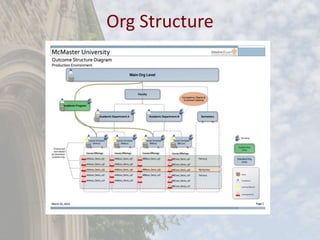
Org Structure
Org Structure
• Create “shadow” structure to the Org
– In our case Program
• Add competencies at the Org level
• Add competencies at the Program level
• Add objectives at the Template level
• Add activities at the Course Offering level
• Connect Offering > Template > Program
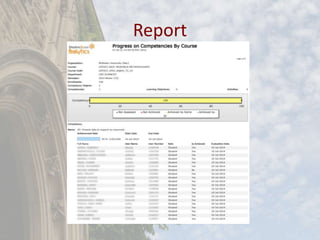
Report
Lessons Learned
• Logic of Competencies are too rigid
• Year over year? How to manage?
• Introduced/Practiced/Mastered classification
• Global reporting was slow
– Fixed by D2L
• Structure of D2L system can be flexible
– Using the DOME/OrgUnit Editor to connect
courses allows for multiple levels of reporting
What’s Next - Engineering
• 140 external standards that need to be
assessed per student
• 4 levels of achievement – will be assessed
with different competencies…
– Problematic as reporting will not recognize two
“distinct” competencies are related (eg. Level 1 –
Numeric Literacy and Level 2 – Numeric Literacy)
What’s Next - Continuing Education
• Fall 2014 will compare/contrast same course
delivered in a blended approach and a face-to-
face approach
Beyond “Next”
• Extending to Nursing, MedRadSci
– Both programs have external accreditation that
must be reported to
– Both have unique challenges in the types of
information they require
• Reporting back to D2L

Learning Outcomes Assessment

  • 1.
    Learning Outcomes at McMasterUniversity Lavinia Oltean, McMaster University Jon Kruithof, McMaster University
  • 2.
    Background Story • Gov’tof Ontario was giving money to various projects around productivity and innovation • University of Guelph and four other D2L clients (McMaster, Mohawk College, Waterloo, Wilfred Laurier) part of the project to work with D2L to improve Analytics/Insights
  • 3.
    Timeline • September 2013– submit proposal for funding • November 2013 – proposal accepted • November 2013 – budget for spending from April 2013, write a mid term report • March 2014 – budget for spending up until March • June 2014 – start doing the work
  • 4.
    Life Sciences • Lookingfor alignment between course & program outcomes • Fall 2014 – one course, one outcome • Winter 2015 – three courses, five outcomes • Spring/Summer 2015 – five courses, all outcomes • Fall 2015 – full program
  • 5.
    Geography and EarthSciences • Looking for alignment between course & program outcomes • Fall 2014 – four course, two outcomes • Winter 2015 – six courses, three outcomes • Fall 2015 – all courses, all outcomes
  • 6.
  • 7.
    Org Structure • Create“shadow” structure to the Org – In our case Program • Add competencies at the Org level • Add competencies at the Program level • Add objectives at the Template level • Add activities at the Course Offering level • Connect Offering > Template > Program
  • 8.
  • 9.
    Lessons Learned • Logicof Competencies are too rigid • Year over year? How to manage? • Introduced/Practiced/Mastered classification • Global reporting was slow – Fixed by D2L • Structure of D2L system can be flexible – Using the DOME/OrgUnit Editor to connect courses allows for multiple levels of reporting
  • 10.
    What’s Next -Engineering • 140 external standards that need to be assessed per student • 4 levels of achievement – will be assessed with different competencies… – Problematic as reporting will not recognize two “distinct” competencies are related (eg. Level 1 – Numeric Literacy and Level 2 – Numeric Literacy)
  • 11.
    What’s Next -Continuing Education • Fall 2014 will compare/contrast same course delivered in a blended approach and a face-to- face approach
  • 12.
    Beyond “Next” • Extendingto Nursing, MedRadSci – Both programs have external accreditation that must be reported to – Both have unique challenges in the types of information they require • Reporting back to D2L