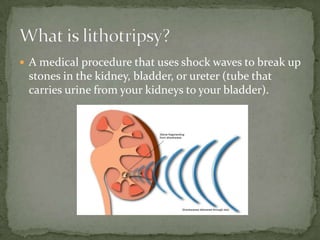
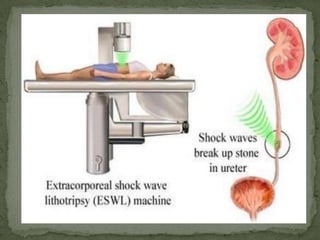
 A medical procedure that uses shock waves to break up
 stones in the kidney, bladder, or ureter (tube that
 carries urine from your kidneys to your bladder).
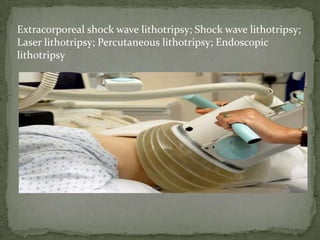
Extracorporeal shock wave lithotripsy; Shock wave lithotripsy;
Laser lithotripsy; Percutaneous lithotripsy; Endoscopic
lithotripsy
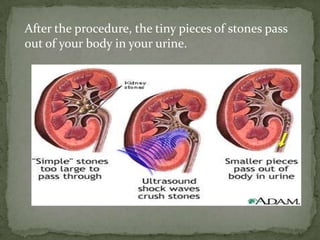
After the procedure, the tiny pieces of stones pass
out of your body in your urine.
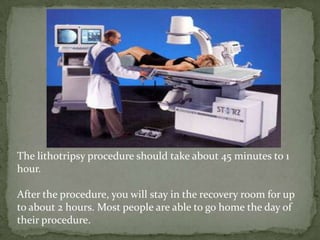
The lithotripsy procedure should take about 45 minutes to 1
hour.

After the procedure, you will stay in the recovery room for up
to about 2 hours. Most people are able to go home the day of
their procedure.
 Blood in the urine
 Pain and discomfort due to passage to remaining stone
    fragments.
   Frequency and urgency of urination
   Persistent abdominal pain due to injury to internal
    organs
   Inability to urinate due to obstruction by a stone
    fragment
   Repeat Lithotripsy procedure may be needed.

Lithotripsy

  • 2.
     A medicalprocedure that uses shock waves to break up stones in the kidney, bladder, or ureter (tube that carries urine from your kidneys to your bladder).
  • 3.
    Extracorporeal shock wavelithotripsy; Shock wave lithotripsy; Laser lithotripsy; Percutaneous lithotripsy; Endoscopic lithotripsy
  • 5.
    After the procedure,the tiny pieces of stones pass out of your body in your urine.
  • 6.
    The lithotripsy procedureshould take about 45 minutes to 1 hour. After the procedure, you will stay in the recovery room for up to about 2 hours. Most people are able to go home the day of their procedure.
  • 7.
     Blood inthe urine  Pain and discomfort due to passage to remaining stone fragments.  Frequency and urgency of urination  Persistent abdominal pain due to injury to internal organs  Inability to urinate due to obstruction by a stone fragment  Repeat Lithotripsy procedure may be needed.