E R C P
Endoscopic Retrograde
Cholangio-Pancreatography
By: Errol John S. Gongora
Endoscopic – performed by means of
endoscopy.
Endoscopy – is a nonsurgical
procedure used to examine a person’s
digestive tract.
Endoscope – is a medical device with
a light attached. It is used to look inside a
body cavity or organ.
Retrograde – moving backward or against
the usual direction.
Cholangiopancreatography- study of the
biliary or pancreatic ductal system.
Endoscopic retrograde cholangio-
pancreatography (ERCP) is a diagnostic test to
examine:
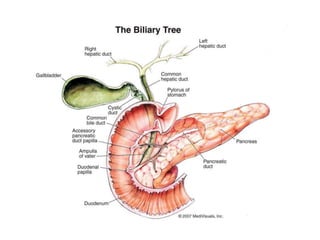
1. the duodenum (the first portion of the small intestine)
2. the papilla of Vater (a small nipple-like structure with
openings leading to the bile ducts and the pancreatic
duct)
3. the bile ducts, and
4. the gallbladder and the pancreatic duct.
Who performed ERCP:
Gastroenterologist
Anesthesiologist
Radiologist
Radiology Nurse
Radiologic Technologist
Contrast Media used:
The low-osmolar low-viscosity non-ionic Iopromid
(Ultravist, n = 15),
The low-viscosity high-osmolar Ioglicinate (Rayvist, n
= 18), and
The conventional dissociable high-viscosity Ioxaglinate
(Heaxbrix, n = 13).
Each presenting a iodine content of 300-320
mg/ml were compared. All three contrast solutions gave
excellent imaging of pancreatic and bile ducts.
Patient Preparation:
The stomach must be empty. (NPO 8 hrs)
The patient should not eat anything after
midnight on the evening preceding the exam.
In case the procedure is performed early in the
morning, no liquids should be taken.
In case the examination is performed at noon
time, a cup of tea, juice, milk, or coffee can be
taken four hours earlier. Heart and blood
pressure medications should always be taken
with a small amount of water in the early
morning.
Since the procedure will require intravenous
sedation, the patient needs to have a companion
drive them home after the procedure.
Sedation — The nurse will start an intravenous
(IV) line (by inserting a needle into a vein in the
hand or arm) to administer medications. Most
endoscopy units use a combination of a sedative
to induce relaxation, and a medication to prevent
discomfort. This is called "conscious sedation"
because you are awake, but the body is relaxed
and pain is numbed. In some more complicated
cases, you may be sedated more heavily or given
anesthesia (put to sleep) for the ERCP.
Two common ways of providing sedation for ERCP
are to administer combined intravenous midazolam
(sedative agent) and meperidine (morphine‐like
opioid) or the drug propofol (a sedative‐anaesthetic
agent) to patients.
Xylocaine spray (lidocaine)
Xylocaine spray contains the active ingredient
lidocaine hydrochloride (previously known as
lignocaine hydrochloride in the UK). It is a type of
medicine called a local anaesthetic and is used to
numb areas that would otherwise feel pain.
Indications:
Biliary Obstruction – suspected or known.
Pancreatic Obstruction – suspected or known.
Evaluation of signs/symptoms suggesting
pancreatic malignancy.
Evaluation of idiopathic pancreatitis.
Evaluation of sphincter of oddi by manometry.
Contraindications:
Evaluation of abdominal pain of obscure origin
in the absence of objective findings which
suggest biliary or pancreatic disease.
Evaluation of suspected gallbladder disease
without evidence of bile duct disease.
As further evaluation of proven pancreatic
malignancy unless management will be altered.
Materials used:
Mouth piece
Endoscope
Guidewires
Cannulation Catheters
Dilator Catheter
Manometry Catheter
Stent
Dye (CM)
Procedure:
The procedure is performed by using a long,
flexible, viewing instrument (a duodenoscope)
about the diameter of a pen.
The duodenoscope is inserted through the mouth,
through the back of the throat, down the food pipe
(esophagus), through the stomach and into the
duodenum.
Once the papilla of Vater is identified, a
small plastic catheter (cannula) is passed through an
open channel of the endoscope into the opening of
the papilla, and into the bile ducts and/or the
pancreatic duct.
Contrast material (dye) is then injected and X-rays
are taken of the bile ducts and the pancreatic duct.
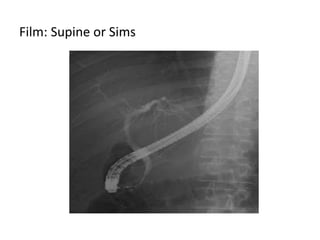
Film: Supine or Sims
Pathologies
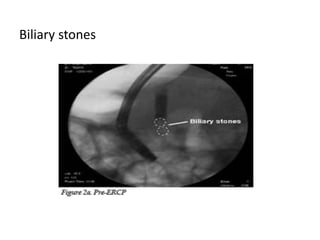
Biliary stones
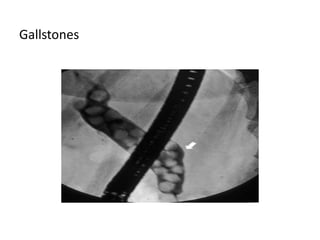
Gallstones
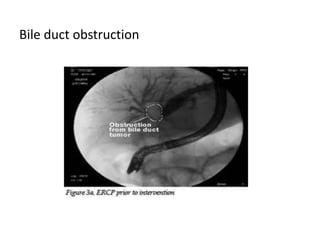
Bile duct obstruction
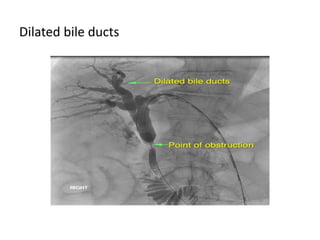
Dilated bile ducts
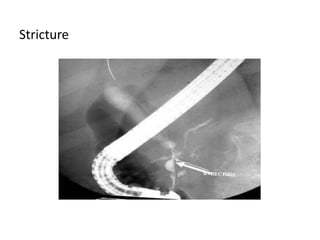
Stricture
After the procedure:
After ERCP, patients are moved to a recovery room where they
wait for about an hour for the sedatives to wear off. Patients
may not remember conversations with health care staff, as the
sedatives reduce memory of events during and after the
procedure. During this time, patients may feel bloated or
nauseous. Patients may also have a sore throat, which can last
a day or two.
• Patients can go home after the sedatives wear off. Patients
will likely feel tired and should plan to rest for the
remainder of the day.
• Some ERCP results are available immediately after the
procedure. Biopsy results are usually ready in a few days.
Eating, Diet, and Nutrition
Unless otherwise directed, patients may
immediately resume their normal diet and
medications after having an ERCP. The health
care provider can answer any specific questions
about eating, diet, and nutrition.
What are the risks associated with ERCP?
Significant risks associated with ERCP includes:
• infection
• pancreatitis
• allergic reaction to sedatives
• excessive bleeding, called hemorrhage
• puncture of the GI tract or ducts
• tissue damage from radiation exposure
• death, in rare circumstances
When ERCP is performed by an experienced doctor,
complications occur in about 6 to 10 percent of
patients and these often require hospitalization.1
Patients who experience any of the following
symptoms after ERCP should contact their health
care provider immediately:
• swallowing difficulties
• throat, chest, or abdominal pain that worsens
• vomiting
• bloody or dark stool
• fever

E r c p

  • 1.
    E R CP Endoscopic Retrograde Cholangio-Pancreatography By: Errol John S. Gongora
  • 2.
    Endoscopic – performedby means of endoscopy. Endoscopy – is a nonsurgical procedure used to examine a person’s digestive tract. Endoscope – is a medical device with a light attached. It is used to look inside a body cavity or organ.
  • 3.
    Retrograde – movingbackward or against the usual direction. Cholangiopancreatography- study of the biliary or pancreatic ductal system.
  • 4.
    Endoscopic retrograde cholangio- pancreatography(ERCP) is a diagnostic test to examine: 1. the duodenum (the first portion of the small intestine) 2. the papilla of Vater (a small nipple-like structure with openings leading to the bile ducts and the pancreatic duct) 3. the bile ducts, and 4. the gallbladder and the pancreatic duct.
  • 6.
  • 7.
    Contrast Media used: Thelow-osmolar low-viscosity non-ionic Iopromid (Ultravist, n = 15), The low-viscosity high-osmolar Ioglicinate (Rayvist, n = 18), and The conventional dissociable high-viscosity Ioxaglinate (Heaxbrix, n = 13). Each presenting a iodine content of 300-320 mg/ml were compared. All three contrast solutions gave excellent imaging of pancreatic and bile ducts.
  • 8.
    Patient Preparation: The stomachmust be empty. (NPO 8 hrs) The patient should not eat anything after midnight on the evening preceding the exam. In case the procedure is performed early in the morning, no liquids should be taken.
  • 9.
    In case theexamination is performed at noon time, a cup of tea, juice, milk, or coffee can be taken four hours earlier. Heart and blood pressure medications should always be taken with a small amount of water in the early morning. Since the procedure will require intravenous sedation, the patient needs to have a companion drive them home after the procedure.
  • 10.
    Sedation — Thenurse will start an intravenous (IV) line (by inserting a needle into a vein in the hand or arm) to administer medications. Most endoscopy units use a combination of a sedative to induce relaxation, and a medication to prevent discomfort. This is called "conscious sedation" because you are awake, but the body is relaxed and pain is numbed. In some more complicated cases, you may be sedated more heavily or given anesthesia (put to sleep) for the ERCP.
  • 11.
    Two common waysof providing sedation for ERCP are to administer combined intravenous midazolam (sedative agent) and meperidine (morphine‐like opioid) or the drug propofol (a sedative‐anaesthetic agent) to patients. Xylocaine spray (lidocaine) Xylocaine spray contains the active ingredient lidocaine hydrochloride (previously known as lignocaine hydrochloride in the UK). It is a type of medicine called a local anaesthetic and is used to numb areas that would otherwise feel pain.
  • 12.
    Indications: Biliary Obstruction –suspected or known. Pancreatic Obstruction – suspected or known. Evaluation of signs/symptoms suggesting pancreatic malignancy. Evaluation of idiopathic pancreatitis. Evaluation of sphincter of oddi by manometry.
  • 13.
    Contraindications: Evaluation of abdominalpain of obscure origin in the absence of objective findings which suggest biliary or pancreatic disease. Evaluation of suspected gallbladder disease without evidence of bile duct disease. As further evaluation of proven pancreatic malignancy unless management will be altered.
  • 14.
    Materials used: Mouth piece Endoscope Guidewires CannulationCatheters Dilator Catheter Manometry Catheter Stent Dye (CM)
  • 15.
    Procedure: The procedure isperformed by using a long, flexible, viewing instrument (a duodenoscope) about the diameter of a pen. The duodenoscope is inserted through the mouth, through the back of the throat, down the food pipe (esophagus), through the stomach and into the duodenum.
  • 16.
    Once the papillaof Vater is identified, a small plastic catheter (cannula) is passed through an open channel of the endoscope into the opening of the papilla, and into the bile ducts and/or the pancreatic duct. Contrast material (dye) is then injected and X-rays are taken of the bile ducts and the pancreatic duct.
  • 17.
  • 18.
  • 19.
  • 20.
  • 21.
  • 22.
  • 23.
  • 24.
    After the procedure: AfterERCP, patients are moved to a recovery room where they wait for about an hour for the sedatives to wear off. Patients may not remember conversations with health care staff, as the sedatives reduce memory of events during and after the procedure. During this time, patients may feel bloated or nauseous. Patients may also have a sore throat, which can last a day or two. • Patients can go home after the sedatives wear off. Patients will likely feel tired and should plan to rest for the remainder of the day. • Some ERCP results are available immediately after the procedure. Biopsy results are usually ready in a few days.
  • 25.
    Eating, Diet, andNutrition Unless otherwise directed, patients may immediately resume their normal diet and medications after having an ERCP. The health care provider can answer any specific questions about eating, diet, and nutrition.
  • 26.
    What are therisks associated with ERCP? Significant risks associated with ERCP includes: • infection • pancreatitis • allergic reaction to sedatives • excessive bleeding, called hemorrhage • puncture of the GI tract or ducts • tissue damage from radiation exposure • death, in rare circumstances
  • 27.
    When ERCP isperformed by an experienced doctor, complications occur in about 6 to 10 percent of patients and these often require hospitalization.1 Patients who experience any of the following symptoms after ERCP should contact their health care provider immediately: • swallowing difficulties • throat, chest, or abdominal pain that worsens • vomiting • bloody or dark stool • fever