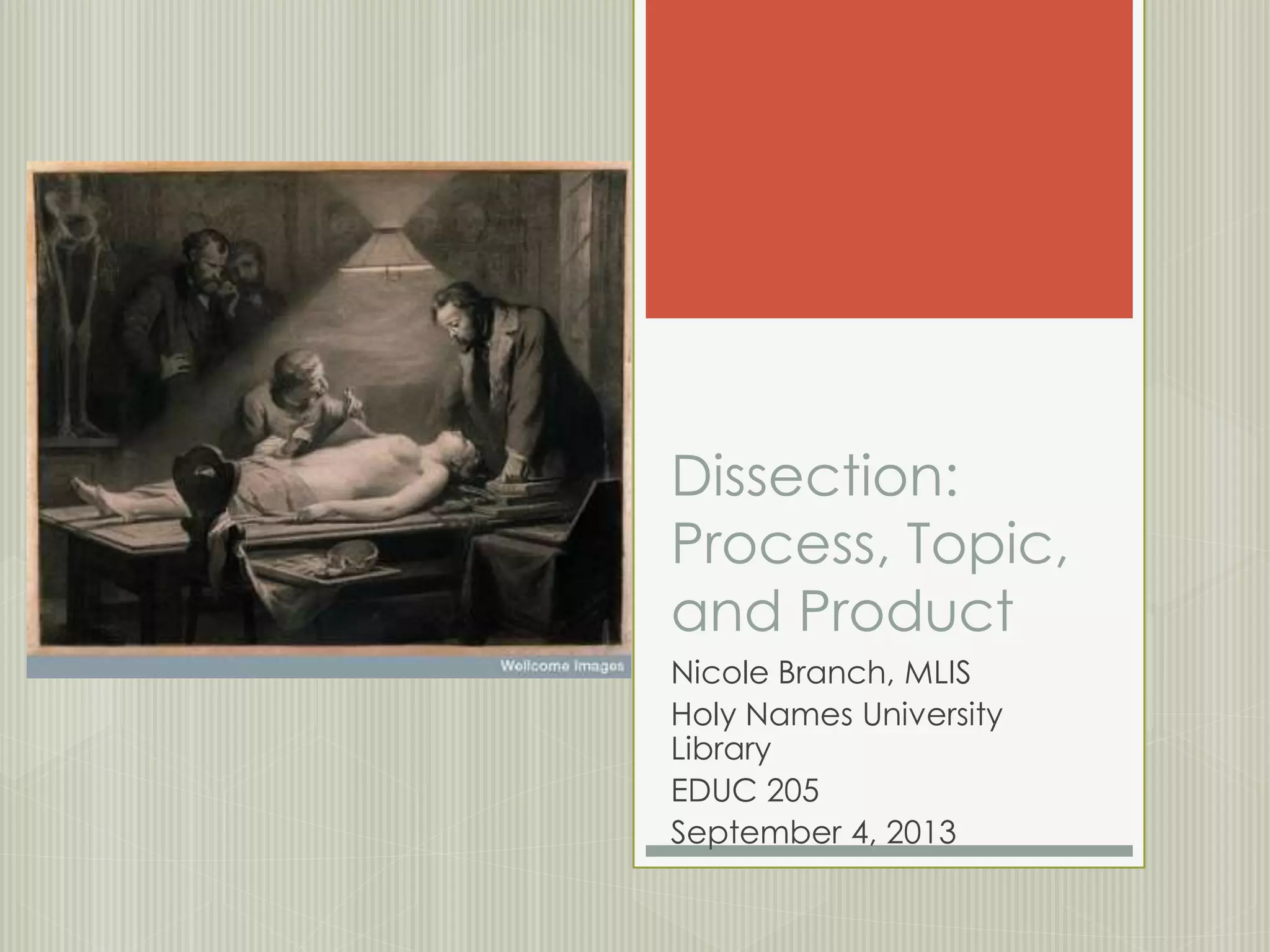
Dissection: 
Process, Topic, 
and Product 
Nicole Branch, MLIS 
Holy Names University 
Library 
EDUC 205 
September 4, 2013
Library Lab Structure 
 Concepts: How we find, use, evaluate, & 
interact with information. 
 Skill: Discrete capabilities to aid in finding 
and using information. 
 Tools: Information resources used to find, 
organize, retrieve, and access 
information.
Today we will cover… 
 Concept: The search process 
 Concept: Research as a conversation 
 Skill: Refining/developing a topic for search 
 Skill: Analyzing literature reviews 
 Tool: RefWorks
Topic 
Write 
down your 
topic as it 
currently 
exists.
Search Process 
Think back on a time when you 
had to search for information 
Reflect on the process you 
used and how you felt as you 
were going along
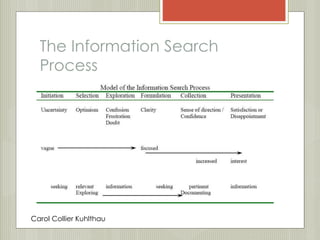
The Information Search 
Process 
Carol Collier Kuhlthau
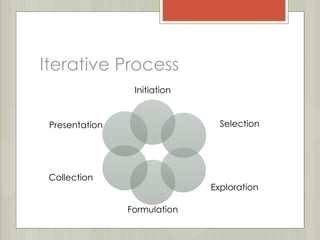
Iterative Process 
Initiation 
Selection 
Exploration 
Formulation 
Presentation 
Collection
Research as a Conversation 
Scholarly communication 
Multiple viewpoints (sometimes 
contradictory) 
Informed by position (discipline, 
area of expertise, background) 
Conversation vs. debate
Being a Good Listener 
Social conventions of 
conversation 
Lit review as a listening exercise
Topic Break: Listening 
Pull out the “talking” from the 
“listening” in your topic
Communication Styles 
Reference 
Popular 
Practitioner 
Reports, data and statistics 
Scholarly
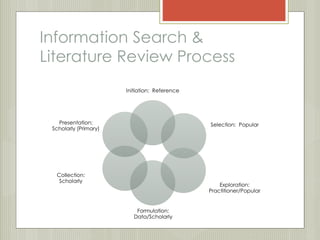
Information Search & 
Literature Review Process 
Initiation: Reference 
Selection: Popular 
Exploration: 
Practitioner/Popular 
Formulation: 
Data/Scholarly 
Presentation: 
Scholarly (Primary) 
Collection: 
Scholarly
Basic (Narrative) Literature 
Review 
“A written document that develops a case 
to establish a thesis. This review synthesizes 
current knowledge pertaining to the 
research question.” 
- Machi & McEvoy
Advanced Literature Review 
“A review that uses the work of the basic 
review to formulate and argue a question 
for original research.” 
- Machi & McEvoy
Systematic Review 
“A systematic review attempts to identify, 
appraise and synthesize all the empirical 
evidence that meets pre-specified eligibility 
criteria to answer a given research 
question.” 
- Cochrane Library
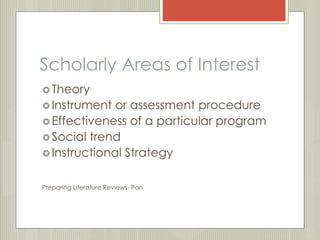
Scholarly Areas of Interest 
 Theory 
 Instrument or assessment procedure 
 Effectiveness of a particular program 
 Social trend 
 Instructional Strategy 
Preparing Literature Reviews- Pan
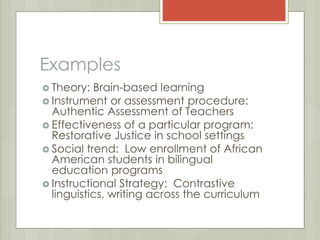
Examples 
 Theory: Brain-based learning 
 Instrument or assessment procedure: 
Authentic Assessment of Teachers 
 Effectiveness of a particular program: 
Restorative Justice in school settings 
 Social trend: Low enrollment of African 
American students in bilingual 
education programs 
 Instructional Strategy: Contrastive 
linguistics, writing across the curriculum
Topic Break: Define 
Define your topic interest area: 
Theory 
Instrument or assessment 
procedure 
Effectiveness of a particular 
program 
Social Trend 
Something else?
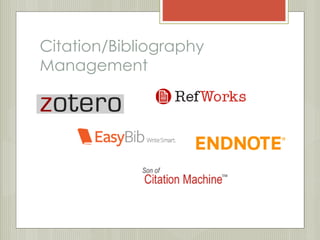
Citation/Bibliography 
Management
Seeking out the Voices 
HNU WorldCat 
Education Research Guide 
Reference Materials
Topic Break: So What? 
Step 1: Name your topic 
 I am studying…. 
Step 2: Add an indirect question 
 Because I want to… 
Step 3: Answer “So What?” 
 In order to… 
The Craft of Research, 3rd Ed., Booth, Colomb & Williams
So What?: Define Your Topic 
Step 1: Name your topic 
 I am studying…. 
 The experience of students that transition to college from high 
schools with weak library cultures 
Step 2: Add an indirect question 
 Because I want to… 
 Understand areas of academic need 
Step 3: Answer “So What?” 
 In order to… 
 Add to professional understanding of how library services can 
improve the academic success of under-resourced students. 
The Craft of Research, 3rd Ed., Booth, Colomb & Williams
Topic Break: So What? 
Step 1: Name your topic 
 I am studying…. 
Step 2: Add an indirect question 
 Because I want to… 
Step 3: Answer “So What?” 
 In order to… 
The Craft of Research, 3rd Ed., Booth, Colomb & Williams
Dissecting Lit Review 
 Groups of three 
 Analyze structure of the lit review 
 Report back
Reflection 
 Search for information on your topic 
 Reflect (in writing is great!) on your 
experience 
 Frustrations 
 Victories 
 Process 
 Impact on how you perceive your topic
Closing 
Feedback, please! 
http://tinyurl.com/educ205 
Next Library Lab: 
September 11, 2013, 4:30-7:30 pm 
Topic: Academic Networking: 
Finding the Conversation

Literature Review Dissestion

  • 1.
    Dissection: Process, Topic, and Product Nicole Branch, MLIS Holy Names University Library EDUC 205 September 4, 2013
  • 2.
    Library Lab Structure  Concepts: How we find, use, evaluate, & interact with information.  Skill: Discrete capabilities to aid in finding and using information.  Tools: Information resources used to find, organize, retrieve, and access information.
  • 3.
    Today we willcover…  Concept: The search process  Concept: Research as a conversation  Skill: Refining/developing a topic for search  Skill: Analyzing literature reviews  Tool: RefWorks
  • 4.
    Topic Write downyour topic as it currently exists.
  • 5.
    Search Process Thinkback on a time when you had to search for information Reflect on the process you used and how you felt as you were going along
  • 6.
    The Information Search Process Carol Collier Kuhlthau
  • 7.
    Iterative Process Initiation Selection Exploration Formulation Presentation Collection
  • 8.
    Research as aConversation Scholarly communication Multiple viewpoints (sometimes contradictory) Informed by position (discipline, area of expertise, background) Conversation vs. debate
  • 9.
    Being a GoodListener Social conventions of conversation Lit review as a listening exercise
  • 10.
    Topic Break: Listening Pull out the “talking” from the “listening” in your topic
  • 11.
    Communication Styles Reference Popular Practitioner Reports, data and statistics Scholarly
  • 12.
    Information Search & Literature Review Process Initiation: Reference Selection: Popular Exploration: Practitioner/Popular Formulation: Data/Scholarly Presentation: Scholarly (Primary) Collection: Scholarly
  • 13.
    Basic (Narrative) Literature Review “A written document that develops a case to establish a thesis. This review synthesizes current knowledge pertaining to the research question.” - Machi & McEvoy
  • 14.
    Advanced Literature Review “A review that uses the work of the basic review to formulate and argue a question for original research.” - Machi & McEvoy
  • 15.
    Systematic Review “Asystematic review attempts to identify, appraise and synthesize all the empirical evidence that meets pre-specified eligibility criteria to answer a given research question.” - Cochrane Library
  • 16.
    Scholarly Areas ofInterest  Theory  Instrument or assessment procedure  Effectiveness of a particular program  Social trend  Instructional Strategy Preparing Literature Reviews- Pan
  • 17.
    Examples  Theory:Brain-based learning  Instrument or assessment procedure: Authentic Assessment of Teachers  Effectiveness of a particular program: Restorative Justice in school settings  Social trend: Low enrollment of African American students in bilingual education programs  Instructional Strategy: Contrastive linguistics, writing across the curriculum
  • 18.
    Topic Break: Define Define your topic interest area: Theory Instrument or assessment procedure Effectiveness of a particular program Social Trend Something else?
  • 19.
  • 20.
    Seeking out theVoices HNU WorldCat Education Research Guide Reference Materials
  • 22.
    Topic Break: SoWhat? Step 1: Name your topic  I am studying…. Step 2: Add an indirect question  Because I want to… Step 3: Answer “So What?”  In order to… The Craft of Research, 3rd Ed., Booth, Colomb & Williams
  • 23.
    So What?: DefineYour Topic Step 1: Name your topic  I am studying….  The experience of students that transition to college from high schools with weak library cultures Step 2: Add an indirect question  Because I want to…  Understand areas of academic need Step 3: Answer “So What?”  In order to…  Add to professional understanding of how library services can improve the academic success of under-resourced students. The Craft of Research, 3rd Ed., Booth, Colomb & Williams
  • 24.
    Topic Break: SoWhat? Step 1: Name your topic  I am studying…. Step 2: Add an indirect question  Because I want to… Step 3: Answer “So What?”  In order to… The Craft of Research, 3rd Ed., Booth, Colomb & Williams
  • 25.
    Dissecting Lit Review  Groups of three  Analyze structure of the lit review  Report back
  • 26.
    Reflection  Searchfor information on your topic  Reflect (in writing is great!) on your experience  Frustrations  Victories  Process  Impact on how you perceive your topic
  • 27.
    Closing Feedback, please! http://tinyurl.com/educ205 Next Library Lab: September 11, 2013, 4:30-7:30 pm Topic: Academic Networking: Finding the Conversation

Editor's Notes

  • #7 From: Kuhlthau http://comminfo.rutgers.edu/~kuhlthau/information_search_process.htm Initiation, when a person first becomes aware of a lack of knowledge or understanding and feelings of uncertainty and apprehension are common.  Selection, when a general area, topic, or problem is identified and initial uncertainty often gives way to a brief sense of optimism and a readiness to begin the search.  Exploration, when inconsistent, incompatible information is encountered and uncertainty, confusion, and doubt frequently increase and people find themselves “in the dip” of confidence.  Formulation, when a focused perspective is formed and uncertainty diminishes as confidence begins to increase. Collection, when information pertinent to the focused perspective is gathered and uncertainty subsides as interest and involvement deepens.  Presentation, when the search is completed with a new understanding enabling the person to explain his or her learning to others or in someway put the learning to use.
  • #13  Initiation, when a person first becomes aware of a lack of knowledge or understanding and feelings of uncertainty and apprehension are common.  Selection, when a general area, topic, or problem is identified and initial uncertainty often gives way to a brief sense of optimism and a readiness to begin the search.  Exploration, when inconsistent, incompatible information is encountered and uncertainty, confusion, and doubt frequently increase and people find themselves “in the dip” of confidence.  Formulation, when a focused perspective is formed and uncertainty diminishes as confidence begins to increase. Collection, when information pertinent to the focused perspective is gathered and uncertainty subsides as interest and involvement deepens.  Presentation, when the search is completed with a new understanding enabling the person to explain his or her learning to others or in someway put the learning to use.