Burkina Faso
About Burkina Faso
• Age structure
• 0-14 years: 46.8% (male 3,267,202/female
3,235,190)
• 15-64 years: 50.7% (male 3,513,559/female
3,538,623)
• 65 years and over: 2.5% (male 140,083/female
208,315) (2006 est.)
• Education expenditure
• 4.2% of GDP (2006)
Literacy rate
Population

15,264,735

Poverty (Population living on less
than US$1 per day)

27%

Poverty (Population living on less
than US$2 per day)

72 %

Adult Literacy Rate (15 years and
over, 2000–2006)

Female: 18 %
Male: 34 %
Total: 26 %

Total Youth Literacy Rate (15-24
years)

34 %

Access to Primary Education – Total
Net Intake Rate (NIR)

44% (2006)
Education
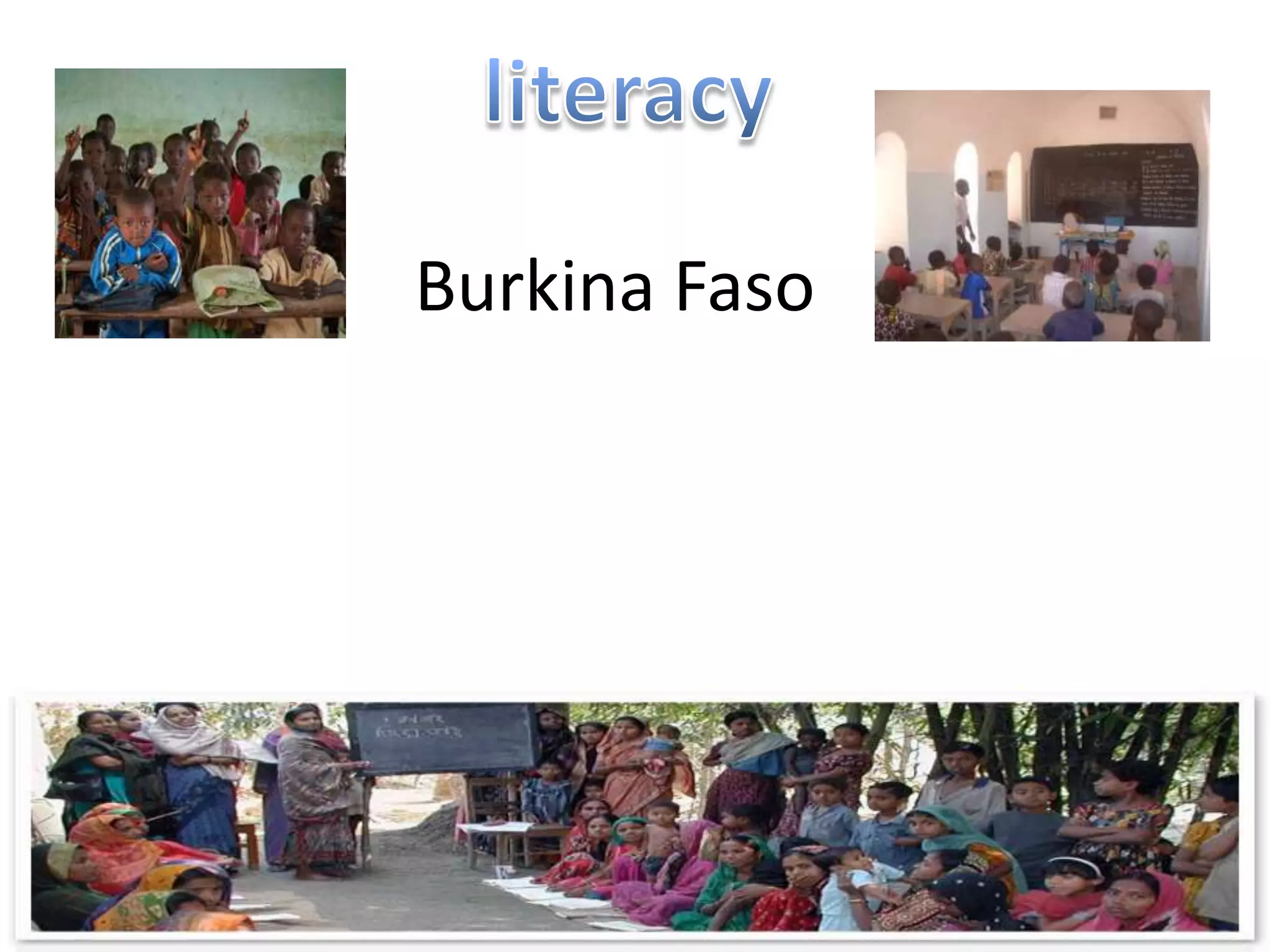
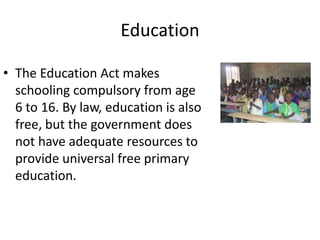
• The Education Act makes
schooling compulsory from age
6 to 16. By law, education is also
free, but the government does
not have adequate resources to
provide universal free primary
education.
Impact and challenges
• The lack of education would lead to more
people to work in primary industries such as
farming
• This would lead to a high birth rate in the
country as the people want more children to
help in farming
• Majority of the youth would also not receve
education as most of them are working in
farms
Impact and challenges
The BEP has achieved major accomplishments which have had strong and positive
impacts on the entire education system as well as on the quality of life of the
beneficiaries. The following are key indicators of the impact of the BEP.
Many children and young people have benefited from the BEP and many beneficiaries
have acquired professional qualifications:
• 36 E centres catering for 2,832 children aged between three and sis years, of which
50.28 per cent were girls
• 112 bilingual primary schools with a total of 14,301 pupils, 46.82 per cent of whom
were girls
• two CMS with 337 pupils, 48.37 per cent being girls.
Bilingual schools have also proved to be more efficient and effective with regards to
skills acquisition than normal schools. As the table below indicates, the pass rate in
the Primary School Certificate (CEP) for pupils in bilingual schools – where they only
spend four to five years – has generally been higher than the national average, despite
the fact that the CEP tests are entirely in French and intended for pupils who have
spent at least six years in school.
Aims and Objectives
The BEP aims to:
• increase access to education for all people
• improve the quality, relevance and effectiveness
of basic education in Burkina Faso through the
use of national languages and French
• combat illiteracy and to use literacy skills to
combat poverty
• promote development based on the country’s
socio-cultural values and realities
• strengthen the status of national languages
How to solve the problem
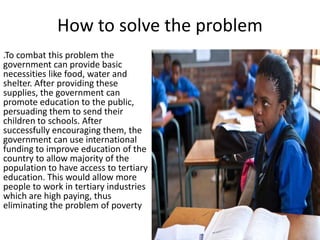
.To combat this problem the
government can provide basic
necessities like food, water and
shelter. After providing these
supplies, the government can
promote education to the public,
persuading them to send their
children to schools. After
successfully encouraging them, the
government can use international
funding to improve education of the
country to allow majority of the
population to have access to tertiary
education. This would allow more
people to work in tertiary industries
which are high paying, thus
eliminating the problem of poverty

Literacy

  • 1.
  • 2.
    About Burkina Faso •Age structure • 0-14 years: 46.8% (male 3,267,202/female 3,235,190) • 15-64 years: 50.7% (male 3,513,559/female 3,538,623) • 65 years and over: 2.5% (male 140,083/female 208,315) (2006 est.) • Education expenditure • 4.2% of GDP (2006)
  • 3.
    Literacy rate Population 15,264,735 Poverty (Populationliving on less than US$1 per day) 27% Poverty (Population living on less than US$2 per day) 72 % Adult Literacy Rate (15 years and over, 2000–2006) Female: 18 % Male: 34 % Total: 26 % Total Youth Literacy Rate (15-24 years) 34 % Access to Primary Education – Total Net Intake Rate (NIR) 44% (2006)
  • 4.
    Education • The EducationAct makes schooling compulsory from age 6 to 16. By law, education is also free, but the government does not have adequate resources to provide universal free primary education.
  • 5.
    Impact and challenges •The lack of education would lead to more people to work in primary industries such as farming • This would lead to a high birth rate in the country as the people want more children to help in farming • Majority of the youth would also not receve education as most of them are working in farms
  • 6.
    Impact and challenges TheBEP has achieved major accomplishments which have had strong and positive impacts on the entire education system as well as on the quality of life of the beneficiaries. The following are key indicators of the impact of the BEP. Many children and young people have benefited from the BEP and many beneficiaries have acquired professional qualifications: • 36 E centres catering for 2,832 children aged between three and sis years, of which 50.28 per cent were girls • 112 bilingual primary schools with a total of 14,301 pupils, 46.82 per cent of whom were girls • two CMS with 337 pupils, 48.37 per cent being girls. Bilingual schools have also proved to be more efficient and effective with regards to skills acquisition than normal schools. As the table below indicates, the pass rate in the Primary School Certificate (CEP) for pupils in bilingual schools – where they only spend four to five years – has generally been higher than the national average, despite the fact that the CEP tests are entirely in French and intended for pupils who have spent at least six years in school.
  • 7.
    Aims and Objectives TheBEP aims to: • increase access to education for all people • improve the quality, relevance and effectiveness of basic education in Burkina Faso through the use of national languages and French • combat illiteracy and to use literacy skills to combat poverty • promote development based on the country’s socio-cultural values and realities • strengthen the status of national languages
  • 8.
    How to solvethe problem .To combat this problem the government can provide basic necessities like food, water and shelter. After providing these supplies, the government can promote education to the public, persuading them to send their children to schools. After successfully encouraging them, the government can use international funding to improve education of the country to allow majority of the population to have access to tertiary education. This would allow more people to work in tertiary industries which are high paying, thus eliminating the problem of poverty