49 
reclaiming and redefining rights: 
setting the adolescent and young 
people srhr agenda beyond icpd+20 
SUB-SAHARAN AFRICA REGION FACT SHEET 
These Global South Adolescent and Young People Fact Sheets, have been 
developed as part of the ICPD+20 Global South SRHR Monitoring and 
Research Initiative steered by ARROW in partnership with Central and 
Eastern European Women’s Network for Sexual and Reproductive Health and 
Rights (ASTRA), Latin American and Caribbean Women’s Health Network (LACWHN), 
Egyptian Initiative for Personal Rights (EIPR) and the World YWCA. The fact sheets 
provide the most recent data and analysis on adolescent and young people SRHR 
across the Global South regions. The recommendations to respective governments, 
donors, UN agencies take into consideration the evidence and lived realities of 
adolescent and young people in Asia and the Pacific, Eastern Europe, Latin America 
and the Caribbean, and the Middle East and Northern Africa and Sub-Saharan Africa. 
1.Context1 
Adolescents and young people in Sub-Saharan Africa (SSA) will 
constitute 19.6% (224,432,000) of the region’s population by 
2015.2 The region is characterized by unemployment particularly 
among youth with an employment to population ratio at 
45.8%.3 Employment for young people age 15-24 has remained 
stagnant4 and youth in particular face lack of productive 
employment and decent jobs. Too many young people are 
employed in the informal and vulnerable employment sectors.5 
While the 45 countries that comprise SSA6 show steady 
economic growth, this progress is not reflected in the 
socioeconomic and health indicators for its young population. 
The region is yet to achieve the ICPD goals as well as the MDG 
targets and indicators. Poverty is highest in SSA compared to 
all the other regions, with 47.5% of people living on less than a 
$1.25 PPP/day.7 
2. Universal access to quality 
education 
The ICPD PoA states that education is a key factor in sustainable 
development. The PoA calls for universal access to quality 
education and achieving the widest and earliest possible access 
by girls and women to secondary education. At the same 
time the MDG 2 calls for universal primary education for boys 
and girls alike by 2015. Young people in SSA share common 
dreams about their education, health, and work; however the 
experience of being a young woman or man is as diverse as the 
cultures of the communities they live in. 
SSA has progressed with promoting gross enrolment in primary 
education for both boys and girls, however low retention and 
high dropout rates caused by poverty, gender discrimination, 
poor hygiene and sanitation facilities, and sexual harassment 
by teachers and male pupils, hinder completion of primary 
This fact sheet has been published by ARROW with funding support from FORDFOUNDATION and Sida
50 
education especially for girls. The gross secondary enrolment 
ratio is a mere 35.3% and the gross tertiary enrolment ratio is a 
dismal 5.9%.8 
At 32 million, SSA has the highest number of out of school 
youth, many of them young women in rural areas. Gender 
disparities are largest in rural poor households, where only 
38% of females are enroled in tertiary education9 The rights of 
many young women to higher education is dependent on family 
choices and societal norms. These norms often keep them at 
home to help with household chores and some are married off 
early to increase household incomes. They are sexually abused 
by teachers and peers, and subjected to gender insensitive 
curriculum with no female role models. 
Countries that have abolished school fees over the past decade 
showed positive results. In Kenya, enrolment increased by 
1.3 million in just a matter of weeks.10 The abolition of fees is 
partly credited with Tanzania’s success in raising the primary 
net enrolment ratio from a reported 50 % in 1999 to 98 % in 
2007.11 
The percentage of literate young women and men age 15- 
24, according to 2010 data, is 71.8% in the region, men 
accounting for higher percentage than women in most countries 
observed.12 
3. Access to sexual and 
reproductive health (SRH) 
information and services 
The ICPD PoA calls for the promotion “to the fullest extent” 
of the health of young people and provision of services that 
are of good quality and sensitive to the needs of the young 
and “safeguarding the rights of adolescents to privacy, 
confidentiality, respect and informed consent.”13 
3.1 Comprehensive sexuality education (CSE) 
Overall there is limited data on sexuality education status in 
the region. A Guttmacher study14 emphasised the need for 
sexuality education both in school and out of school in SSA, 
given the magnitude of HIV, unintended pregnancies and the 
vulnerabilities of adolescent and young girls. 
Despite policies in place many adolescents do not receive 
any form of sexuality education. The entry point for most of 
the sexuality education curricula is through HIV and AIDS 
programmes. According to a 2004 survey, HIV and AIDS 
were part of the primary school curriculum in 19 of 20 
African countries with a high prevalence of HIV. Life skills are 
integrated into the curricula in 17 of the 20 countries, however 
implementation of the programmes have not been effective. 
At the same time school-based sex education programmes do 
not cater to youth (the majority of them adolescent girls and 
young women) who are not in school. Addressing out-of-school 
adolescents is another big challenge in the region. 
Sexuality education is not comprehensive, mostly takes 
a biological perspective and religious groups and parent 
associations define the parameters and content for its age 
appropriateness. Some NGOs have established adolescent 
friendly reproductive health services in Tanzania and Zambia to 
provide the population age 10-24 with sexual and reproductive 
health information. Other barriers include teachers who are 
perpetrators of sexual harassment and violence thus parents 
are not comfortable with them handling the programmes. The 
low number of female teachers in rural schools and poor 
infrastructure also limit young women’s access to quality 
information.15 
3.2 Contraceptive use among adolescents and 
young people 
According to Guttmacher brief- Facts on the Sexual and 
Reproductive Health of Adolescent Women in the Developing 
World- only 21% of married adolescents in sub-Saharan Africa 
are using a modern contraceptive method and 67% of married 
adolescent women who want to avoid pregnancy for at least the 
next two years are not using any method of contraception. At 
the same time significant percentage- 68%- of sexually active 
adolescents have an unmet need for modern contraception.16 
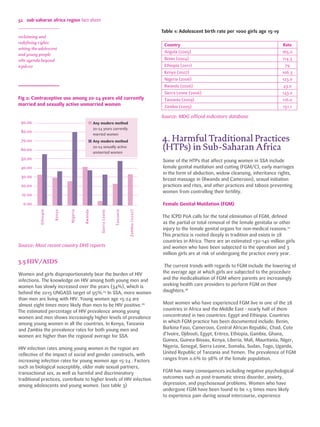
In the nine SSA countries, as part of the Global South ICPD+20 
review, contraceptive use among young unmarried women is 
higher in comparison to married women of the same age. This 
situation might have arisen due to strong HIV intervention 
programmes as the predominant method of contraception used 
by this group is condoms and this group does not seem to have 
access to range of contraceptive methods. 
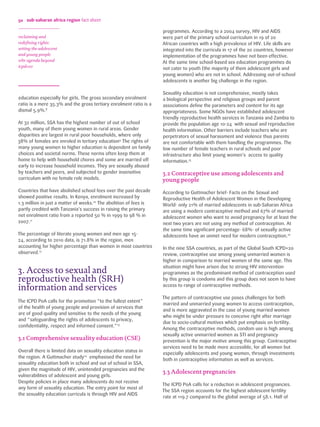
The pattern of contraceptive use poses challenges for both 
married and unmarried young women to access contraception, 
and is more aggravated in the case of young married women 
who might be under pressure to conceive right after marriage 
due to socio-cultural motives which put emphasis on fertility. 
Among the contraceptive methods, condom use is high among 
sexually active unmarried women as STI and pregnancy 
prevention is the major motive among this group. Contraceptive 
services need to be made more accessible, for all women but 
especially adolescents and young women, through investments 
both in contraceptive information as well as services. 
3.3 Adolescent pregnancies 
The ICPD PoA calls for a reduction in adolescent pregnancies. 
The SSA region accounts for the highest adolescent fertility 
rate at 119.7 compared to the global average of 58.1. Half of 
sub-saharan africa region fact sheet 
reclaiming and 
redefining rights: 
setting the adolescent 
and young people 
srhr agenda beyond 
icpd+20
51 
sub-saharan africa region fact sheet 
services. It calls for women’s access to quality services for the 
management of complications arising from abortion. Post-abortion 
counselling, education and family planning services 
should be offered promptly, which will also help to avoid 
repeat abortions.”18 
The annual number of induced abortions in Africa rose between 
2003 and 2008, from 5.6 million to 6.4 million. In 2008, the 
most abortions occurred in Eastern Africa (2.5 million), followed 
by Western Africa (1.8 million), Northern and Middle Africa (0.9 
million), and Southern Africa (0.2 million).19 
Of the 6.4 million abortions carried out in 2008, only 3% were 
safe. The condition for the legality of abortion varies among 
countries in the region. Every country in Africa has at least one 
ground on which abortion is permitted.20 
In most Sub-Saharan countries legal restrictions on abortion 
increases the risk of unsafe abortion among young women, 
particularly in countries where sex education is also restricted 
on moral grounds. This environment places young women in a 
complex situation where they are stigmatised for seeking unsafe 
abortion following unintended pregnancies. Many of them 
are poor, cannot access services and have limited access to 
contraception as well. (see table 2) 
The African charter on the Protocol on Women of Rights 
(Maputo Protocol), signed by most of SSA countries, has 
explicitly articulated a woman’s right to abortion. Article 
14(2) of the Protocol calls upon states to “provide adequate, 
affordable and accessible health services” to women. It also 
urges governments to protect the reproductive rights of women 
by authorising medical abortion in cases of sexual assault, rape, 
incest, and where the continued pregnancy endangers the 
mental and physical health or life of the [pregnant woman] or 
life of the foetus. 
Despite this most of the countries still retain harsh laws on 
abortion, inherited from colonial regimes and borrowed from 
other countries with similar religious barriers. One quarter of 
unsafe abortions occur among adolescents age 15-19 in Africa, 
which is the highest of all the world regions.21 Young women 
account for a significant proportion of the number of unsafe 
abortions22 with almost 60% under age 25 and 80% under 
age 30.23 Even where abortions are legal, young women face 
barriers in accessing safe abortions, including gestational limits, 
the need for parental consent, mandatory waiting periods or 
counseling, and lack of knowledge on the legality of abortions.24 
Fig 1: Contraceptive use among 15-19 years old currently 
married and sexually active unmarried women 
70.00 
60.00 
50.00 
40.00 
30.00 
20.00 
10.00 
0.00 
Ethiopia 
Kenya 
Nigeria 
Rwanda 
Any modern method 
15-19 years currently 
married women 
Any modern method 
15-19 sexually active 
unmarried women 
Sierra Leone 
Tanzania 
Zambia (2007) 
Source: Most recent country DHS reports 
adolescent births occur in seven countries across the world and 
Democratic Republic of Congo, Ethiopia, and Nigeria are among 
these countries. 
An examination of adolescent fertility rates in Angola (165.0), 
Zambia (151.1), Sierra Leone (143.0), and Nigeria (123.0) shows 
high adolescent fertility rates above the regional SSA average of 
119.7. Rwanda is the only country that has an adolescent fertility 
rate that is lower than the regional and the global average. (see 
table 1) 
In the nine SSA countries, as part of the Global South ICPD+20 
review, the percentage of women aged 15-19 who have already 
started child bearing is quite high according to the most recent 
DHS in the respective countries, 34% in Sierra Leone; 28.6% in 
Angola; 27.9% in Zambia; 22.9% in Nigeria; 22.8% in Tanzania; 
21.4% in Benin; 17.7% in Kenya; 12.4% in Ethiopia. Rwanda has 
a relatively lower percentage of women aged 15-19 who have 
already begun child bearing at 6.1%. 
Adolescent girls are at risk of early childbearing and the risks 
are magnified for the youngest mothers.17 Adolescents under 
16 face four times the risk of maternal death and morbidity as 
women over 20. Pregnancy may limit or even end a teenager’s 
ability to pursue educational or job opportunities. 
3.4 Access to abortion information and servcies 
among adolescents and young people 
The ICPD PoA calls upon governments and all stakeholders 
to “deal with the health impact of unsafe abortion as a 
major public health concern and to reduce the recourse to 
abortion through expanded and improved family planning 
reclaiming and 
redefining rights: 
setting the adolescent 
and young people 
srhr agenda beyond 
icpd+20
52 
sub-saharan africa region fact sheet 
reclaiming and 
redefining rights: 
setting the adolescent 
and young people 
srhr agenda beyond 
icpd+20 
3.5 HIV/AIDS 
Women and girls disproportionately bear the burden of HIV 
infections. The knowledge on HIV among both young men and 
women has slowly increased over the years (34%), which is 
behind the 2015 UNGASS target of 95%.25 In SSA, more women 
than men are living with HIV. Young women age 15-24 are 
almost eight times more likely than men to be HIV positive.26 
The estimated percentage of HIV prevalence among young 
women and men shows increasingly higher levels of prevalence 
among young women in all the countries. In Kenya, Tanzania 
and Zambia the prevalence rates for both young men and 
women are higher than the regional average for SSA. 
HIV infection rates among young women in the region are 
reflective of the impact of social and gender constructs, with 
increasing infection rates for young women age 15-24 . Factors 
such as biological susceptibly, older male sexual partners, 
transactional sex, as well as harmful and discriminatory 
traditional practices, contribute to higher levels of HIV infection 
among adolescents and young women. (see table 3) 
4. Harmful Traditional Practices 
(HTPs) in Sub-Saharan Africa 
Some of the HTPs that affect young women in SSA include 
female genital mutilation and cutting (FGM/C), early marriages 
in the form of abduction, widow cleansing, inheritance rights, 
breast massage in (Rwanda and Cameroon), sexual initiation 
practices and rites, and other practices and taboos preventing 
women from controlling their fertility. 
Female Genital Mutilation (FGM) 
The ICPD PoA calls for the total elimination of FGM, defined 
as the partial or total removal of the female genitalia or other 
injury to the female genital organs for non-medical reasons.27 
This practice is rooted deeply in tradition and exists in 28 
countries in Africa. There are an estimated 130–140 million girls 
and women who have been subjected to the operation and 3 
million girls are at risk of undergoing the practice every year. 
The current trends with regards to FGM include the lowering of 
the average age at which girls are subjected to the procedure 
and the medicalisation of FGM where parents are increasingly 
seeking health care providers to perform FGM on their 
daughters.28 
Most women who have experienced FGM live in one of the 28 
countries in Africa and the Middle East – nearly half of them 
concentrated in two countries: Egypt and Ethiopia. Countries 
in which FGM practice has been documented include: Benin, 
Burkina Faso, Cameroon, Central African Republic, Chad, Cote 
d’Ivoire, Djibouti, Egypt, Eritrea, Ethiopia, Gambia, Ghana, 
Guinea, Guinea-Bissau, Kenya, Liberia, Mali, Mauritania, Niger, 
Nigeria, Senegal, Sierra Leone, Somalia, Sudan, Togo, Uganda, 
United Republic of Tanzania and Yemen. The prevalence of FGM 
ranges from 0.6% to 98% of the female population. 
FGM has many consequences including negative psychological 
outcomes such as post-traumatic stress disorder, anxiety, 
depression, and psychosexual problems. Women who have 
undergone FGM have been found to be 1.5 times more likely 
to experience pain during sexual intercourse, experience 
Fig 2: Contraceptive use among 20-24 years old currently 
married and sexually active unmarried women 
Table 1: Adolescent birth rate per 1000 girls age 15-19 
Country Rate 
Angola (2005) 165.0 
Benin (2004) 114.3 
Ethiopia (2011) 79 
Kenya (2007) 106.3 
Nigeria (2006) 123.0 
Rwanda (2006) 43.0 
Sierra Leone (2006) 143.0 
Tanzania (2009) 116.0 
Zambia (2005) 151.1 
Source: MDG official indicators database 
90.00 
80.00 
70.00 
60.00 
50.00 
40.00 
30.00 
20.00 
10.00 
0.00 
Ethiopia 
Kenya 
Nigeria 
Rwanda 
Sierra Leone 
Tanzania 
Zambia (2007) 
Any modern method 
20-24 years currently 
married women 
Any modern method 
20-24 sexually active 
unmarried women 
Source: Most recent country DHS reports
53 
Table 2: Grounds on which abortion is permitted 
Country 
sub-saharan africa region fact sheet 
Grounds on which abortion is permitted 
To save the 
woman’s life 
To preserve 
physical 
health 
To preserve 
mental health Rape or incest Foetal 
significantly less sexual satisfaction, and have less sexual desire, 
and experience complications during childbirth. While there are 
efforts to curb this practice, in many countries the reduction 
in prevalence is not as substantial as hoped for, and in a few, 
no decline has been noted.29 Although some countries in SSA 
have addressed these issues, there is need for greater effort to 
combat HTPs in the region.30 
5. Homophobia and Transphobia 
The situation in Africa for lesbian, gay, bisexual, trans, intersex 
and queer (LGBTIQ) persons has not seen much progress in 
recent years. Regionally, 36 countries have laws criminalizing 
homosexuality. Punishments include imprisonment and the 
death penalty. The laws on homosexuality are rooted in colonial 
era laws, religious extremism, political climates, cultural beliefs, 
heterosexual family values and patriarchy.31 
At the UN Assembly in Geneva on the Joint Declaration to 
decriminalise homosexuality in 2011, the number of African 
countries who signed rose from 6 to 11 with 13 countries who 
abstained and 28 who opposed Joint Statement on Sexual 
Orientation and Gender Identity (SOGI).32 These developments 
will have implications for the exercise of SRH rights of LGBTIQ 
persons. 
impairment 
Economic or 
social reasons On request 
Angola  –— –— –— –— –— –— 
Benin      –— –— 
Ethiopia      –— –— 
Kenya    –— –— –— –— 
Nigeria    –— –— –— –— 
Rwanda    –— –— –— –— 
Sierra Leone    –— –— –— –— 
Tanzania    –— –— –— –— 
Zambia    –—   –— 
Source: World Abortion Policies 2011 (UN) 
reclaiming and 
redefining rights: 
setting the adolescent 
and young people 
srhr agenda beyond 
icpd+20 
Table 3: Young women and men HIV prevalence 
Young women (15–24) 
prevalence (%) 
Young men (15–24) 
prevalence (%) 
Global 0.6 [0.5 – 0.7] 0.3 [0.2 – 0.3] 
Sub-Saharan Africa 3.4 [3.0 – 4.2] 1.4 [1.2 – 1.7] 
Angola 1.6 [1.1 – 2.2] 0.6 [0.4 – 0.9] 
Benin (2006) 0.7 [0.5 – 1.1] 0.3 [0.2 – 0.4] 
Ethiopia (2011) No data No data 
Kenya (2008) 4.1 [3.0 – 5.4] 1.8 [1.3 – 2.4] 
Nigeria (2008) 2.9 [2.3 – 3.9] 1.2 [0.9 – 1.6] 
Rwanda (2010) 1.9 [1.3 – 2.3] 1.3 [0.9 – 1.6] 
Sierra Leone (2008) 1.5 [0.9 – 2.5] 0.6 [0.3 – 1.0] 
Tanzania (2010) 3.9 [3.1 – 5.3] 1.7 [1.3 – 2.3] 
Zambia (2007-08) 8.9 [7.3 – 12.0] 4.2 [3.2 – 5.5] 
Source: UNAIDS report on global AIDS epidemic 2010.
54 
6. Recommendations 
We, the adolescents and young people of Sub-Saharan Africa 
on call upon our governments to: 
1. Scale-up investments in quality education and seamless 
progression to employment and self-employment for young 
people, especially adolescent girls and young women. 
2. In order to sustain the progress and accelerate the 
Sub-Saharan, countries achievement of MDG2 targets, 
governments need support to increase investment in 
education. They also need to reduce user fees, improve 
infrastructure train more female teachers and build capacity 
of communities to be responsible for ensuring young 
women and girls accessing education. The lack of access 
to quality education has implications for young women 
and men not only in seeking gainful employment but also 
seeking SRH services. 
3. Deliberately allocate funds for sexual and reproductive 
health programmes in line with regional and global 
commitments including the Abuja Declaration, the Maputo 
Programme of Action which calls on a minimum allocation 
of 15% of the national budget to health, 
4. Support the formulation, integration, and implementation of 
laws, policies and programmes that protect the sexual and 
reproductive health of young people, in addressing harmful 
traditional practices. 
5. Remove legal barriers to access SRH services, and 
implement policies to uphold the sexual and reproductive 
health of adolescents and young people to the highest 
attainable standards. 
6. Ensure evidence-based comprehensive sexuality education 
for in-and out of school young people through schools and 
communities. 
7. Urgently expand provision of youth friendly sexual and 
reproductive health services to all adolescents and 
young people by enabling affordability, acceptability and 
availability of these services especially for marginalized and 
underserved young people. These services include access to 
a range of comprehensive contraceptive methods, access to 
safe abortion services, prevention treatment of STIs and HIV 
and a host of other sexual and reproductive health services 
to meet their needs. 
8. Call for effective implementation of Art. 5 of the Maputo 
Protocol on the Rights of women and HTPs at the national 
level in the sub-Saharan countries. 
9. Education reduces the risk of pregnancy among adolescents 
and accurate information on sexuality also enables them 
to make relevant choices. There is also a need to invest 
in research to get more data on the trends of adolescent 
pregnancies in Sub Saharan Africa to address cultural 
drivers of adolescent fertility and to meaningfully include 
the youth in defining their SRH needs. 
10. Government should develop programmes that provide 
access to comprehensive reproductive health services that 
include contraception, safe abortion and post abortion care 
counselling and treatment. 
11. Hold our governments accountable to their commitments 
concerning young people’s access to evidence-based 
comprehensive sexuality education and youth friendly 
services. 
12. Mobilize young people to seize all opportunities within 
their families, in schools, communities and reproductive 
health-care centres, to obtain the appropriate sexual and 
reproductive health information and services. 
13. Educate young people on their sexual reproductive health 
and rights, as well as how to protect these rights in the 
context of supportive legal and development frameworks. 
14. Ensure the meaningful participation of young people in the 
operational review of the ICPD Programme of Action, ICDP 
Beyond 2014 and Millennium Development Goals post 2015 
in defining the future they want. 
sub-saharan africa region fact sheet 
reclaiming and 
redefining rights: 
setting the adolescent 
and young people 
srhr agenda beyond 
icpd+20
55 
sub-saharan africa region fact sheet 
reclaiming and 
redefining rights: 
setting the adolescent 
and young people 
srhr agenda beyond 
icpd+20 
1 In this factsheet, Sub Saharan Africa (SSA) is 
used to represent the region in general. Specific 
references are made to Angola, Benin, Ethiopia, 
Kenya, Nigeria, Rwanda, Sierra Leone, Tanzania 
and Zambia, as they comprise the nine SSA 
countries monitored for the ICPD+20 Global 
South Monitoring Report. 
2 United Nations Department of Economic 
and Social Affairs. (2012). World Population 
Prospects [Data File]. New York, NY: United 
Nations. Retrieved from (http://esa.un.org/ 
unpd/wpp/unpp/panel_indicators.htm) 
3 United Nations Department of Economic and 
Social Affairs (2012). Millennium Development 
Report 2012, Regional and World Estimates. 
New York, NY: United Nations. 
4 Agbor, J; Taiwo, 0; and Smith, J. (2012). Sub- 
Saharan Africa’s youth bulge: A demographic 
dividend or disaster? In Foresight Africa: 
Top Priorities for the Continent in 2012. 
Washington, DC: The Brookings Institute. 
5 United Nations Development Programme. 
(2012). MDG Report 2012: Assessing Progress 
in Africa toward the Millennium Development 
Goals. Retrieved from http://web.undp.org/ 
africa/documents/mdg/2012.pdf 
6 For the purposes of this fact sheet, the 
countries included in this region are: Angola, 
Benin, Ethiopia, Kenya, Nigeria, Rwanda, Sierra 
Leone, Tanzania and Zambia. 
7 United Nations Development Programme 
(2011). Human Development Report 2011, 
Sustainability and Equity: A Better Future for 
All. New York, NY: United Nations 
8 United Nations Development Programme 
(2011). Human Development Report 2011, 
Sustainability and Equity: A Better Future for 
All. New York, NY: United Nations 
9 United Nations Department of Economic and 
Social Affairs. (2012). World Atlas of Gender 
Equality in Education. New York, NY: United 
Nations Retrieved from (http://www.uis. 
unesco.org/Library/Documents/world-atlas-gender- 
equality-education-2012-en.pdf). 
10 Chalasini, R. . Thematic Paper on MDG2: 
Achieve Universal Primary Education. New 
York, NY: United Nations Development Group. 
Retrieved from (http://www.undg.org/ 
docs/11421/MDG2_1954-UNDG-MDG2-LR.pdf). 
11 Chalasini, R. Thematic Paper on MDG2: Achieve 
Universal Primary Education. New York, NY: 
United Nations Development Group. Retrieved 
from (http://www.undg.org/docs/11421/ 
MDG2_1954-UNDG-MDG2-LR.pdf). 
12 United Nations Development Programme 
(2011). Human Development Report 2011, 
Sustainability and Equity: A Better Future for 
All. New York, NY: United Nations 
13 ICPD PoA == paras 6.7(a), 6.7(b), 6.15, 7.45 
14 Biddlecom, AE; Hessburg, L; Singh, S; 
Bankole, A; Darabi, L. (2007). Protecting 
the Next Generation in Sub-Saharan Africa: 
Learning from Adolescents to Prevent HIV 
and Unintended Pregnancy, New York: 
Guttmacher Institute. Retrieved from (http:// 
www.guttmacher.org/pubs/2007/12/12/ 
PNG_monograph.pdf). 
15 Africa Regional Sexuality Resource Centre. 
www.arsrc.org/index.htm ? 
16 Guttmacher Institute. (April 2010). Facts on the 
Sexual and Reproductive Health Of Adolescent 
Women in the Developing World. New York, 
NY. Retrieved from (http://www.guttmacher. 
org/pubs/FB-Adolescents-SRH.pdf). 
17 World Health Organization (WHO). (2008). 
Adolescent Pregnancy. Making Pregnancy 
Safer Notes, 1(1). Geneva, Switzerland: WHO. 
Retrieved from <www.who.int/maternal_child_ 
adolescent/documents/mpsnnotes_2_lr.pdf>. 
18 ICPD Programme of Action para 8.25 
19 Guttmacher Institute. (2012). Facts on abortion 
in Africa. New York, NY: Guttmacher Institute 
and World Health Organisation (WHO). 
Retrieved from <http://www.guttmacher.org/ 
pubs/IB_AWW-Africa.pdf>. 
20 Global South ICPD+20 Africa regional report 
(Draft) 
21 Population Reference Bureau (PRB). (2005). 
Unsafe abortion: facts and figures. Washington, 
DC. Retrieved from <http://www.prb.org/ 
pdf05/ unsafeabortion.pdf>. 
22 Bayer, L; Cheetham, N; Robbins, S. (2011). 
Youth and Unsafe Abortion. A Global Snapshot. 
Washington DC, USA: Advocates for Youth. 
23 Guttmacher. 2004. Assessing Costs and 
Benefits Of Sexual and Reproductive Health 
Interventions. Retrieved from http://www. 
guttmacher.org/pubs/2004/12/20/or11.pdf 
24 United Nations Department of Economic and 
Social Affairs. (2011). World Abortion Policies 
2011. New York, NY: Population Division. 
Retrieved from (http://www.un.org/esa/ 
population/publications/2011abortion/2011abo 
rtionwallchart.html). 
25 Joint United Nations Programme on HIV/ 
AIDS (UNAIDS). (2010). Annex 1: HIV & AIDS 
estimates and data, 2009 and 2001. In Global 
Report. UNAIDS Global Report on the Global 
AIDS Epidemic 2010.Geneva, Switzerland: 
UNAIDS 
26 Joint United Nations Programme on HIV/ 
AIDS (UNAIDS). (2010). Annex 1: HIV & AIDS 
estimates and data, 2009 and 2001. In Global 
Report. UNAIDS Global Report on the Global 
AIDS Epidemic 2010.Geneva, Switzerland: 
UNAIDS 
27 World Health Organization. (2011). An update 
on WHO’s work on female genital mutilation 
(FGM) (Progress report) Retrieved from 
(http://whqlibdoc.who.int/hq/2011/WHO_ 
RHR_11.18_eng.pdf). 
28 World Health Organization. (2011). An update 
on WHO’s work on female genital mutilation 
(FGM) (Progress report) Retrieved from 
(http://whqlibdoc.who.int/hq/2011/WHO_ 
RHR_11.18_eng.pdf). 
29 World Health Organization. (2011). An update 
on WHO’s work on female genital mutilation 
(FGM) (Progress report) Retrieved from 
(http://whqlibdoc.who.int/hq/2011/WHO_ 
RHR_11.18_eng.pdf). 
30 Pan-African Conference on Celebrating Courage 
and Overcoming Harmful Traditional Practices 
in Africa. (2011). Report on the Pan-African 
Conference on Celebrating Courage and 
Overcoming Harmful Traditional Practices, 5-7 
October 2011 Retrieved from (http://au.int/en/ 
dp/sa/sites/default/files/English%20Final%20 
Report%20HTP%20.pdf). 
31 Itaborahy, LP (2012). State-sponsored 
Homophobia: A world survey of laws 
criminalising same-sex sexual acts between 
consenting adults. Brussels, Belgium: The 
International Lesbian, Gay, Bisexual, Trans and 
Intersex Association. Retrieved from (http:// 
old.ilga.org/Statehomophobia/ILGA_State_ 
Sponsored_Homophobia_2012.pdf). 
32 Itaborahy, LP (2012). State-sponsored 
Homophobia: A world survey of laws 
criminalising same-sex sexual acts between 
consenting adults. Brussels, Belgium: The 
International Lesbian, Gay, Bisexual, Trans and 
Intersex Association. Retrieved from (http:// 
old.ilga.org/Statehomophobia/ILGA_State_ 
Sponsored_Homophobia_2012.pdf). 
Endnotes 
This fact sheet was 
written by 
Nelly Lukale and 
Hendrica Okondo 
World YWCA 
and Sai Jyothirmai 
Racherla 
Asian-Pacific Resource 
and Research Centre 
for Women
Fact sheet sub saharan africa

Fact sheet sub saharan africa

  • 1.
    49 reclaiming andredefining rights: setting the adolescent and young people srhr agenda beyond icpd+20 SUB-SAHARAN AFRICA REGION FACT SHEET These Global South Adolescent and Young People Fact Sheets, have been developed as part of the ICPD+20 Global South SRHR Monitoring and Research Initiative steered by ARROW in partnership with Central and Eastern European Women’s Network for Sexual and Reproductive Health and Rights (ASTRA), Latin American and Caribbean Women’s Health Network (LACWHN), Egyptian Initiative for Personal Rights (EIPR) and the World YWCA. The fact sheets provide the most recent data and analysis on adolescent and young people SRHR across the Global South regions. The recommendations to respective governments, donors, UN agencies take into consideration the evidence and lived realities of adolescent and young people in Asia and the Pacific, Eastern Europe, Latin America and the Caribbean, and the Middle East and Northern Africa and Sub-Saharan Africa. 1.Context1 Adolescents and young people in Sub-Saharan Africa (SSA) will constitute 19.6% (224,432,000) of the region’s population by 2015.2 The region is characterized by unemployment particularly among youth with an employment to population ratio at 45.8%.3 Employment for young people age 15-24 has remained stagnant4 and youth in particular face lack of productive employment and decent jobs. Too many young people are employed in the informal and vulnerable employment sectors.5 While the 45 countries that comprise SSA6 show steady economic growth, this progress is not reflected in the socioeconomic and health indicators for its young population. The region is yet to achieve the ICPD goals as well as the MDG targets and indicators. Poverty is highest in SSA compared to all the other regions, with 47.5% of people living on less than a $1.25 PPP/day.7 2. Universal access to quality education The ICPD PoA states that education is a key factor in sustainable development. The PoA calls for universal access to quality education and achieving the widest and earliest possible access by girls and women to secondary education. At the same time the MDG 2 calls for universal primary education for boys and girls alike by 2015. Young people in SSA share common dreams about their education, health, and work; however the experience of being a young woman or man is as diverse as the cultures of the communities they live in. SSA has progressed with promoting gross enrolment in primary education for both boys and girls, however low retention and high dropout rates caused by poverty, gender discrimination, poor hygiene and sanitation facilities, and sexual harassment by teachers and male pupils, hinder completion of primary This fact sheet has been published by ARROW with funding support from FORDFOUNDATION and Sida
  • 2.
    50 education especiallyfor girls. The gross secondary enrolment ratio is a mere 35.3% and the gross tertiary enrolment ratio is a dismal 5.9%.8 At 32 million, SSA has the highest number of out of school youth, many of them young women in rural areas. Gender disparities are largest in rural poor households, where only 38% of females are enroled in tertiary education9 The rights of many young women to higher education is dependent on family choices and societal norms. These norms often keep them at home to help with household chores and some are married off early to increase household incomes. They are sexually abused by teachers and peers, and subjected to gender insensitive curriculum with no female role models. Countries that have abolished school fees over the past decade showed positive results. In Kenya, enrolment increased by 1.3 million in just a matter of weeks.10 The abolition of fees is partly credited with Tanzania’s success in raising the primary net enrolment ratio from a reported 50 % in 1999 to 98 % in 2007.11 The percentage of literate young women and men age 15- 24, according to 2010 data, is 71.8% in the region, men accounting for higher percentage than women in most countries observed.12 3. Access to sexual and reproductive health (SRH) information and services The ICPD PoA calls for the promotion “to the fullest extent” of the health of young people and provision of services that are of good quality and sensitive to the needs of the young and “safeguarding the rights of adolescents to privacy, confidentiality, respect and informed consent.”13 3.1 Comprehensive sexuality education (CSE) Overall there is limited data on sexuality education status in the region. A Guttmacher study14 emphasised the need for sexuality education both in school and out of school in SSA, given the magnitude of HIV, unintended pregnancies and the vulnerabilities of adolescent and young girls. Despite policies in place many adolescents do not receive any form of sexuality education. The entry point for most of the sexuality education curricula is through HIV and AIDS programmes. According to a 2004 survey, HIV and AIDS were part of the primary school curriculum in 19 of 20 African countries with a high prevalence of HIV. Life skills are integrated into the curricula in 17 of the 20 countries, however implementation of the programmes have not been effective. At the same time school-based sex education programmes do not cater to youth (the majority of them adolescent girls and young women) who are not in school. Addressing out-of-school adolescents is another big challenge in the region. Sexuality education is not comprehensive, mostly takes a biological perspective and religious groups and parent associations define the parameters and content for its age appropriateness. Some NGOs have established adolescent friendly reproductive health services in Tanzania and Zambia to provide the population age 10-24 with sexual and reproductive health information. Other barriers include teachers who are perpetrators of sexual harassment and violence thus parents are not comfortable with them handling the programmes. The low number of female teachers in rural schools and poor infrastructure also limit young women’s access to quality information.15 3.2 Contraceptive use among adolescents and young people According to Guttmacher brief- Facts on the Sexual and Reproductive Health of Adolescent Women in the Developing World- only 21% of married adolescents in sub-Saharan Africa are using a modern contraceptive method and 67% of married adolescent women who want to avoid pregnancy for at least the next two years are not using any method of contraception. At the same time significant percentage- 68%- of sexually active adolescents have an unmet need for modern contraception.16 In the nine SSA countries, as part of the Global South ICPD+20 review, contraceptive use among young unmarried women is higher in comparison to married women of the same age. This situation might have arisen due to strong HIV intervention programmes as the predominant method of contraception used by this group is condoms and this group does not seem to have access to range of contraceptive methods. The pattern of contraceptive use poses challenges for both married and unmarried young women to access contraception, and is more aggravated in the case of young married women who might be under pressure to conceive right after marriage due to socio-cultural motives which put emphasis on fertility. Among the contraceptive methods, condom use is high among sexually active unmarried women as STI and pregnancy prevention is the major motive among this group. Contraceptive services need to be made more accessible, for all women but especially adolescents and young women, through investments both in contraceptive information as well as services. 3.3 Adolescent pregnancies The ICPD PoA calls for a reduction in adolescent pregnancies. The SSA region accounts for the highest adolescent fertility rate at 119.7 compared to the global average of 58.1. Half of sub-saharan africa region fact sheet reclaiming and redefining rights: setting the adolescent and young people srhr agenda beyond icpd+20
  • 3.
    51 sub-saharan africaregion fact sheet services. It calls for women’s access to quality services for the management of complications arising from abortion. Post-abortion counselling, education and family planning services should be offered promptly, which will also help to avoid repeat abortions.”18 The annual number of induced abortions in Africa rose between 2003 and 2008, from 5.6 million to 6.4 million. In 2008, the most abortions occurred in Eastern Africa (2.5 million), followed by Western Africa (1.8 million), Northern and Middle Africa (0.9 million), and Southern Africa (0.2 million).19 Of the 6.4 million abortions carried out in 2008, only 3% were safe. The condition for the legality of abortion varies among countries in the region. Every country in Africa has at least one ground on which abortion is permitted.20 In most Sub-Saharan countries legal restrictions on abortion increases the risk of unsafe abortion among young women, particularly in countries where sex education is also restricted on moral grounds. This environment places young women in a complex situation where they are stigmatised for seeking unsafe abortion following unintended pregnancies. Many of them are poor, cannot access services and have limited access to contraception as well. (see table 2) The African charter on the Protocol on Women of Rights (Maputo Protocol), signed by most of SSA countries, has explicitly articulated a woman’s right to abortion. Article 14(2) of the Protocol calls upon states to “provide adequate, affordable and accessible health services” to women. It also urges governments to protect the reproductive rights of women by authorising medical abortion in cases of sexual assault, rape, incest, and where the continued pregnancy endangers the mental and physical health or life of the [pregnant woman] or life of the foetus. Despite this most of the countries still retain harsh laws on abortion, inherited from colonial regimes and borrowed from other countries with similar religious barriers. One quarter of unsafe abortions occur among adolescents age 15-19 in Africa, which is the highest of all the world regions.21 Young women account for a significant proportion of the number of unsafe abortions22 with almost 60% under age 25 and 80% under age 30.23 Even where abortions are legal, young women face barriers in accessing safe abortions, including gestational limits, the need for parental consent, mandatory waiting periods or counseling, and lack of knowledge on the legality of abortions.24 Fig 1: Contraceptive use among 15-19 years old currently married and sexually active unmarried women 70.00 60.00 50.00 40.00 30.00 20.00 10.00 0.00 Ethiopia Kenya Nigeria Rwanda Any modern method 15-19 years currently married women Any modern method 15-19 sexually active unmarried women Sierra Leone Tanzania Zambia (2007) Source: Most recent country DHS reports adolescent births occur in seven countries across the world and Democratic Republic of Congo, Ethiopia, and Nigeria are among these countries. An examination of adolescent fertility rates in Angola (165.0), Zambia (151.1), Sierra Leone (143.0), and Nigeria (123.0) shows high adolescent fertility rates above the regional SSA average of 119.7. Rwanda is the only country that has an adolescent fertility rate that is lower than the regional and the global average. (see table 1) In the nine SSA countries, as part of the Global South ICPD+20 review, the percentage of women aged 15-19 who have already started child bearing is quite high according to the most recent DHS in the respective countries, 34% in Sierra Leone; 28.6% in Angola; 27.9% in Zambia; 22.9% in Nigeria; 22.8% in Tanzania; 21.4% in Benin; 17.7% in Kenya; 12.4% in Ethiopia. Rwanda has a relatively lower percentage of women aged 15-19 who have already begun child bearing at 6.1%. Adolescent girls are at risk of early childbearing and the risks are magnified for the youngest mothers.17 Adolescents under 16 face four times the risk of maternal death and morbidity as women over 20. Pregnancy may limit or even end a teenager’s ability to pursue educational or job opportunities. 3.4 Access to abortion information and servcies among adolescents and young people The ICPD PoA calls upon governments and all stakeholders to “deal with the health impact of unsafe abortion as a major public health concern and to reduce the recourse to abortion through expanded and improved family planning reclaiming and redefining rights: setting the adolescent and young people srhr agenda beyond icpd+20
  • 4.
    52 sub-saharan africaregion fact sheet reclaiming and redefining rights: setting the adolescent and young people srhr agenda beyond icpd+20 3.5 HIV/AIDS Women and girls disproportionately bear the burden of HIV infections. The knowledge on HIV among both young men and women has slowly increased over the years (34%), which is behind the 2015 UNGASS target of 95%.25 In SSA, more women than men are living with HIV. Young women age 15-24 are almost eight times more likely than men to be HIV positive.26 The estimated percentage of HIV prevalence among young women and men shows increasingly higher levels of prevalence among young women in all the countries. In Kenya, Tanzania and Zambia the prevalence rates for both young men and women are higher than the regional average for SSA. HIV infection rates among young women in the region are reflective of the impact of social and gender constructs, with increasing infection rates for young women age 15-24 . Factors such as biological susceptibly, older male sexual partners, transactional sex, as well as harmful and discriminatory traditional practices, contribute to higher levels of HIV infection among adolescents and young women. (see table 3) 4. Harmful Traditional Practices (HTPs) in Sub-Saharan Africa Some of the HTPs that affect young women in SSA include female genital mutilation and cutting (FGM/C), early marriages in the form of abduction, widow cleansing, inheritance rights, breast massage in (Rwanda and Cameroon), sexual initiation practices and rites, and other practices and taboos preventing women from controlling their fertility. Female Genital Mutilation (FGM) The ICPD PoA calls for the total elimination of FGM, defined as the partial or total removal of the female genitalia or other injury to the female genital organs for non-medical reasons.27 This practice is rooted deeply in tradition and exists in 28 countries in Africa. There are an estimated 130–140 million girls and women who have been subjected to the operation and 3 million girls are at risk of undergoing the practice every year. The current trends with regards to FGM include the lowering of the average age at which girls are subjected to the procedure and the medicalisation of FGM where parents are increasingly seeking health care providers to perform FGM on their daughters.28 Most women who have experienced FGM live in one of the 28 countries in Africa and the Middle East – nearly half of them concentrated in two countries: Egypt and Ethiopia. Countries in which FGM practice has been documented include: Benin, Burkina Faso, Cameroon, Central African Republic, Chad, Cote d’Ivoire, Djibouti, Egypt, Eritrea, Ethiopia, Gambia, Ghana, Guinea, Guinea-Bissau, Kenya, Liberia, Mali, Mauritania, Niger, Nigeria, Senegal, Sierra Leone, Somalia, Sudan, Togo, Uganda, United Republic of Tanzania and Yemen. The prevalence of FGM ranges from 0.6% to 98% of the female population. FGM has many consequences including negative psychological outcomes such as post-traumatic stress disorder, anxiety, depression, and psychosexual problems. Women who have undergone FGM have been found to be 1.5 times more likely to experience pain during sexual intercourse, experience Fig 2: Contraceptive use among 20-24 years old currently married and sexually active unmarried women Table 1: Adolescent birth rate per 1000 girls age 15-19 Country Rate Angola (2005) 165.0 Benin (2004) 114.3 Ethiopia (2011) 79 Kenya (2007) 106.3 Nigeria (2006) 123.0 Rwanda (2006) 43.0 Sierra Leone (2006) 143.0 Tanzania (2009) 116.0 Zambia (2005) 151.1 Source: MDG official indicators database 90.00 80.00 70.00 60.00 50.00 40.00 30.00 20.00 10.00 0.00 Ethiopia Kenya Nigeria Rwanda Sierra Leone Tanzania Zambia (2007) Any modern method 20-24 years currently married women Any modern method 20-24 sexually active unmarried women Source: Most recent country DHS reports
  • 5.
    53 Table 2:Grounds on which abortion is permitted Country sub-saharan africa region fact sheet Grounds on which abortion is permitted To save the woman’s life To preserve physical health To preserve mental health Rape or incest Foetal significantly less sexual satisfaction, and have less sexual desire, and experience complications during childbirth. While there are efforts to curb this practice, in many countries the reduction in prevalence is not as substantial as hoped for, and in a few, no decline has been noted.29 Although some countries in SSA have addressed these issues, there is need for greater effort to combat HTPs in the region.30 5. Homophobia and Transphobia The situation in Africa for lesbian, gay, bisexual, trans, intersex and queer (LGBTIQ) persons has not seen much progress in recent years. Regionally, 36 countries have laws criminalizing homosexuality. Punishments include imprisonment and the death penalty. The laws on homosexuality are rooted in colonial era laws, religious extremism, political climates, cultural beliefs, heterosexual family values and patriarchy.31 At the UN Assembly in Geneva on the Joint Declaration to decriminalise homosexuality in 2011, the number of African countries who signed rose from 6 to 11 with 13 countries who abstained and 28 who opposed Joint Statement on Sexual Orientation and Gender Identity (SOGI).32 These developments will have implications for the exercise of SRH rights of LGBTIQ persons. impairment Economic or social reasons On request Angola  –— –— –— –— –— –— Benin      –— –— Ethiopia      –— –— Kenya    –— –— –— –— Nigeria    –— –— –— –— Rwanda    –— –— –— –— Sierra Leone    –— –— –— –— Tanzania    –— –— –— –— Zambia    –—   –— Source: World Abortion Policies 2011 (UN) reclaiming and redefining rights: setting the adolescent and young people srhr agenda beyond icpd+20 Table 3: Young women and men HIV prevalence Young women (15–24) prevalence (%) Young men (15–24) prevalence (%) Global 0.6 [0.5 – 0.7] 0.3 [0.2 – 0.3] Sub-Saharan Africa 3.4 [3.0 – 4.2] 1.4 [1.2 – 1.7] Angola 1.6 [1.1 – 2.2] 0.6 [0.4 – 0.9] Benin (2006) 0.7 [0.5 – 1.1] 0.3 [0.2 – 0.4] Ethiopia (2011) No data No data Kenya (2008) 4.1 [3.0 – 5.4] 1.8 [1.3 – 2.4] Nigeria (2008) 2.9 [2.3 – 3.9] 1.2 [0.9 – 1.6] Rwanda (2010) 1.9 [1.3 – 2.3] 1.3 [0.9 – 1.6] Sierra Leone (2008) 1.5 [0.9 – 2.5] 0.6 [0.3 – 1.0] Tanzania (2010) 3.9 [3.1 – 5.3] 1.7 [1.3 – 2.3] Zambia (2007-08) 8.9 [7.3 – 12.0] 4.2 [3.2 – 5.5] Source: UNAIDS report on global AIDS epidemic 2010.
  • 6.
    54 6. Recommendations We, the adolescents and young people of Sub-Saharan Africa on call upon our governments to: 1. Scale-up investments in quality education and seamless progression to employment and self-employment for young people, especially adolescent girls and young women. 2. In order to sustain the progress and accelerate the Sub-Saharan, countries achievement of MDG2 targets, governments need support to increase investment in education. They also need to reduce user fees, improve infrastructure train more female teachers and build capacity of communities to be responsible for ensuring young women and girls accessing education. The lack of access to quality education has implications for young women and men not only in seeking gainful employment but also seeking SRH services. 3. Deliberately allocate funds for sexual and reproductive health programmes in line with regional and global commitments including the Abuja Declaration, the Maputo Programme of Action which calls on a minimum allocation of 15% of the national budget to health, 4. Support the formulation, integration, and implementation of laws, policies and programmes that protect the sexual and reproductive health of young people, in addressing harmful traditional practices. 5. Remove legal barriers to access SRH services, and implement policies to uphold the sexual and reproductive health of adolescents and young people to the highest attainable standards. 6. Ensure evidence-based comprehensive sexuality education for in-and out of school young people through schools and communities. 7. Urgently expand provision of youth friendly sexual and reproductive health services to all adolescents and young people by enabling affordability, acceptability and availability of these services especially for marginalized and underserved young people. These services include access to a range of comprehensive contraceptive methods, access to safe abortion services, prevention treatment of STIs and HIV and a host of other sexual and reproductive health services to meet their needs. 8. Call for effective implementation of Art. 5 of the Maputo Protocol on the Rights of women and HTPs at the national level in the sub-Saharan countries. 9. Education reduces the risk of pregnancy among adolescents and accurate information on sexuality also enables them to make relevant choices. There is also a need to invest in research to get more data on the trends of adolescent pregnancies in Sub Saharan Africa to address cultural drivers of adolescent fertility and to meaningfully include the youth in defining their SRH needs. 10. Government should develop programmes that provide access to comprehensive reproductive health services that include contraception, safe abortion and post abortion care counselling and treatment. 11. Hold our governments accountable to their commitments concerning young people’s access to evidence-based comprehensive sexuality education and youth friendly services. 12. Mobilize young people to seize all opportunities within their families, in schools, communities and reproductive health-care centres, to obtain the appropriate sexual and reproductive health information and services. 13. Educate young people on their sexual reproductive health and rights, as well as how to protect these rights in the context of supportive legal and development frameworks. 14. Ensure the meaningful participation of young people in the operational review of the ICPD Programme of Action, ICDP Beyond 2014 and Millennium Development Goals post 2015 in defining the future they want. sub-saharan africa region fact sheet reclaiming and redefining rights: setting the adolescent and young people srhr agenda beyond icpd+20
  • 7.
    55 sub-saharan africaregion fact sheet reclaiming and redefining rights: setting the adolescent and young people srhr agenda beyond icpd+20 1 In this factsheet, Sub Saharan Africa (SSA) is used to represent the region in general. Specific references are made to Angola, Benin, Ethiopia, Kenya, Nigeria, Rwanda, Sierra Leone, Tanzania and Zambia, as they comprise the nine SSA countries monitored for the ICPD+20 Global South Monitoring Report. 2 United Nations Department of Economic and Social Affairs. (2012). World Population Prospects [Data File]. New York, NY: United Nations. Retrieved from (http://esa.un.org/ unpd/wpp/unpp/panel_indicators.htm) 3 United Nations Department of Economic and Social Affairs (2012). Millennium Development Report 2012, Regional and World Estimates. New York, NY: United Nations. 4 Agbor, J; Taiwo, 0; and Smith, J. (2012). Sub- Saharan Africa’s youth bulge: A demographic dividend or disaster? In Foresight Africa: Top Priorities for the Continent in 2012. Washington, DC: The Brookings Institute. 5 United Nations Development Programme. (2012). MDG Report 2012: Assessing Progress in Africa toward the Millennium Development Goals. Retrieved from http://web.undp.org/ africa/documents/mdg/2012.pdf 6 For the purposes of this fact sheet, the countries included in this region are: Angola, Benin, Ethiopia, Kenya, Nigeria, Rwanda, Sierra Leone, Tanzania and Zambia. 7 United Nations Development Programme (2011). Human Development Report 2011, Sustainability and Equity: A Better Future for All. New York, NY: United Nations 8 United Nations Development Programme (2011). Human Development Report 2011, Sustainability and Equity: A Better Future for All. New York, NY: United Nations 9 United Nations Department of Economic and Social Affairs. (2012). World Atlas of Gender Equality in Education. New York, NY: United Nations Retrieved from (http://www.uis. unesco.org/Library/Documents/world-atlas-gender- equality-education-2012-en.pdf). 10 Chalasini, R. . Thematic Paper on MDG2: Achieve Universal Primary Education. New York, NY: United Nations Development Group. Retrieved from (http://www.undg.org/ docs/11421/MDG2_1954-UNDG-MDG2-LR.pdf). 11 Chalasini, R. Thematic Paper on MDG2: Achieve Universal Primary Education. New York, NY: United Nations Development Group. Retrieved from (http://www.undg.org/docs/11421/ MDG2_1954-UNDG-MDG2-LR.pdf). 12 United Nations Development Programme (2011). Human Development Report 2011, Sustainability and Equity: A Better Future for All. New York, NY: United Nations 13 ICPD PoA == paras 6.7(a), 6.7(b), 6.15, 7.45 14 Biddlecom, AE; Hessburg, L; Singh, S; Bankole, A; Darabi, L. (2007). Protecting the Next Generation in Sub-Saharan Africa: Learning from Adolescents to Prevent HIV and Unintended Pregnancy, New York: Guttmacher Institute. Retrieved from (http:// www.guttmacher.org/pubs/2007/12/12/ PNG_monograph.pdf). 15 Africa Regional Sexuality Resource Centre. www.arsrc.org/index.htm ? 16 Guttmacher Institute. (April 2010). Facts on the Sexual and Reproductive Health Of Adolescent Women in the Developing World. New York, NY. Retrieved from (http://www.guttmacher. org/pubs/FB-Adolescents-SRH.pdf). 17 World Health Organization (WHO). (2008). Adolescent Pregnancy. Making Pregnancy Safer Notes, 1(1). Geneva, Switzerland: WHO. Retrieved from <www.who.int/maternal_child_ adolescent/documents/mpsnnotes_2_lr.pdf>. 18 ICPD Programme of Action para 8.25 19 Guttmacher Institute. (2012). Facts on abortion in Africa. New York, NY: Guttmacher Institute and World Health Organisation (WHO). Retrieved from <http://www.guttmacher.org/ pubs/IB_AWW-Africa.pdf>. 20 Global South ICPD+20 Africa regional report (Draft) 21 Population Reference Bureau (PRB). (2005). Unsafe abortion: facts and figures. Washington, DC. Retrieved from <http://www.prb.org/ pdf05/ unsafeabortion.pdf>. 22 Bayer, L; Cheetham, N; Robbins, S. (2011). Youth and Unsafe Abortion. A Global Snapshot. Washington DC, USA: Advocates for Youth. 23 Guttmacher. 2004. Assessing Costs and Benefits Of Sexual and Reproductive Health Interventions. Retrieved from http://www. guttmacher.org/pubs/2004/12/20/or11.pdf 24 United Nations Department of Economic and Social Affairs. (2011). World Abortion Policies 2011. New York, NY: Population Division. Retrieved from (http://www.un.org/esa/ population/publications/2011abortion/2011abo rtionwallchart.html). 25 Joint United Nations Programme on HIV/ AIDS (UNAIDS). (2010). Annex 1: HIV & AIDS estimates and data, 2009 and 2001. In Global Report. UNAIDS Global Report on the Global AIDS Epidemic 2010.Geneva, Switzerland: UNAIDS 26 Joint United Nations Programme on HIV/ AIDS (UNAIDS). (2010). Annex 1: HIV & AIDS estimates and data, 2009 and 2001. In Global Report. UNAIDS Global Report on the Global AIDS Epidemic 2010.Geneva, Switzerland: UNAIDS 27 World Health Organization. (2011). An update on WHO’s work on female genital mutilation (FGM) (Progress report) Retrieved from (http://whqlibdoc.who.int/hq/2011/WHO_ RHR_11.18_eng.pdf). 28 World Health Organization. (2011). An update on WHO’s work on female genital mutilation (FGM) (Progress report) Retrieved from (http://whqlibdoc.who.int/hq/2011/WHO_ RHR_11.18_eng.pdf). 29 World Health Organization. (2011). An update on WHO’s work on female genital mutilation (FGM) (Progress report) Retrieved from (http://whqlibdoc.who.int/hq/2011/WHO_ RHR_11.18_eng.pdf). 30 Pan-African Conference on Celebrating Courage and Overcoming Harmful Traditional Practices in Africa. (2011). Report on the Pan-African Conference on Celebrating Courage and Overcoming Harmful Traditional Practices, 5-7 October 2011 Retrieved from (http://au.int/en/ dp/sa/sites/default/files/English%20Final%20 Report%20HTP%20.pdf). 31 Itaborahy, LP (2012). State-sponsored Homophobia: A world survey of laws criminalising same-sex sexual acts between consenting adults. Brussels, Belgium: The International Lesbian, Gay, Bisexual, Trans and Intersex Association. Retrieved from (http:// old.ilga.org/Statehomophobia/ILGA_State_ Sponsored_Homophobia_2012.pdf). 32 Itaborahy, LP (2012). State-sponsored Homophobia: A world survey of laws criminalising same-sex sexual acts between consenting adults. Brussels, Belgium: The International Lesbian, Gay, Bisexual, Trans and Intersex Association. Retrieved from (http:// old.ilga.org/Statehomophobia/ILGA_State_ Sponsored_Homophobia_2012.pdf). Endnotes This fact sheet was written by Nelly Lukale and Hendrica Okondo World YWCA and Sai Jyothirmai Racherla Asian-Pacific Resource and Research Centre for Women