Downloaded 285 times
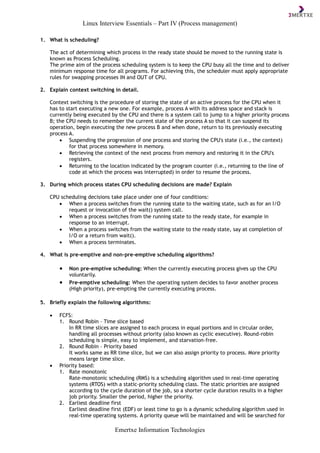
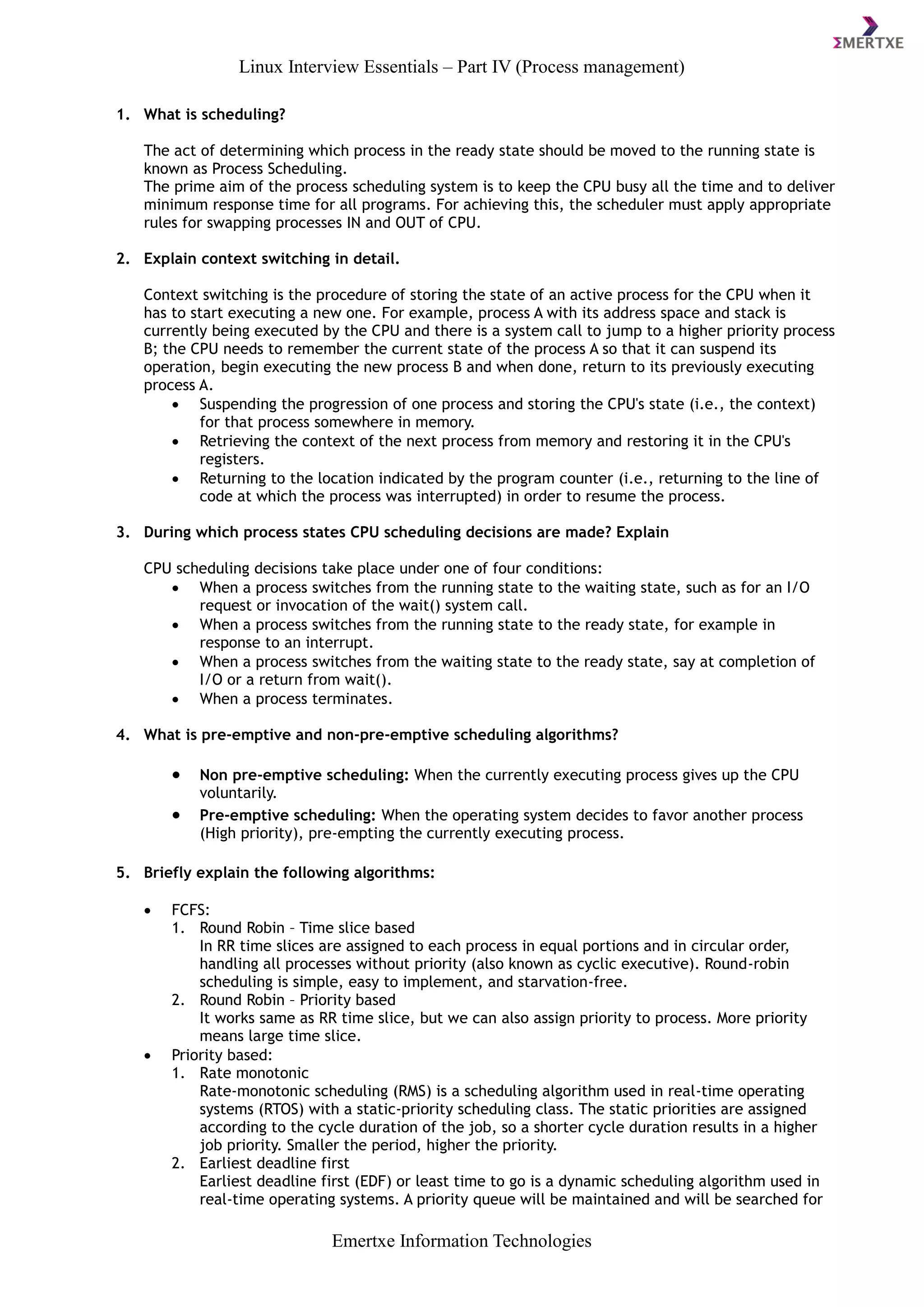
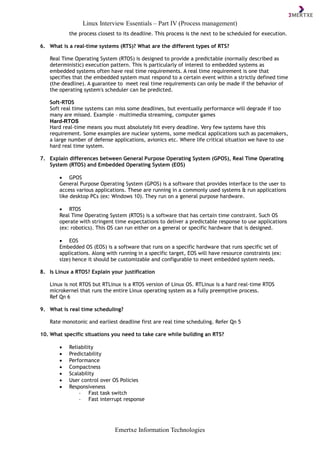


The document discusses process management in Linux, including scheduling, context switching, and real-time systems. It defines process scheduling as determining which ready process moves to the running state, with the goal of keeping the CPU busy and minimizing response times. Context switching is described as storing the state of a process when it stops running so the CPU can restore another process's state when it starts running. CPU scheduling decisions occur when a process changes state, such as from running to waiting. Real-time systems must meet strict deadlines, and the document discusses soft and hard real-time systems as well as differences between general purpose, real-time, and embedded operating systems.


