Linkage between
Performance
Management, Reward
Management and
Human Resource
Development
Presented by DEBARUN
PAUL
Performance
Management
An ongoing, continuous process of
communicating and clarifying job
responsibilities, priorities, performance
expectations, and development
planning that optimize an individual’s
performance and aligns with
organizational strategic goals.
Reward
Managemen
t
It is the strategies, policies
and processes required to
ensure that the value of
people and the contribution
they make to achieving
organization, departmental
and team goals is
recognized and rewarded.
Human Resource
Development
Framework for helping employees
develop their personal and
organizational skills, knowledge, and
abilities.
Includes such opportunities as
employee training, employee career
development, performance
management, mentoring, succession
planning, key employee identification,
reward planning and organization
development.
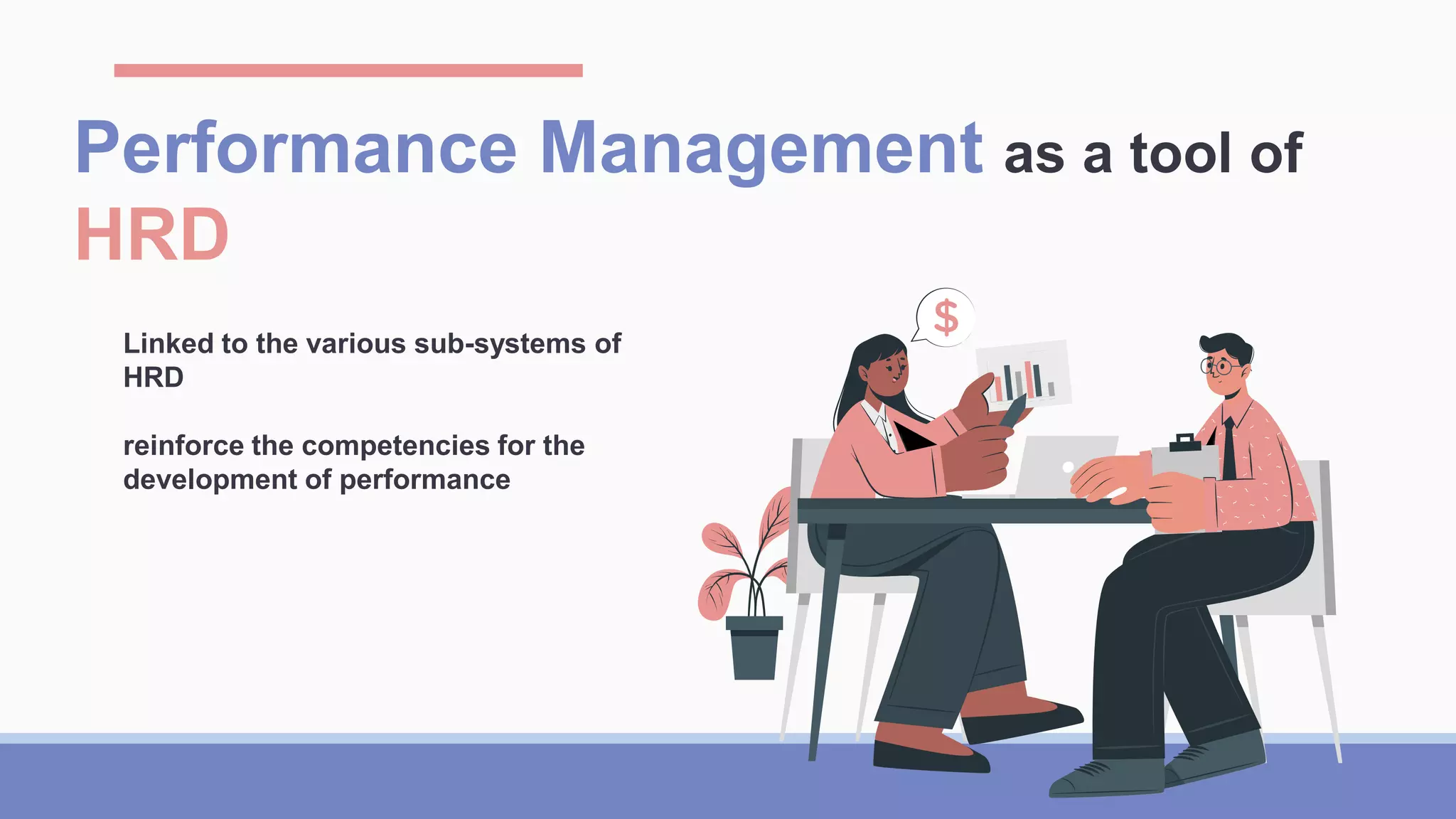
Performance Management as a tool of
HRD
Linked to the various sub-systems of
HRD
reinforce the competencies for the
development of performance
HRD for Performance Management
Learning environment leads to the
competitiveness of organization
Considerable connection between
organizational objectives and
outcomes should be developed
through HRD functions
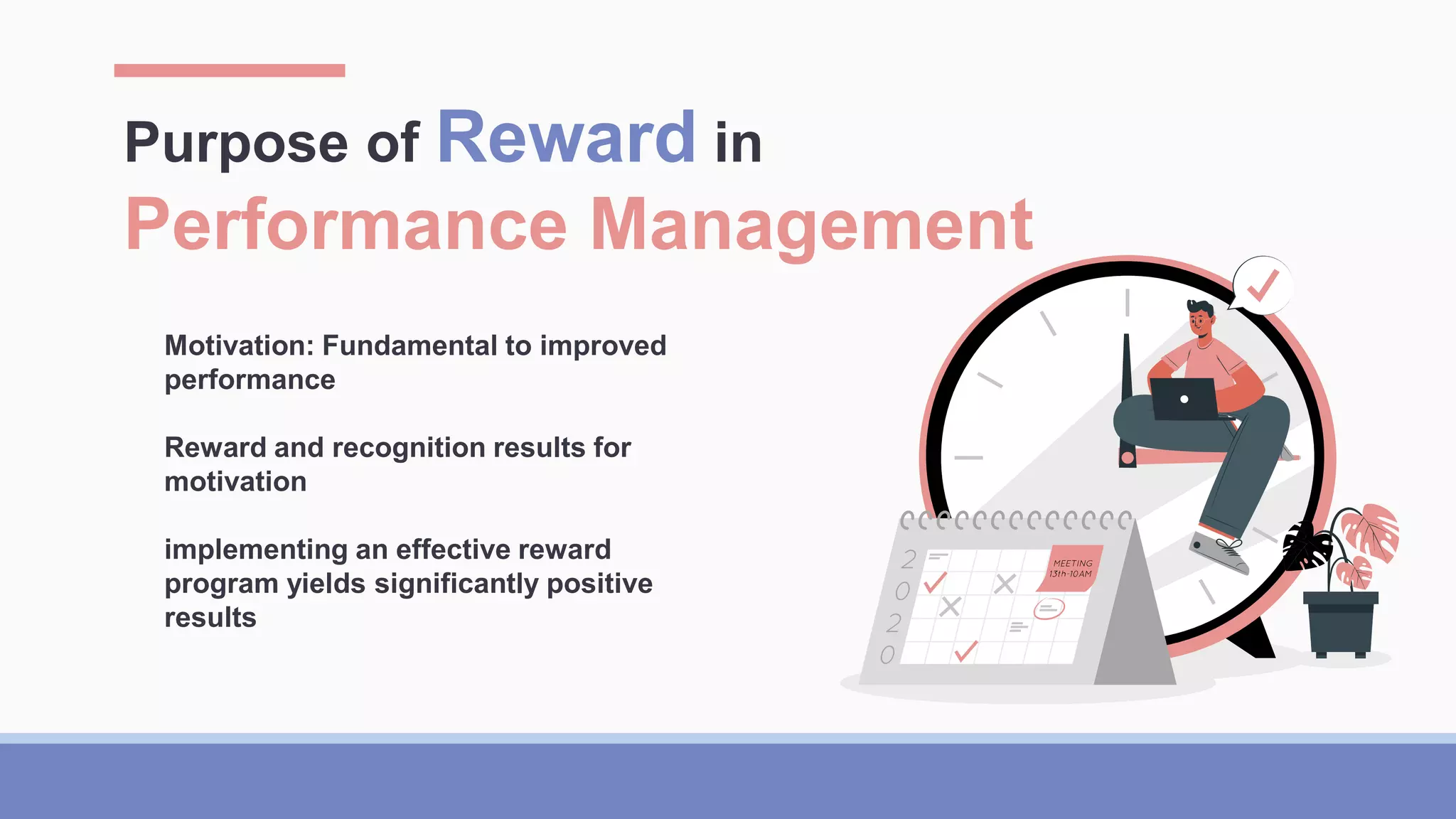
Purpose of Reward in
Performance Management
Motivation: Fundamental to improved
performance
Reward and recognition results for
motivation
implementing an effective reward
program yields significantly positive
results
Reward System from the perspective of
HRD
Reward elevates the productivity
strategic role of HRD when coupled
with effective recruitment and reward
management.
Necessity of reward system to attract
and retain competent
Employees
Thank
s!

Linkage between performance management, reward management and human resource development

  • 1.
    Linkage between Performance Management, Reward Managementand Human Resource Development Presented by DEBARUN PAUL
  • 2.
    Performance Management An ongoing, continuousprocess of communicating and clarifying job responsibilities, priorities, performance expectations, and development planning that optimize an individual’s performance and aligns with organizational strategic goals.
  • 3.
    Reward Managemen t It is thestrategies, policies and processes required to ensure that the value of people and the contribution they make to achieving organization, departmental and team goals is recognized and rewarded.
  • 4.
    Human Resource Development Framework forhelping employees develop their personal and organizational skills, knowledge, and abilities. Includes such opportunities as employee training, employee career development, performance management, mentoring, succession planning, key employee identification, reward planning and organization development.
  • 5.
    Performance Management asa tool of HRD Linked to the various sub-systems of HRD reinforce the competencies for the development of performance
  • 6.
    HRD for PerformanceManagement Learning environment leads to the competitiveness of organization Considerable connection between organizational objectives and outcomes should be developed through HRD functions
  • 7.
    Purpose of Rewardin Performance Management Motivation: Fundamental to improved performance Reward and recognition results for motivation implementing an effective reward program yields significantly positive results
  • 8.
    Reward System fromthe perspective of HRD Reward elevates the productivity strategic role of HRD when coupled with effective recruitment and reward management. Necessity of reward system to attract and retain competent Employees
  • 9.