Linear Inequalities
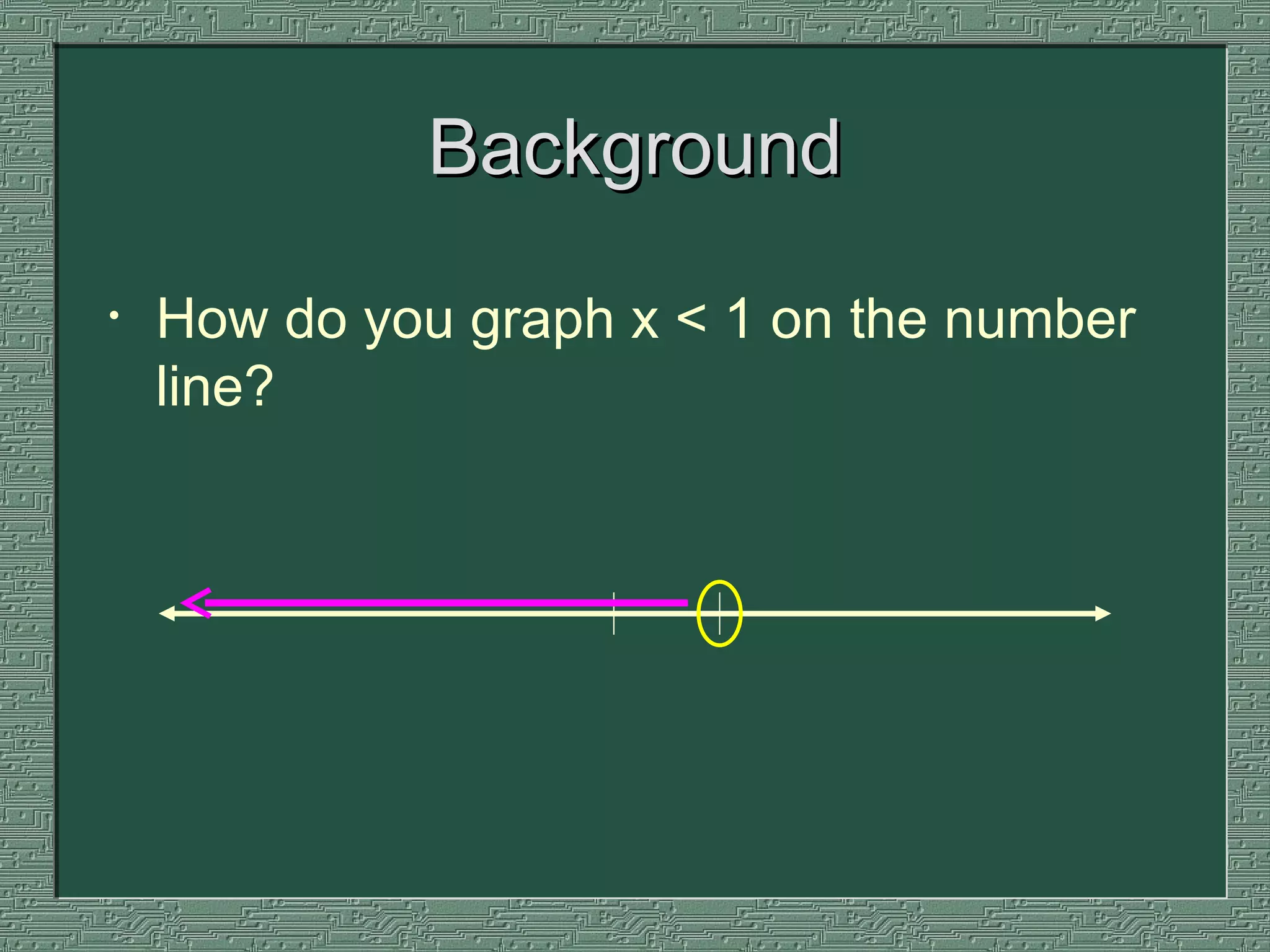
Background How do you graph x < 1 on the number line?
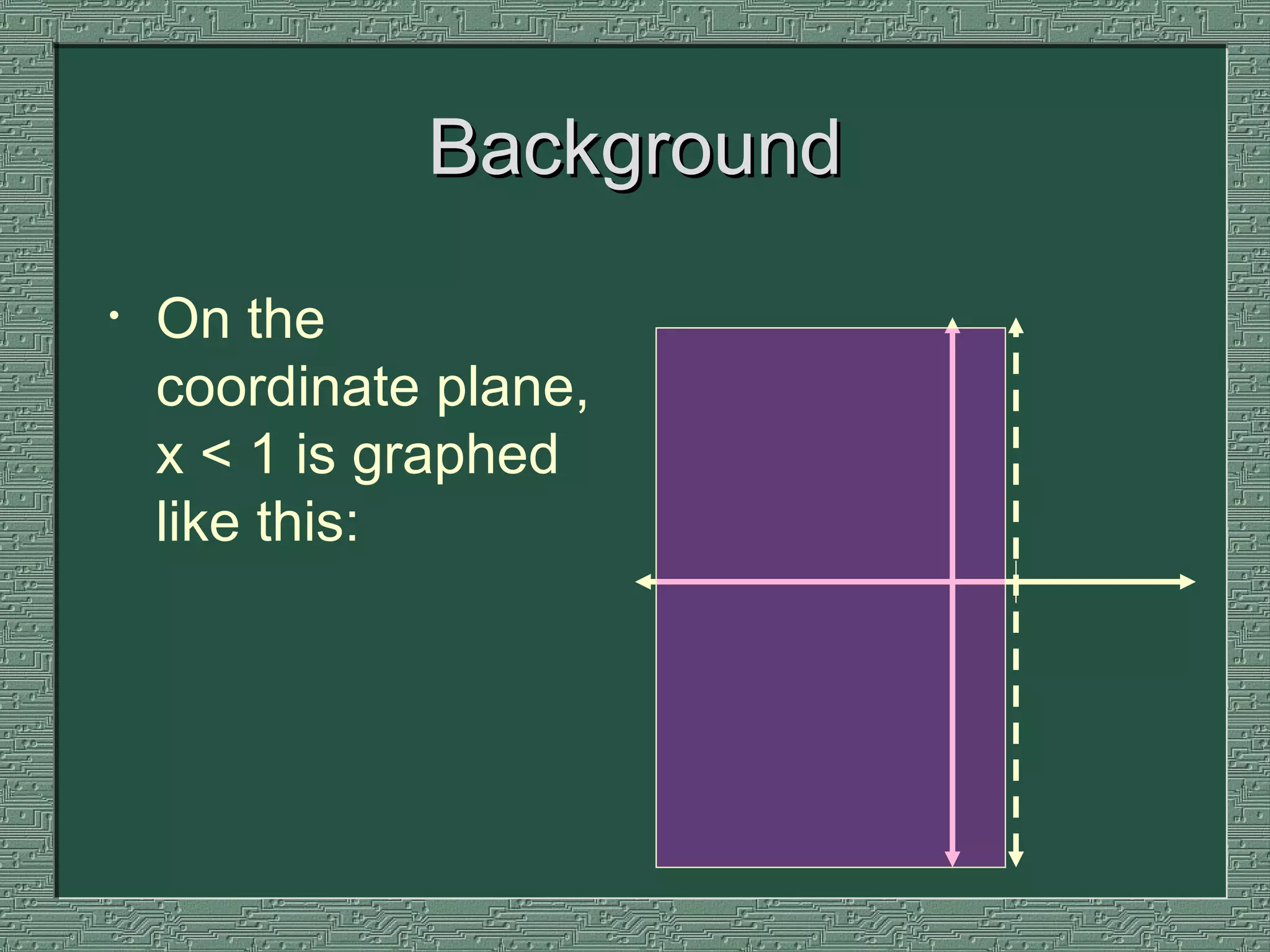
Background On the coordinate plane, x < 1 is graphed like this:
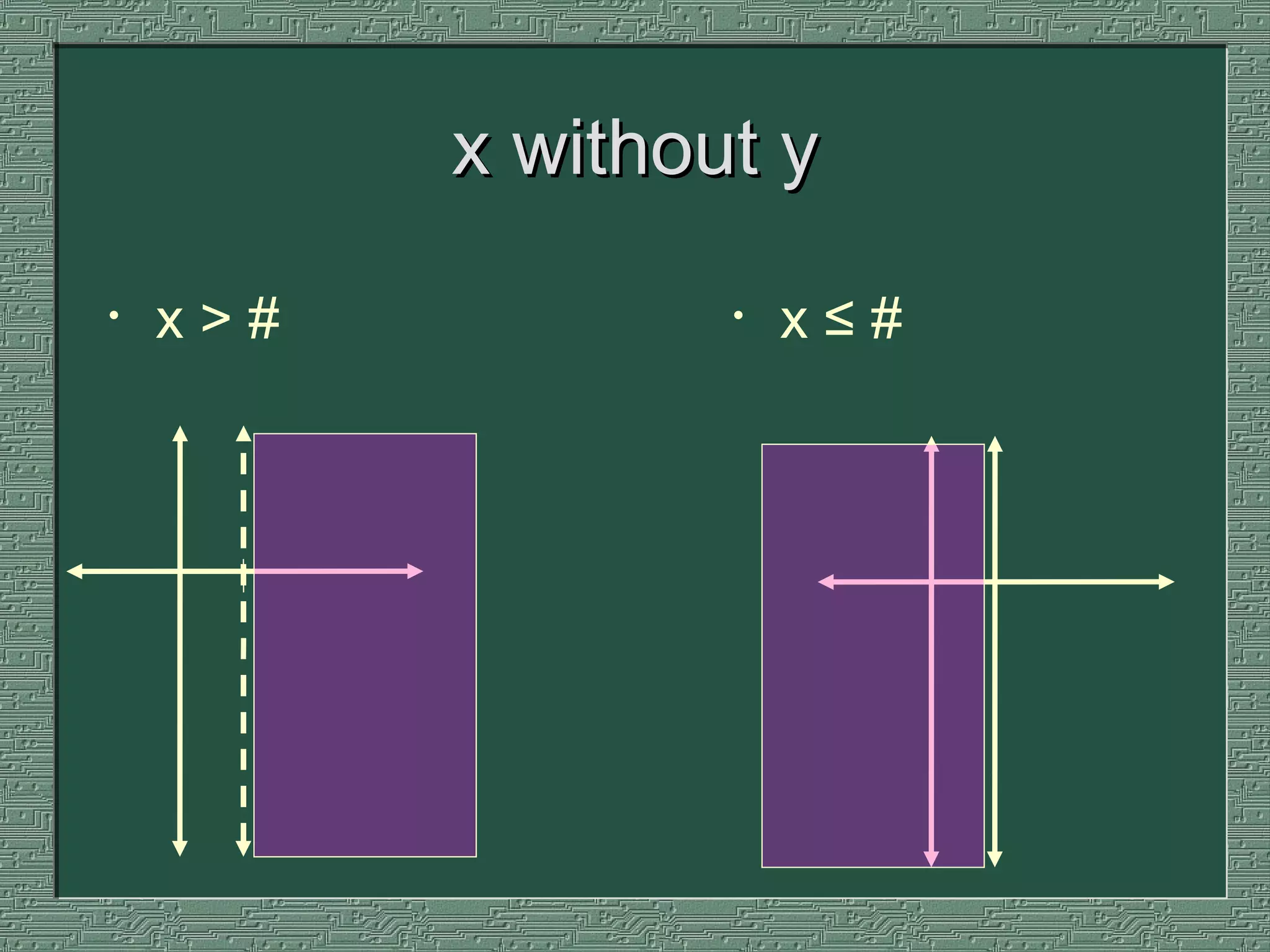
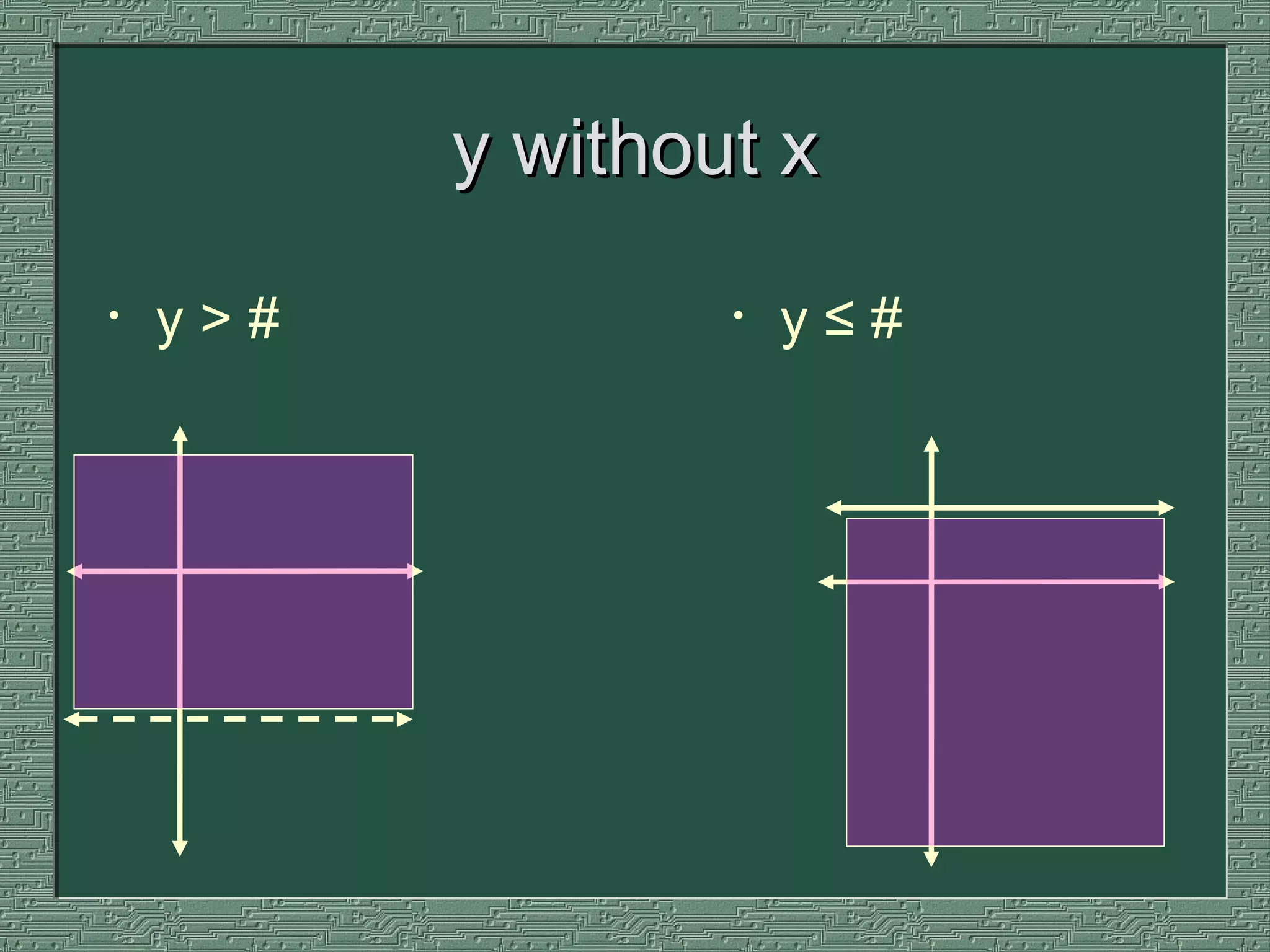
Background For inequalities on the coordinate plane: < & > are represented with a dashed line ≤ & ≥ are represented with a solid line (non-dashed line)
x without y x > # x ≤ #
y without x y > # y ≤ #
Linear Inequalities Make sure the inequality is in slope intercept form.  All the rules you know about inequalities apply here: If you multiply or divide by a negative number you have to flip the sign.
Linear Inequalities After the equation is in slope intercept form, graph the line.  Use a dashed line if the sign is < or >.  The big thing is, understanding where to shade.  The sign helps you know where to shade.
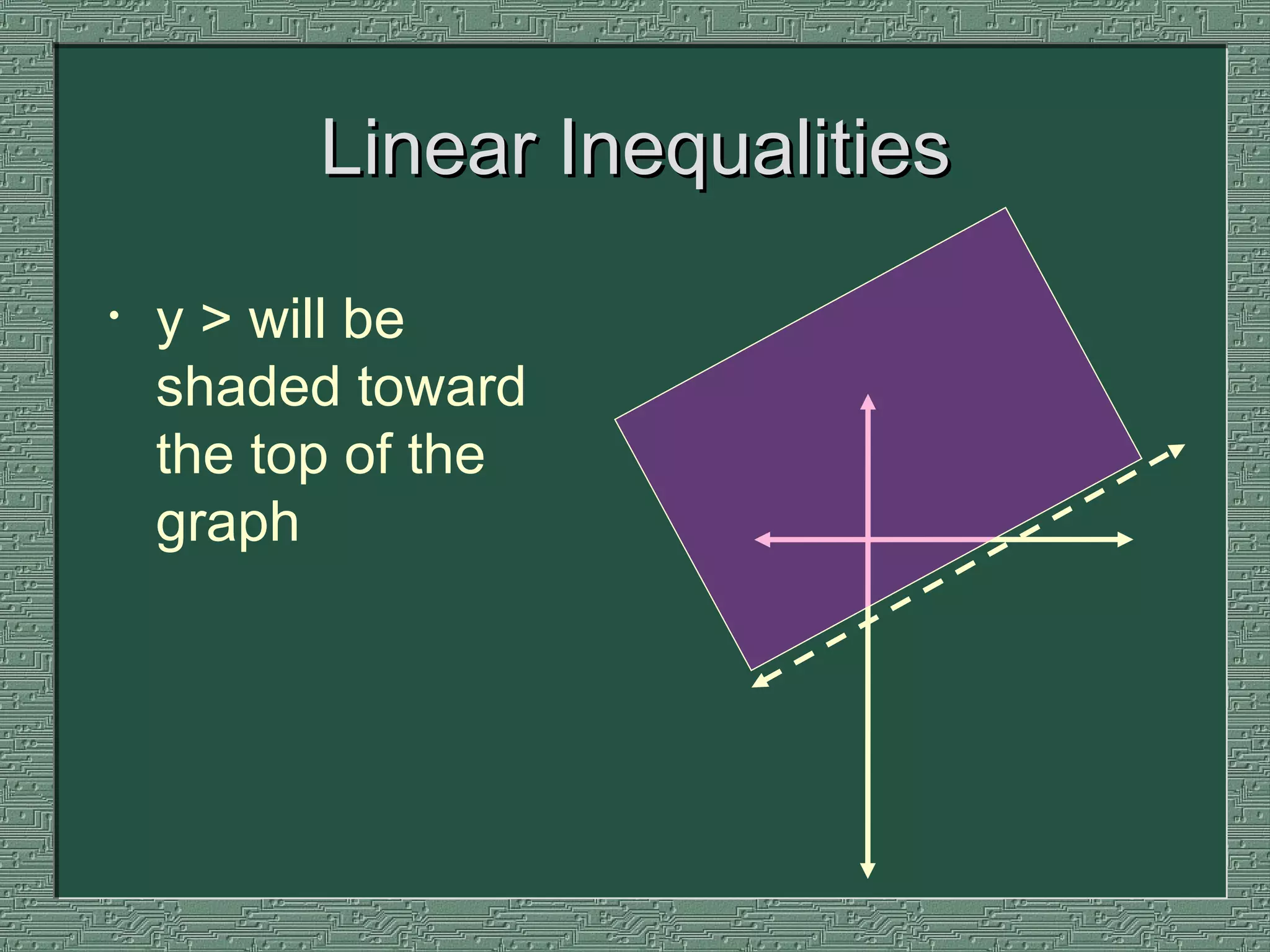
Linear Inequalities y > will be shaded toward the top of the graph
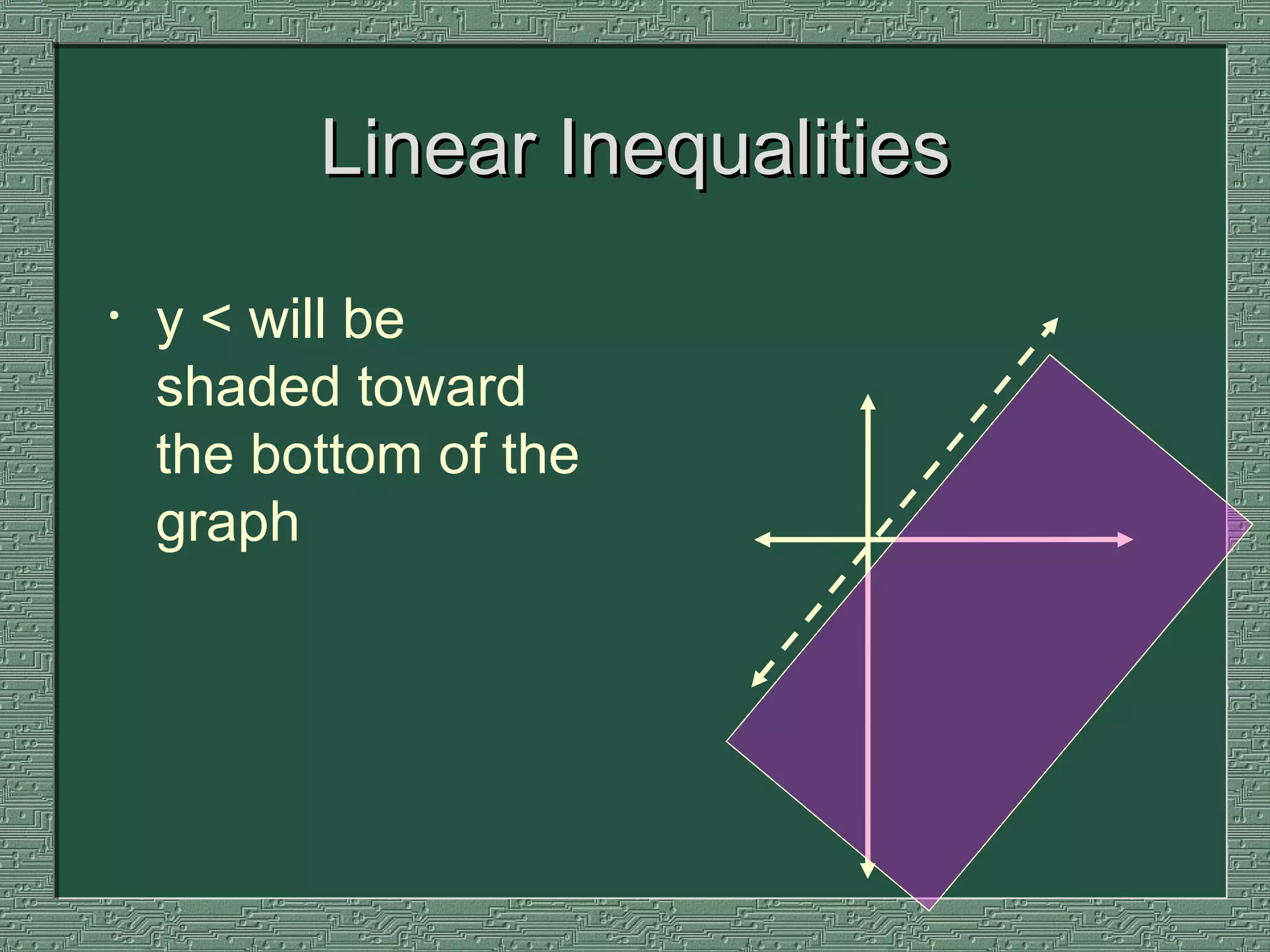
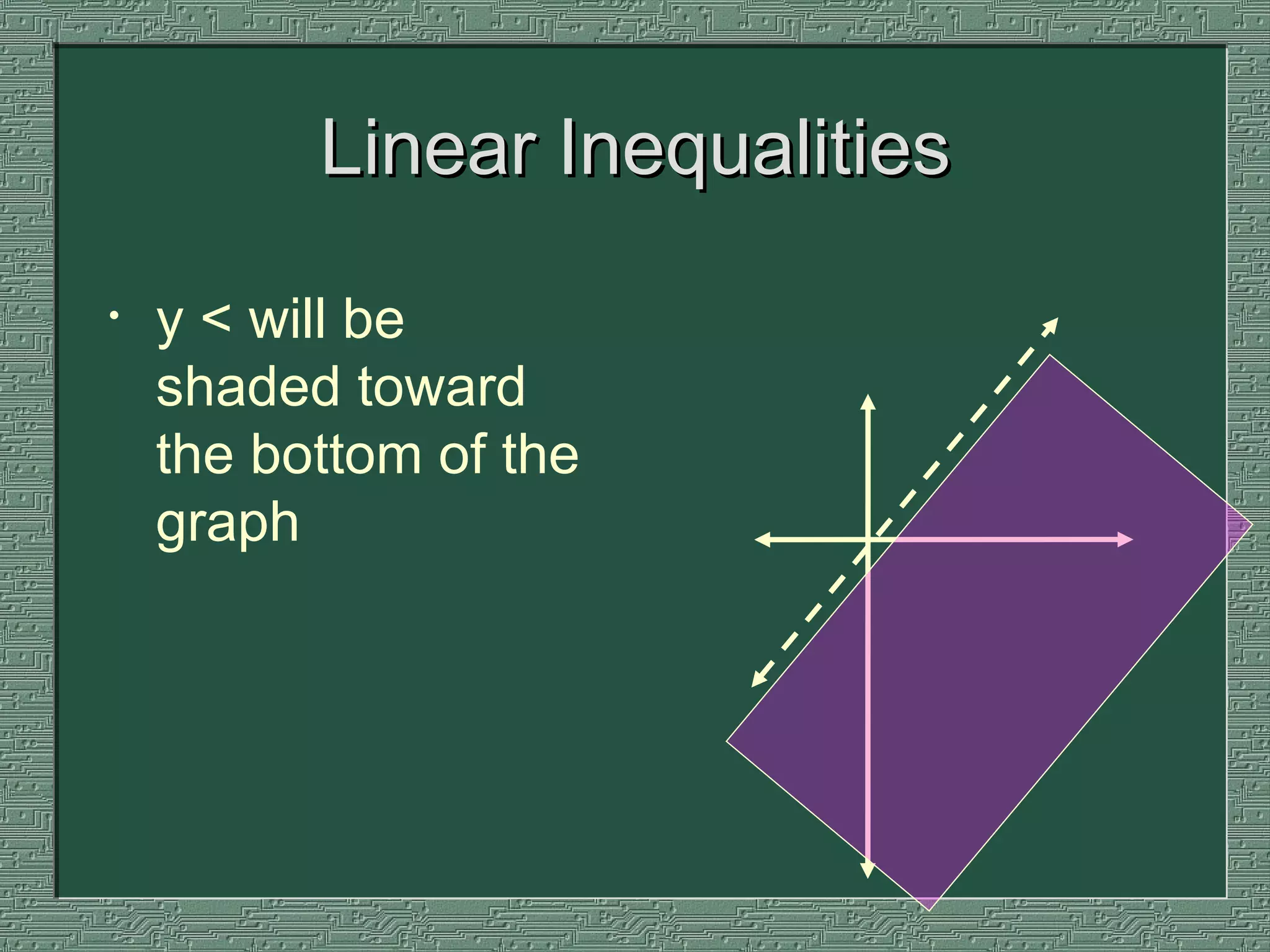
Linear Inequalities y < will be shaded toward the bottom of the graph
Linear Inequalities Since every graph lays on the coordinate plane differently, toward the top and toward the bottom is a bit subjective.  The best way to get a good feel for it is to work a lot of problems.

Linear Inequalities

  • 1.
  • 2.
    Background How doyou graph x < 1 on the number line?
  • 3.
    Background On thecoordinate plane, x < 1 is graphed like this:
  • 4.
    Background For inequalitieson the coordinate plane: < & > are represented with a dashed line ≤ & ≥ are represented with a solid line (non-dashed line)
  • 5.
    x without yx > # x ≤ #
  • 6.
    y without xy > # y ≤ #
  • 7.
    Linear Inequalities Makesure the inequality is in slope intercept form. All the rules you know about inequalities apply here: If you multiply or divide by a negative number you have to flip the sign.
  • 8.
    Linear Inequalities Afterthe equation is in slope intercept form, graph the line. Use a dashed line if the sign is < or >. The big thing is, understanding where to shade. The sign helps you know where to shade.
  • 9.
    Linear Inequalities y> will be shaded toward the top of the graph
  • 10.
    Linear Inequalities y< will be shaded toward the bottom of the graph
  • 11.
    Linear Inequalities y< will be shaded toward the bottom of the graph
  • 12.
    Linear Inequalities Sinceevery graph lays on the coordinate plane differently, toward the top and toward the bottom is a bit subjective. The best way to get a good feel for it is to work a lot of problems.