SDSU  Mkt710 Dr. Don Jung Lincoln Electric’s Harsh Lessons from International Expansion Andy Ku, Jason Chen  Mavis Lin, Sean Yeh
Company Profile Founded by John C. Lincoln in 1895.  Mainstay business : arc-welding products  The arc-welding products took more than 87%(853M) in total sales of Lincoln. (=> 980M year earning) Until 1992, only 6 companies produce arc-welding products. Core competency: Low price, high quality Key Successful Factors: Incentive system :  created in 1934, reward according to performance (rank and file) combines a bonus with piecework; bonuses have constituted more than 50% of U.S. employees’ annual incomes. (average wage: 70,000-80,000usd yearly) an integral part of the company’s culture Absentee rates: 1.5-2%;  turnover rates: 3.5%; few supervisors Open communication: 29-member employee advisory board Competitor: ESAB (Sweden/ has global ambition-US, Far East, Latin America)
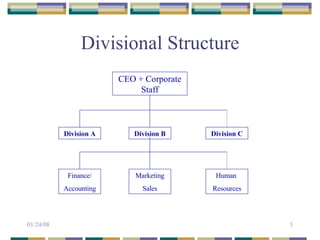
Divisional Structure CEO + Corporate Staff Division A Division B Division C Finance/ Accounting Marketing Sales Human  Resources
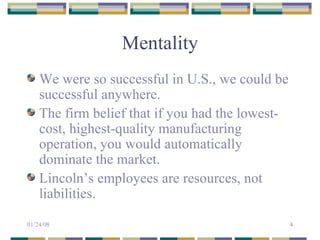
Mentality We were so successful in U.S., we could be successful anywhere.  The firm belief that if you had the lowest-cost, highest-quality manufacturing operation, you would automatically dominate the market.  Lincoln’s employees are resources, not liabilities.
React through Globalization Expansion due to 1980s US recession/ antitrust law To reduce costs by applying Lincoln’s expertise, equipment, incentive system into the acquisition list. acquisition Mexico     acquisition Spain/ 1988 after Barcelona Olympics     acquisition Netherlands     acquisition UK     acquisition Norway/ Norweld     acquisition Germany/ Messer Grisheim/ 1991 treated like colonies Frence built greenfield plant Brazil marketing/ operation Australia built greenfield plant Venezuela   Canada built greenfield plant Japan Main plants US 1986/ Ted/ total cost: 325 M Before 1980s
Crisis forming Still using old Mindset: Ethnocentric to manage a international company.  Borrowing : a culture shock to US employees( cash reserve 70M and no debt    1992, 250 M (63% of equity) make no money Donald Mexico       marginally profitable Ted Spain/ 1988 after Barcelona Olympics       marginally profitable Ted Netherlands       marginally profitable Ted UK       marginally profitable Ted Norway/ Norweld       make no money Ted Germany/ Messer Grisheim/ 1991 elusive Ted France sinkhole Ted Brazil well Ted Australia make no money Ted Venezuela well Donald Canada make no money Ted Japan well Ted US Performance in 1991 Report to  1986/ Ted/ total cost: 325 M Performance in 1991 Report to Before 1980s Low achieving ratio in Europe; gap became larger after 1991. Lack of the concern to boost revenue.
A series of wrong decision Overconfidence in domestic success, then believe LE can success anywhere Wrong timing for acquisitions A number of acquisitions were made at the peak of market cycles Over trusted foreign partners and didn’t examine the information Ineffective IHR practices Late attention at warning signs
Issue facing after Globalization Recession in Europe  Reunification of German Lack of international knowledge  Neglect culture difference Rely too much on foreign distributors No testing before execution Lack of running complex and dispersed organization  Decision made by CEO Ted only  Most board members are insiders: 12/15  Integration issue See more in the article…
Analysis Hofstede’s Cultural Dimension Trompenaars’s Cultural Dimensions Synthesis of Country Clusters
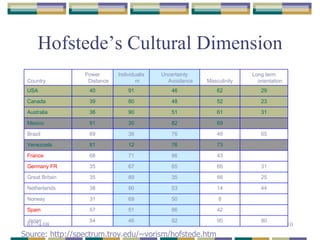
Hofstede’s Cultural Dimension Source: http://spectrum.troy.edu/~vorism/hofstede.htm 80 95 92 46 54 Japan   42 86 51 57 Spain   8 50 69 31 Norway 44 14 53 80 38 Netherlands 25 66 35 89 35 Great Britain 31 66 65 67 35 Germany FR   43 86 71 68 France   73 76 12 81 Venezuela 65 49 76 38 69 Brazil   69 82 30 81 Mexico 31 61 51 90 36 Australia 23 52 48 80 39 Canada 29 62 46 91 40 USA Long term orientation Masculinity Uncertainty Avoidance Individualism Power Distance Country
Trompenaars’s Cultural Dimensions X X   X     X     Ascription     X   X X   X X Achievement X       X   X   X Emotional relationship   X X X   X   X   Neutral relationship   X X X   X       Particularism X       X   X X X Universalism   X X X X X       Diffuse relationship X           X X X Specific relationship   X   X X   X     Communitariansm X   X     X   X X Individualism Brazil Venezuela Mexico Japan Germany Spain France United Kingdom United States  
Synthesis of Country Clusters Adapted from Figure 4–8: A Synthesis of Country Clusters
Difficulty would face Incentive system Individualism  Uncertainty Avoidance Open communication Individualism
Solution Careful about foreign acquisitions Partner in a J.V or formed alliances Changes at the top new blood and expertise on the board and in top management who with strong international and financial experience. Restructuring Scaled down or close operations New product line/ special promotion
Countermeasure Talk to Banks:  higher line of credit; ten-bank consortium Changes at the Top. Need new blood and expertise on the board and in  top management. Revive  the Patient. Rather than downsize, they turned to the U.S.  employees for help.(21-points/ open communication/ 1.8M->2.1M/ per day) Down operations and restructure in foreign countries. Scale down: UK, Spain, France, Norway, Netherland Shot down: Japan, Germany/ Messer, Brazil and Venezuela
Worldwide Area Structure CEO North America Asia Europe South America Country Manger: U.S. Canada Mexico Brazil Argentina  Ecuador Germany France Czech Republic India China Japan
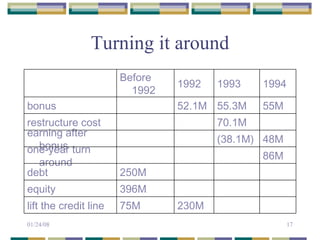
Turning it around     230M 75M lift the credit line       396M equity       250M debt 86M       one-year turn around 48M (38.1M)     earning after bonus   70.1M     restructure cost 55M 55.3M 52.1M   bonus  1994 1993 1992 Before 1992  
Lesson learned Mistake: Leaders grew overconfident in the company’s ability and system. Assume incentive system and culture could be transferred abroad and work force could be quickly replicated. Ignore the employees’ concerns to widely expansion. Naïve to think they would be a global company with LE’s limited resources.
Lesson Learned Build up management team and board of directors 5 years before expansion Allocate twice the money as the expansion budget Careful about foreign expansion: JV (ex. Canada, Turkey) Successful transplanted the incentive system: Mexico, 2 years
Thank you

Lincoln Electric

  • 1.
    SDSU Mkt710Dr. Don Jung Lincoln Electric’s Harsh Lessons from International Expansion Andy Ku, Jason Chen Mavis Lin, Sean Yeh
  • 2.
    Company Profile Foundedby John C. Lincoln in 1895. Mainstay business : arc-welding products The arc-welding products took more than 87%(853M) in total sales of Lincoln. (=> 980M year earning) Until 1992, only 6 companies produce arc-welding products. Core competency: Low price, high quality Key Successful Factors: Incentive system : created in 1934, reward according to performance (rank and file) combines a bonus with piecework; bonuses have constituted more than 50% of U.S. employees’ annual incomes. (average wage: 70,000-80,000usd yearly) an integral part of the company’s culture Absentee rates: 1.5-2%; turnover rates: 3.5%; few supervisors Open communication: 29-member employee advisory board Competitor: ESAB (Sweden/ has global ambition-US, Far East, Latin America)
  • 3.
    Divisional Structure CEO+ Corporate Staff Division A Division B Division C Finance/ Accounting Marketing Sales Human Resources
  • 4.
    Mentality We wereso successful in U.S., we could be successful anywhere. The firm belief that if you had the lowest-cost, highest-quality manufacturing operation, you would automatically dominate the market. Lincoln’s employees are resources, not liabilities.
  • 5.
    React through GlobalizationExpansion due to 1980s US recession/ antitrust law To reduce costs by applying Lincoln’s expertise, equipment, incentive system into the acquisition list. acquisition Mexico     acquisition Spain/ 1988 after Barcelona Olympics     acquisition Netherlands     acquisition UK     acquisition Norway/ Norweld     acquisition Germany/ Messer Grisheim/ 1991 treated like colonies Frence built greenfield plant Brazil marketing/ operation Australia built greenfield plant Venezuela   Canada built greenfield plant Japan Main plants US 1986/ Ted/ total cost: 325 M Before 1980s
  • 6.
    Crisis forming Stillusing old Mindset: Ethnocentric to manage a international company. Borrowing : a culture shock to US employees( cash reserve 70M and no debt  1992, 250 M (63% of equity) make no money Donald Mexico       marginally profitable Ted Spain/ 1988 after Barcelona Olympics       marginally profitable Ted Netherlands       marginally profitable Ted UK       marginally profitable Ted Norway/ Norweld       make no money Ted Germany/ Messer Grisheim/ 1991 elusive Ted France sinkhole Ted Brazil well Ted Australia make no money Ted Venezuela well Donald Canada make no money Ted Japan well Ted US Performance in 1991 Report to 1986/ Ted/ total cost: 325 M Performance in 1991 Report to Before 1980s Low achieving ratio in Europe; gap became larger after 1991. Lack of the concern to boost revenue.
  • 7.
    A series ofwrong decision Overconfidence in domestic success, then believe LE can success anywhere Wrong timing for acquisitions A number of acquisitions were made at the peak of market cycles Over trusted foreign partners and didn’t examine the information Ineffective IHR practices Late attention at warning signs
  • 8.
    Issue facing afterGlobalization Recession in Europe Reunification of German Lack of international knowledge Neglect culture difference Rely too much on foreign distributors No testing before execution Lack of running complex and dispersed organization Decision made by CEO Ted only Most board members are insiders: 12/15 Integration issue See more in the article…
  • 9.
    Analysis Hofstede’s CulturalDimension Trompenaars’s Cultural Dimensions Synthesis of Country Clusters
  • 10.
    Hofstede’s Cultural DimensionSource: http://spectrum.troy.edu/~vorism/hofstede.htm 80 95 92 46 54 Japan   42 86 51 57 Spain   8 50 69 31 Norway 44 14 53 80 38 Netherlands 25 66 35 89 35 Great Britain 31 66 65 67 35 Germany FR   43 86 71 68 France   73 76 12 81 Venezuela 65 49 76 38 69 Brazil   69 82 30 81 Mexico 31 61 51 90 36 Australia 23 52 48 80 39 Canada 29 62 46 91 40 USA Long term orientation Masculinity Uncertainty Avoidance Individualism Power Distance Country
  • 11.
    Trompenaars’s Cultural DimensionsX X   X     X     Ascription     X   X X   X X Achievement X       X   X   X Emotional relationship   X X X   X   X   Neutral relationship   X X X   X       Particularism X       X   X X X Universalism   X X X X X       Diffuse relationship X           X X X Specific relationship   X   X X   X     Communitariansm X   X     X   X X Individualism Brazil Venezuela Mexico Japan Germany Spain France United Kingdom United States  
  • 12.
    Synthesis of CountryClusters Adapted from Figure 4–8: A Synthesis of Country Clusters
  • 13.
    Difficulty would faceIncentive system Individualism Uncertainty Avoidance Open communication Individualism
  • 14.
    Solution Careful aboutforeign acquisitions Partner in a J.V or formed alliances Changes at the top new blood and expertise on the board and in top management who with strong international and financial experience. Restructuring Scaled down or close operations New product line/ special promotion
  • 15.
    Countermeasure Talk toBanks: higher line of credit; ten-bank consortium Changes at the Top. Need new blood and expertise on the board and in top management. Revive the Patient. Rather than downsize, they turned to the U.S. employees for help.(21-points/ open communication/ 1.8M->2.1M/ per day) Down operations and restructure in foreign countries. Scale down: UK, Spain, France, Norway, Netherland Shot down: Japan, Germany/ Messer, Brazil and Venezuela
  • 16.
    Worldwide Area StructureCEO North America Asia Europe South America Country Manger: U.S. Canada Mexico Brazil Argentina Ecuador Germany France Czech Republic India China Japan
  • 17.
    Turning it around    230M 75M lift the credit line       396M equity       250M debt 86M       one-year turn around 48M (38.1M)     earning after bonus   70.1M     restructure cost 55M 55.3M 52.1M   bonus 1994 1993 1992 Before 1992  
  • 18.
    Lesson learned Mistake:Leaders grew overconfident in the company’s ability and system. Assume incentive system and culture could be transferred abroad and work force could be quickly replicated. Ignore the employees’ concerns to widely expansion. Naïve to think they would be a global company with LE’s limited resources.
  • 19.
    Lesson Learned Buildup management team and board of directors 5 years before expansion Allocate twice the money as the expansion budget Careful about foreign expansion: JV (ex. Canada, Turkey) Successful transplanted the incentive system: Mexico, 2 years
  • 20.