Women Entrepreneurship Model –
        Lijjat Papad


  Entrepreneurship and Small Business Management
Objectives of the Study
 Study the Lijjat Papad business model


 Understand the problems they face


 Explore possible business opportunities


 Analyze the threats


 Suggest solutions to the problem


 Research on the brand awareness of Lijjat papad among consumers
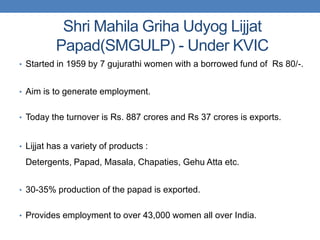
Shri Mahila Griha Udyog Lijjat
          Papad(SMGULP) - Under KVIC
• Started in 1959 by 7 gujurathi women with a borrowed fund of Rs 80/-.


• Aim is to generate employment.


• Today the turnover is Rs. 887 crores and Rs 37 crores is exports.


• Lijjat has a variety of products :

 Detergents, Papad, Masala, Chapaties, Gehu Atta etc.


• 30-35% production of the papad is exported.


• Provides employment to over 43,000 women all over India.
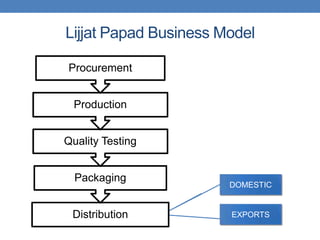
Lijjat Papad Business Model

Procurement


  Production


Quality Testing


  Packaging
                       DOMESTIC


 Distribution          EXPORTS
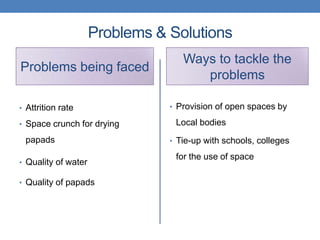
Problems & Solutions
                                   Ways to tackle the
Problems being faced
                                      problems

• Attrition rate                • Provision of open spaces by

• Space crunch for drying        Local bodies
 papads                         • Tie-up with schools, colleges

                                 for the use of space
• Quality of water

• Quality of papads
Business Opportunity for Lijjat
• Expand the Chapati Division into a full fledged meal service.


• Tie-up with the Mumbai Dabbawalas for the distribution.


• More women will be employed in the new division.
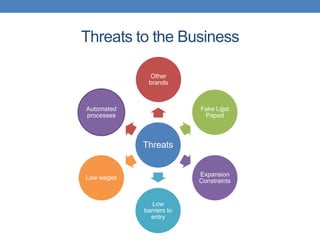
Threats to the Business

              Other
             brands


Automated                 Fake Lijjat
processes                  Papad


            Threats


                          Expansion
Low wages
                          Constraints


               Low
            barriers to
              entry
Research & Findings
Research Objective: Understand the brand awareness of Lijjat papad

Findings:
1. 80% respondents were Lijjat papad consumers.


2.   23% show customer loyalty for more than 16 yrs.


3.   They prefer Lijjat papad because of the
     taste, quality, availability, price, brand name & variety.

4.   Familiarity with other Lijjat products.

5.   61% became aware of Lijjat papad through the ads on TV. 23%
     through their families.
Conclusion
• Devise ways to tackle the problem of drying the papads.


• Consider business expansion in order to generate more employment.


• Allow for more interaction with the women working at Lijjat.
THANK YOU

Lijjat papad

  • 1.
    Women Entrepreneurship Model– Lijjat Papad Entrepreneurship and Small Business Management
  • 2.
    Objectives of theStudy  Study the Lijjat Papad business model  Understand the problems they face  Explore possible business opportunities  Analyze the threats  Suggest solutions to the problem  Research on the brand awareness of Lijjat papad among consumers
  • 3.
    Shri Mahila GrihaUdyog Lijjat Papad(SMGULP) - Under KVIC • Started in 1959 by 7 gujurathi women with a borrowed fund of Rs 80/-. • Aim is to generate employment. • Today the turnover is Rs. 887 crores and Rs 37 crores is exports. • Lijjat has a variety of products : Detergents, Papad, Masala, Chapaties, Gehu Atta etc. • 30-35% production of the papad is exported. • Provides employment to over 43,000 women all over India.
  • 4.
    Lijjat Papad BusinessModel Procurement Production Quality Testing Packaging DOMESTIC Distribution EXPORTS
  • 5.
    Problems & Solutions Ways to tackle the Problems being faced problems • Attrition rate • Provision of open spaces by • Space crunch for drying Local bodies papads • Tie-up with schools, colleges for the use of space • Quality of water • Quality of papads
  • 6.
    Business Opportunity forLijjat • Expand the Chapati Division into a full fledged meal service. • Tie-up with the Mumbai Dabbawalas for the distribution. • More women will be employed in the new division.
  • 7.
    Threats to theBusiness Other brands Automated Fake Lijjat processes Papad Threats Expansion Low wages Constraints Low barriers to entry
  • 8.
    Research & Findings ResearchObjective: Understand the brand awareness of Lijjat papad Findings: 1. 80% respondents were Lijjat papad consumers. 2. 23% show customer loyalty for more than 16 yrs. 3. They prefer Lijjat papad because of the taste, quality, availability, price, brand name & variety. 4. Familiarity with other Lijjat products. 5. 61% became aware of Lijjat papad through the ads on TV. 23% through their families.
  • 9.
    Conclusion • Devise waysto tackle the problem of drying the papads. • Consider business expansion in order to generate more employment. • Allow for more interaction with the women working at Lijjat.
  • 10.