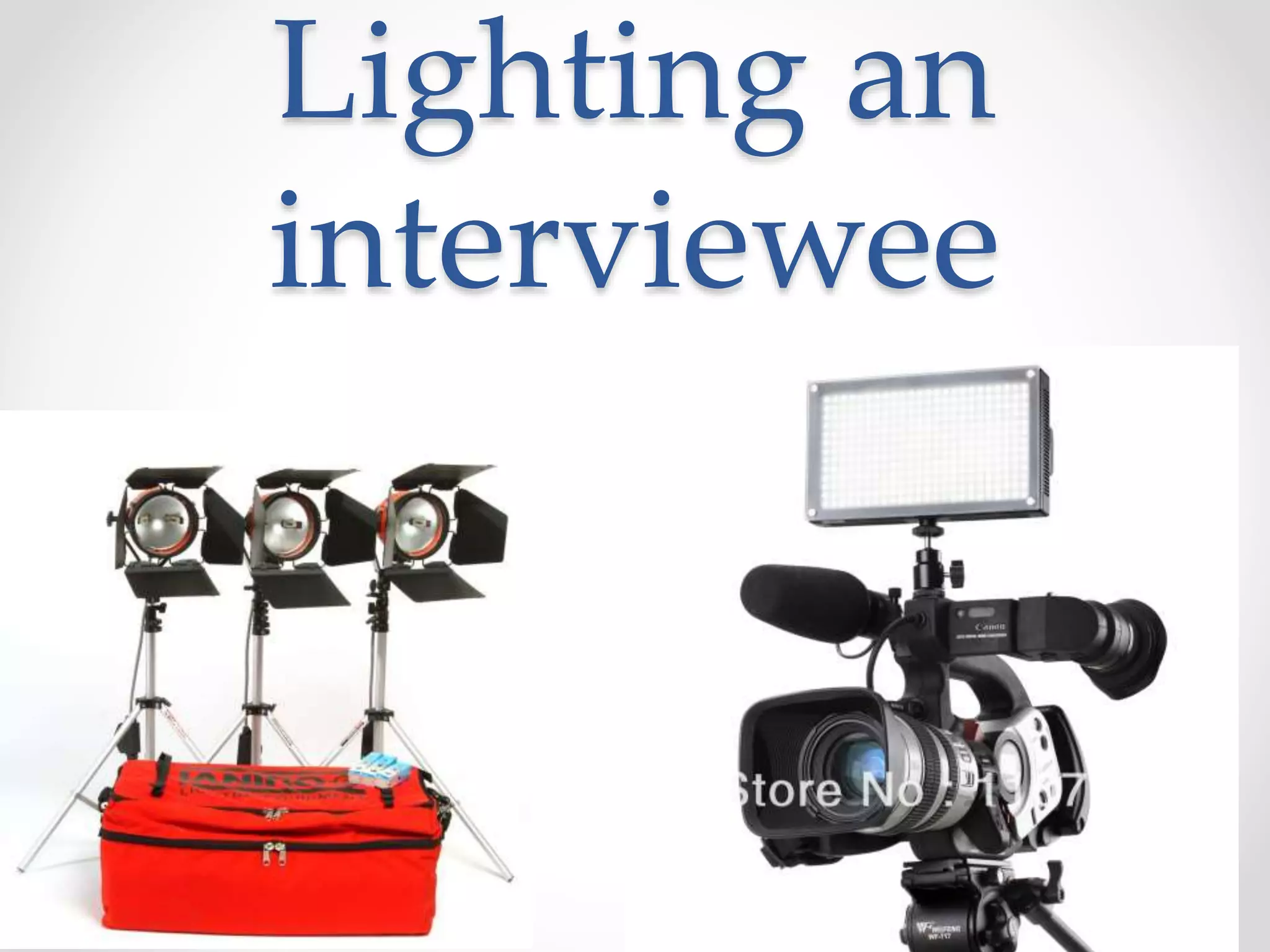
Lighting an
interviewee
starter
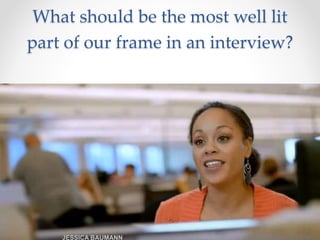
What should be the most well lit
part of our frame in an interview?
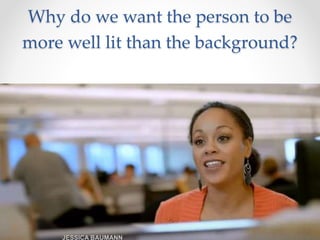
Why do we want the person to be
more well lit than the background?
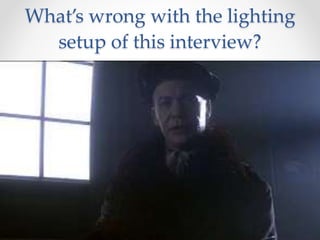
What’s wrong with the lighting
setup of this interview?
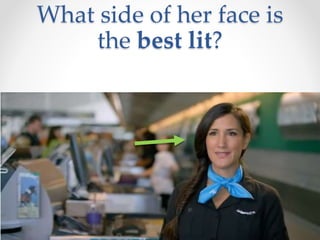
What side of her face is
the best lit?
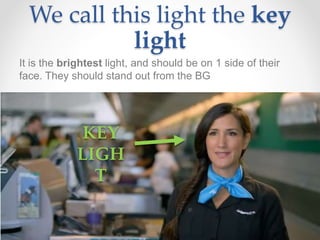
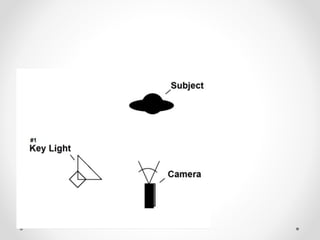
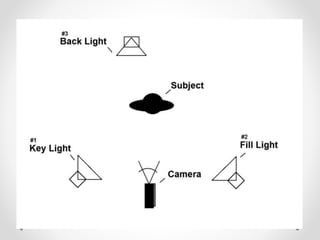
We call this light the key
light
It is the brightest light, and should be on 1 side of their
face. They should stand out from the BG
KEY
LIGH
T
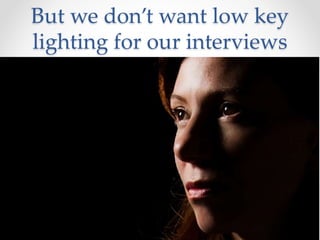
But we don’t want low key
lighting for our interviews
Why not?
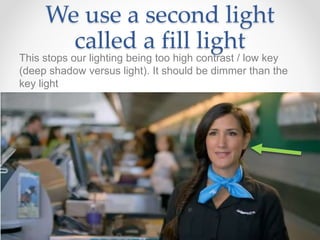
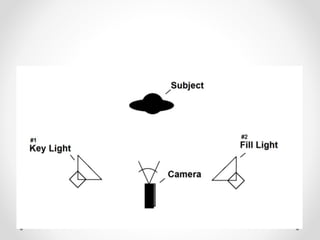
We use a second light
called a fill light
This stops our lighting being too high contrast / low key
(deep shadow versus light). It should be dimmer than the
key light
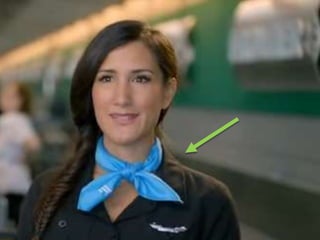
We can also use a third light
called a backlight or kicker
This is shone on the back of the interviewee, so a bright
band of light separates neck and shoulders from the
background
We call this 3 point
lighting
It is the standard lighting setup for lighting an interviewee or
character.
Today you will be applying this knowledge to light and
record an interview.
Lighting do’s
• Treat the lamps carefully
• Carry them carefully
• Be mindful that they are dangerous
• Only touch them when they’ve been off for at least five
minutes
• Leave them on unattended
• Put the lamp head on carpet if they’ve been on
Lighting don’ts
• Touch the head of the
lamp if its been on
• Move a light while its on
• Drag a light
• Drop a light
• Leave them on
unattended
• Put the lamp head on
carpet if they’ve been on
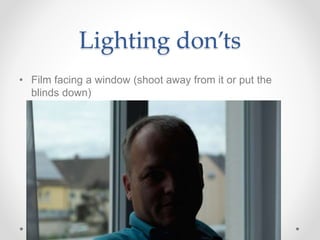
Lighting don’ts
• Film facing a window (shoot away from it or put the
blinds down)

Lighting an interviewee

  • 1.
  • 2.
  • 3.
    What should bethe most well lit part of our frame in an interview?
  • 4.
    Why do wewant the person to be more well lit than the background?
  • 5.
    What’s wrong withthe lighting setup of this interview?
  • 6.
    What side ofher face is the best lit?
  • 7.
    We call thislight the key light It is the brightest light, and should be on 1 side of their face. They should stand out from the BG KEY LIGH T
  • 9.
    But we don’twant low key lighting for our interviews Why not?
  • 10.
    We use asecond light called a fill light This stops our lighting being too high contrast / low key (deep shadow versus light). It should be dimmer than the key light
  • 12.
    We can alsouse a third light called a backlight or kicker This is shone on the back of the interviewee, so a bright band of light separates neck and shoulders from the background
  • 14.
    We call this3 point lighting It is the standard lighting setup for lighting an interviewee or character. Today you will be applying this knowledge to light and record an interview.
  • 15.
    Lighting do’s • Treatthe lamps carefully • Carry them carefully • Be mindful that they are dangerous • Only touch them when they’ve been off for at least five minutes • Leave them on unattended • Put the lamp head on carpet if they’ve been on
  • 16.
    Lighting don’ts • Touchthe head of the lamp if its been on • Move a light while its on • Drag a light • Drop a light • Leave them on unattended • Put the lamp head on carpet if they’ve been on
  • 17.
    Lighting don’ts • Filmfacing a window (shoot away from it or put the blinds down)