Helene Blowers


                                                Indianapolis Public Library
                                                November 2012


http://www.flickr.com/photos/drown/148206233/
"What matters here is technical capital, it's social capital. These
                   tools don't get socially interesting until they get
                   technologically boring. It isn't when the shiny new tools show
                   up that their uses start permeating; it's when everyone is able to take
                   them for granted.“
                                                                      - Clay Shirky, Ted Talk 6/09


http://www.flickr.com/photos/milivoj/2166043959/
"Too much light often blinds gentlemen
                                                  of this sort. They cannot see the forest
                                                  for the trees."
                                                                     - Musarion [1768], Canto II


http://www.flickr.com/photos/rowmuse/309542801/
http://www.flickr.com/photos/gerlos/3119891607/
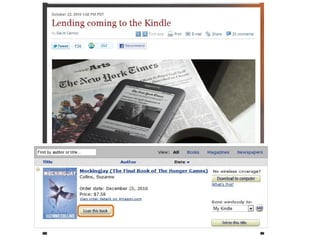
Reality ► The digital book revolution is forcing a massive evolution


http://www.flickr.com/photos/johndecember/2914192044/
Reality ► Mobile builds bridges faster


                                               Six in 10 people around the world (60%) now have
                                               cellphone subscriptions, signaling that mobile
                                               phones are the communications technology of
                                               choice, particularly in poor countries.
                                                                                         – UN Report, March 2, 2009

                                                  Up from 2002 – 15%   Internet worldwide: 11%- 2002 >> 23% - 2008


http://www.flickr.com/photos/wink/192265445/
Reality ► Augmenting is the new information window


                                http://blog.stratepedia.org/wp-content/uploads/2009/10/42A94156-89A4-4D61-84FA-FE426B647889.jpg
Urban Spoon
http://www.youtube.com/watch?
v=HW9gU_4AUCA
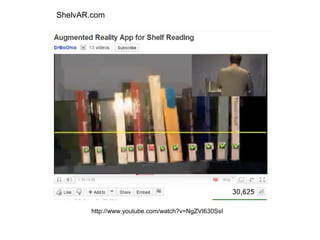
ShelvAR.com


       http://www.youtube.com/watch?v=NgZVI630SsI
Reality ► Circulation is no longer local, it’s personal


http://www.flickr.com/photos/luptonlibrary/921402626
Reality ► Print is in peril
“As many newspapers struggle to stay
                                        economically viable, fewer than half of
                                        Americans (43%) say that losing their local
                                        newspaper would hurt civic life in their
                                        community "a lot."


                                                  Pew Research Study: Stop the Presses (March 12, 2009 )


http://www.flickr.com/photos/gog/21039882/
http://nowandnext.com
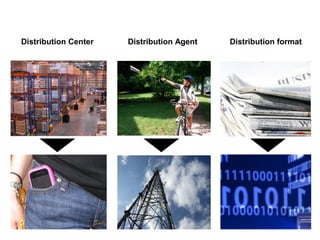
Distribution Center   Distribution Agent   Distribution format
http://www.flickr.com/photos/sabine01/717745775
It’s not the
    death of the
        book to
         fear…


      it’s our
dependency on
    formats
as our community
 (service delivery)
        value!


 http://www.flickr.com/photos/aprilzosia/2585184283/
http://www.flickr.com/photos/carolrain/20055833/
Story of the Phoenix


http://www.flickr.com/photos/foxtongue/206292827
http://www.flickr.com/photos/10451396@N00/342725173/
http://www.flickr.com/photos/sindala/2464020168
http://www.flickr.com/photos/johnnyg1955/2980297442/   http://www.flickr.com/photos/webchicken/1806160182/
Latin, librarius of books, from libr-, liber inner bark, rind, book
Sept 2009
The Information Age, is an idea that
the current age will be characterized by the
ability of individuals to transfer
information freely, and to have instant
access to knowledge that would have
been difficult or impossible to find
previously.
                                  - Wikipedia, 9/09
http://www.flickr.com/photos/jaeming/3788942583/
The information age of now …


http://www.flickr.com/photos/ekai/473003133/
We Think


     http://www.youtube.com/watch?v=qiP79vYsfbo
http://www.flickr.com/photos/distortedsmile/18500026/
Chauvet Cave – 32,000 yrs old
http://www.flickr.com/photos/laanba/165758145/
http://www.flickr.com/photos/eternallyluna/154946086/

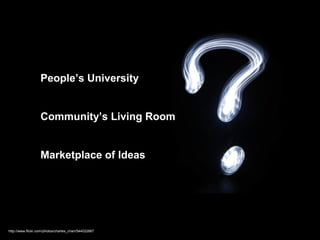
People’s University


                   Community’s Living Room


                   Marketplace of Ideas


http://www.flickr.com/photos/charles_chan/544022867
http://www.flickr.com/photos/clairity/590697378/
The evolution of
idea exchange
The evolution of
idea exchange
The evolution of
idea exchange


                   PLAY!
"You can discover more about a
person in an hour of play than in
a year of conversation."
                             - Plato
Let’s talk about Play …
What is Play?


            Play is the
          highest form
             of human
               activity
          - Nietzsche philosophy


                                   http://www.flickr.com/photos/mnadi/18067074
“Play is the
highest form
of research”
     - Albert Einstein


                         http://www.flickr.com/photos/devcentre/335708735/
“Play is the highest
      expression of
             human
   development in
        childhood.”.

        -Friedrich Froebel
                  (1782- 1852)


                                 http://www.flickr.com/photos/madmetal/2208315035/
Play is the “free
    expression of
       what is in a
     child’s soul,”
       giving “ joy,
          freedom,
     contentment,
  inner and outer
rest, [and] peace
 with the world.”
       -Friedrich Froebel
           Father of kindergarten
Froebel's gifts &
occupations


                    http://www.flickr.com/photos/apoptotic/2540055580/
Play is
 serious
learning
 - Fred Rogers


                 http://www.flickr.com/photos/gaspi/12944421/
What’s necessary for Play?


 http://www.flickr.com/photos/onegoodbumblebee/1444006597/
Name the toy?

Over 200 million sold each year


1st sold as a commercial toy in 1940


1st known image of toy – 1648 painting


Best selling toy worldwide ever   !


                                         http://flickr.com/photos/jupac/2675420204/
http://www.flickr.com/photos/brandi_22/474558156/
consumption                                                                             creativity
         & use                                                                               & production
http://www.flickr.com/photos/kubina/50366633/   http://www.flickr.com/photos/lkusuma/818295509/
Books                         Media


                                                        Engagement
                                                        Experiences
                                                                      Programs

                                   information


                        Computers                                          storytimes
http://en.wikipedia.org/wiki/Image:Soap_bubbles_2.jpg
Photo: Aaron Schmidt | walkingPaper.org
http://www.flickr.com/photos/bertabetti/96068714/
http://www.flickr.com/photos/kimonomania/474758933/
My Slides are @

                                                    www.slideshare.net/hblowers


                                                       Helene Blowers
                                                                heleneblowers.com


http://www.flickr.com/photos/gregwake/2961213279/

Libraries to Lifebraries

Editor's Notes

  • #5 Rember I’m a trend watcher. So this is what I’ve noticed
  • #8 http://www.cbc.ca/technology/story/2009/03/02/un-telecommunications.html http://www.tgdaily.com/html_tmp/content-view-41586-113.html Two thirds of the world’s cell phone subscriptions are in developing nations, with the highest growth rate in Africa where a quarter of the population now has a mobile, a United Nations agency said on Friday. While just 1 in 50 Africans had a mobile in the year 2000, now 28 percent have a cellular subscription, according to the International Telecommunications Union (ITU). The world has more than three times more mobile cellular subscriptions than fixed telephone lines, and in some countries in Asia and Europe people have more than one contract each, pushing the mobile access rate above 100 percent.
  • #9 http://blog.nielsen.com/nielsenwire/online_mobile/smartphones-account-for-half-of-all-mobile-phones-dominate-new-phone-purchases-in-the-us/
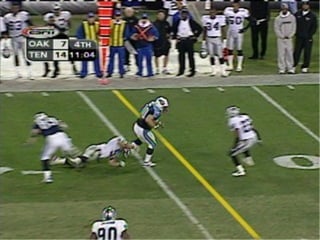
  • #11 Sportsvision’s “1st and ten” system premiered in fall of 1998 – 1 st augmented reality application for mass market.
  • #12 Virtual box simulator
  • #14 Developed by Miami University Oxford OH
  • #21 http://pewresearch.org/pubs/1147/newspapers-struggle-public-not-concerned
  • #23 Repair shops Phone boxes Mendiignt hings
  • #30 The story of the Phoenix is as old as time. The tale of a bird burning itself every 500 years in order to renew its immortality has been passed through all major civilizations since the ancients Greeks. Sensing old age and lackluster, the mystical bird collects kindling and fans its own fire while nesting upon the flames. From the ashes of the old Phoenix, a young and beautiful Phoenix is reborn. By overcoming fire, death, and old age, the Phoenix represents triumph over adversity and rebirth into glory, thereby providing hope and constancy.
  • #38 http://www.mothersdaycentral.com/fun/net-safety/images/kidsnet.jpg
  • #42 http://www.flickr.com/photos/distortedsmile/18500026/
  • #43 he handprint to the right is a cave painting drawn 32,000 years ago and is the oldest portrait of man. On the walls of Chauvet Cave in southern France, the artist used the technology of his day, tinted charcoal dust blown through a straw, to create a simple, yet powerful icon of human-ness. This image captures the essence of human-centered computing. Much like the Paleolithic beings, we still use technology to relate to, understand and depict the world around us, still trying to say "I am here. I am human."
  • #48 The People’s University The community’s Living Room The marketplace of ideas
  • #49 The People’s University The community’s Living Room The marketplace of ideas
  • #57 Friedrich Froebel created Kindergarten (1837 first school Kindergarten) 19 th century The name Kindergarten signifies both a garden for children, a location where they can observe and interact with nature, and also a garden of children, where they themselves can grow and develop in freedom from arbitrary political and social imperatives. In 1837, having developed and tested a radically new educational method and philosophy based on structured, activity based learning, Froebel moved to Bad Blankenburg and established his Play and Activity Institute which he renamed in 1840 Kindergarten ." The kindergarten was essentially tri-partite: toys for sedentary creative play (these Froebel called gifts and occupations ) games and dances for healthy activity observing and nurturing plants in a garden for stimulating awareness of the natural world It was a search for metaphysical unity , in which the potential growth to wholeness of the individual child within the natural world would fulfil an harmonious ideal within the mind of God. " Peter Weston in The Froebel Educational Institute : the Origins and History of the College Froebel's philosophy of education were based on the concepts of free self-expression, creativity, social activity, and motor ability and work.
  • #58 Within 20 years of Frobeol’s death died in 1852 ( 1872) , Kindergarten was mandatory in western Eurpore for all childrem
  • #59 Froebel developed a specific set of 20 "gifts" and "occupations" - physical objects such as balls, blocks, and sticks - for children to use in the kindergarten. Froebel carefully designed these gifts to help children recognize and appreciate the common patterns and forms found in nature. Froebel's gifts were eventually distributed throughout the world, deeply influencing the development of generations of young children.
  • #61 Global Toy Sales Reached $71.96 Billion in 2007 and Expected to Top $86.3 Billion in 2010 Us = 30 billion 75 million children under 18 roughly $400/child