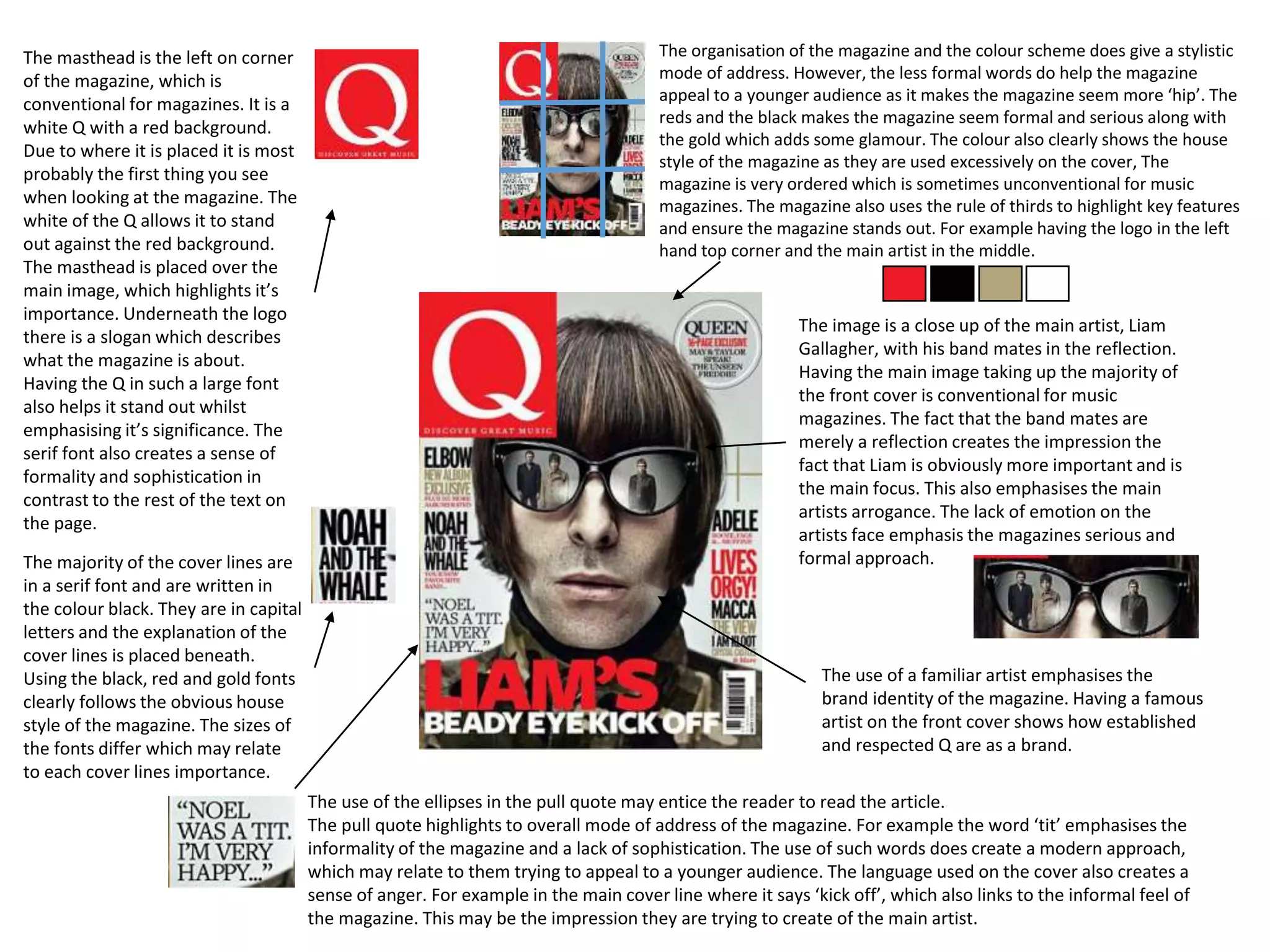
The masthead is the left on corner
of the magazine, which is
conventional for magazines. It is a
white Q with a red background.
Due to where it is placed it is most
probably the first thing you see
when looking at the magazine. The
white of the Q allows it to stand
out against the red background.
The masthead is placed over the
main image, which highlights it’s
importance. Underneath the logo
there is a slogan which describes
what the magazine is about.
Having the Q in such a large font
also helps it stand out whilst
emphasising it’s significance. The
serif font also creates a sense of
formality and sophistication in
contrast to the rest of the text on
the page.
The majority of the cover lines are
in a serif font and are written in
the colour black. They are in capital
letters and the explanation of the
cover lines is placed beneath.
Using the black, red and gold fonts
clearly follows the obvious house
style of the magazine. The sizes of
the fonts differ which may relate
to each cover lines importance.
The use of the ellipses in the pull quote may entice the reader to read the article.
The pull quote highlights to overall mode of address of the magazine. For example the word ‘tit’ emphasises the
informality of the magazine and a lack of sophistication. The use of such words does create a modern approach,
which may relate to them trying to appeal to a younger audience. The language used on the cover also creates a
sense of anger. For example in the main cover line where it says ‘kick off’, which also links to the informal feel of
the magazine. This may be the impression they are trying to create of the main artist.
The image is a close up of the main artist, Liam
Gallagher, with his band mates in the reflection.
Having the main image taking up the majority of
the front cover is conventional for music
magazines. The fact that the band mates are
merely a reflection creates the impression the
fact that Liam is obviously more important and is
the main focus. This also emphasises the main
artists arrogance. The lack of emotion on the
artists face emphasis the magazines serious and
formal approach.
The organisation of the magazine and the colour scheme does give a stylistic
mode of address. However, the less formal words do help the magazine
appeal to a younger audience as it makes the magazine seem more ‘hip’. The
reds and the black makes the magazine seem formal and serious along with
the gold which adds some glamour. The colour also clearly shows the house
style of the magazine as they are used excessively on the cover, The
magazine is very ordered which is sometimes unconventional for music
magazines. The magazine also uses the rule of thirds to highlight key features
and ensure the magazine stands out. For example having the logo in the left
hand top corner and the main artist in the middle.
The use of a familiar artist emphasises the
brand identity of the magazine. Having a famous
artist on the front cover shows how established
and respected Q are as a brand.
Once again, as seen on the front cover we can see that the magazine follows a
consistent house style. This house style is the colours red, white and black. This would
be something readers could easily recognise when picking up the magazine, making
the magazine more familiar. The colours also have different connotations. For
example red has connotations to anger and passion. The colour white implicates
simplicity and modernity, whereas black can highlight sophistication and seriousness.
These features help emphasise the mode of address as formal and sophisticated.
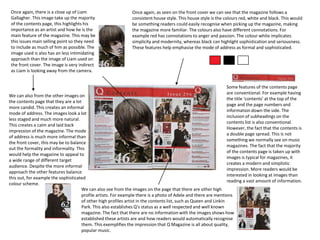
Once again, there is a close up of Liam
Gallagher. This image take up the majority
of the contents page, this highlights his
importance as an artist and how he is the
main feature of the magazine. This may be
this issues main selling point so they need
to include as much of him as possible. The
image used is also has an less intimidating
approach than the image of Liam used on
the front cover. The image is very indirect
as Liam is looking away from the camera.
We can also from the other images on
the contents page that they are a lot
more candid. This creates an informal
mode of address. The images look a lot
less staged and much more natural.
This creates a calm and laid back
impression of the magazine. The mode
of address is much more informal than
the front cover, this may be to balance
out the formality and informality. This
would help the magazine to appeal to
a wide range of different target
audience. Despite the more informal
approach the other features balance
this out, for example the sophisticated
colour scheme.
We can also see from the images on the page that there are other high
profile artists. For example there is a photo of Adele and there are mentions
of other high profiles artist in the contents list, such as Queen and Linkin
Park. This also establishes Q’s status as a well respected and well known
magazine. The fact that there are no information with the images shows how
established these artists are and how readers would automatically recognise
them. This exemplifies the impression that Q Magazine is all about quality,
popular music.
Some features of the contents page
are conventional. For example having
the title ‘contents’ at the top of the
page and the page numbers and
information down the side. The
inclusion of subheadings on the
contents list is also conventional.
However, the fact that the contents is
a double page spread. This is not
something we normally see on music
magazines. The fact that the majority
of the contents page is taken up with
images is typical for magazines, it
creates a modern and simplistic
impression. More readers would be
interested in looking at images than
reading a vast amount of information.
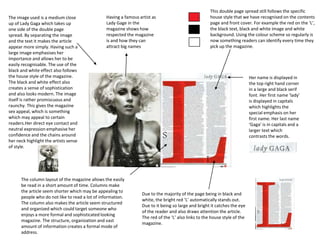
This double page spread still follows the specific
house style that we have recognised on the contents
page and front cover. For example the red on the ‘L’,
the black text, black and white image and white
background. Using the colour scheme so regularly is
now something readers can identify every time they
pick up the magazine.
The image used is a medium close
up of Lady Gaga which takes up
one side of the double page
spread. By separating the image
and the text it makes the article
appear more simply. Having such a
large image emphasises her
importance and allows her to be
easily recognisable. The use of the
black and white effect also follows
the house style of the magazine.
The black and white effect also
creates a sense of sophistication
and also looks modern. The image
itself is rather promiscuous and
raunchy. This gives the magazine
sex appeal, which is something
which may appeal to certain
readers.Her direct eye contact and
neutral expression emphasise her
confidence and the chains around
her neck highlight the artists sense
of style.
Due to the majority of the page being in black and
white, the bright red ‘L’ automatically stands out.
Due to it being so large and bright it catches the eye
of the reader and also draws attention the article.
The red of the ‘L’ also links to the house style of the
magazine.
Her name is displayed in
the top right hand corner
in a large and black serif
font. Her first name ‘lady’
is displayed in capitals
which highlights the
special emphasis on her
first name. Her last name
‘Gaga’ is in capitals and a
larger text which
contrasts the words.
The column layout of the magazine allows the easily
be read in a short amount of time. Columns make
the article seem shorter which may be appealing to
people who do not like to read a lot of information.
The column also makes the article seem structured
and organized which could target someone who
enjoys a more formal and sophisticated looking
magazine. The structure, organization and vast
amount of information creates a formal mode of
address.
Having a famous artist as
Lady Gage in the
magazine shows how
respected the magazine
is and how they can
attract big names

Q Magazine analysis

  • 1.
    The masthead isthe left on corner of the magazine, which is conventional for magazines. It is a white Q with a red background. Due to where it is placed it is most probably the first thing you see when looking at the magazine. The white of the Q allows it to stand out against the red background. The masthead is placed over the main image, which highlights it’s importance. Underneath the logo there is a slogan which describes what the magazine is about. Having the Q in such a large font also helps it stand out whilst emphasising it’s significance. The serif font also creates a sense of formality and sophistication in contrast to the rest of the text on the page. The majority of the cover lines are in a serif font and are written in the colour black. They are in capital letters and the explanation of the cover lines is placed beneath. Using the black, red and gold fonts clearly follows the obvious house style of the magazine. The sizes of the fonts differ which may relate to each cover lines importance. The use of the ellipses in the pull quote may entice the reader to read the article. The pull quote highlights to overall mode of address of the magazine. For example the word ‘tit’ emphasises the informality of the magazine and a lack of sophistication. The use of such words does create a modern approach, which may relate to them trying to appeal to a younger audience. The language used on the cover also creates a sense of anger. For example in the main cover line where it says ‘kick off’, which also links to the informal feel of the magazine. This may be the impression they are trying to create of the main artist. The image is a close up of the main artist, Liam Gallagher, with his band mates in the reflection. Having the main image taking up the majority of the front cover is conventional for music magazines. The fact that the band mates are merely a reflection creates the impression the fact that Liam is obviously more important and is the main focus. This also emphasises the main artists arrogance. The lack of emotion on the artists face emphasis the magazines serious and formal approach. The organisation of the magazine and the colour scheme does give a stylistic mode of address. However, the less formal words do help the magazine appeal to a younger audience as it makes the magazine seem more ‘hip’. The reds and the black makes the magazine seem formal and serious along with the gold which adds some glamour. The colour also clearly shows the house style of the magazine as they are used excessively on the cover, The magazine is very ordered which is sometimes unconventional for music magazines. The magazine also uses the rule of thirds to highlight key features and ensure the magazine stands out. For example having the logo in the left hand top corner and the main artist in the middle. The use of a familiar artist emphasises the brand identity of the magazine. Having a famous artist on the front cover shows how established and respected Q are as a brand.
  • 2.
    Once again, asseen on the front cover we can see that the magazine follows a consistent house style. This house style is the colours red, white and black. This would be something readers could easily recognise when picking up the magazine, making the magazine more familiar. The colours also have different connotations. For example red has connotations to anger and passion. The colour white implicates simplicity and modernity, whereas black can highlight sophistication and seriousness. These features help emphasise the mode of address as formal and sophisticated. Once again, there is a close up of Liam Gallagher. This image take up the majority of the contents page, this highlights his importance as an artist and how he is the main feature of the magazine. This may be this issues main selling point so they need to include as much of him as possible. The image used is also has an less intimidating approach than the image of Liam used on the front cover. The image is very indirect as Liam is looking away from the camera. We can also from the other images on the contents page that they are a lot more candid. This creates an informal mode of address. The images look a lot less staged and much more natural. This creates a calm and laid back impression of the magazine. The mode of address is much more informal than the front cover, this may be to balance out the formality and informality. This would help the magazine to appeal to a wide range of different target audience. Despite the more informal approach the other features balance this out, for example the sophisticated colour scheme. We can also see from the images on the page that there are other high profile artists. For example there is a photo of Adele and there are mentions of other high profiles artist in the contents list, such as Queen and Linkin Park. This also establishes Q’s status as a well respected and well known magazine. The fact that there are no information with the images shows how established these artists are and how readers would automatically recognise them. This exemplifies the impression that Q Magazine is all about quality, popular music. Some features of the contents page are conventional. For example having the title ‘contents’ at the top of the page and the page numbers and information down the side. The inclusion of subheadings on the contents list is also conventional. However, the fact that the contents is a double page spread. This is not something we normally see on music magazines. The fact that the majority of the contents page is taken up with images is typical for magazines, it creates a modern and simplistic impression. More readers would be interested in looking at images than reading a vast amount of information.
  • 3.
    This double pagespread still follows the specific house style that we have recognised on the contents page and front cover. For example the red on the ‘L’, the black text, black and white image and white background. Using the colour scheme so regularly is now something readers can identify every time they pick up the magazine. The image used is a medium close up of Lady Gaga which takes up one side of the double page spread. By separating the image and the text it makes the article appear more simply. Having such a large image emphasises her importance and allows her to be easily recognisable. The use of the black and white effect also follows the house style of the magazine. The black and white effect also creates a sense of sophistication and also looks modern. The image itself is rather promiscuous and raunchy. This gives the magazine sex appeal, which is something which may appeal to certain readers.Her direct eye contact and neutral expression emphasise her confidence and the chains around her neck highlight the artists sense of style. Due to the majority of the page being in black and white, the bright red ‘L’ automatically stands out. Due to it being so large and bright it catches the eye of the reader and also draws attention the article. The red of the ‘L’ also links to the house style of the magazine. Her name is displayed in the top right hand corner in a large and black serif font. Her first name ‘lady’ is displayed in capitals which highlights the special emphasis on her first name. Her last name ‘Gaga’ is in capitals and a larger text which contrasts the words. The column layout of the magazine allows the easily be read in a short amount of time. Columns make the article seem shorter which may be appealing to people who do not like to read a lot of information. The column also makes the article seem structured and organized which could target someone who enjoys a more formal and sophisticated looking magazine. The structure, organization and vast amount of information creates a formal mode of address. Having a famous artist as Lady Gage in the magazine shows how respected the magazine is and how they can attract big names