P. Salcedo L. ; M. del Valle L.
R. Contreras A. ; M.A. Pinninghoff
Universidad de Concepción
Chile
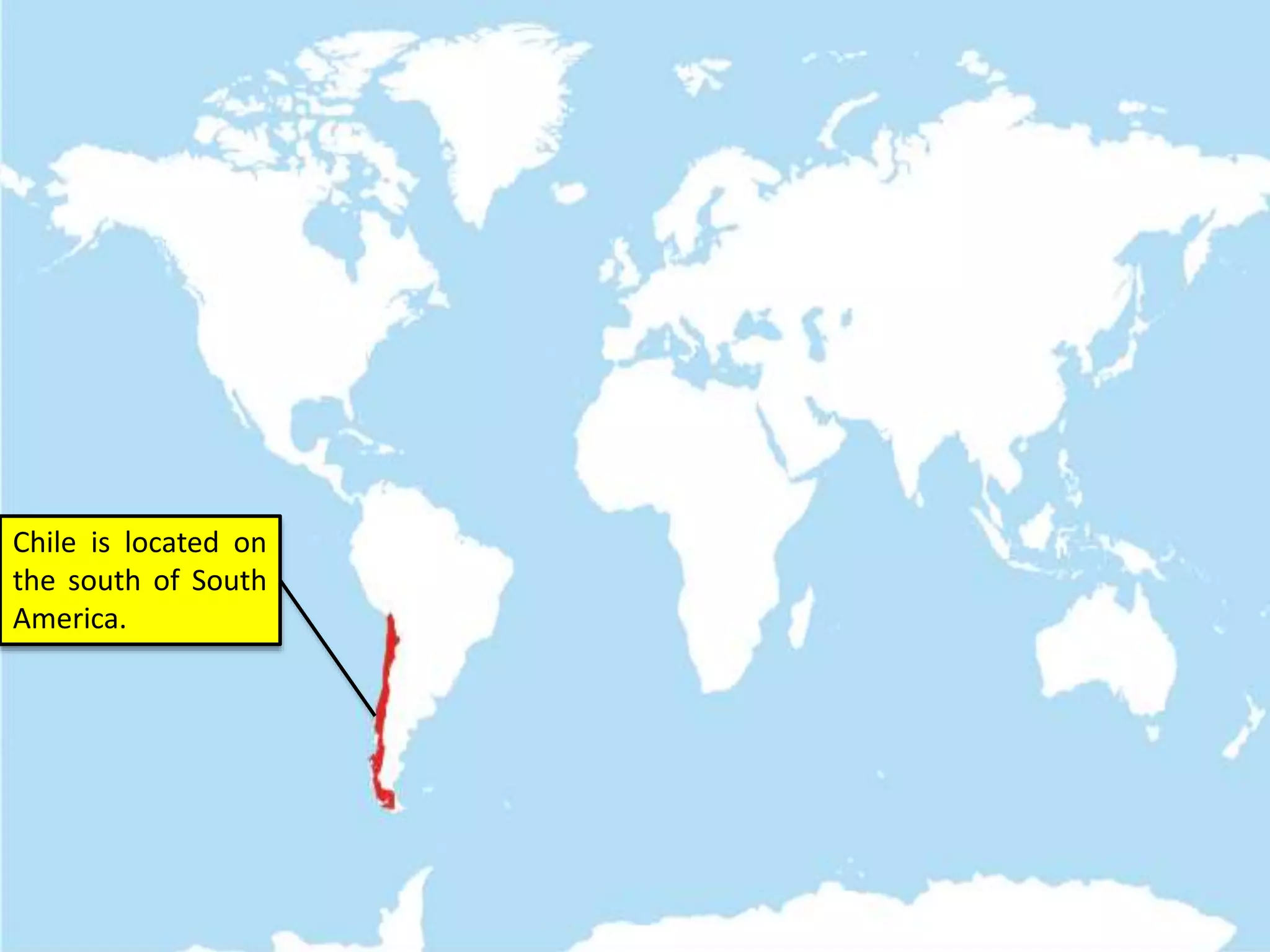
Chile is located on
the south of South
America.
Previous ideas
It is a good choice to be
competent using our
language in different
fields orally, writing, or
talking to each others.
Students are in the process
of learning the language.
Step by step they increase
their language in terms of
accuracy.
All the words describing a
particular area of
knowledge are named
Lexicon.
It is possible to quantify
the lexical units of a
language using statistics
indicators.
Each word is a lexical
unit.
LexMath is a tool to study the available lexicon in
mathematics (oral and written, not symbolic)
LexMath is created to establish an innovation in the
way in which the available lexicon for a group of
students is collected.
About LexMath
Using LexMath you can study the latent lexicon of a
given population and to present easily the main
indicators.
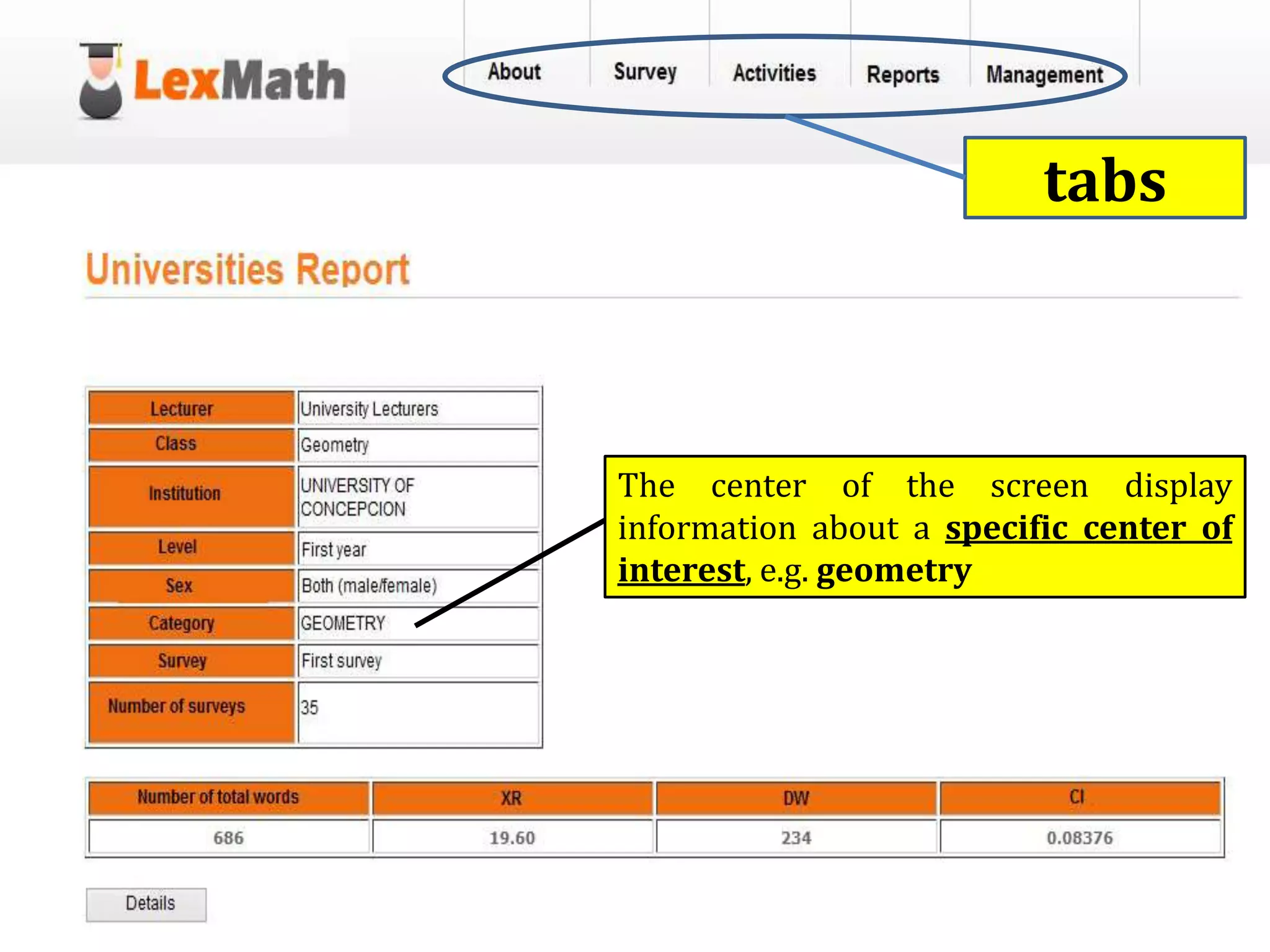
tabs
The center of the screen display
information about a specific center of
interest, e.g. geometry
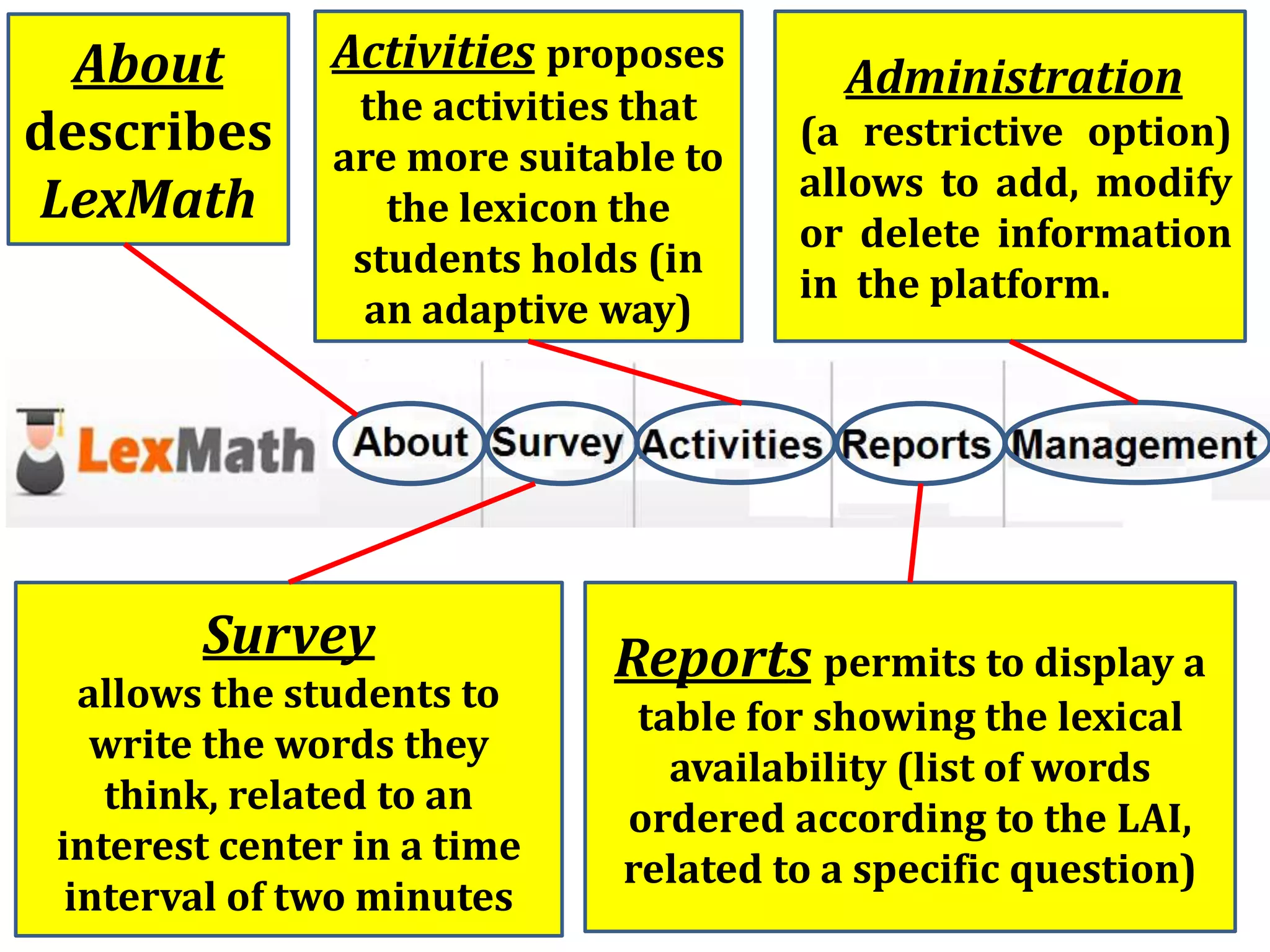
About
describes
LexMath
Survey
allows the students to
write the words they
think, related to an
interest center in a time
interval of two minutes
Activities proposes
the activities that
are more suitable to
the lexicon the
students holds (in
an adaptive way)
Reports permits to display a
table for showing the lexical
availability (list of words
ordered according to the LAI,
related to a specific question)
Administration
(a restrictive option)
allows to add, modify
or delete information
in the platform.
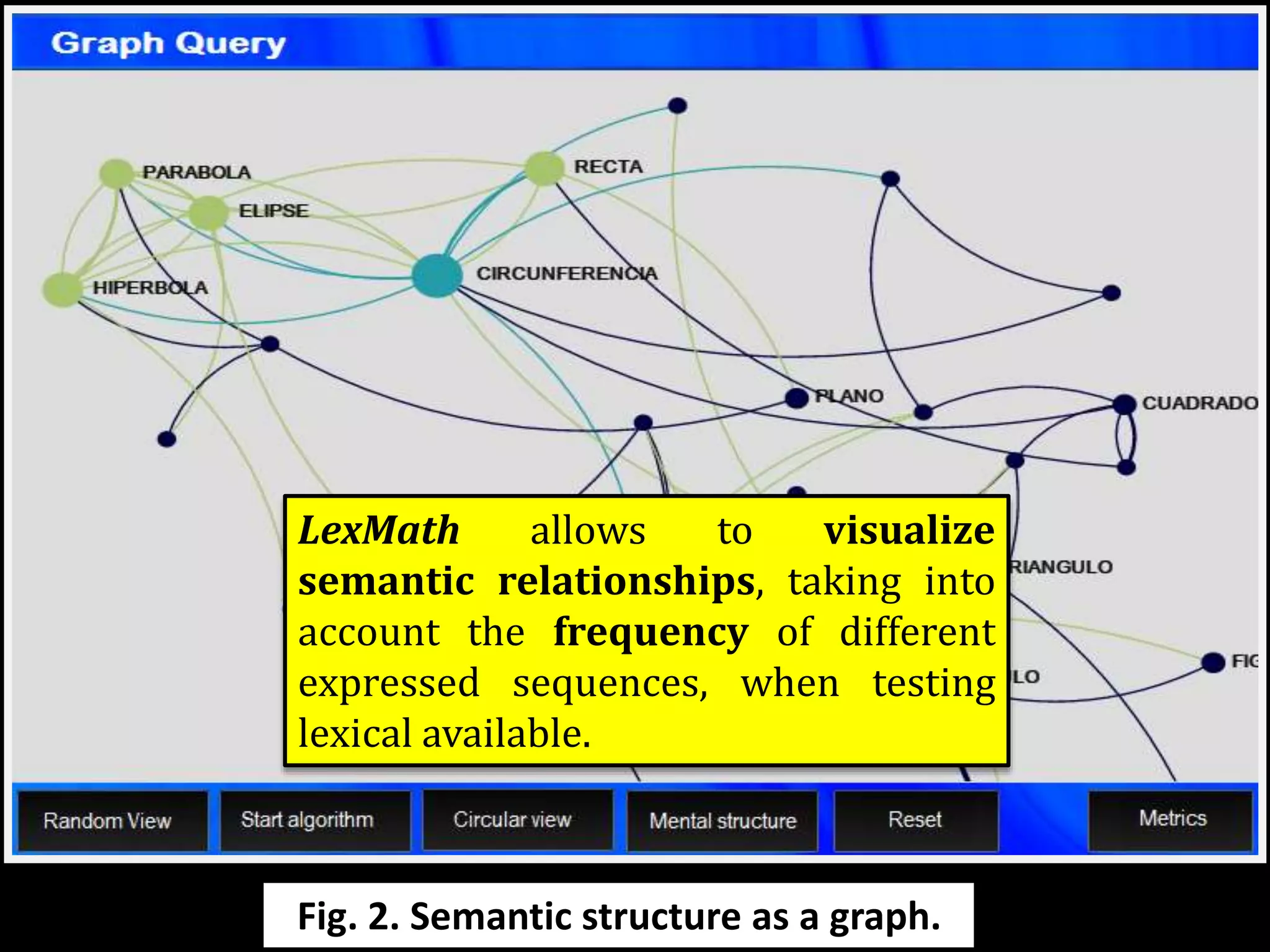
Fig. 2. Semantic structure as a graph.
LexMath allows to visualize
semantic relationships, taking into
account the frequency of different
expressed sequences, when testing
lexical available.
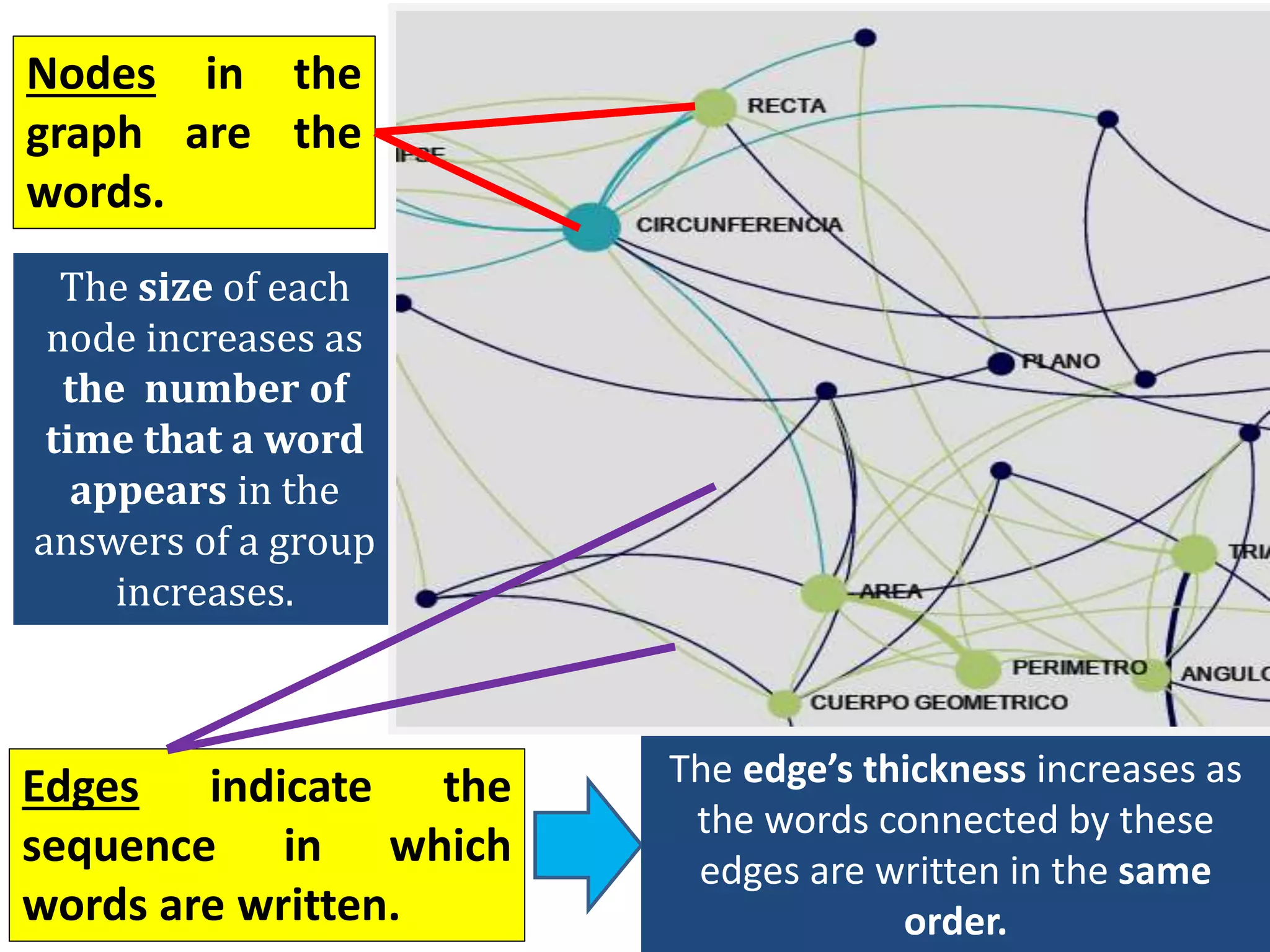
Nodes in the
graph are the
words.
The size of each
node increases as
the number of
time that a word
appears in the
answers of a group
increases.
Edges indicate the
sequence in which
words are written.
The edge’s thickness increases as
the words connected by these
edges are written in the same
order.
LexMath allows to delete relationship
that are not relevant because it
appears with a low frequency.
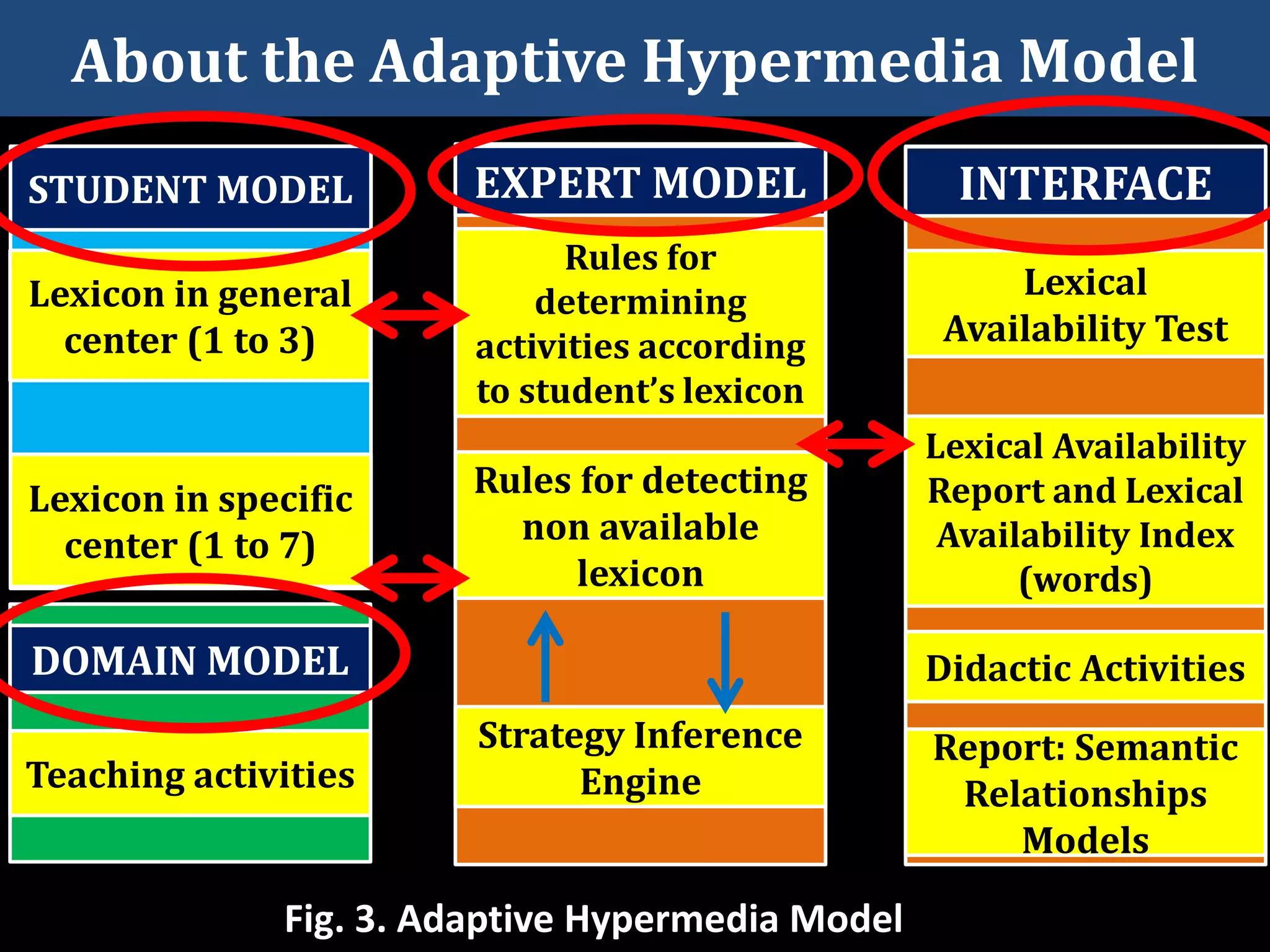
STUDENT MODEL
Lexicon in general
center (1 to 3)
Lexicon in specific
center (1 to 7)
DOMAIN MODEL
Teaching activities
EXPERT MODEL
Rules for
determining
activities according
to student’s lexicon
Rules for detecting
non available
lexicon
Strategy Inference
Engine
INTERFACE
Lexical
Availability Test
Lexical Availability
Report and Lexical
Availability Index
(words)
Didactic Activities
Report: Semantic
Relationships
Models
About the Adaptive Hypermedia Model
Fig. 3. Adaptive Hypermedia Model
Using LexMath you can have access to Gephi
and the graphs which enable the study of
semantic relations between them.
Gephi is an interactive visualization and
exploration platform for all kinds of networks
and complex systems, dynamic and hierarchical
graphs.
http://www.gephi.org
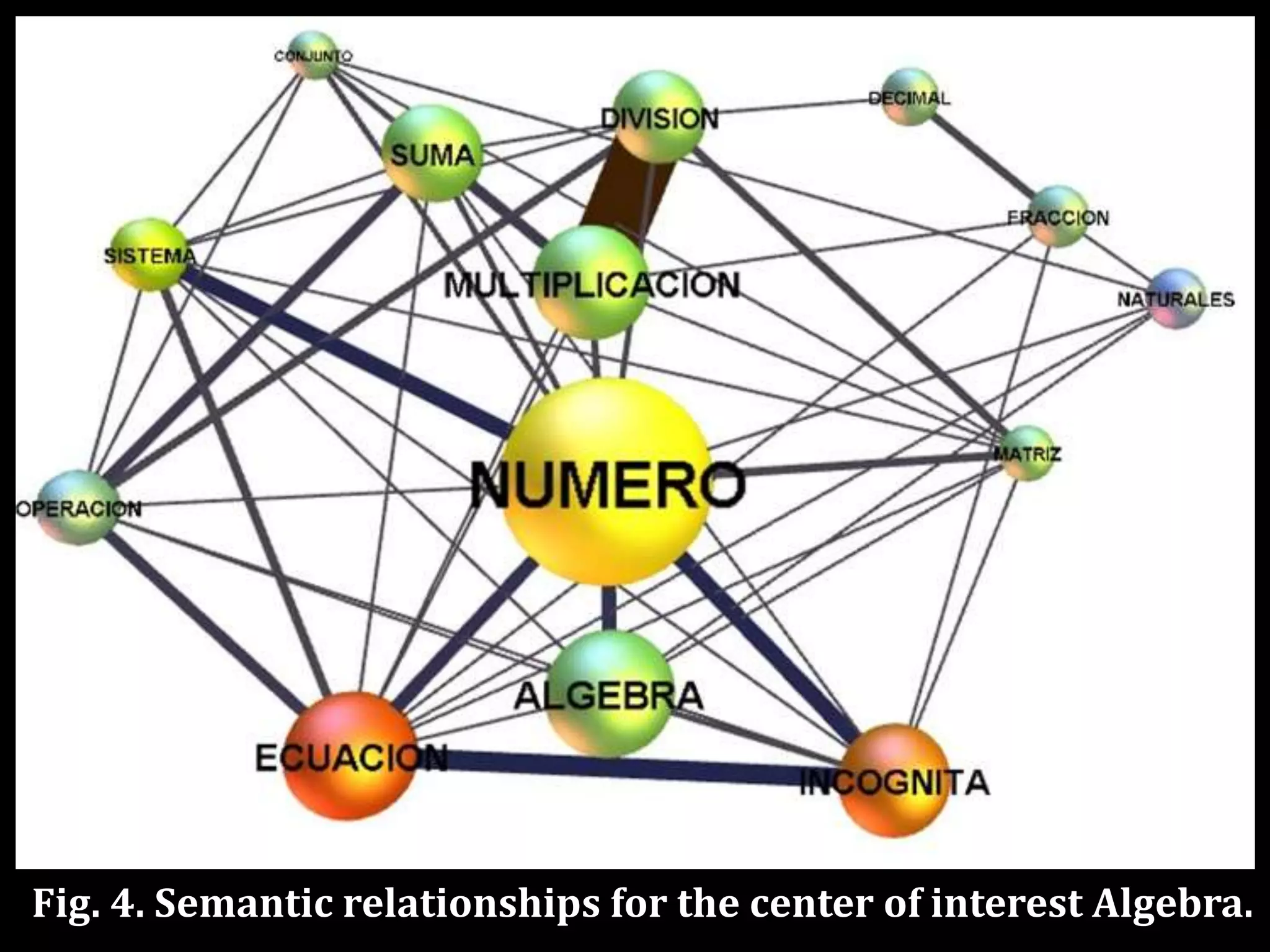
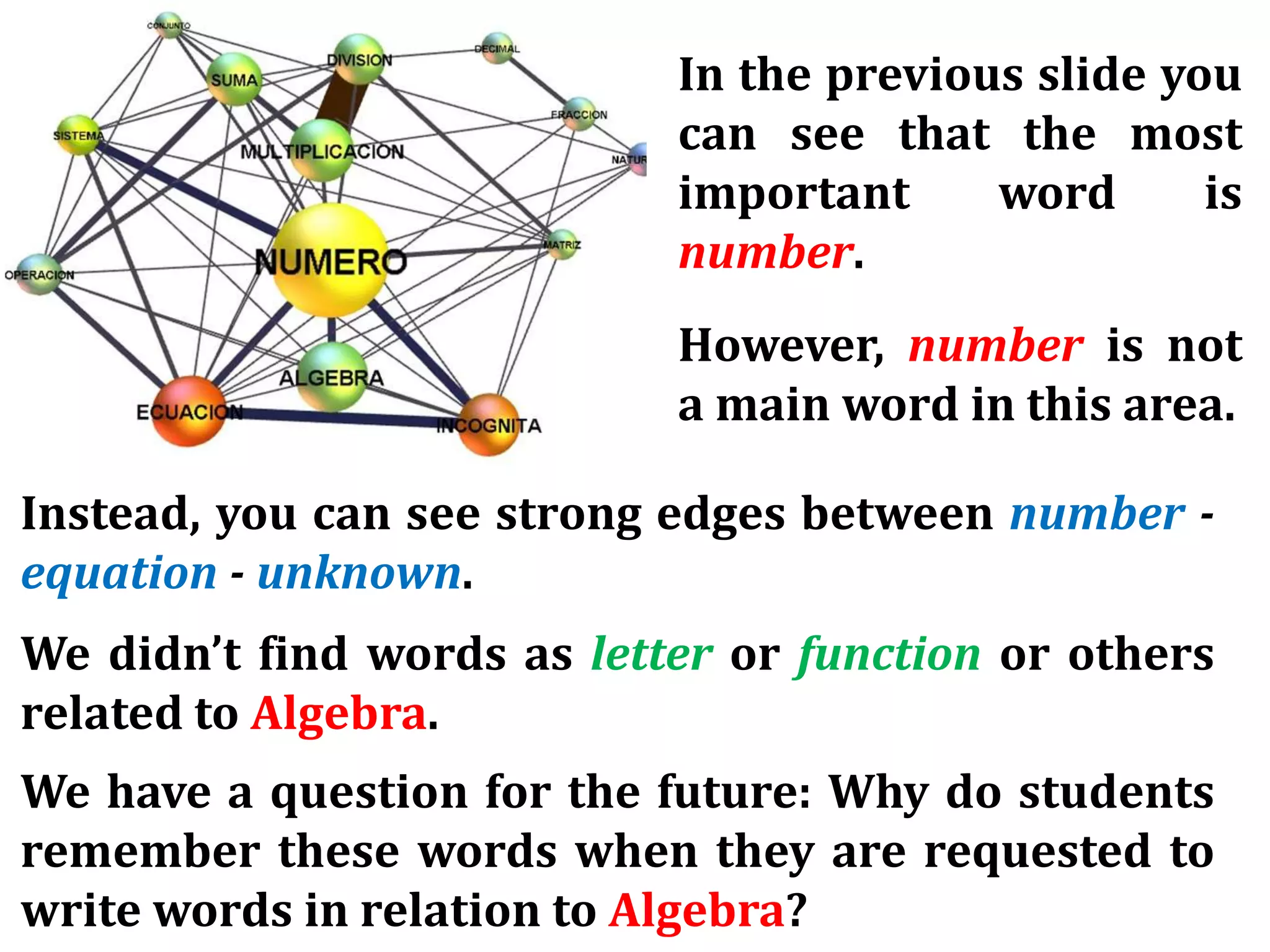
Fig. 4. Semantic relationships for the center of interest Algebra.
Instead, you can see strong edges between number -
equation - unknown.
We didn’t find words as letter or function or others
related to Algebra.
We have a question for the future: Why do students
remember these words when they are requested to
write words in relation to Algebra?
In the previous slide you
can see that the most
important word is
number.
However, number is not
a main word in this area.
Lexmath’s applications
In Concepción (Chile) was conducted
a research about lexical analysis
supported by LexMath.
The hypothesis is that there exist
differences in the vocabulary
associated to the field of
mathematics, according to the
different socio-economical level
presented in the Educational
Institutions
The goal of this research was to
analyze the lexicon and semantic
networks on a sample of high school
students.
Conclusions
LexMath is faster than others statistics
procedures.
The mentioned hypothesis was
confirmed: there exist differences
in semantic networks for identical
center of interest when considering
social-economical background in
students.
It is important to note that students with a lower social-
economical level show less nodes and edges.
Gephi is an important tool to describe semantic relations.
Acknowledgement
This work is supported by the Chilean National
Fund for Scientific and Technological
Development, FONDECYT, through research
project number 1140457

Lexmath - Tool for the study of available lexicon in mathematics fondecyt 1140457

  • 1.
    P. Salcedo L.; M. del Valle L. R. Contreras A. ; M.A. Pinninghoff Universidad de Concepción Chile
  • 2.
    Chile is locatedon the south of South America.
  • 3.
    Previous ideas It isa good choice to be competent using our language in different fields orally, writing, or talking to each others. Students are in the process of learning the language. Step by step they increase their language in terms of accuracy.
  • 4.
    All the wordsdescribing a particular area of knowledge are named Lexicon. It is possible to quantify the lexical units of a language using statistics indicators. Each word is a lexical unit.
  • 5.
    LexMath is atool to study the available lexicon in mathematics (oral and written, not symbolic) LexMath is created to establish an innovation in the way in which the available lexicon for a group of students is collected. About LexMath Using LexMath you can study the latent lexicon of a given population and to present easily the main indicators.
  • 6.
    tabs The center ofthe screen display information about a specific center of interest, e.g. geometry
  • 7.
    About describes LexMath Survey allows the studentsto write the words they think, related to an interest center in a time interval of two minutes Activities proposes the activities that are more suitable to the lexicon the students holds (in an adaptive way) Reports permits to display a table for showing the lexical availability (list of words ordered according to the LAI, related to a specific question) Administration (a restrictive option) allows to add, modify or delete information in the platform.
  • 8.
    Fig. 2. Semanticstructure as a graph. LexMath allows to visualize semantic relationships, taking into account the frequency of different expressed sequences, when testing lexical available.
  • 9.
    Nodes in the graphare the words. The size of each node increases as the number of time that a word appears in the answers of a group increases. Edges indicate the sequence in which words are written. The edge’s thickness increases as the words connected by these edges are written in the same order.
  • 10.
    LexMath allows todelete relationship that are not relevant because it appears with a low frequency.
  • 11.
    STUDENT MODEL Lexicon ingeneral center (1 to 3) Lexicon in specific center (1 to 7) DOMAIN MODEL Teaching activities EXPERT MODEL Rules for determining activities according to student’s lexicon Rules for detecting non available lexicon Strategy Inference Engine INTERFACE Lexical Availability Test Lexical Availability Report and Lexical Availability Index (words) Didactic Activities Report: Semantic Relationships Models About the Adaptive Hypermedia Model Fig. 3. Adaptive Hypermedia Model
  • 12.
    Using LexMath youcan have access to Gephi and the graphs which enable the study of semantic relations between them. Gephi is an interactive visualization and exploration platform for all kinds of networks and complex systems, dynamic and hierarchical graphs. http://www.gephi.org
  • 13.
    Fig. 4. Semanticrelationships for the center of interest Algebra.
  • 14.
    Instead, you cansee strong edges between number - equation - unknown. We didn’t find words as letter or function or others related to Algebra. We have a question for the future: Why do students remember these words when they are requested to write words in relation to Algebra? In the previous slide you can see that the most important word is number. However, number is not a main word in this area.
  • 15.
    Lexmath’s applications In Concepción(Chile) was conducted a research about lexical analysis supported by LexMath. The hypothesis is that there exist differences in the vocabulary associated to the field of mathematics, according to the different socio-economical level presented in the Educational Institutions The goal of this research was to analyze the lexicon and semantic networks on a sample of high school students.
  • 16.
    Conclusions LexMath is fasterthan others statistics procedures. The mentioned hypothesis was confirmed: there exist differences in semantic networks for identical center of interest when considering social-economical background in students. It is important to note that students with a lower social- economical level show less nodes and edges. Gephi is an important tool to describe semantic relations.
  • 17.
    Acknowledgement This work issupported by the Chilean National Fund for Scientific and Technological Development, FONDECYT, through research project number 1140457

Editor's Notes

  • #10 Noud Edgis riten
  • #12 Jaipermidia The Adapted Hypermedia contains four well defined components. This components interact to offer a hypermedia according to their lexical requirements.