







Asking Creative Questions
Week Eight
Re-Forming
Session Aims


Consider different types of questions and
 demonstrate effective questioning
Learning Outcomes

By the end of this session you will be able to:

1. Recognise the difference between open and
   closed questions
2. Focus a client’s attention on different areas of
   their experience using the change model and
   creative questions
Last Session
1. Practised paraphrasing skills

2. Practised reflecting feelings

3. Described the Change Model
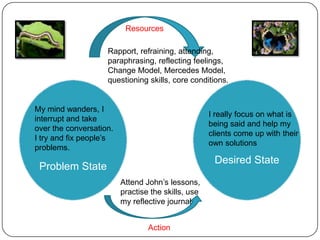
Resources

                    Rapport, refraining, attending,
                    paraphrasing, reflecting feelings,
                    Change Model, Mercedes Model,
                    questioning skills, core conditions.


My mind wanders, I
                                                    I really focus on what is
interrupt and take
                                                    being said and help my
over the conversation.
                                                    clients come up with their
I try and fix people’s
                                                    own solutions
problems.
                                                     Desired State
 Problem State
                         Attend John’s lessons,
                         practise the skills, use
                         my reflective journal


                                 Action
Contents of this Session

 Open and Closed Questions
 Creative Questions using the Change Model
 Demonstration by Adam and John
 Skills practise in pairs
 Self-reflection
 Feedback to whole group
Open and Closed Questions
Ask Who?
Definitions
Open Questions

Invite the speaker to expand on what they have
  said and share more of their experience

Closed Questions

Invite a specific response, often ‘yes’ or ‘no’. They
  tend to shift people into their rational mind, taking
  them out of their emotions.
Asking Creative Questions
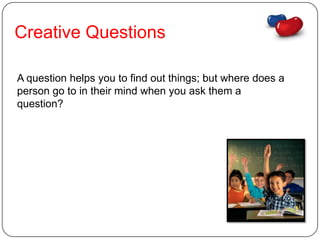
Creative Questions

A question helps you to find out things; but where does a
person go to in their mind when you ask them a
question?
Creative Questions

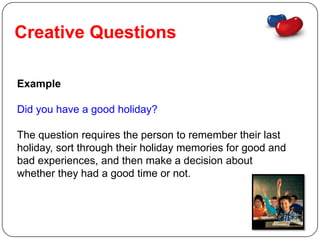
Example

Did you have a good holiday?

The question requires the person to remember their last
holiday, sort through their holiday memories for good and
bad experiences, and then make a decision about
whether they had a good time or not.
Questions direct an individual’s
 attention to different areas of
 their experience
Questions and the Change Model


  1.   How is your depression?

  2.   What do you want instead?

  3.   What helps you feel better?

  4.   What would you have to do to start feeling
       better?
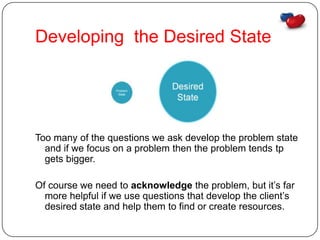
Developing the Desired State


Too many of the questions we ask develop the problem state
  and if we focus on a problem then the problem tends tp
  gets bigger.

Of course we need to acknowledge the problem, but it’s far
  more helpful if we use questions that develop the client’s
  desired state and help them to find or create resources.
Demonstration
Comfort Break
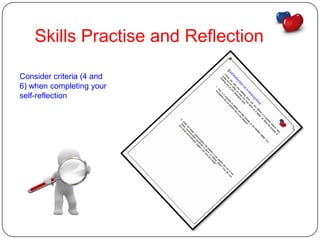
Skills Practise and Reflection

Consider criteria (4 and
6) when completing your
self-reflection
Skills Practise                   40 minutes
1.   Work in pairs

2.   Take turns being the helper and helpee

3.   Take 10 minutes each

4.   Helpee - talk about a small problem that’s current in your life

5.   Helper – practise all your listening skills, including
     paraphrasing, reflecting feelings, paraphrasing and asking an
     appropriate amount of questions.

6.   After 20 minutes complete the self-reflection worksheet
Feedback
Learning Outcomes

You are now able to:

1. Recognise the difference between open and
   closed questions
2. Focus a client’s attention on different areas of
   their experience using the change model and
   creative questions
Next Week

Please bring your portfolio to
 the class, including all your
 journal entries
Well done Everybody!

Level II Counselling Skills Session Eight

  • 1.
  • 2.
  • 3.
    Session Aims Consider differenttypes of questions and demonstrate effective questioning
  • 4.
    Learning Outcomes By theend of this session you will be able to: 1. Recognise the difference between open and closed questions 2. Focus a client’s attention on different areas of their experience using the change model and creative questions
  • 5.
    Last Session 1. Practisedparaphrasing skills 2. Practised reflecting feelings 3. Described the Change Model
  • 6.
    Resources Rapport, refraining, attending, paraphrasing, reflecting feelings, Change Model, Mercedes Model, questioning skills, core conditions. My mind wanders, I I really focus on what is interrupt and take being said and help my over the conversation. clients come up with their I try and fix people’s own solutions problems. Desired State Problem State Attend John’s lessons, practise the skills, use my reflective journal Action
  • 7.
    Contents of thisSession  Open and Closed Questions  Creative Questions using the Change Model  Demonstration by Adam and John  Skills practise in pairs  Self-reflection  Feedback to whole group
  • 8.
    Open and ClosedQuestions
  • 9.
  • 10.
    Definitions Open Questions Invite thespeaker to expand on what they have said and share more of their experience Closed Questions Invite a specific response, often ‘yes’ or ‘no’. They tend to shift people into their rational mind, taking them out of their emotions.
  • 11.
  • 12.
    Creative Questions A questionhelps you to find out things; but where does a person go to in their mind when you ask them a question?
  • 13.
    Creative Questions Example Did youhave a good holiday? The question requires the person to remember their last holiday, sort through their holiday memories for good and bad experiences, and then make a decision about whether they had a good time or not.
  • 14.
    Questions direct anindividual’s attention to different areas of their experience
  • 15.
    Questions and theChange Model 1. How is your depression? 2. What do you want instead? 3. What helps you feel better? 4. What would you have to do to start feeling better?
  • 16.
    Developing the DesiredState Too many of the questions we ask develop the problem state and if we focus on a problem then the problem tends tp gets bigger. Of course we need to acknowledge the problem, but it’s far more helpful if we use questions that develop the client’s desired state and help them to find or create resources.
  • 17.
  • 18.
  • 19.
    Skills Practise andReflection Consider criteria (4 and 6) when completing your self-reflection
  • 20.
    Skills Practise 40 minutes 1. Work in pairs 2. Take turns being the helper and helpee 3. Take 10 minutes each 4. Helpee - talk about a small problem that’s current in your life 5. Helper – practise all your listening skills, including paraphrasing, reflecting feelings, paraphrasing and asking an appropriate amount of questions. 6. After 20 minutes complete the self-reflection worksheet
  • 21.
  • 22.
    Learning Outcomes You arenow able to: 1. Recognise the difference between open and closed questions 2. Focus a client’s attention on different areas of their experience using the change model and creative questions
  • 23.
    Next Week Please bringyour portfolio to the class, including all your journal entries
  • 24.