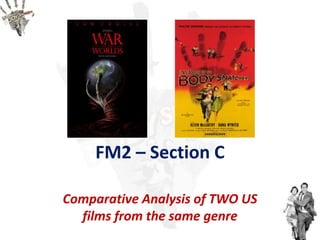
FM2 – Section C 
Comparative Analysis of TWO US 
films from the same genre
Starter Task 
How do you think people felt on the day of the 9/11 
attacks? 
How do you think people felt in the days following the 
attacks? 
How do you think people felt by October, when the 
USA went to war with Afghanistan?
Starter Task 
Note down definitions for 
the following terms: 
Post-9/11 Society 
Post-9/11 CINEMA 
Can you think of any films, books, 
TV shows or other media products 
that could be defined as “Post 
9/11”?
Starter Task 
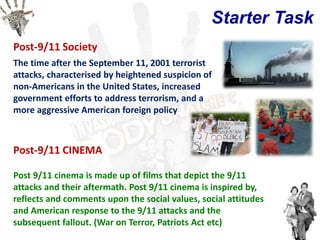
Post-9/11 Society 
The time after the September 11, 2001 terrorist 
attacks, characterised by heightened suspicion of 
non-Americans in the United States, increased 
government efforts to address terrorism, and a 
more aggressive American foreign policy 
Post-9/11 CINEMA 
Post 9/11 cinema is made up of films that depict the 9/11 
attacks and their aftermath. Post 9/11 cinema is inspired by, 
reflects and comments upon the social values, social attitudes 
and American response to the 9/11 attacks and the 
subsequent fallout. (War on Terror, Patriots Act etc)
Post 9/11 Media 
Post-9/11 
Media
Starter Task 
What are the defining features of our ‘Post 9/11’ Society? 
Longest war in US 
Characteristics of 
Post-9/11 
Society 
history 
‘War on 
Terror’ 
‘Patriots Act’ 
Terrorists - ‘Islamic 
fundamentalism’ 
Increasingly 
paranoid society 
Growth of anti- 
Islamic sentiment 
Fear of future 
attacks
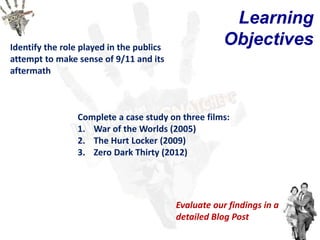
Learning 
Objectives Identify the role played in the publics 
attempt to make sense of 9/11 and its 
aftermath 
Complete a case study on three films: 
1. War of the Worlds (2005) 
2. The Hurt Locker (2009) 
3. Zero Dark Thirty (2012) 
Evaluate our findings in a 
detailed Blog Post
Making sense of 9/11 
“In contemporary society, cinema has become a primary way 
in which people gain knowledge about world events. Films 
often go beyond news reports, showing in-depth, behind-the-scenes 
footage. 
In a much more profound way than other media, Cinema can 
influence peoples’ emotions and feeling about war and what 
political leaders should do about it” 
Since 9/11, filmmakers have used their medium to 
represent, challenge and try to make sense of the 9/11 
attacks and subsequent aftermath 
As a consequence, we can look these films and explore 
how our society responded to the attacks and fallout
Making sense of 9/11 
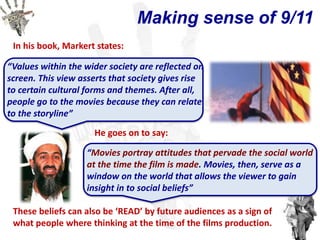
In his book, Markert states: 
“Values within the wider society are reflected on 
screen. This view asserts that society gives rise 
to certain cultural forms and themes. After all, 
people go to the movies because they can relate 
to the storyline” 
He goes on to say: 
“Movies portray attitudes that pervade the social world 
at the time the film is made. Movies, then, serve as a 
window on the world that allows the viewer to gain 
insight in to social beliefs” 
These beliefs can also be ‘READ’ by future audiences as a sign of 
what people where thinking at the time of the films production.
Making sense of 9/11 
“Movies portray attitudes that pervade the social world at the time 
the film is made” 
What do you think this statement 
means? 
Like all media, Films are made by people who 
are positioned within a particular culture and 
society. 
As we are ‘positioned’ within a society we 
grow up being taught certain ideologies, 
beliefs and ways of viewing the world 
As a result, filmmakers world views inevitably 
impact on how they represent the world 
through their films 
This is known as: 
‘Cultural Experience’
Cultural Experience 
Cultural Experience: 
This is how our culture – our upbringing, 
experiences and beliefs – affect our response 
to a film. 
Cultural Experience also relates to our 
experiences within our culture and how these 
experiences shape our world view (how we 
see the world). 
As filmmakers attempt to represent a certain 
view of the world, their cultural experience 
will influence what they put in their films
Cultural Experience 
Note down a few words that identify and label the people in the images 
below:
Cultural Experience 
Our ‘Cultural Experience’ tells us that these people are:
Cultural Experience 
However, people from a different ‘Cultural Experience’ could see these 
people as:
Cultural Experiences and 
Hollywood 
Case Study 1 – War of the Worlds (2005) 
Directed by Steven Spielberg and based on the novel 
of the same name by H.G. Welles, ‘War of the Worlds’ 
depicts an alien invasion, beginning in New York City. 
Read the article you have been given and 
annotate what you think are the key points 
What does the article say the film is really about? 
War of the Worlds depicts a world in the immediate aftermath of an 
‘outsider’ attack. The film shows a world in chaos were all social 
norms and rules are subverted. 
Characters act rashly and react to the events before they have 
chance to make sense of them!
Cultural Experiences and 
Hollywood 
Case Study 1 – War of the Worlds (2005) 
In the immediate aftermath of 9/11 the USA: 
• Went to war with Afghanistan without complete 
evidence of their involvement (Actions begin in 
October ‘01) 
• Passed the ‘Patriots Act’ 
• Immigration laws were made a lot more stringent 
• Went to War with Iraq 
• The war in Iraq was based on ‘Bad Intelligence’ 
that they had ‘Weapons of Mass Destruction’ 
• This intelligence turned out to be FALSE 
• Therefore it can be argued that the US / UK 
reacted too quickly, based on an emotional 
response, rather than a logical one
Cultural Experiences and 
Hollywood 
Case Study 2 – Hurt Locker (2009)
Cultural Experiences and 
Hollywood 
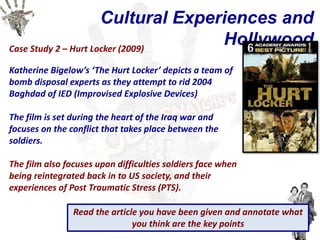
Case Study 2 – Hurt Locker (2009) 
Katherine Bigelow’s ‘The Hurt Locker’ depicts a team of 
bomb disposal experts as they attempt to rid 2004 
Baghdad of IED (Improvised Explosive Devices) 
The film is set during the heart of the Iraq war and 
focuses on the conflict that takes place between the 
soldiers. 
The film also focuses upon difficulties soldiers face when 
being reintegrated back in to US society, and their 
experiences of Post Traumatic Stress (PTS). 
Read the article you have been given and annotate what 
you think are the key points
Cultural Experiences and 
Hollywood 
Case Study 3 – Zero Dark Thirty (2012)
Cultural Experiences and 
Hollywood 
Case Study 3 – Zero Dark Thirty (2012) 
Katherine Bigelow’s ‘Zero Dark Thirty’ is a fictionalised 
version of the assault by US Marines that killed Osama 
Bin Laden 
The US Government are seen torturing prisoners of war 
for information – a crime in war. 
The film implies that the US government illegally tortured 
prisoners of war to gain information 
Information that lead them to the hiding place of Osama 
Bin Laden. 
Read the article you have been given and annotate what 
you think are the key points
Cultural Experiences and 
Hollywood 
Case Study 3 – Zero Dark Thirty (2012)
Cultural Experiences and 
Hollywood 
Case Study 3 – Zero Dark Thirty (2012) 
Films like Zero Dark Thirty reflect the American publics 
desire for answers about their countries role in the War 
on Terror 
The film re-opened the debate in the USA about the use 
of torture in war 
Ultimately, Zero Dark Thirty was made at a time when 
the war had been raging for over ten years, Bin Laden 
just been killed, and the American Government was being 
accused of torture 
The film reflected peoples desires for answers and debate 
about these topics
Plenary 
Log on to the internet and research a ‘Post 9/11 film’ 
You must complete the following tasks: 
1. Find a post 9/11 film you want to study 
2. Identify the ways the film can be considered 
‘Post 9/11’ 
3. Using Google, search the terms: 
• ‘[film title] post 9/11 analysis’ 
4. Read at least TWO articles about your chosen 
film and copy and paste quotes in to… 
5. Create a detailed blog post of your findings (see 
handout for extra guidance)

Lesson2 what is post 9/11?

  • 1.
    FM2 – SectionC Comparative Analysis of TWO US films from the same genre
  • 2.
    Starter Task Howdo you think people felt on the day of the 9/11 attacks? How do you think people felt in the days following the attacks? How do you think people felt by October, when the USA went to war with Afghanistan?
  • 3.
    Starter Task Notedown definitions for the following terms: Post-9/11 Society Post-9/11 CINEMA Can you think of any films, books, TV shows or other media products that could be defined as “Post 9/11”?
  • 4.
    Starter Task Post-9/11Society The time after the September 11, 2001 terrorist attacks, characterised by heightened suspicion of non-Americans in the United States, increased government efforts to address terrorism, and a more aggressive American foreign policy Post-9/11 CINEMA Post 9/11 cinema is made up of films that depict the 9/11 attacks and their aftermath. Post 9/11 cinema is inspired by, reflects and comments upon the social values, social attitudes and American response to the 9/11 attacks and the subsequent fallout. (War on Terror, Patriots Act etc)
  • 5.
    Post 9/11 Media Post-9/11 Media
  • 6.
    Starter Task Whatare the defining features of our ‘Post 9/11’ Society? Longest war in US Characteristics of Post-9/11 Society history ‘War on Terror’ ‘Patriots Act’ Terrorists - ‘Islamic fundamentalism’ Increasingly paranoid society Growth of anti- Islamic sentiment Fear of future attacks
  • 7.
    Learning Objectives Identifythe role played in the publics attempt to make sense of 9/11 and its aftermath Complete a case study on three films: 1. War of the Worlds (2005) 2. The Hurt Locker (2009) 3. Zero Dark Thirty (2012) Evaluate our findings in a detailed Blog Post
  • 8.
    Making sense of9/11 “In contemporary society, cinema has become a primary way in which people gain knowledge about world events. Films often go beyond news reports, showing in-depth, behind-the-scenes footage. In a much more profound way than other media, Cinema can influence peoples’ emotions and feeling about war and what political leaders should do about it” Since 9/11, filmmakers have used their medium to represent, challenge and try to make sense of the 9/11 attacks and subsequent aftermath As a consequence, we can look these films and explore how our society responded to the attacks and fallout
  • 9.
    Making sense of9/11 In his book, Markert states: “Values within the wider society are reflected on screen. This view asserts that society gives rise to certain cultural forms and themes. After all, people go to the movies because they can relate to the storyline” He goes on to say: “Movies portray attitudes that pervade the social world at the time the film is made. Movies, then, serve as a window on the world that allows the viewer to gain insight in to social beliefs” These beliefs can also be ‘READ’ by future audiences as a sign of what people where thinking at the time of the films production.
  • 10.
    Making sense of9/11 “Movies portray attitudes that pervade the social world at the time the film is made” What do you think this statement means? Like all media, Films are made by people who are positioned within a particular culture and society. As we are ‘positioned’ within a society we grow up being taught certain ideologies, beliefs and ways of viewing the world As a result, filmmakers world views inevitably impact on how they represent the world through their films This is known as: ‘Cultural Experience’
  • 11.
    Cultural Experience CulturalExperience: This is how our culture – our upbringing, experiences and beliefs – affect our response to a film. Cultural Experience also relates to our experiences within our culture and how these experiences shape our world view (how we see the world). As filmmakers attempt to represent a certain view of the world, their cultural experience will influence what they put in their films
  • 12.
    Cultural Experience Notedown a few words that identify and label the people in the images below:
  • 13.
    Cultural Experience Our‘Cultural Experience’ tells us that these people are:
  • 14.
    Cultural Experience However,people from a different ‘Cultural Experience’ could see these people as:
  • 15.
    Cultural Experiences and Hollywood Case Study 1 – War of the Worlds (2005) Directed by Steven Spielberg and based on the novel of the same name by H.G. Welles, ‘War of the Worlds’ depicts an alien invasion, beginning in New York City. Read the article you have been given and annotate what you think are the key points What does the article say the film is really about? War of the Worlds depicts a world in the immediate aftermath of an ‘outsider’ attack. The film shows a world in chaos were all social norms and rules are subverted. Characters act rashly and react to the events before they have chance to make sense of them!
  • 16.
    Cultural Experiences and Hollywood Case Study 1 – War of the Worlds (2005) In the immediate aftermath of 9/11 the USA: • Went to war with Afghanistan without complete evidence of their involvement (Actions begin in October ‘01) • Passed the ‘Patriots Act’ • Immigration laws were made a lot more stringent • Went to War with Iraq • The war in Iraq was based on ‘Bad Intelligence’ that they had ‘Weapons of Mass Destruction’ • This intelligence turned out to be FALSE • Therefore it can be argued that the US / UK reacted too quickly, based on an emotional response, rather than a logical one
  • 17.
    Cultural Experiences and Hollywood Case Study 2 – Hurt Locker (2009)
  • 18.
    Cultural Experiences and Hollywood Case Study 2 – Hurt Locker (2009) Katherine Bigelow’s ‘The Hurt Locker’ depicts a team of bomb disposal experts as they attempt to rid 2004 Baghdad of IED (Improvised Explosive Devices) The film is set during the heart of the Iraq war and focuses on the conflict that takes place between the soldiers. The film also focuses upon difficulties soldiers face when being reintegrated back in to US society, and their experiences of Post Traumatic Stress (PTS). Read the article you have been given and annotate what you think are the key points
  • 19.
    Cultural Experiences and Hollywood Case Study 3 – Zero Dark Thirty (2012)
  • 20.
    Cultural Experiences and Hollywood Case Study 3 – Zero Dark Thirty (2012) Katherine Bigelow’s ‘Zero Dark Thirty’ is a fictionalised version of the assault by US Marines that killed Osama Bin Laden The US Government are seen torturing prisoners of war for information – a crime in war. The film implies that the US government illegally tortured prisoners of war to gain information Information that lead them to the hiding place of Osama Bin Laden. Read the article you have been given and annotate what you think are the key points
  • 21.
    Cultural Experiences and Hollywood Case Study 3 – Zero Dark Thirty (2012)
  • 22.
    Cultural Experiences and Hollywood Case Study 3 – Zero Dark Thirty (2012) Films like Zero Dark Thirty reflect the American publics desire for answers about their countries role in the War on Terror The film re-opened the debate in the USA about the use of torture in war Ultimately, Zero Dark Thirty was made at a time when the war had been raging for over ten years, Bin Laden just been killed, and the American Government was being accused of torture The film reflected peoples desires for answers and debate about these topics
  • 23.
    Plenary Log onto the internet and research a ‘Post 9/11 film’ You must complete the following tasks: 1. Find a post 9/11 film you want to study 2. Identify the ways the film can be considered ‘Post 9/11’ 3. Using Google, search the terms: • ‘[film title] post 9/11 analysis’ 4. Read at least TWO articles about your chosen film and copy and paste quotes in to… 5. Create a detailed blog post of your findings (see handout for extra guidance)

Editor's Notes

  • #3 Watch a montage of clips from 9/11 and ask students to note down how they think people felt: on the day, in the days afterwards and in the month afterwards Should say: Paranoid Afraid etc – then reinforce these as central points to our course.
  • #9 http://newscenter.berkeley.edu/2011/09/09/10-years-later-how-did-the-911-attacks-change-america/ Put situated culture after this and explain that our culture, and view of the world is impacted by what happens in real life. As a result, the media and what it depicts etc is also impacted and influenced by that.
  • #10 http://newscenter.berkeley.edu/2011/09/09/10-years-later-how-did-the-911-attacks-change-america/ Put situated culture after this and explain that our culture, and view of the world is impacted by what happens in real life. As a result, the media and what it depicts etc is also impacted and influenced by that.
  • #11 http://newscenter.berkeley.edu/2011/09/09/10-years-later-how-did-the-911-attacks-change-america/ Put situated culture after this and explain that our culture, and view of the world is impacted by what happens in real life. As a result, the media and what it depicts etc is also impacted and influenced by that.
  • #12 http://newscenter.berkeley.edu/2011/09/09/10-years-later-how-did-the-911-attacks-change-america/ Put situated culture after this and explain that our culture, and view of the world is impacted by what happens in real life. As a result, the media and what it depicts etc is also impacted and influenced by that.
  • #13 http://newscenter.berkeley.edu/2011/09/09/10-years-later-how-did-the-911-attacks-change-america/ Put situated culture after this and explain that our culture, and view of the world is impacted by what happens in real life. As a result, the media and what it depicts etc is also impacted and influenced by that.
  • #14 http://newscenter.berkeley.edu/2011/09/09/10-years-later-how-did-the-911-attacks-change-america/ Put situated culture after this and explain that our culture, and view of the world is impacted by what happens in real life. As a result, the media and what it depicts etc is also impacted and influenced by that.
  • #15 http://newscenter.berkeley.edu/2011/09/09/10-years-later-how-did-the-911-attacks-change-america/ Put situated culture after this and explain that our culture, and view of the world is impacted by what happens in real life. As a result, the media and what it depicts etc is also impacted and influenced by that.
  • #16 Summati
  • #17 Summati
  • #18 Summati
  • #19 Summati
  • #20 Summati
  • #21 Summati
  • #22 Summati
  • #23 Summati
  • #24 Summati