Day 4 in Unit
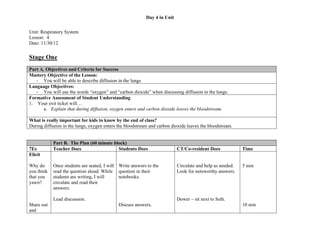
Unit: Respiratory System
Lesson: 4
Date: 11/30/12

Stage One
Part A. Objectives and Criteria for Success
Mastery Objective of the Lesson:
- You will be able to describe diffusion in the lungs
Language Objectives:
- You will use the words “oxygen” and “carbon dioxide” when discussing diffusion in the lungs.
Formative Assessment of Student Understanding
1. Your exit ticket will…
a. Explain that during diffusion, oxygen enters and carbon dioxide leaves the bloodstream.
What is really important for kids to know by the end of class?
During diffusion in the lungs, oxygen enters the bloodstream and carbon dioxide leaves the bloodstream.

7Es
Elicit

Part B. The Plan (60 minute block)
Teacher Does
Students Does

Share out
and

Time

Once students are seated, I will Write answers to the
read the question aloud. While question in their
students are writing, I will
notebooks.
circulate and read their
answers.

Circulate and help as needed.
Look for noteworthy answers.

5 min

Lead discussion.

Why do
you think
that you
yawn?

CT/Co-resident Does

Dower – sit next to Seth.
Discuss answers.

10 min
Day 4 in Unit
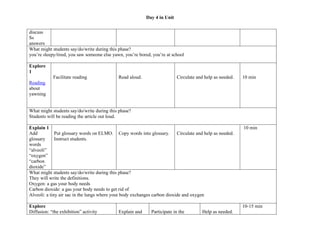
discuss
Ss
answers
What might students say/do/write during this phase?
you’re sleepy/tired, you saw someone else yawn, you’re bored, you’re at school
Explore
1
Facilitate reading

Read aloud.

Circulate and help as needed.

10 min

Explain 1
Add
Put glossary words on ELMO. Copy words into glossary. Circulate and help as needed.
glossary
Instruct students.
words
“alveoli”
“oxygen”
“carbon
dioxide”
What might students say/do/write during this phase?
They will write the definitions.
Oxygen: a gas your body needs
Carbon dioxide: a gas your body needs to get rid of
Alveoli: a tiny air sac in the lungs where your body exchanges carbon dioxide and oxygen

10 min

Explore
Diffusion: “the exhibition” activity

10-15 min

Reading
about
yawning
What might students say/do/write during this phase?
Students will be reading the article out loud.

Explain and

Participate in the

Help as needed.
Day 4 in Unit
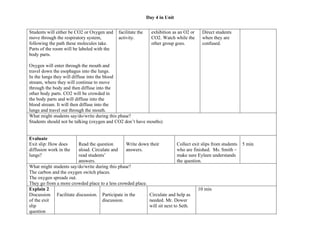
Students will either be CO2 or Oxygen and
move through the respiratory system,
following the path these molecules take.
Parts of the room will be labeled with the
body parts.

facilitate the
activity.

exhibition as an O2 or
CO2. Watch while the
other group goes.

Direct students
when they are
confused.

Oxygen will enter through the mouth and
travel down the esophagus into the lungs.
In the lungs they will diffuse into the blood
stream, where they will continue to move
through the body and then diffuse into the
other body parts. CO2 will be crowded in
the body parts and will diffuse into the
blood stream. It will then diffuse into the
lungs and travel out through the mouth.
What might students say/do/write during this phase?
Students should not be talking (oxygen and CO2 don’t have mouths)
Evaluate
Exit slip: How does
diffusion work in the
lungs?

Read the question
Write down their
Collect exit slips from students
aloud. Circulate and
answers.
who are finished. Ms. Smith –
read students’
make sure Eyleen understands
answers.
the question.
What might students say/do/write during this phase?
The carbon and the oxygen switch places.
The oxygen spreads out.
They go from a more crowded place to a less crowded place.
Explain 2
10 min
Discussion Facilitate discussion. Participate in the
Circulate and help as
of the exit
discussion.
needed. Mr. Dower
slip
will sit next to Seth.
question

5 min
Day 4 in Unit
What might students say/do/write during this phase?
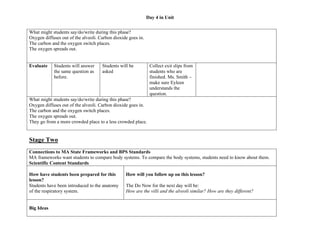
Oxygen diffuses out of the alveoli. Carbon dioxide goes in.
The carbon and the oxygen switch places.
The oxygen spreads out.
Evaluate

Students will answer
the same question as
before.

Students will be
asked

Collect exit slips from
students who are
finished. Ms. Smith –
make sure Eyleen
understands the
question.

What might students say/do/write during this phase?
Oxygen diffuses out of the alveoli. Carbon dioxide goes in.
The carbon and the oxygen switch places.
The oxygen spreads out.
They go from a more crowded place to a less crowded place.

Stage Two
Connections to MA State Frameworks and BPS Standards
MA frameworks want students to compare body systems. To compare the body systems, students need to know about them.
Scientific Content Standards
How have students been prepared for this
lesson?
Students have been introduced to the anatomy
of the respiratory system.
Big Ideas

How will you follow up on this lesson?
The Do Now for the next day will be:
How are the villi and the alveoli similar? How are they different?
Day 4 in Unit
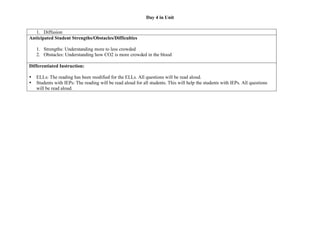
1. Diffusion
Anticipated Student Strengths/Obstacles/Difficulties
1. Strengths: Understanding more to less crowded
2. Obstacles: Understanding how CO2 is more crowded in the blood
Differentiated Instruction:
•
•

ELLs: The reading has been modified for the ELLs. All questions will be read aloud.
Students with IEPs: The reading will be read aloud for all students. This will help the students with IEPs. All questions
will be read aloud.

Lesson 4 respiratory system

  • 1.
    Day 4 inUnit Unit: Respiratory System Lesson: 4 Date: 11/30/12 Stage One Part A. Objectives and Criteria for Success Mastery Objective of the Lesson: - You will be able to describe diffusion in the lungs Language Objectives: - You will use the words “oxygen” and “carbon dioxide” when discussing diffusion in the lungs. Formative Assessment of Student Understanding 1. Your exit ticket will… a. Explain that during diffusion, oxygen enters and carbon dioxide leaves the bloodstream. What is really important for kids to know by the end of class? During diffusion in the lungs, oxygen enters the bloodstream and carbon dioxide leaves the bloodstream. 7Es Elicit Part B. The Plan (60 minute block) Teacher Does Students Does Share out and Time Once students are seated, I will Write answers to the read the question aloud. While question in their students are writing, I will notebooks. circulate and read their answers. Circulate and help as needed. Look for noteworthy answers. 5 min Lead discussion. Why do you think that you yawn? CT/Co-resident Does Dower – sit next to Seth. Discuss answers. 10 min
  • 2.
    Day 4 inUnit discuss Ss answers What might students say/do/write during this phase? you’re sleepy/tired, you saw someone else yawn, you’re bored, you’re at school Explore 1 Facilitate reading Read aloud. Circulate and help as needed. 10 min Explain 1 Add Put glossary words on ELMO. Copy words into glossary. Circulate and help as needed. glossary Instruct students. words “alveoli” “oxygen” “carbon dioxide” What might students say/do/write during this phase? They will write the definitions. Oxygen: a gas your body needs Carbon dioxide: a gas your body needs to get rid of Alveoli: a tiny air sac in the lungs where your body exchanges carbon dioxide and oxygen 10 min Explore Diffusion: “the exhibition” activity 10-15 min Reading about yawning What might students say/do/write during this phase? Students will be reading the article out loud. Explain and Participate in the Help as needed.
  • 3.
    Day 4 inUnit Students will either be CO2 or Oxygen and move through the respiratory system, following the path these molecules take. Parts of the room will be labeled with the body parts. facilitate the activity. exhibition as an O2 or CO2. Watch while the other group goes. Direct students when they are confused. Oxygen will enter through the mouth and travel down the esophagus into the lungs. In the lungs they will diffuse into the blood stream, where they will continue to move through the body and then diffuse into the other body parts. CO2 will be crowded in the body parts and will diffuse into the blood stream. It will then diffuse into the lungs and travel out through the mouth. What might students say/do/write during this phase? Students should not be talking (oxygen and CO2 don’t have mouths) Evaluate Exit slip: How does diffusion work in the lungs? Read the question Write down their Collect exit slips from students aloud. Circulate and answers. who are finished. Ms. Smith – read students’ make sure Eyleen understands answers. the question. What might students say/do/write during this phase? The carbon and the oxygen switch places. The oxygen spreads out. They go from a more crowded place to a less crowded place. Explain 2 10 min Discussion Facilitate discussion. Participate in the Circulate and help as of the exit discussion. needed. Mr. Dower slip will sit next to Seth. question 5 min
  • 4.
    Day 4 inUnit What might students say/do/write during this phase? Oxygen diffuses out of the alveoli. Carbon dioxide goes in. The carbon and the oxygen switch places. The oxygen spreads out. Evaluate Students will answer the same question as before. Students will be asked Collect exit slips from students who are finished. Ms. Smith – make sure Eyleen understands the question. What might students say/do/write during this phase? Oxygen diffuses out of the alveoli. Carbon dioxide goes in. The carbon and the oxygen switch places. The oxygen spreads out. They go from a more crowded place to a less crowded place. Stage Two Connections to MA State Frameworks and BPS Standards MA frameworks want students to compare body systems. To compare the body systems, students need to know about them. Scientific Content Standards How have students been prepared for this lesson? Students have been introduced to the anatomy of the respiratory system. Big Ideas How will you follow up on this lesson? The Do Now for the next day will be: How are the villi and the alveoli similar? How are they different?
  • 5.
    Day 4 inUnit 1. Diffusion Anticipated Student Strengths/Obstacles/Difficulties 1. Strengths: Understanding more to less crowded 2. Obstacles: Understanding how CO2 is more crowded in the blood Differentiated Instruction: • • ELLs: The reading has been modified for the ELLs. All questions will be read aloud. Students with IEPs: The reading will be read aloud for all students. This will help the students with IEPs. All questions will be read aloud.