Do-Now
                  
 We will work on a do-now after WSMS.
Do-Now
                   
 Please work on your do-now silently.
Announcements
            
 Tomorrow & Friday
Scenario 2


•
                         run for office in
    Joel has always wanted to
    California. He moved there 9 years ago, having
    lived in Oregon all of his life. He’s so excited
    that he can finally run for the Congressional
    office of his dreams. Which office does he want
    to run for?
Review
                    
 What did we talk about yesterday?
 What activities did we do?
American Idol
               
 You will have 5 minutes to work with your group
 Remember:
   You need to turn your lyrics into me
   You need to mention 6 powers in your song
Lesson 3, Unit: The Federal System
Take-Home Point
          
Is the lawmaking process
 just or fair?
Today’s Agenda
              
 Do-Now
 Announcements + Review
 AI
 Lawmaking
   Notes
   So True/So False
Powers of Congress
             
 Which one of the 18 do you think is the most
  important?
Lawmaking
             
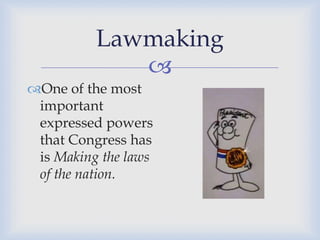
One of the most
 important
 expressed powers
 that Congress has
 is Making the laws
 of the nation.
Lawmaking
            
A bill is a
 proposed law or
                    NO!
 a draft of a law

  YES!
A Step Back
           
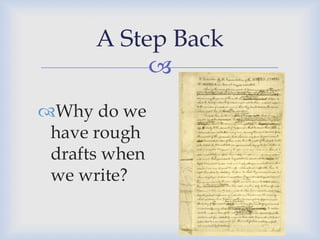
Why do we
 have rough
 drafts when
 we write?
Lawmaking
               
Ideas for laws can
 come from members of
 Congress, voters favoring
 certain bills, a large
 group of Americans
 asking for bill, and the
 President
Individuals and
 interest groups help
 shape laws
Lawmaking
                
 What does the process look like?
Step 1
                 
The process
 begins with the
 introduction of a
 bill by a Senator or
 Representative in
 Congress.
Step 2
                   
The bill is then to
 sent to a committee in
 the house of
 Congress it started in
Here it gets debated
 and revised
Step 3
                   
The bill is debated on
 the floor of each house*

*NOT AT THE SAME
  TIME- it goes all the
  way through one
  house first and THEN
  begins the process
  again
Step 4
             
The bill is
 voted on in
 each house
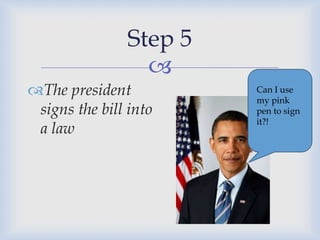
Step 5
                  
The president           Can I use
                         my pink
 signs the bill into     pen to sign
                         it?!
 a law
Lawmaking
               
A bill can begin in
 either house with the
 exception of
 appropriation bills or
 bills that deal with
 money which begin in
 the House of
 Representatives
Lawmaking
              
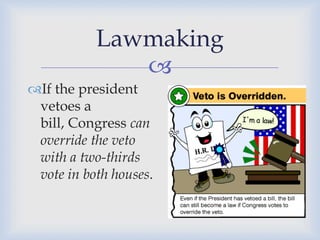
If the president
 vetoes a
 bill, Congress can
 override the veto
 with a two-thirds
 vote in both houses.
Lawmaking
              
Most bills do not
 survive this process
                                     You will
 (Less than 5%                       survive,
 become laws).                       Bill!!


                        Probs
                        not, dude!
So True/So False
               
Hold up your cards to indicate your response. Blue is true, and
                        green is false.
So True/So False
            
A bill on gun control can begin in
 either house.
So True/So False
              
Once a bill has successfully gone through the
 process in the House of Representatives, the
 Senators just need to vote on it, and then it
 can go to the president.
So True/So False
             
A bill can die (be thrown out or
 forgotten) in the committee phase of
 the process in either house.
So True/So False
            
Only Congressmen can propose ideas
 about laws.
So True/So False
            
Most bills become laws.
So True/So False
               
 The President has the final say on whether or not a
  bill becomes a law.
So True/So False
            
The process of making laws is very
 straightforward and simple.
Take-Home Point
          
Is the lawmaking process
 just or fair?

Legislative branch lawmaking process

  • 1.
    Do-Now   We will work on a do-now after WSMS.
  • 2.
    Do-Now   Please work on your do-now silently.
  • 3.
    Announcements   Tomorrow & Friday
  • 4.
    Scenario 2 •  run for office in Joel has always wanted to California. He moved there 9 years ago, having lived in Oregon all of his life. He’s so excited that he can finally run for the Congressional office of his dreams. Which office does he want to run for?
  • 5.
    Review   What did we talk about yesterday?  What activities did we do?
  • 6.
    American Idol   You will have 5 minutes to work with your group  Remember:  You need to turn your lyrics into me  You need to mention 6 powers in your song
  • 7.
    Lesson 3, Unit:The Federal System
  • 8.
    Take-Home Point  Is the lawmaking process just or fair?
  • 9.
    Today’s Agenda   Do-Now  Announcements + Review  AI  Lawmaking  Notes  So True/So False
  • 10.
    Powers of Congress   Which one of the 18 do you think is the most important?
  • 11.
    Lawmaking  One of the most important expressed powers that Congress has is Making the laws of the nation.
  • 12.
    Lawmaking  A bill is a proposed law or NO! a draft of a law YES!
  • 13.
    A Step Back  Why do we have rough drafts when we write?
  • 14.
    Lawmaking  Ideas for laws can come from members of Congress, voters favoring certain bills, a large group of Americans asking for bill, and the President Individuals and interest groups help shape laws
  • 15.
    Lawmaking   What does the process look like?
  • 16.
    Step 1  The process begins with the introduction of a bill by a Senator or Representative in Congress.
  • 17.
    Step 2  The bill is then to sent to a committee in the house of Congress it started in Here it gets debated and revised
  • 18.
    Step 3  The bill is debated on the floor of each house* *NOT AT THE SAME TIME- it goes all the way through one house first and THEN begins the process again
  • 19.
    Step 4  The bill is voted on in each house
  • 20.
    Step 5  The president Can I use my pink signs the bill into pen to sign it?! a law
  • 22.
    Lawmaking  A bill can begin in either house with the exception of appropriation bills or bills that deal with money which begin in the House of Representatives
  • 23.
    Lawmaking  If the president vetoes a bill, Congress can override the veto with a two-thirds vote in both houses.
  • 24.
    Lawmaking  Most bills do not survive this process You will (Less than 5% survive, become laws). Bill!! Probs not, dude!
  • 25.
    So True/So False  Hold up your cards to indicate your response. Blue is true, and green is false.
  • 26.
    So True/So False  A bill on gun control can begin in either house.
  • 27.
    So True/So False  Once a bill has successfully gone through the process in the House of Representatives, the Senators just need to vote on it, and then it can go to the president.
  • 28.
    So True/So False  A bill can die (be thrown out or forgotten) in the committee phase of the process in either house.
  • 29.
    So True/So False  Only Congressmen can propose ideas about laws.
  • 30.
    So True/So False  Most bills become laws.
  • 31.
    So True/So False   The President has the final say on whether or not a bill becomes a law.
  • 32.
    So True/So False  The process of making laws is very straightforward and simple.
  • 33.
    Take-Home Point  Is the lawmaking process just or fair?