LESSON 3
MAINTAIN HAND TOOLS

 DIRECTION. WRITE TRUE IF THE STATEMENT IS CORRECT AND FALSE IF IT IS WRONG. WRITE
YOUR ANSWERS ON A SEPARATE SHEET OF PAPER.
1. ALL TOOLS AND EQUIPMENT MUST BE PROPERLY MAINTAINED SO THAT WORKERS ARE NOT
ENDANGERED.
2. PREVENTIVE MAINTENANCE IS THE SYSTEMATIC CARE AND PROTECTION OF TOOLS,
EQUIPMENT AND MACHINES IN ORDER TO KEEP THEM IN A SAFE, USABLE CONDITION, LIMIT
DOWNTIME AND EXTEND PRODUCTIVITY.
3. THE DEGREE OF DETAIL TO INCLUDE REGARDING TOOLS AND EQUIPMENT MAINTENANCE WILL
DEPEND ON THE KINDS OF TOOLS/EQUIPMENT USED.
4. DAMAGED OR DEFECTIVE EQUIPMENT/TOOLS SHOULD BE TAGGED AND REMOVED FROM
SERVICE.
5. MOST MANUFACTURERS CAN PROVIDE MAINTENANCE SCHEDULES FOR THEIR EQUIPMENT.
6. PROPERLY STORED TOOLS AND EQUIPMENT WILL BE EASY TO FIND WHEN NEEDED AND ARE
LESS LIKELY TO BE LOST.
7. USE BINS FOR STORING SMALL PARTS IS A GOOD PRACTICE ON PROPER STORAGE.
8. PRODUCTIVITY IS INCREASED BECAUSE TIME IS NOT LOST LOOKING FOR TOOLS, PARTS AND
EQUIPMENT IS ONE OF THE BENEFITS OF PROPER STORAGE.


TOOL AND EQUIPMENT MAINTENANCE
All tools and equipment must be properly
maintained so that workers are not endangered.
Regulations require inspections of tools, machines
and equipment before use.
Preventive maintenance is the systematic care and
protection of tools, equipment and machines in order to keep
them in a safe, usable condition, limit downtime and extend
productivity. We must always be aware that maintenance
tasks themselves are potentially hazardous and can result in
injury. The successful maintenance program is:
• well organized and scheduled,
• controls hazards,
• defines operational procedures, and trains key personnel.

The degree of detail to include regarding tools and
equipment maintenance will depend on the kinds of
tools/equipment used. Some construction equipment
may have very specific inspection and maintenance
requirements. Electronic equipment may have different
maintenance requirements. Hand tools may require only
basic maintenance. Power tools should be maintained in
good working order.
This may be limited to ensuring that blades/bits
are replaced when needed and those guards or
other safety devices are operable and any
damaged electrical cords/plugs are repaired or
replaced. Damaged or defective equipment/tools
should be tagged and removed from service.
Most manufacturers can provide maintenance
schedules for their equipment. Large companies
typically have a comprehensive maintenance
program due to the capital investment and/or
leasing agreements. Smaller companies may lease
equipment and maintenance services may be
included in the leasing agreement.
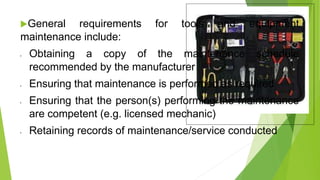
General requirements for tools and equipment
maintenance include:
• Obtaining a copy of the maintenance schedule
recommended by the manufacturer
• Ensuring that maintenance is performed as required
• Ensuring that the person(s) performing the maintenance
are competent (e.g. licensed mechanic)
• Retaining records of maintenance/service conducted
TOOLS AND EQUIPMENT MAINTENANCE
All tools and equipment must be properly maintained so that
workers are not endangered. Regulations require inspections of
tools, machines and equipment before use.
Preventive maintenance is the systematic care and protection of
tools, equipment and machines in order to keep them in a safe,
usable condition, limit downtime and extend productivity. We must
always be aware that maintenance tasks themselves are potentially
hazardous and can result in injury. The successful maintenance
program is:
• well organized and scheduled,
• controls hazards,
• defines operational procedures, and trains key
personnel.
The degree of detail to include regarding tools and
equipment maintenance will depend on the kinds of
tools/equipment used. Some construction equipment may
have very specific inspection and maintenance
requirements. Electronic equipment may have different
maintenance requirements. Hand tools may require only
basic maintenance. Power tools should be maintained in
good working order. This may be limited to ensuring that
blades/bits are replaced when needed and those guards or
other safety devices are operable and any damaged
electrical cords/plugs are repaired or replaced. Damaged or
defective equipment/tools should be tagged and removed
from service.
General requirements for tools and equipment maintenance include:
• Obtaining a copy of the maintenance schedule recommended by the
manufacturer
• Ensuring that maintenance is performed as required
• Ensuring that the person(s) performing the maintenance are competent
(e.g. licensed mechanic)
• Retaining records of maintenance/service conducted
• Specifying who is responsible for overseeing equipment
maintenance and where the records are kept
• Set up a system for removal and tagging of damaged or defective
tools and equipment

•
PROPER STORAGE OF TOOLS, PARTS, AND EQUIPMENT
Good practices include:
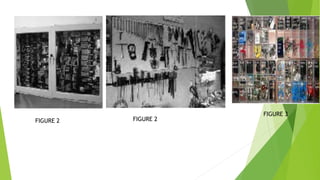
• Parts should be properly stored and labeled (Figure 1).
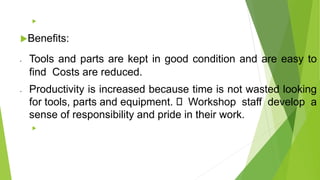
• Tools should be properly placed on the board, and labeled (Figure
2). Consider drawing the shapes of the tools on the board so that
they always get put back in the same position.
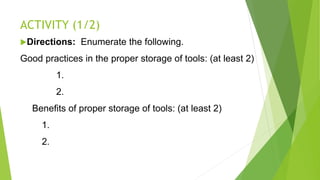
• Use bins for storing small parts (Figure 3).
• Consider making an individual (or individuals) responsible for the
good maintenance of tools and parts.
FIGURE 2
FIGURE 2
FIGURE 3

Benefits:
• Tools and parts are kept in good condition and are easy to
find Costs are reduced.
• Productivity is increased because time is not wasted looking
for tools, parts and equipment. Workshop staff develop a
sense of responsibility and pride in their work.

ACTIVITY (1/2)
Directions: Enumerate the following.
Good practices in the proper storage of tools: (at least 2)
1.
2.
Benefits of proper storage of tools: (at least 2)
1.
2.
LESSON 3.pptx

LESSON 3.pptx

  • 1.
  • 2.
      DIRECTION. WRITETRUE IF THE STATEMENT IS CORRECT AND FALSE IF IT IS WRONG. WRITE YOUR ANSWERS ON A SEPARATE SHEET OF PAPER. 1. ALL TOOLS AND EQUIPMENT MUST BE PROPERLY MAINTAINED SO THAT WORKERS ARE NOT ENDANGERED. 2. PREVENTIVE MAINTENANCE IS THE SYSTEMATIC CARE AND PROTECTION OF TOOLS, EQUIPMENT AND MACHINES IN ORDER TO KEEP THEM IN A SAFE, USABLE CONDITION, LIMIT DOWNTIME AND EXTEND PRODUCTIVITY. 3. THE DEGREE OF DETAIL TO INCLUDE REGARDING TOOLS AND EQUIPMENT MAINTENANCE WILL DEPEND ON THE KINDS OF TOOLS/EQUIPMENT USED. 4. DAMAGED OR DEFECTIVE EQUIPMENT/TOOLS SHOULD BE TAGGED AND REMOVED FROM SERVICE. 5. MOST MANUFACTURERS CAN PROVIDE MAINTENANCE SCHEDULES FOR THEIR EQUIPMENT. 6. PROPERLY STORED TOOLS AND EQUIPMENT WILL BE EASY TO FIND WHEN NEEDED AND ARE LESS LIKELY TO BE LOST. 7. USE BINS FOR STORING SMALL PARTS IS A GOOD PRACTICE ON PROPER STORAGE. 8. PRODUCTIVITY IS INCREASED BECAUSE TIME IS NOT LOST LOOKING FOR TOOLS, PARTS AND EQUIPMENT IS ONE OF THE BENEFITS OF PROPER STORAGE.  
  • 3.
    TOOL AND EQUIPMENTMAINTENANCE All tools and equipment must be properly maintained so that workers are not endangered. Regulations require inspections of tools, machines and equipment before use.
  • 4.
    Preventive maintenance isthe systematic care and protection of tools, equipment and machines in order to keep them in a safe, usable condition, limit downtime and extend productivity. We must always be aware that maintenance tasks themselves are potentially hazardous and can result in injury. The successful maintenance program is: • well organized and scheduled, • controls hazards, • defines operational procedures, and trains key personnel.
  • 5.
     The degree ofdetail to include regarding tools and equipment maintenance will depend on the kinds of tools/equipment used. Some construction equipment may have very specific inspection and maintenance requirements. Electronic equipment may have different maintenance requirements. Hand tools may require only basic maintenance. Power tools should be maintained in good working order.
  • 6.
    This may belimited to ensuring that blades/bits are replaced when needed and those guards or other safety devices are operable and any damaged electrical cords/plugs are repaired or replaced. Damaged or defective equipment/tools should be tagged and removed from service.
  • 7.
    Most manufacturers canprovide maintenance schedules for their equipment. Large companies typically have a comprehensive maintenance program due to the capital investment and/or leasing agreements. Smaller companies may lease equipment and maintenance services may be included in the leasing agreement.
  • 8.
    General requirements fortools and equipment maintenance include: • Obtaining a copy of the maintenance schedule recommended by the manufacturer • Ensuring that maintenance is performed as required • Ensuring that the person(s) performing the maintenance are competent (e.g. licensed mechanic) • Retaining records of maintenance/service conducted
  • 9.
    TOOLS AND EQUIPMENTMAINTENANCE All tools and equipment must be properly maintained so that workers are not endangered. Regulations require inspections of tools, machines and equipment before use. Preventive maintenance is the systematic care and protection of tools, equipment and machines in order to keep them in a safe, usable condition, limit downtime and extend productivity. We must always be aware that maintenance tasks themselves are potentially hazardous and can result in injury. The successful maintenance program is:
  • 10.
    • well organizedand scheduled, • controls hazards, • defines operational procedures, and trains key personnel.
  • 11.
    The degree ofdetail to include regarding tools and equipment maintenance will depend on the kinds of tools/equipment used. Some construction equipment may have very specific inspection and maintenance requirements. Electronic equipment may have different maintenance requirements. Hand tools may require only basic maintenance. Power tools should be maintained in good working order. This may be limited to ensuring that blades/bits are replaced when needed and those guards or other safety devices are operable and any damaged electrical cords/plugs are repaired or replaced. Damaged or defective equipment/tools should be tagged and removed from service.
  • 12.
    General requirements fortools and equipment maintenance include: • Obtaining a copy of the maintenance schedule recommended by the manufacturer • Ensuring that maintenance is performed as required • Ensuring that the person(s) performing the maintenance are competent (e.g. licensed mechanic) • Retaining records of maintenance/service conducted • Specifying who is responsible for overseeing equipment maintenance and where the records are kept • Set up a system for removal and tagging of damaged or defective tools and equipment  •
  • 13.
    PROPER STORAGE OFTOOLS, PARTS, AND EQUIPMENT Good practices include: • Parts should be properly stored and labeled (Figure 1). • Tools should be properly placed on the board, and labeled (Figure 2). Consider drawing the shapes of the tools on the board so that they always get put back in the same position. • Use bins for storing small parts (Figure 3). • Consider making an individual (or individuals) responsible for the good maintenance of tools and parts.
  • 14.
  • 15.
     Benefits: • Tools andparts are kept in good condition and are easy to find Costs are reduced. • Productivity is increased because time is not wasted looking for tools, parts and equipment. Workshop staff develop a sense of responsibility and pride in their work. 
  • 16.
    ACTIVITY (1/2) Directions: Enumeratethe following. Good practices in the proper storage of tools: (at least 2) 1. 2. Benefits of proper storage of tools: (at least 2) 1. 2.