Performing preventive maintenance prolongs the life of
your equipment, reduces downtime, decreases reactive
maintenance requests, helps you manage compliance and
inspection needs, and prevents costly emergency repairs
from occurring.
All tools and equipment must be properly maintained so
that workers are not endangered. Regulations require
inspection of tools, machines and equipment before use.
We must always be aware that maintenance tasks
themselves are potentially hazardous and can result
injury.
Well organized and scheduled,
Control hazards,
Defines operational procedures, and
Trains key personnel.
Most manufacturers can provide maintenance schedules
for their equipment. Large companies typically have a
comprehensive maintenance program due to the capital
investment and/or leasing agreements.
Smaller companies may lease equipment and maintenance
services may be included in the leasing agreement.
Obtaining a copy of the maintenance schedule
recommended by the manufacturer
Ensuring that maintenance is performed as required
Ensuring that the person’s performing the maintenance
are competent (licensed machanic )
Retaining records of maintenance/service conducted
Specifying who is responsible for overseeing equipment
maintenance and where the records are kept
Set up a system for removal and tagging of damaged or
defective tools and equipment
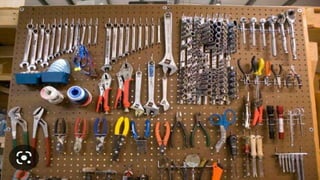
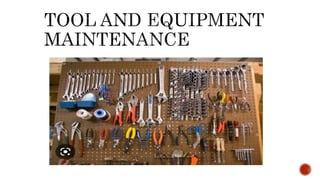
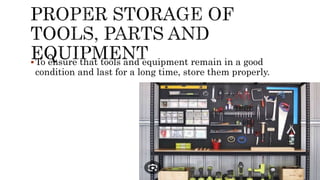
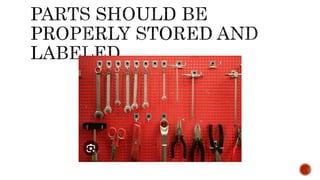
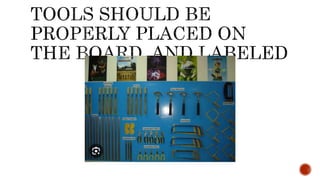
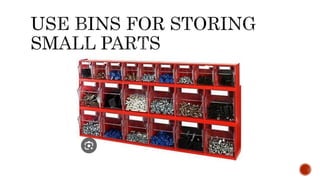
To ensure that tools and equipment remain in a good
condition and last for a long time, store them properly.
Tools and parts are kept in good condition and are easy to
find.
Cost are reduced.
Productivity is increased because time is not wasted
looking for tools, parts and equipment.
Workshop staff develop a sense of responsibility and pride
in their work.
The successful maintenance program is
General requirements for tools and equipment
maintenance include
Good practices include
TOOL AND EQUIPMENT MAINTENANCE.pptx

TOOL AND EQUIPMENT MAINTENANCE.pptx

  • 3.
    Performing preventive maintenanceprolongs the life of your equipment, reduces downtime, decreases reactive maintenance requests, helps you manage compliance and inspection needs, and prevents costly emergency repairs from occurring.
  • 5.
    All tools andequipment must be properly maintained so that workers are not endangered. Regulations require inspection of tools, machines and equipment before use.
  • 6.
    We must alwaysbe aware that maintenance tasks themselves are potentially hazardous and can result injury.
  • 7.
    Well organized andscheduled, Control hazards, Defines operational procedures, and Trains key personnel.
  • 13.
    Most manufacturers canprovide maintenance schedules for their equipment. Large companies typically have a comprehensive maintenance program due to the capital investment and/or leasing agreements. Smaller companies may lease equipment and maintenance services may be included in the leasing agreement.
  • 14.
    Obtaining a copyof the maintenance schedule recommended by the manufacturer Ensuring that maintenance is performed as required Ensuring that the person’s performing the maintenance are competent (licensed machanic )
  • 15.
    Retaining records ofmaintenance/service conducted Specifying who is responsible for overseeing equipment maintenance and where the records are kept Set up a system for removal and tagging of damaged or defective tools and equipment
  • 16.
    To ensure thattools and equipment remain in a good condition and last for a long time, store them properly.
  • 21.
    Tools and partsare kept in good condition and are easy to find. Cost are reduced. Productivity is increased because time is not wasted looking for tools, parts and equipment. Workshop staff develop a sense of responsibility and pride in their work.
  • 22.
    The successful maintenanceprogram is General requirements for tools and equipment maintenance include Good practices include