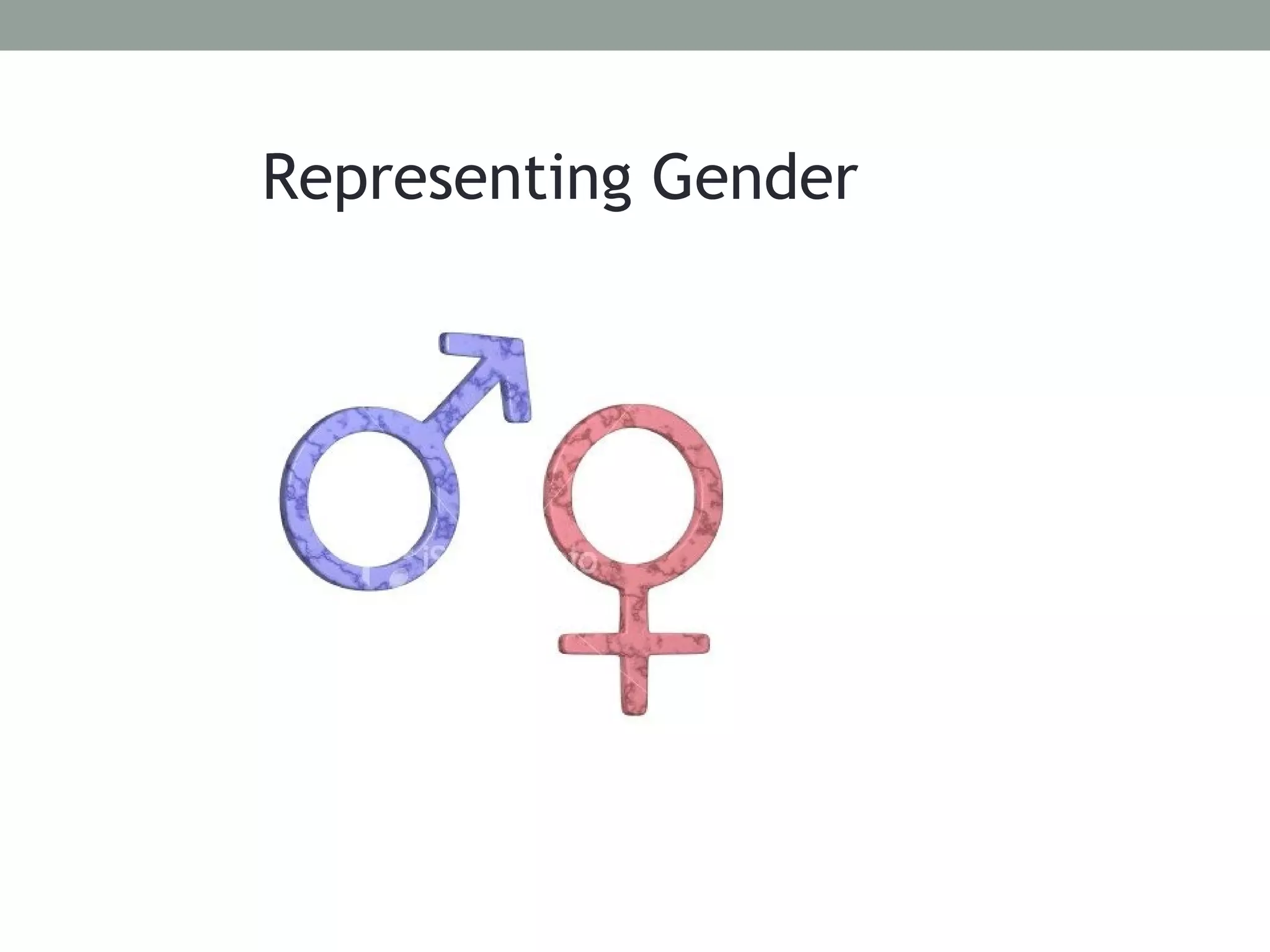
Representing Gender
What is gender?
Gender is not biological but refers to a
socially constructed set of behaviour
patterns.
Your sex, whether you are male or
female, is biologically determined.
However, femininity/masculinity are
culturally determined and a matter of
choice – they refer to patterns of
behaviour and qualities that we normally
associate with being female or being male.
As we grow up, we ‘learn’ what is
expected in terms of our gender
identity from a range of sources:
parents, school, books, the media,
peer pressure…

The power to conform is so strong in
us that we tend to copy the gender
models we see. Thus, by the time
we have started school, most of us
have “learnt” how to be masculine or
feminine as our culture defines it.
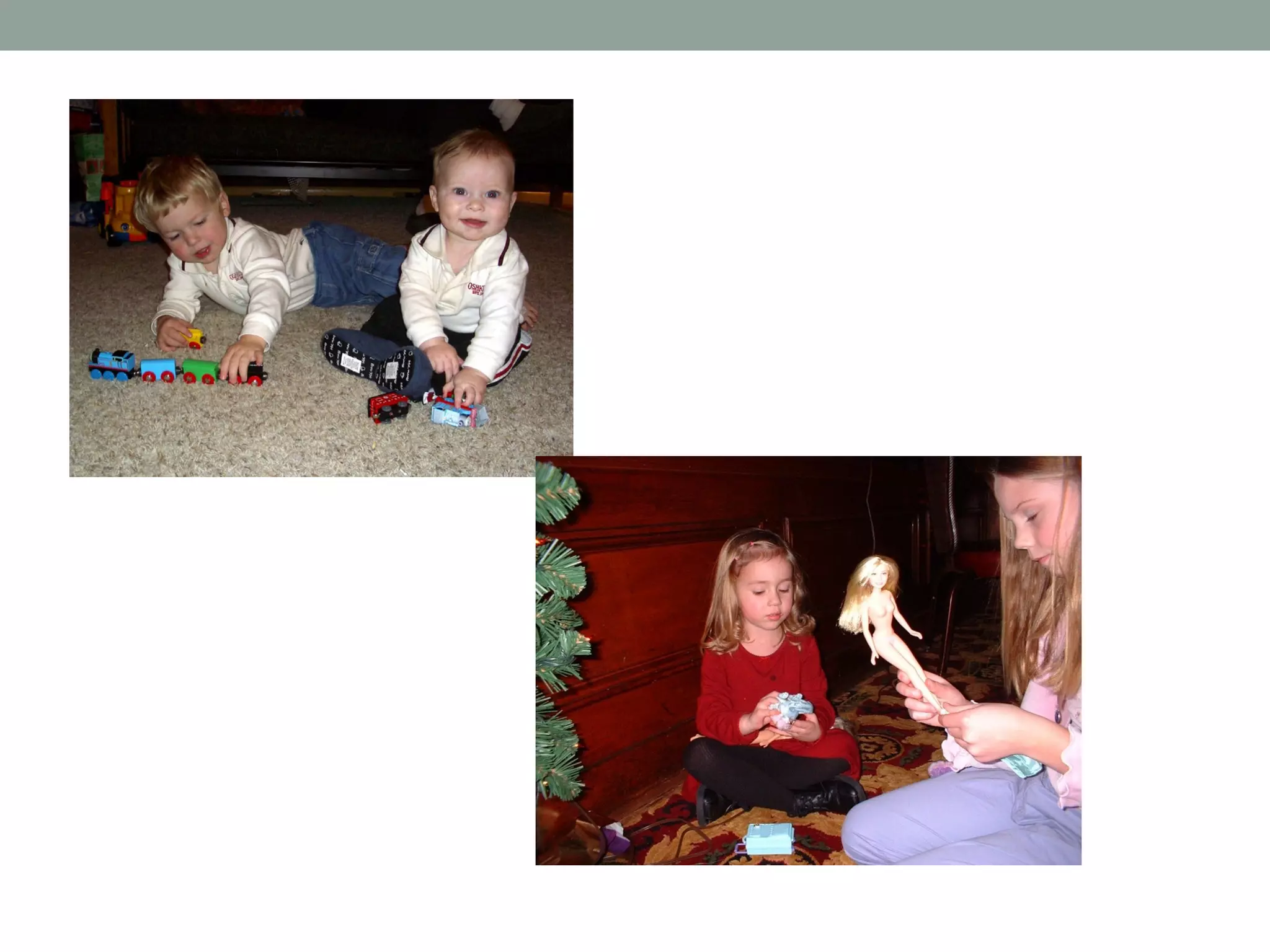
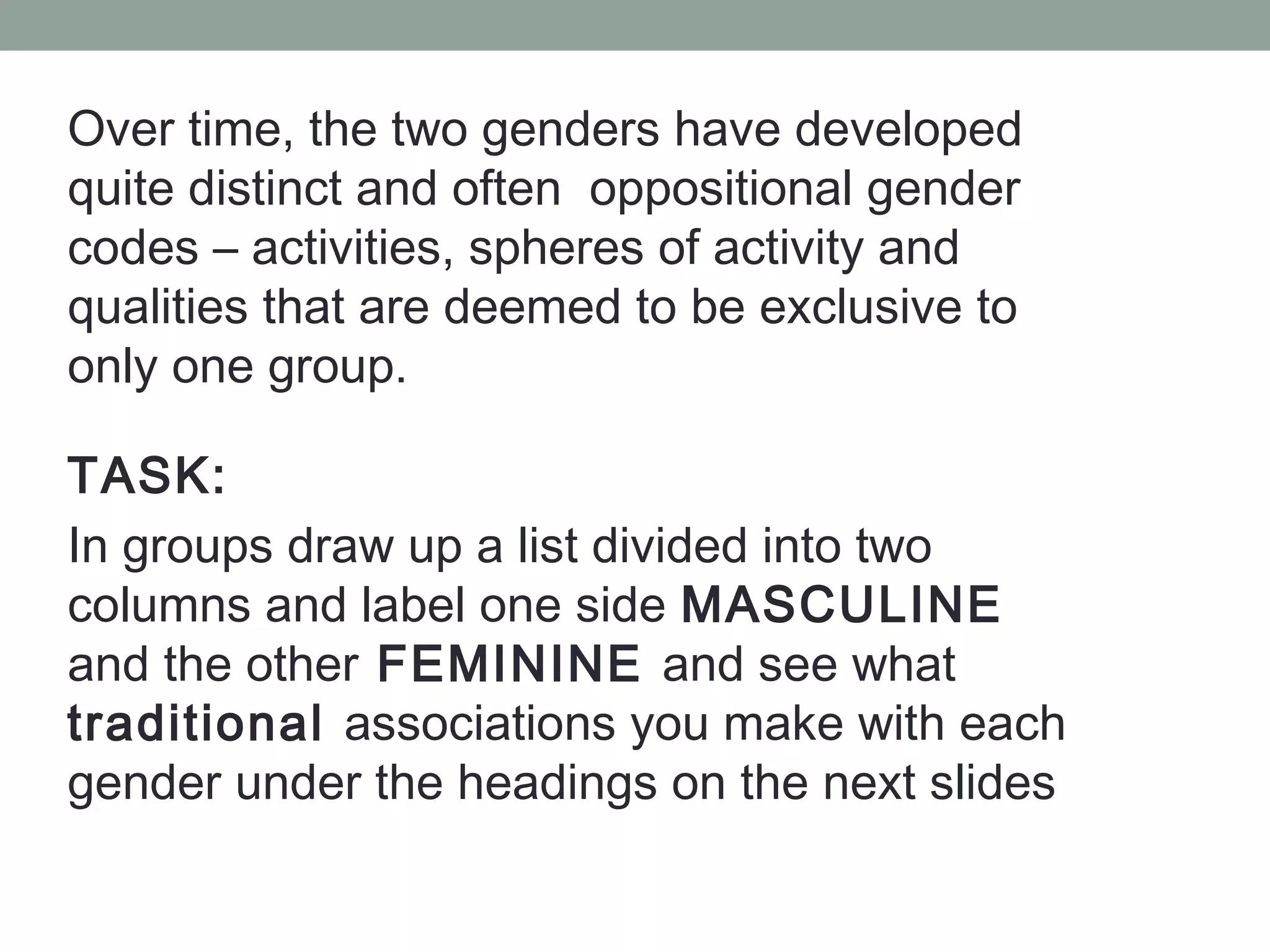
Think about the way girls are often
dressed in pink and bought
“domesticating” toys like dolls and
play ovens and toy vacuum cleaners,
whereas boys are usually dressed in
blues and non-pastel colours and
given toys like guns and construction
sets and cars, developing skills that
are outside the domestic sphere.
Over time, the two genders have developed
quite distinct and often oppositional gender
codes – activities, spheres of activity and
qualities that are deemed to be exclusive to
only one group.

TASK:
In groups draw up a list divided into two
columns and label one side MASCULINE
and the other FEMININE and see what
traditional associations you make with each
gender under the headings on the next slides
•Colours
•Clothes
•Toys
•Jobs
•Leisure Activities
•Responsibilities in the Home
•Drinks on a Night Out
•A Typical Night Out
•Favourite Genre of Films
•Typical Character Qualities
What do you notice about these different
ideas associated traditionally with each
gender?

What image do they conjure up of each
group?
Traditional Ideologies
    about Gender
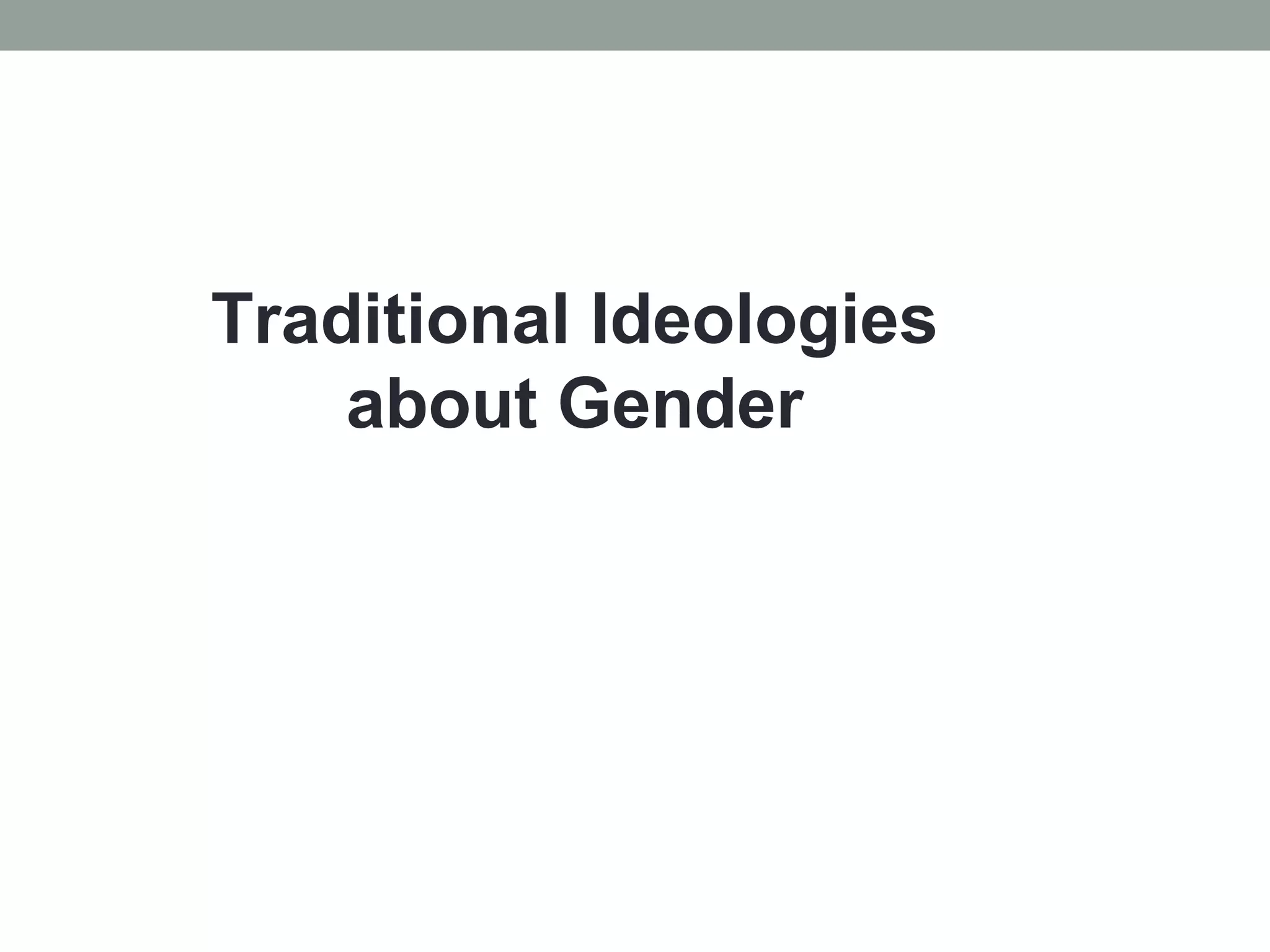
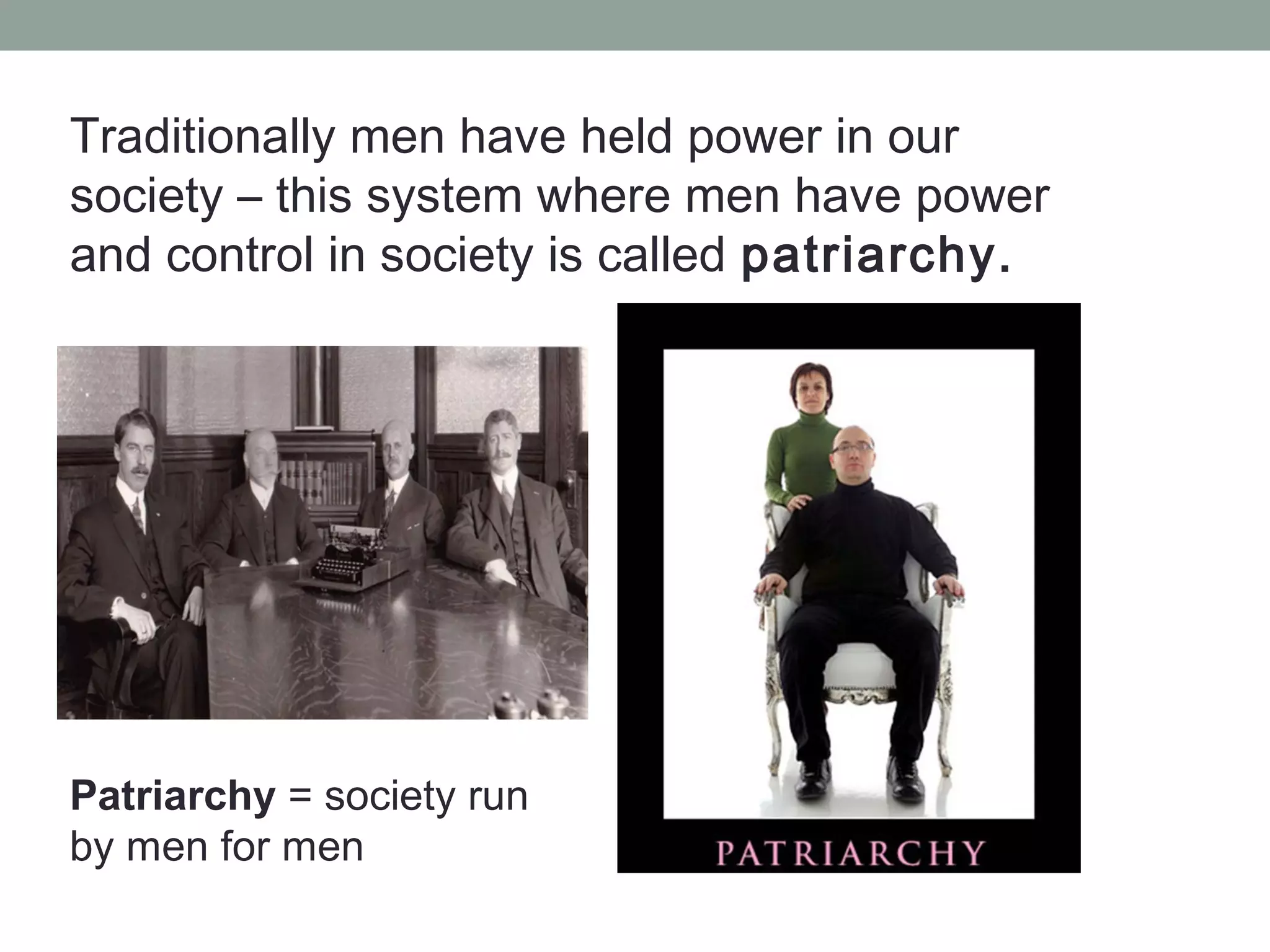
Traditionally men have held power in our
society – this system where men have power
and control in society is called patriarchy.


Patriarchy = society run
by men for men
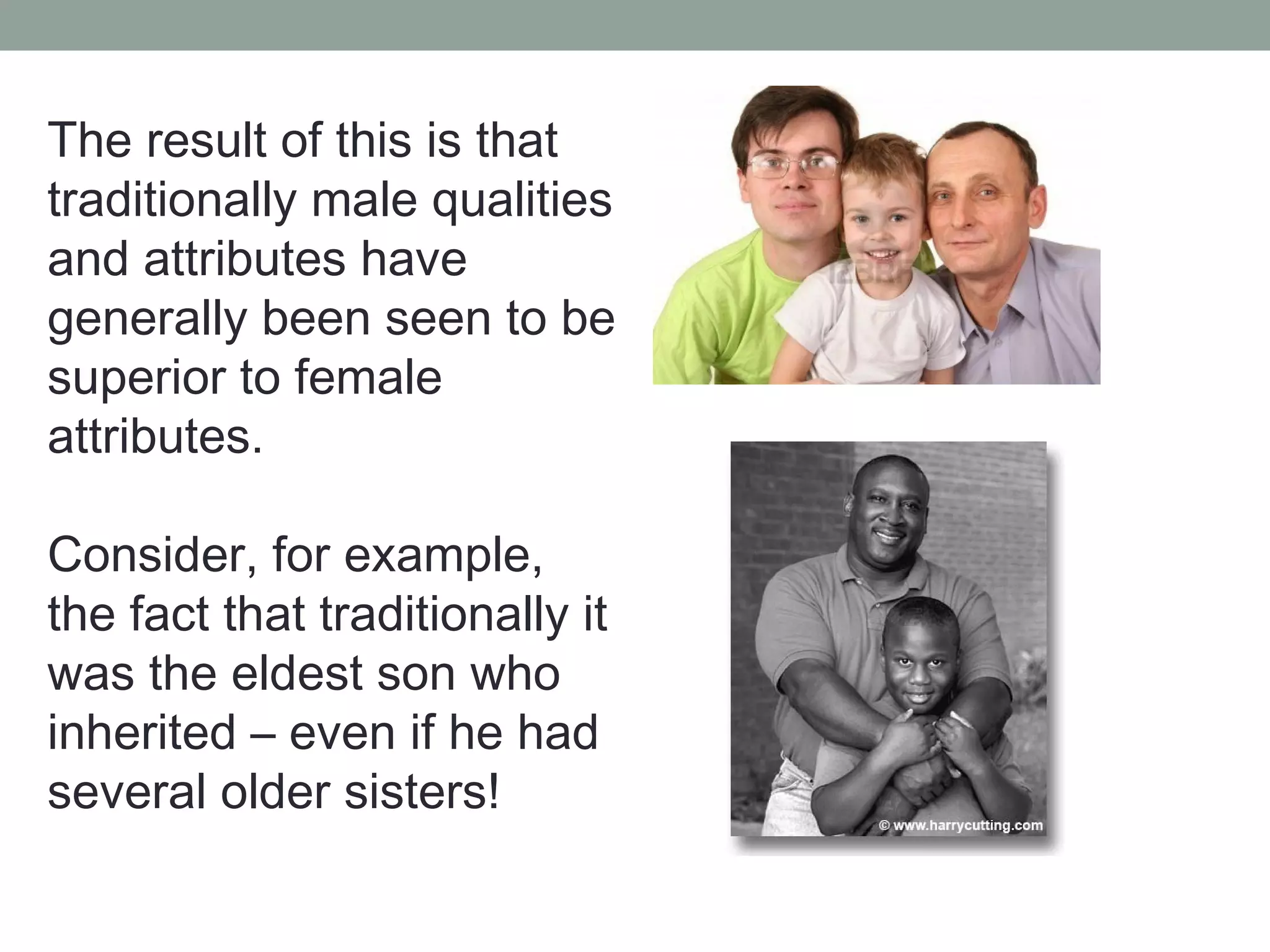
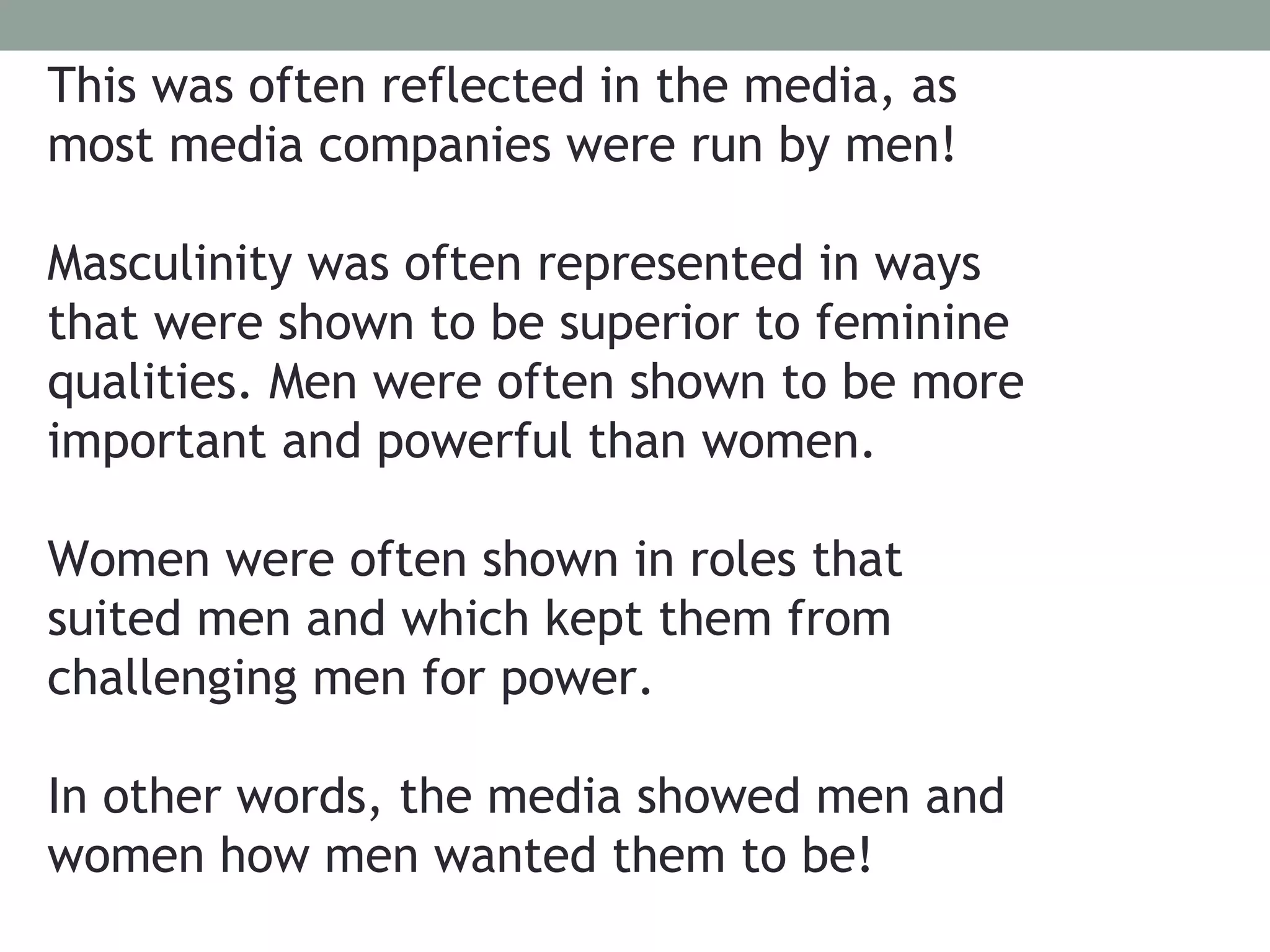
The result of this is that
traditionally male qualities
and attributes have
generally been seen to be
superior to female
attributes.

Consider, for example,
the fact that traditionally it
was the eldest son who
inherited – even if he had
several older sisters!
This was often reflected in the media, as
most media companies were run by men!

Masculinity was often represented in ways
that were shown to be superior to feminine
qualities. Men were often shown to be more
important and powerful than women.

Women were often shown in roles that
suited men and which kept them from
challenging men for power.

In other words, the media showed men and
women how men wanted them to be!
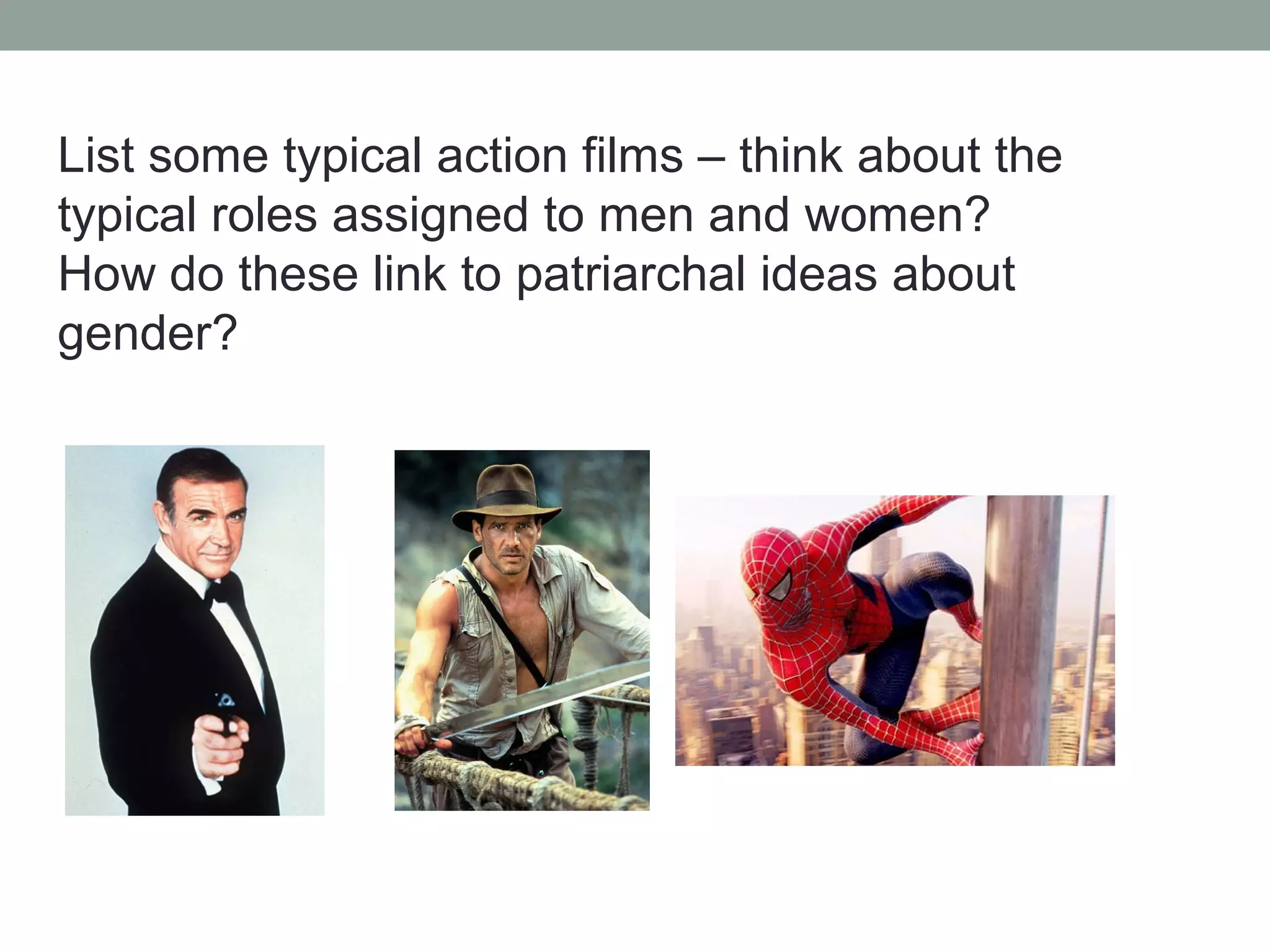
List some typical action films – think about the
typical roles assigned to men and women?
How do these link to patriarchal ideas about
gender?
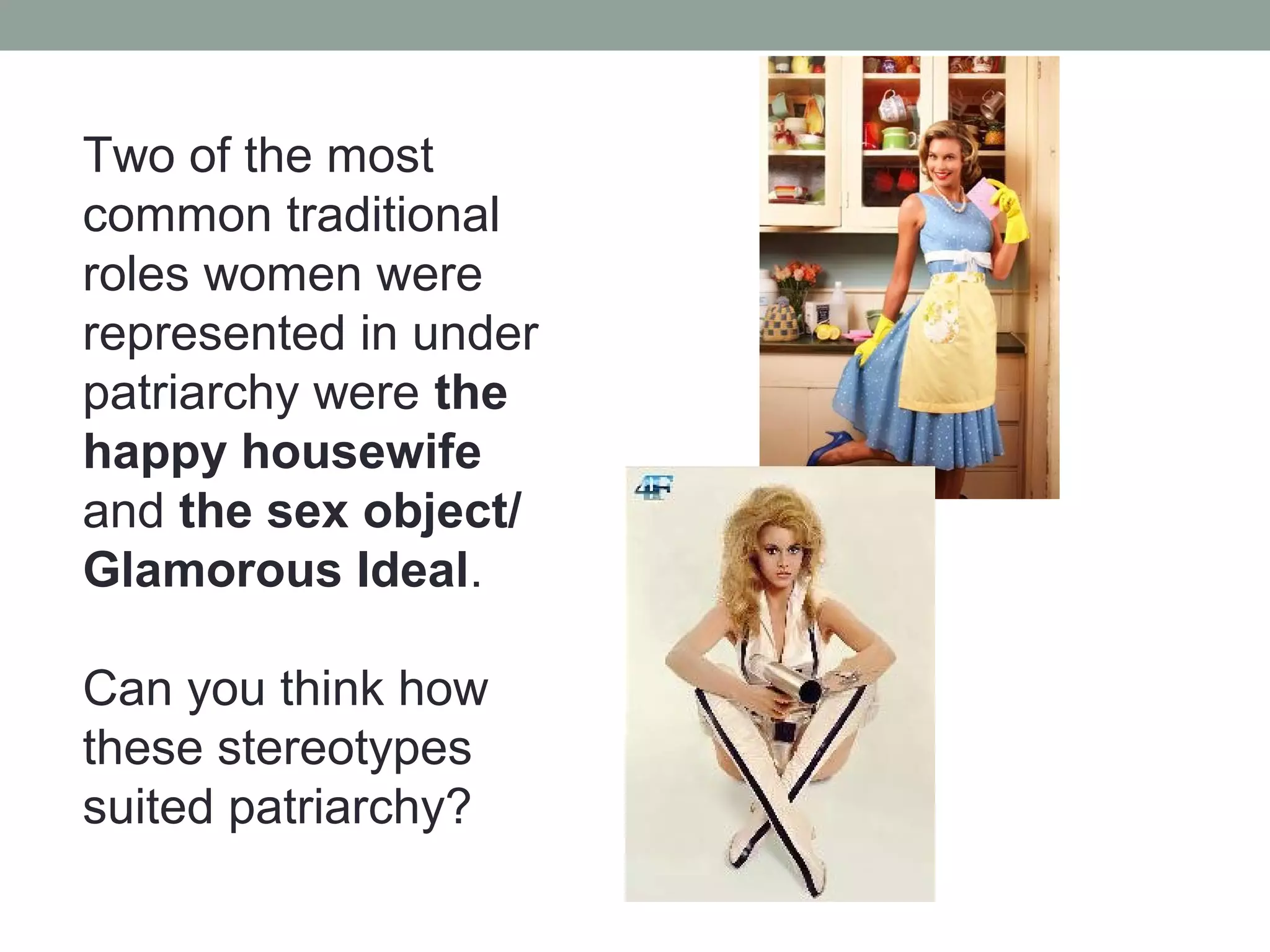
Two of the most
common traditional
roles women were
represented in under
patriarchy were the
happy housewife
and the sex object/
Glamorous Ideal.

Can you think how
these stereotypes
suited patriarchy?
TASK:
We will now look at some short extracts –
see if you can see how these traditional
ideas about gender were reflected?
1 – Calamity Jane
2 – Fairy Snow Ad (1960)
3 - Persil Ad (1958)
4 - Kelloggs Ad (1950s)
5 - Oxo Ads with Katy and Philip (1960s - 70s)
6 - Toni Home Hair Perm (1961)
7 - Prom Home Perm Kit (1961)
8 – Goldfinger
More Modern
Ideologies about
     Gender
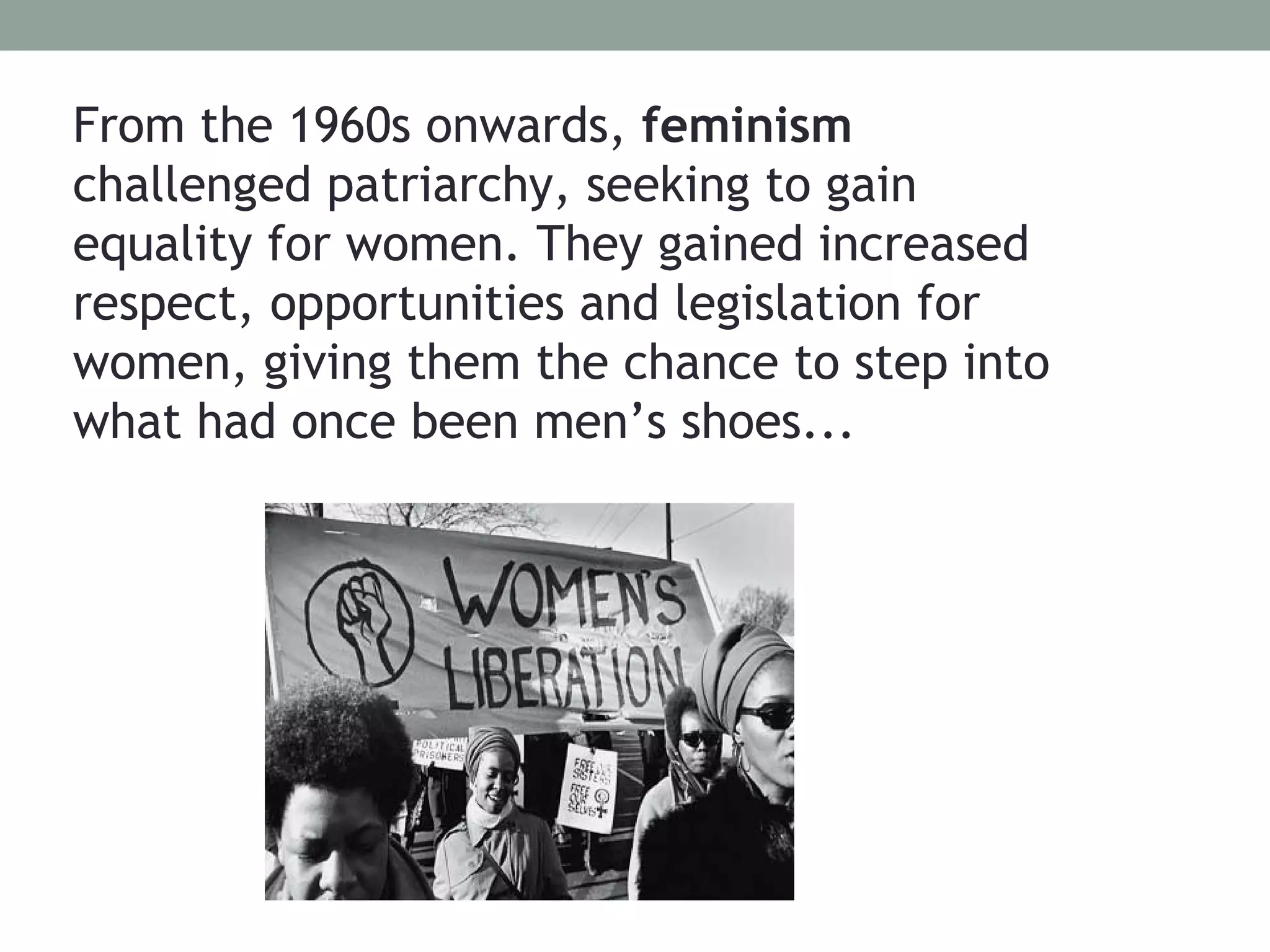
From the 1960s onwards, feminism
challenged patriarchy, seeking to gain
equality for women. They gained increased
respect, opportunities and legislation for
women, giving them the chance to step into
what had once been men’s shoes...
Suddenly gender roles were less rigid and
defined and this is often reflected in
newer media representations.

TASK:
Again, we will look at two short extracts
to see how men and women are being
represented today.

1 – Million Dollar Baby extract
2 - Aero Melt ad
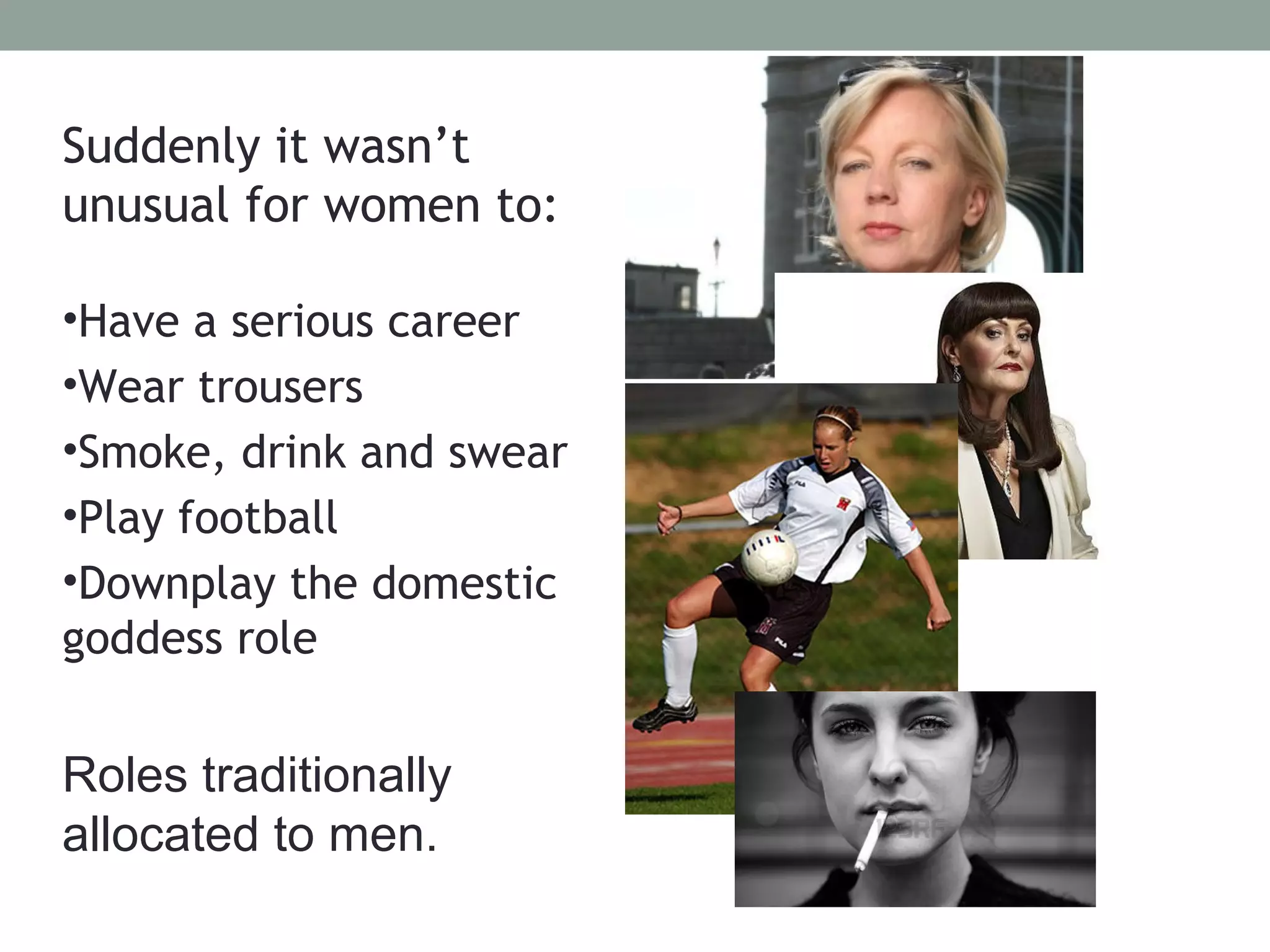
Suddenly it wasn’t
unusual for women to:

•Have a serious career
•Wear trousers
•Smoke, drink and swear
•Play football
•Downplay the domestic
goddess role


Roles traditionally
allocated to men.
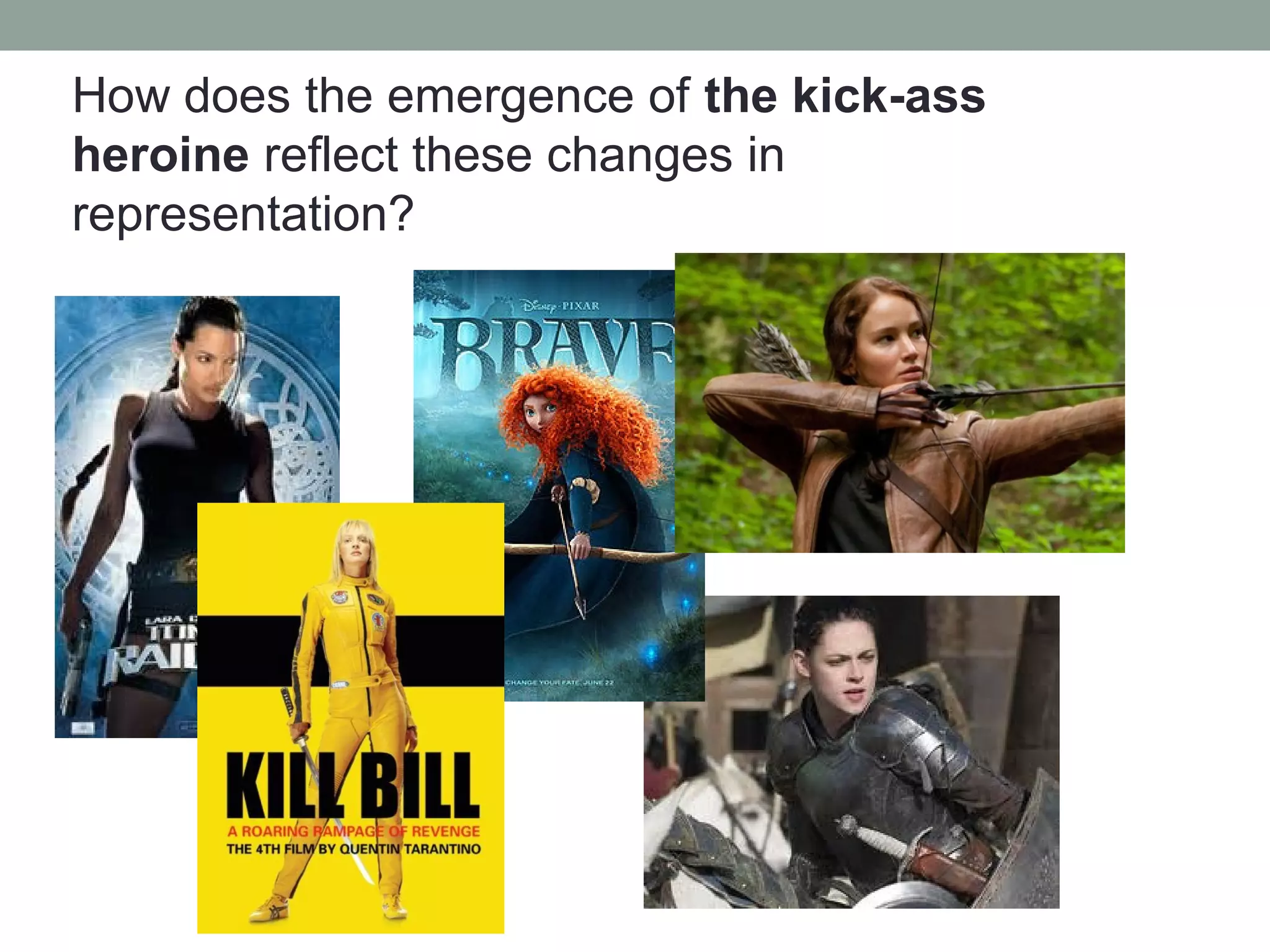
How does the emergence of the kick-ass
heroine reflect these changes in
representation?
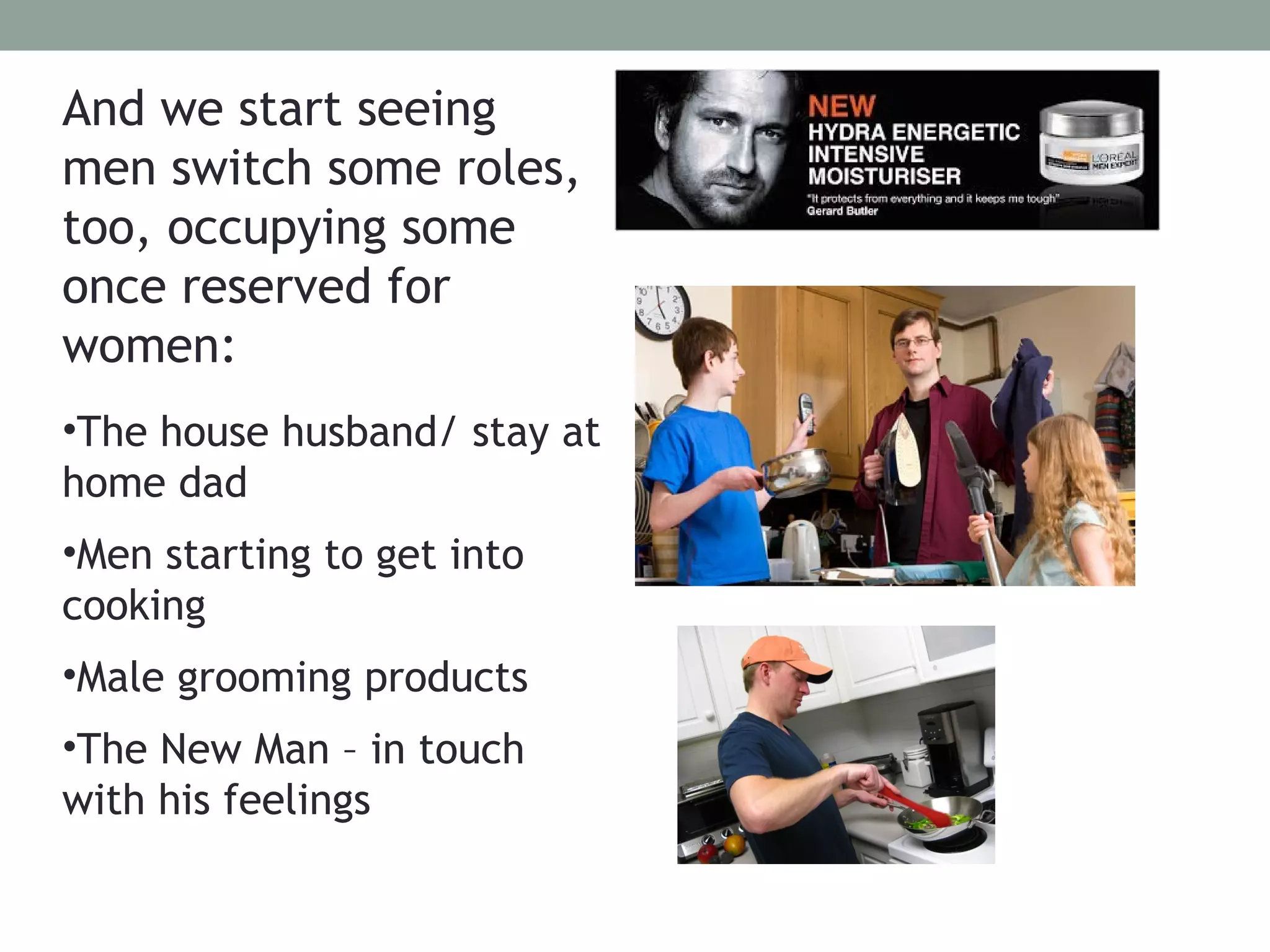
And we start seeing
men switch some roles,
too, occupying some
once reserved for
women:
•The house husband/ stay at
home dad
•Men starting to get into
cooking
•Male grooming products
•The New Man – in touch
with his feelings
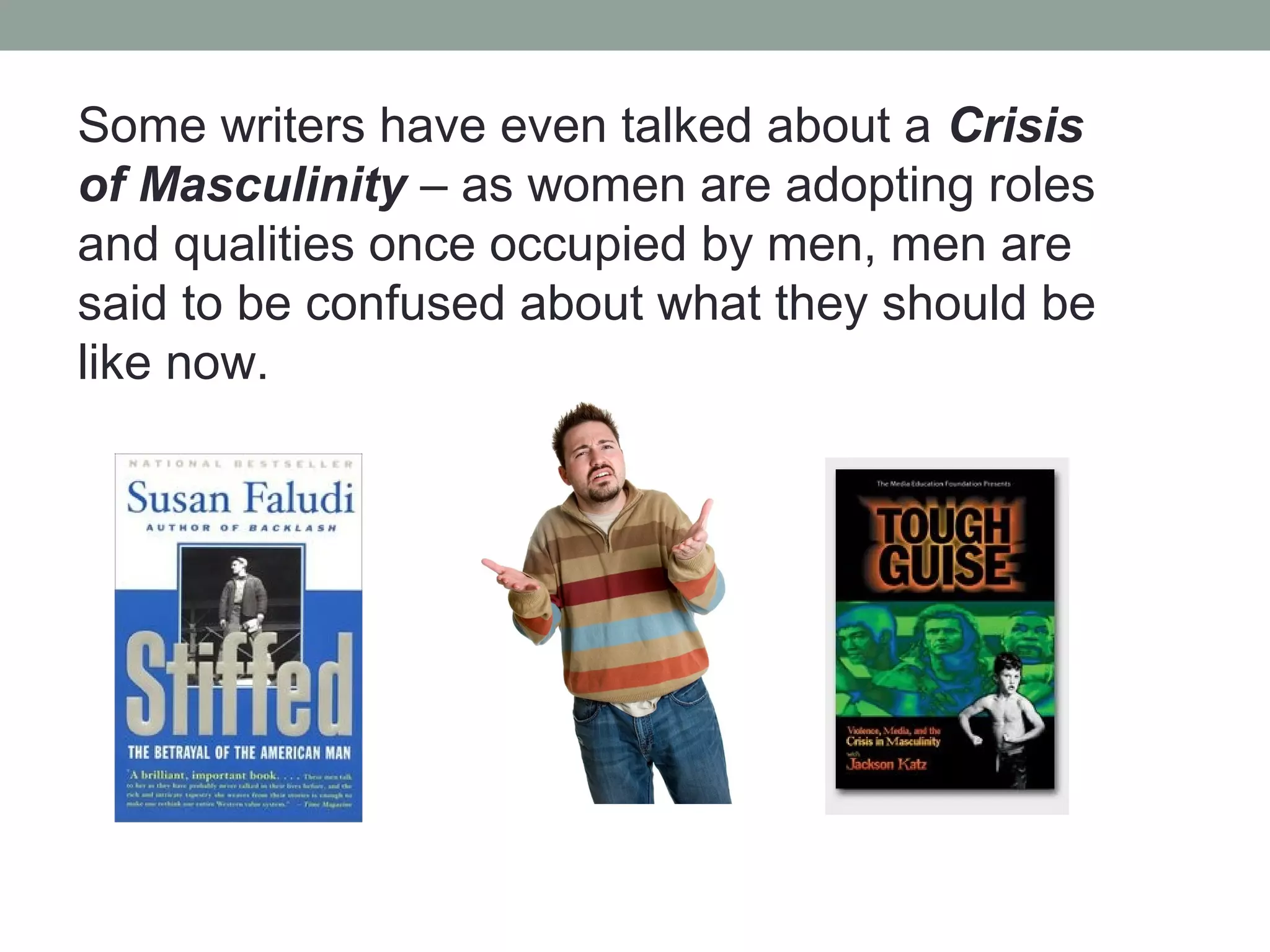
Some writers have even talked about a Crisis
of Masculinity – as women are adopting roles
and qualities once occupied by men, men are
said to be confused about what they should be
like now.
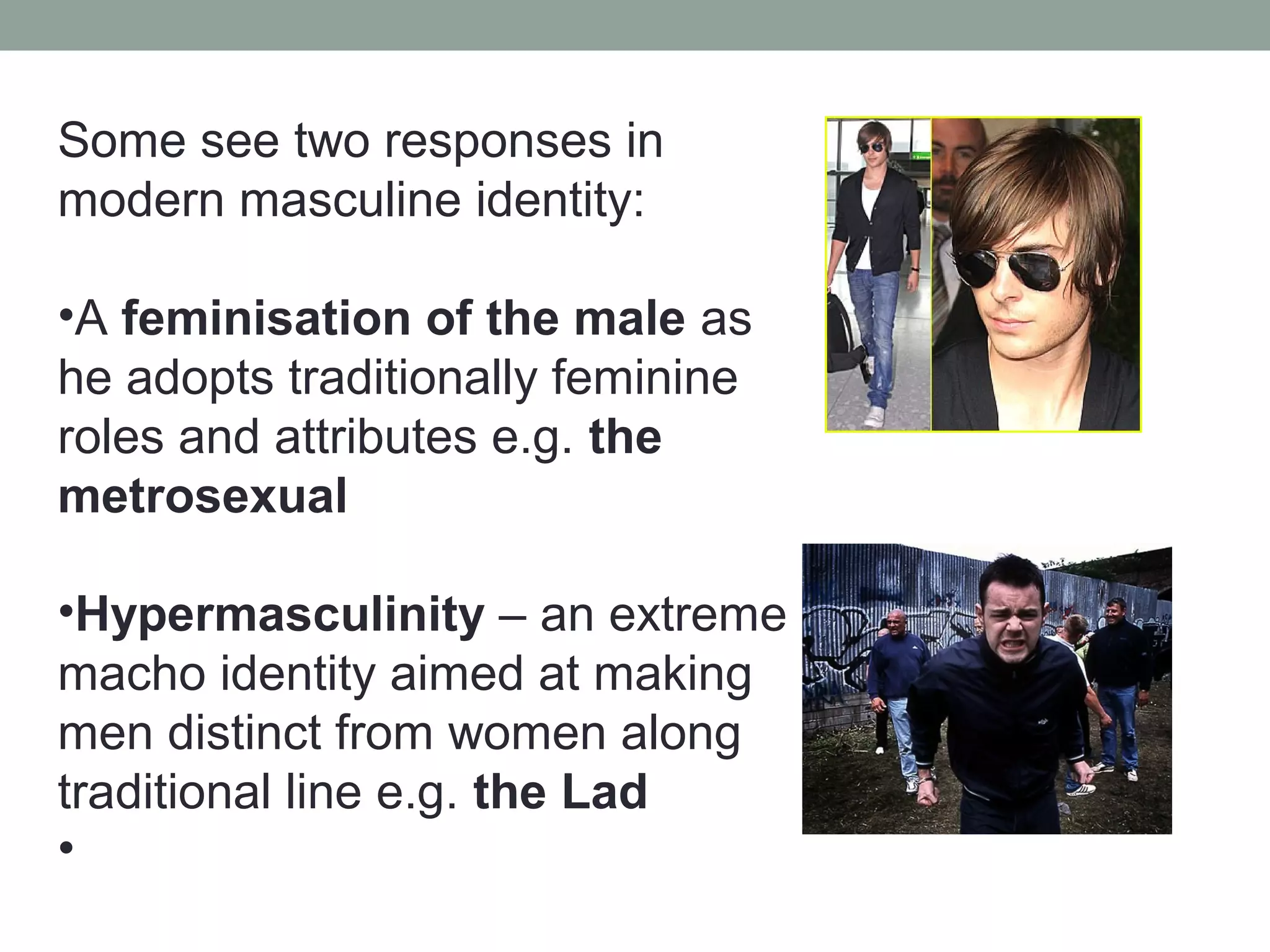
Some see two responses in
modern masculine identity:

•A feminisation of the male as
he adopts traditionally feminine
roles and attributes e.g. the
metrosexual

•Hypermasculinity – an extreme
macho identity aimed at making
men distinct from women along
traditional line e.g. the Lad
•
A word of caution….
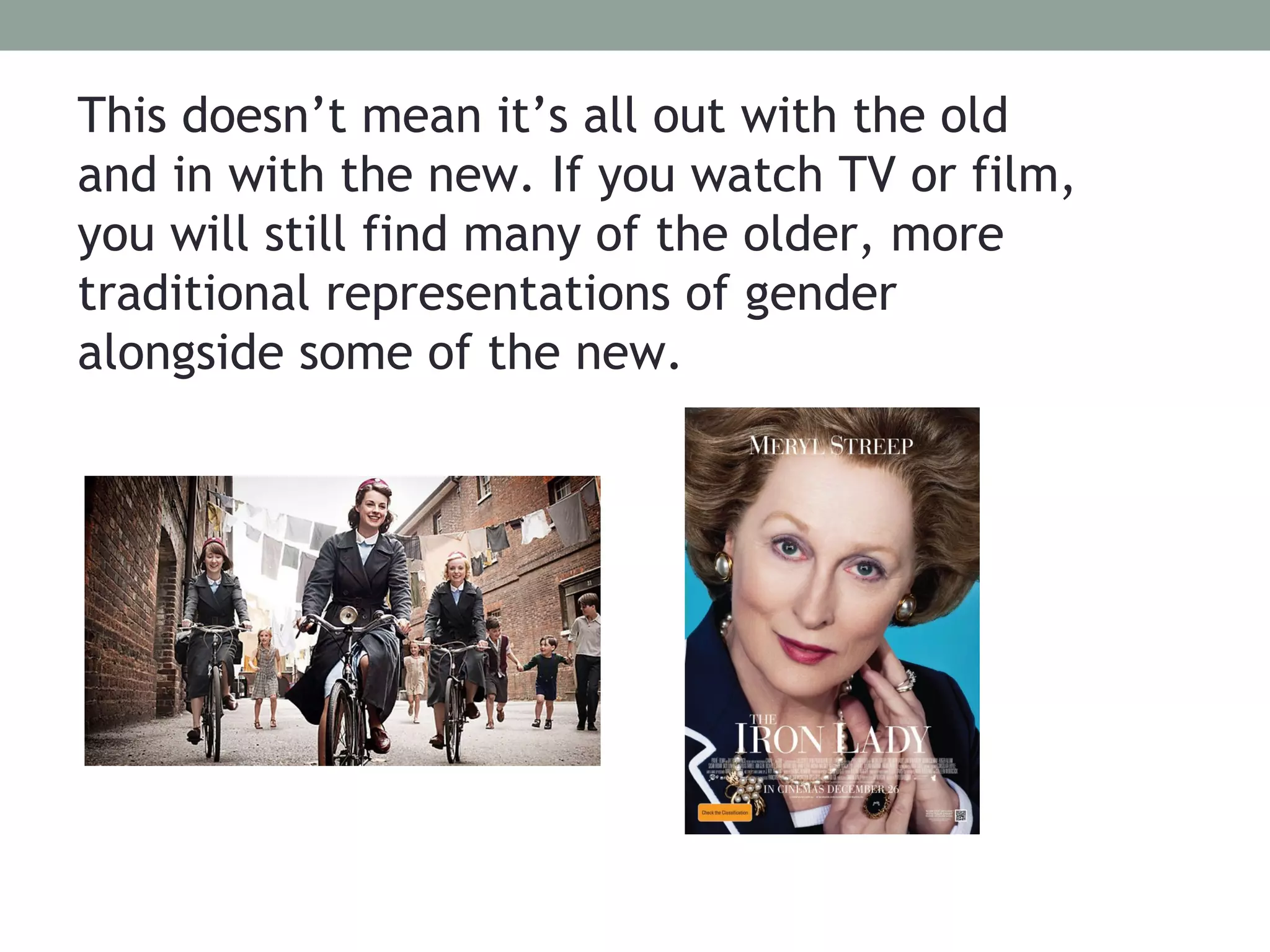
This doesn’t mean it’s all out with the old
and in with the new. If you watch TV or film,
you will still find many of the older, more
traditional representations of gender
alongside some of the new.
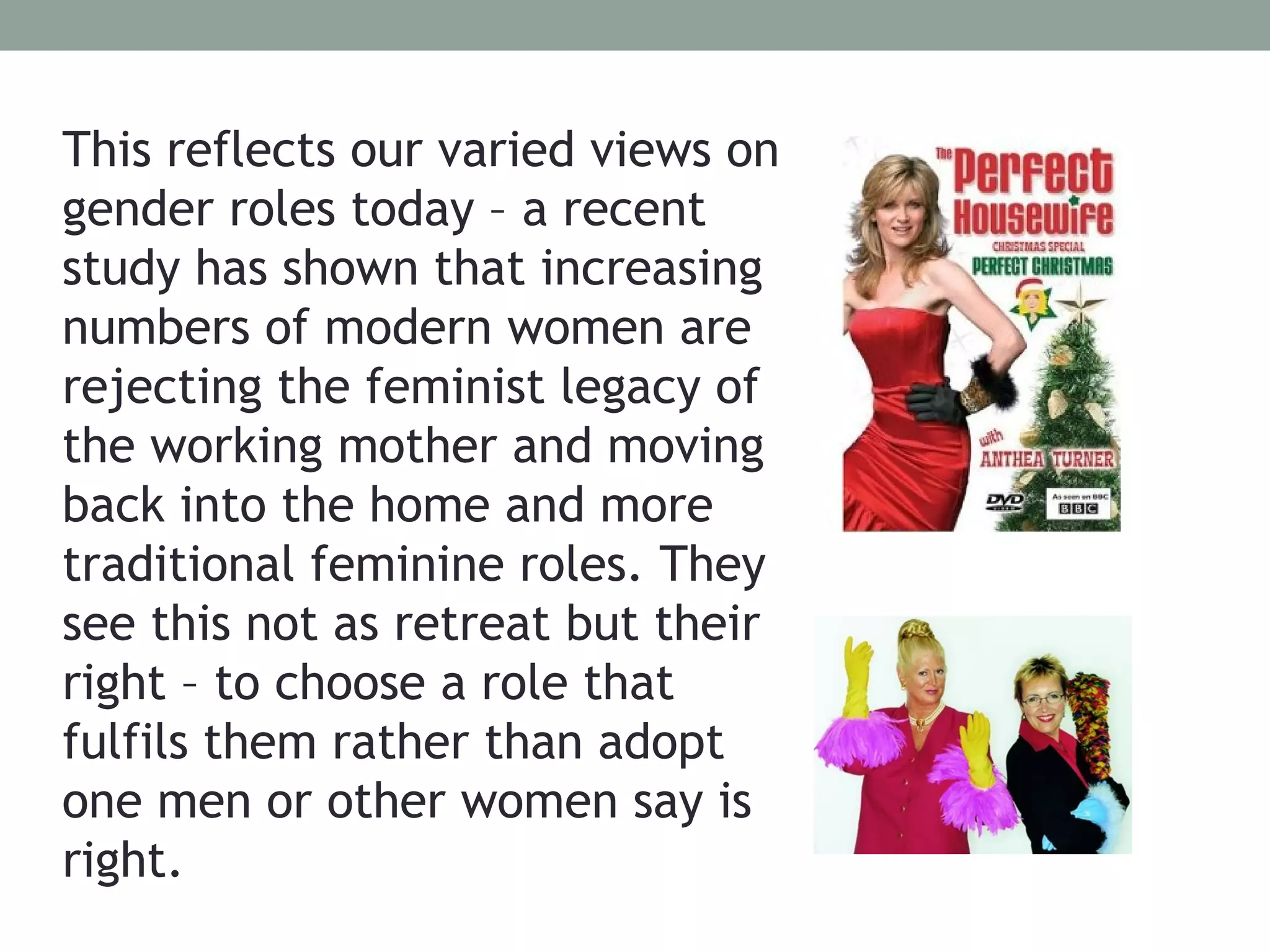
This reflects our varied views on
gender roles today – a recent
study has shown that increasing
numbers of modern women are
rejecting the feminist legacy of
the working mother and moving
back into the home and more
traditional feminine roles. They
see this not as retreat but their
right – to choose a role that
fulfils them rather than adopt
one men or other women say is
right.
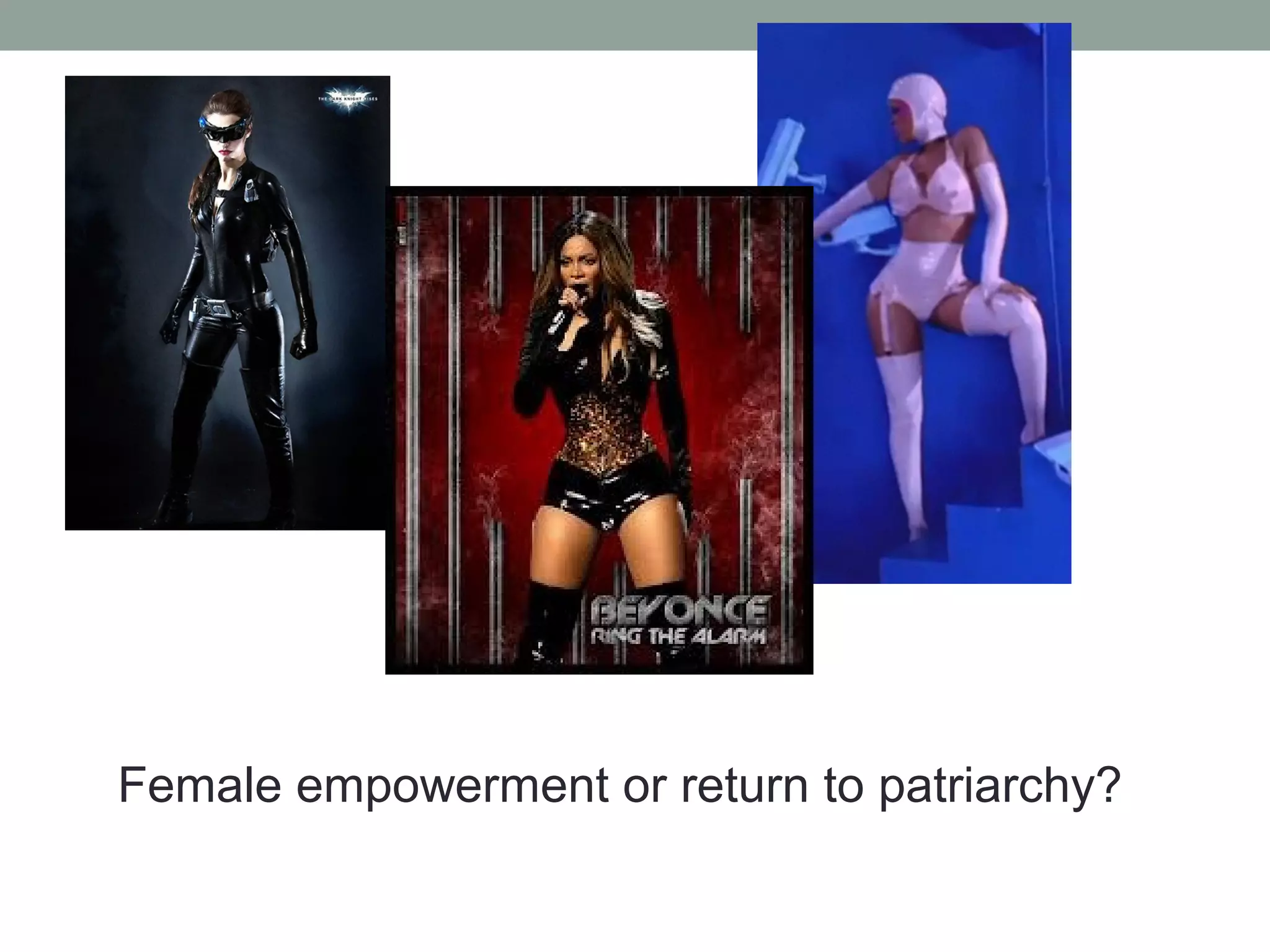
Some feel we have entered an era of post-
feminism – a stage where equality has
been achieved and women are free to be
what they like.

This often includes adopting what were
once perceived as sexist roles like sex
objects.

Some women see this as a positive
assertion of choice; others claim it is simply
retro-sexism and reflects a new era of
female oppression.
Female empowerment or return to patriarchy?
And one final clip....

Charlie’s Angels 2

How are women represented in this
recent clip? What mixture of values
and ideas are embedded in this
representation?

2012 dd gender pp

  • 1.
  • 2.
    What is gender? Genderis not biological but refers to a socially constructed set of behaviour patterns. Your sex, whether you are male or female, is biologically determined. However, femininity/masculinity are culturally determined and a matter of choice – they refer to patterns of behaviour and qualities that we normally associate with being female or being male.
  • 3.
    As we growup, we ‘learn’ what is expected in terms of our gender identity from a range of sources: parents, school, books, the media, peer pressure… The power to conform is so strong in us that we tend to copy the gender models we see. Thus, by the time we have started school, most of us have “learnt” how to be masculine or feminine as our culture defines it.
  • 4.
    Think about theway girls are often dressed in pink and bought “domesticating” toys like dolls and play ovens and toy vacuum cleaners, whereas boys are usually dressed in blues and non-pastel colours and given toys like guns and construction sets and cars, developing skills that are outside the domestic sphere.
  • 6.
    Over time, thetwo genders have developed quite distinct and often oppositional gender codes – activities, spheres of activity and qualities that are deemed to be exclusive to only one group. TASK: In groups draw up a list divided into two columns and label one side MASCULINE and the other FEMININE and see what traditional associations you make with each gender under the headings on the next slides
  • 7.
    •Colours •Clothes •Toys •Jobs •Leisure Activities •Responsibilities inthe Home •Drinks on a Night Out •A Typical Night Out •Favourite Genre of Films •Typical Character Qualities
  • 8.
    What do younotice about these different ideas associated traditionally with each gender? What image do they conjure up of each group?
  • 9.
  • 10.
    Traditionally men haveheld power in our society – this system where men have power and control in society is called patriarchy. Patriarchy = society run by men for men
  • 11.
    The result ofthis is that traditionally male qualities and attributes have generally been seen to be superior to female attributes. Consider, for example, the fact that traditionally it was the eldest son who inherited – even if he had several older sisters!
  • 12.
    This was oftenreflected in the media, as most media companies were run by men! Masculinity was often represented in ways that were shown to be superior to feminine qualities. Men were often shown to be more important and powerful than women. Women were often shown in roles that suited men and which kept them from challenging men for power. In other words, the media showed men and women how men wanted them to be!
  • 13.
    List some typicalaction films – think about the typical roles assigned to men and women? How do these link to patriarchal ideas about gender?
  • 14.
    Two of themost common traditional roles women were represented in under patriarchy were the happy housewife and the sex object/ Glamorous Ideal. Can you think how these stereotypes suited patriarchy?
  • 15.
    TASK: We will nowlook at some short extracts – see if you can see how these traditional ideas about gender were reflected?
  • 16.
    1 – CalamityJane 2 – Fairy Snow Ad (1960) 3 - Persil Ad (1958) 4 - Kelloggs Ad (1950s) 5 - Oxo Ads with Katy and Philip (1960s - 70s) 6 - Toni Home Hair Perm (1961) 7 - Prom Home Perm Kit (1961) 8 – Goldfinger
  • 17.
  • 18.
    From the 1960sonwards, feminism challenged patriarchy, seeking to gain equality for women. They gained increased respect, opportunities and legislation for women, giving them the chance to step into what had once been men’s shoes...
  • 19.
    Suddenly gender roleswere less rigid and defined and this is often reflected in newer media representations. TASK: Again, we will look at two short extracts to see how men and women are being represented today. 1 – Million Dollar Baby extract 2 - Aero Melt ad
  • 20.
    Suddenly it wasn’t unusualfor women to: •Have a serious career •Wear trousers •Smoke, drink and swear •Play football •Downplay the domestic goddess role Roles traditionally allocated to men.
  • 21.
    How does theemergence of the kick-ass heroine reflect these changes in representation?
  • 22.
    And we startseeing men switch some roles, too, occupying some once reserved for women: •The house husband/ stay at home dad •Men starting to get into cooking •Male grooming products •The New Man – in touch with his feelings
  • 23.
    Some writers haveeven talked about a Crisis of Masculinity – as women are adopting roles and qualities once occupied by men, men are said to be confused about what they should be like now.
  • 24.
    Some see tworesponses in modern masculine identity: •A feminisation of the male as he adopts traditionally feminine roles and attributes e.g. the metrosexual •Hypermasculinity – an extreme macho identity aimed at making men distinct from women along traditional line e.g. the Lad •
  • 25.
    A word ofcaution….
  • 26.
    This doesn’t meanit’s all out with the old and in with the new. If you watch TV or film, you will still find many of the older, more traditional representations of gender alongside some of the new.
  • 27.
    This reflects ourvaried views on gender roles today – a recent study has shown that increasing numbers of modern women are rejecting the feminist legacy of the working mother and moving back into the home and more traditional feminine roles. They see this not as retreat but their right – to choose a role that fulfils them rather than adopt one men or other women say is right.
  • 28.
    Some feel wehave entered an era of post- feminism – a stage where equality has been achieved and women are free to be what they like. This often includes adopting what were once perceived as sexist roles like sex objects. Some women see this as a positive assertion of choice; others claim it is simply retro-sexism and reflects a new era of female oppression.
  • 29.
    Female empowerment orreturn to patriarchy?
  • 30.
    And one finalclip.... Charlie’s Angels 2 How are women represented in this recent clip? What mixture of values and ideas are embedded in this representation?