ARTS
GRADE 10
Characteristics of
Arts from Various Art
Movements
QUARTER 1- Module 2
GRADE 10
IMPRESSIONISM
01 EXPRESSIONISM
02
ABSTRACTIONIS
M
03
OP ART & POP
04 ART
ART MOVEMENTS
CONTEMPORARY ART FORMS
05
IMPRESSIONISM
• Started in the second half of 19th
century
• Capturing scenes of lifelike household
objects, seascapes ,houses and
ordinary people.
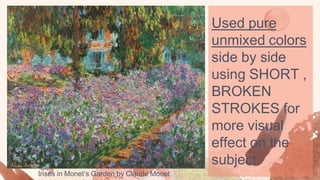
Used pure
unmixed colors
side by side
using SHORT ,
BROKEN
STROKES for
more visual
effect on the
subject.
Irises in Monet’s Garden by Claude Monet
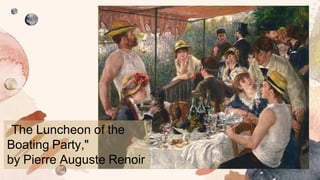
"The Luncheon of the
Boating Party,"
by Pierre Auguste Renoir
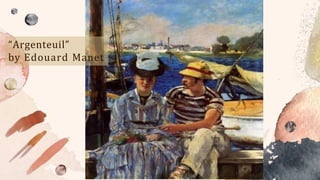
“Argenteuil”
by Edouard Manet
EXPRESSIONISM
 EMOTIONAL FORCE
 DISTORTED OUTLINES
 UNREALISTIC/
UNNATURAL IMAGES
The different styles that emerged within the expressionist art
movements are:
 Neoprimitivism
 Dadaism
 Fauvism
 Surrealism
 Social realism
EXPRESSIONISM
NEOPRIMITIVISM
Was an art style that incorporated elements from
the native arts of the South Sea Islanders and
the wood carvings of African tribes that surged in
popularity that time.
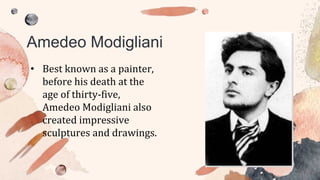
Amedeo Modigliani
• Best known as a painter,
before his death at the
age of thirty-five,
Amedeo Modigliani also
created impressive
sculptures and drawings.
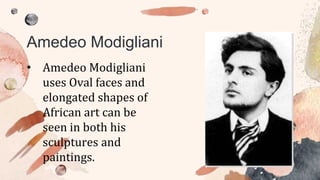
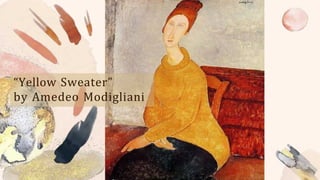
• Amedeo Modigliani
uses Oval faces and
elongated shapes of
African art can be
seen in both his
sculptures and
paintings.
Amedeo Modigliani
“Yellow Sweater”
by Amedeo Modigliani
FAUVISM
• Fauvism is an art movement that was established
towards the beginning of the 20th century.
• Characterized by its bold colors, textured brushwork
and non-naturalistic depictions, the Fauvist style marked
a seminal moment in the early 20th century.
• The most known artist of Fauvism was Henri Matisse.
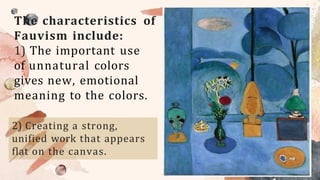
The characteristics of
Fauvism include:
1) The important use
of unnatural colors
gives new, emotional
meaning to the colors.
2) Creating a strong,
unified work that appears
flat on the canvas.
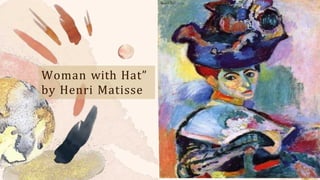
Woman with Hat”
by Henri Matisse
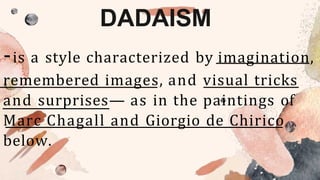
DADAISM
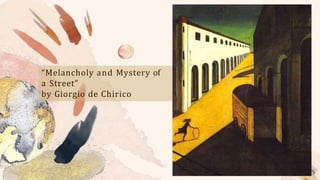
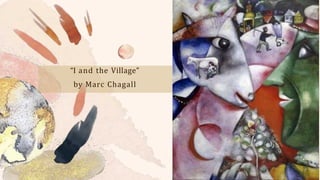
-is a style characterized by imagination,
remembered images, and visual tricks
and surprises— as in the paintings of
Marc Chagall and Giorgio de Chirico
below.
“Melancholy and Mystery of
a Street”
by Giorgio de Chirico
“I and the Village”
by Marc Chagall
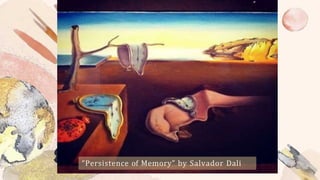
SURREALISM
• Surrealism came from the term "super-realism,"
a style that depicts an illogical, subconscious
dream world.
• It is a clear expression of departure from
reality - as if the artists were dreaming,
seeing illusions, or experiencing a change in
mental state.
“Persistence of Memory” by Salvador Dali
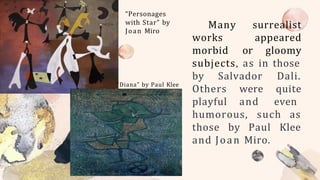
Many
works
morbid
surrealist
appeared
or gloomy
subjects, as in those
by Salvador
Others
playful
Dali.
were quite
and even
humorous, such as
those by Paul Klee
and Joan Miro.
“Personages
with Star” by
Joan Miro
“Diana” by Paul Klee
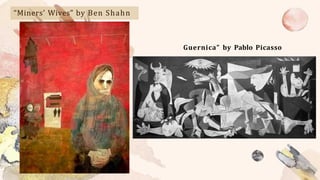
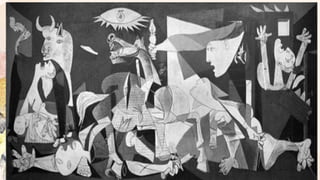
SOCIAL REALISM
• Social realism is an art movement that expresses the
artist's role in social reform.
• The artists used their works to show protest against
the injustices, inequalities immorality, and other
concerns of the human condition. Social
realists havel.
• The addressed different social issues for purpose of
increasing people’s awareness leading to reforms and
general welfare.
“Miners’ Wives” by Ben Shahn
Guernica” by Pablo Picasso
ABSTRACTIONISM
• LOGICAL & RATIONAL
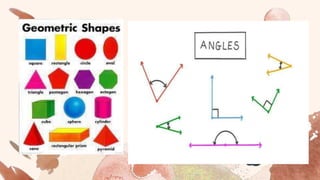
• GEOMETRICAL SHAPES
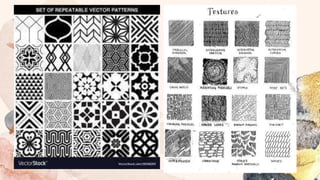
• PATTERNS
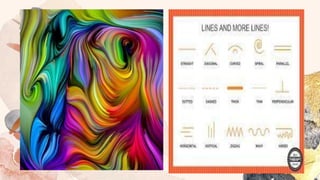
• LINES
• ANGLES
• TEXTURES
• SWIRL OF COLORS
ABSTRACTIONISM
The abstractionist movement has
four art styles, namely:
 Cubism
 Futurism
 Mechanical style
 Non-objectivism
CUBISM
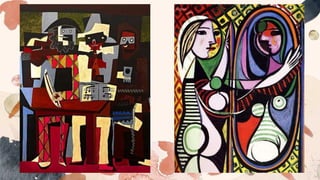
The cubist style was derived from
word cube,
the a three-dimensional
geometric figure composed of lines,
planes, and angles.
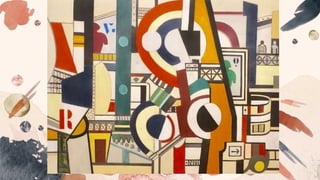
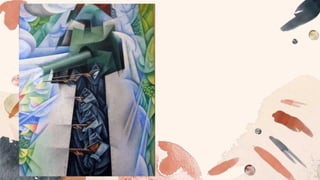
FUTURISM
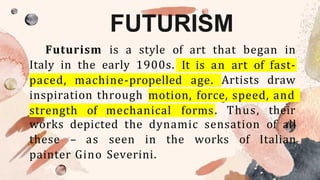
Futurism is a style of art that began in
Italy in the early 1900s. It is an art of fast-
paced, machine-propelled age. Artists draw
inspiration through motion, force, speed, and
strength of mechanical forms. Thus, their
works depicted the dynamic sensation of all
these – as seen in the works of Italian
painter Gino Severini.
MECHANICAL
S
In
TY
th
Le
Emechanical style
of art, basic forms such as
planes, cones, spheres, and
cylinders all fit together in a
precise and neat manner.
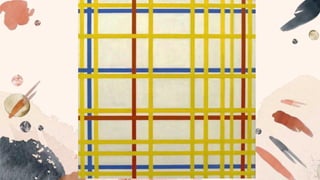
NON-OBJECTIVISM
From
works in
the term non-object,
the non-objectivism
style did not make use of figures
or even representations of figures.
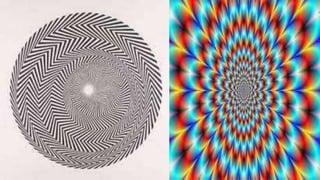
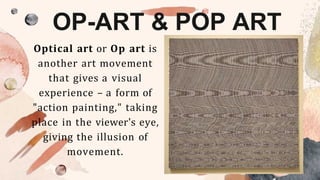
OP-ART & POP ART
Optical art or Op art is
another art movement
that gives a visual
experience – a form of
"action painting," taking
place in the viewer's eye,
giving the illusion of
movement.
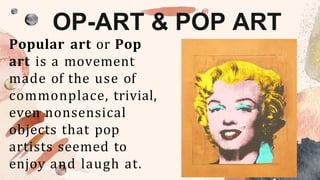
OP-ART & POP ART
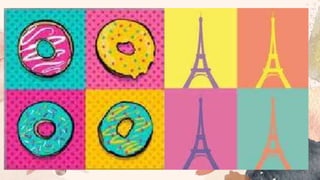
Popular art or Pop
art is a movement
made of the use of
commonplace, trivial,
even nonsensical
objects that pop
artists seemed to
enjoy and laugh at.
CONTEMPORARY ART FORM
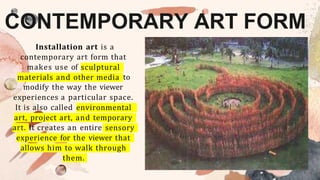
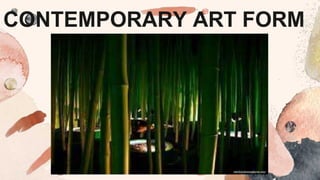
Installation art is a
contemporary art form that
makes use of sculptural
materials and other media to
modify the way the viewer
experiences a particular space.
It is also called environmental
art, project art, and temporary
art. It creates an entire sensory
experience for the viewer that
allows him to walk through
them.
CONTEMPORARY ART FORM
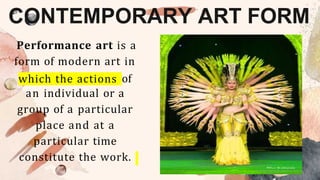
Performance art is a
form of modern art in
which the actions of
an individual or a
group of a particular
place and at a
particular time
constitute the work.
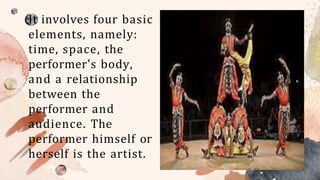
It involves four basic
elements, namely:
time, space, the
performer's body,
and a relationship
between the
performer and
audience. The
performer himself or
herself is the artist.
ALTERNATIVE RESOURCES

Lesson 3 - Art Movements.pptx

  • 1.
  • 2.
    Characteristics of Arts fromVarious Art Movements QUARTER 1- Module 2 GRADE 10
  • 3.
    IMPRESSIONISM 01 EXPRESSIONISM 02 ABSTRACTIONIS M 03 OP ART& POP 04 ART ART MOVEMENTS CONTEMPORARY ART FORMS 05
  • 4.
    IMPRESSIONISM • Started inthe second half of 19th century • Capturing scenes of lifelike household objects, seascapes ,houses and ordinary people.
  • 5.
    Used pure unmixed colors sideby side using SHORT , BROKEN STROKES for more visual effect on the subject. Irises in Monet’s Garden by Claude Monet
  • 6.
    "The Luncheon ofthe Boating Party," by Pierre Auguste Renoir
  • 7.
  • 8.
    EXPRESSIONISM  EMOTIONAL FORCE DISTORTED OUTLINES  UNREALISTIC/ UNNATURAL IMAGES
  • 9.
    The different stylesthat emerged within the expressionist art movements are:  Neoprimitivism  Dadaism  Fauvism  Surrealism  Social realism EXPRESSIONISM
  • 10.
    NEOPRIMITIVISM Was an artstyle that incorporated elements from the native arts of the South Sea Islanders and the wood carvings of African tribes that surged in popularity that time.
  • 11.
    Amedeo Modigliani • Bestknown as a painter, before his death at the age of thirty-five, Amedeo Modigliani also created impressive sculptures and drawings.
  • 12.
    • Amedeo Modigliani usesOval faces and elongated shapes of African art can be seen in both his sculptures and paintings. Amedeo Modigliani
  • 13.
  • 14.
    FAUVISM • Fauvism isan art movement that was established towards the beginning of the 20th century. • Characterized by its bold colors, textured brushwork and non-naturalistic depictions, the Fauvist style marked a seminal moment in the early 20th century. • The most known artist of Fauvism was Henri Matisse.
  • 15.
    The characteristics of Fauvisminclude: 1) The important use of unnatural colors gives new, emotional meaning to the colors. 2) Creating a strong, unified work that appears flat on the canvas.
  • 16.
    Woman with Hat” byHenri Matisse
  • 17.
    DADAISM -is a stylecharacterized by imagination, remembered images, and visual tricks and surprises— as in the paintings of Marc Chagall and Giorgio de Chirico below.
  • 18.
    “Melancholy and Mysteryof a Street” by Giorgio de Chirico
  • 19.
    “I and theVillage” by Marc Chagall
  • 20.
    SURREALISM • Surrealism camefrom the term "super-realism," a style that depicts an illogical, subconscious dream world. • It is a clear expression of departure from reality - as if the artists were dreaming, seeing illusions, or experiencing a change in mental state.
  • 21.
  • 22.
    Many works morbid surrealist appeared or gloomy subjects, asin those by Salvador Others playful Dali. were quite and even humorous, such as those by Paul Klee and Joan Miro. “Personages with Star” by Joan Miro “Diana” by Paul Klee
  • 23.
    SOCIAL REALISM • Socialrealism is an art movement that expresses the artist's role in social reform. • The artists used their works to show protest against the injustices, inequalities immorality, and other concerns of the human condition. Social realists havel. • The addressed different social issues for purpose of increasing people’s awareness leading to reforms and general welfare.
  • 24.
    “Miners’ Wives” byBen Shahn Guernica” by Pablo Picasso
  • 26.
    ABSTRACTIONISM • LOGICAL &RATIONAL • GEOMETRICAL SHAPES • PATTERNS • LINES • ANGLES • TEXTURES • SWIRL OF COLORS
  • 30.
    ABSTRACTIONISM The abstractionist movementhas four art styles, namely:  Cubism  Futurism  Mechanical style  Non-objectivism
  • 31.
    CUBISM The cubist stylewas derived from word cube, the a three-dimensional geometric figure composed of lines, planes, and angles.
  • 33.
    FUTURISM Futurism is astyle of art that began in Italy in the early 1900s. It is an art of fast- paced, machine-propelled age. Artists draw inspiration through motion, force, speed, and strength of mechanical forms. Thus, their works depicted the dynamic sensation of all these – as seen in the works of Italian painter Gino Severini.
  • 35.
    MECHANICAL S In TY th Le Emechanical style of art,basic forms such as planes, cones, spheres, and cylinders all fit together in a precise and neat manner.
  • 37.
    NON-OBJECTIVISM From works in the termnon-object, the non-objectivism style did not make use of figures or even representations of figures.
  • 39.
    OP-ART & POPART Optical art or Op art is another art movement that gives a visual experience – a form of "action painting," taking place in the viewer's eye, giving the illusion of movement.
  • 41.
    OP-ART & POPART Popular art or Pop art is a movement made of the use of commonplace, trivial, even nonsensical objects that pop artists seemed to enjoy and laugh at.
  • 43.
    CONTEMPORARY ART FORM Installationart is a contemporary art form that makes use of sculptural materials and other media to modify the way the viewer experiences a particular space. It is also called environmental art, project art, and temporary art. It creates an entire sensory experience for the viewer that allows him to walk through them.
  • 44.
  • 45.
    CONTEMPORARY ART FORM Performanceart is a form of modern art in which the actions of an individual or a group of a particular place and at a particular time constitute the work.
  • 46.
    It involves fourbasic elements, namely: time, space, the performer's body, and a relationship between the performer and audience. The performer himself or herself is the artist.
  • 47.