Starter
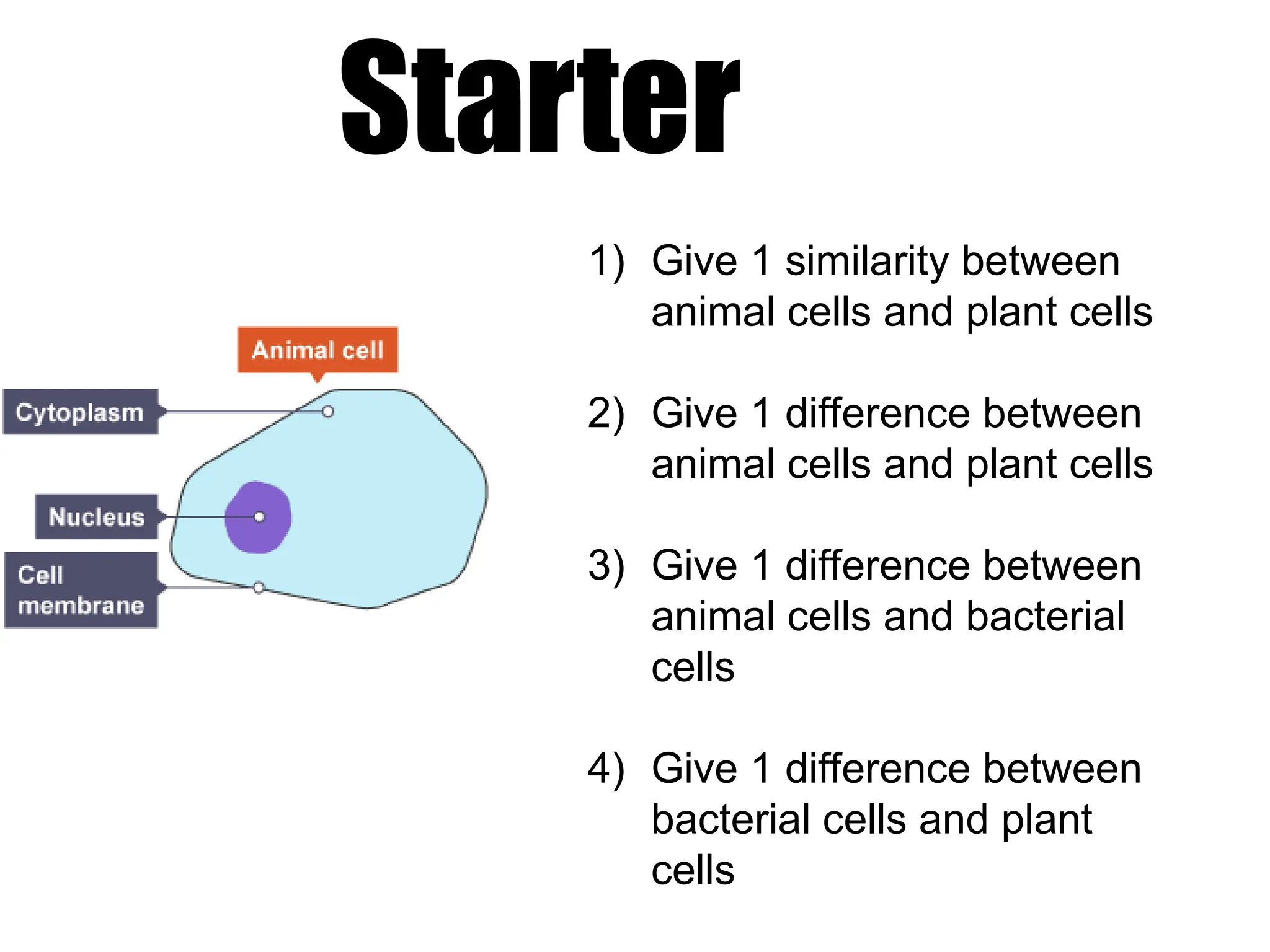
1) Give 1 similarity between
animal cells and plant cells
2) Give 1 difference between
animal cells and plant cells
3) Give 1 difference between
animal cells and bacterial
cells
4) Give 1 difference between
bacterial cells and plant
cells
Ready to Learn
Comparing animal, plant and bacterial cells
Success Criteria
•Give examples of specialised cells
•Describe how different cell types are
specialised
•Explain the need for specialisation
Specialised Cells
Keywords
Specialisation, ciliated, acrosome, mitochondria, haploid
Activities
• Information market
•Summary questions
Specialised Cells
• Plants and animals are multicellular (consist
of many cells).
• They contain many different types of cells.
• Each type of cell is designed to carry out a
particular job or function.
• This is known as CELL SPECIALISM
• Not all cells look the same.
• Some cells have a special shape and
features to help them do a certain job.
Questions
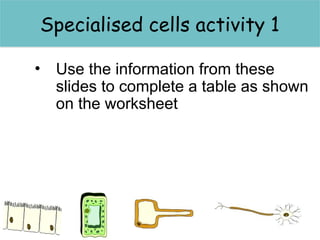
• Use the information from these
slides to complete a table as shown
on the worksheet
Specialised cells activity 1
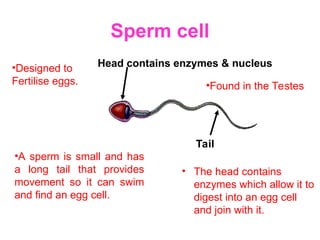
Sperm cell
• The head contains
enzymes which allow it to
digest into an egg cell
and join with it.
Head contains enzymes & nucleus
Tail
•Designed to
Fertilise eggs.
•A sperm is small and has
a long tail that provides
movement so it can swim
and find an egg cell.
•Found in the Testes
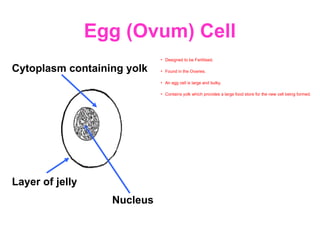
Egg (Ovum) Cell
• Designed to be Fertilised.
• Found in the Ovaries.
• An egg cell is large and bulky.
• Contains yolk which provides a large food store for the new cell being formed.
Cytoplasm containing yolk
Layer of jelly
Nucleus
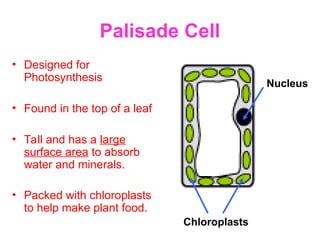
Palisade Cell
• Designed for
Photosynthesis
• Found in the top of a leaf
• Tall and has a large
surface area to absorb
water and minerals.
• Packed with chloroplasts
to help make plant food.
Nucleus
Chloroplasts
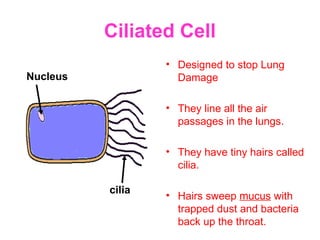
Ciliated Cell
• Designed to stop Lung
Damage
• They line all the air
passages in the lungs.
• They have tiny hairs called
cilia.
• Hairs sweep mucus with
trapped dust and bacteria
back up the throat.
Nucleus
cilia
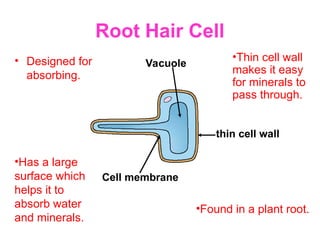
Root Hair Cell
• Designed for
absorbing.
•Thin cell wall
makes it easy
for minerals to
pass through.
•Has a large
surface which
helps it to
absorb water
and minerals.
•Found in a plant root.
Vacuole
Cell membrane
thin cell wall
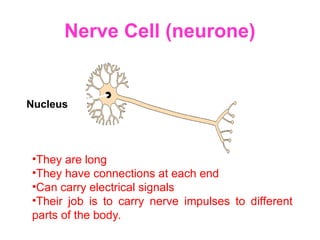
Nerve Cell (neurone)
•They are long
•They have connections at each end
•Can carry electrical signals
•Their job is to carry nerve impulses to different
parts of the body.
Nucleus
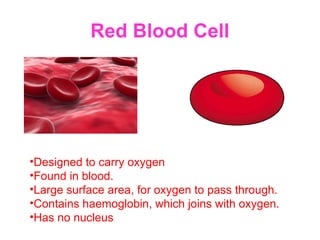
Red Blood Cell
•Designed to carry oxygen
•Found in blood.
•Large surface area, for oxygen to pass through.
•Contains haemoglobin, which joins with oxygen.
•Has no nucleus
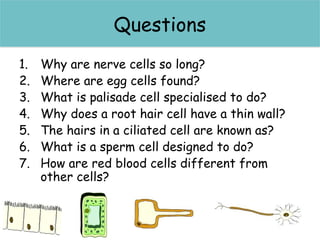
Questions
1. Why are nerve cells so long?
2. Where are egg cells found?
3. What is palisade cell specialised to do?
4. Why does a root hair cell have a thin wall?
5. The hairs in a ciliated cell are known as?
6. What is a sperm cell designed to do?
7. How are red blood cells different from
other cells?
Questions

Lesson-2-Specialised-cells for Year Seven

  • 1.
    Starter 1) Give 1similarity between animal cells and plant cells 2) Give 1 difference between animal cells and plant cells 3) Give 1 difference between animal cells and bacterial cells 4) Give 1 difference between bacterial cells and plant cells
  • 2.
    Ready to Learn Comparinganimal, plant and bacterial cells Success Criteria •Give examples of specialised cells •Describe how different cell types are specialised •Explain the need for specialisation Specialised Cells Keywords Specialisation, ciliated, acrosome, mitochondria, haploid Activities • Information market •Summary questions
  • 3.
    Specialised Cells • Plantsand animals are multicellular (consist of many cells). • They contain many different types of cells. • Each type of cell is designed to carry out a particular job or function. • This is known as CELL SPECIALISM • Not all cells look the same. • Some cells have a special shape and features to help them do a certain job.
  • 4.
    Questions • Use theinformation from these slides to complete a table as shown on the worksheet Specialised cells activity 1
  • 5.
    Sperm cell • Thehead contains enzymes which allow it to digest into an egg cell and join with it. Head contains enzymes & nucleus Tail •Designed to Fertilise eggs. •A sperm is small and has a long tail that provides movement so it can swim and find an egg cell. •Found in the Testes
  • 6.
    Egg (Ovum) Cell •Designed to be Fertilised. • Found in the Ovaries. • An egg cell is large and bulky. • Contains yolk which provides a large food store for the new cell being formed. Cytoplasm containing yolk Layer of jelly Nucleus
  • 7.
    Palisade Cell • Designedfor Photosynthesis • Found in the top of a leaf • Tall and has a large surface area to absorb water and minerals. • Packed with chloroplasts to help make plant food. Nucleus Chloroplasts
  • 8.
    Ciliated Cell • Designedto stop Lung Damage • They line all the air passages in the lungs. • They have tiny hairs called cilia. • Hairs sweep mucus with trapped dust and bacteria back up the throat. Nucleus cilia
  • 9.
    Root Hair Cell •Designed for absorbing. •Thin cell wall makes it easy for minerals to pass through. •Has a large surface which helps it to absorb water and minerals. •Found in a plant root. Vacuole Cell membrane thin cell wall
  • 10.
    Nerve Cell (neurone) •Theyare long •They have connections at each end •Can carry electrical signals •Their job is to carry nerve impulses to different parts of the body. Nucleus
  • 11.
    Red Blood Cell •Designedto carry oxygen •Found in blood. •Large surface area, for oxygen to pass through. •Contains haemoglobin, which joins with oxygen. •Has no nucleus
  • 12.
    Questions 1. Why arenerve cells so long? 2. Where are egg cells found? 3. What is palisade cell specialised to do? 4. Why does a root hair cell have a thin wall? 5. The hairs in a ciliated cell are known as? 6. What is a sperm cell designed to do? 7. How are red blood cells different from other cells? Questions