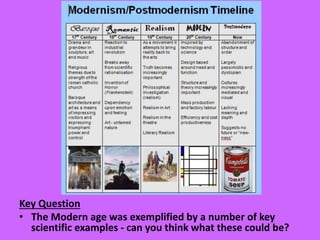
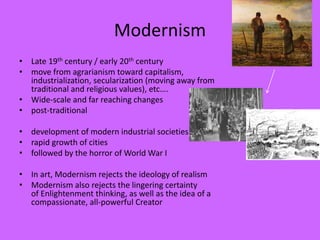
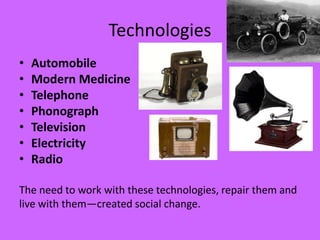
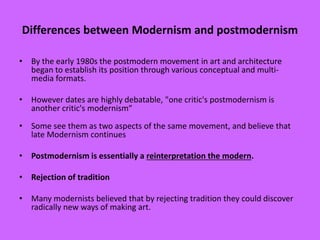
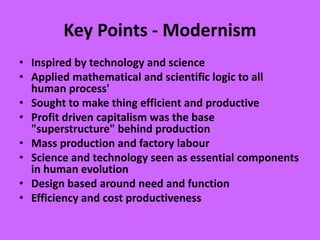
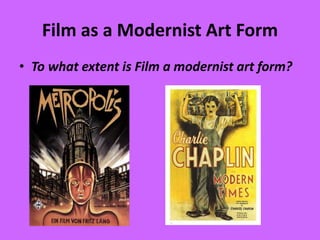
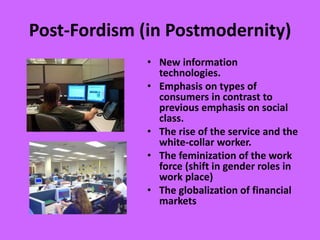
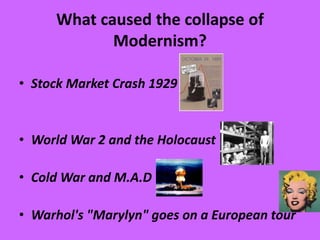
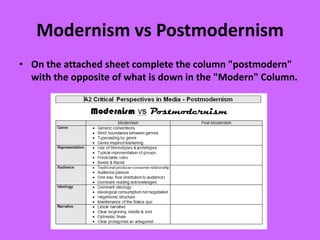
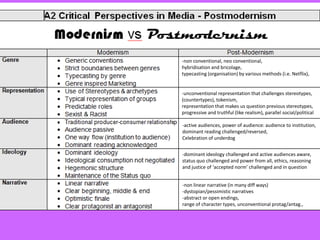
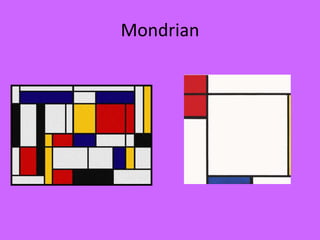
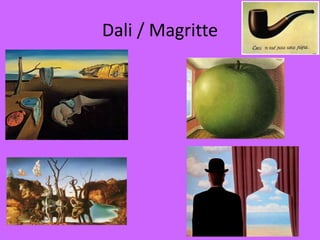
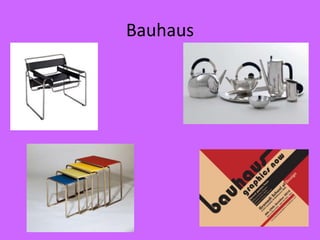
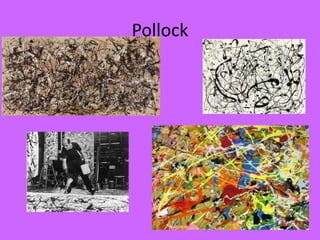
Modernism emerged in the late 19th century in response to industrialization and secularization, characterized by rationalization, capitalism, and new technologies that altered perceptions of time and space. Key aspects included efficiency, order, and faith in science and technology. Modernist art rejected realism and embraced new styles like cubism. However, modernism collapsed after World War 2 as faith in rationality, science, and social progress was shattered by events like the stock market crash, world war, and Holocaust. Postmodernism emerged and questioned modernism's assumptions through unconventional styles, challenging dominant ideologies, and celebrating underrepresented groups.