Introduction to Programming in C++
Eight Edition
Lesson 10: Void Functions
An Introduction to Programming with C++, Eight Edition
• Create a void function
• Invoke a void function
• Pass information by reference to a function
Objectives
2
An Introduction to Programming with C++, Eight Edition
• Recall that value-returning functions perform a task and
then return a single value
• Void functions also perform tasks but do not return a
value
• A void function may be used to do something like
display information on the screen
– Doesn’t need to return a value
Functions
3
An Introduction to Programming with C++, Eight Edition 4
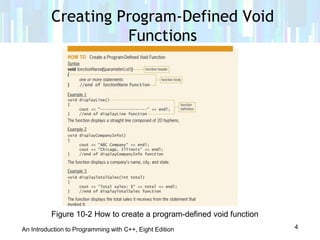
Figure 10-2 How to create a program-defined void function
Creating Program-Defined Void
Functions
An Introduction to Programming with C++, Eight Edition
• Note that header begins with keyword void, instead of
a return data type
– Indicates that the function does not return a value
• Function body does not contain a return statement
• Call a void function by including its name and actual
arguments (if any) in a statement
• Call to a void function appears as a self-contained
statement, not part of another statement
• Execution is same as for value-returning functions
Creating Program-Defined Void
Functions (cont’d.)
5
An Introduction to Programming with C++, Eight Edition 6
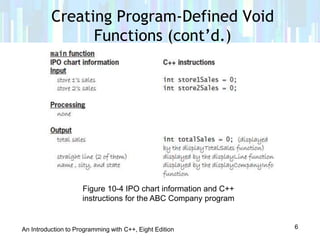
Figure 10-4 IPO chart information and C++
instructions for the ABC Company program
Creating Program-Defined Void
Functions (cont’d.)
An Introduction to Programming with C++, Eight Edition 7
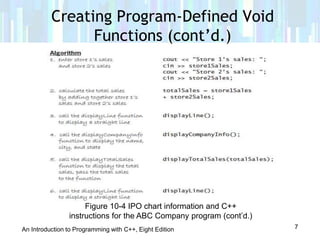
Figure 10-4 IPO chart information and C++
instructions for the ABC Company program (cont’d.)
Creating Program-Defined Void
Functions (cont’d.)
An Introduction to Programming with C++, Eight Edition 8
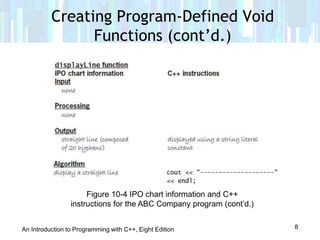
Figure 10-4 IPO chart information and C++
instructions for the ABC Company program (cont’d.)
Creating Program-Defined Void
Functions (cont’d.)
An Introduction to Programming with C++, Eight Edition 9
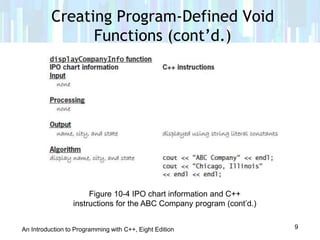
Figure 10-4 IPO chart information and C++
instructions for the ABC Company program (cont’d.)
Creating Program-Defined Void
Functions (cont’d.)
An Introduction to Programming with C++, Eight Edition 10
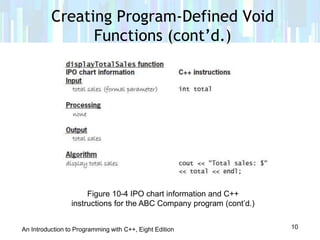
Figure 10-4 IPO chart information and C++
instructions for the ABC Company program (cont’d.)
Creating Program-Defined Void
Functions (cont’d.)
An Introduction to Programming with C++, Eight Edition 11
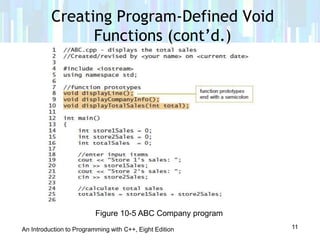
Figure 10-5 ABC Company program
Creating Program-Defined Void
Functions (cont’d.)
An Introduction to Programming with C++, Eight Edition 12
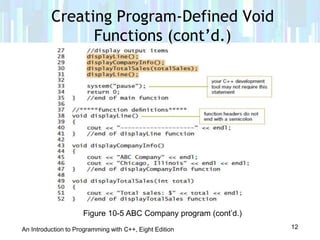
Figure 10-5 ABC Company program (cont’d.)
Creating Program-Defined Void
Functions (cont’d.)
An Introduction to Programming with C++, Eight Edition 13
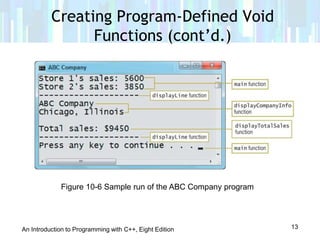
Figure 10-6 Sample run of the ABC Company program
Creating Program-Defined Void
Functions (cont’d.)
An Introduction to Programming with C++, Eight Edition
• Recall you can pass a variable’s value or its address
• Passing a variable’s value is referred to as passing by
value, while passing a variable’s address is referred to as
passing by reference
• Which one you choose depends on whether the receiving
function should have access to the variable in memory
• Passing by value will not permit the function to change
the contents of the variable, but passing by reference will
Passing Variables to a Function
14
An Introduction to Programming with C++, Eight Edition
• Passing a variable by value means that only a copy of
the variable’s contents is passed, not the address of the
variable
• This means that the receiving function cannot change
the contents of the variable
• It is thus appropriate to pass by value when the
receiving function needs to know the value of the
variable but does not need to change it
Reviewing Passing Variables by Value
15
An Introduction to Programming with C++, Eight Edition
• Passing a variable’s address in internal memory to a
function is referred to as passing by reference
• You pass by reference when you want the receiving
function to change the contents of the variable
• To pass by reference in C++, you include an ampersand
(&) before the name of the formal parameter in the
receiving function’s header
• Ampersand (&) is the address-of operator
– Tells the computer to pass the variable’s address rather
than a copy of its contents
Passing Variables by Reference
16
An Introduction to Programming with C++, Eight Edition
• If receiving function appears below main, you must
also include the & in the receiving function’s prototype
• You enter the & immediately before the name of the
formal parameter in the prototype
– If the prototype does not contain the formal parameter’s
name, you enter a space followed by & after the formal
parameter’s data type
• Void functions use variables passed by reference to
send information back to the calling function, instead of
a return value
Passing Variables by Reference
(cont’d.)
17
An Introduction to Programming with C++, Eight Edition 18
Figure 10-13 Modified age message program
Passing Variables by Reference
(cont’d.)

Lesson 10

  • 1.
    Introduction to Programmingin C++ Eight Edition Lesson 10: Void Functions
  • 2.
    An Introduction toProgramming with C++, Eight Edition • Create a void function • Invoke a void function • Pass information by reference to a function Objectives 2
  • 3.
    An Introduction toProgramming with C++, Eight Edition • Recall that value-returning functions perform a task and then return a single value • Void functions also perform tasks but do not return a value • A void function may be used to do something like display information on the screen – Doesn’t need to return a value Functions 3
  • 4.
    An Introduction toProgramming with C++, Eight Edition 4 Figure 10-2 How to create a program-defined void function Creating Program-Defined Void Functions
  • 5.
    An Introduction toProgramming with C++, Eight Edition • Note that header begins with keyword void, instead of a return data type – Indicates that the function does not return a value • Function body does not contain a return statement • Call a void function by including its name and actual arguments (if any) in a statement • Call to a void function appears as a self-contained statement, not part of another statement • Execution is same as for value-returning functions Creating Program-Defined Void Functions (cont’d.) 5
  • 6.
    An Introduction toProgramming with C++, Eight Edition 6 Figure 10-4 IPO chart information and C++ instructions for the ABC Company program Creating Program-Defined Void Functions (cont’d.)
  • 7.
    An Introduction toProgramming with C++, Eight Edition 7 Figure 10-4 IPO chart information and C++ instructions for the ABC Company program (cont’d.) Creating Program-Defined Void Functions (cont’d.)
  • 8.
    An Introduction toProgramming with C++, Eight Edition 8 Figure 10-4 IPO chart information and C++ instructions for the ABC Company program (cont’d.) Creating Program-Defined Void Functions (cont’d.)
  • 9.
    An Introduction toProgramming with C++, Eight Edition 9 Figure 10-4 IPO chart information and C++ instructions for the ABC Company program (cont’d.) Creating Program-Defined Void Functions (cont’d.)
  • 10.
    An Introduction toProgramming with C++, Eight Edition 10 Figure 10-4 IPO chart information and C++ instructions for the ABC Company program (cont’d.) Creating Program-Defined Void Functions (cont’d.)
  • 11.
    An Introduction toProgramming with C++, Eight Edition 11 Figure 10-5 ABC Company program Creating Program-Defined Void Functions (cont’d.)
  • 12.
    An Introduction toProgramming with C++, Eight Edition 12 Figure 10-5 ABC Company program (cont’d.) Creating Program-Defined Void Functions (cont’d.)
  • 13.
    An Introduction toProgramming with C++, Eight Edition 13 Figure 10-6 Sample run of the ABC Company program Creating Program-Defined Void Functions (cont’d.)
  • 14.
    An Introduction toProgramming with C++, Eight Edition • Recall you can pass a variable’s value or its address • Passing a variable’s value is referred to as passing by value, while passing a variable’s address is referred to as passing by reference • Which one you choose depends on whether the receiving function should have access to the variable in memory • Passing by value will not permit the function to change the contents of the variable, but passing by reference will Passing Variables to a Function 14
  • 15.
    An Introduction toProgramming with C++, Eight Edition • Passing a variable by value means that only a copy of the variable’s contents is passed, not the address of the variable • This means that the receiving function cannot change the contents of the variable • It is thus appropriate to pass by value when the receiving function needs to know the value of the variable but does not need to change it Reviewing Passing Variables by Value 15
  • 16.
    An Introduction toProgramming with C++, Eight Edition • Passing a variable’s address in internal memory to a function is referred to as passing by reference • You pass by reference when you want the receiving function to change the contents of the variable • To pass by reference in C++, you include an ampersand (&) before the name of the formal parameter in the receiving function’s header • Ampersand (&) is the address-of operator – Tells the computer to pass the variable’s address rather than a copy of its contents Passing Variables by Reference 16
  • 17.
    An Introduction toProgramming with C++, Eight Edition • If receiving function appears below main, you must also include the & in the receiving function’s prototype • You enter the & immediately before the name of the formal parameter in the prototype – If the prototype does not contain the formal parameter’s name, you enter a space followed by & after the formal parameter’s data type • Void functions use variables passed by reference to send information back to the calling function, instead of a return value Passing Variables by Reference (cont’d.) 17
  • 18.
    An Introduction toProgramming with C++, Eight Edition 18 Figure 10-13 Modified age message program Passing Variables by Reference (cont’d.)