Arts in INDONESIA
Mr. AL-LYN L. VOCAL
La Salle University Integrated School
Arts 8
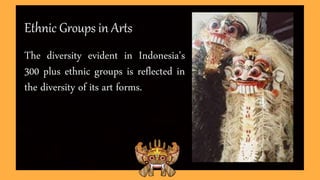
Ethnic Groups in Arts
The diversity evident in Indonesia's
300 plus ethnic groups is reflected in
the diversity of its art forms.
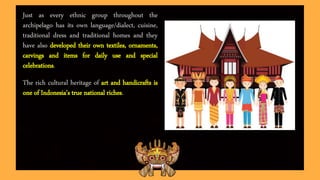
Just as every ethnic group throughout the
archipelago has its own language/dialect, cuisine,
traditional dress and traditional homes and they
have also developed their own textiles, ornaments,
carvings and items for daily use and special
celebrations.
The rich cultural heritage of art and handicrafts is
one of Indonesia's true national riches.
Indonesian Art Forms
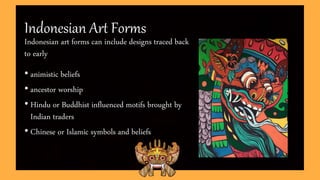
Indonesian art forms can include designs traced back
to early
• animistic beliefs
• ancestor worship
• Hindu or Buddhist influenced motifs brought by
Indian traders
• Chinese or Islamic symbols and beliefs
Influences of Arts in Indonesia
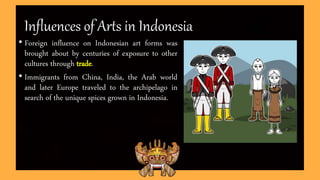
• Foreign influence on Indonesian art forms was
brought about by centuries of exposure to other
cultures through trade.
• Immigrants from China, India, the Arab world
and later Europe traveled to the archipelago in
search of the unique spices grown in Indonesia.
Symbolism
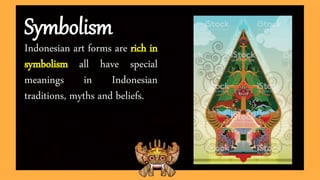
Indonesian art forms are rich in
symbolism all have special
meanings in Indonesian
traditions, myths and beliefs.
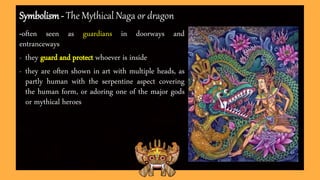
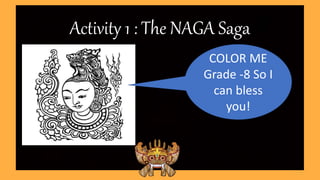
Symbolism - The Mythical Naga or dragon
-often seen as guardians in doorways and
entranceways
- they guard and protect whoever is inside
- they are often shown in art with multiple heads, as
partly human with the serpentine aspect covering
the human form, or adoring one of the major gods
or mythical heroes
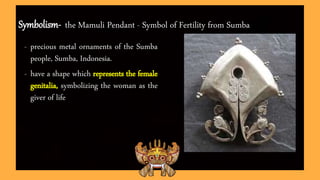
Symbolism- the Mamuli Pendant - Symbol of Fertility from Sumba
- precious metal ornaments of the Sumba
people, Sumba, Indonesia.
- have a shape which represents the female
genitalia, symbolizing the woman as the
giver of life
History of Indonesian Art
Activity 1 : The NAGA Saga
COLOR ME
Grade -8 So I
can bless
you!

Lesson 1 Indonesian Art

  • 1.
    Arts in INDONESIA Mr.AL-LYN L. VOCAL La Salle University Integrated School Arts 8
  • 2.
    Ethnic Groups inArts The diversity evident in Indonesia's 300 plus ethnic groups is reflected in the diversity of its art forms.
  • 3.
    Just as everyethnic group throughout the archipelago has its own language/dialect, cuisine, traditional dress and traditional homes and they have also developed their own textiles, ornaments, carvings and items for daily use and special celebrations. The rich cultural heritage of art and handicrafts is one of Indonesia's true national riches.
  • 4.
    Indonesian Art Forms Indonesianart forms can include designs traced back to early • animistic beliefs • ancestor worship • Hindu or Buddhist influenced motifs brought by Indian traders • Chinese or Islamic symbols and beliefs
  • 5.
    Influences of Artsin Indonesia • Foreign influence on Indonesian art forms was brought about by centuries of exposure to other cultures through trade. • Immigrants from China, India, the Arab world and later Europe traveled to the archipelago in search of the unique spices grown in Indonesia.
  • 6.
    Symbolism Indonesian art formsare rich in symbolism all have special meanings in Indonesian traditions, myths and beliefs.
  • 7.
    Symbolism - TheMythical Naga or dragon -often seen as guardians in doorways and entranceways - they guard and protect whoever is inside - they are often shown in art with multiple heads, as partly human with the serpentine aspect covering the human form, or adoring one of the major gods or mythical heroes
  • 8.
    Symbolism- the MamuliPendant - Symbol of Fertility from Sumba - precious metal ornaments of the Sumba people, Sumba, Indonesia. - have a shape which represents the female genitalia, symbolizing the woman as the giver of life
  • 9.
  • 10.
    Activity 1 :The NAGA Saga COLOR ME Grade -8 So I can bless you!