Lesson I
Part of the Southern Tagalog: Designated as region
IV-B
The acronym is a combination of names of its
constituent provinces:
MINDORO,MARINDUQUE,ROMBLON,PALAWAN
Arts and crafts depicts the different aspects of their
culture.
Mindoro is the seventh largest island in the Philippines,
with an area of 10,224 square kilometers and two provinces –
Oriental and Occidental. Of the total population of one
million, the indigenous population is estimated at 100,000.
Mangyan is the collective name for the eight indigenous
groups living in Mindoro, each with its own name, language,
and set of customs:
-Iraya -Bangon
-Buhid -Alangan -Ratagnon
-Tadyawan -Hanunuo
A rhythmic poetic expression with a
meter of seven syllable lines and
having rhythmic end-syllables.
It is usually written on bamboo in the
Surat Mangyan, a centuries-old pre-
Spanish script.
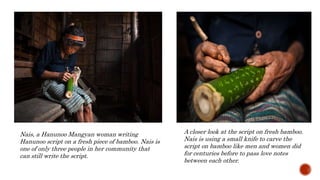
A closer look at the script on fresh bamboo.
Nais is using a small knife to carve the
script on bamboo like men and women did
for centuries before to pass love notes
between each other.
Nais, a Hanunoo Mangyan woman writing
Hanunoo script on a fresh piece of bamboo. Nais is
one of only three people in her community that
can still write the script.
Is a variation of the
ambahan that uses eight
syllables instead of
seven.
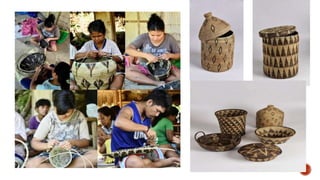
Has intricate patterns and designs of humans, animals, trees
and other objects.
Made of dried nito grass and forest vines. Nito refers to the
special vine that grows in the wild
Nito woven item is one-of-a-kind, with no single design being
exactly the same as the other. Delicately crafted by a single
individual, a large basket takes roughly one week to complete.
 These specialty crafts require much time and patience but
the final work speaks volumes of our rich indigenous tradition
and excellent craftsmanship.
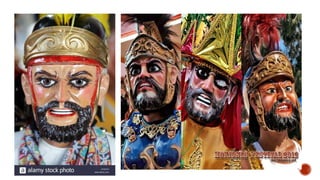
The Moriones Festival is an annual festival, locally
known as "Moryonan", celebrated in Marinduque
from March to April or celebrated every holy week.
Morion refers to the mask that are made of wood or
papier-mache, adorned with colorful shells, animal
hairs tassels and crepe papers.
People who acts as roman soldiers during the
festival wear these masks together with the vest,
capes and wooden shield.
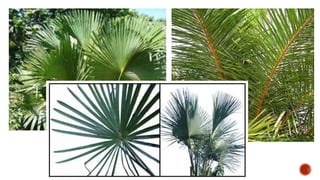
Also became a staple
materials in the arts and
crafts of Marinduque
because of their abundance.
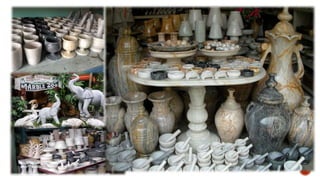
Known for its fine marble products.
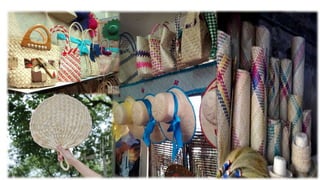
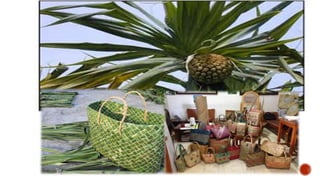
They also produce beautifully woven
mats and bags made of Romblon
plants.
Romblon is known as the marble
capital of the Philippines.
Palawan is known as the Country’s Last
frontier because of its rich cultural and
natural diversity.
Tagbanuas are the first inhabitants in
Palawan.
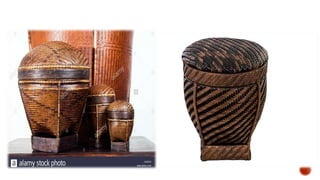
Is a cone shape
colander harvest made
of blackened and
natural bamboo.
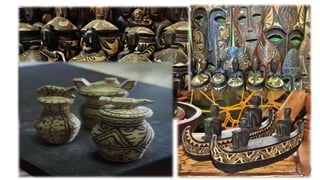
The Tagbanuas carve
different animal forms from
soft wood.
These are used in rituals or
as toys for children.
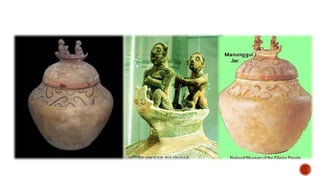
The manungul jar dates to the 8th century BCE and
was excavated in the early 1960’s inside the
manunggul cave at Lipuun Point, Palawan.
Considered as one of the most important artifacts in
the Philippines.
A container for secondary burial of deceased/
On top of the jar lid is a boat with two human figures
representing two souls on voyage to the after life.
Lesson II
Is one of the three
principal geographical
divisions of the Philippines
consisting different major
and minor Islands.
a hand-woven textile made of cotton, abaca,
pine- apple or silk. Handloom weaving in
Iloilo started when Ilonggos wove textiles
from materials bartered with the Chi-
nese. Hablon is derived from the Hiligaynon
word “habol”, meaning to weave,
and hablon refers to both the process of
weaving and its finished prod- ucts.
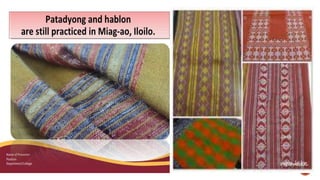
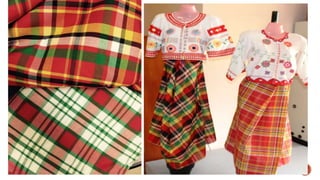
The patadyong is a pre-Spanish wrap around loose
skirt worn by Filipino women[1] particularly in the
lowland regions of the Visayas islands. It is similar
to the "sarong" or malong used
in Mindanao and Indonesia, but instead of the batik
patterns it has colourful checked designs or
patterns.[2] It is usually worn with a kimona (a
blouse that was traditionally made of pineapple
fibre)
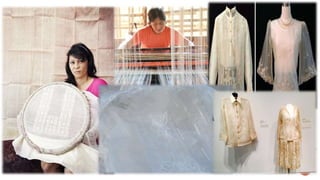
It is an age-old
tradition in Aklan, the
leading manufacturer
of Pina cloth in the
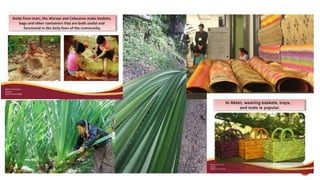
The people of Aklan weave baskets, trays
and mats.
Pandan and bariw plants are the
materials they use in their weaving.
The process of Pagara or weaving is often
a form of social interaction in the
community.
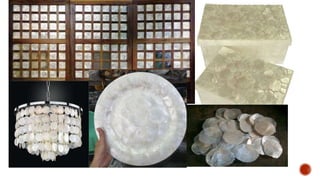
Capiz is an important material in the craft
of panay island particularly in Aklan and
Iloilo.
Te capiz shell are beached and dried before
they are pressed or cut into different
shapes. They formed into various craft
products like plates utility box, windows,
The Negros island was first
called Buglas, named after
the type of grass similar to
sugar cane grows abundantly
in the island.
The weaving tradition of the negrenses
include the production of roofing materials,
walls, hats and baskets.
The materials commonly used are pandan
and buri leaves.
The Negrenses also weave fabric abaca(musa
textile) twine and indigenous plant similar
to banana known as sinamay.
Basket weaving is among the earliest industries that have
been established in bohol, particularly Antequera.
Antequera is known as the Basket Capital of Bohol.
The material used for baskets weaving in Antequera can be
found in their souroundings: from Bamboo,
rattan,wicker,nito,buri,sig-id, and other vines.
Loom weaving is popular in the municipality of Tubigon.
Their products are made from raffia and Buri leaves.
Known for its woven
products such as mats, wall
decorations and the famous
colorful sleeping mat called
banig.
Lesson III
 The Ati-Atihan Festival is a feast held annually in January in honor of the Santo
Niño (Infant Jesus), Held on the third Sunday, in the town of Kalibo Philippines in
the island of Panay originally came from Batan, Aklan, then adopted later by
some neighboring towns. The name Ati-Atihan means "to be like Atis" or "to make
believe Atis", the local name for the Aeta aborigines who first settled in Panay
Island and other parts of the archipelago.
 The festival consists of tribal dance, music, accompanied by indigenous costumes
and weapons, and parade along the street. Christians and non-Christians observe
this day with religious processions. It has inspired many other Philippine
Festivals including the Sinulog Festival of Cebu and Dinagyang of Iloilo City, both
adaptations of the Kalibo's Ati-Atihan Festival, and legally holds the title "The
Mother of All Philippine Festivals" in spite of the other two festivals' claims of the
same title.
The most famous festival in Bacolod, the city
known across the Philippines as “The City of
Smiles”.
Every year different barangays (the smallest
administrative division in the Philippines) of
Bacolod take part in street dance competitions
where participants put on colorful masks—
“kara” is taken from the Spanish cara (face) and
so MassKara literally means “multiple faces”.
The merged celebration of the Pintados Festival
and Kasadyaan Festival in Tacloban City based on
the body-painting traditions of the ancient tattooed
“pintados” warriors. Dancers paint their bodies in
patterns that resemble armor to represent past
warriors. The festival, officially called Leyte
Pintados-Kasadyaan Festival and also known as
the “Festival of Festivals,” is held annually on
June 29, the day of the Feast of the Señor Santo
Niño de Leyte.

ARTS QUARTER II

  • 1.
  • 2.
    Part of theSouthern Tagalog: Designated as region IV-B The acronym is a combination of names of its constituent provinces: MINDORO,MARINDUQUE,ROMBLON,PALAWAN Arts and crafts depicts the different aspects of their culture.
  • 3.
    Mindoro is theseventh largest island in the Philippines, with an area of 10,224 square kilometers and two provinces – Oriental and Occidental. Of the total population of one million, the indigenous population is estimated at 100,000. Mangyan is the collective name for the eight indigenous groups living in Mindoro, each with its own name, language, and set of customs: -Iraya -Bangon -Buhid -Alangan -Ratagnon -Tadyawan -Hanunuo
  • 4.
    A rhythmic poeticexpression with a meter of seven syllable lines and having rhythmic end-syllables. It is usually written on bamboo in the Surat Mangyan, a centuries-old pre- Spanish script.
  • 5.
    A closer lookat the script on fresh bamboo. Nais is using a small knife to carve the script on bamboo like men and women did for centuries before to pass love notes between each other. Nais, a Hanunoo Mangyan woman writing Hanunoo script on a fresh piece of bamboo. Nais is one of only three people in her community that can still write the script.
  • 6.
    Is a variationof the ambahan that uses eight syllables instead of seven.
  • 7.
    Has intricate patternsand designs of humans, animals, trees and other objects. Made of dried nito grass and forest vines. Nito refers to the special vine that grows in the wild Nito woven item is one-of-a-kind, with no single design being exactly the same as the other. Delicately crafted by a single individual, a large basket takes roughly one week to complete.  These specialty crafts require much time and patience but the final work speaks volumes of our rich indigenous tradition and excellent craftsmanship.
  • 9.
    The Moriones Festivalis an annual festival, locally known as "Moryonan", celebrated in Marinduque from March to April or celebrated every holy week. Morion refers to the mask that are made of wood or papier-mache, adorned with colorful shells, animal hairs tassels and crepe papers. People who acts as roman soldiers during the festival wear these masks together with the vest, capes and wooden shield.
  • 11.
    Also became astaple materials in the arts and crafts of Marinduque because of their abundance.
  • 14.
    Known for itsfine marble products. They also produce beautifully woven mats and bags made of Romblon plants. Romblon is known as the marble capital of the Philippines.
  • 17.
    Palawan is knownas the Country’s Last frontier because of its rich cultural and natural diversity. Tagbanuas are the first inhabitants in Palawan.
  • 18.
    Is a coneshape colander harvest made of blackened and natural bamboo.
  • 20.
    The Tagbanuas carve differentanimal forms from soft wood. These are used in rituals or as toys for children.
  • 22.
    The manungul jardates to the 8th century BCE and was excavated in the early 1960’s inside the manunggul cave at Lipuun Point, Palawan. Considered as one of the most important artifacts in the Philippines. A container for secondary burial of deceased/ On top of the jar lid is a boat with two human figures representing two souls on voyage to the after life.
  • 24.
  • 25.
    Is one ofthe three principal geographical divisions of the Philippines consisting different major and minor Islands.
  • 27.
    a hand-woven textilemade of cotton, abaca, pine- apple or silk. Handloom weaving in Iloilo started when Ilonggos wove textiles from materials bartered with the Chi- nese. Hablon is derived from the Hiligaynon word “habol”, meaning to weave, and hablon refers to both the process of weaving and its finished prod- ucts.
  • 29.
    The patadyong isa pre-Spanish wrap around loose skirt worn by Filipino women[1] particularly in the lowland regions of the Visayas islands. It is similar to the "sarong" or malong used in Mindanao and Indonesia, but instead of the batik patterns it has colourful checked designs or patterns.[2] It is usually worn with a kimona (a blouse that was traditionally made of pineapple fibre)
  • 31.
    It is anage-old tradition in Aklan, the leading manufacturer of Pina cloth in the
  • 33.
    The people ofAklan weave baskets, trays and mats. Pandan and bariw plants are the materials they use in their weaving. The process of Pagara or weaving is often a form of social interaction in the community.
  • 35.
    Capiz is animportant material in the craft of panay island particularly in Aklan and Iloilo. Te capiz shell are beached and dried before they are pressed or cut into different shapes. They formed into various craft products like plates utility box, windows,
  • 37.
    The Negros islandwas first called Buglas, named after the type of grass similar to sugar cane grows abundantly in the island.
  • 38.
    The weaving traditionof the negrenses include the production of roofing materials, walls, hats and baskets. The materials commonly used are pandan and buri leaves. The Negrenses also weave fabric abaca(musa textile) twine and indigenous plant similar to banana known as sinamay.
  • 39.
    Basket weaving isamong the earliest industries that have been established in bohol, particularly Antequera. Antequera is known as the Basket Capital of Bohol. The material used for baskets weaving in Antequera can be found in their souroundings: from Bamboo, rattan,wicker,nito,buri,sig-id, and other vines. Loom weaving is popular in the municipality of Tubigon. Their products are made from raffia and Buri leaves.
  • 40.
    Known for itswoven products such as mats, wall decorations and the famous colorful sleeping mat called banig.
  • 41.
  • 42.
     The Ati-AtihanFestival is a feast held annually in January in honor of the Santo Niño (Infant Jesus), Held on the third Sunday, in the town of Kalibo Philippines in the island of Panay originally came from Batan, Aklan, then adopted later by some neighboring towns. The name Ati-Atihan means "to be like Atis" or "to make believe Atis", the local name for the Aeta aborigines who first settled in Panay Island and other parts of the archipelago.  The festival consists of tribal dance, music, accompanied by indigenous costumes and weapons, and parade along the street. Christians and non-Christians observe this day with religious processions. It has inspired many other Philippine Festivals including the Sinulog Festival of Cebu and Dinagyang of Iloilo City, both adaptations of the Kalibo's Ati-Atihan Festival, and legally holds the title "The Mother of All Philippine Festivals" in spite of the other two festivals' claims of the same title.
  • 43.
    The most famousfestival in Bacolod, the city known across the Philippines as “The City of Smiles”. Every year different barangays (the smallest administrative division in the Philippines) of Bacolod take part in street dance competitions where participants put on colorful masks— “kara” is taken from the Spanish cara (face) and so MassKara literally means “multiple faces”.
  • 44.
    The merged celebrationof the Pintados Festival and Kasadyaan Festival in Tacloban City based on the body-painting traditions of the ancient tattooed “pintados” warriors. Dancers paint their bodies in patterns that resemble armor to represent past warriors. The festival, officially called Leyte Pintados-Kasadyaan Festival and also known as the “Festival of Festivals,” is held annually on June 29, the day of the Feast of the Señor Santo Niño de Leyte.