Cultural Mapping:
INTANGIBLE Art Forms
Lesson 5: WHAT ARE THE ART FORMS OF MY COMMUNITY?
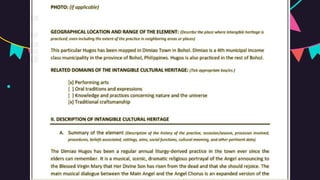
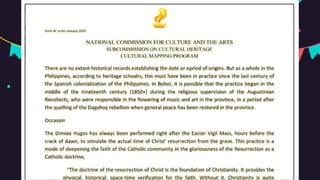
Intangible Cultural Heritage
UNESCO defines Intangible Cultural Heritage as the practices, representations,
expressions, as well as the knowledge and skills (including instruments, objects,
artefacts, cultural spaces), that most of the communities, groups, and , in some
cases, individuals recognize as part of their cultural heritage.
Characteristics of Intangible Cultural Heritage
The main component concept of the ICH is its being INTANGIBLE.
- Incapable of being perceived by the sense of touch, as in
corporeal or immaterial; impalpable;
- Not made of physical substance; not able to be touched;
- Inanimate concpets that cannot be touched, such as language,
thoughts, beliefs, processes, values, systems, patterns, and the likes.
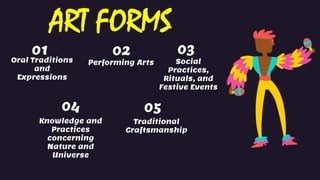
01
Oral Traditions
and
Expressions
02
Performing Arts
ART FORMS
03
Social
Practices,
Rituals, and
Festive Events
Knowledge and
Practices
concerning
Nature and
Universe
Traditional
Craftsmanship
04 05
01
-the cultural knowledge and
information that has been
passed down through speech
from one generation to the next.
Tradition means something that is
handed down from generation to
generation.
Oral Traditions and
Expressions
Examples of Oral Traditions and Expressions
Origin Myths and Epics
Folktales, legends, riddles
Poetic Jousts or debates
(Balagtasan/balak)
Languages
Chants
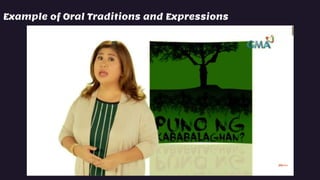
Example of Oral Traditions and Expressions
Cultural Mapping:
INTANGIBLE Art Forms
Lesson 5: WHAT ARE THE ART FORMS OF MY COMMUNITY?
02
- range from vocal and instrumental
music, dance and theatre to pantomime,
sung verse and beyond.
- They include numerous cultural
expressions that reflect human
creativity and that are also found, to
some extent, in many other intangible
cultural heritage domains.
Performing Arts
Examples of Performing Arts
Instrumental Music
Vocal Music
Folk and Ethic Dances
Traditional Drama
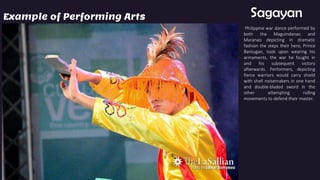
Example of Performing Arts Sagayan
Philippine war dance performed by
both the Maguindanao and
Maranao depicting in dramatic
fashion the steps their hero, Prince
Bantugan, took upon wearing his
armaments, the war he fought in
and his subsequent victory
afterwards. Performers, depicting
fierce warriors would carry shield
with shell noisemakers in one hand
and double-bladed sword in the
other attempting rolling
movements to defend their master.
03
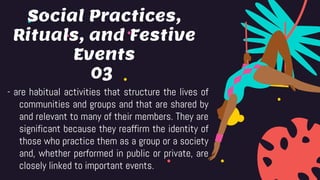
- are habitual activities that structure the lives of
communities and groups and that are shared by
and relevant to many of their members. They are
significant because they reaffirm the identity of
those who practice them as a group or a society
and, whether performed in public or private, are
closely linked to important events.
Social Practices,
Rituals, and Festive
Events
Examples of Social Practices, Rituals, and
Festive Events
• Fiestas
• Holy Week Paraliturgical rites
• Folk Customs in the Catholic Regions
• Life Cycle Rituals
• Subanen Wedding
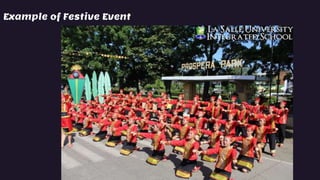
Example of Festive Event
Cultural Mapping:
INTANGIBLE Art Forms
Lesson 5: WHAT ARE THE ART FORMS OF MY COMMUNITY?
04
- includes knowledge, knowhow, skills, practices and
representations developed by communities by interacting
with the natural environment
- these ways of thinking about the universe are expressed
through language, oral traditions, feelings of attachment
towards a place, memories, spirituality and worldview
- they also strongly influence values and beliefs and
underlie many social practices and cultural traditions
- they, in turn, are shaped by the natural environment and
the community’s wider world
Knowledge and Practices
concerning Nature and
the Universe
Examples of Knowledge and practices
concerning nature and the universe
• traditional ecological wisdom
• indigenous knowledge
• knowledge about local fauna and flora
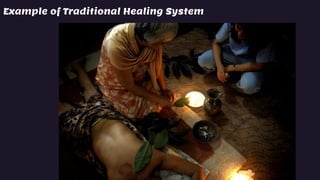
• traditional healing systems
• rituals, beliefs, initiatory rites
• cosmologies
• Shamanism
• possession rites
Example of Traditional Healing System
05
- the most tangible manifestation of intangible
cultural heritage
- mainly concerned with the skills and knowledge
involved in craftsmanship rather than the craft
products themselves
- rather than focusing on preserving craft objects,
safeguarding attempts should instead
concentrate on encouraging artisans to continue
to produce craft and to pass their skills and
knowledge onto others, particularly within their
own communities
Traditional Craftmanship
Examples of Traditional Craftmanship
• Basket Weaving
• Mat Weaving
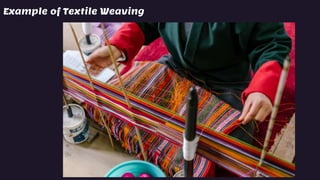
• Textile Weaving
• Sculptures, Jewelry and Carvings
on Silver, Bronze, Brass, wood
Example of Textile Weaving
NOTE:
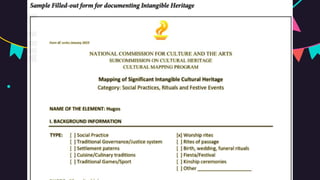
When documenting an intangible cultural heritage, the
mapper must provide all or any of the following supporting
documentation:
• Video and audio recordings
• Photographs and sketches
• Others
Lesson 5 intangible art forms

Lesson 5 intangible art forms

  • 1.
    Cultural Mapping: INTANGIBLE ArtForms Lesson 5: WHAT ARE THE ART FORMS OF MY COMMUNITY?
  • 2.
    Intangible Cultural Heritage UNESCOdefines Intangible Cultural Heritage as the practices, representations, expressions, as well as the knowledge and skills (including instruments, objects, artefacts, cultural spaces), that most of the communities, groups, and , in some cases, individuals recognize as part of their cultural heritage.
  • 3.
    Characteristics of IntangibleCultural Heritage The main component concept of the ICH is its being INTANGIBLE. - Incapable of being perceived by the sense of touch, as in corporeal or immaterial; impalpable; - Not made of physical substance; not able to be touched; - Inanimate concpets that cannot be touched, such as language, thoughts, beliefs, processes, values, systems, patterns, and the likes.
  • 4.
    01 Oral Traditions and Expressions 02 Performing Arts ARTFORMS 03 Social Practices, Rituals, and Festive Events Knowledge and Practices concerning Nature and Universe Traditional Craftsmanship 04 05
  • 5.
    01 -the cultural knowledgeand information that has been passed down through speech from one generation to the next. Tradition means something that is handed down from generation to generation. Oral Traditions and Expressions
  • 6.
    Examples of OralTraditions and Expressions Origin Myths and Epics Folktales, legends, riddles Poetic Jousts or debates (Balagtasan/balak) Languages Chants
  • 7.
    Example of OralTraditions and Expressions
  • 8.
    Cultural Mapping: INTANGIBLE ArtForms Lesson 5: WHAT ARE THE ART FORMS OF MY COMMUNITY?
  • 9.
    02 - range fromvocal and instrumental music, dance and theatre to pantomime, sung verse and beyond. - They include numerous cultural expressions that reflect human creativity and that are also found, to some extent, in many other intangible cultural heritage domains. Performing Arts
  • 10.
    Examples of PerformingArts Instrumental Music Vocal Music Folk and Ethic Dances Traditional Drama
  • 11.
    Example of PerformingArts Sagayan Philippine war dance performed by both the Maguindanao and Maranao depicting in dramatic fashion the steps their hero, Prince Bantugan, took upon wearing his armaments, the war he fought in and his subsequent victory afterwards. Performers, depicting fierce warriors would carry shield with shell noisemakers in one hand and double-bladed sword in the other attempting rolling movements to defend their master.
  • 12.
    03 - are habitualactivities that structure the lives of communities and groups and that are shared by and relevant to many of their members. They are significant because they reaffirm the identity of those who practice them as a group or a society and, whether performed in public or private, are closely linked to important events. Social Practices, Rituals, and Festive Events
  • 13.
    Examples of SocialPractices, Rituals, and Festive Events • Fiestas • Holy Week Paraliturgical rites • Folk Customs in the Catholic Regions • Life Cycle Rituals • Subanen Wedding
  • 14.
  • 15.
    Cultural Mapping: INTANGIBLE ArtForms Lesson 5: WHAT ARE THE ART FORMS OF MY COMMUNITY?
  • 16.
    04 - includes knowledge,knowhow, skills, practices and representations developed by communities by interacting with the natural environment - these ways of thinking about the universe are expressed through language, oral traditions, feelings of attachment towards a place, memories, spirituality and worldview - they also strongly influence values and beliefs and underlie many social practices and cultural traditions - they, in turn, are shaped by the natural environment and the community’s wider world Knowledge and Practices concerning Nature and the Universe
  • 17.
    Examples of Knowledgeand practices concerning nature and the universe • traditional ecological wisdom • indigenous knowledge • knowledge about local fauna and flora • traditional healing systems • rituals, beliefs, initiatory rites • cosmologies • Shamanism • possession rites
  • 18.
    Example of TraditionalHealing System
  • 19.
    05 - the mosttangible manifestation of intangible cultural heritage - mainly concerned with the skills and knowledge involved in craftsmanship rather than the craft products themselves - rather than focusing on preserving craft objects, safeguarding attempts should instead concentrate on encouraging artisans to continue to produce craft and to pass their skills and knowledge onto others, particularly within their own communities Traditional Craftmanship
  • 20.
    Examples of TraditionalCraftmanship • Basket Weaving • Mat Weaving • Textile Weaving • Sculptures, Jewelry and Carvings on Silver, Bronze, Brass, wood
  • 21.
  • 22.
    NOTE: When documenting anintangible cultural heritage, the mapper must provide all or any of the following supporting documentation: • Video and audio recordings • Photographs and sketches • Others