LESSON 1. COMPUTER
ETHICS AND SAFETY
4TH QUARTER
COMPUTER ETHICS
When you use technology, you should apply the same ethics that you
use in other areas of your life.
Ethics is a set of moral principles that govern the behavior of a group
or individual. Therefore, computer ethics is set of moral principles that
regulate the use of Information technology and computers. Some
common issues of computer ethics include intellectual property rights (
such as copyright electronic content), privacy concerns, and how
computers affect society.
INTELLECTUAL PROPERTY AND COPYRIGHT
The law helps people act ethically by protecting both physical property and
intellectual property.
Intellectual Property refers to the ideas and concepts created or owned by a
person or company. Examples are books, music's, movies, software, and
inventions.
Trademark which is name symbol, or other feature that identifies a product with
specific owner. It represent by ™ or ® to protect a specific name or image that
identifies an organizations or its product.
Copyright is exclusive legal right to reproduce, publish, sell of something, such as
literary, musical, or artistic work.
SOFTWARE PIRACY
Violating copyright laws can cost heavy penalties and imprisonment.
If you copy software, music, or videos from the original disk or the
Internet without obtaining permission, you may be guilty of piracy. It is
called Software Piracy, an act of copying or sharing copyrighted
software material without permission.
CITING THE SOURCE
Three ways to cite these sources are:
1. Works cited page
2. Endnotes
3. Bibliography
Works cited means citing references on the page where they occur. It
differs from a bibliography. A works cited page is a list of works that
you referenced in the body of your paper, whereas a bibliography is a
list of all sources you used in your research.
TEN COMMANDMENTS OF COMPUTER
ETHICS
Created by the Computer Ethics
1. Thou Shalt Not Use a Computer to Harm Other People.
2. Thou Shalt Not Interfere with Other People’s Computer Work.
3. Thou Shalt Not Snoop around in Other People’s Computer Files.
4. Thou Shalt Not Use a Computer to Steal.
5. Thou Shalt Not Use a Computer to Bear False Witness.
6. Thou Shalt Not Copy or Use Proprietary Software for Which You Have Not Paid.
7. Thou Shalt Not Use Other People’s Computer Resources without Authorization or Proper Compensation.
8. Thou Shalt Not Appropriate Other People’s Intellectual Output.
9. Thou Shalt Think about the Social Consequences of the Program You are Writing or the System You are
Designing.
10. Thou Shalt Always Use a Computer in ways that Ensure Consideration and Respect for Your Fellow
Humans.
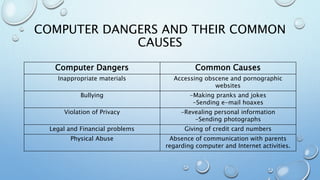
COMPUTER DANGERS AND THEIR COMMON
CAUSES
Computer Dangers Common Causes
Inappropriate materials Accessing obscene and pornographic
websites
Bullying -Making pranks and jokes
-Sending e-mail hoaxes
Violation of Privacy -Revealing personal information
-Sending photographs
Legal and Financial problems Giving of credit card numbers
Physical Abuse Absence of communication with parents
regarding computer and Internet activities.
ASSIGNMENT:
Create 10 pledges for Computer Internet
Safety.

Lesson 1. Computer ethics and safety.pptx

  • 1.
    LESSON 1. COMPUTER ETHICSAND SAFETY 4TH QUARTER
  • 2.
    COMPUTER ETHICS When youuse technology, you should apply the same ethics that you use in other areas of your life. Ethics is a set of moral principles that govern the behavior of a group or individual. Therefore, computer ethics is set of moral principles that regulate the use of Information technology and computers. Some common issues of computer ethics include intellectual property rights ( such as copyright electronic content), privacy concerns, and how computers affect society.
  • 3.
    INTELLECTUAL PROPERTY ANDCOPYRIGHT The law helps people act ethically by protecting both physical property and intellectual property. Intellectual Property refers to the ideas and concepts created or owned by a person or company. Examples are books, music's, movies, software, and inventions. Trademark which is name symbol, or other feature that identifies a product with specific owner. It represent by ™ or ® to protect a specific name or image that identifies an organizations or its product. Copyright is exclusive legal right to reproduce, publish, sell of something, such as literary, musical, or artistic work.
  • 4.
    SOFTWARE PIRACY Violating copyrightlaws can cost heavy penalties and imprisonment. If you copy software, music, or videos from the original disk or the Internet without obtaining permission, you may be guilty of piracy. It is called Software Piracy, an act of copying or sharing copyrighted software material without permission.
  • 5.
    CITING THE SOURCE Threeways to cite these sources are: 1. Works cited page 2. Endnotes 3. Bibliography Works cited means citing references on the page where they occur. It differs from a bibliography. A works cited page is a list of works that you referenced in the body of your paper, whereas a bibliography is a list of all sources you used in your research.
  • 6.
    TEN COMMANDMENTS OFCOMPUTER ETHICS Created by the Computer Ethics 1. Thou Shalt Not Use a Computer to Harm Other People. 2. Thou Shalt Not Interfere with Other People’s Computer Work. 3. Thou Shalt Not Snoop around in Other People’s Computer Files. 4. Thou Shalt Not Use a Computer to Steal. 5. Thou Shalt Not Use a Computer to Bear False Witness. 6. Thou Shalt Not Copy or Use Proprietary Software for Which You Have Not Paid. 7. Thou Shalt Not Use Other People’s Computer Resources without Authorization or Proper Compensation. 8. Thou Shalt Not Appropriate Other People’s Intellectual Output. 9. Thou Shalt Think about the Social Consequences of the Program You are Writing or the System You are Designing. 10. Thou Shalt Always Use a Computer in ways that Ensure Consideration and Respect for Your Fellow Humans.
  • 7.
    COMPUTER DANGERS ANDTHEIR COMMON CAUSES Computer Dangers Common Causes Inappropriate materials Accessing obscene and pornographic websites Bullying -Making pranks and jokes -Sending e-mail hoaxes Violation of Privacy -Revealing personal information -Sending photographs Legal and Financial problems Giving of credit card numbers Physical Abuse Absence of communication with parents regarding computer and Internet activities.
  • 8.
    ASSIGNMENT: Create 10 pledgesfor Computer Internet Safety.