Leprosy in Indonesia
Fadel Muhammad Garishah, MD
Department of General Medicine
Overview of Leprosy
 Leprosy is a disease caused by Mycobacterium leprae, a bacterium
which primarily affects the skin and peripheral nerves.
 Mode of transmission is considered to be air-borne, through
droplets discharged from the respiratory tract of untreated
infectious cases
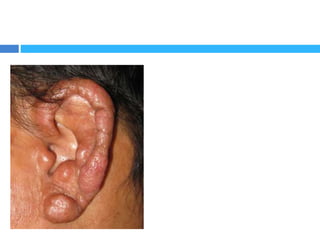
 The disease causes stigma and those affected can be victims of
discrimination and often displacement.
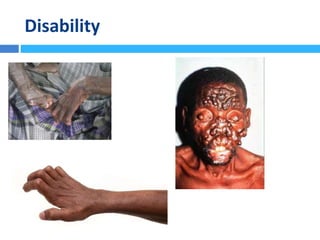
 Physical and neurological damage may be irreversible even if cured.
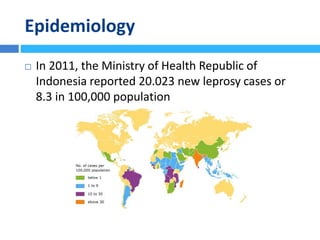
Epidemiology
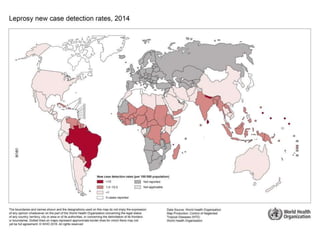
 In 2011, the Ministry of Health Republic of
Indonesia reported 20.023 new leprosy cases or
8.3 in 100,000 population
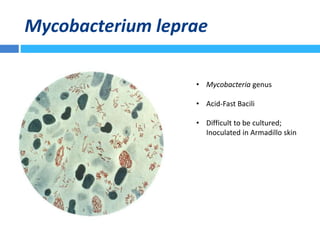
Mycobacterium leprae
• Mycobacteria genus
• Acid-Fast Bacili
• Difficult to be cultured;
Inoculated in Armadillo skin
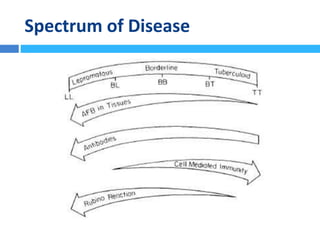
Spectrum of Disease
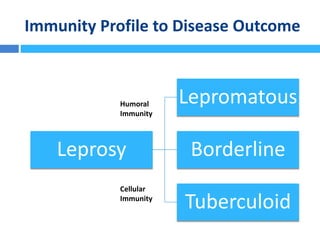
Immunity Profile to Disease Outcome
Leprosy
Lepromatous
Borderline
Tuberculoid
Humoral
Immunity
Cellular
Immunity
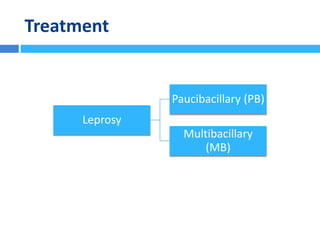
Treatment
Leprosy
Paucibacillary (PB)
Multibacillary
(MB)
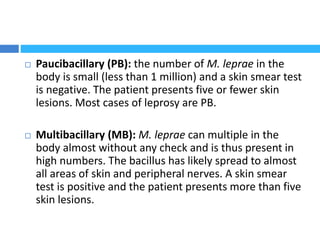
 Paucibacillary (PB): the number of M. leprae in the
body is small (less than 1 million) and a skin smear test
is negative. The patient presents five or fewer skin
lesions. Most cases of leprosy are PB.
 Multibacillary (MB): M. leprae can multiple in the
body almost without any check and is thus present in
high numbers. The bacillus has likely spread to almost
all areas of skin and peripheral nerves. A skin smear
test is positive and the patient presents more than five
skin lesions.
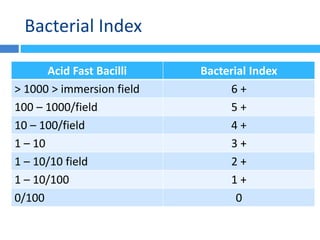
Bacterial Index
Acid Fast Bacilli Bacterial Index
> 1000 > immersion field 6 +
100 – 1000/field 5 +
10 – 100/field 4 +
1 – 10 3 +
1 – 10/10 field 2 +
1 – 10/100 1 +
0/100 0
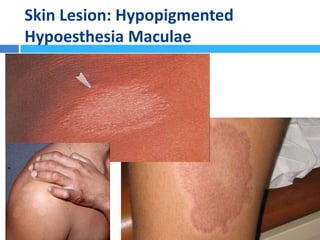
Skin Lesion: Hypopigmented
Hypoesthesia Maculae
Disability
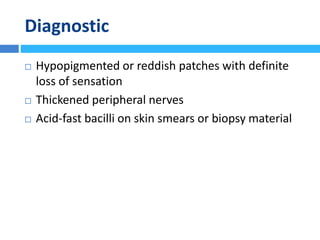
Diagnostic
 Hypopigmented or reddish patches with definite
loss of sensation
 Thickened peripheral nerves
 Acid-fast bacilli on skin smears or biopsy material
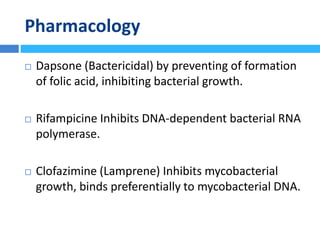
Pharmacology
 Dapsone (Bactericidal) by preventing of formation
of folic acid, inhibiting bacterial growth.
 Rifampicine Inhibits DNA-dependent bacterial RNA
polymerase.
 Clofazimine (Lamprene) Inhibits mycobacterial
growth, binds preferentially to mycobacterial DNA.
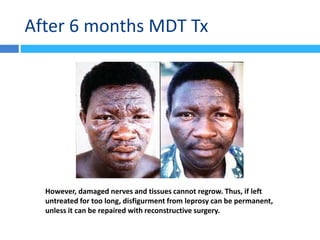
After 6 months MDT Tx
However, damaged nerves and tissues cannot regrow. Thus, if left
untreated for too long, disfigurment from leprosy can be permanent,
unless it can be repaired with reconstructive surgery.
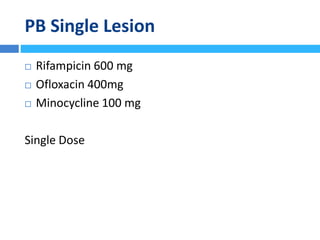
PB Single Lesion
 Rifampicin 600 mg
 Ofloxacin 400mg
 Minocycline 100 mg
Single Dose
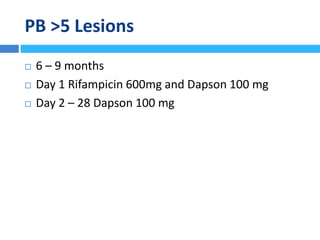
PB >5 Lesions
 6 – 9 months
 Day 1 Rifampicin 600mg and Dapson 100 mg
 Day 2 – 28 Dapson 100 mg
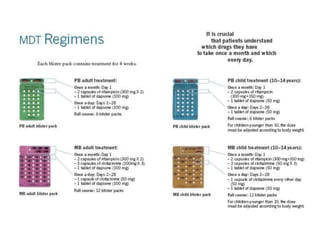
MB
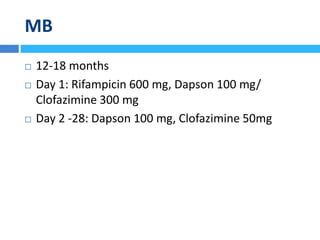
 12-18 months
 Day 1: Rifampicin 600 mg, Dapson 100 mg/
Clofazimine 300 mg
 Day 2 -28: Dapson 100 mg, Clofazimine 50mg
Leprosy Reactions
 Reversal reactions
 Erythema Nodosum Leprosum
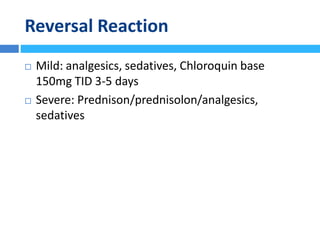
Reversal Reaction
 Mild: analgesics, sedatives, Chloroquin base
150mg TID 3-5 days
 Severe: Prednison/prednisolon/analgesics,
sedatives
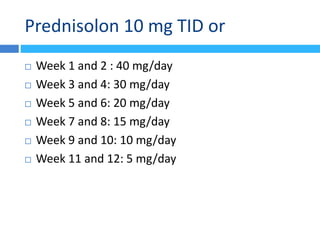
Prednisolon 10 mg TID or
 Week 1 and 2 : 40 mg/day
 Week 3 and 4: 30 mg/day
 Week 5 and 6: 20 mg/day
 Week 7 and 8: 15 mg/day
 Week 9 and 10: 10 mg/day
 Week 11 and 12: 5 mg/day
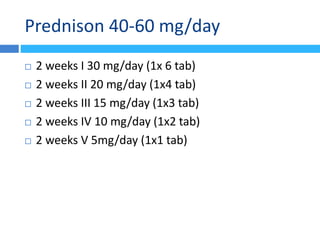
Prednison 40-60 mg/day
 2 weeks I 30 mg/day (1x 6 tab)
 2 weeks II 20 mg/day (1x4 tab)
 2 weeks III 15 mg/day (1x3 tab)
 2 weeks IV 10 mg/day (1x2 tab)
 2 weeks V 5mg/day (1x1 tab)
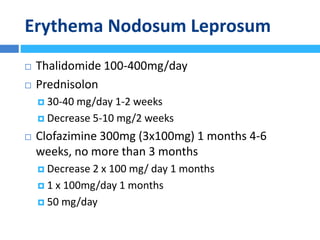
Erythema Nodosum Leprosum
 Thalidomide 100-400mg/day
 Prednisolon
 30-40 mg/day 1-2 weeks
 Decrease 5-10 mg/2 weeks
 Clofazimine 300mg (3x100mg) 1 months 4-6
weeks, no more than 3 months
 Decrease 2 x 100 mg/ day 1 months
 1 x 100mg/day 1 months
 50 mg/day

Leprosy

  • 1.
    Leprosy in Indonesia FadelMuhammad Garishah, MD Department of General Medicine
  • 2.
    Overview of Leprosy Leprosy is a disease caused by Mycobacterium leprae, a bacterium which primarily affects the skin and peripheral nerves.  Mode of transmission is considered to be air-borne, through droplets discharged from the respiratory tract of untreated infectious cases  The disease causes stigma and those affected can be victims of discrimination and often displacement.  Physical and neurological damage may be irreversible even if cured.
  • 3.
    Epidemiology  In 2011,the Ministry of Health Republic of Indonesia reported 20.023 new leprosy cases or 8.3 in 100,000 population
  • 5.
    Mycobacterium leprae • Mycobacteriagenus • Acid-Fast Bacili • Difficult to be cultured; Inoculated in Armadillo skin
  • 6.
  • 7.
    Immunity Profile toDisease Outcome Leprosy Lepromatous Borderline Tuberculoid Humoral Immunity Cellular Immunity
  • 8.
  • 9.
     Paucibacillary (PB):the number of M. leprae in the body is small (less than 1 million) and a skin smear test is negative. The patient presents five or fewer skin lesions. Most cases of leprosy are PB.  Multibacillary (MB): M. leprae can multiple in the body almost without any check and is thus present in high numbers. The bacillus has likely spread to almost all areas of skin and peripheral nerves. A skin smear test is positive and the patient presents more than five skin lesions.
  • 10.
    Bacterial Index Acid FastBacilli Bacterial Index > 1000 > immersion field 6 + 100 – 1000/field 5 + 10 – 100/field 4 + 1 – 10 3 + 1 – 10/10 field 2 + 1 – 10/100 1 + 0/100 0
  • 11.
  • 13.
  • 14.
    Diagnostic  Hypopigmented orreddish patches with definite loss of sensation  Thickened peripheral nerves  Acid-fast bacilli on skin smears or biopsy material
  • 15.
    Pharmacology  Dapsone (Bactericidal)by preventing of formation of folic acid, inhibiting bacterial growth.  Rifampicine Inhibits DNA-dependent bacterial RNA polymerase.  Clofazimine (Lamprene) Inhibits mycobacterial growth, binds preferentially to mycobacterial DNA.
  • 16.
    After 6 monthsMDT Tx However, damaged nerves and tissues cannot regrow. Thus, if left untreated for too long, disfigurment from leprosy can be permanent, unless it can be repaired with reconstructive surgery.
  • 18.
    PB Single Lesion Rifampicin 600 mg  Ofloxacin 400mg  Minocycline 100 mg Single Dose
  • 19.
    PB >5 Lesions 6 – 9 months  Day 1 Rifampicin 600mg and Dapson 100 mg  Day 2 – 28 Dapson 100 mg
  • 20.
    MB  12-18 months Day 1: Rifampicin 600 mg, Dapson 100 mg/ Clofazimine 300 mg  Day 2 -28: Dapson 100 mg, Clofazimine 50mg
  • 21.
    Leprosy Reactions  Reversalreactions  Erythema Nodosum Leprosum
  • 22.
    Reversal Reaction  Mild:analgesics, sedatives, Chloroquin base 150mg TID 3-5 days  Severe: Prednison/prednisolon/analgesics, sedatives
  • 23.
    Prednisolon 10 mgTID or  Week 1 and 2 : 40 mg/day  Week 3 and 4: 30 mg/day  Week 5 and 6: 20 mg/day  Week 7 and 8: 15 mg/day  Week 9 and 10: 10 mg/day  Week 11 and 12: 5 mg/day
  • 24.
    Prednison 40-60 mg/day 2 weeks I 30 mg/day (1x 6 tab)  2 weeks II 20 mg/day (1x4 tab)  2 weeks III 15 mg/day (1x3 tab)  2 weeks IV 10 mg/day (1x2 tab)  2 weeks V 5mg/day (1x1 tab)
  • 25.
    Erythema Nodosum Leprosum Thalidomide 100-400mg/day  Prednisolon  30-40 mg/day 1-2 weeks  Decrease 5-10 mg/2 weeks  Clofazimine 300mg (3x100mg) 1 months 4-6 weeks, no more than 3 months  Decrease 2 x 100 mg/ day 1 months  1 x 100mg/day 1 months  50 mg/day

Editor's Notes

  • #4 http://www.antaranews.com/en/news/87365/indonesia-still-unable-to-eradicate-leprosy