



Leadership Comparison Ravi Kumdesh Dip(MLT)/BSc(Mgt)/PG Dip(ExMgt)
Group 9 Mr. Ravi Kumudesh (IHRA/ESmgt/01/30) Mr. Lalath Abeyagunawardana (IHRA/ESmgt/01/02) Mr. BJ Seneviratna(IHRA/ESmgt/01/60) Mr. W Pathum Waas(IHRA/ESmgt/64) Mr. MADS Dilruk(IHRA/EDSMgt/11)
Overview Introduction  Styles for Leading Best leadership style Selected Leadership behaviors Analysis of Characteristic futures Data Resaving Data Analysis Conclusions Recommendations
What is a Leader? A Leader is someone in authority to lead others to accomplish a goal(s).  A leader needs to be able to motivate others to accomplish a goal(s) while at the same time encourage others to work toward their own professional goals.
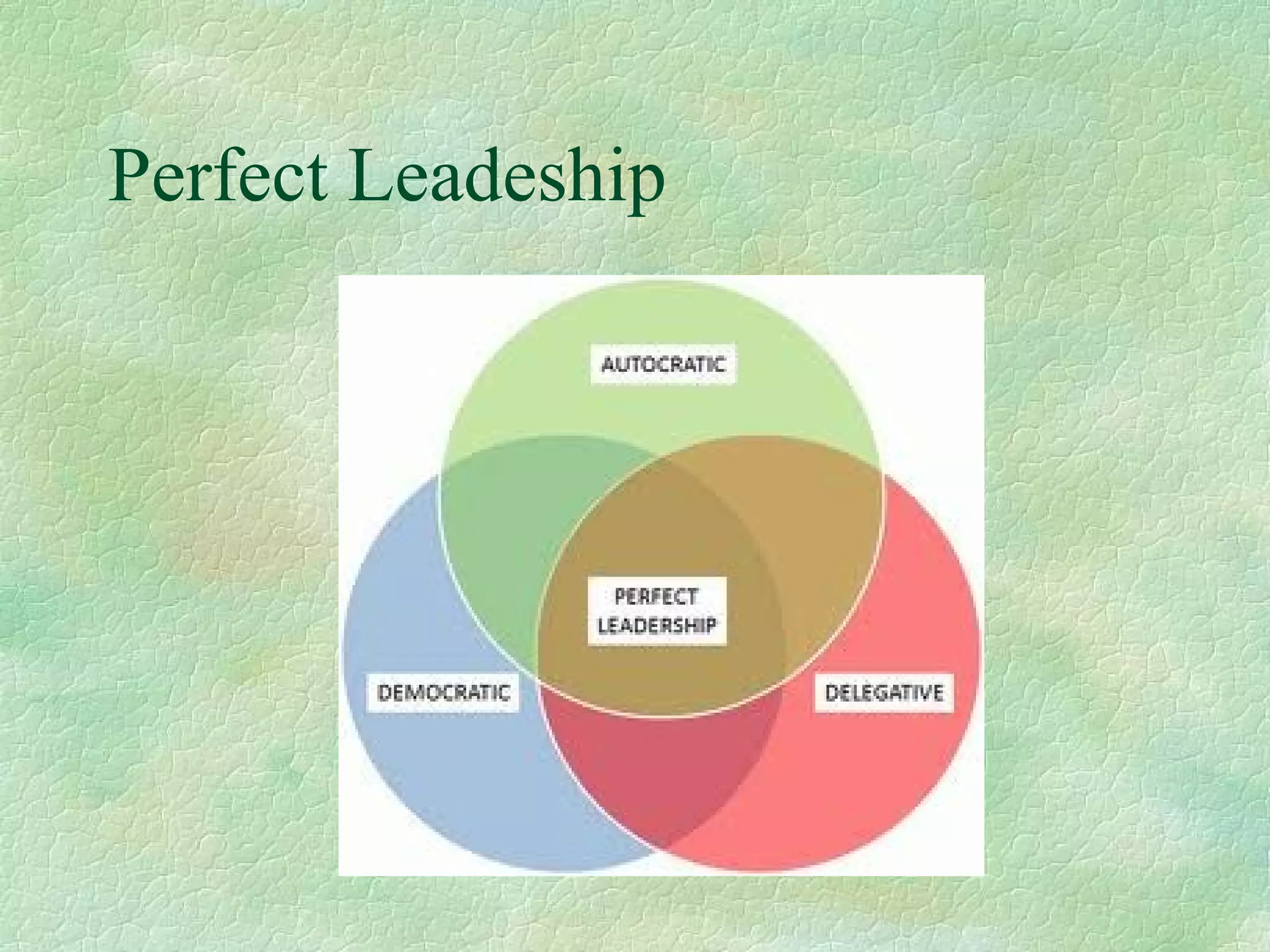
Leadership Styles Autocratic Democratic Delegative
Autocratic  Leadership Authoritarian  Tells employees/students what they want done and how to do it (without getting the advice from others). Works well if you don’t have much time to accomplish goals or if employees are well motivated. Generally, this style is not a good way to get the best performance from a team.
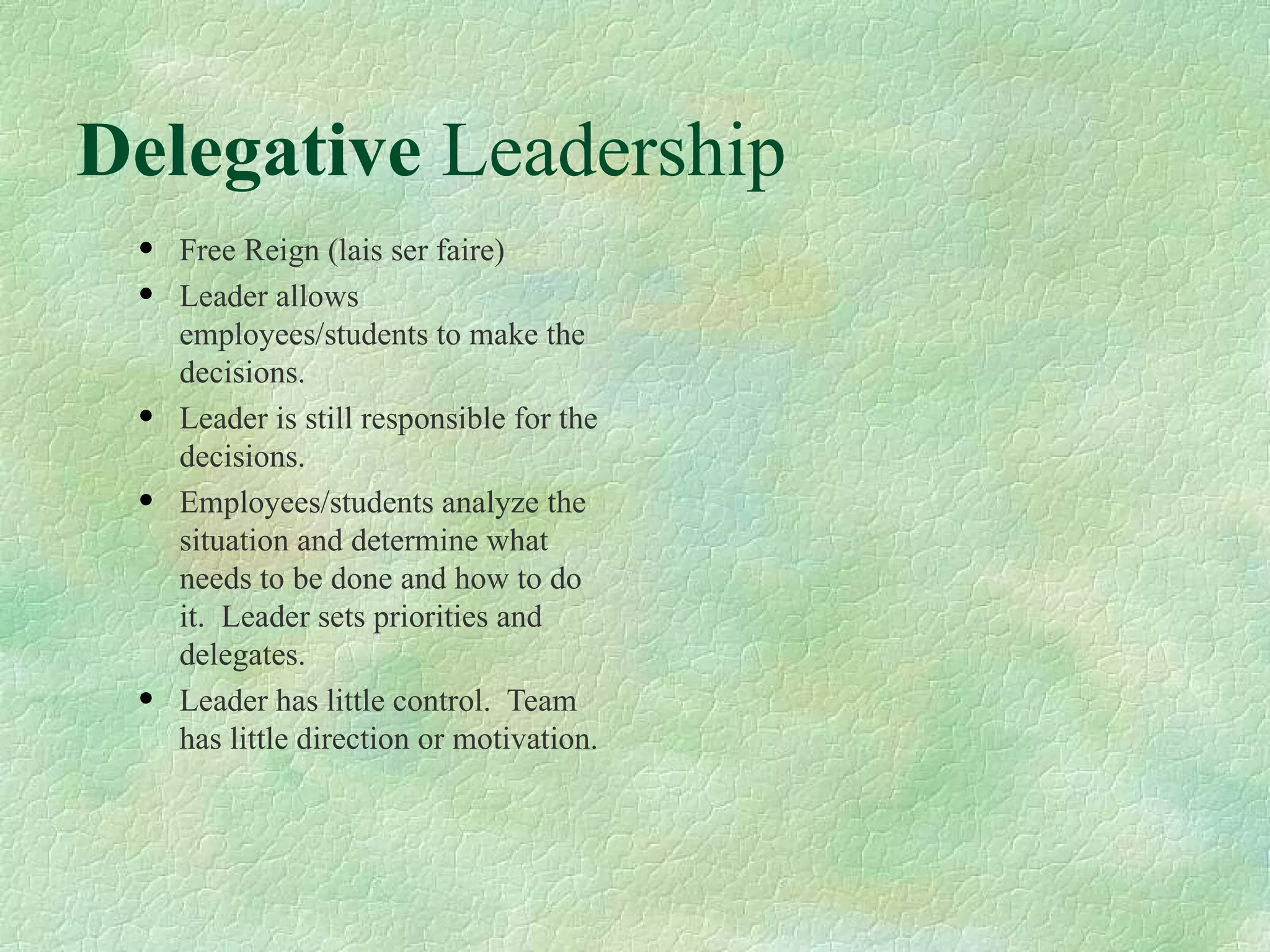
Delegative  Leadership  Free Reign (lais ser faire) Leader allows employees/students to make the decisions.  Leader is still responsible for the decisions. Employees/students analyze the situation and determine what needs to be done and how to do it.  Leader sets priorities and delegates. Leader has little control.  Team has little direction or motivation.
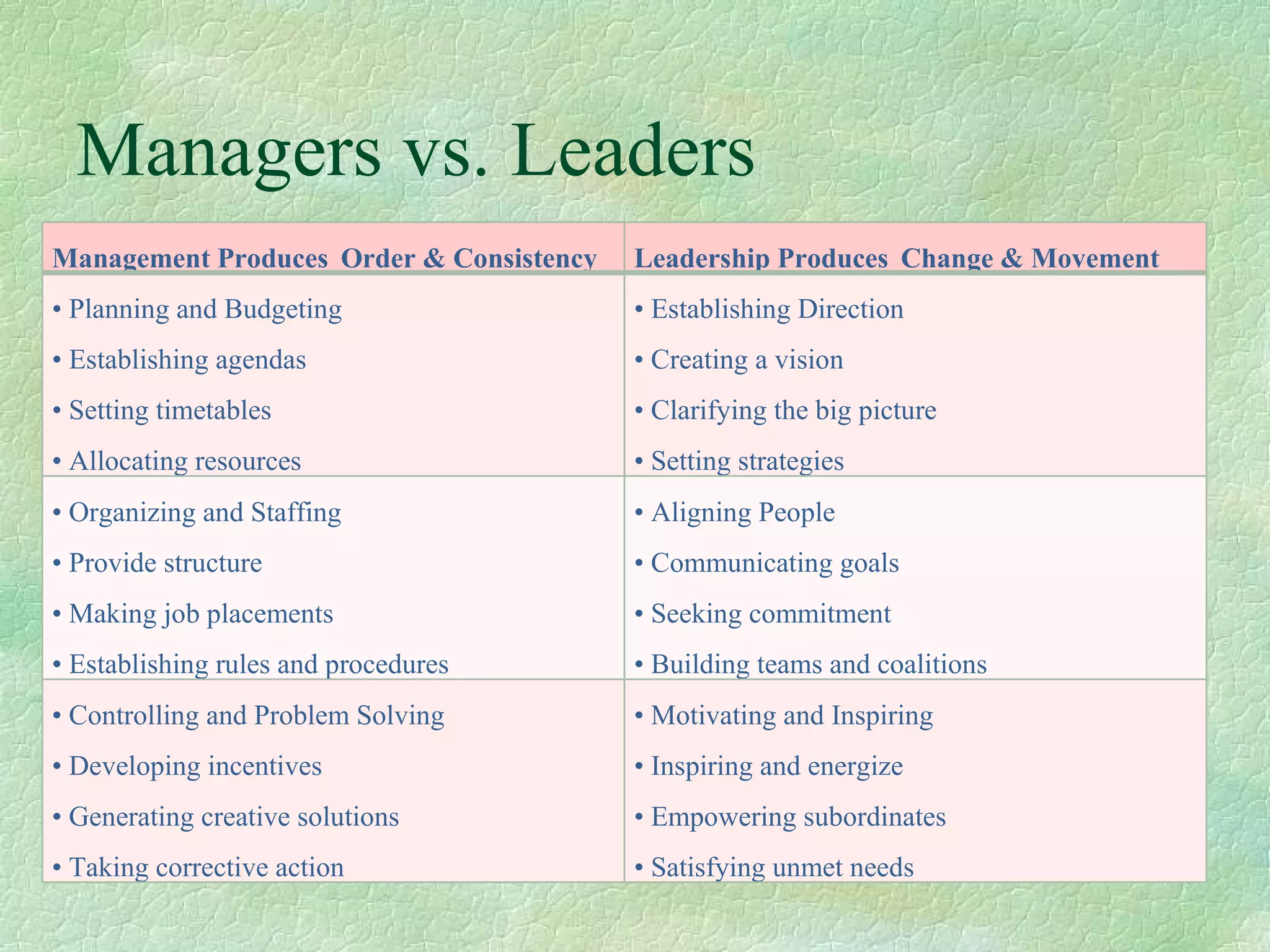
Managers vs. Leaders Management Produces  Order & Consistency Leadership Produces  Change & Movement •  Planning and Budgeting •  Establishing agendas •  Setting timetables •  Allocating resources •  Establishing Direction •  Creating a vision •  Clarifying the big picture •  Setting strategies •  Organizing and Staffing •  Provide structure •  Making job placements •  Establishing rules and procedures  •  Aligning People •  Communicating goals •  Seeking commitment •  Building teams and coalitions •  Controlling and Problem Solving •  Developing incentives •  Generating creative solutions •  Taking corrective action  •  Motivating and Inspiring •  Inspiring and energize •  Empowering subordinates •  Satisfying unmet needs
Leadership Goals Leadership style is the manner and approach of providing direction, implementing plans, and motivating people. Leaders vary their styles.  A leader is not strictly one or another style.  Most leaders use all three styles; one style, however, becomes the dominate one. Positive Leaders use rewards (independence, education) to motivate employees. Negative Leaders use penalties with employees.  These leaders act domineering and superior w/people.  Negative penalties include:  days off without pay, reprimanding in front of others, assigning unpleasant job tasks.
Factors Affecting Style Leadership style may be dependent  on various factors: Risk - decision making and change initiatives  based on degree of risk involved Type of business – creative business  or supply driven? How  important change is –  change for change’s sake? Organisational culture – may be long embedded  and difficult to change Nature of the task – needing cooperation? Direction? Structure?
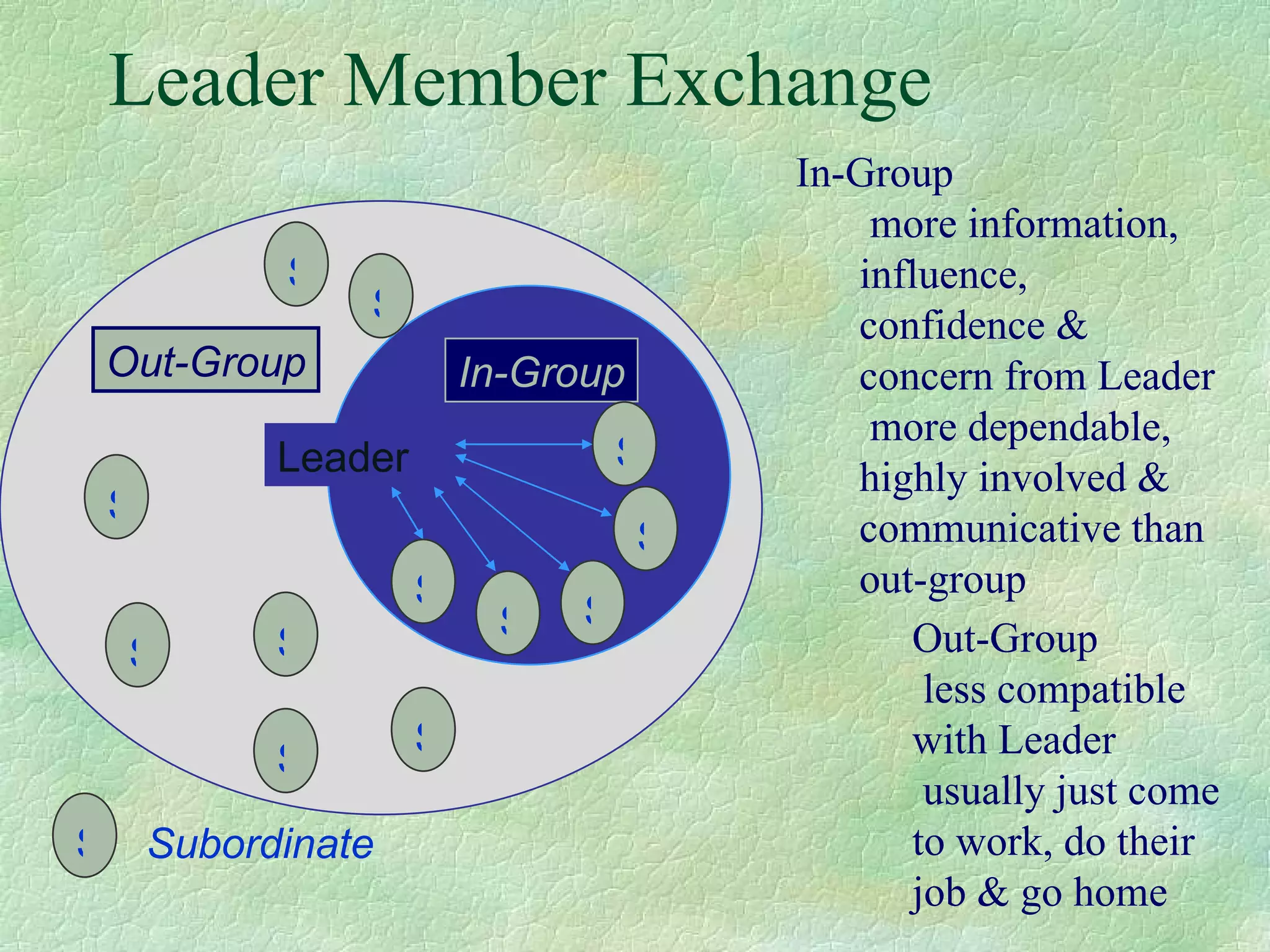
Leader Member Exchange In-Group Out-Group Leader In-Group  more information, influence, confidence & concern from Leader more dependable, highly involved & communicative than out-group Out-Group  less compatible with Leader usually just come to work, do their job & go home  S Subordinate S S S S S S S S S S S S
Perfect Leadeship
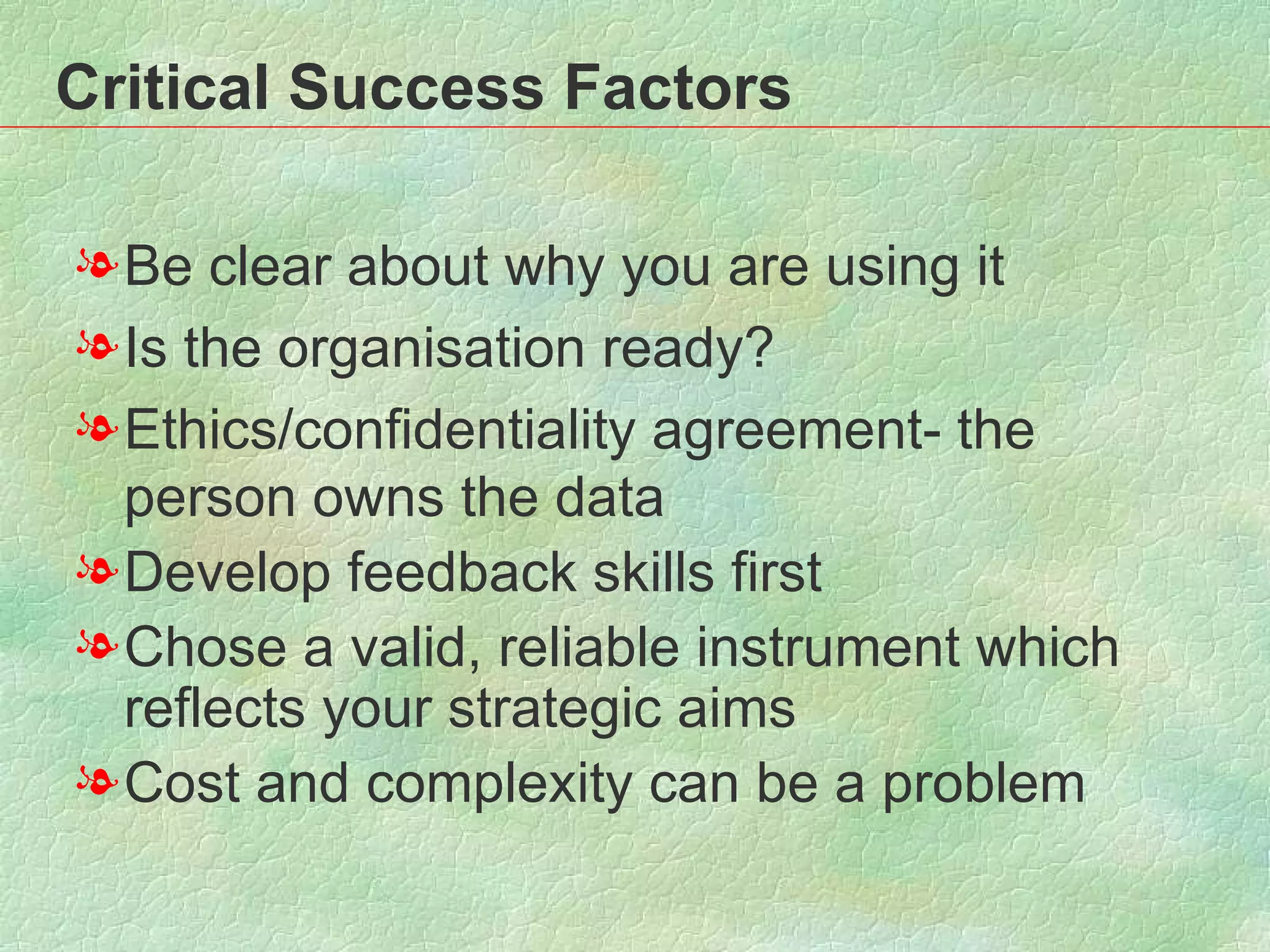
Critical Success Factors Be clear about why you are using it Is the organisation ready? Ethics/confidentiality agreement- the person owns the data Develop feedback skills first Chose a valid, reliable instrument which reflects your strategic aims  Cost and complexity can be a problem
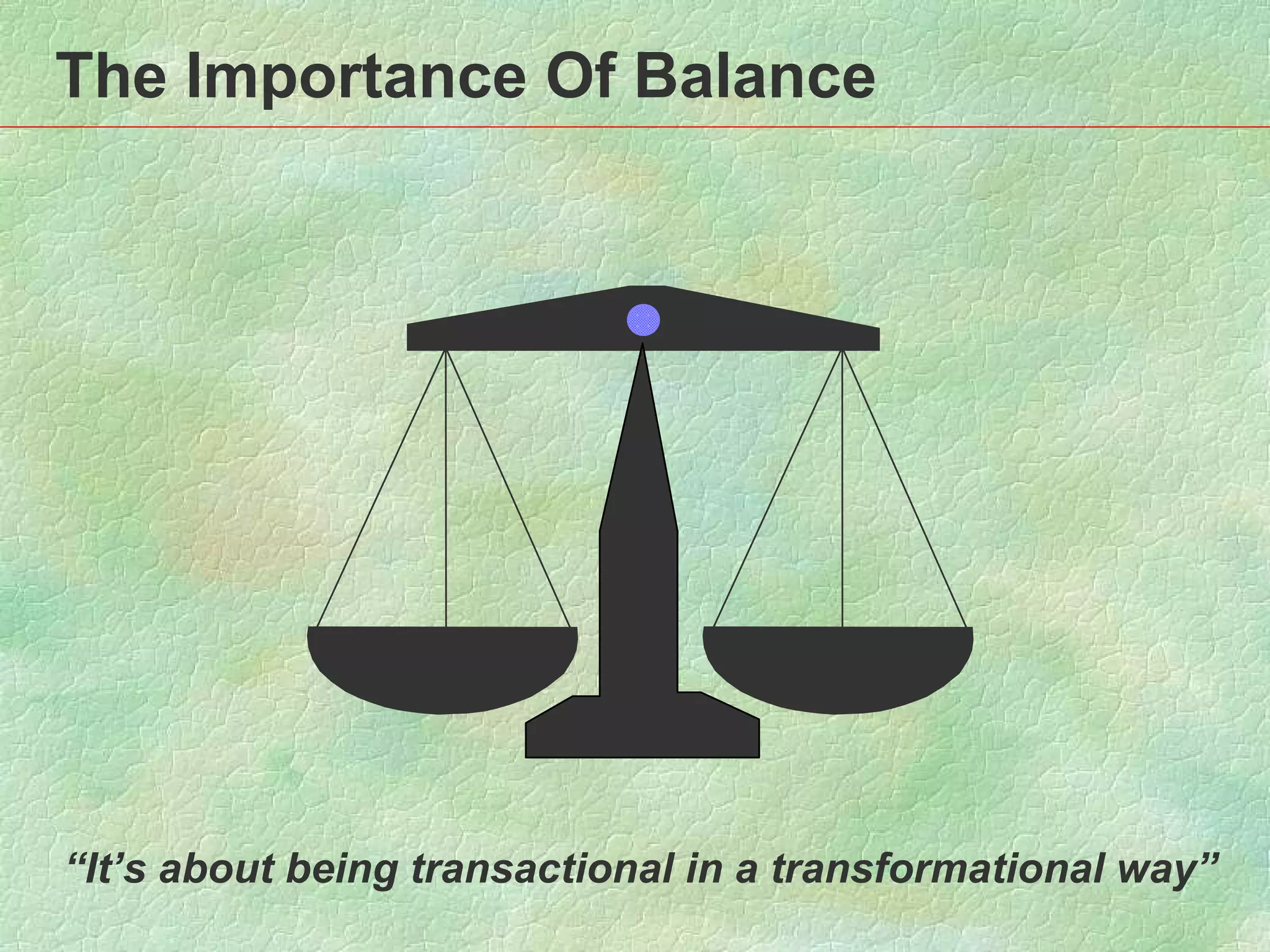
The Importance Of Balance “ It’s about being transactional in a transformational way”
Selected Leadership behaviors National Hospital Sri Lanka Lanka Hospital PLC
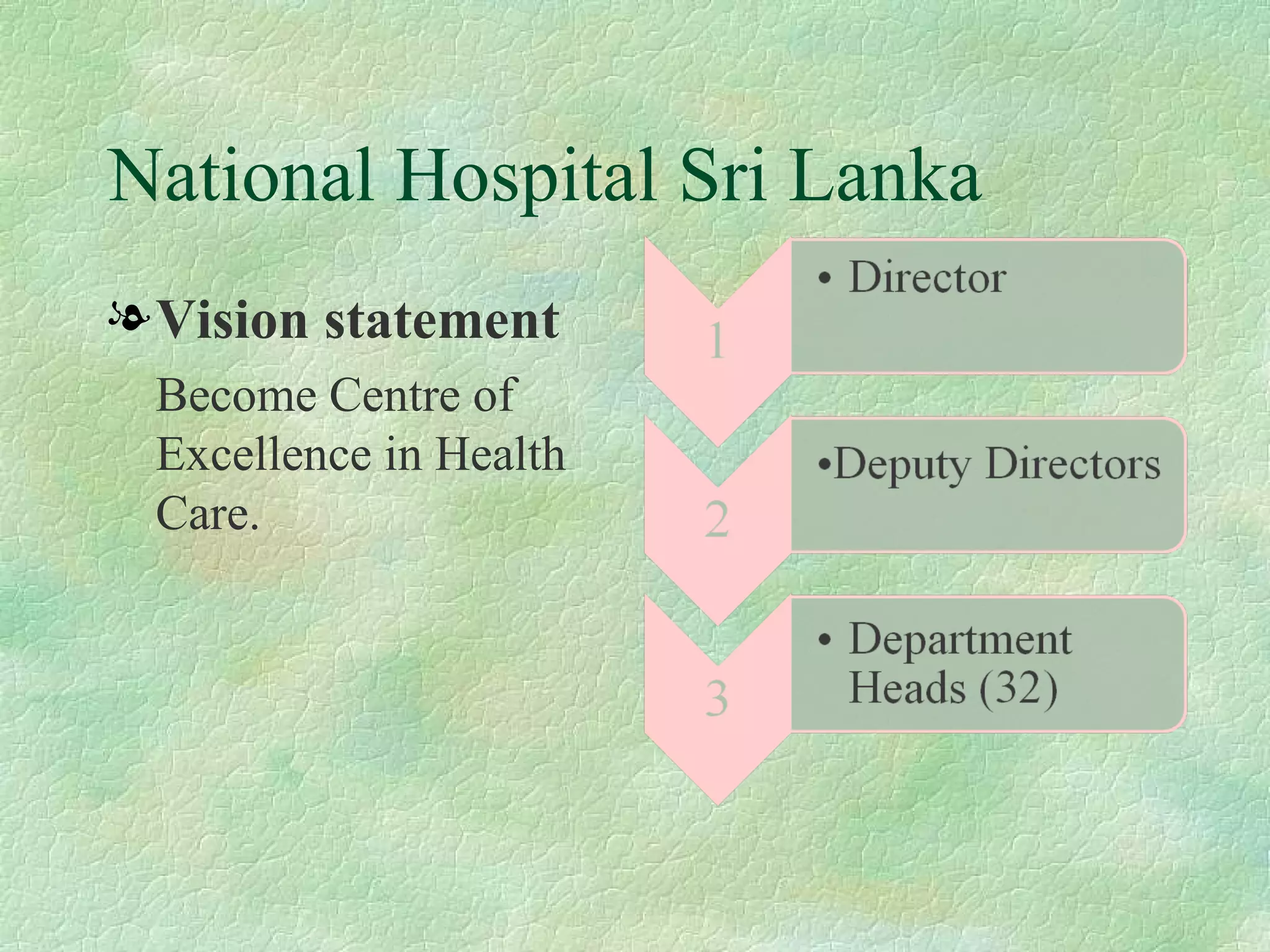
National Hospital Sri Lanka Vision statement Become Centre of Excellence in Health Care.   
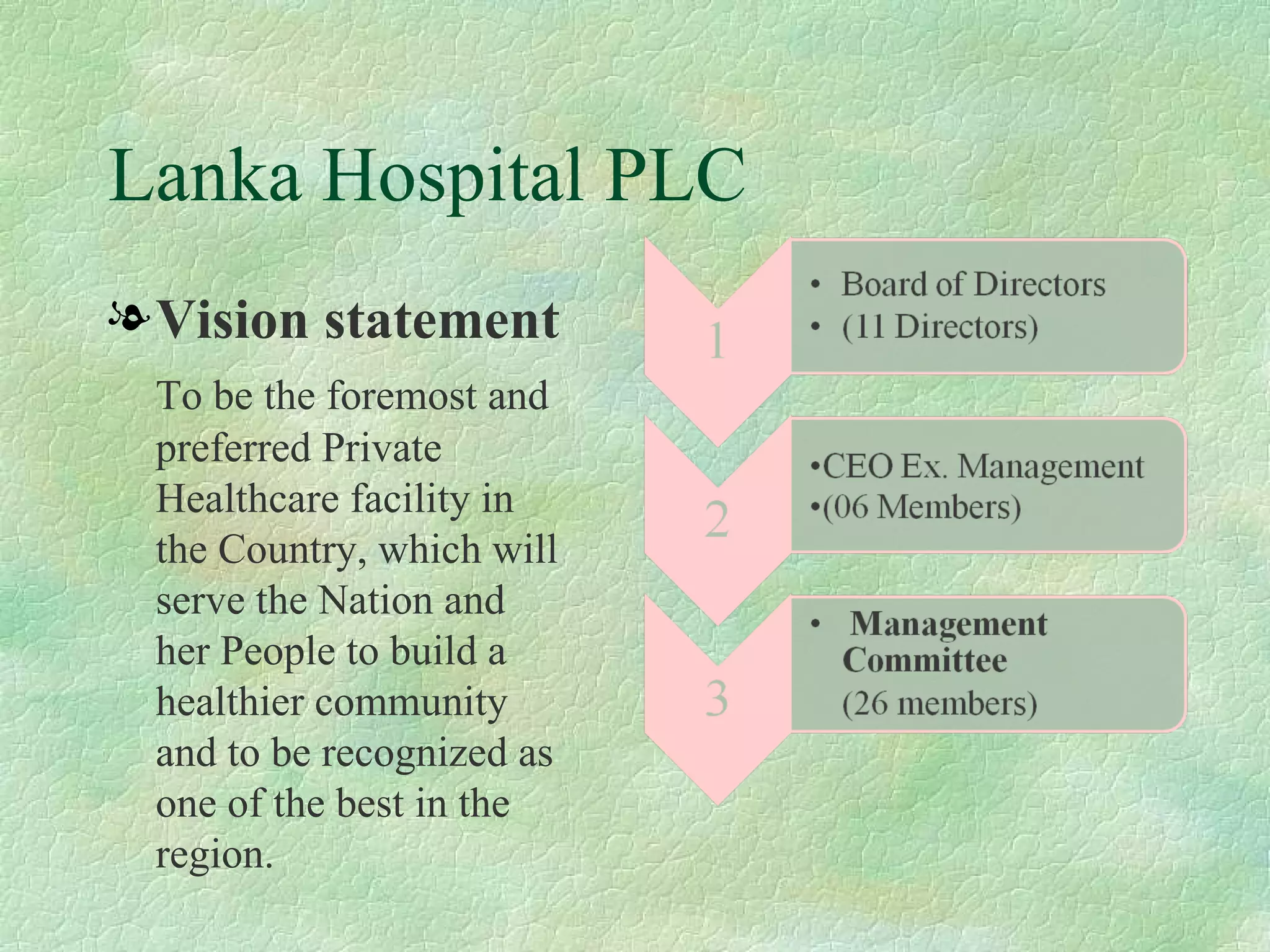
Lanka Hospital PLC Vision statement To be the foremost and preferred Private Healthcare facility in the Country, which will serve the Nation and her People to build a healthier community and to be recognized as one of the best in the region.
Analysis of the Characteristics  Decision Making Power Delegation Welfare Customer Relations
Data Receiving Managers  Managers Anzwer summery.docx Employers  employee answer summery.docx
Data Analysis Cordiality of the company Team work Concept vocational Influence Efficiency and Enthusiasm Hospitality
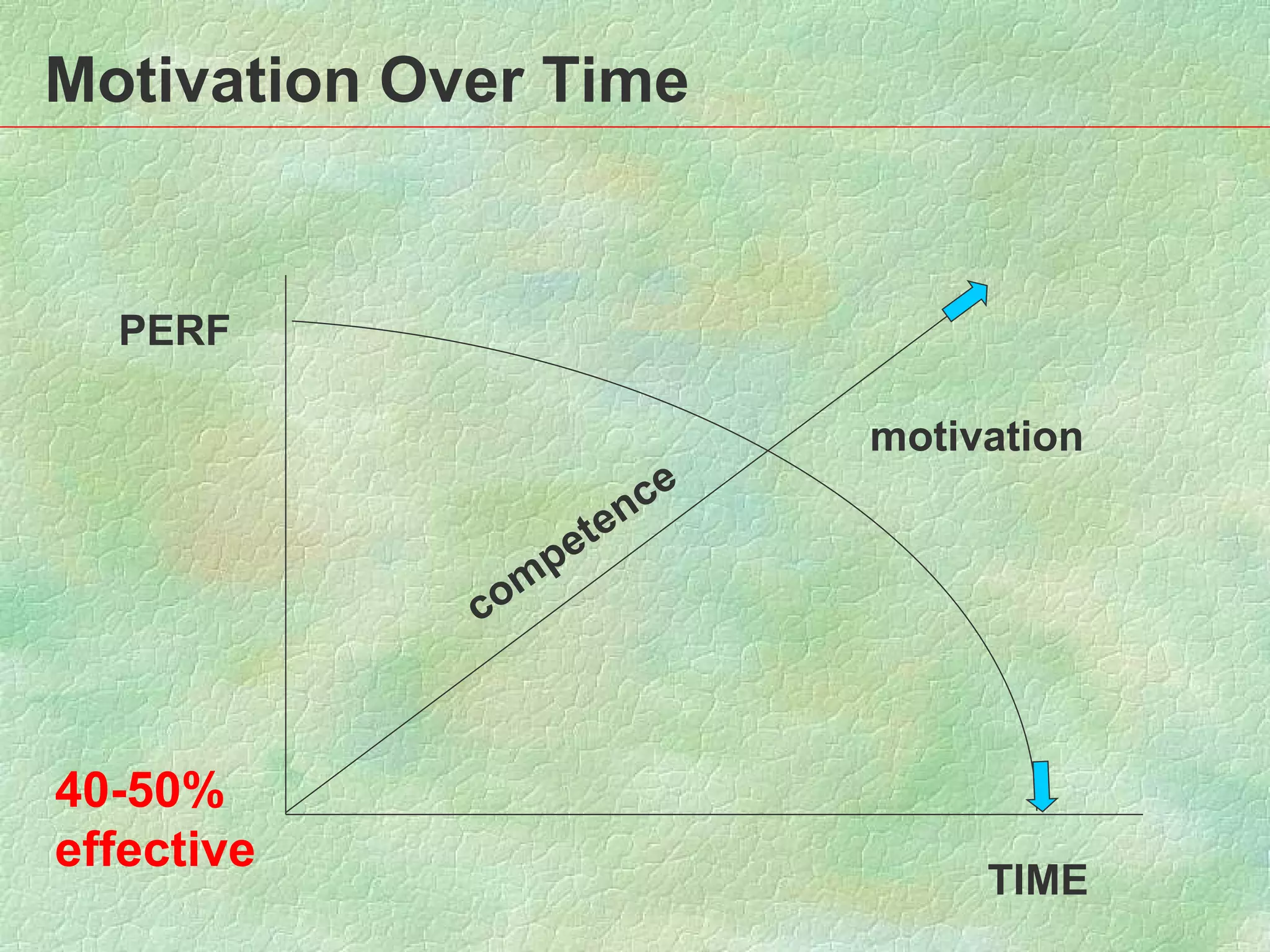
TIME PERF motivation competence Motivation Over Time 40-50% effective
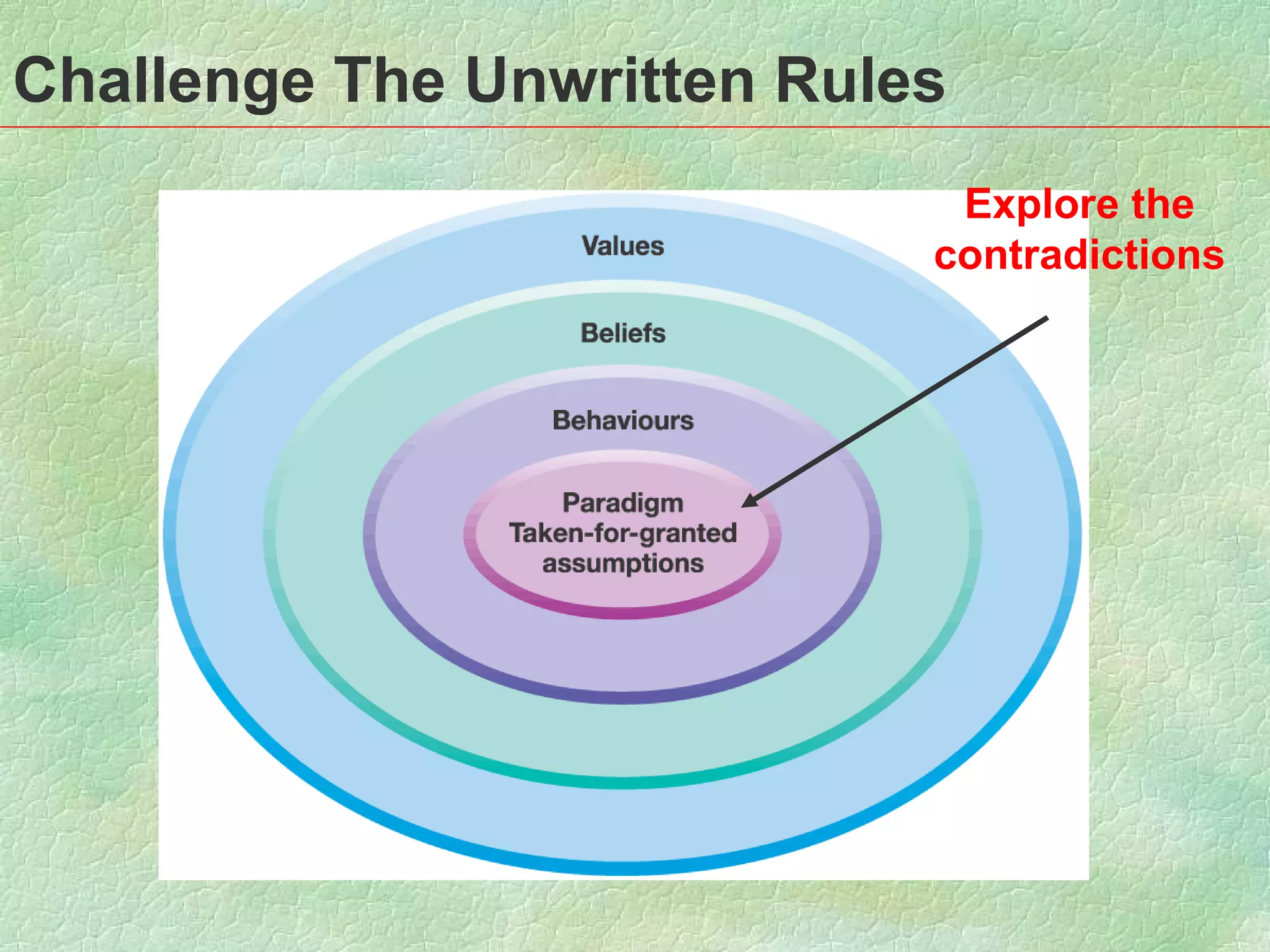
Challenge The Unwritten Rules Explore the contradictions
Conclusions
Recomendations
Thank You !

Ledership comparison

  • 1.
    Leadership Comparison RaviKumdesh Dip(MLT)/BSc(Mgt)/PG Dip(ExMgt)
  • 2.
    Group 9 Mr.Ravi Kumudesh (IHRA/ESmgt/01/30) Mr. Lalath Abeyagunawardana (IHRA/ESmgt/01/02) Mr. BJ Seneviratna(IHRA/ESmgt/01/60) Mr. W Pathum Waas(IHRA/ESmgt/64) Mr. MADS Dilruk(IHRA/EDSMgt/11)
  • 3.
    Overview Introduction Styles for Leading Best leadership style Selected Leadership behaviors Analysis of Characteristic futures Data Resaving Data Analysis Conclusions Recommendations
  • 4.
    What is aLeader? A Leader is someone in authority to lead others to accomplish a goal(s). A leader needs to be able to motivate others to accomplish a goal(s) while at the same time encourage others to work toward their own professional goals.
  • 5.
    Leadership Styles AutocraticDemocratic Delegative
  • 6.
    Autocratic LeadershipAuthoritarian Tells employees/students what they want done and how to do it (without getting the advice from others). Works well if you don’t have much time to accomplish goals or if employees are well motivated. Generally, this style is not a good way to get the best performance from a team.
  • 7.
    Delegative Leadership Free Reign (lais ser faire) Leader allows employees/students to make the decisions. Leader is still responsible for the decisions. Employees/students analyze the situation and determine what needs to be done and how to do it. Leader sets priorities and delegates. Leader has little control. Team has little direction or motivation.
  • 8.
    Managers vs. LeadersManagement Produces Order & Consistency Leadership Produces Change & Movement • Planning and Budgeting • Establishing agendas • Setting timetables • Allocating resources • Establishing Direction • Creating a vision • Clarifying the big picture • Setting strategies • Organizing and Staffing • Provide structure • Making job placements • Establishing rules and procedures • Aligning People • Communicating goals • Seeking commitment • Building teams and coalitions • Controlling and Problem Solving • Developing incentives • Generating creative solutions • Taking corrective action • Motivating and Inspiring • Inspiring and energize • Empowering subordinates • Satisfying unmet needs
  • 9.
    Leadership Goals Leadershipstyle is the manner and approach of providing direction, implementing plans, and motivating people. Leaders vary their styles. A leader is not strictly one or another style. Most leaders use all three styles; one style, however, becomes the dominate one. Positive Leaders use rewards (independence, education) to motivate employees. Negative Leaders use penalties with employees. These leaders act domineering and superior w/people. Negative penalties include: days off without pay, reprimanding in front of others, assigning unpleasant job tasks.
  • 10.
    Factors Affecting StyleLeadership style may be dependent on various factors: Risk - decision making and change initiatives based on degree of risk involved Type of business – creative business or supply driven? How important change is – change for change’s sake? Organisational culture – may be long embedded and difficult to change Nature of the task – needing cooperation? Direction? Structure?
  • 11.
    Leader Member ExchangeIn-Group Out-Group Leader In-Group more information, influence, confidence & concern from Leader more dependable, highly involved & communicative than out-group Out-Group less compatible with Leader usually just come to work, do their job & go home S Subordinate S S S S S S S S S S S S
  • 12.
  • 13.
    Critical Success FactorsBe clear about why you are using it Is the organisation ready? Ethics/confidentiality agreement- the person owns the data Develop feedback skills first Chose a valid, reliable instrument which reflects your strategic aims Cost and complexity can be a problem
  • 14.
    The Importance OfBalance “ It’s about being transactional in a transformational way”
  • 15.
    Selected Leadership behaviorsNational Hospital Sri Lanka Lanka Hospital PLC
  • 16.
    National Hospital SriLanka Vision statement Become Centre of Excellence in Health Care.  
  • 17.
    Lanka Hospital PLCVision statement To be the foremost and preferred Private Healthcare facility in the Country, which will serve the Nation and her People to build a healthier community and to be recognized as one of the best in the region.
  • 18.
    Analysis of theCharacteristics Decision Making Power Delegation Welfare Customer Relations
  • 19.
    Data Receiving Managers Managers Anzwer summery.docx Employers employee answer summery.docx
  • 20.
    Data Analysis Cordialityof the company Team work Concept vocational Influence Efficiency and Enthusiasm Hospitality
  • 21.
    TIME PERF motivationcompetence Motivation Over Time 40-50% effective
  • 22.
    Challenge The UnwrittenRules Explore the contradictions
  • 23.
  • 24.
  • 25.

Editor's Notes

  • #14 create a climate of openness and feedback
  • #15 Transactional is management, (the what) ;transformational is leadership (the how). Obviously we need both. Managers who take responsibility and manage and leaders who challenge the status quo and help set the new direction I worked for a manager once who was really dynamic and enthusiastic- couldn’t organise anything to save his life - used to leave a trail of chaos behind him, other people were left picking up the pieces . I worked for another one who was brilliant at managing data , producing reports but useless at dealing with people Tried really hard after we ran some training- almost like he had been programmed to ask “how are you?” Never listened to the answer!!! Its about being transactional in a transformational way, thinking in how can we go about this in a way that will help me get the best out of my staff
  • #22 The problem is that motivation levels change over time . When someone starts a new post they are only 40-50% effective for the first 6 months and that’s if it’s a familiar role . Once they become highly proficient motivation will wain if we don’t continue to give them challenging tasks. Eighteen months is usually the point at which they start looking for something else. The leaders role is to recognise that and intervene give them stretching projects Leadership is about saying how can I improve the way I interact with people to improve organisational performance Quick Q and A How good are you at valuing people in LES? How good are you at engaging people whose motivation might be dropping (due to quality of work rather than JE?) What do you need to do more of?