Hort-502 Commercial Fruit production 3(2-2)
Specific Objectives:
• To accustom students with production technology of major fruits of
Pakistan.
Theory: outline
• Classification of fruits
• Cultivation with reference to acreage
• Production
• Botany
• Cultivars
• Rootstocks
• Propagation
Theory: outline
• Climate
• Soil
• Cultural practices (water, nutrition, weeds, diseases, disorders and
pest management)
• Maturity
• Ripening
• Harvesting
• Quality assurance
• Marketing
Practical: outline
• Practices in fruit health management
• Pollination in commercial fruits
• Cost of production
• Description and identification of commercial cultivars of important
fruits
• Visit to research institutes and commercial orchards
Recommended Books
• Bali, S.S. 2003. Fruit Growing, Kalyani Publishers, New Delhi.
• Bose, T.K. and S.K. Mitra (Eds.). 1990. Fruits: Tropical and
Subtropical. Naya Prokash, Calcutta-Six.
• Mitra, S.K., D.S. Rathore, and T.K. Bose (Eds.). 1991. Temperate
Fruits. Horticulture and Allied Publishers, Calcutta.
• Barooh, S. 1998. Modern Fruit Culture. Kalyani Publishers, Ludhiana,
New Delhi, India.
Recommended Books
• Chottopadhay, T.K. (Ed.). 2006. A Textbook on Pomology, Vol: II. Tropical
Fruits. Kalyani Publishers, Ludhiana, New Delhi, India.
• Chottopadhay, T.K. (Ed.). 2009. A Textbook on Pomology, Vol: IV.
Temperate Fruits. Kalyani Publishers, Ludhiana, New Delhi, India.
• Yadav, P.K. 2007. Fruit Production Technology. International Book
Distributing Co. (Publishing Division), Lucknow, India.
• Jackson, D.I., N.E. Looney (Eds.). 1999. Temperate and Subtropical Fruit
Production (2nd Ed.). CAB International Publishing, Wallingford, U.K.
• Nakasone, H.Y. and R.E. Paull. 1998. Tropical Fruits. Crop Production
Science in Horticulture 7. CAB International Publishing, Wallingford, U.K.
• Salunkhe, D.K., S.S. Kadam. 1995. Handbook of Fruit Science: production,
composition, storage and processing. Marcel Dekker, Inc. New York
• Journals/Periodicals:
• Major journal and periodicals related with production technology of the fruits
• Scientia Horticulturae (Elseveir)
• Fruits (Cambridge)
• International Journal of Fruit Science (Taylor and Francis)
• Journal of American Society of Horticultural Sciences (ASHS)
• Acta Horticulture (ISHS)
• Worldwide Web:
• Important websites related to production technology of fruits
• http://fruitsandnuts.ucdavis.edu/ (University of California, USA)
• http://www.tfrec.wsu.edu/ (Washington State University, USA)
• http://fruit.cfans.umn.edu/ (University of Minnesota, USA)
• http://miami-dade.ifas.ufl.edu/agriculture/tropical_fruit.shtml (University of Florida, USA)
• Botanically referred to as “ripened ovary”
• ‘FRUIT’ Latin word which means ‘ENJOY”
• Commonly juicy, sweet and tart kind used
as dessert or snack
• Technically
• Fleshy tissue associated with ovary
• Produced by a perennial woody plant
• Exception ‘Strawberry’
1. Watermelon
2. Muskmelon
3. Tomato
A snack is a portion of food often smaller than a
regular meal, generally eaten between meals
A Dessert is a typically sweet course that concludes an
evening meal. The course usually consists of sweet
foods, but may include other items.
Classification of Fruit
On the basis of:
1. Structure (Systematic Pomology)
2. Usage
3. Temperature requirement/Climatic conditions
4. Response to ethylene
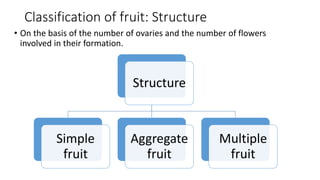
Classification of fruit: Structure
• On the basis of the number of ovaries and the number of flowers
involved in their formation.
Structure
Simple
fruit
Aggregate
fruit
Multiple
fruit
Types of fruit
• Simple fruit
• Derived from a single ovary e.g. Peach, Plum, mango
• Aggregate fruit
• Derived from a flower having many pistils on a common receptacle
e.g. Blackberry, Strawberry
• Multiple fruit
• Derived from separate but closely clustered flowers
e.g. Pineapple, fig, mulberry
Simple fruit
Fleshy fruit Dry fruit
1. Fleshy Fruits
• A fruit in which the wall becomes soft and fleshy as it matures.
Types of Fleshy Fruits
A. Drupe
B. Berry
C. Pome
• A one-seeded simple fruit developed from a superior
ovary having three distinct layers e.g. mango, peach,
plum
• Exocarp
• Mesocarp
• Endocarp
A. Drupe (Stone fruit/ True fruit)
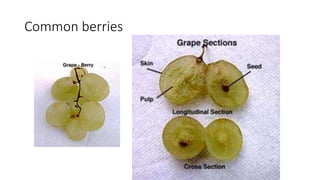
B. The Berry
• A fruit formed from a compound ovary with few to many
seeds. The entire pericarp is fleshy. (e.g. grape, banana,
gooseberry, kiwi)
• Two special types of
1. Hesperidium
2. Pepo
Common berries
Hesperidium
• This is a special type of
berry in which a leathery
rind forms containing oil
and locules filled with
fleshy outgrowths
containing juice
• the interior of the fruit
divided by septa,
indicating the number of
carpels.
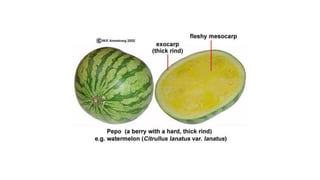
Pepo
• Berry with a relatively hard rind (watermelon, gourds,
squash).
C. Pome (False fruit)
• a pome (after the French name for an apple: pomme)
• Edible part is thalamus e.g. (Apple, pear, quince)
• Hypanthium: A cup-shaped structure surrounding the ovary
2. Dry Fruits
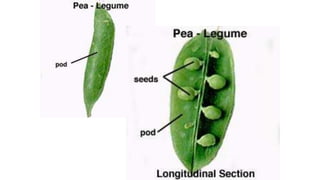
A. Dehiscent
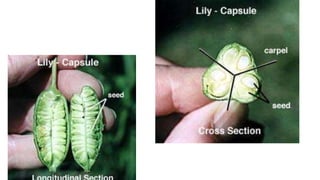
iii. Capsule
Cotton
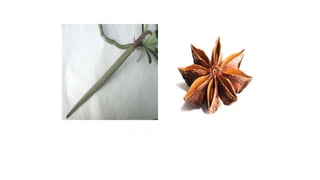
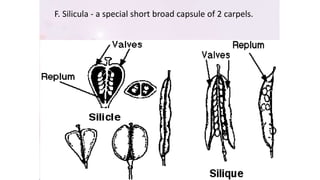
E. Silique - a special long slender capsule of 2 carpels.
F. Silicula - a special short broad capsule of 2 carpels.
Indehiscent fruits
• Dry fruits which do not open when mature to shed their seeds.
• Many of this group are one seeded fruits.
Types of Indehiscent Fruits:
a. Achene d. grain
b. Nut e. Schizocarp
c. Samara
Strawberry (Fragaria sp.)
Sunflower (Helianthus annuus)
Seed without wings and with thin fruit wall. One
seed attached to ovary wall at one point.
A. Achene
B. Nut
• A dry, indehiscent, one seeded fruit similar to an achene but with the
wall greatly thickened and hardened.
• (beech, chestnut, oak, hazel; walnut and hickory - note: because of
extrafloral bracts, or "husk", the latter two fruits are sometimes called
"drupes").
bur oak (Quercus macrocarpa).
C. Samara
• A one- or two-seeded dry, indehiscent fruit in which
part of the fruit wall grows out into a wing. (elm,
maple, ash).
• an achene with a wing for wind dispersal
Narra
D. Grain or Caryopsis
• one seed which has the seed coat fused to the pericarp
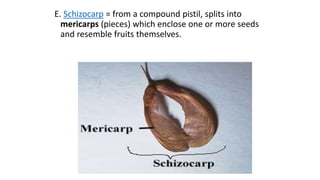
E. Schizocarp = from a compound pistil, splits into
mericarps (pieces) which enclose one or more seeds
and resemble fruits themselves.
Temperature requirement
• Tropical fruit
• a year-round summer-like growing season without freezing
temperatures. Examples include cocao, cashew, banana, mango, papaya,
and pineapple.
• Sub-tropical fruit
• cannot tolerate severe winter temperatures but need some winter
chilling. Examples include citrus, dates, figs, and olives.
• Temperate fruit
• require a cold winter season as well as a summer growing season
• adapted to survive temperatures considerably below freezing. Examples
include apples, cherries, peaches,
Plant characteristics
• Tree fruit
• The fruit produced on trees like peach, plum, mango etc
• Small fruit
• The fruit produced on shrubs (brambles) like blackberry, raspberry etc
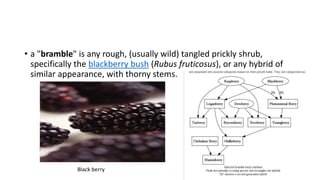
• a "bramble" is any rough, (usually wild) tangled prickly shrub,
specifically the blackberry bush (Rubus fruticosus), or any hybrid of
similar appearance, with thorny stems.
Black berry
Ripening/ response to ethylene
• Fruits can be divided into two groups according to the regulatory
mechanisms underlying their ripening process.
• Climacteric fruit,
• characterized by a ripening-associated increase in respiration and in
ethylene production, the ethylene being the major trigger and
coordinator of the ripening process. e.g. tomato, apple, pear, and melon
• Non-climacteric fruits,
• characterized by the lack of ethylene-associated respiratory peak and the
signaling pathways that drive the ripening process e.g. grape, orange and
pineapple
Webinar
• https://www.onlineseminar.nl/haifa-u/webinar/5961/optimizing-
color--appearance/

lecture1-160306104403 (1).pdf

  • 1.
    Hort-502 Commercial Fruitproduction 3(2-2)
  • 2.
    Specific Objectives: • Toaccustom students with production technology of major fruits of Pakistan.
  • 3.
    Theory: outline • Classificationof fruits • Cultivation with reference to acreage • Production • Botany • Cultivars • Rootstocks • Propagation
  • 4.
    Theory: outline • Climate •Soil • Cultural practices (water, nutrition, weeds, diseases, disorders and pest management) • Maturity • Ripening • Harvesting • Quality assurance • Marketing
  • 5.
    Practical: outline • Practicesin fruit health management • Pollination in commercial fruits • Cost of production • Description and identification of commercial cultivars of important fruits • Visit to research institutes and commercial orchards
  • 6.
    Recommended Books • Bali,S.S. 2003. Fruit Growing, Kalyani Publishers, New Delhi. • Bose, T.K. and S.K. Mitra (Eds.). 1990. Fruits: Tropical and Subtropical. Naya Prokash, Calcutta-Six. • Mitra, S.K., D.S. Rathore, and T.K. Bose (Eds.). 1991. Temperate Fruits. Horticulture and Allied Publishers, Calcutta. • Barooh, S. 1998. Modern Fruit Culture. Kalyani Publishers, Ludhiana, New Delhi, India.
  • 7.
    Recommended Books • Chottopadhay,T.K. (Ed.). 2006. A Textbook on Pomology, Vol: II. Tropical Fruits. Kalyani Publishers, Ludhiana, New Delhi, India. • Chottopadhay, T.K. (Ed.). 2009. A Textbook on Pomology, Vol: IV. Temperate Fruits. Kalyani Publishers, Ludhiana, New Delhi, India. • Yadav, P.K. 2007. Fruit Production Technology. International Book Distributing Co. (Publishing Division), Lucknow, India. • Jackson, D.I., N.E. Looney (Eds.). 1999. Temperate and Subtropical Fruit Production (2nd Ed.). CAB International Publishing, Wallingford, U.K. • Nakasone, H.Y. and R.E. Paull. 1998. Tropical Fruits. Crop Production Science in Horticulture 7. CAB International Publishing, Wallingford, U.K. • Salunkhe, D.K., S.S. Kadam. 1995. Handbook of Fruit Science: production, composition, storage and processing. Marcel Dekker, Inc. New York
  • 8.
    • Journals/Periodicals: • Majorjournal and periodicals related with production technology of the fruits • Scientia Horticulturae (Elseveir) • Fruits (Cambridge) • International Journal of Fruit Science (Taylor and Francis) • Journal of American Society of Horticultural Sciences (ASHS) • Acta Horticulture (ISHS) • Worldwide Web: • Important websites related to production technology of fruits • http://fruitsandnuts.ucdavis.edu/ (University of California, USA) • http://www.tfrec.wsu.edu/ (Washington State University, USA) • http://fruit.cfans.umn.edu/ (University of Minnesota, USA) • http://miami-dade.ifas.ufl.edu/agriculture/tropical_fruit.shtml (University of Florida, USA)
  • 9.
    • Botanically referredto as “ripened ovary” • ‘FRUIT’ Latin word which means ‘ENJOY” • Commonly juicy, sweet and tart kind used as dessert or snack • Technically • Fleshy tissue associated with ovary • Produced by a perennial woody plant • Exception ‘Strawberry’ 1. Watermelon 2. Muskmelon 3. Tomato A snack is a portion of food often smaller than a regular meal, generally eaten between meals A Dessert is a typically sweet course that concludes an evening meal. The course usually consists of sweet foods, but may include other items.
  • 10.
    Classification of Fruit Onthe basis of: 1. Structure (Systematic Pomology) 2. Usage 3. Temperature requirement/Climatic conditions 4. Response to ethylene
  • 11.
    Classification of fruit:Structure • On the basis of the number of ovaries and the number of flowers involved in their formation. Structure Simple fruit Aggregate fruit Multiple fruit
  • 12.
    Types of fruit •Simple fruit • Derived from a single ovary e.g. Peach, Plum, mango • Aggregate fruit • Derived from a flower having many pistils on a common receptacle e.g. Blackberry, Strawberry • Multiple fruit • Derived from separate but closely clustered flowers e.g. Pineapple, fig, mulberry
  • 14.
  • 15.
    1. Fleshy Fruits •A fruit in which the wall becomes soft and fleshy as it matures. Types of Fleshy Fruits A. Drupe B. Berry C. Pome
  • 16.
    • A one-seededsimple fruit developed from a superior ovary having three distinct layers e.g. mango, peach, plum • Exocarp • Mesocarp • Endocarp A. Drupe (Stone fruit/ True fruit)
  • 19.
    B. The Berry •A fruit formed from a compound ovary with few to many seeds. The entire pericarp is fleshy. (e.g. grape, banana, gooseberry, kiwi) • Two special types of 1. Hesperidium 2. Pepo
  • 20.
  • 22.
    Hesperidium • This isa special type of berry in which a leathery rind forms containing oil and locules filled with fleshy outgrowths containing juice • the interior of the fruit divided by septa, indicating the number of carpels.
  • 24.
    Pepo • Berry witha relatively hard rind (watermelon, gourds, squash).
  • 27.
    C. Pome (Falsefruit) • a pome (after the French name for an apple: pomme) • Edible part is thalamus e.g. (Apple, pear, quince) • Hypanthium: A cup-shaped structure surrounding the ovary
  • 28.
  • 29.
  • 34.
  • 36.
  • 37.
    E. Silique -a special long slender capsule of 2 carpels.
  • 38.
    F. Silicula -a special short broad capsule of 2 carpels.
  • 40.
    Indehiscent fruits • Dryfruits which do not open when mature to shed their seeds. • Many of this group are one seeded fruits. Types of Indehiscent Fruits: a. Achene d. grain b. Nut e. Schizocarp c. Samara
  • 41.
    Strawberry (Fragaria sp.) Sunflower(Helianthus annuus) Seed without wings and with thin fruit wall. One seed attached to ovary wall at one point. A. Achene
  • 43.
    B. Nut • Adry, indehiscent, one seeded fruit similar to an achene but with the wall greatly thickened and hardened. • (beech, chestnut, oak, hazel; walnut and hickory - note: because of extrafloral bracts, or "husk", the latter two fruits are sometimes called "drupes").
  • 44.
    bur oak (Quercusmacrocarpa).
  • 46.
    C. Samara • Aone- or two-seeded dry, indehiscent fruit in which part of the fruit wall grows out into a wing. (elm, maple, ash). • an achene with a wing for wind dispersal Narra
  • 48.
    D. Grain orCaryopsis • one seed which has the seed coat fused to the pericarp
  • 49.
    E. Schizocarp =from a compound pistil, splits into mericarps (pieces) which enclose one or more seeds and resemble fruits themselves.
  • 50.
    Temperature requirement • Tropicalfruit • a year-round summer-like growing season without freezing temperatures. Examples include cocao, cashew, banana, mango, papaya, and pineapple. • Sub-tropical fruit • cannot tolerate severe winter temperatures but need some winter chilling. Examples include citrus, dates, figs, and olives. • Temperate fruit • require a cold winter season as well as a summer growing season • adapted to survive temperatures considerably below freezing. Examples include apples, cherries, peaches,
  • 52.
    Plant characteristics • Treefruit • The fruit produced on trees like peach, plum, mango etc • Small fruit • The fruit produced on shrubs (brambles) like blackberry, raspberry etc
  • 53.
    • a "bramble"is any rough, (usually wild) tangled prickly shrub, specifically the blackberry bush (Rubus fruticosus), or any hybrid of similar appearance, with thorny stems. Black berry
  • 54.
    Ripening/ response toethylene • Fruits can be divided into two groups according to the regulatory mechanisms underlying their ripening process. • Climacteric fruit, • characterized by a ripening-associated increase in respiration and in ethylene production, the ethylene being the major trigger and coordinator of the ripening process. e.g. tomato, apple, pear, and melon • Non-climacteric fruits, • characterized by the lack of ethylene-associated respiratory peak and the signaling pathways that drive the ripening process e.g. grape, orange and pineapple
  • 56.