Eco-design principles: lecture notes
                                         Helsinki Summer School | 140809


Sustainable design principles | Design Factory| 140809
SUSTAINABLE DEVELOPMENT
    • People: social aspects and
      user needs in design,
                                                                            PROFIT
      manufacturing, use and
      recycling                                          PEOPLE
                                                                  SUSTAIN
    • Planet: considering the well-                               ABILITY
      being and continuity of
      environment
    • Profit: financial sustainability
                                                                      PLANET


Sustainable design principles | Design Factory| 140809
By whom?
       • Decisions made during product
         development have significant
         impact on material flows and
         behavioural patterns
       • Product development teams
         (particularly design-led) have a
         capability to synthesise and solve
         problems caused by often
         conflicting demands
       • Solutions require controlling large,
         complex problems; cannot be done
         alone


Sustainable design principles | Design Factory| 140809
Five demands for sustainable products
       Cyclic:
                  and/or
                                Product uses bio-based materials
                                materials suitable for recycling.                                    
       Renewable:      Manufacturing and use utilize
                       renewable sources of energy.                                                  
       Safe:                    Products are safe to use and
                  dispose.      Manufacturing and using products/
                       services does not produce toxic waste or
                                                                                                     
                       ecosystem disruption.
       Efficient:                The efficiency of manufacture and
                  use are significantly better than goods of
                                                                                                     ⅞
                       equivalent utility.
       Social:
                  not cause
                                Manufacture, use or disposal do
                                harm to physical, social or                                          
                  emotional well-          being of people affected
                                                         LÄHDE: http://www.biothinking.com/btintro.htm / The Total Beauty of Sustainable Products


Sustainable design principles | Design Factory| 140809
Five eco-design strategies
       Design for Longevity:                             Durable, easy to repair, timeless
       Design for Disposal:                                     Simple, renewable, fashionable

       Reduce:                                                        Optimize materials and
                          energy
       Re-use:                                                        Increase re-use potential
       Re-cycle:                                               Design for disassembly,
                          remanufac-
                                                               ture and material reclaiming


Sustainable design principles | Design Factory| 140809
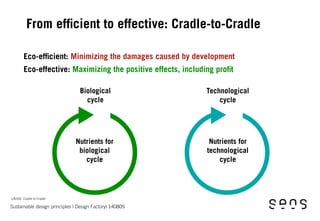
From efficient to effective: Cradle-to-Cradle

        Eco-efficient: Minimizing the damages caused by development
        Eco-effective: Maximizing the positive effects, including profit

                                Biological                    Technological
                                  cycle                           cycle


                              Nutrients for                     Nutrients for
                               biological                      technological
                                 cycle                             cycle


LÄHDE: Cradle to Cradle

Sustainable design principles | Design Factory| 140809
Complete
                                                     (Covers different processes and all phases of life
                                                                           cycle)

                                       Qualitative                                                   Life Cycle
                                       Matrix LCA                                                   Assessment


                                                                Pharos
               Subjective                                                                                         Objective
          (“Guesstimates,” not                                                                             (Repeatable measurements)
                repeatable)


                                           LiDS                                  Ecological
                                           wheel                                  Footprint

                                                                                                          MBDC
                                                      Total
                                                     Beauty
                                                                       Incomplete
       SOURCE: Okala Design Guide 2007 / IDSA
                                                   (Lacks impact categories, processes or life cycle
                                                                      phases)
Sustainable design principles | Design Factory| 140809
Why designers don’t do LCA

• Full-blown LCA can take 6 months
• Collecting environmental information
  throughout the product life cycle can
  be difficult
• Interpreting results is an art


Sustainable design principles | Design Factory| 140809
Single-figure LCA rides to rescue
E.g. Eco-99 and Okala account for
• Health hazards
• Ecosystem damages
• Resource depletion

Including:
• Materials usage
• Production processes
• Energy production
• Disposal/recycling

…rolling all these into single figure!

Sustainable design principles | Design Factory| 140809
What is light LCA good for?
Light LCA methods intended for early design phases
• Benchmarking
• Concept evaluation
• Rapid testing of assumptions
• Comparing different
  products, processes and
  industries

Lightweight methods
SHOULD NOT BE USED FOR
• Marketing
• Greenwashing
• Public announcements
Sustainable design principles | Design Factory| 140809
Basics of life cycle assessment


1. Define what the LCA is used for: comparing products, components,
   different product alternatives...
2. Define life cycle: draw a diagram of product’s life cycle
3. Define materials and processes; make assumptions where necessary
4. Gather information: make best estimates if data isn’t available
5. Interpret the results; REMEMBER THE STRESS TEST!


Sustainable design principles | Design Factory| 140809
Example case: life cycle of coffee cup
                          Detergents                             Pigments


                           Logistics                              Paints        Clay


                                                                                        Energy
     Water                                                             Manufacture
                                                                                       for oven

                                                      Use &            Packaging &
  Electricity
                                                     cleaning            logistics


                                                          Broken cup
                                     Waste water
                                                           disposal
Sustainable design principles | Design Factory| 140809
System description for coffee cup
Purpose:
• Hold coffee and prevent burns

System includes:
• All products and processes needed
  to keep the cup from becoming
  mouldy

Assumptions:
• Product lifetime 4 years
• Used once a day
• 30 cups in dishwasher


Sustainable design principles | Design Factory| 140809
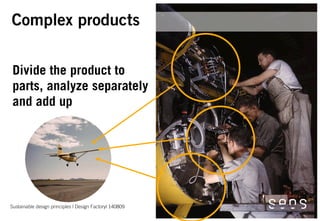
Complex products


 Divide the product to
 parts, analyze separately
 and add up


Sustainable design principles | Design Factory| 140809
If you’re stuck:
• Check whether missing data
  significantly affects the results
• Use known, similar indicators
• Calculate from e.g. energy
  use
• Get professional help


Sustainable design principles | Design Factory| 140809
Dealing with uncertainties
Uncertainties come from
• difference between models
  and real life; assumptions
  and preferences have an
  effect
• errors in data result to
  absolute and relative
  uncertainties


Sustainable design principles | Design Factory| 140809
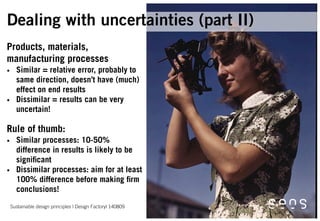
Dealing with uncertainties (part II)
Products, materials,
manufacturing processes
• Similar = relative error, probably to
  same direction, doesn’t have (much)
  effect on end results
• Dissimilar = results can be very
  uncertain!

Rule of thumb:
• Similar processes: 10-50%
  difference in results is likely to be
  significant
• Dissimilar processes: aim for at least
  100% difference before making firm
  conclusions!
 Sustainable design principles | Design Factory| 140809
RE-DESIGN EXERCISE!
Items: coffee maker and sofa
• You’ll compete against the other team
• The objective: suggest improvements to
  ecological and economical efficiency
• Prepare a 5-minute presentation

Some guidelines
• Start with LCA analysis
• Use Okala impact factors provided
• Make rough assumptions if needed
• Identify “low-hanging fruit”
• You can improve the product, but you can
  also improve the business model, service
  or some other factors
• Search for additional information where
  necessary
• Don’t waste anything, especially time!
    Sustainable design principles | Design Factory| 140809

Lecture Notes for Eco-design principles lecture

  • 1.
    Eco-design principles: lecturenotes Helsinki Summer School | 140809 Sustainable design principles | Design Factory| 140809
  • 2.
    SUSTAINABLE DEVELOPMENT • People: social aspects and user needs in design, PROFIT manufacturing, use and recycling PEOPLE SUSTAIN • Planet: considering the well- ABILITY being and continuity of environment • Profit: financial sustainability PLANET Sustainable design principles | Design Factory| 140809
  • 3.
    By whom? • Decisions made during product development have significant impact on material flows and behavioural patterns • Product development teams (particularly design-led) have a capability to synthesise and solve problems caused by often conflicting demands • Solutions require controlling large, complex problems; cannot be done alone Sustainable design principles | Design Factory| 140809
  • 4.
    Five demands forsustainable products Cyclic: and/or Product uses bio-based materials materials suitable for recycling.  Renewable: Manufacturing and use utilize renewable sources of energy.  Safe: Products are safe to use and dispose. Manufacturing and using products/ services does not produce toxic waste or  ecosystem disruption. Efficient: The efficiency of manufacture and use are significantly better than goods of ⅞ equivalent utility. Social: not cause Manufacture, use or disposal do harm to physical, social or  emotional well- being of people affected LÄHDE: http://www.biothinking.com/btintro.htm / The Total Beauty of Sustainable Products Sustainable design principles | Design Factory| 140809
  • 5.
    Five eco-design strategies Design for Longevity: Durable, easy to repair, timeless Design for Disposal: Simple, renewable, fashionable Reduce: Optimize materials and energy Re-use: Increase re-use potential Re-cycle: Design for disassembly, remanufac- ture and material reclaiming Sustainable design principles | Design Factory| 140809
  • 6.
    From efficient toeffective: Cradle-to-Cradle Eco-efficient: Minimizing the damages caused by development Eco-effective: Maximizing the positive effects, including profit Biological Technological cycle cycle Nutrients for Nutrients for biological technological cycle cycle LÄHDE: Cradle to Cradle Sustainable design principles | Design Factory| 140809
  • 7.
    Complete (Covers different processes and all phases of life cycle) Qualitative Life Cycle Matrix LCA Assessment Pharos Subjective Objective (“Guesstimates,” not (Repeatable measurements) repeatable) LiDS Ecological wheel Footprint MBDC Total Beauty Incomplete SOURCE: Okala Design Guide 2007 / IDSA (Lacks impact categories, processes or life cycle phases) Sustainable design principles | Design Factory| 140809
  • 8.
    Why designers don’tdo LCA • Full-blown LCA can take 6 months • Collecting environmental information throughout the product life cycle can be difficult • Interpreting results is an art Sustainable design principles | Design Factory| 140809
  • 9.
    Single-figure LCA ridesto rescue E.g. Eco-99 and Okala account for • Health hazards • Ecosystem damages • Resource depletion Including: • Materials usage • Production processes • Energy production • Disposal/recycling …rolling all these into single figure! Sustainable design principles | Design Factory| 140809
  • 10.
    What is lightLCA good for? Light LCA methods intended for early design phases • Benchmarking • Concept evaluation • Rapid testing of assumptions • Comparing different products, processes and industries Lightweight methods SHOULD NOT BE USED FOR • Marketing • Greenwashing • Public announcements Sustainable design principles | Design Factory| 140809
  • 11.
    Basics of lifecycle assessment 1. Define what the LCA is used for: comparing products, components, different product alternatives... 2. Define life cycle: draw a diagram of product’s life cycle 3. Define materials and processes; make assumptions where necessary 4. Gather information: make best estimates if data isn’t available 5. Interpret the results; REMEMBER THE STRESS TEST! Sustainable design principles | Design Factory| 140809
  • 12.
    Example case: lifecycle of coffee cup Detergents Pigments Logistics Paints Clay Energy Water Manufacture for oven Use & Packaging & Electricity cleaning logistics Broken cup Waste water disposal Sustainable design principles | Design Factory| 140809
  • 13.
    System description forcoffee cup Purpose: • Hold coffee and prevent burns System includes: • All products and processes needed to keep the cup from becoming mouldy Assumptions: • Product lifetime 4 years • Used once a day • 30 cups in dishwasher Sustainable design principles | Design Factory| 140809
  • 14.
    Complex products Dividethe product to parts, analyze separately and add up Sustainable design principles | Design Factory| 140809
  • 15.
    If you’re stuck: •Check whether missing data significantly affects the results • Use known, similar indicators • Calculate from e.g. energy use • Get professional help Sustainable design principles | Design Factory| 140809
  • 16.
    Dealing with uncertainties Uncertaintiescome from • difference between models and real life; assumptions and preferences have an effect • errors in data result to absolute and relative uncertainties Sustainable design principles | Design Factory| 140809
  • 17.
    Dealing with uncertainties(part II) Products, materials, manufacturing processes • Similar = relative error, probably to same direction, doesn’t have (much) effect on end results • Dissimilar = results can be very uncertain! Rule of thumb: • Similar processes: 10-50% difference in results is likely to be significant • Dissimilar processes: aim for at least 100% difference before making firm conclusions! Sustainable design principles | Design Factory| 140809
  • 18.
    RE-DESIGN EXERCISE! Items: coffeemaker and sofa • You’ll compete against the other team • The objective: suggest improvements to ecological and economical efficiency • Prepare a 5-minute presentation Some guidelines • Start with LCA analysis • Use Okala impact factors provided • Make rough assumptions if needed • Identify “low-hanging fruit” • You can improve the product, but you can also improve the business model, service or some other factors • Search for additional information where necessary • Don’t waste anything, especially time! Sustainable design principles | Design Factory| 140809