Perception
Lecture 3.3
University of Alberta
ALES 204
Nancy Bray
iClicker set up

 iClicker - set frequency

 1. Press and hold power button until blue light flashes

 2. Click C then click A

 3. Green light will flash, blue light will stay on


                                                           2
Housekeeping
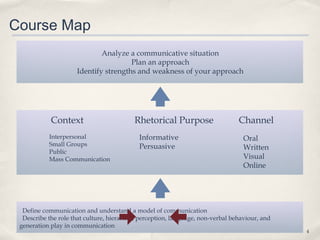
Course Map
                             Analyze a communicative situation
                                      Plan an approach
                     Identify strengths and weakness of your approach


            Context                       Rhetorical Purpose                    Channel
           Interpersonal                    Informative                           Oral
           Small Groups                     Persuasive                            Written
           Public
           Mass Communication                                                     Visual
                                                                                  Online


  Define communication and understand a model of communication
  Describe the role that culture, hierarchy, perception, language, non-verbal behaviour, and
 generation play in communication
                                                                                               4
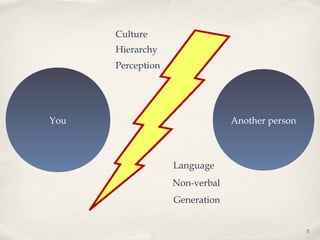
Culture
      Hierarchy
      Perception


You                             Another person


                   Language
                   Non-verbal
                   Generation


                                                 5
Lecture Outline

1. What is perception?

2. How do we perceive ourselves?

3. How do we perceive others?

4. The dark side...
1. What is perception?
Perception
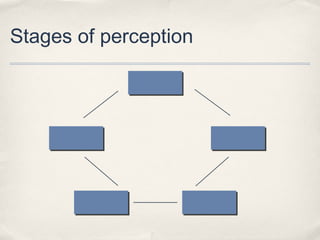
Stages of perception
Example
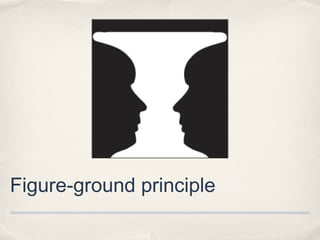
Figure-ground principle
Perceptual
schemata
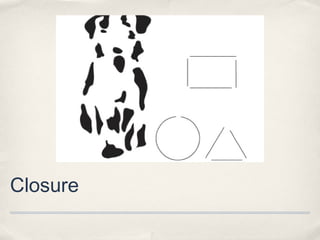
Closure
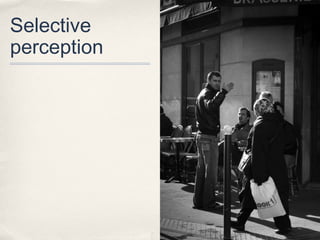
Selective
perception
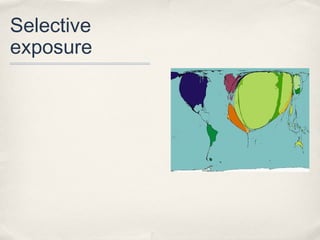
Selective
exposure
Selective
attention
Selective
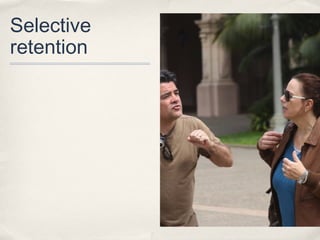
retention
Memory influences
perception
Memories are
fallible
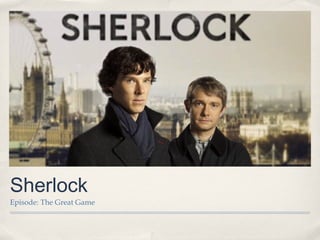
Sherlock
Episode: The Great Game
2. How do we perceive
ourselves?
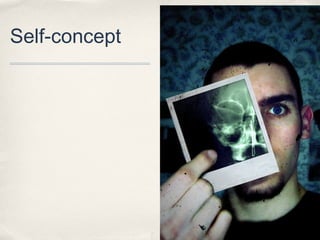
Self-concept
Anger Management
Who are You?
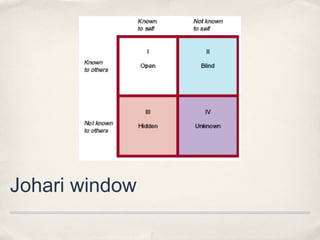
Johari window
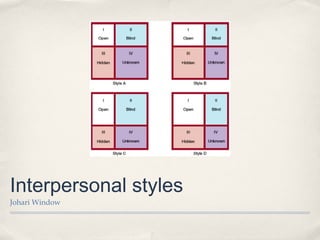
Interpersonal styles
Johari Window
Johari window exercise (if time)

 In pairs and groups of threes

 Think of some hypothetical situations which illustrate each of the
 four areas of the Johari window: open, blind, hidden, and unknown.

 Example: an employee who believes that he is worthy of promotion,
 but is blind to the fact that he is not well-regarded in the office.
3. How do we perceive others?
First
impressions
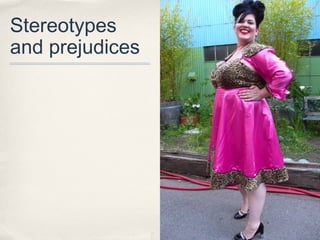
Stereotypes
and prejudices
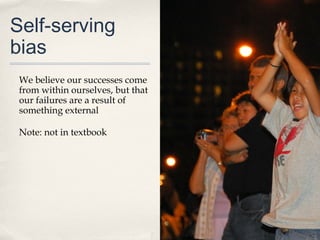
Self-serving
bias
 We believe our successes come
 from within ourselves, but that
 our failures are a result of
 something external

 Note: not in textbook
Allness
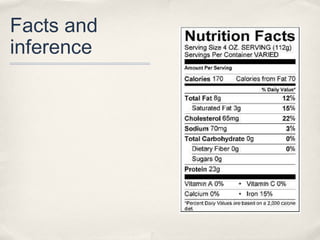
Facts and
inference
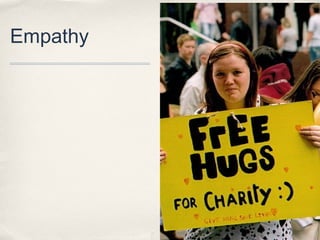
Empathy
4. The dark side...
Keith Barry - brain hacker
http://www.ted.com/talks/keith_barry_does_brain_magic.html
Can you explain...

 How do these tricks work? Can you explain them based on what we
 have learned about perception?
Take Away

Know the stages of perception
Mechanisms of perception
(figure-ground, schemata,
closure)
Perception is selective - know
the 4 ways
Know the Johari window
Know what affects our
perceptions of others
Chapter 3 in the textbook
Photo Credits
smelling the rose by Twistiti
Christopher by KrisnFred
Memory box by Kaptain Kobold
fading memory by --hap
Sherlock from BBC2 site
Self concept by Andrew Mason
Doorbell by Ivy Dawned
femme fashion by Jasper Gregory
young girl cheering by tinou bao
professor from tulane university
nutritional facts by USDAgov
free hugs by Mwezibou
Keith Barry photo from his web site
Anger Management poster from film web site
couple fighting by Leigh Myers
focus by kevin dooley
rudeparisian by gdudg
scream by David Salafia
the news about the news by Alisa Miller

Lecture 3.3 perception student notes

Editor's Notes

  • #21 18:05
  • #23 - partly subjective. There are factual elements to your self-concept. For instance, you live in Edmonton and you are students at the U of A - but it is also highly subjective. Study conducted in the US. One million high school students. Every single student rated their ability to get along with others as above average. Mathematically impossible result. - Multifaceted - lead into the Johari window
  • #25 Open area - area known to you and another Blind area - information about you that others, but not you, are aware of Hidden - your hidden self. Known to you but not shared with others Self-disclosure happens when you move something from the hidden area into the open area Unknown - Neither you nor others are aware of it
  • #26 - a consistent and preferred way of interacting
  • #36 From 2:28 to 4:58