


ATMOSPHERE, CLIMATE, AND ORGANISMS
Dr. B. H. Lower, Ph.D.
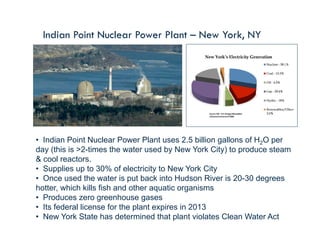
Indian Point Nuclear Power Plant – New York, NY


• Indian Point Nuclear Power Plant uses 2.5 billion gallons of H2O per
day (this is >2-times the water used by New York City) to produce steam
& cool reactors.
• Supplies up to 30% of electricity to New York City
• Once used the water is put back into Hudson River is 20-30 degrees
hotter, which kills fish and other aquatic organisms
• Produces zero greenhouse gases
• Its federal license for the plant expires in 2013
• New York State has determined that plant violates Clean Water Act
Bioremediation of Nuclear Waste – OSU Research:
     http://www.dispatch.com/live/content/science/stories/2009/04/05/
     sci_toxbacteria.ART_ART_04-05-09_G3_QKDEBCE.html?sid=101

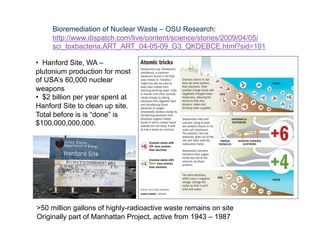
• Hanford Site, WA –
plutonium production for most
of USA’s 60,000 nuclear
weapons
• $2 billion per year spent at
Hanford Site to clean up site.
Total before is is “done” is
$100,000,000,000.


>50 million gallons of highly-radioactive waste remains on site
Originally part of Manhattan Project, active from 1943 – 1987
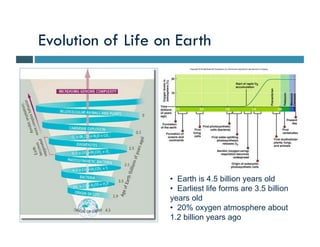
Evolution of Life on Earth


                   • Earth is 4.5 billion years old
                   • Earliest life forms are 3.5 billion
                   years old
                   • 20% oxygen atmosphere about
                   1.2 billion years ago
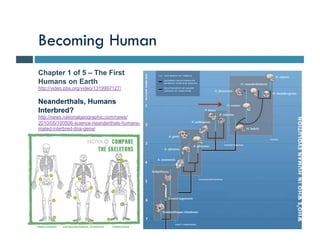
Becoming Human
Chapter 1 of 5 – The First
Humans on Earth
http://video.pbs.org/video/1319997127/

Neanderthals, Humans
Interbred?
http://news.nationalgeographic.com/news/
2010/05/100506-science-neanderthals-humans-
mated-interbred-dna-gene/
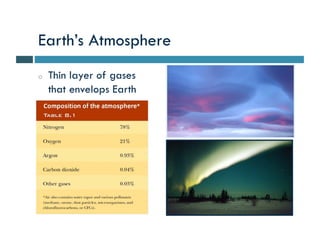
Earth’s Atmosphere
o   Thin layer of gases
    that envelops Earth
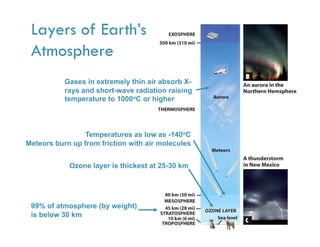
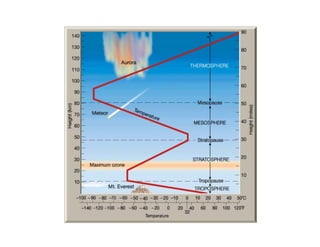
Layers of Earth’s
 Atmosphere
           Gases in extremely thin air absorb X-
           rays and short-wave radiation raising
           temperature to 1000oC or higher


                Temperatures as low as -140oC
Meteors burn up from friction with air molecules


            Ozone layer is thickest at 25-30 km


 99% of atmosphere (by weight)
 is below 30 km
Video, ozone hole over Antarctica:
http://video.nationalgeographic.com/video/player/news/environment-news/
antarctica-ozone-vin.html
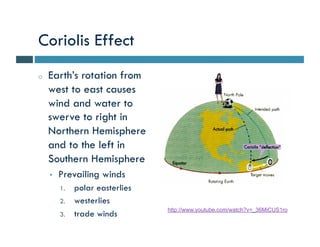
Coriolis Effect
o   Earth’s rotation from
    west to east causes
    wind and water to
    swerve to right in
    Northern Hemisphere
    and to the left in
    Southern Hemisphere
    •   Prevailing winds
        1.   polar easterlies
        2.   westerlies
                                http://www.youtube.com/watch?v=_36MiCUS1ro
        3.   trade winds
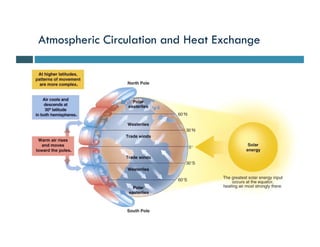
Atmospheric Circulation and Heat Exchange
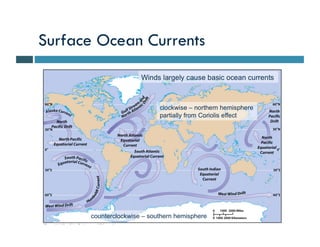
Surface Ocean Currents
                      Winds largely cause basic ocean currents


                            clockwise – northern hemisphere
                            partially from Coriolis effect


      counterclockwise – southern hemisphere
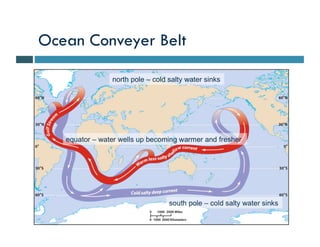
Ocean Conveyer Belt

                north pole – cold salty water sinks


   equator – water wells up becoming warmer and fresher


                                  south pole – cold salty water sinks
El Nino Video:
http://video.google.com/videosearch?client=safari&rls=en-us&q=Saturday%20Night
%20Live%20El%20Nino%20Chris
%20Farley&oe=UTF-8&um=1&ie=UTF-8&sa=N&hl=en&tab=wv#
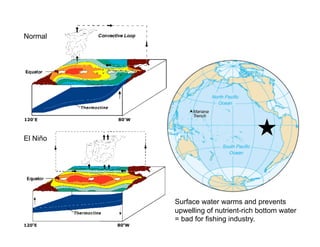
Normal


El Niño


          Surface water warms and prevents
          upwelling of nutrient-rich bottom water
          = bad for fishing industry.
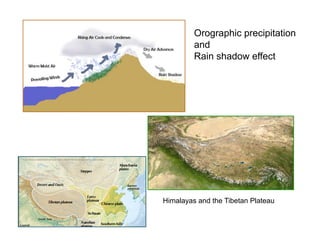
Orographic precipitation
         and
         Rain shadow effect


Himalayas and the Tibetan Plateau
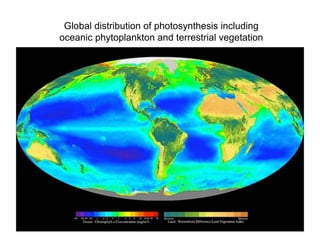
Global distribution of photosynthesis including
oceanic phytoplankton and terrestrial vegetation
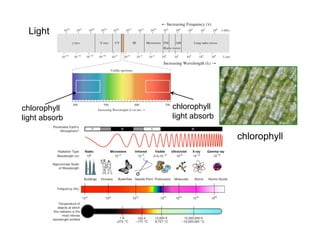
Light


chlorophyll    chlorophyll
light absorb   light absorb

                              chlorophyll
PBS Heat – Watching the Earth Change:
http://www.pbs.org/wgbh/pages/frontline/heat/view/1.html
Heat and Air Temperature
1.   Conduction – transfer of
     heat between objects that
     are in direct physical
     contact
2.   Electromagnetic
     radiation – heat transfer   Q10 = 2
     between substances
     without direct contact
Precipitation and humidity
•   Precipitation – water     •   Dew point –
    that reaches surface of       temperature where
    Earth                         condensation occurs
•   Movement of water:        •   Humidity – amount of
    1.   Condensation             water gas in given
    2.   Evaporation              volume of air
    3.   Transpiration        •   Condensation nuclei –
    4.   Sublimation              suspended air particles
                                  on which condensation
                                  of water occurs

Lecture 3 atmosp climorganis

  • 1.
    ATMOSPHERE, CLIMATE, ANDORGANISMS Dr. B. H. Lower, Ph.D.
  • 2.
    Indian Point NuclearPower Plant – New York, NY • Indian Point Nuclear Power Plant uses 2.5 billion gallons of H2O per day (this is >2-times the water used by New York City) to produce steam & cool reactors. • Supplies up to 30% of electricity to New York City • Once used the water is put back into Hudson River is 20-30 degrees hotter, which kills fish and other aquatic organisms • Produces zero greenhouse gases • Its federal license for the plant expires in 2013 • New York State has determined that plant violates Clean Water Act
  • 3.
    Bioremediation of NuclearWaste – OSU Research: http://www.dispatch.com/live/content/science/stories/2009/04/05/ sci_toxbacteria.ART_ART_04-05-09_G3_QKDEBCE.html?sid=101 • Hanford Site, WA – plutonium production for most of USA’s 60,000 nuclear weapons • $2 billion per year spent at Hanford Site to clean up site. Total before is is “done” is $100,000,000,000. >50 million gallons of highly-radioactive waste remains on site Originally part of Manhattan Project, active from 1943 – 1987
  • 4.
    Evolution of Lifeon Earth • Earth is 4.5 billion years old • Earliest life forms are 3.5 billion years old • 20% oxygen atmosphere about 1.2 billion years ago
  • 5.
    Becoming Human Chapter 1of 5 – The First Humans on Earth http://video.pbs.org/video/1319997127/ Neanderthals, Humans Interbred? http://news.nationalgeographic.com/news/ 2010/05/100506-science-neanderthals-humans- mated-interbred-dna-gene/
  • 6.
    Earth’s Atmosphere o Thin layer of gases that envelops Earth
  • 7.
    Layers of Earth’s Atmosphere Gases in extremely thin air absorb X- rays and short-wave radiation raising temperature to 1000oC or higher Temperatures as low as -140oC Meteors burn up from friction with air molecules Ozone layer is thickest at 25-30 km 99% of atmosphere (by weight) is below 30 km
  • 9.
    Video, ozone holeover Antarctica: http://video.nationalgeographic.com/video/player/news/environment-news/ antarctica-ozone-vin.html
  • 11.
    Coriolis Effect o Earth’s rotation from west to east causes wind and water to swerve to right in Northern Hemisphere and to the left in Southern Hemisphere • Prevailing winds 1. polar easterlies 2. westerlies http://www.youtube.com/watch?v=_36MiCUS1ro 3. trade winds
  • 12.
  • 14.
    Surface Ocean Currents Winds largely cause basic ocean currents clockwise – northern hemisphere partially from Coriolis effect counterclockwise – southern hemisphere
  • 15.
    Ocean Conveyer Belt north pole – cold salty water sinks equator – water wells up becoming warmer and fresher south pole – cold salty water sinks
  • 16.
  • 17.
    Normal El Niño Surface water warms and prevents upwelling of nutrient-rich bottom water = bad for fishing industry.
  • 18.
    Orographic precipitation and Rain shadow effect Himalayas and the Tibetan Plateau
  • 19.
    Global distribution ofphotosynthesis including oceanic phytoplankton and terrestrial vegetation
  • 20.
    Light chlorophyll chlorophyll light absorb light absorb chlorophyll
  • 21.
    PBS Heat –Watching the Earth Change: http://www.pbs.org/wgbh/pages/frontline/heat/view/1.html
  • 22.
    Heat and AirTemperature 1. Conduction – transfer of heat between objects that are in direct physical contact 2. Electromagnetic radiation – heat transfer Q10 = 2 between substances without direct contact
  • 23.
    Precipitation and humidity • Precipitation – water • Dew point – that reaches surface of temperature where Earth condensation occurs • Movement of water: • Humidity – amount of 1. Condensation water gas in given 2. Evaporation volume of air 3. Transpiration • Condensation nuclei – 4. Sublimation suspended air particles on which condensation of water occurs