TYPES OF
COMMUNICATION
Written, Verbal & Non-Verbal
Types of Communication
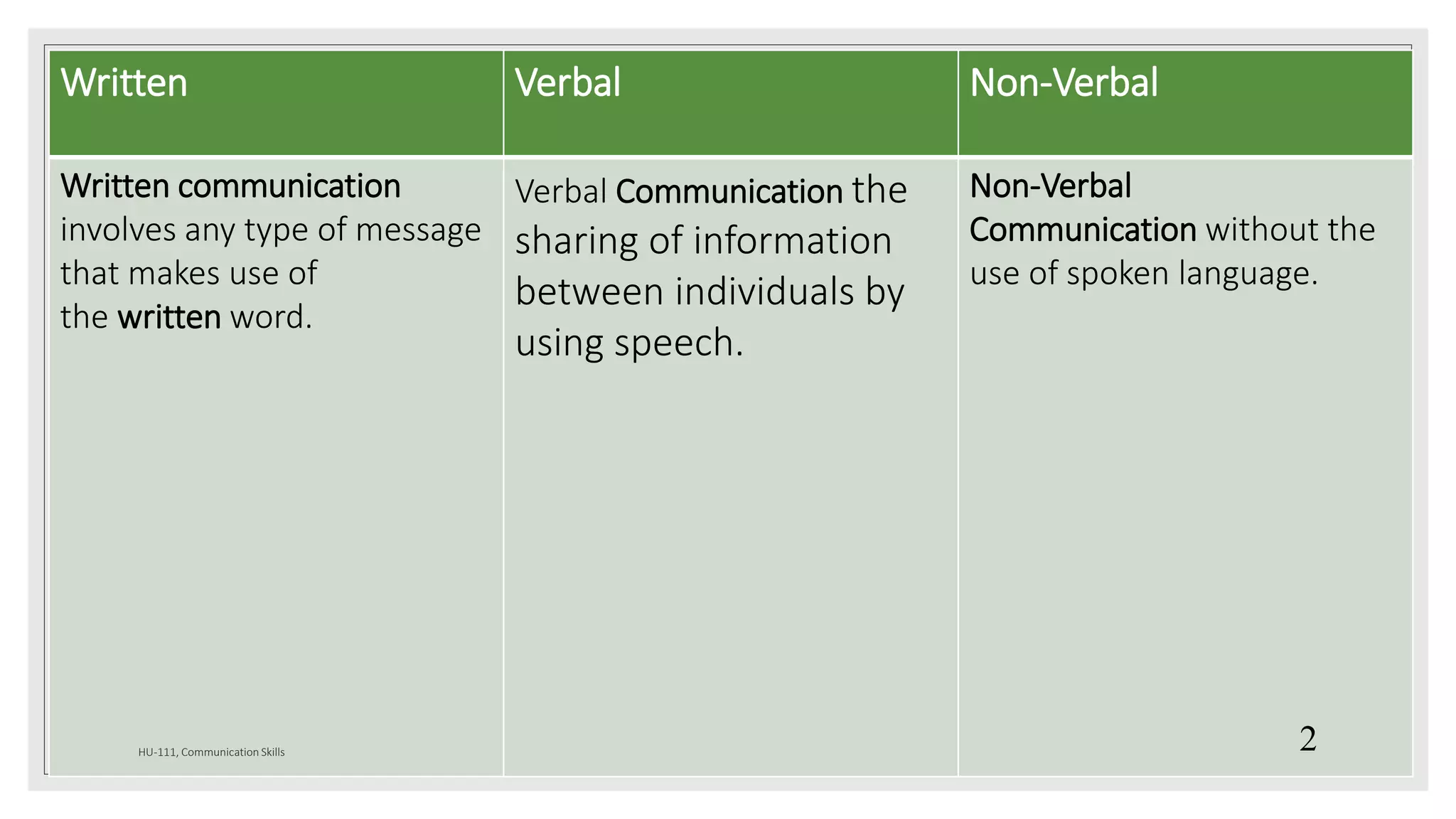
Written Verbal Non-Verbal
Written communication
involves any type of message
that makes use of
the written word.
Verbal Communication the
sharing of information
between individuals by
using speech.
Non-Verbal
Communication without the
use of spoken language.
HU-111, Communication Skills 2
Types of Communication
HU-111, Communication Skills 3
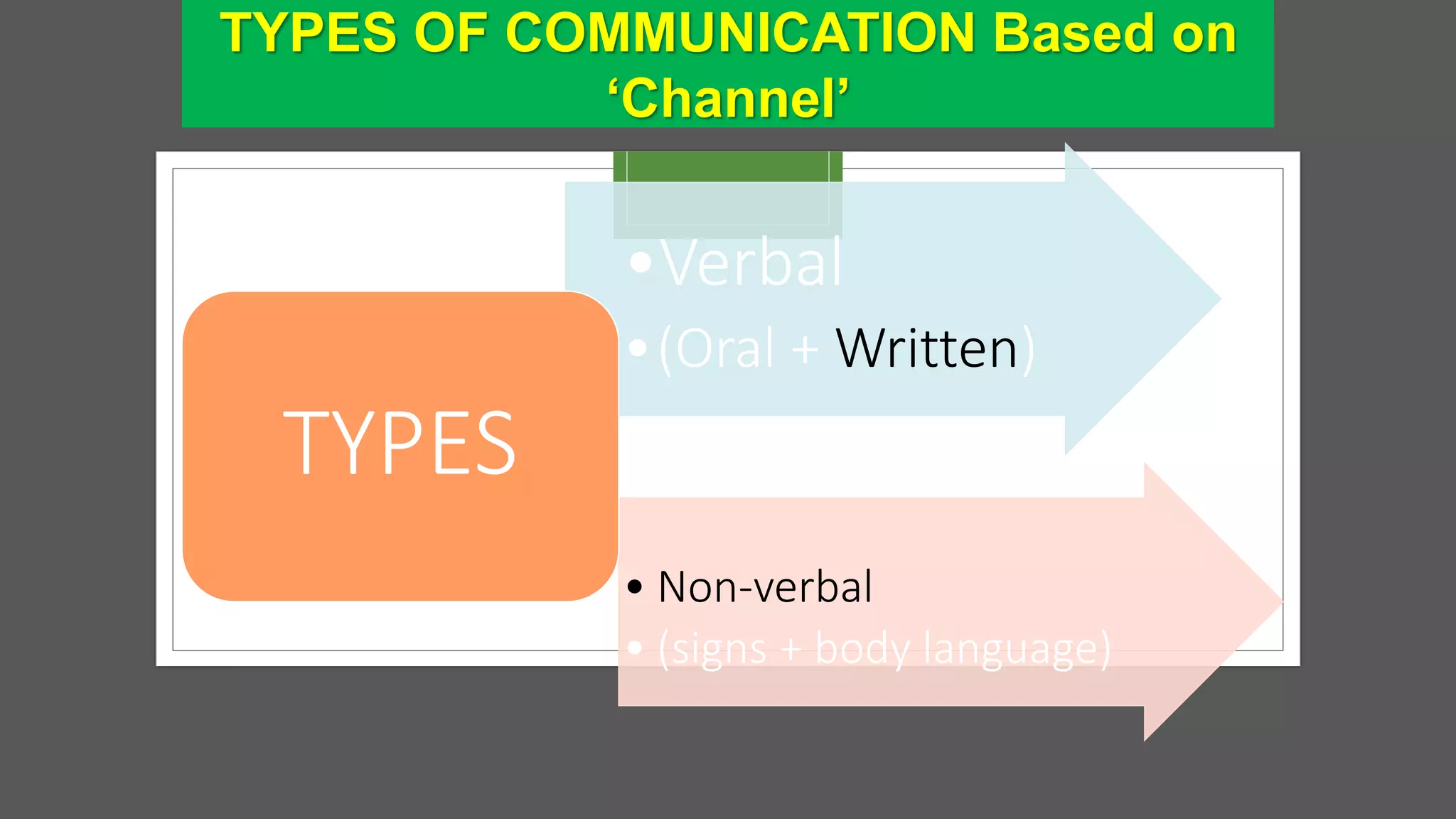
TYPES OF COMMUNICATION Based on
‘Channel’
•Verbal
•(Oral + Written)
• Non-verbal
• (signs + body language)
TYPES
Types of Communication based on ‘channel’
There are two types of communication based on
channel;
◦ Verbal communication
◦ Nonverbal communication.
Verbal Communication
Verbal communication refers to the form of
communication in which message is transmitted
verbally; communication is done by word of
mouth and writing.
Verbal Communication is further divided into, two
1. oral /spoken communication
2. written communication
1. Oral /spoken communication
In oral communication, Spoken words are used.
It includes
1. Face-to-face conversations
2. Speech
3. Telephonic conversation
4. Video
5. Radio
6. Television
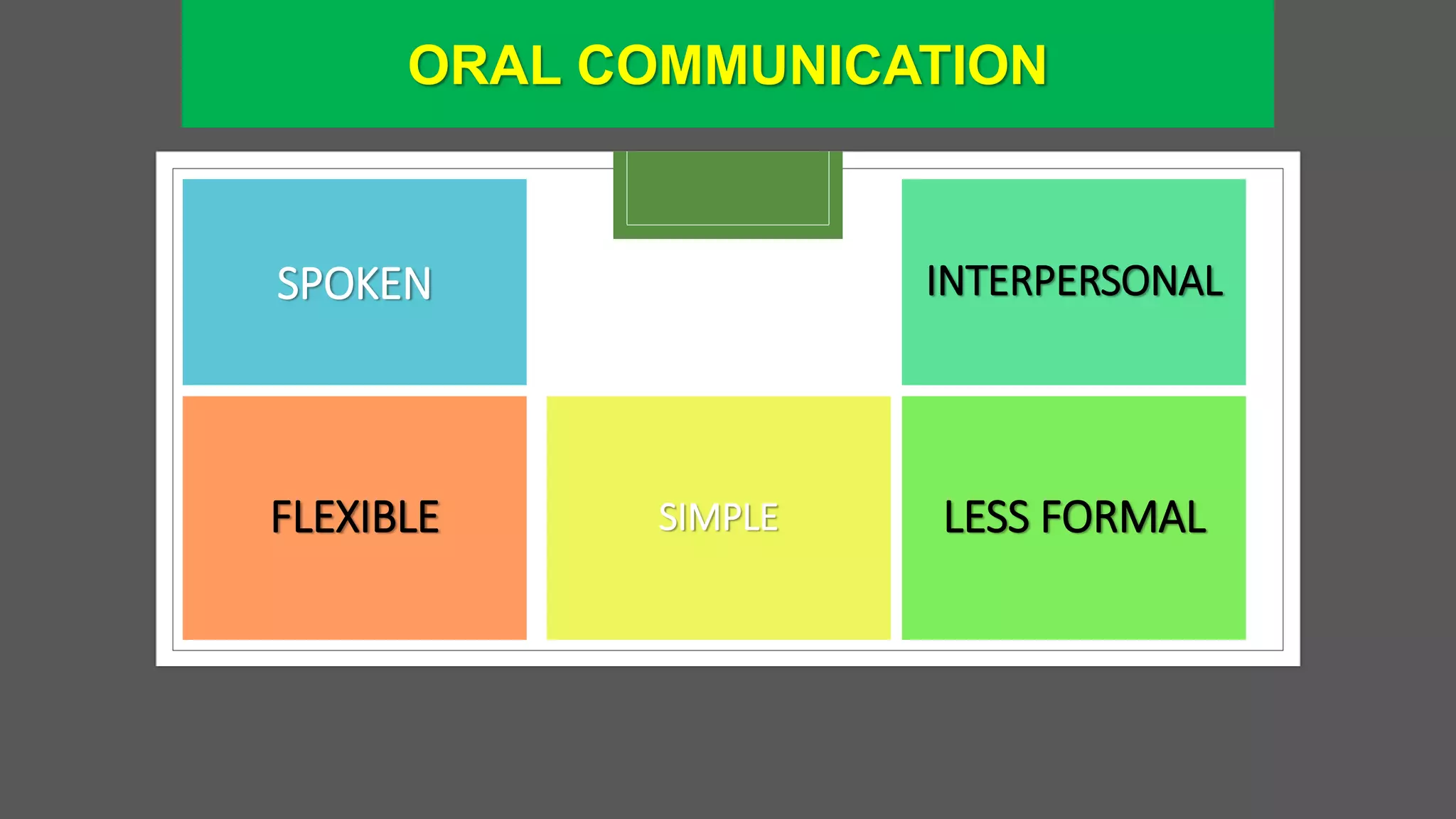
ORAL COMMUNICATION
ORAL COMMUNICATION
SPOKEN INTERPERSONAL
LESS FORMAL
SIMPLE
FLEXIBLE
Oral/Spoken communication used
in the workplace
Spoken communication that is used in the
workplace include
◦ Conversations
◦ Interviews
◦ Counseling/helping colleagues
◦ Meetings
◦ Conferences
Influences on Oral Communication
In oral communication, communication is
influenced by
◦ Pitch
◦ Volume
◦ Speed
◦ Clarity of speaking.
WRITTEN COMMUNICATION
2. Written Communication
In written communication, written signs or
symbols are used to communicate.
A written message may be printed or hand
written.
WRITTEN COMMUNICATION
WRITTEN PERMANENT
STRUCTURED
FORMAL
DIFFICULT
In written communication message can be
transmitted via,
◦ Letters
◦ Electronic mails
◦ Telegram
◦ Faxes
◦ Postcards
◦ Advertisements
◦ Reports
◦ Memos
Influences on Written Communication
Message, in written communication, is
influenced by the
1. Vocabulary and grammar used
2. Writing style
3. Precision
4. Clarity of the language used
Written Communication is most common form of
communication being used in business.
NON-VERBAL
COMMUNICATION
Non-verbal Communication
It is the transmission of messages by some medium other than speech or writing.
Nonverbal communication is behaviour, other than
spoken or written communication, that creates or
represents meaning.
In other words, it includes facial expressions, body
movements, and gestures.
Nonverbal communication is talking without
speaking a word.
◦ Nonverbal communication refers to the silent mode of communication.
◦ Words or sentences are absent in this type of communication.
◦ Actions communicate in this type of communication.
◦ Body language is the most visible and evident form of nonverbal
communication.
◦ Body language involves gestures, postures, eye contact, facial expressions etc.
◦ We also use signs, symbols, space, objects etc. for this purpose.
Elements Of Nonverbal Communication
Nonverbal communication has the following
three elements:-
Appearance
Speaker: clothing, hairstyle, neatness
Surrounding: room size, lighting, decorations,
furnishings
Body Language
Facial expressions, gestures, postures and how
one stands is an important element of non
Verbal communication.
Sounds
Voice Tone, Volume, Speech rate
Non-Verbal Communiation
HU-111, Communication Skills 23
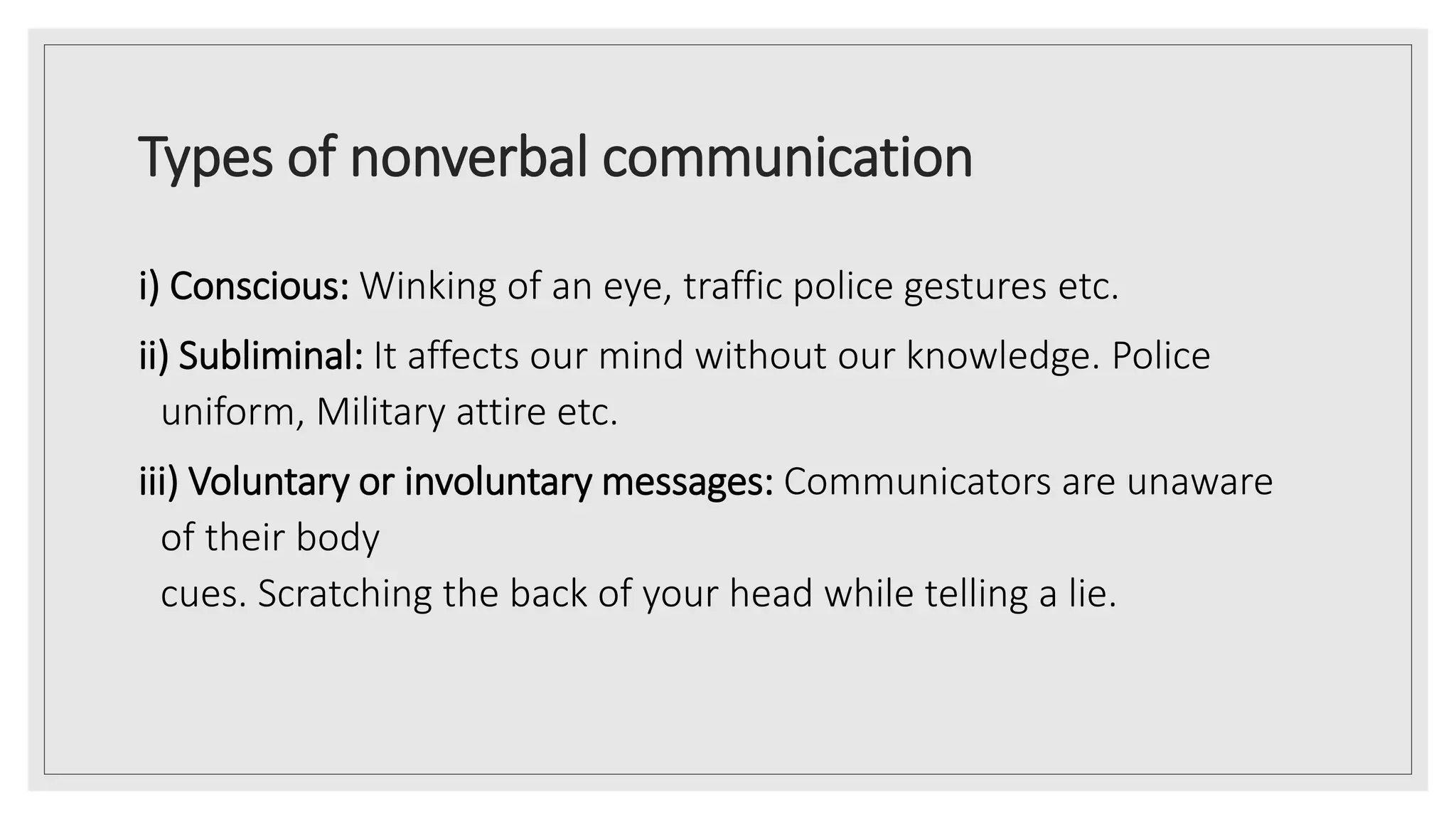
Types of nonverbal communication
i) Conscious: Winking of an eye, traffic police gestures etc.
ii) Subliminal: It affects our mind without our knowledge. Police
uniform, Military attire etc.
iii) Voluntary or involuntary messages: Communicators are unaware
of their body
cues. Scratching the back of your head while telling a lie.
Categories
◦ Signs
◦ symbols
◦ drawing/painting
◦ punctuations
colour
◦ Paralanguage
◦ Body Language
are different categories of nonverbal communication.
Body Language
◦ It is the study of body movements in such a manner that each and every
movement of our body communicates a message depending on the
environment.
◦ The most significant category of nonverbal communication is Body language.
◦ The study of body movements, facial expressions, postures, gestures, eye
contact etc. is known as Kinesics.
i) Emblems: It is the study of finger movements or hand
movements. This type of body language is culture bound.
Most of the emblems are deliberate in nature.
ii) Regulators: It is the study of head movements. Regulators are
an important part of any communication as they regulate
and maintain the flow of speech in communication.
iii) Adopters: It is the study of postural changes of
body/stretching. Yawning, sitting, meditating etc. This is
universal in nature. But when we use it deliberately to reflect
a meaning it becomes culture bound.
iv) Oculesics: It is the study of eye contact. It is universal in nature.
It depends on individual’s cultural background, age, gender and
upbringing.
Various position of our eye can depict different meanings. E.g.
Looking straight suggests direct/open/straight forward, Looking
down suggests out of respect/guilt/lack of confidence, looking
up suggests lack of knowledge, wandering etc
v) Proxemics: It is the study of space distancing. It refers to the
distance generally we
maintain in different situations.
E.g. Intimate: zero, personal: 1.5 ft-4 feet, social: 4-12 feet etc. It
is cultural specific. In western countries particularly Europe they
are
very particular about proxemics.
Paralanguage
Apart from the study of body movements Para language is also an
important part of nonverbal communication. While speaking we
maintain a particular pause and space without these pauses our
speech becomes meaningless. In addition, to that we maintain
tone, speech, voice & modulation in our speech.

Lecture 2. Types of Communication.pptx

  • 1.
  • 2.
    Types of Communication WrittenVerbal Non-Verbal Written communication involves any type of message that makes use of the written word. Verbal Communication the sharing of information between individuals by using speech. Non-Verbal Communication without the use of spoken language. HU-111, Communication Skills 2
  • 3.
    Types of Communication HU-111,Communication Skills 3
  • 4.
    TYPES OF COMMUNICATIONBased on ‘Channel’ •Verbal •(Oral + Written) • Non-verbal • (signs + body language) TYPES
  • 5.
    Types of Communicationbased on ‘channel’ There are two types of communication based on channel; ◦ Verbal communication ◦ Nonverbal communication.
  • 6.
    Verbal Communication Verbal communicationrefers to the form of communication in which message is transmitted verbally; communication is done by word of mouth and writing. Verbal Communication is further divided into, two 1. oral /spoken communication 2. written communication
  • 7.
    1. Oral /spokencommunication In oral communication, Spoken words are used. It includes 1. Face-to-face conversations 2. Speech 3. Telephonic conversation 4. Video 5. Radio 6. Television
  • 8.
  • 9.
  • 10.
    Oral/Spoken communication used inthe workplace Spoken communication that is used in the workplace include ◦ Conversations ◦ Interviews ◦ Counseling/helping colleagues ◦ Meetings ◦ Conferences
  • 11.
    Influences on OralCommunication In oral communication, communication is influenced by ◦ Pitch ◦ Volume ◦ Speed ◦ Clarity of speaking.
  • 12.
  • 13.
    2. Written Communication Inwritten communication, written signs or symbols are used to communicate. A written message may be printed or hand written.
  • 14.
  • 15.
    In written communicationmessage can be transmitted via, ◦ Letters ◦ Electronic mails ◦ Telegram ◦ Faxes ◦ Postcards ◦ Advertisements ◦ Reports ◦ Memos
  • 16.
    Influences on WrittenCommunication Message, in written communication, is influenced by the 1. Vocabulary and grammar used 2. Writing style 3. Precision 4. Clarity of the language used Written Communication is most common form of communication being used in business.
  • 17.
  • 18.
    Non-verbal Communication It isthe transmission of messages by some medium other than speech or writing. Nonverbal communication is behaviour, other than spoken or written communication, that creates or represents meaning. In other words, it includes facial expressions, body movements, and gestures. Nonverbal communication is talking without speaking a word.
  • 19.
    ◦ Nonverbal communicationrefers to the silent mode of communication. ◦ Words or sentences are absent in this type of communication. ◦ Actions communicate in this type of communication. ◦ Body language is the most visible and evident form of nonverbal communication.
  • 20.
    ◦ Body languageinvolves gestures, postures, eye contact, facial expressions etc. ◦ We also use signs, symbols, space, objects etc. for this purpose.
  • 21.
    Elements Of NonverbalCommunication Nonverbal communication has the following three elements:- Appearance Speaker: clothing, hairstyle, neatness Surrounding: room size, lighting, decorations, furnishings
  • 22.
    Body Language Facial expressions,gestures, postures and how one stands is an important element of non Verbal communication. Sounds Voice Tone, Volume, Speech rate
  • 23.
  • 24.
    Types of nonverbalcommunication i) Conscious: Winking of an eye, traffic police gestures etc. ii) Subliminal: It affects our mind without our knowledge. Police uniform, Military attire etc. iii) Voluntary or involuntary messages: Communicators are unaware of their body cues. Scratching the back of your head while telling a lie.
  • 25.
    Categories ◦ Signs ◦ symbols ◦drawing/painting ◦ punctuations colour ◦ Paralanguage ◦ Body Language are different categories of nonverbal communication.
  • 26.
    Body Language ◦ Itis the study of body movements in such a manner that each and every movement of our body communicates a message depending on the environment. ◦ The most significant category of nonverbal communication is Body language. ◦ The study of body movements, facial expressions, postures, gestures, eye contact etc. is known as Kinesics.
  • 27.
    i) Emblems: Itis the study of finger movements or hand movements. This type of body language is culture bound. Most of the emblems are deliberate in nature. ii) Regulators: It is the study of head movements. Regulators are an important part of any communication as they regulate and maintain the flow of speech in communication. iii) Adopters: It is the study of postural changes of body/stretching. Yawning, sitting, meditating etc. This is universal in nature. But when we use it deliberately to reflect a meaning it becomes culture bound.
  • 28.
    iv) Oculesics: Itis the study of eye contact. It is universal in nature. It depends on individual’s cultural background, age, gender and upbringing. Various position of our eye can depict different meanings. E.g. Looking straight suggests direct/open/straight forward, Looking down suggests out of respect/guilt/lack of confidence, looking up suggests lack of knowledge, wandering etc
  • 29.
    v) Proxemics: Itis the study of space distancing. It refers to the distance generally we maintain in different situations. E.g. Intimate: zero, personal: 1.5 ft-4 feet, social: 4-12 feet etc. It is cultural specific. In western countries particularly Europe they are very particular about proxemics.
  • 30.
    Paralanguage Apart from thestudy of body movements Para language is also an important part of nonverbal communication. While speaking we maintain a particular pause and space without these pauses our speech becomes meaningless. In addition, to that we maintain tone, speech, voice & modulation in our speech.