POST TERM PREGNANCY & IOL
Dr. Salwa Neyazi
Assistant professor and consultant OBGYN
KSU
Pediatric and adolescent gynecologist
OBJECTIVES
 Definition of post term pregnancy
 Incidence
 Diagnosis
 Complications
 Managemnt
Induction of labour
 Indications/ contraindications
 Methods of induction
 complications
Postterm Pregnancy
Definition :
 Pregnancy that extends beyond 294 days /42 wks
from first day of LMP
Epidimiology
 Incidence 7-11%
 4%>43 wks
 Recurrence 50%
 Increased perinatal morbidity( 2-3 folds) and
mortality
 Increased congenital anomalies: anecephaly, absent
piutary,adrenal hyperplasia
DIAGNOSIS
Best estimate based on as many criteria as possible
 Accurate LMP
 Positive urine pregnancy test 5-6 wks
 Pelvic examination :uterine size consistent with
gestational age by LMP
 Fetal heart detected by doppler by 13 wks
 Fundal height at umbilicus at 20 wks gestation
 Ultrasound CRL measurement in first trimester(6-
12wks) or BPD before 26 wks
COMPLICATIONS
 Postmature neonate features (10-20%) :
Wasting of subcutaneous tissue, failure of intrauterine
growth, meconium staining, dehydration, absence of
vernix serosa, lanugo hair, oligohydramnious and peeling
of skin
 Macrosomia
 Twice as common post-term fetuses weigh more than
4000 gm
 Birth injuries due to difficult deliveries, instrumental
deliveries , CS and shoulder dystocia are increased
COMPLICATIONS
 Oligohydramnious due to placental insufficiency
 Oligo---leads to fetal distress in labor (due to cord
compression )and increased CS rate
 Meconium stained amniotic fluid 10-15% at term
25-30% at 42 wks
 Meconium aspiration syndrome
 Increased CS rate 4 folds
MANAGEMENT
1-Careful fetal monitoring can reduce the risk of
perinatal mortality
 Monitering should start at 40 wks
 After 40 wks patients should keep daily movement
chart
 Weekly Nonstress test plus Amniotic fluid index can
reduce perinatal mortality
 BPP/Doppler
2-Induction of labour
 The timing of IOL is controversial if fetal monitoring
is normal
 Most obstetrician start IOL at 41 + wks
INDUCTION OF LABOR
INDICATIONS FOR IOL
 Indication : when benefits of delivery to the mother
or fetus outweighs the benefit of continuing
pregnancy
 Maternal indications
-medical disease worsening with pregnancy /cardiac
disease, renal disease, HPT
-preeclampsia
Premature rupture of membranes
 Fetal indications
-post-term/ post-date most common
-Fetal distress/ nonreassuring NST
-IUGR
CONTRAINDICATIONS
Any contraindications to vaginal delivery
 Placenta previa
 Vasa previa
 Transverse lie
 Breech
 Classical uterine scar
 Umbilical cord prolapse
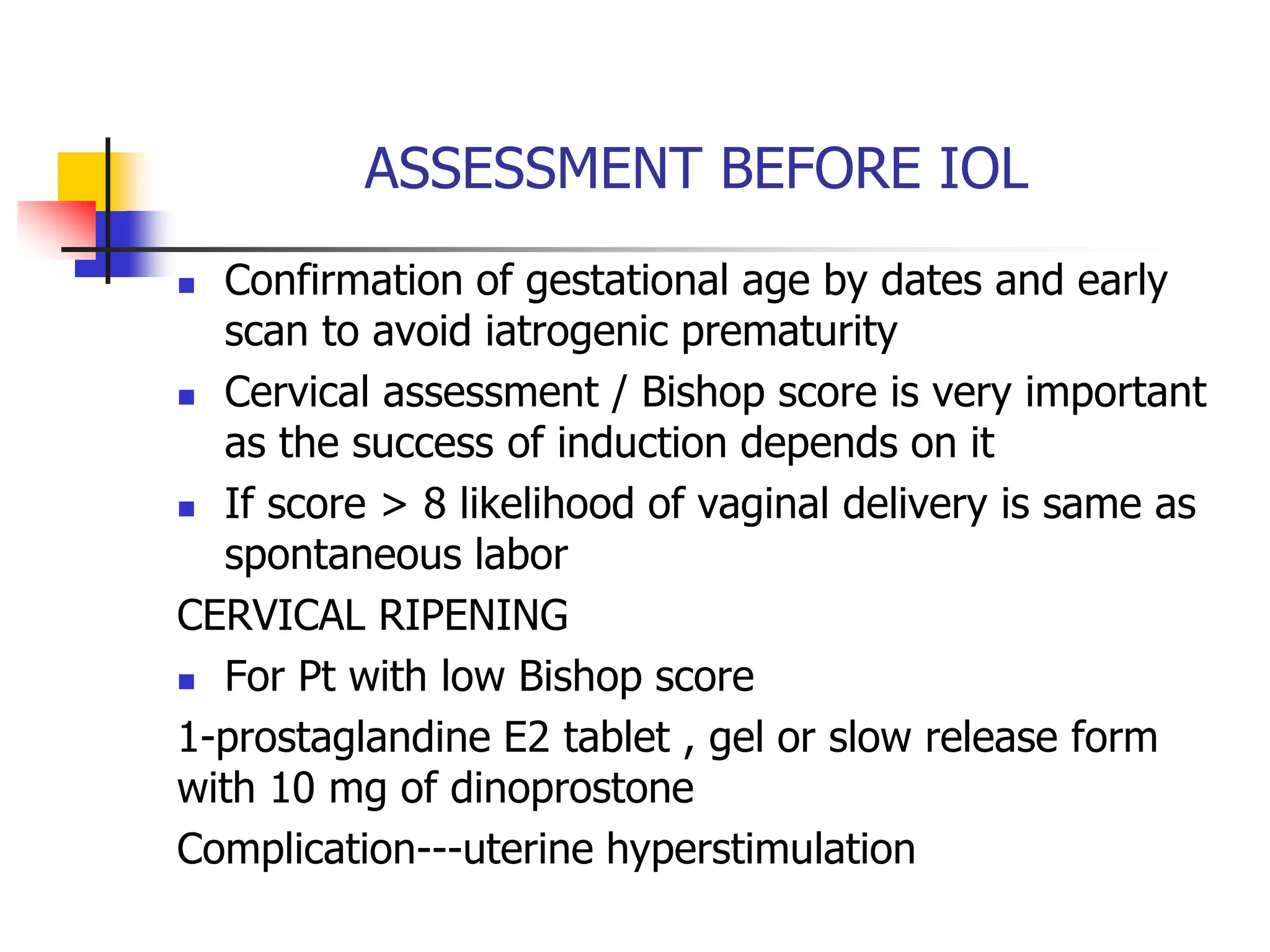
ASSESSMENT BEFORE IOL
 Confirmation of gestational age by dates and early
scan to avoid iatrogenic prematurity
 Cervical assessment / Bishop score is very important
as the success of induction depends on it
 If score > 8 likelihood of vaginal delivery is same as
spontaneous labor
CERVICAL RIPENING
 For Pt with low Bishop score
1-prostaglandine E2 tablet , gel or slow release form
with 10 mg of dinoprostone
Complication---uterine hyperstimulation
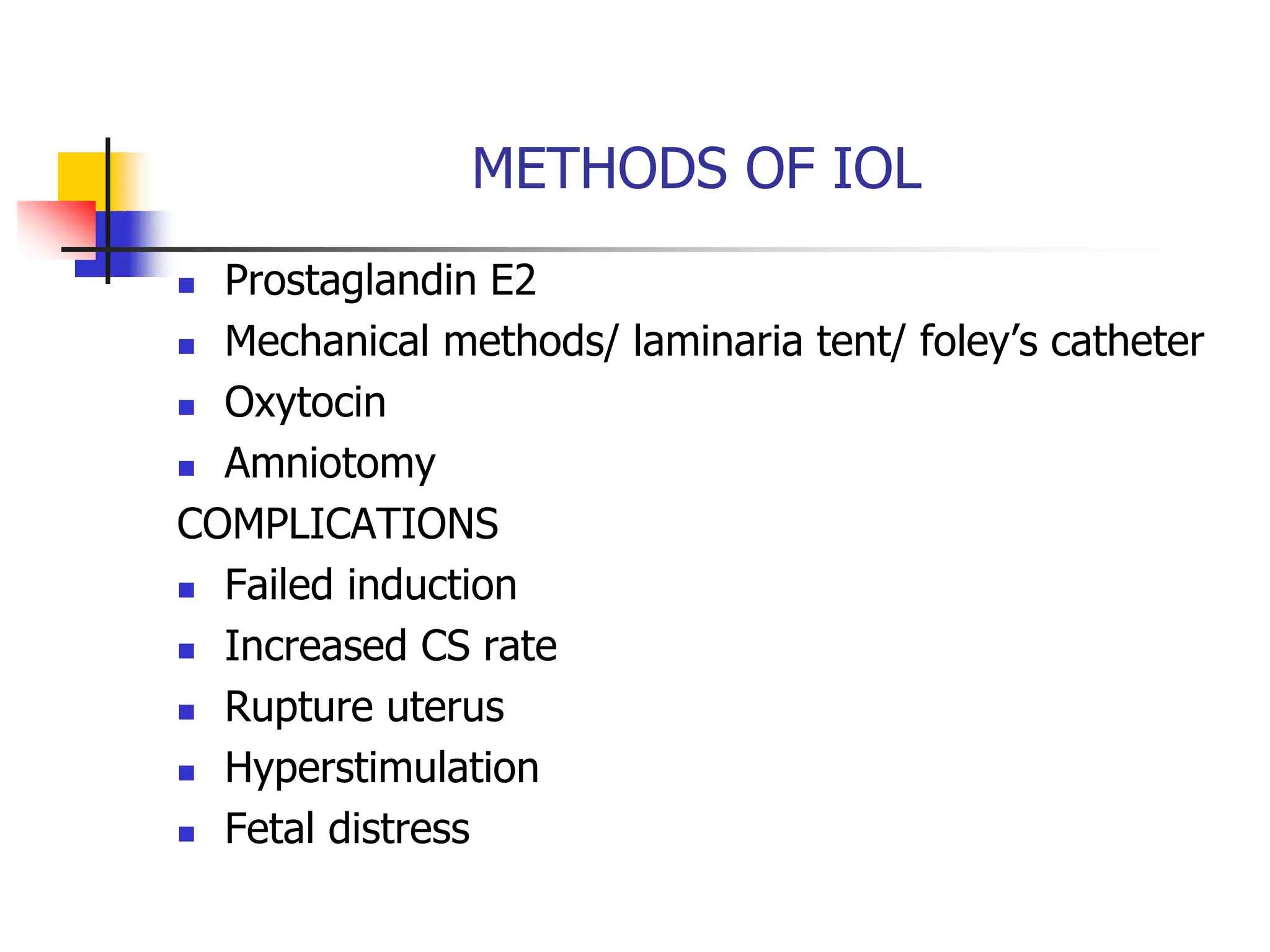
METHODS OF IOL
 Prostaglandin E2
 Mechanical methods/ laminaria tent/ foley’s catheter
 Oxytocin
 Amniotomy
COMPLICATIONS
 Failed induction
 Increased CS rate
 Rupture uterus
 Hyperstimulation
 Fetal distress
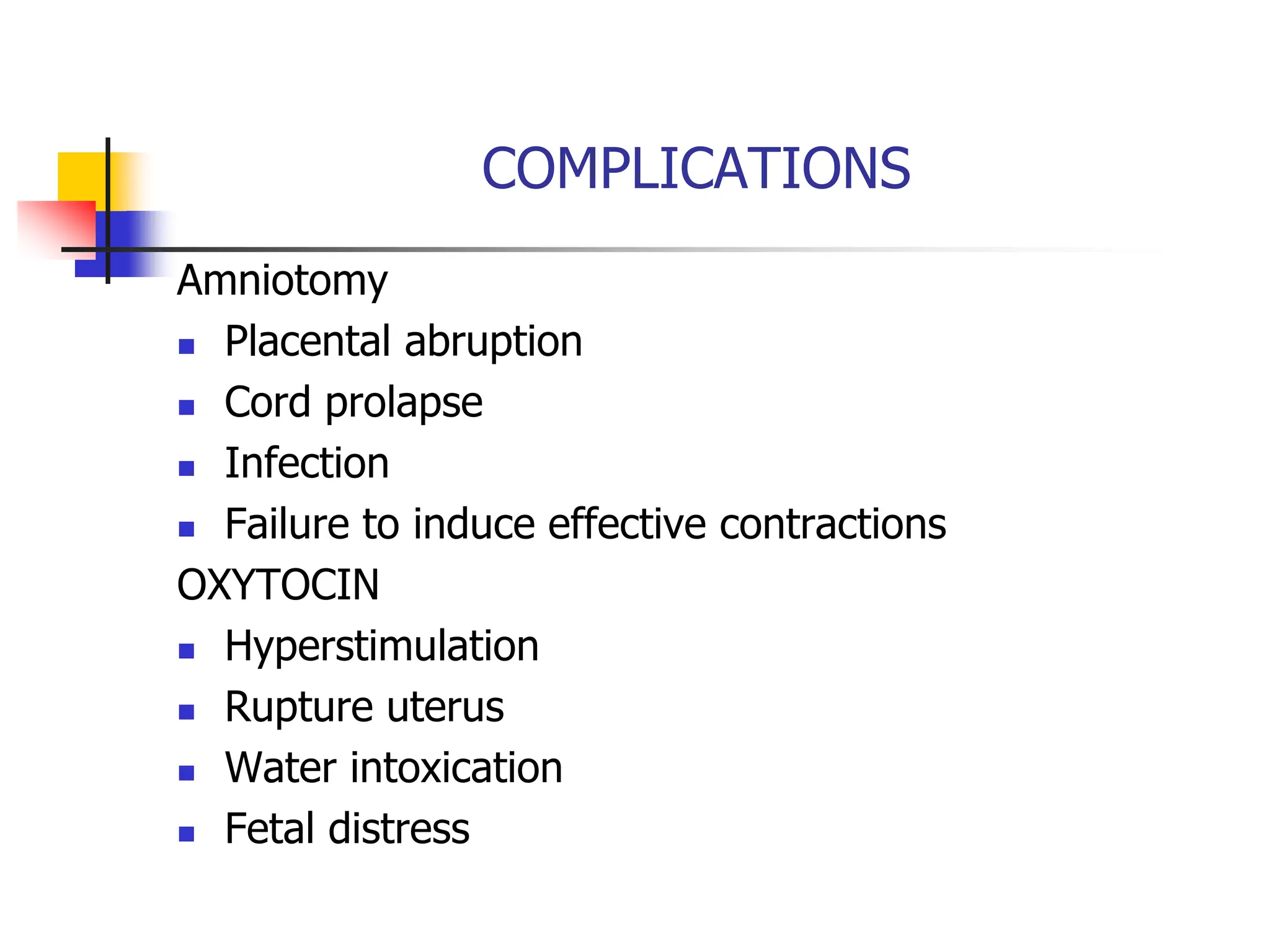
COMPLICATIONS
Amniotomy
 Placental abruption
 Cord prolapse
 Infection
 Failure to induce effective contractions
OXYTOCIN
 Hyperstimulation
 Rupture uterus
 Water intoxication
 Fetal distress

Lecture 15 - POST DATE PREGNANCY & IOL.ppt

  • 1.
    POST TERM PREGNANCY& IOL Dr. Salwa Neyazi Assistant professor and consultant OBGYN KSU Pediatric and adolescent gynecologist
  • 2.
    OBJECTIVES  Definition ofpost term pregnancy  Incidence  Diagnosis  Complications  Managemnt Induction of labour  Indications/ contraindications  Methods of induction  complications
  • 3.
    Postterm Pregnancy Definition : Pregnancy that extends beyond 294 days /42 wks from first day of LMP Epidimiology  Incidence 7-11%  4%>43 wks  Recurrence 50%  Increased perinatal morbidity( 2-3 folds) and mortality  Increased congenital anomalies: anecephaly, absent piutary,adrenal hyperplasia
  • 4.
    DIAGNOSIS Best estimate basedon as many criteria as possible  Accurate LMP  Positive urine pregnancy test 5-6 wks  Pelvic examination :uterine size consistent with gestational age by LMP  Fetal heart detected by doppler by 13 wks  Fundal height at umbilicus at 20 wks gestation  Ultrasound CRL measurement in first trimester(6- 12wks) or BPD before 26 wks
  • 5.
    COMPLICATIONS  Postmature neonatefeatures (10-20%) : Wasting of subcutaneous tissue, failure of intrauterine growth, meconium staining, dehydration, absence of vernix serosa, lanugo hair, oligohydramnious and peeling of skin  Macrosomia  Twice as common post-term fetuses weigh more than 4000 gm  Birth injuries due to difficult deliveries, instrumental deliveries , CS and shoulder dystocia are increased
  • 6.
    COMPLICATIONS  Oligohydramnious dueto placental insufficiency  Oligo---leads to fetal distress in labor (due to cord compression )and increased CS rate  Meconium stained amniotic fluid 10-15% at term 25-30% at 42 wks  Meconium aspiration syndrome  Increased CS rate 4 folds
  • 7.
    MANAGEMENT 1-Careful fetal monitoringcan reduce the risk of perinatal mortality  Monitering should start at 40 wks  After 40 wks patients should keep daily movement chart  Weekly Nonstress test plus Amniotic fluid index can reduce perinatal mortality  BPP/Doppler 2-Induction of labour  The timing of IOL is controversial if fetal monitoring is normal  Most obstetrician start IOL at 41 + wks
  • 8.
  • 9.
    INDICATIONS FOR IOL Indication : when benefits of delivery to the mother or fetus outweighs the benefit of continuing pregnancy  Maternal indications -medical disease worsening with pregnancy /cardiac disease, renal disease, HPT -preeclampsia Premature rupture of membranes  Fetal indications -post-term/ post-date most common -Fetal distress/ nonreassuring NST -IUGR
  • 10.
    CONTRAINDICATIONS Any contraindications tovaginal delivery  Placenta previa  Vasa previa  Transverse lie  Breech  Classical uterine scar  Umbilical cord prolapse
  • 11.
    ASSESSMENT BEFORE IOL Confirmation of gestational age by dates and early scan to avoid iatrogenic prematurity  Cervical assessment / Bishop score is very important as the success of induction depends on it  If score > 8 likelihood of vaginal delivery is same as spontaneous labor CERVICAL RIPENING  For Pt with low Bishop score 1-prostaglandine E2 tablet , gel or slow release form with 10 mg of dinoprostone Complication---uterine hyperstimulation
  • 12.
    METHODS OF IOL Prostaglandin E2  Mechanical methods/ laminaria tent/ foley’s catheter  Oxytocin  Amniotomy COMPLICATIONS  Failed induction  Increased CS rate  Rupture uterus  Hyperstimulation  Fetal distress
  • 13.
    COMPLICATIONS Amniotomy  Placental abruption Cord prolapse  Infection  Failure to induce effective contractions OXYTOCIN  Hyperstimulation  Rupture uterus  Water intoxication  Fetal distress