Tiempos verbales INGLÉS By  Maribel
Present Simple Positiva:  You ride a bike He write s  a letter Negativa : I  don’t  run He  doesn’t  play football Interrogativa :  Do  you like English? Does  she eat?
Present Continuous Positiva:  I am cooking He  is  thinking Negativa:  You  aren’t  listening to music She  isn’t  studying Interrogativa:  Are they painting? Is she watching TV?
P.Simple VS P. Continuous Hábitos o rutinas Adverbios de frecuencia:  sometimes, usually, often, never, every... Algo que está pasando en el momento de hablar:  now, at the moment Situaciones temporales Usos
Past Simple Positiva:  I  broke  the window She broke the window Negativa:  I  didn’t  break the window  She didn’t break the window Interrogativa :  Did  you break the window? Did she break the window?
Past Continuous Positiva:  I  was  eating We  were  eating Negativa:  I  wasn’t  eating We  weren’t  eating Interrogativa:  Was  she eating? Were  they eating?
Past Simple VS Past Continuous Acción completa y acabada en el pasado Lo usamos después de  when Acción en progreso en un tiempo pasado Lo usamos después de  while Usos
Present Perfect Positiva:  I  have  eaten She  has  cooked Negativa:  You  haven’t  drunk He  hasn’t  run Interrogativa:  Have you read? Has she studied?
Past Perfect   Positiva:  I had forgotten the question She had played Negativa:  I hadn’t forgotten the question She hadn’t played Interrogativa : Had you forgotten the question? Had she eaten?
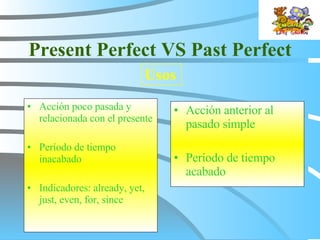
Present Perfect VS Past Perfect Acción poco pasada y relacionada con el presente Período de tiempo inacabado Indicadores:  already, yet, just, even, for, since Acción anterior al pasado simple Período de tiempo acabado Usos
A continuación, veremos los FUTUROS
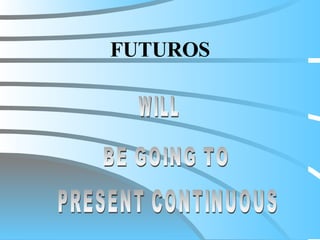
FUTUROS WILL BE GOING TO PRESENT CONTINUOUS
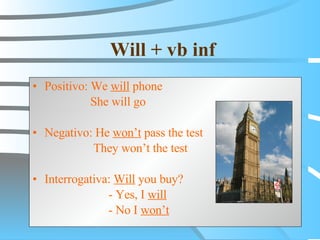
Will + vb inf Positivo:  We  will  phone She will go Negativo:  He  won’t  pass the test They won’t the test Interrogativa:  Will  you buy? - Yes, I  will - No I  won’t
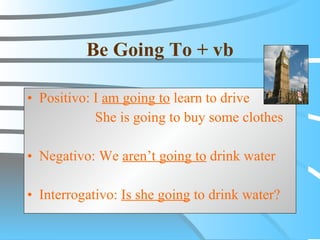
Be Going To  + vb Positivo:  I  am going to  learn to drive She is going to buy some clothes Negativo:  We  aren’t going to  drink water Interrogativo :  Is she going  to drink water?
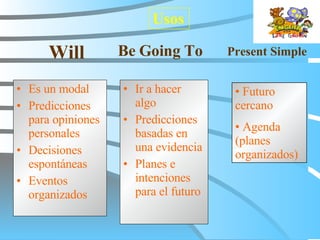
Will Es un modal Predicciones para opiniones personales Decisiones espontáneas Eventos organizados Ir a hacer algo Predicciones basadas en una evidencia Planes e intenciones para el futuro Be  Going To Present  Simple Futuro cercano Agenda (planes organizados) Usos
Una recomendación Para finalizar...
Fin

Lecciones De Ingles

  • 1.
  • 2.
    Present Simple Positiva: You ride a bike He write s a letter Negativa : I don’t run He doesn’t play football Interrogativa : Do you like English? Does she eat?
  • 3.
    Present Continuous Positiva: I am cooking He is thinking Negativa: You aren’t listening to music She isn’t studying Interrogativa: Are they painting? Is she watching TV?
  • 4.
    P.Simple VS P.Continuous Hábitos o rutinas Adverbios de frecuencia: sometimes, usually, often, never, every... Algo que está pasando en el momento de hablar: now, at the moment Situaciones temporales Usos
  • 5.
    Past Simple Positiva: I broke the window She broke the window Negativa: I didn’t break the window She didn’t break the window Interrogativa : Did you break the window? Did she break the window?
  • 6.
    Past Continuous Positiva: I was eating We were eating Negativa: I wasn’t eating We weren’t eating Interrogativa: Was she eating? Were they eating?
  • 7.
    Past Simple VSPast Continuous Acción completa y acabada en el pasado Lo usamos después de when Acción en progreso en un tiempo pasado Lo usamos después de while Usos
  • 8.
    Present Perfect Positiva: I have eaten She has cooked Negativa: You haven’t drunk He hasn’t run Interrogativa: Have you read? Has she studied?
  • 9.
    Past Perfect Positiva: I had forgotten the question She had played Negativa: I hadn’t forgotten the question She hadn’t played Interrogativa : Had you forgotten the question? Had she eaten?
  • 10.
    Present Perfect VSPast Perfect Acción poco pasada y relacionada con el presente Período de tiempo inacabado Indicadores: already, yet, just, even, for, since Acción anterior al pasado simple Período de tiempo acabado Usos
  • 11.
  • 12.
    FUTUROS WILL BEGOING TO PRESENT CONTINUOUS
  • 13.
    Will + vbinf Positivo: We will phone She will go Negativo: He won’t pass the test They won’t the test Interrogativa: Will you buy? - Yes, I will - No I won’t
  • 14.
    Be Going To + vb Positivo: I am going to learn to drive She is going to buy some clothes Negativo: We aren’t going to drink water Interrogativo : Is she going to drink water?
  • 15.
    Will Es unmodal Predicciones para opiniones personales Decisiones espontáneas Eventos organizados Ir a hacer algo Predicciones basadas en una evidencia Planes e intenciones para el futuro Be Going To Present Simple Futuro cercano Agenda (planes organizados) Usos
  • 16.
  • 17.