Downloaded 370 times
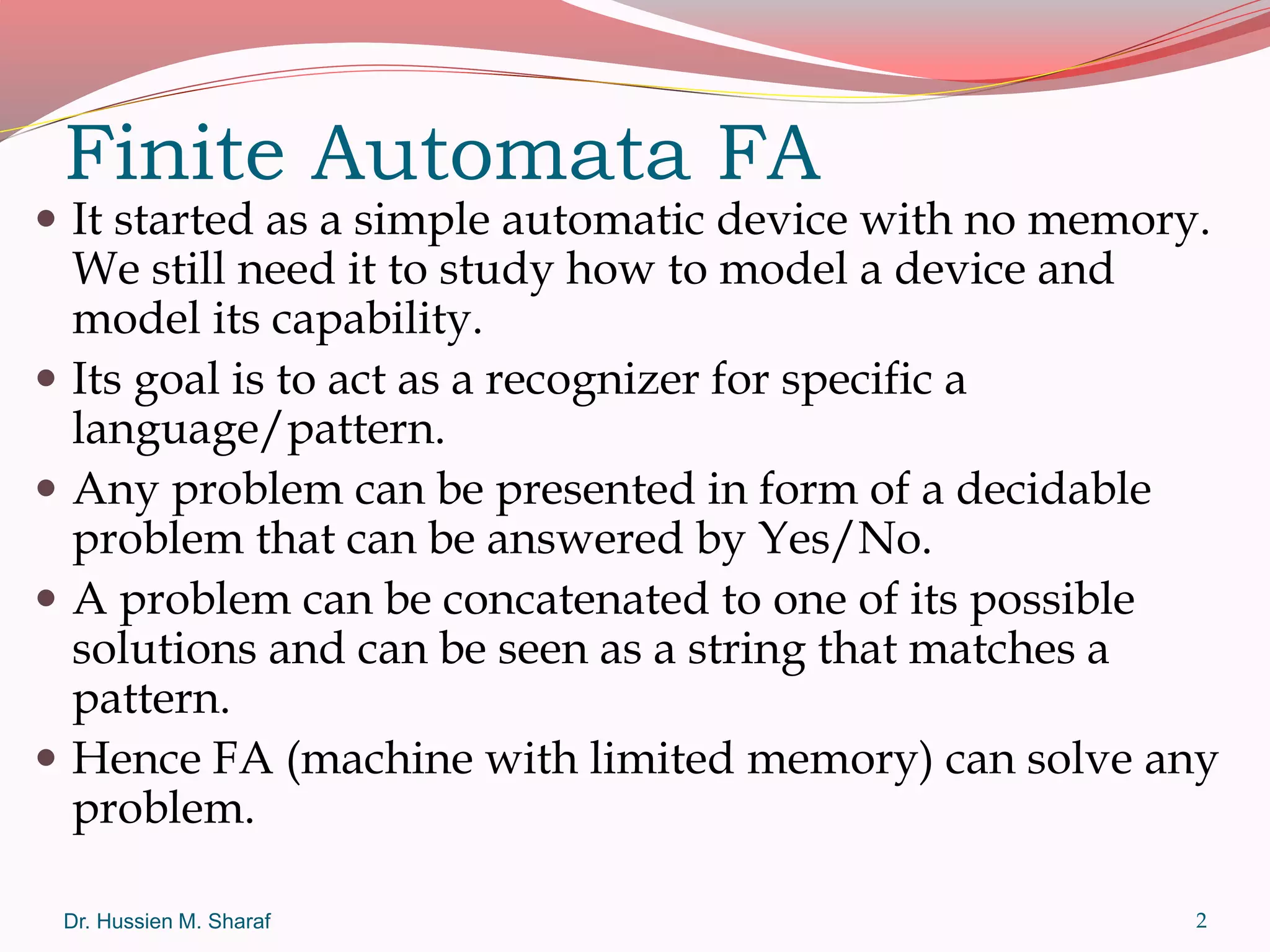
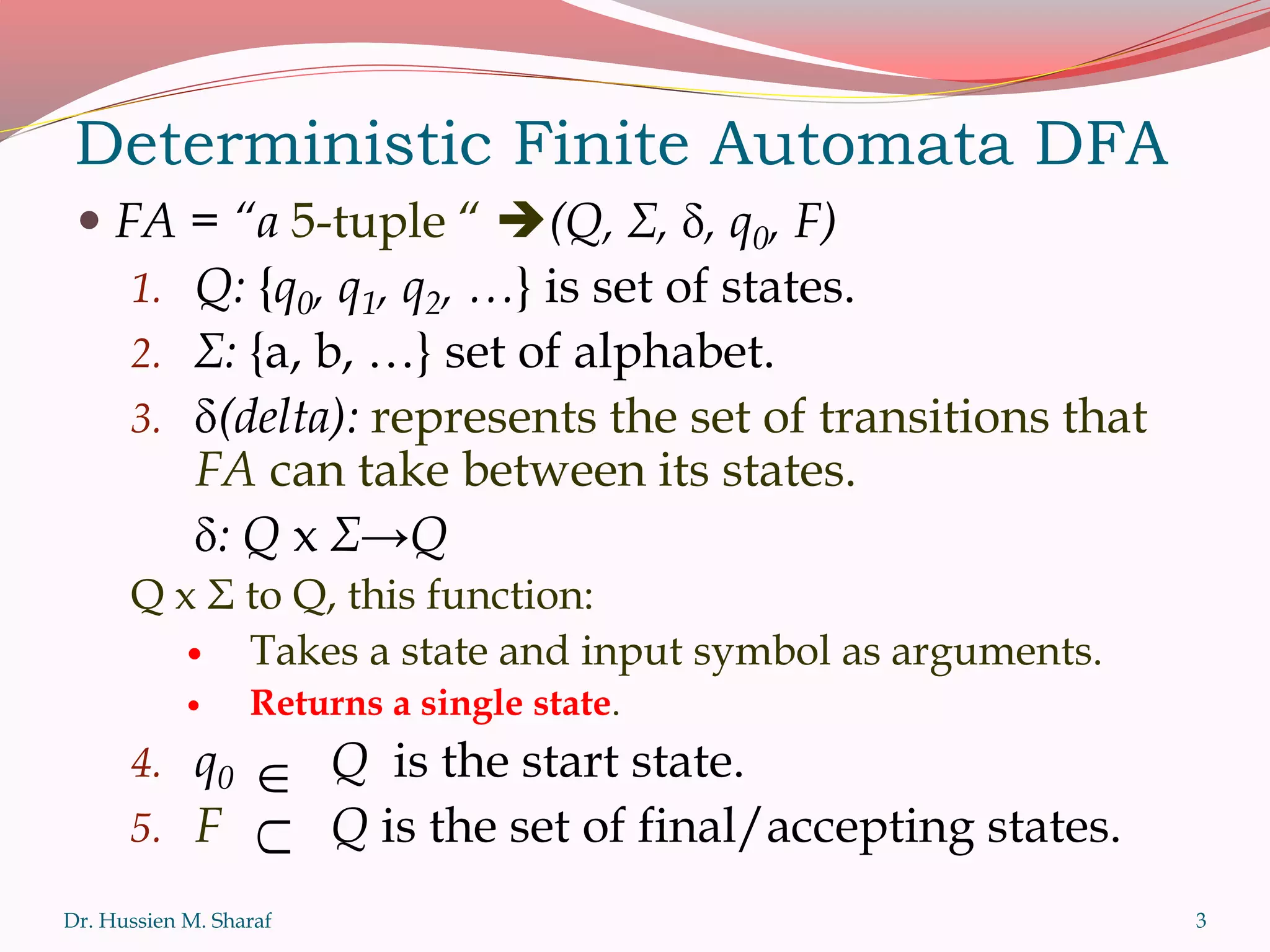
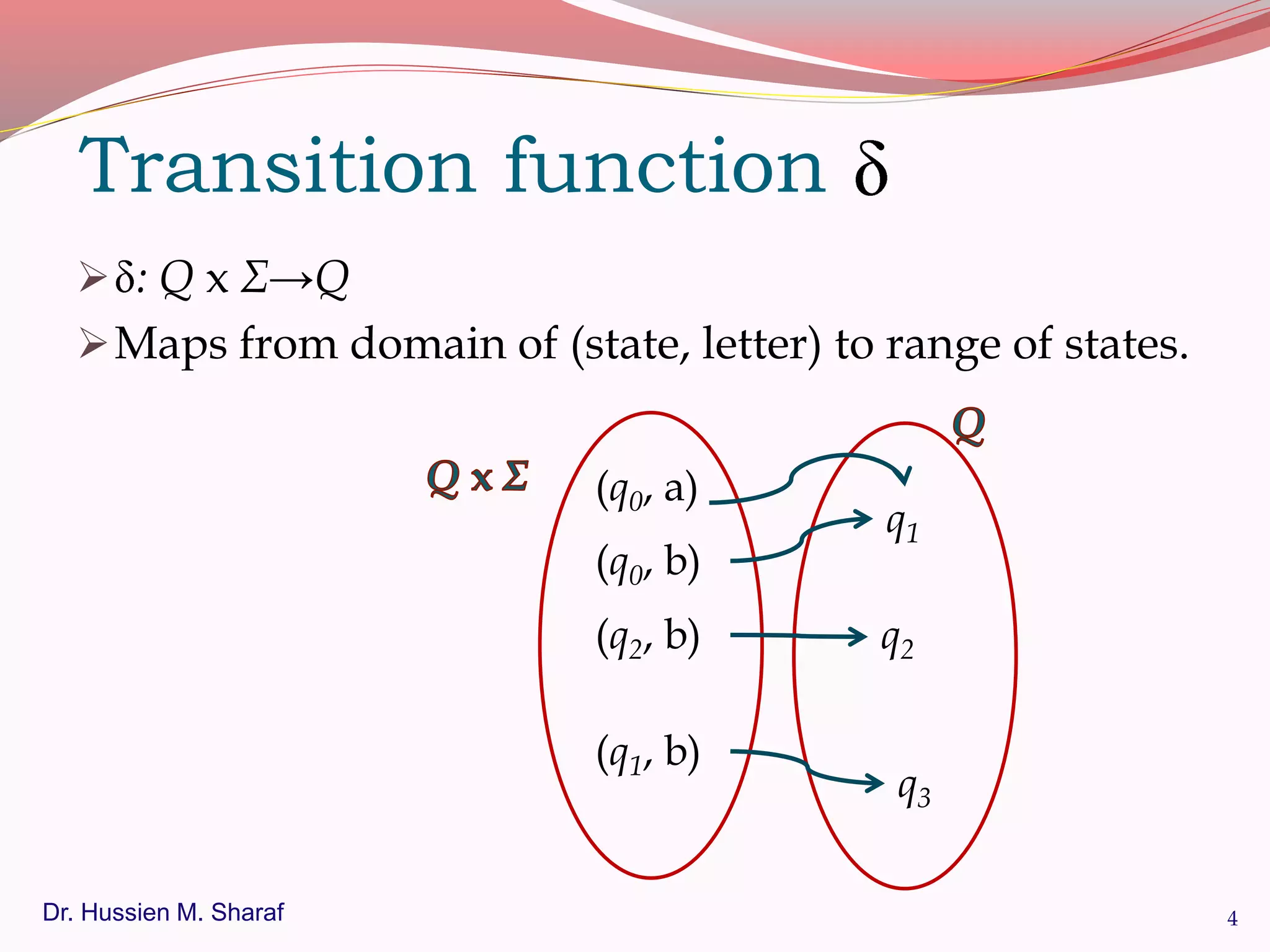
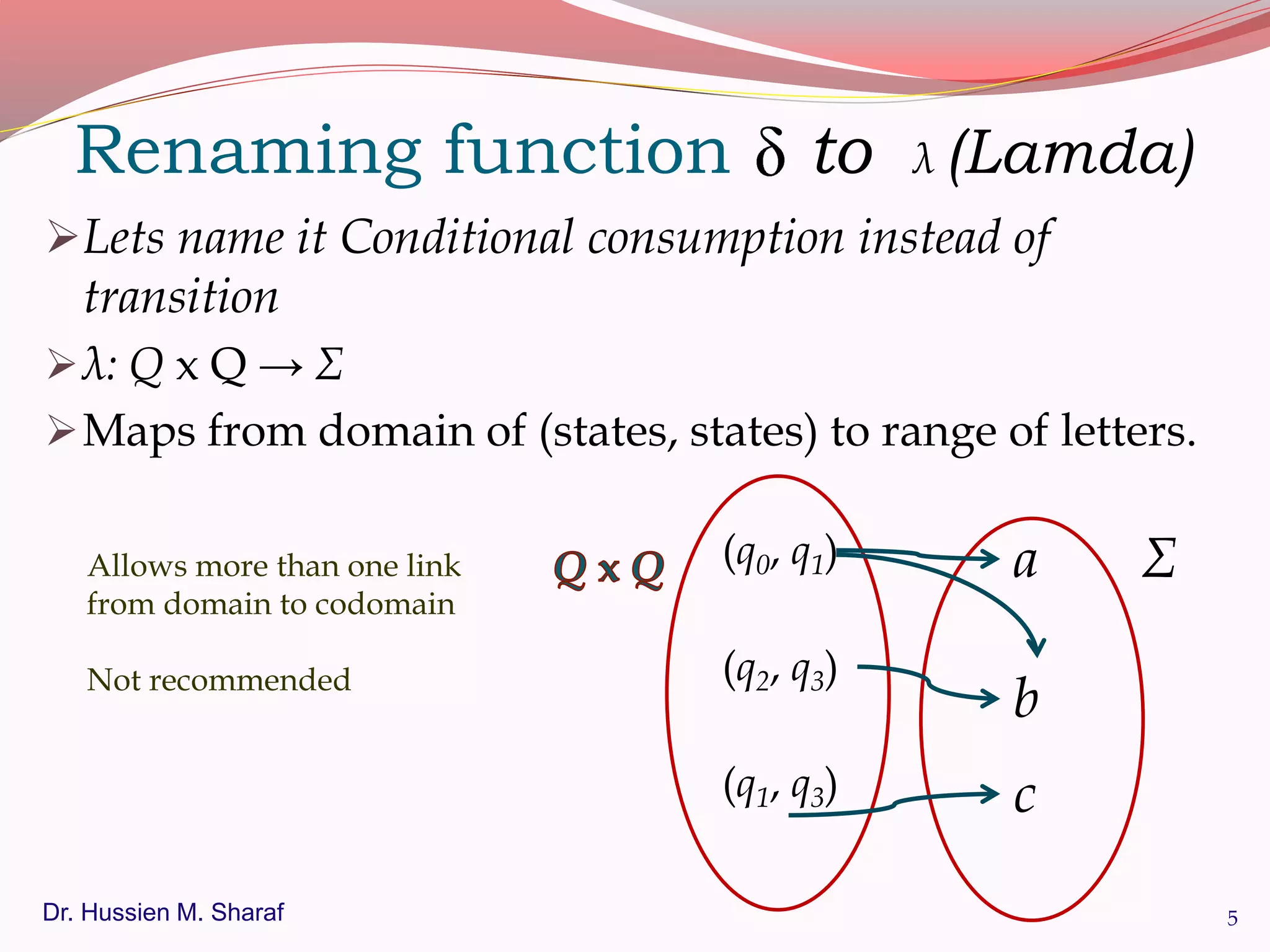
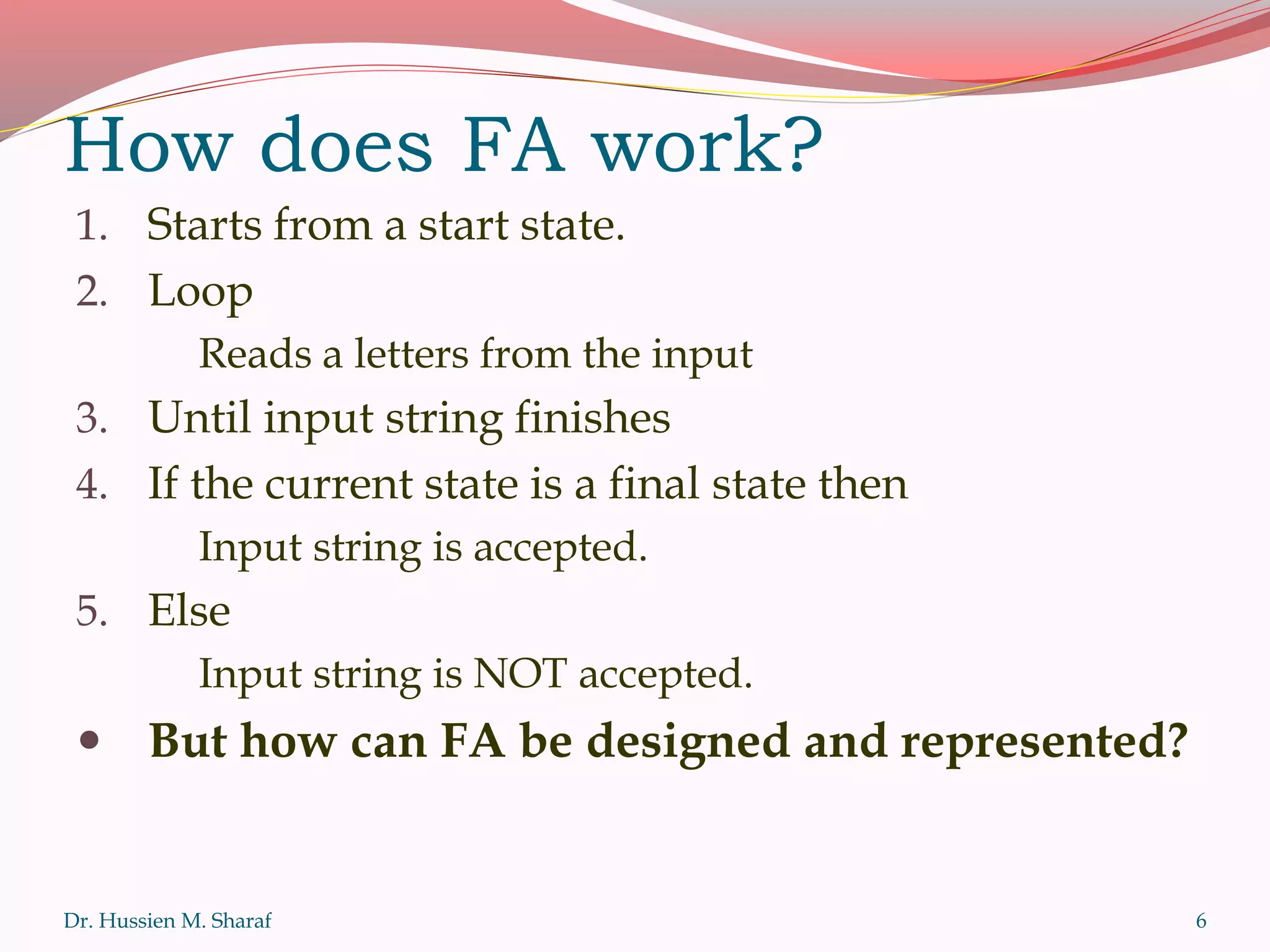
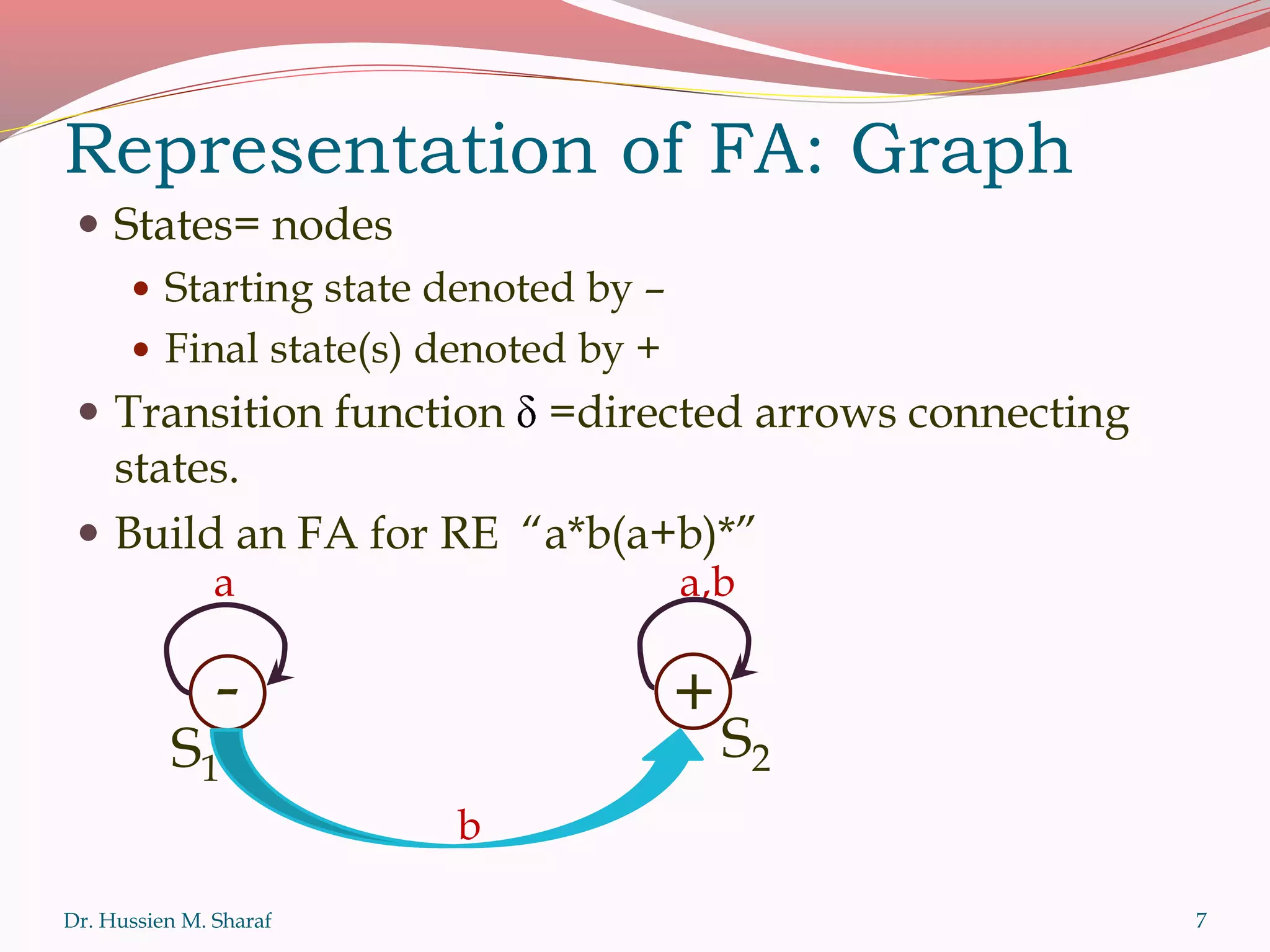
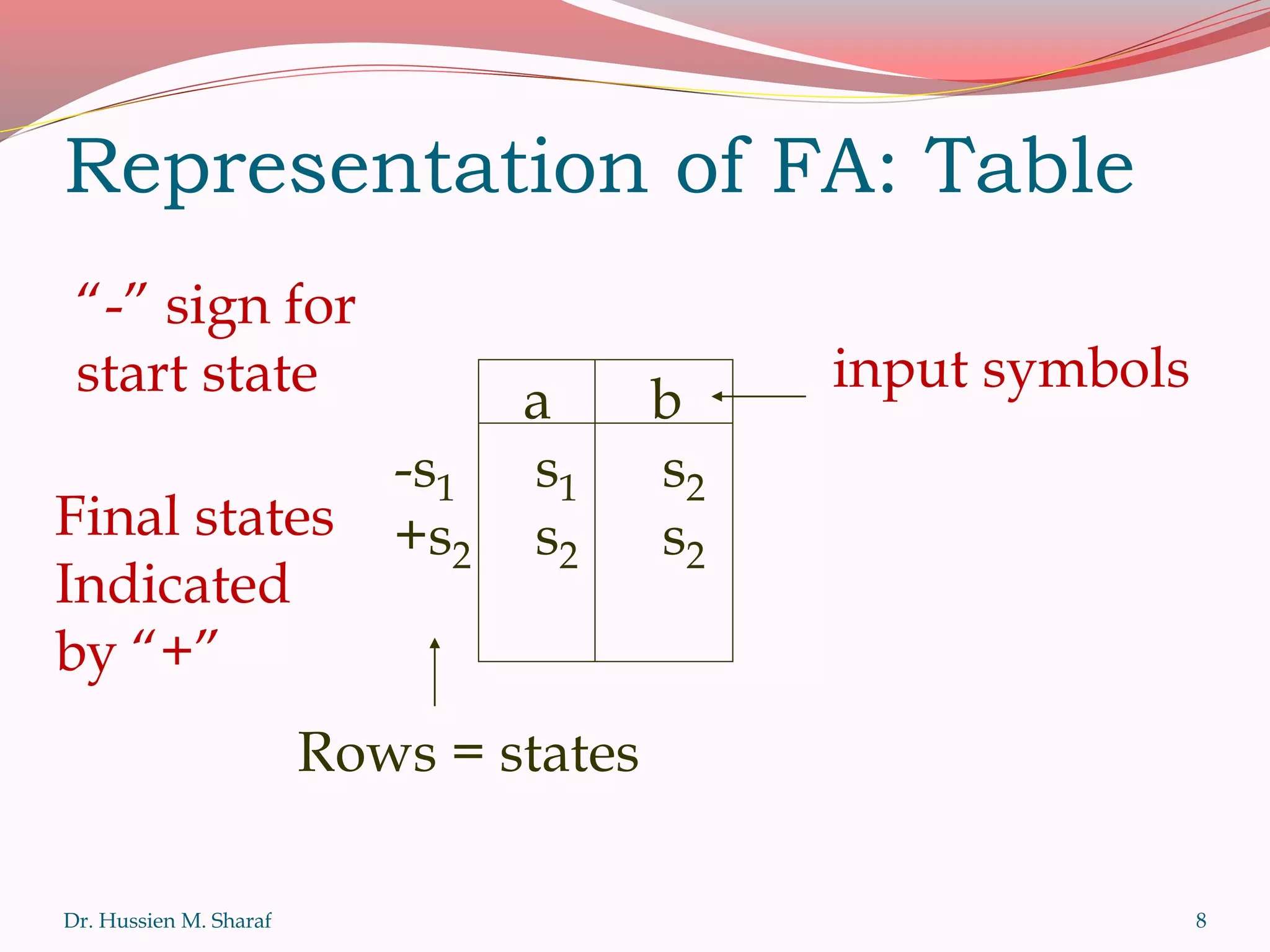
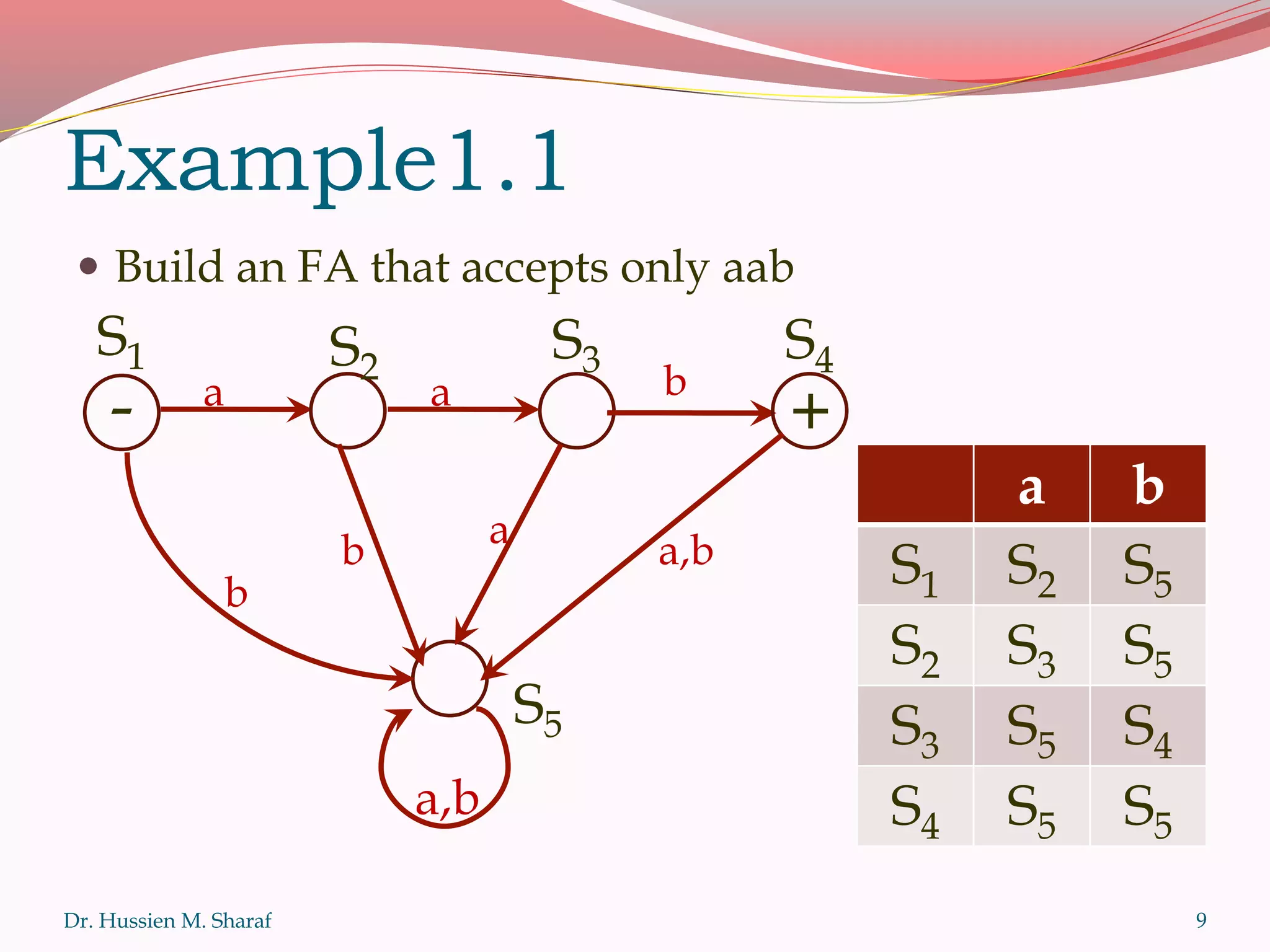
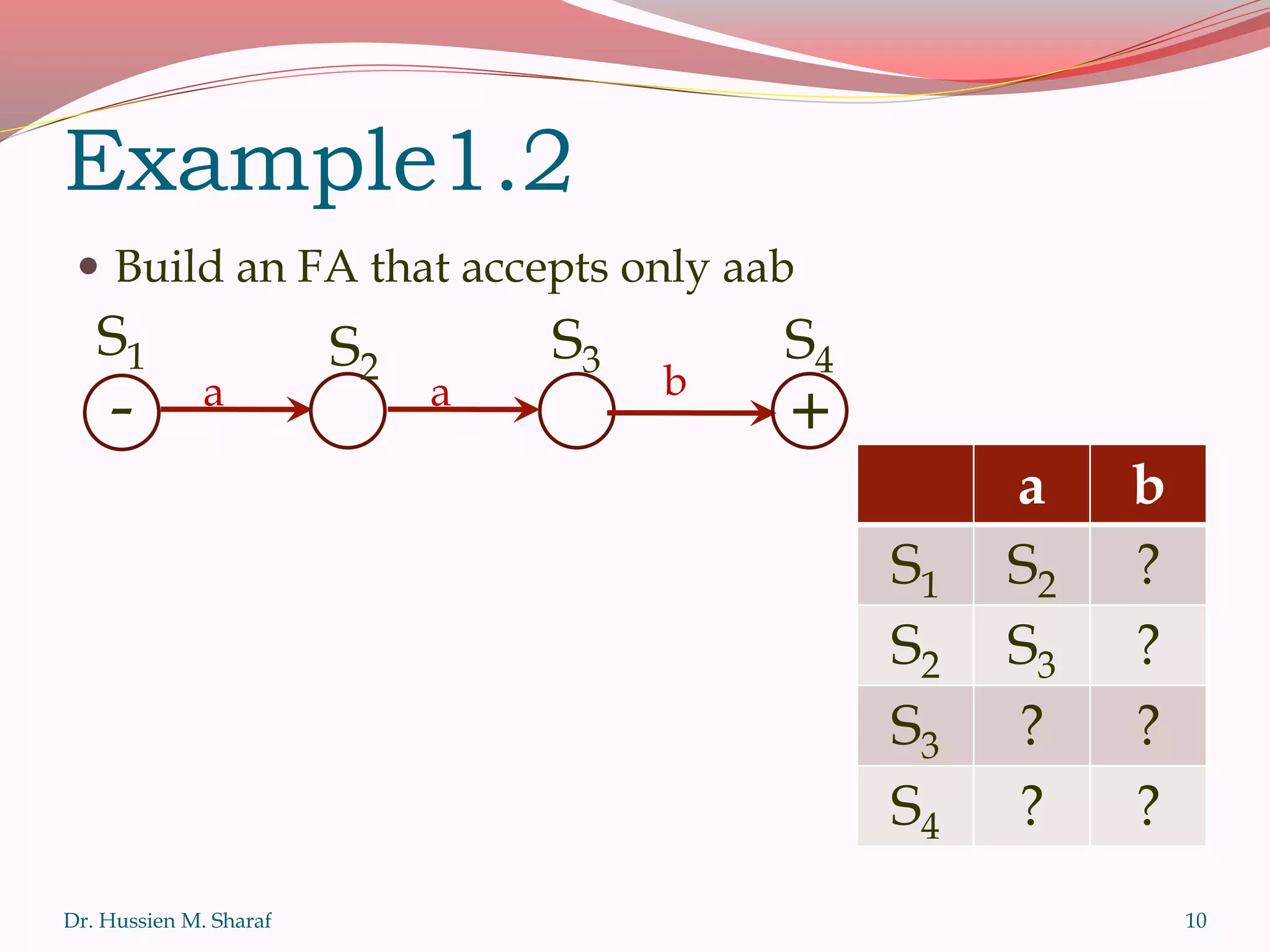
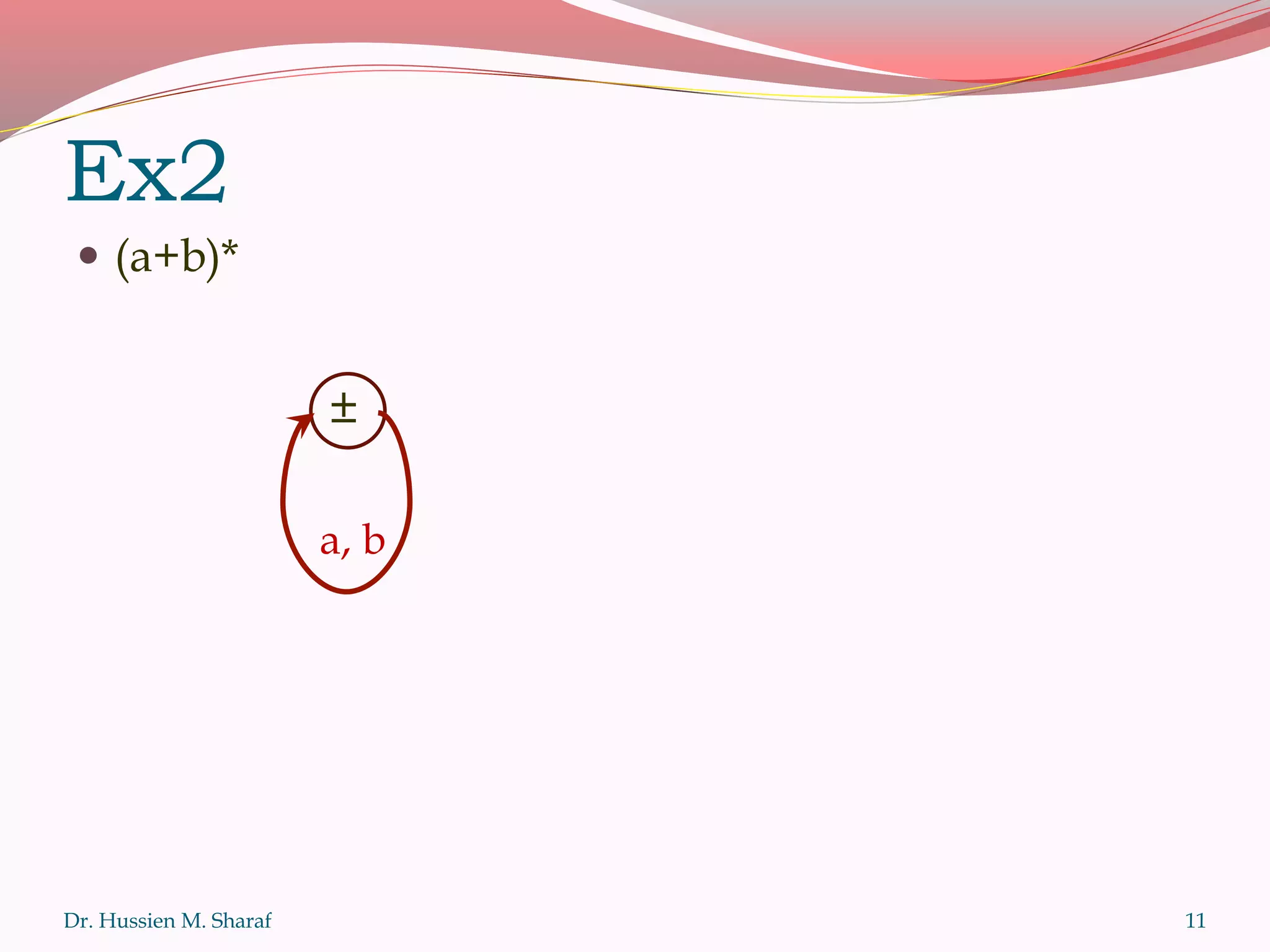
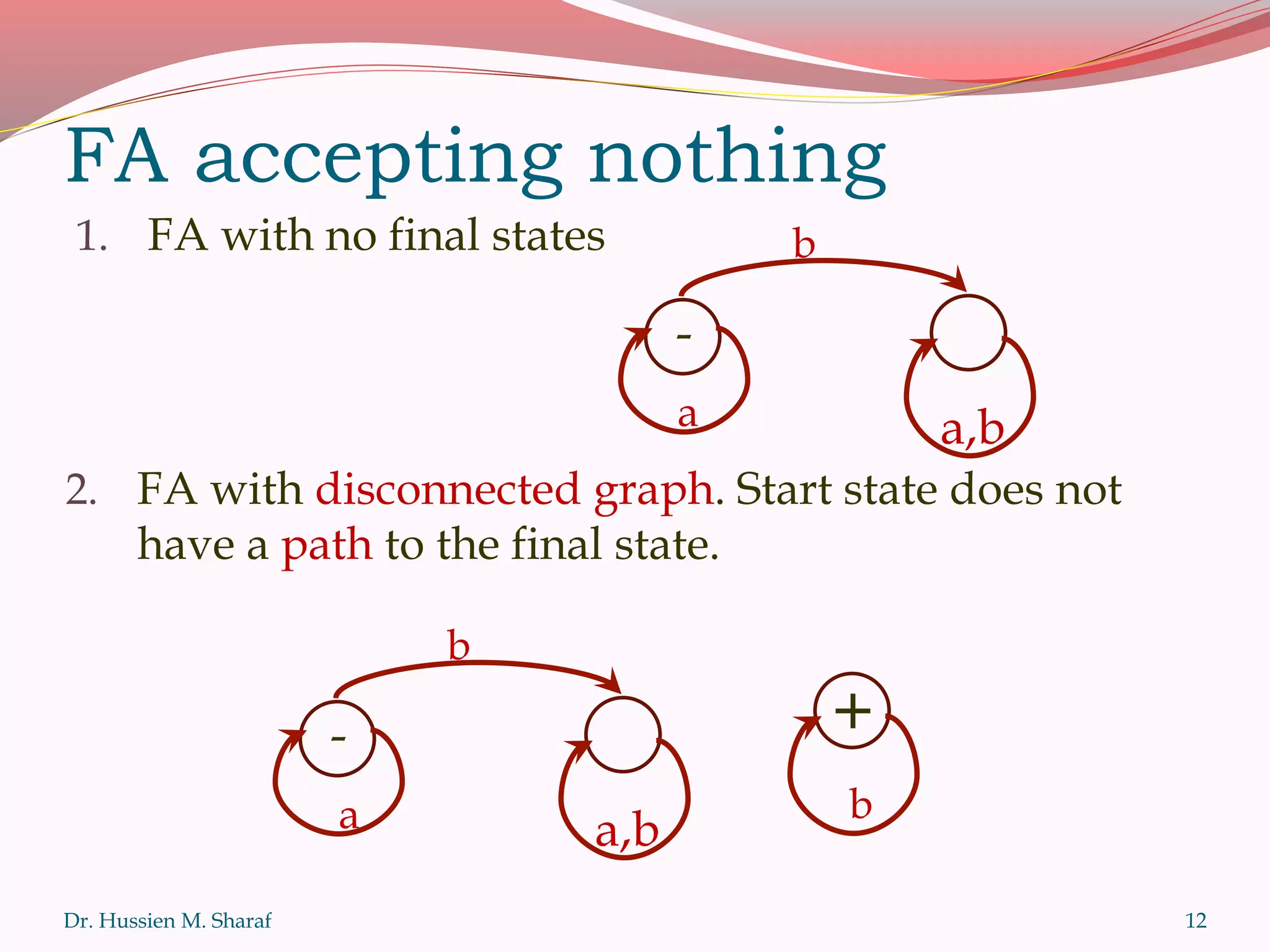
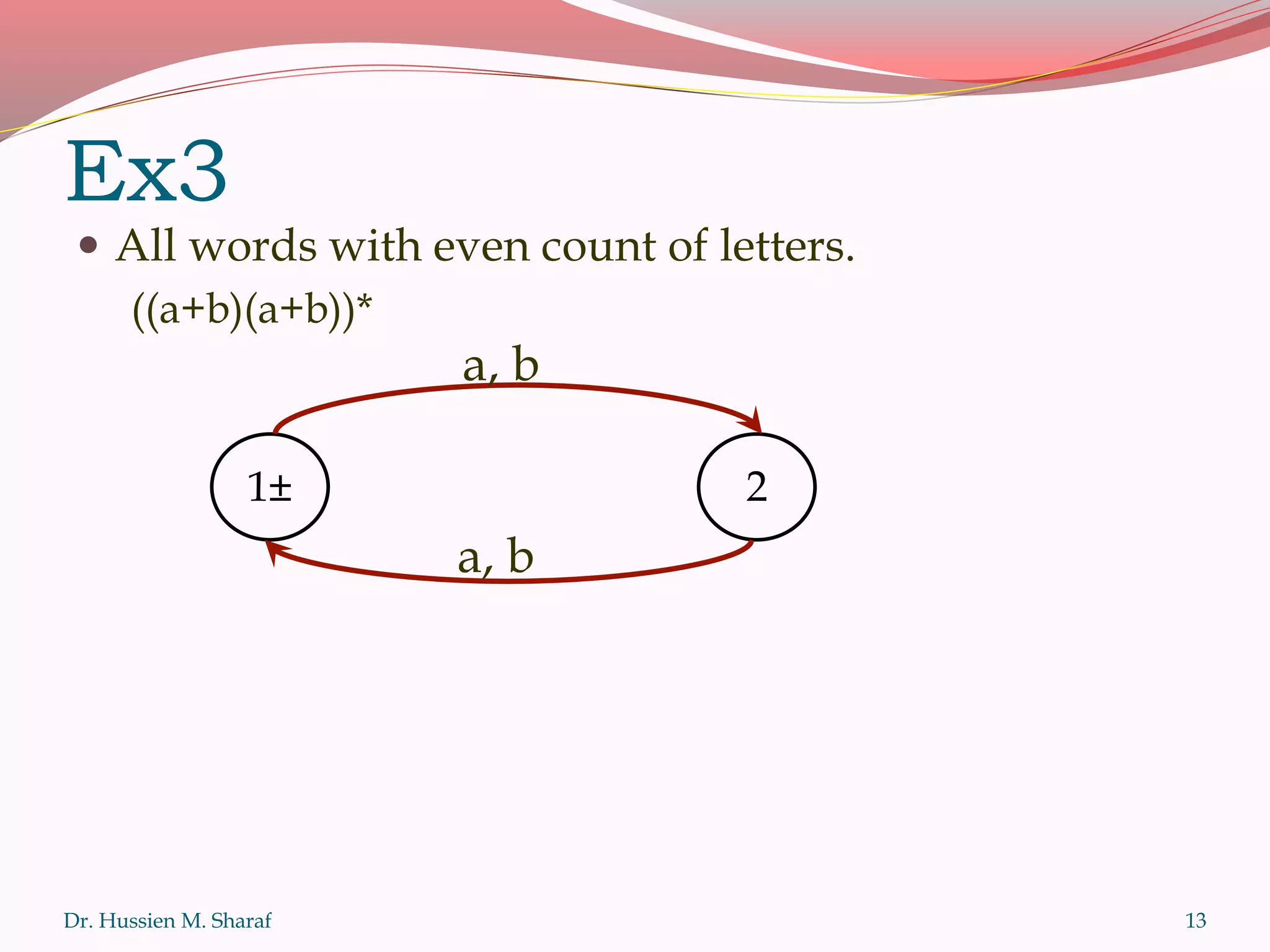
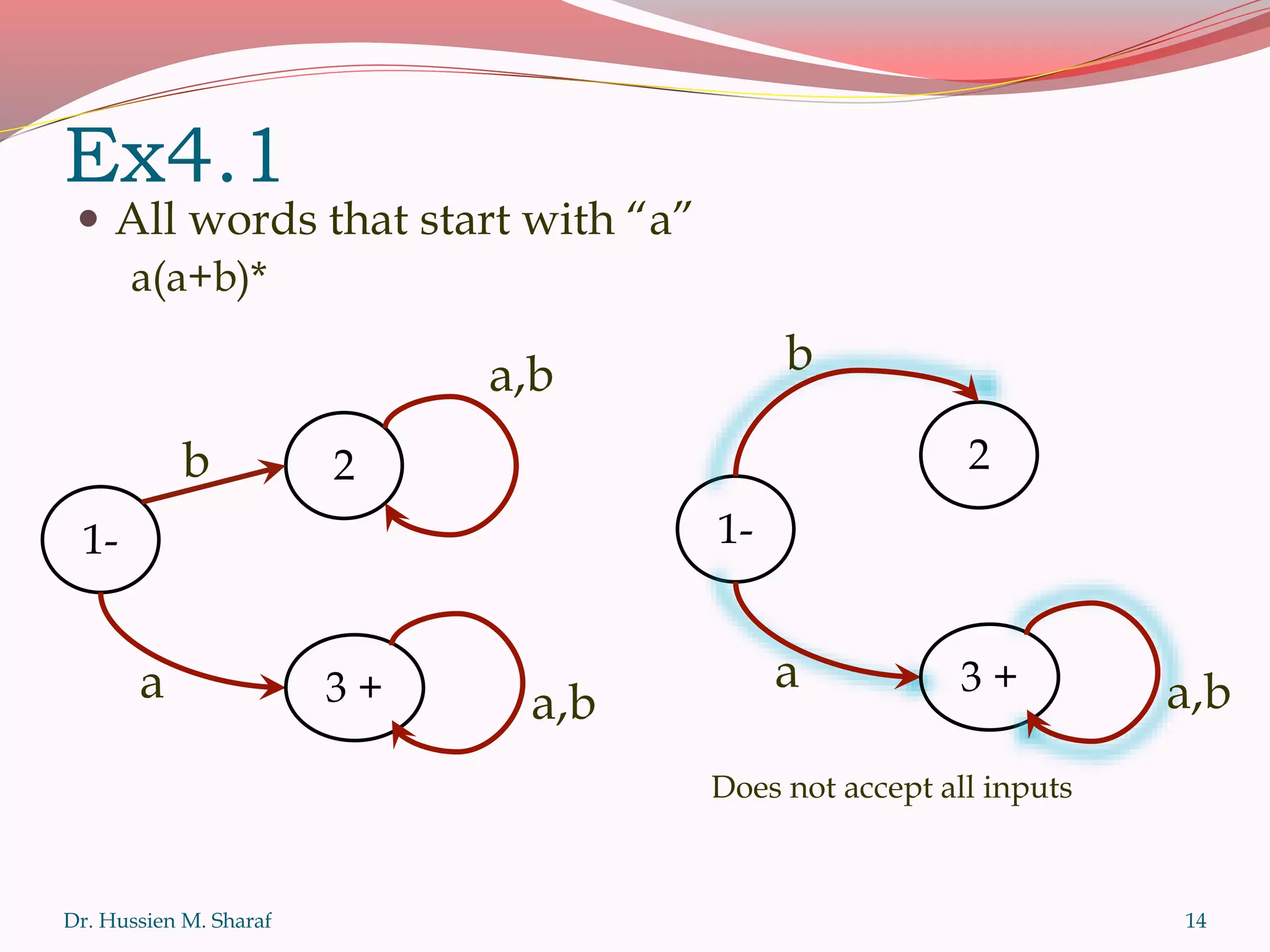
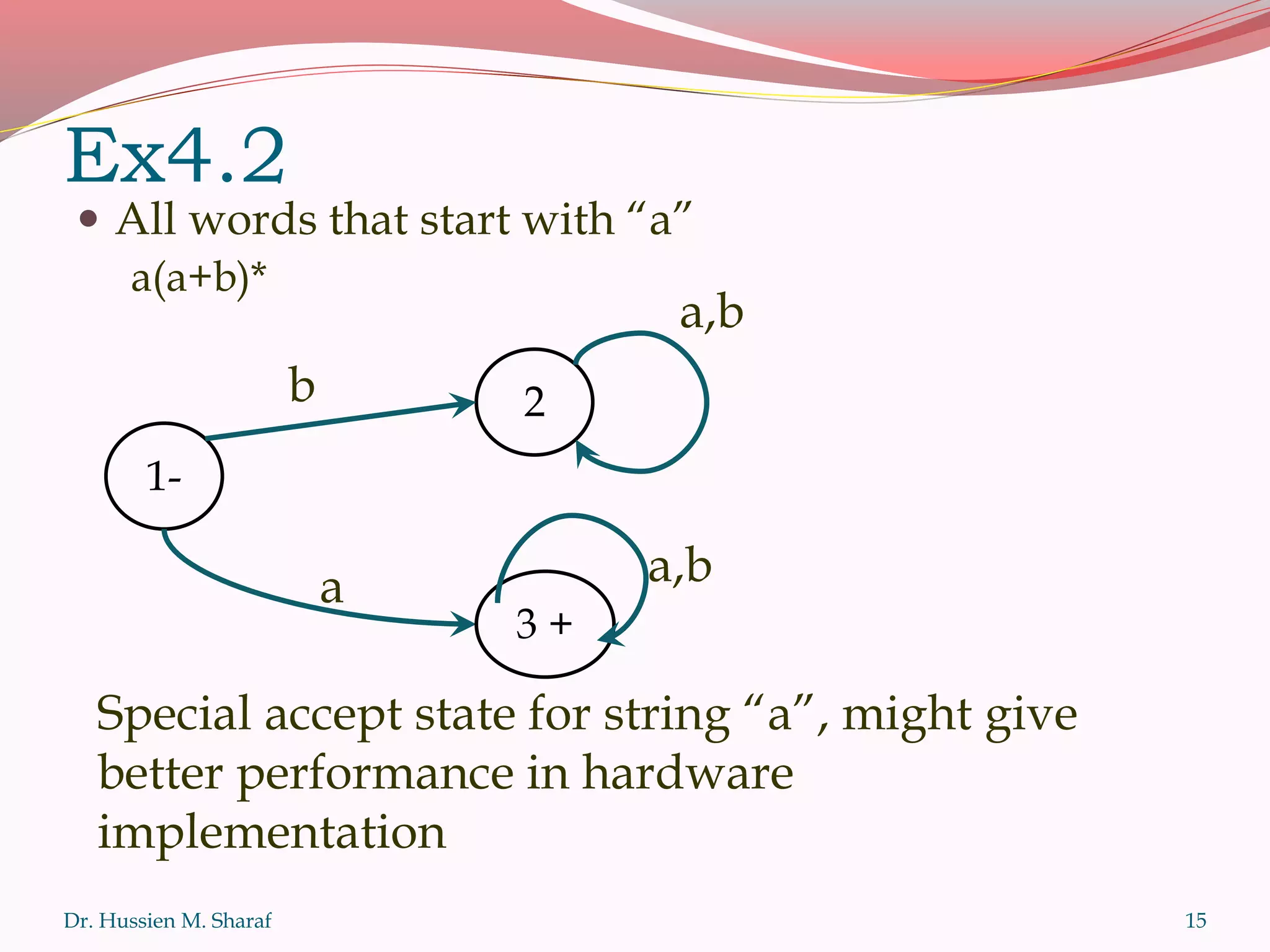
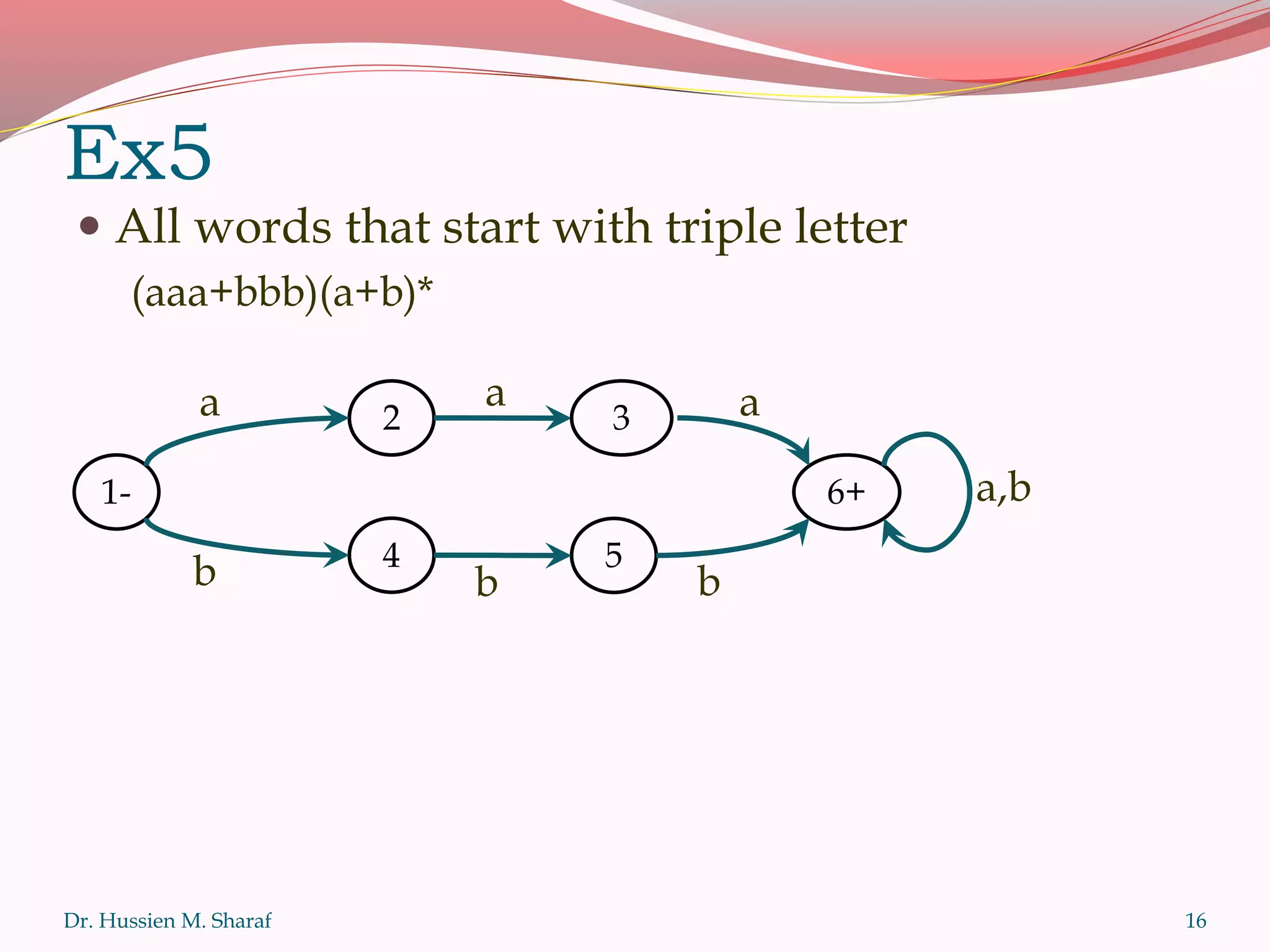
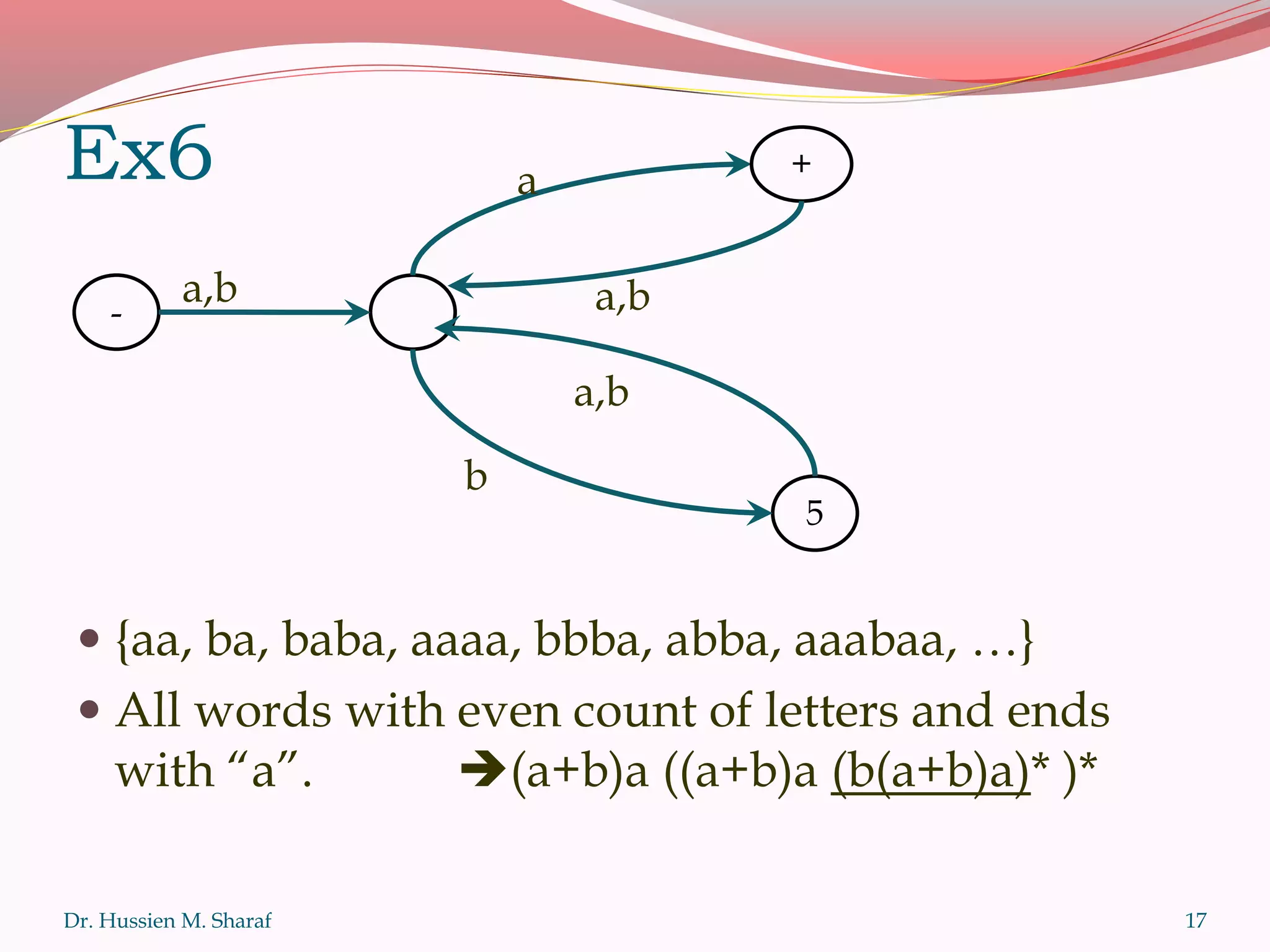
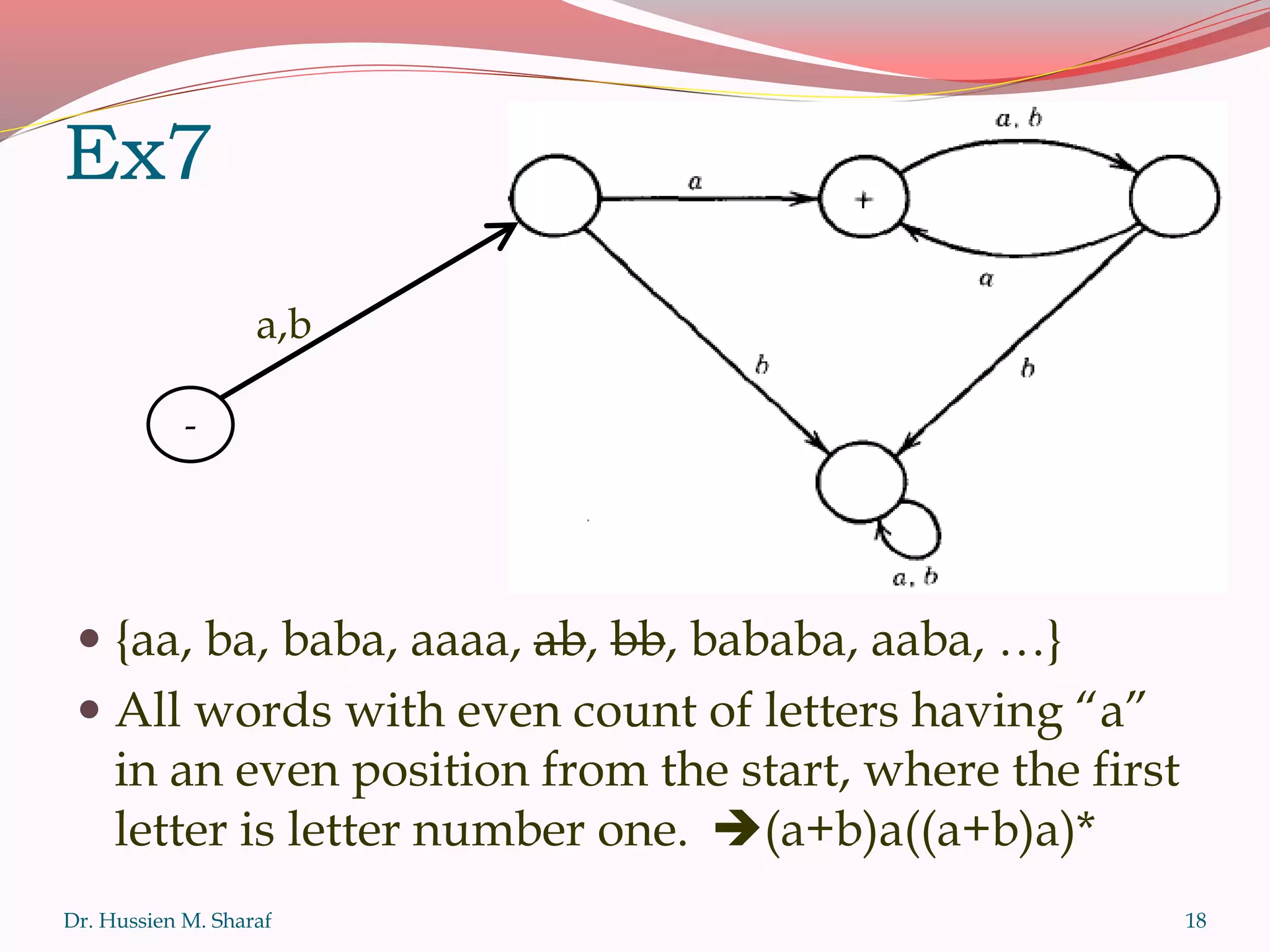
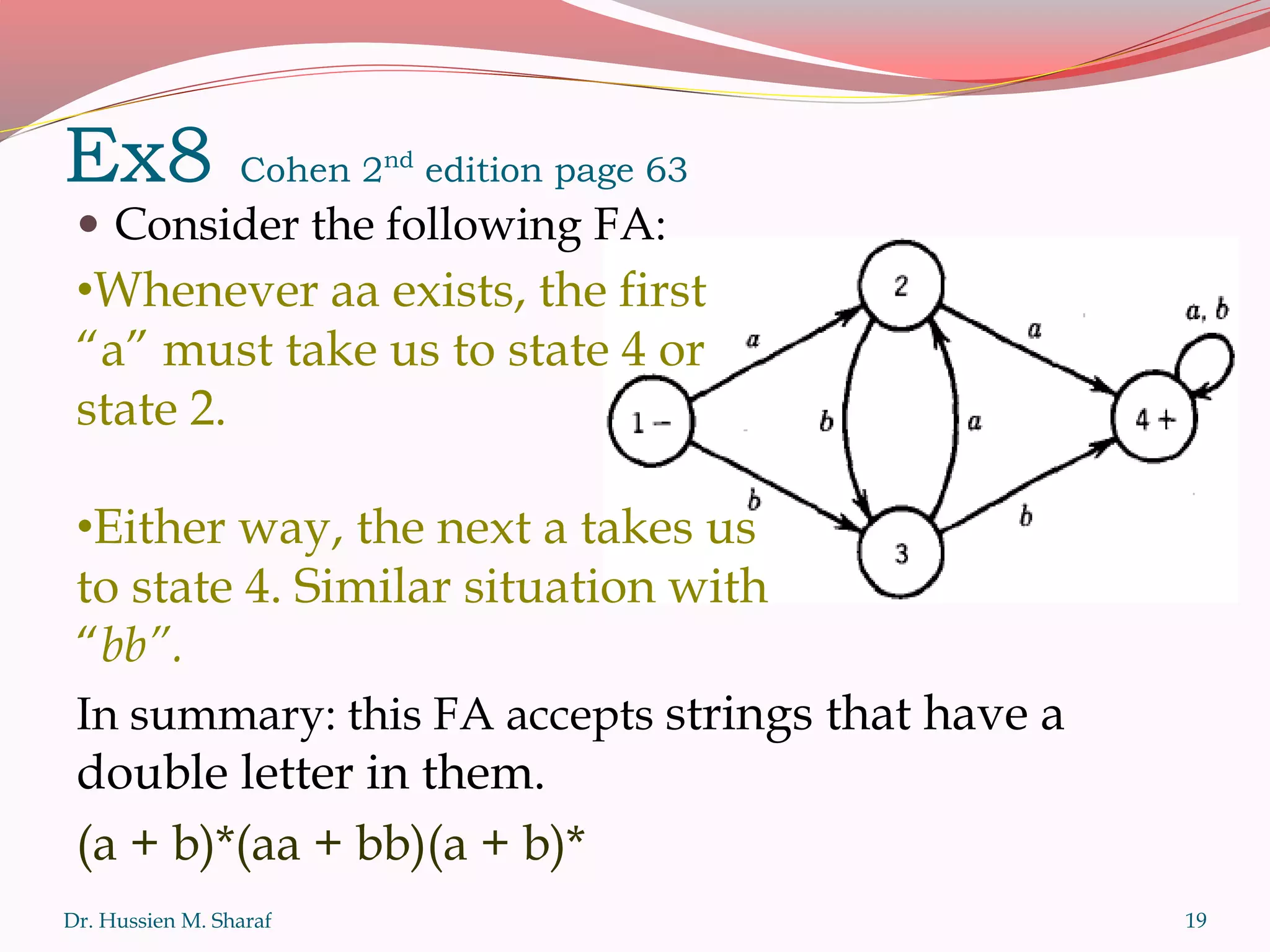
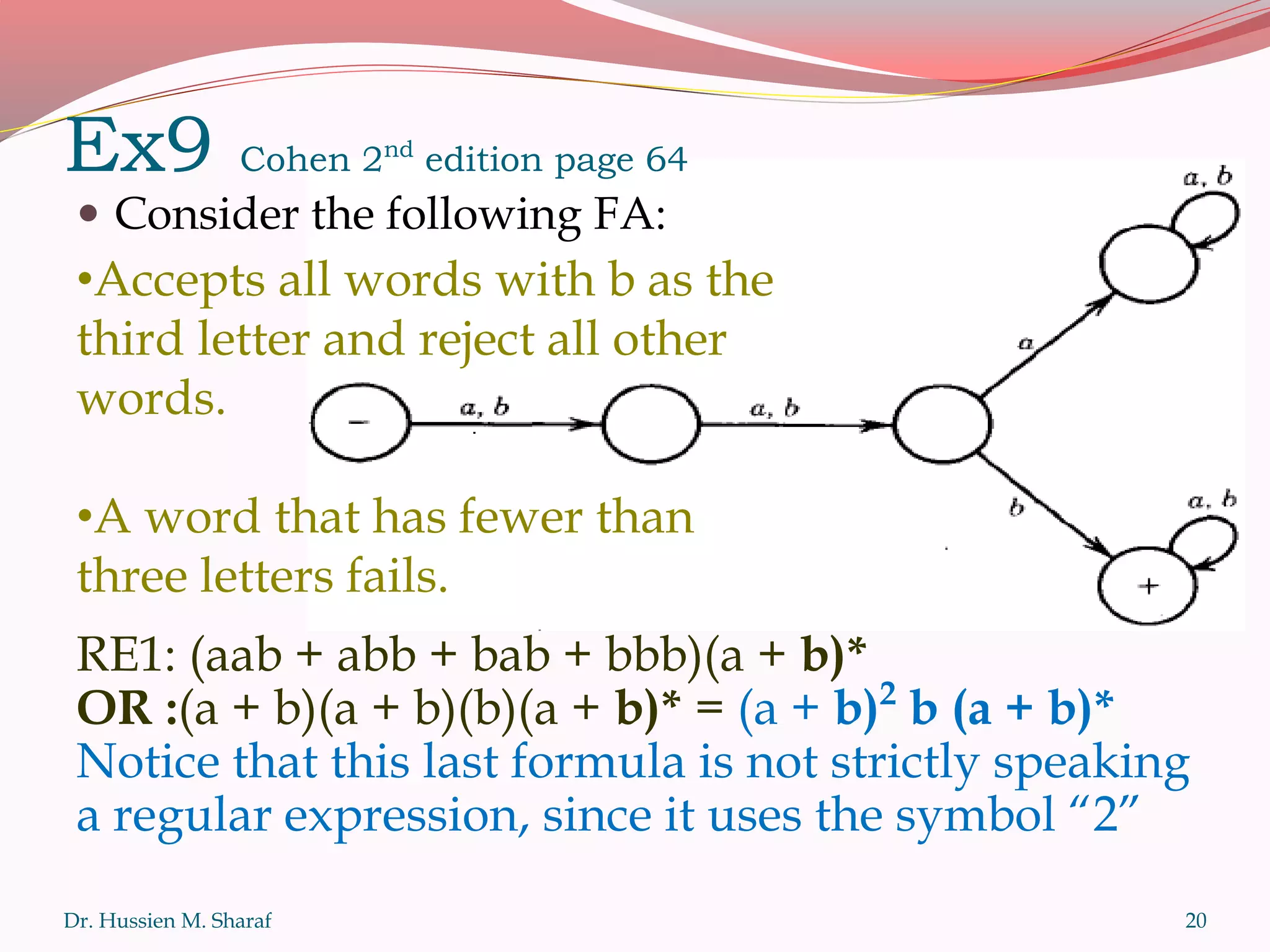
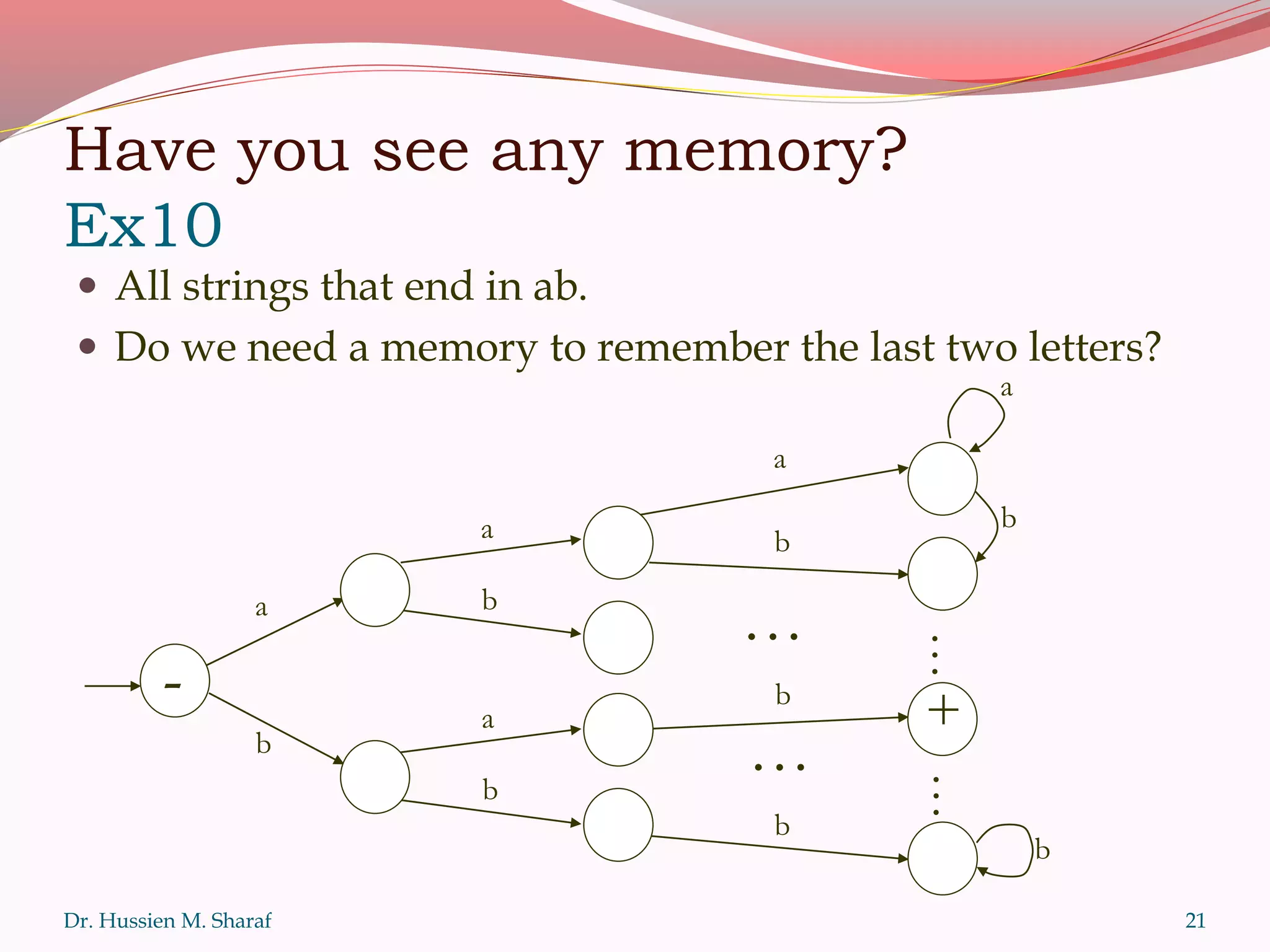
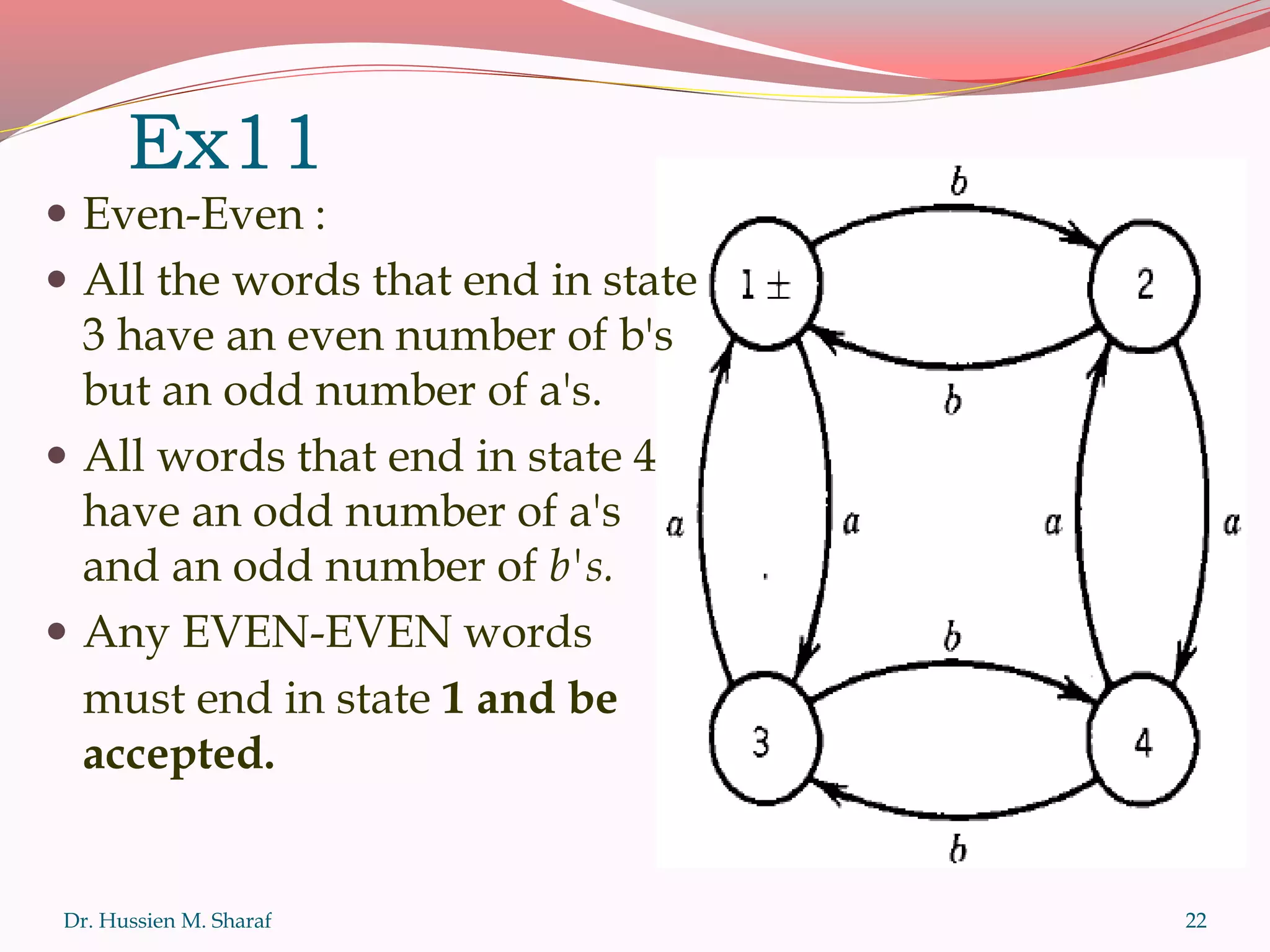
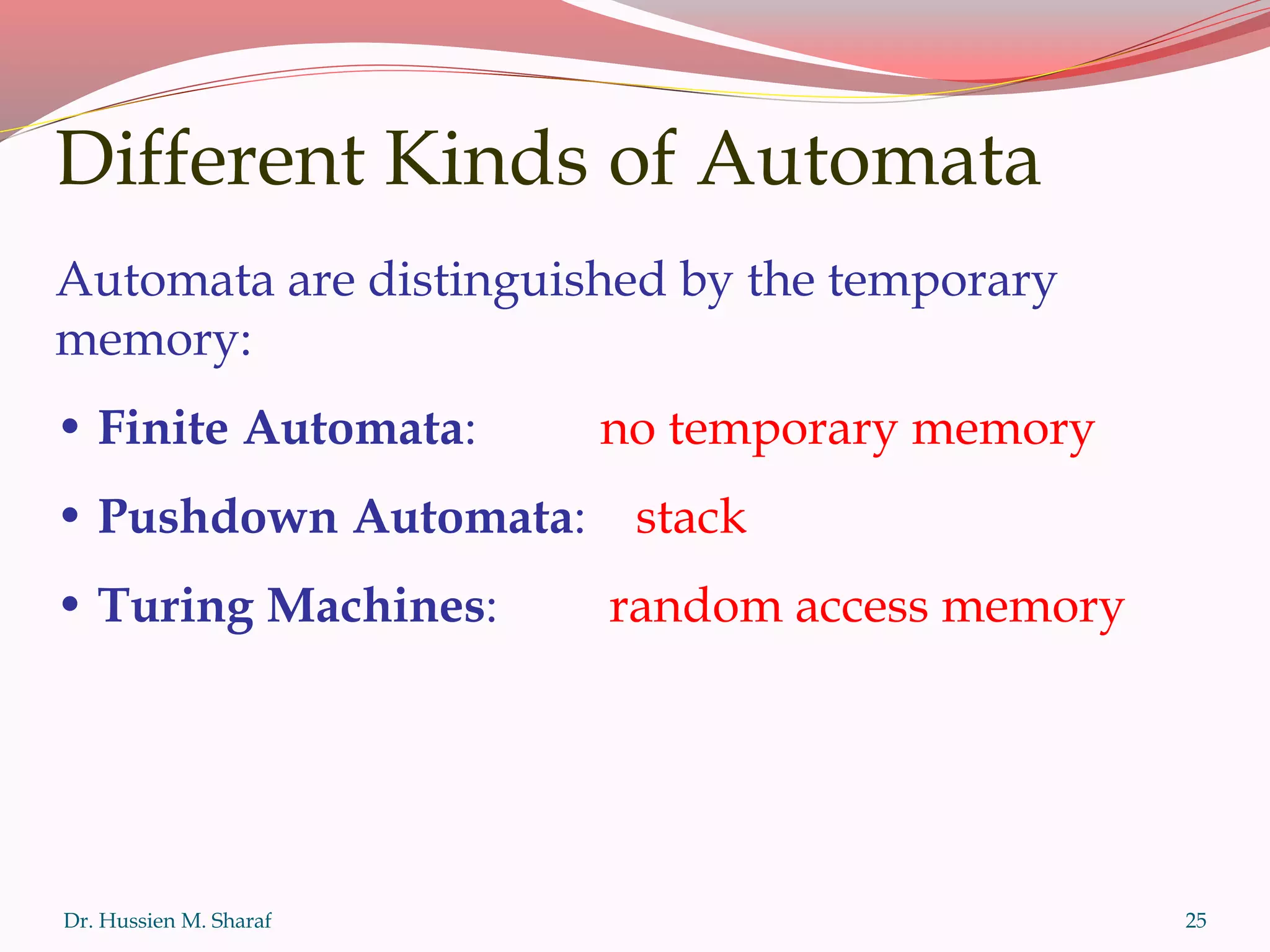
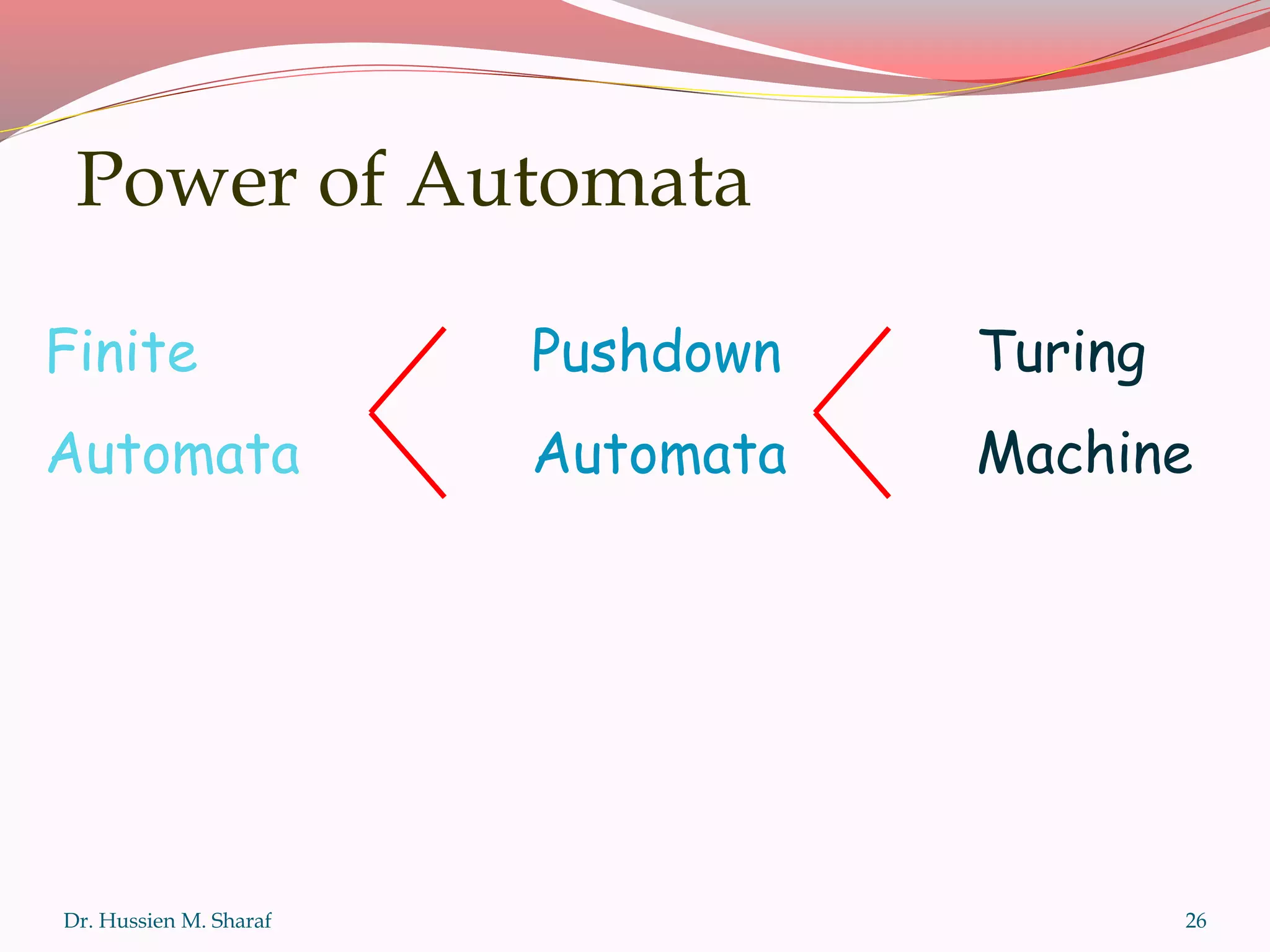
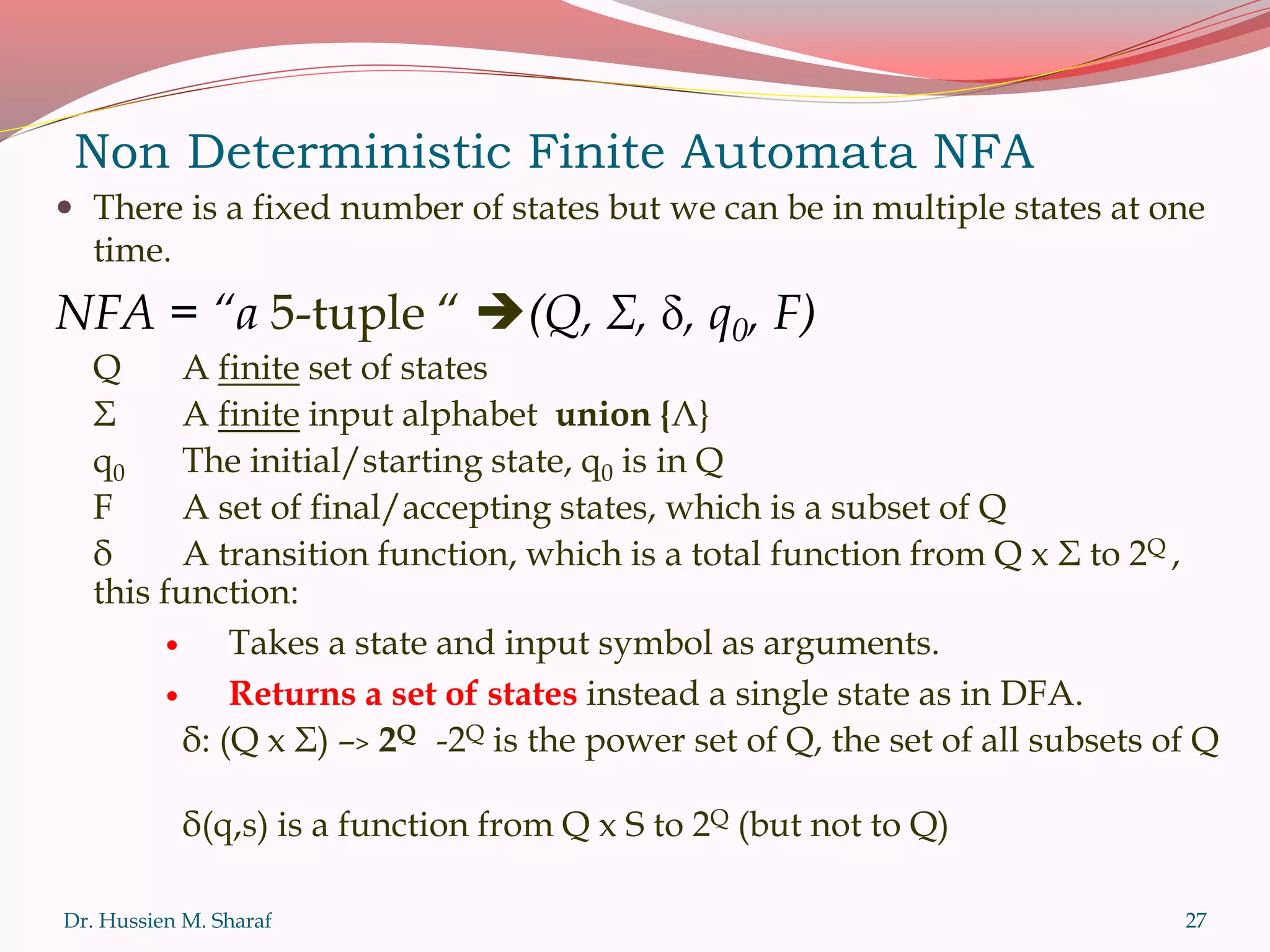
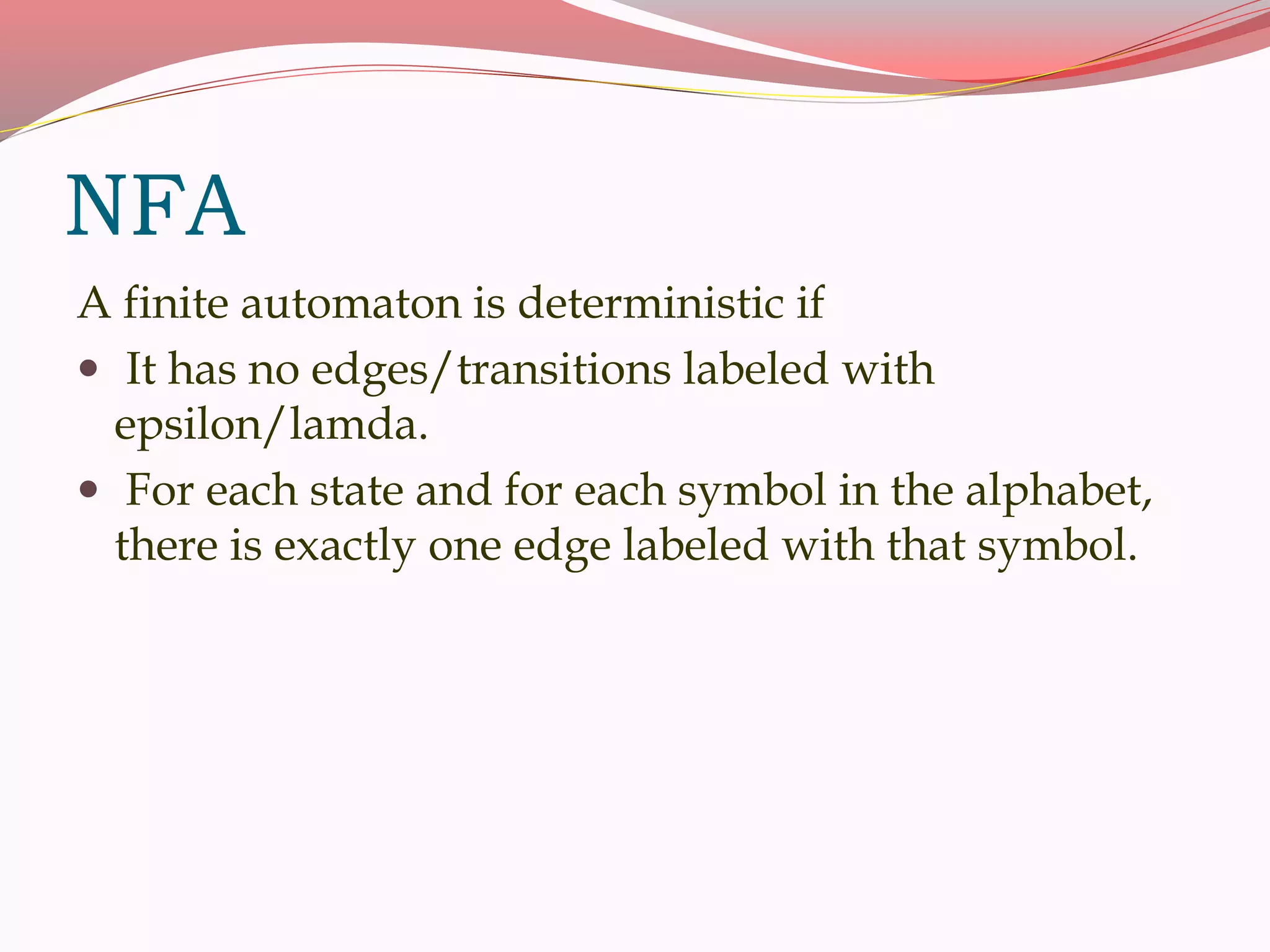
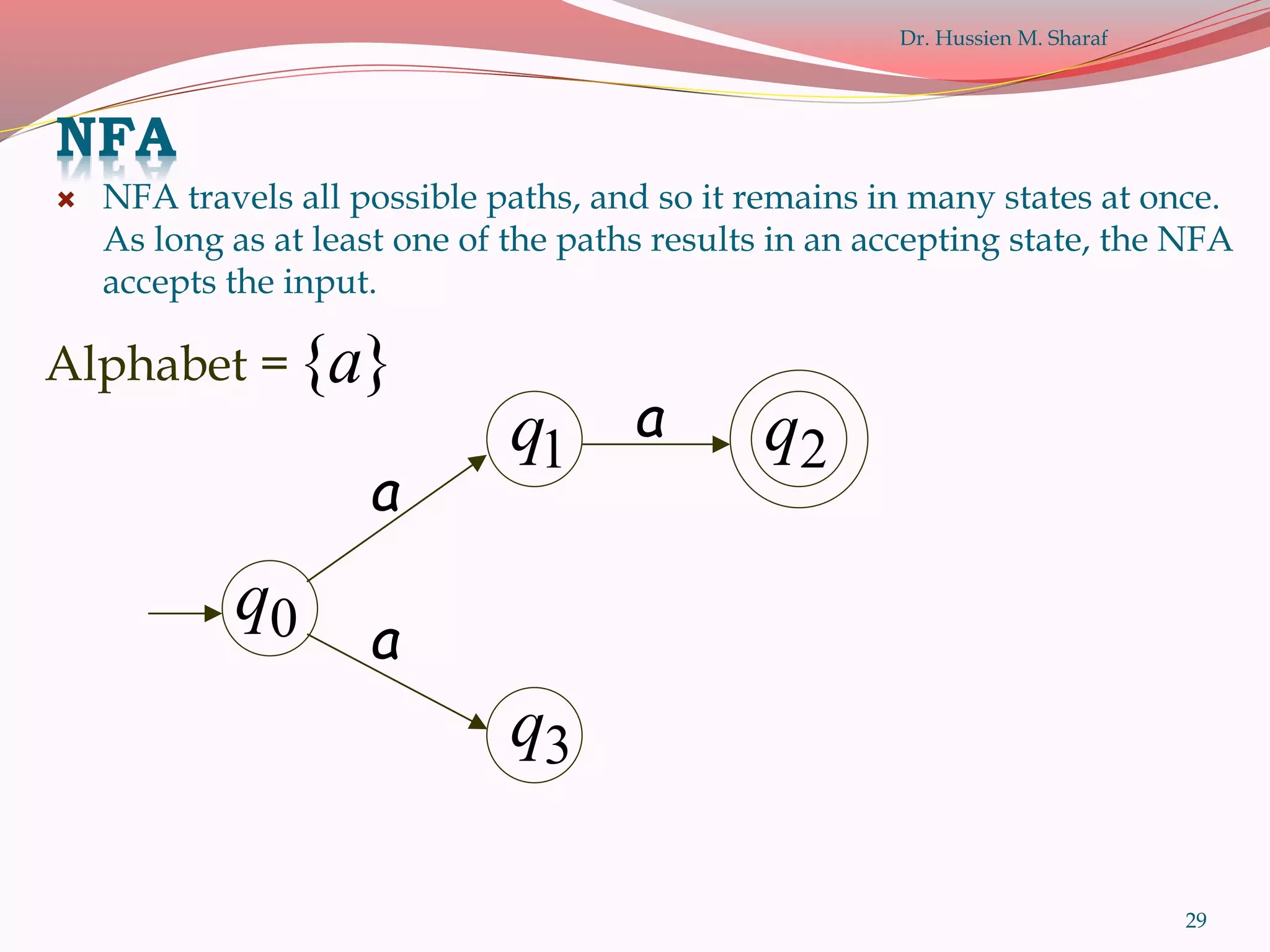
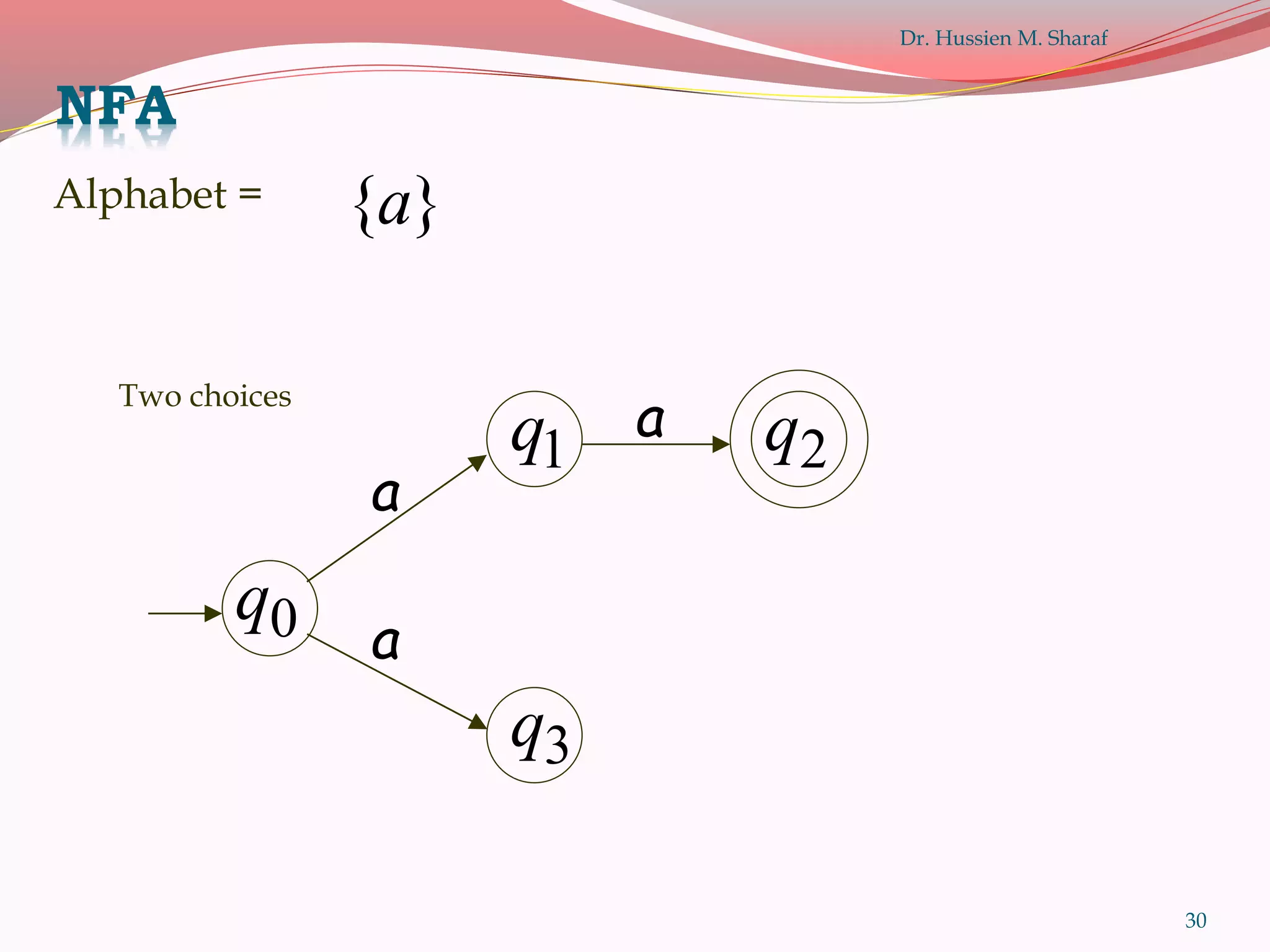
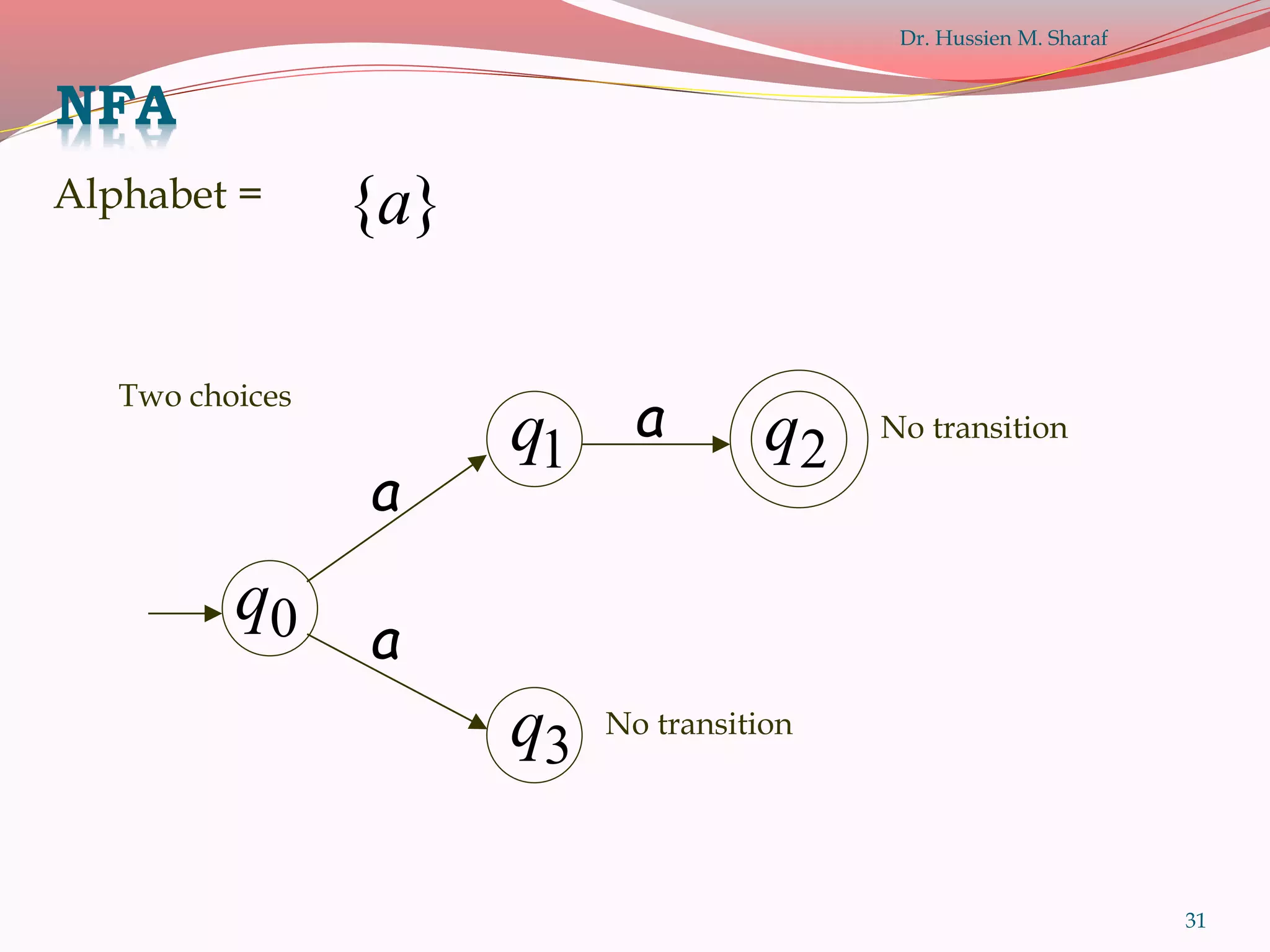
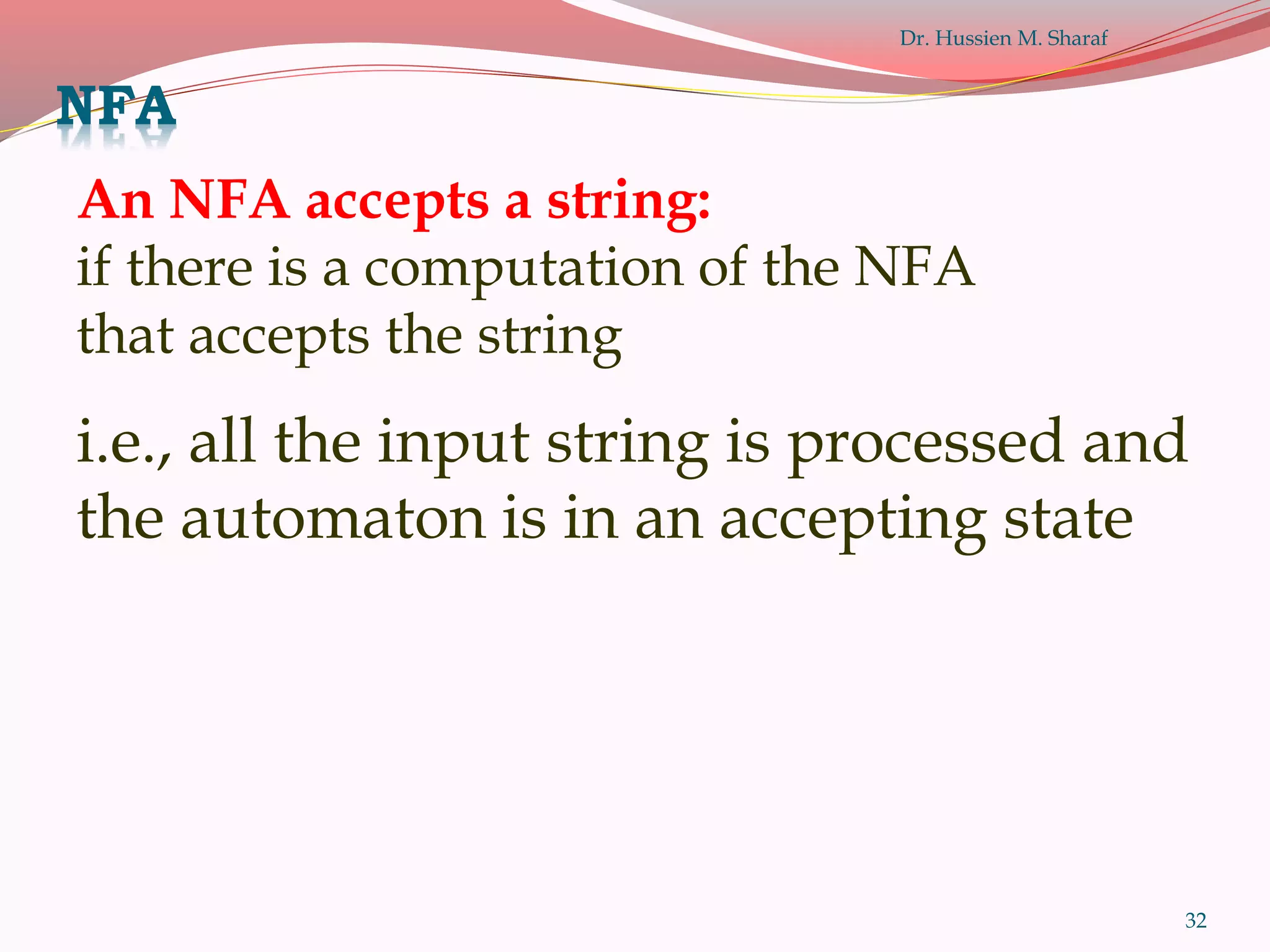
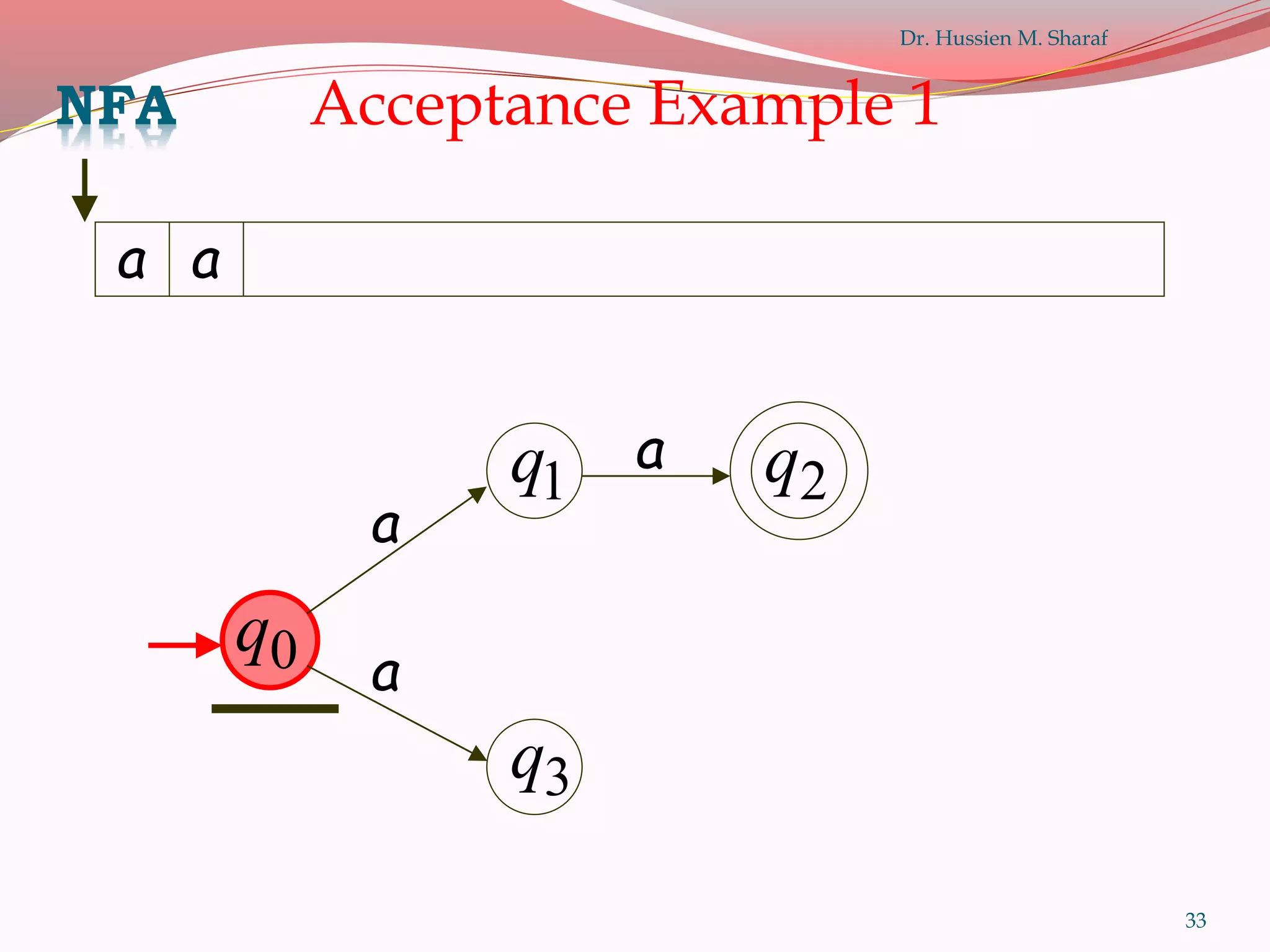
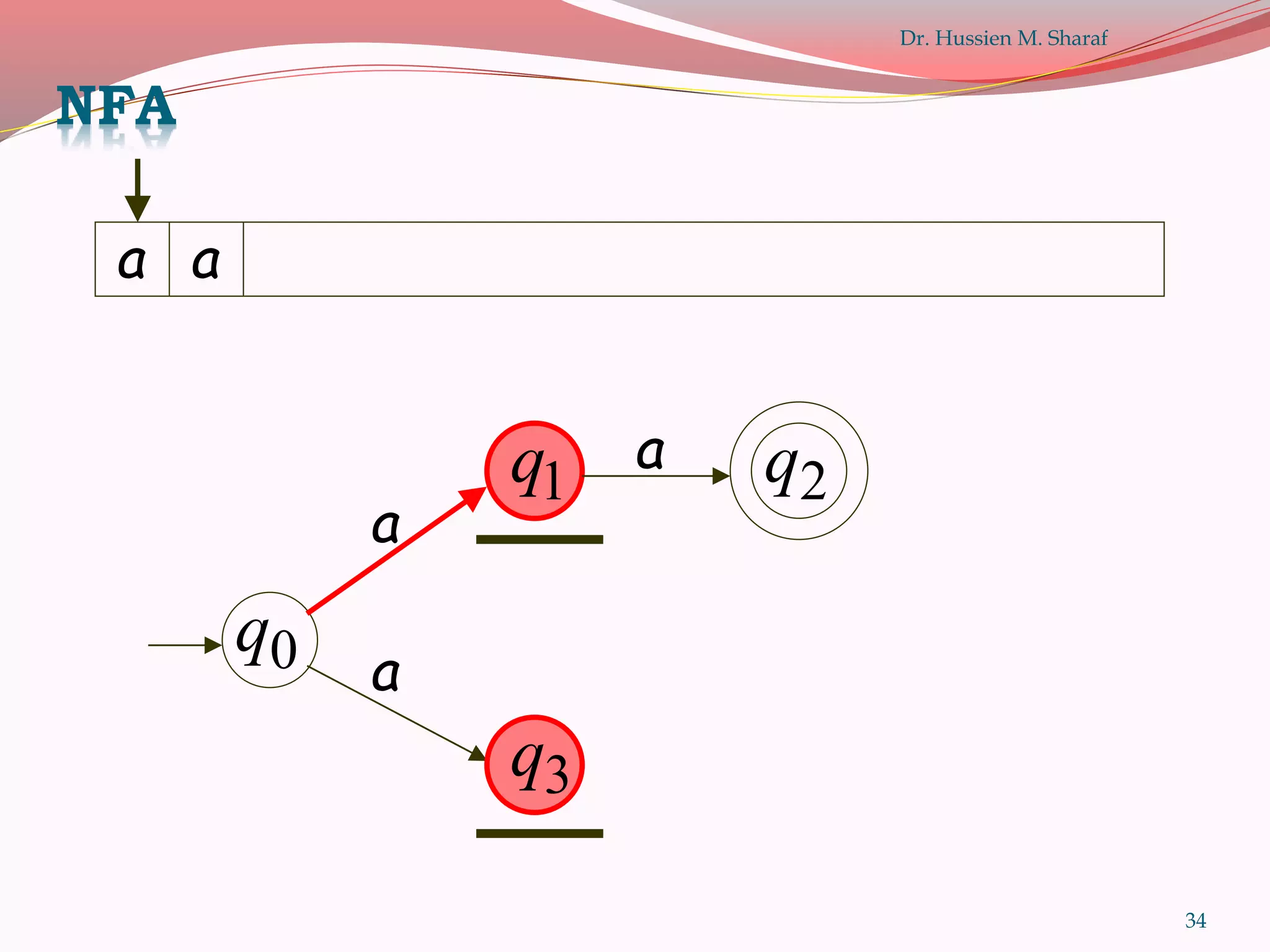
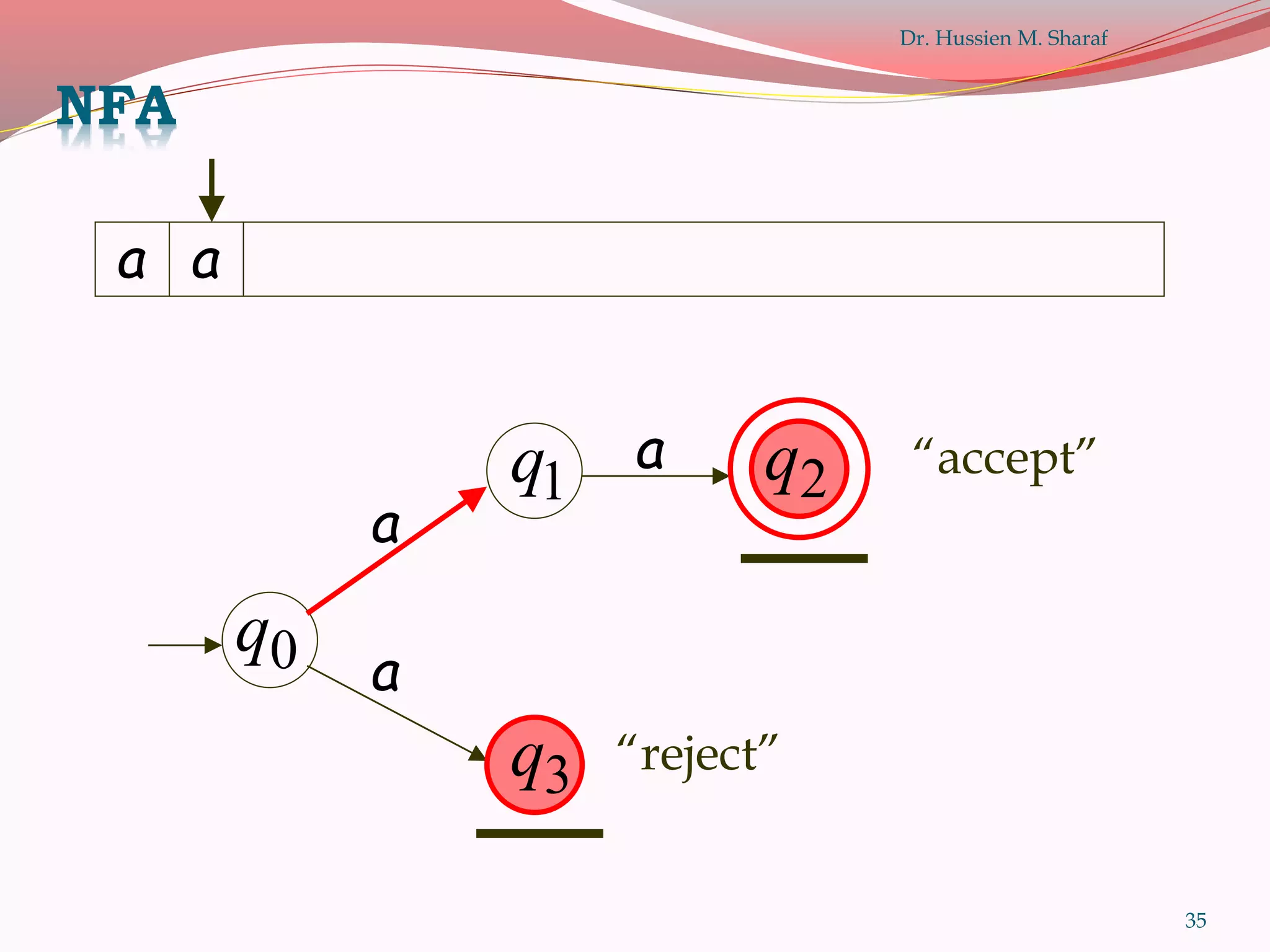
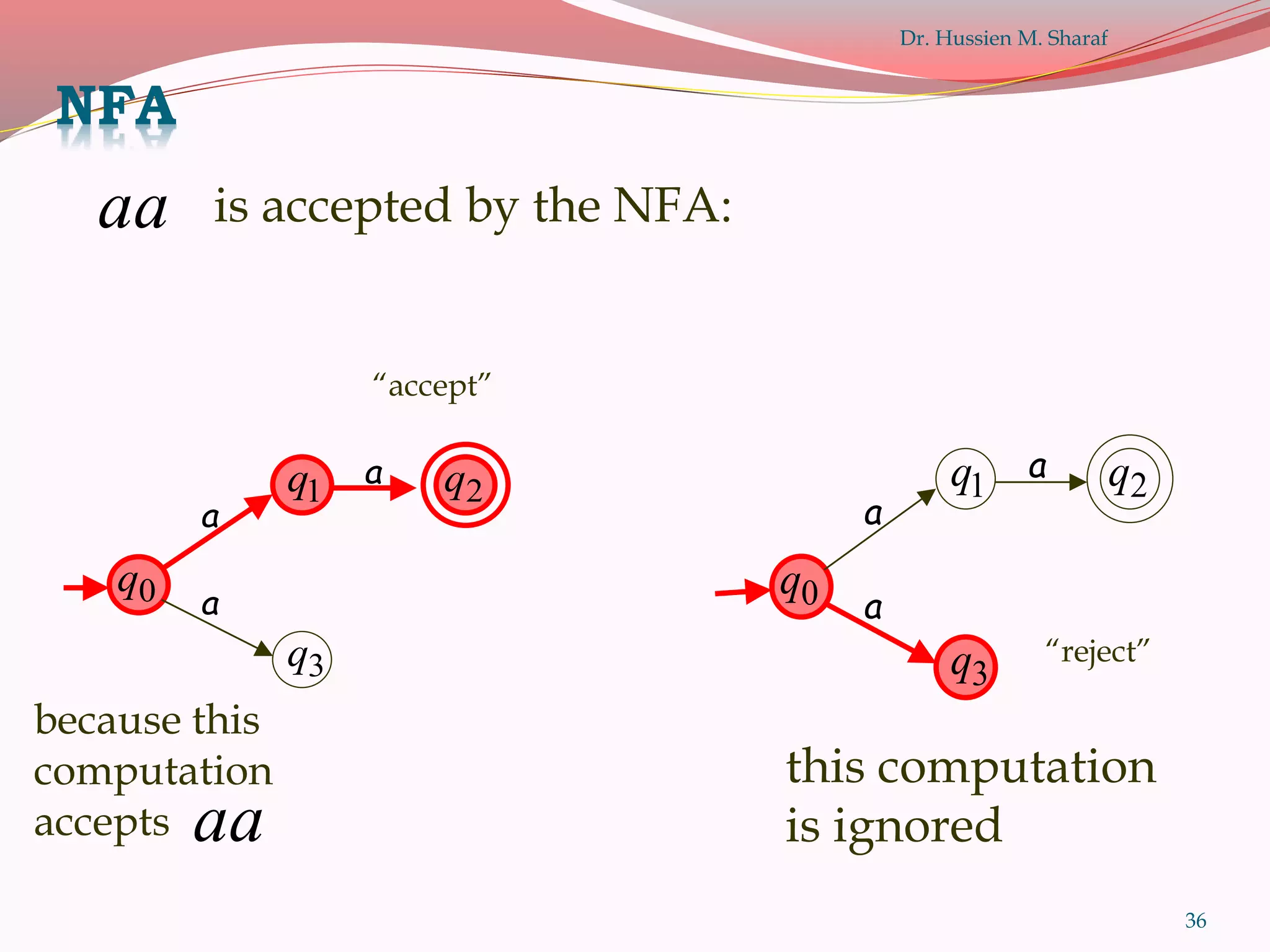
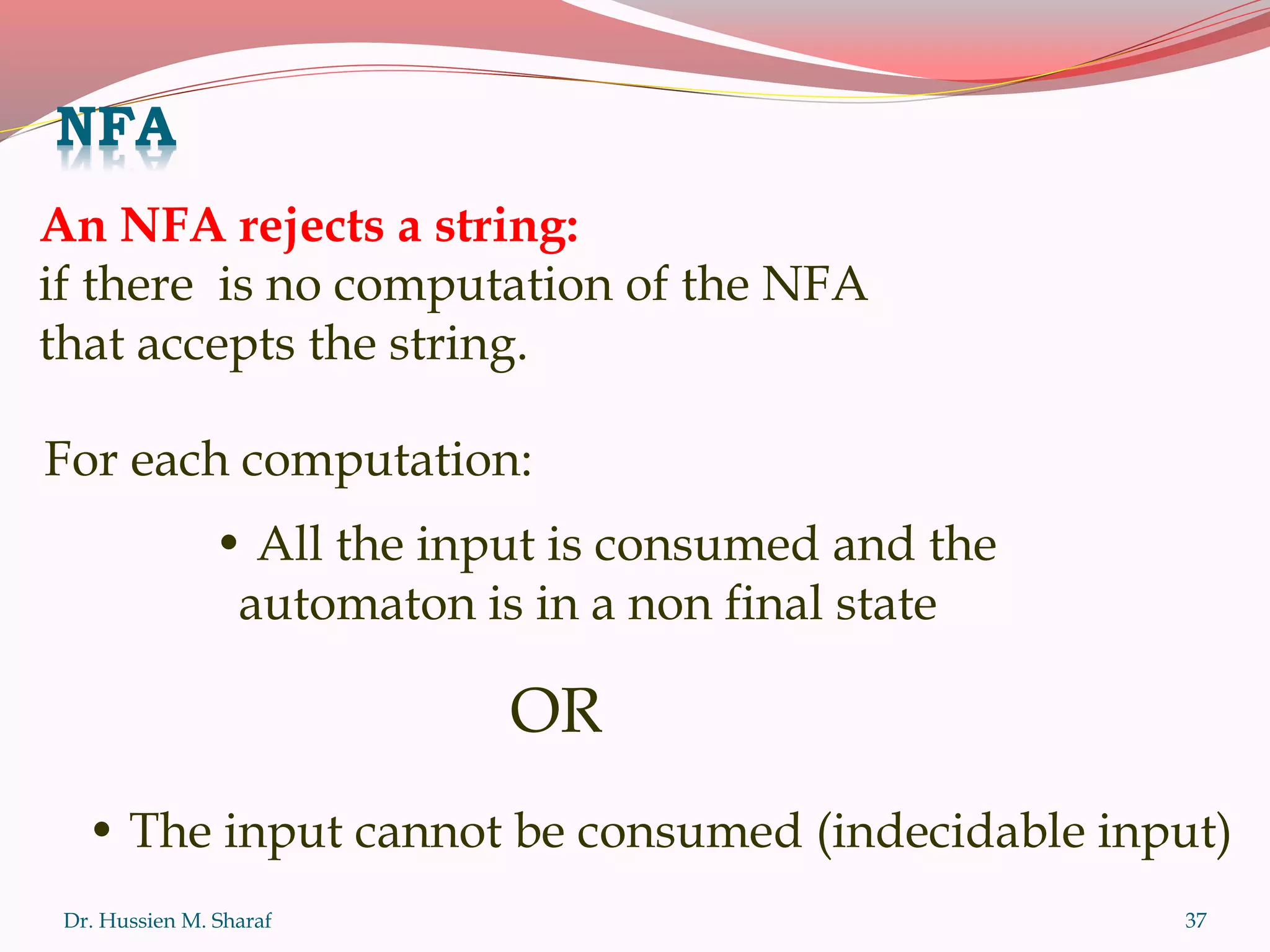
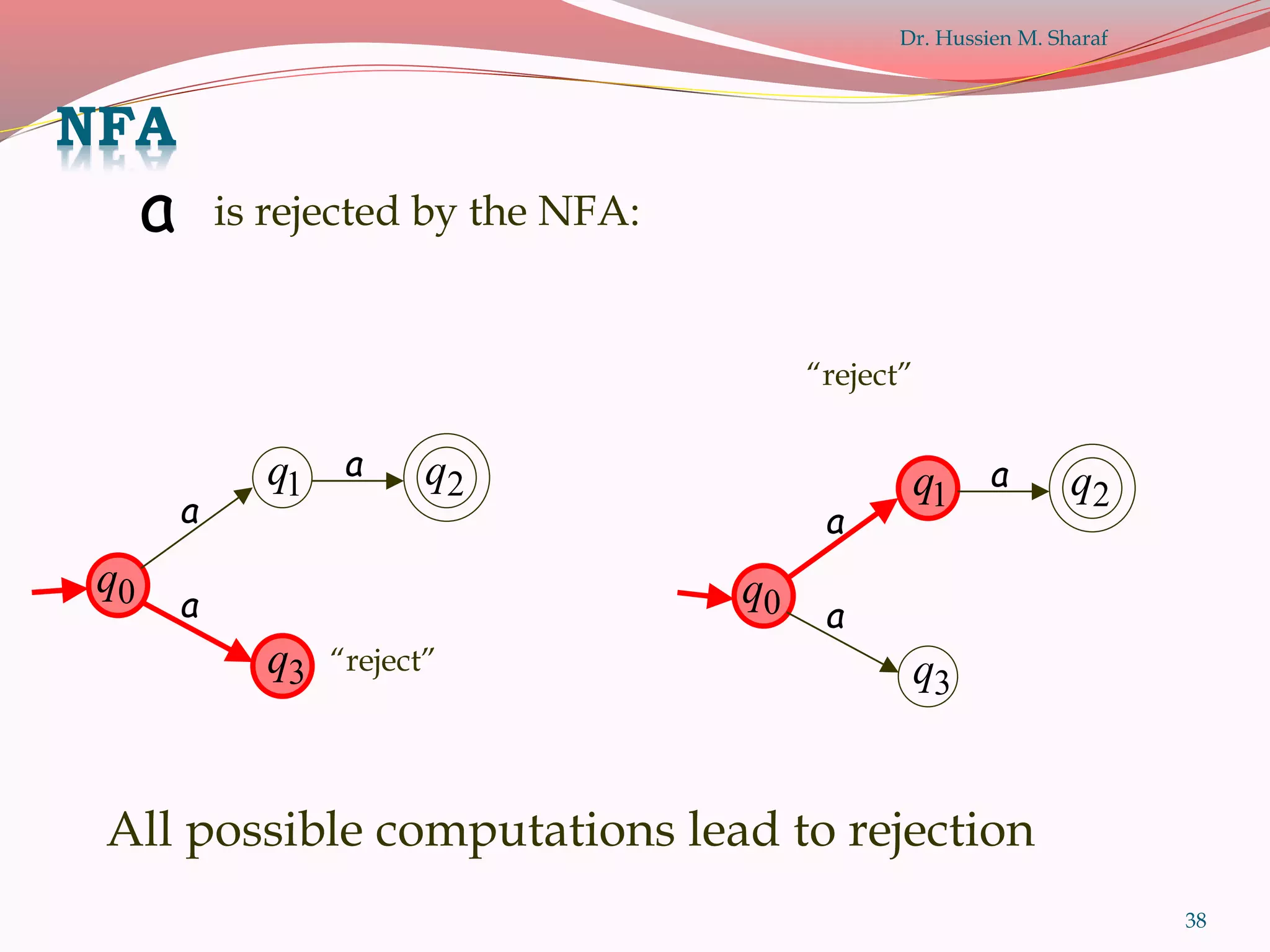
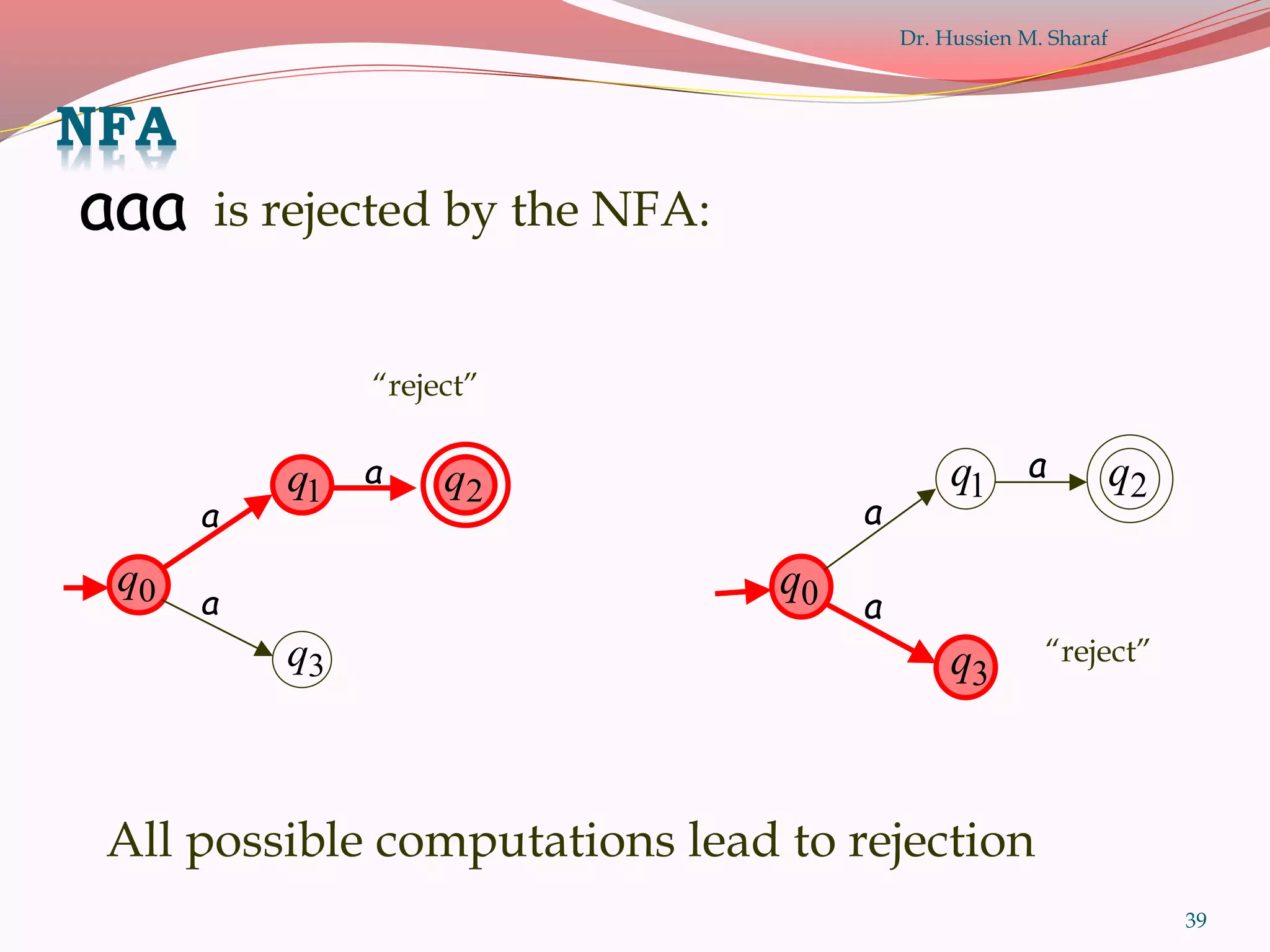
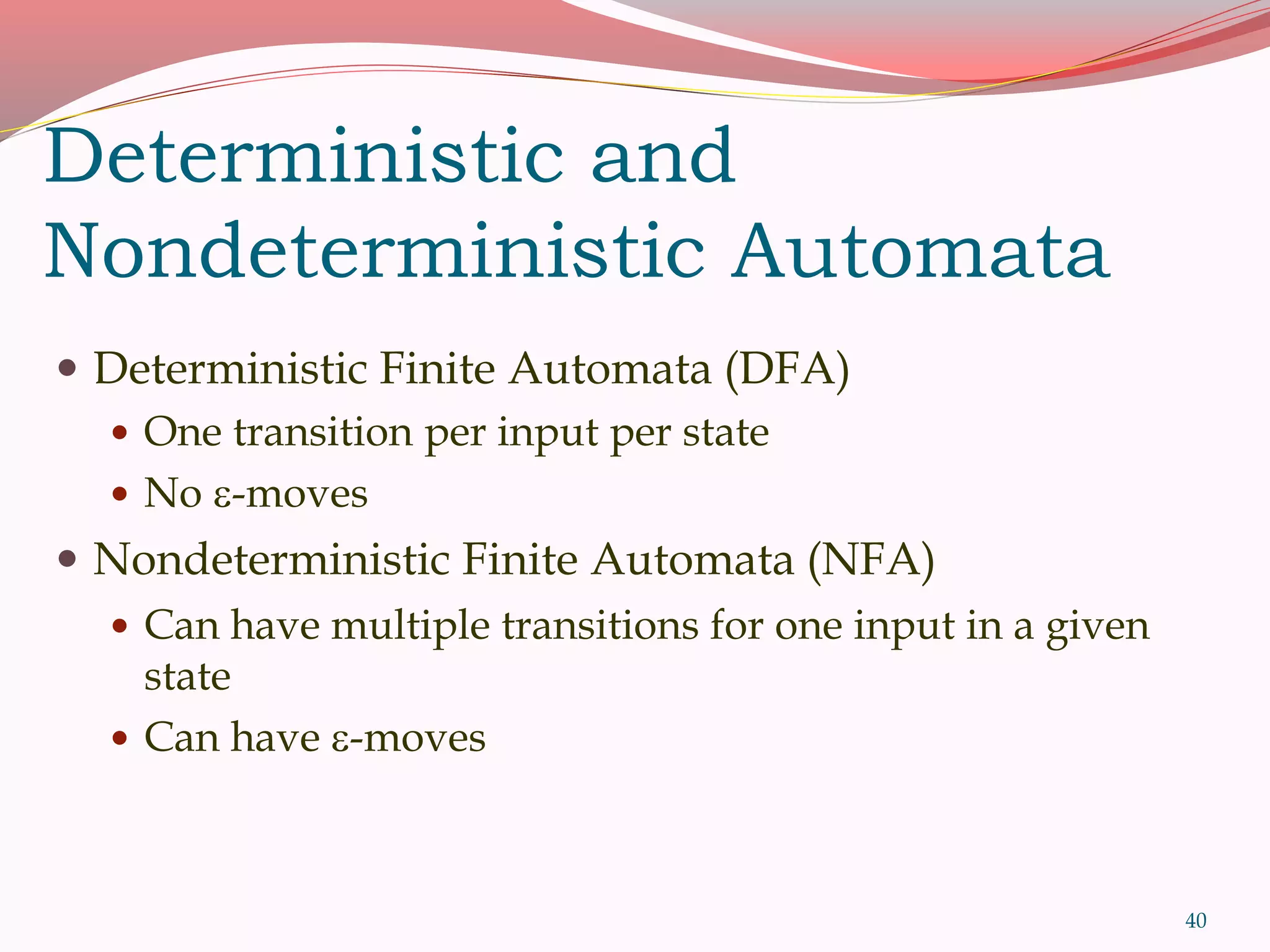


This document discusses finite automata (FA) and provides examples of constructing FAs to recognize various languages. It begins by defining an FA as a 5-tuple (Q, Σ, δ, q0, F) consisting of states Q, input alphabet Σ, transition function δ, starting state q0, and final states F. Examples are given of representing FAs as graphs and tables. Non-deterministic FAs are introduced, which can have multiple transitions between states. The document concludes by discussing the equivalence of deterministic and non-deterministic FAs.


