Data Structures & Algorithm
CS-102
Lecture 8
Binary Heaps
A priority Queue Data Structures
Lecturer: Syeda Nazia Ashraf
1
2
Heap
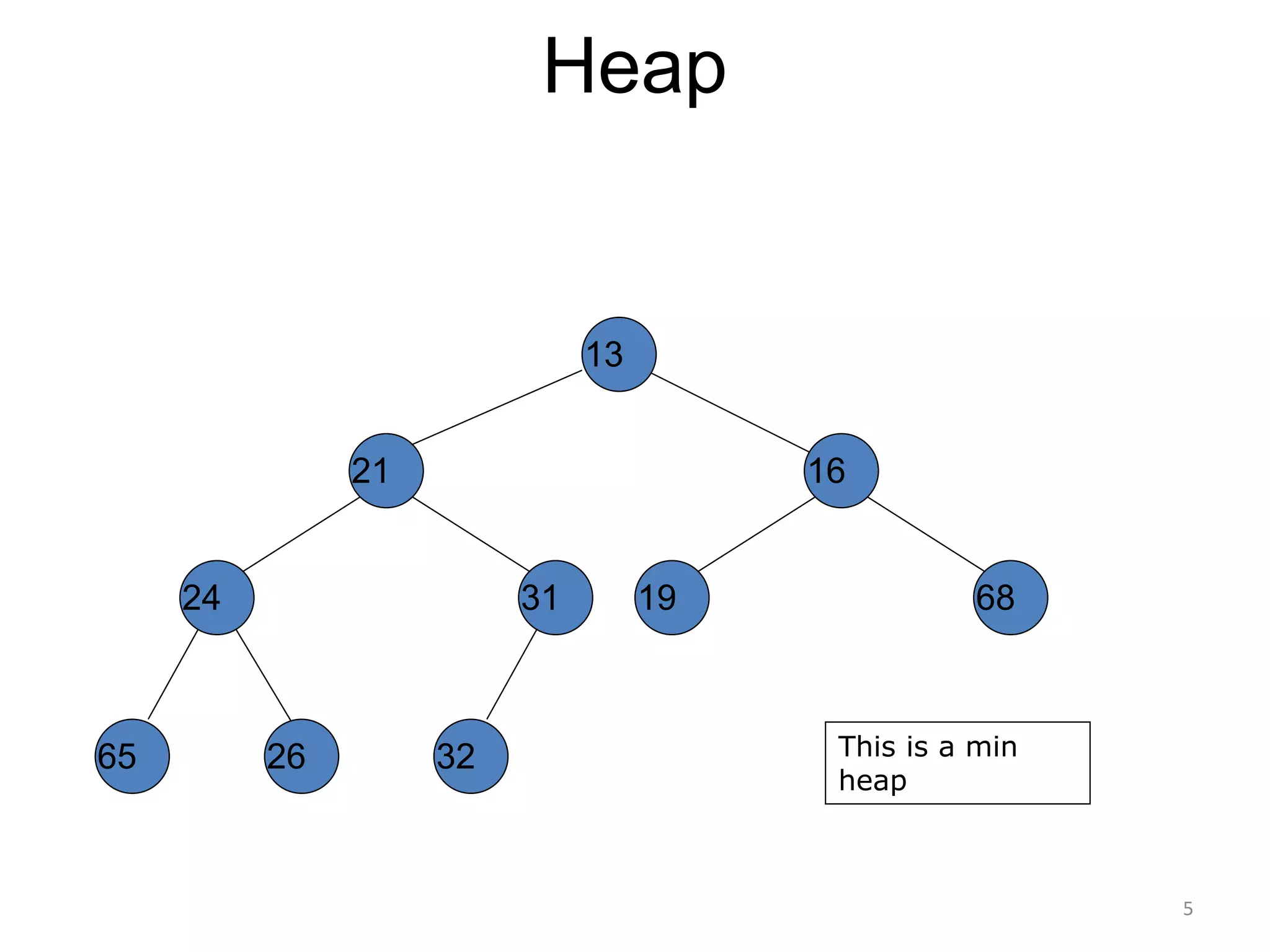
• A heap is a complete binary tree that
conforms to the heap order.
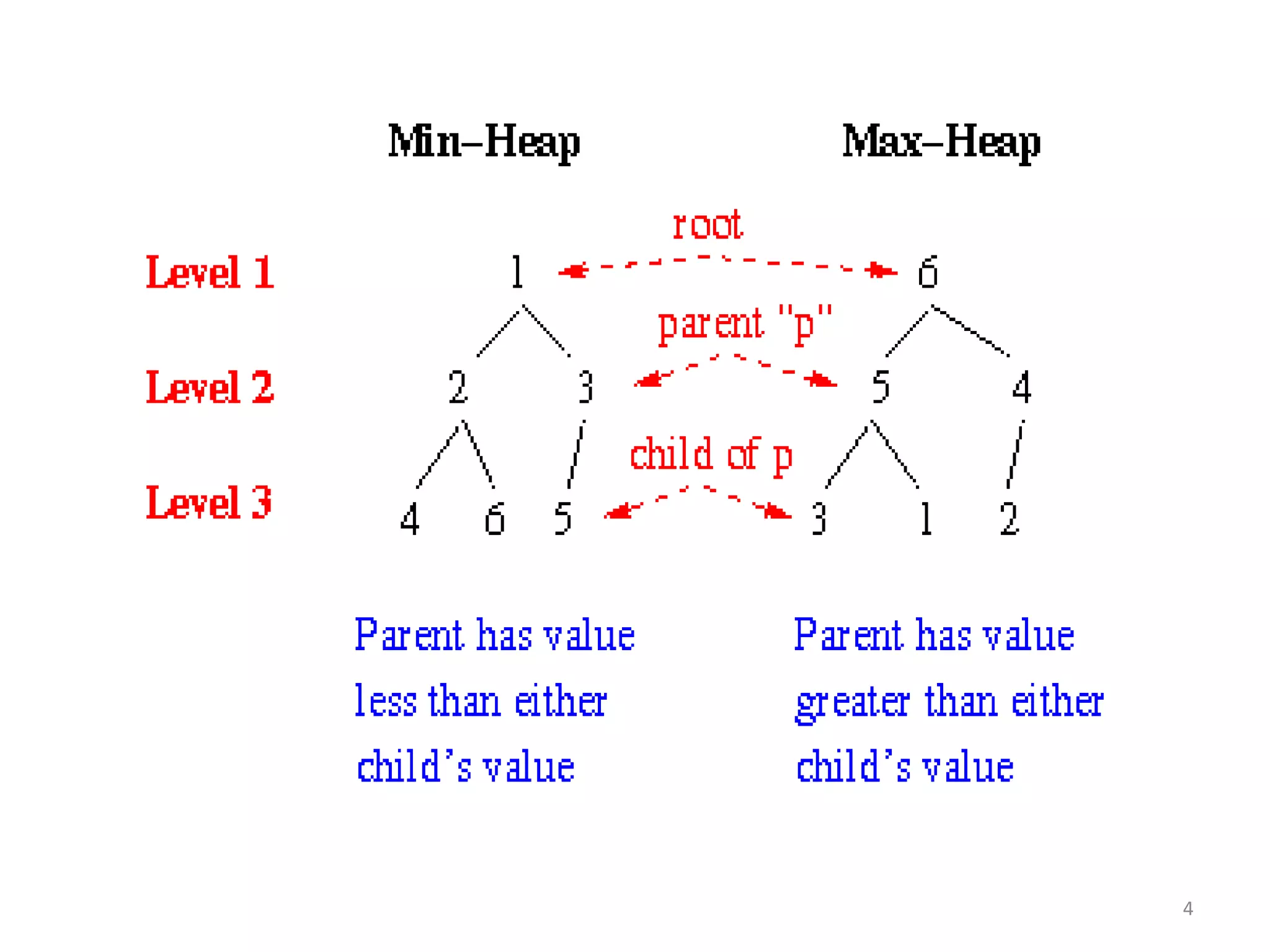
• The heap order property: in a (min)
heap, for every node X, the key in the
parent is smaller than (or equal to) the key
in X.
• Or, the parent node has key smaller than
or equal to both of its children nodes.
3
Heap
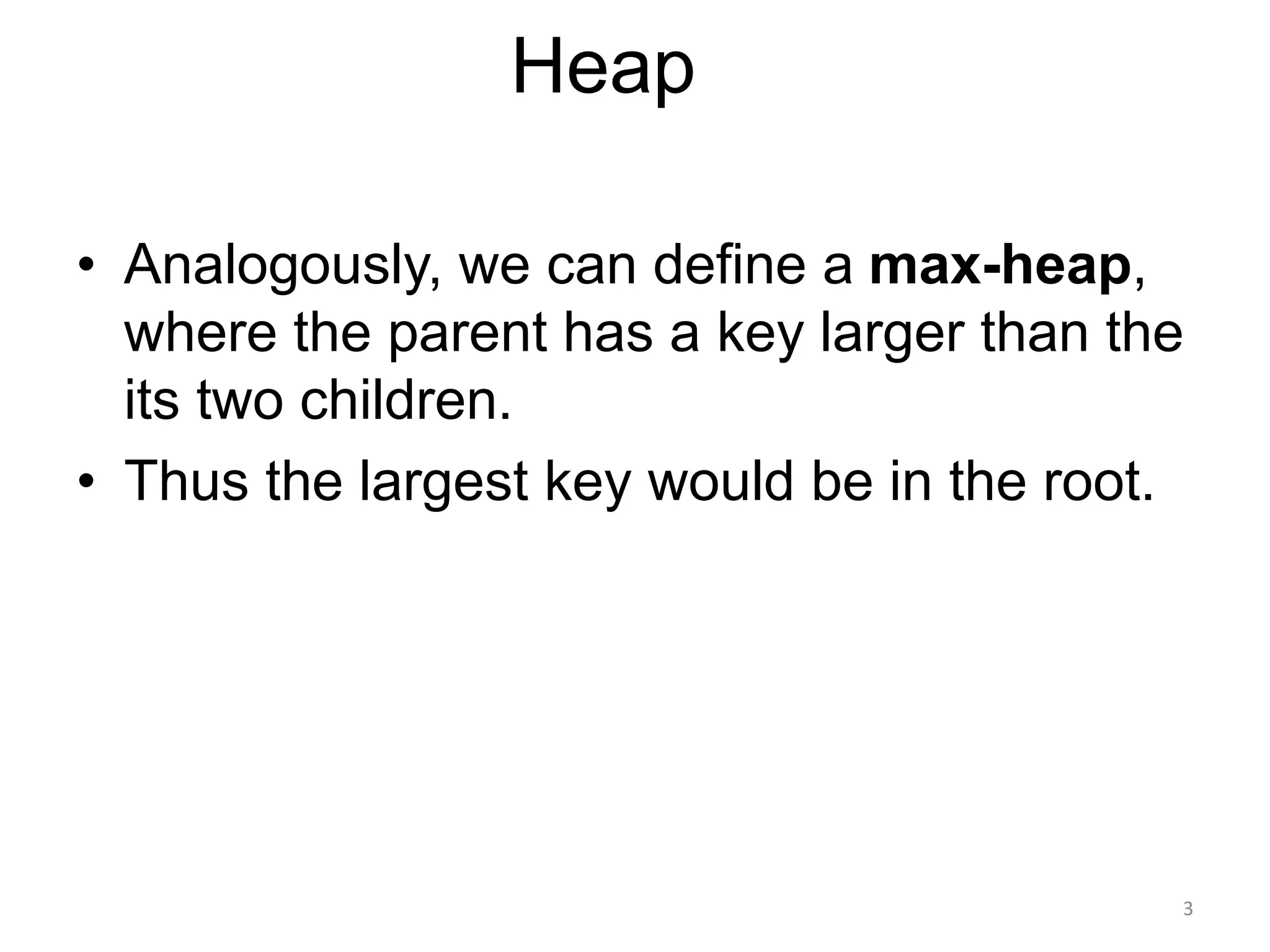
• Analogously, we can define a max-heap,
where the parent has a key larger than the
its two children.
• Thus the largest key would be in the root.
4
5
Heap
13
16
21
31
26
24
65 32
68
19
This is a min
heap
6
Heap
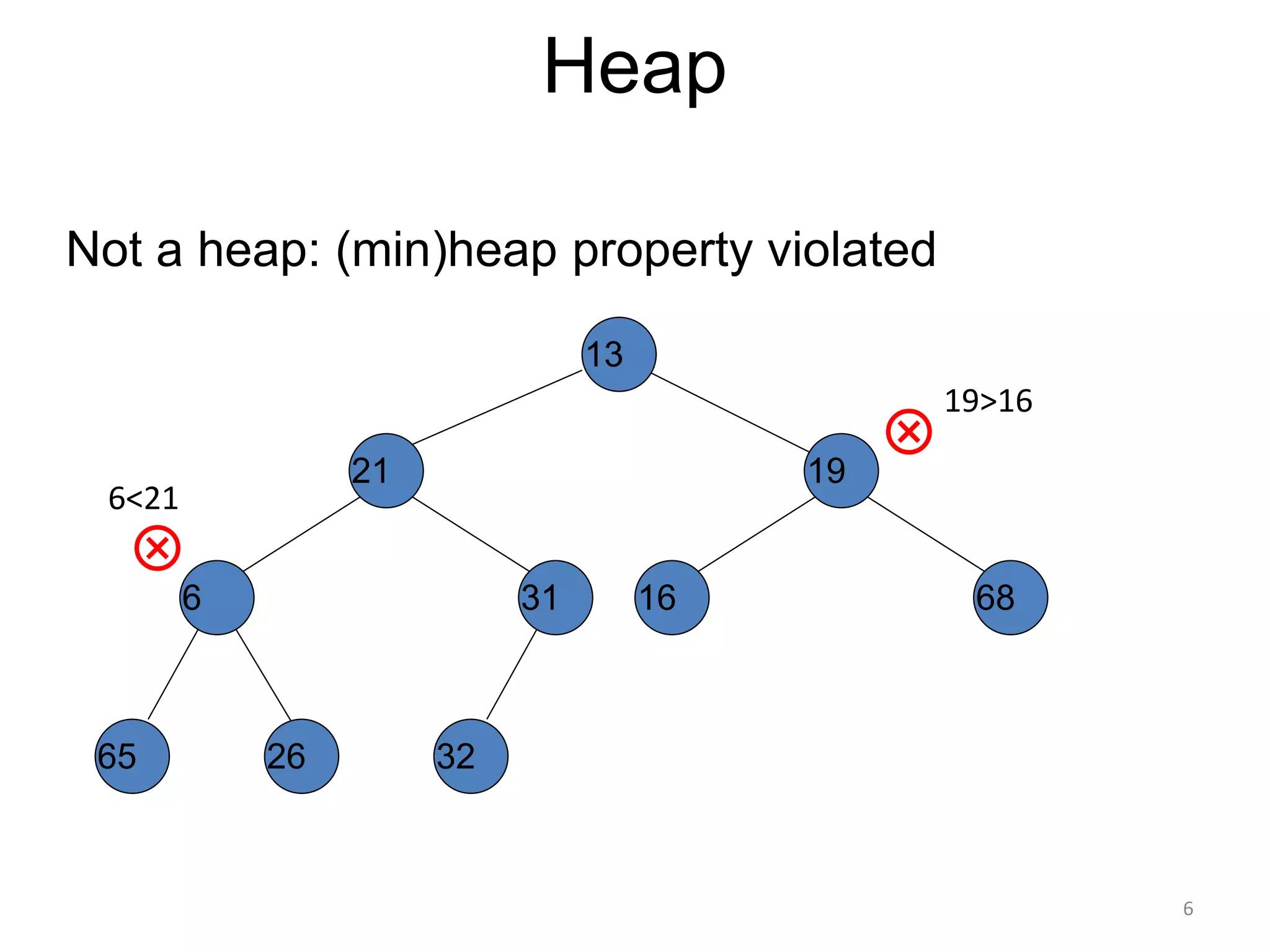
Not a heap: (min)heap property violated
13
19
21
31
26
6
65 32
68
16


19>16
6<21
7
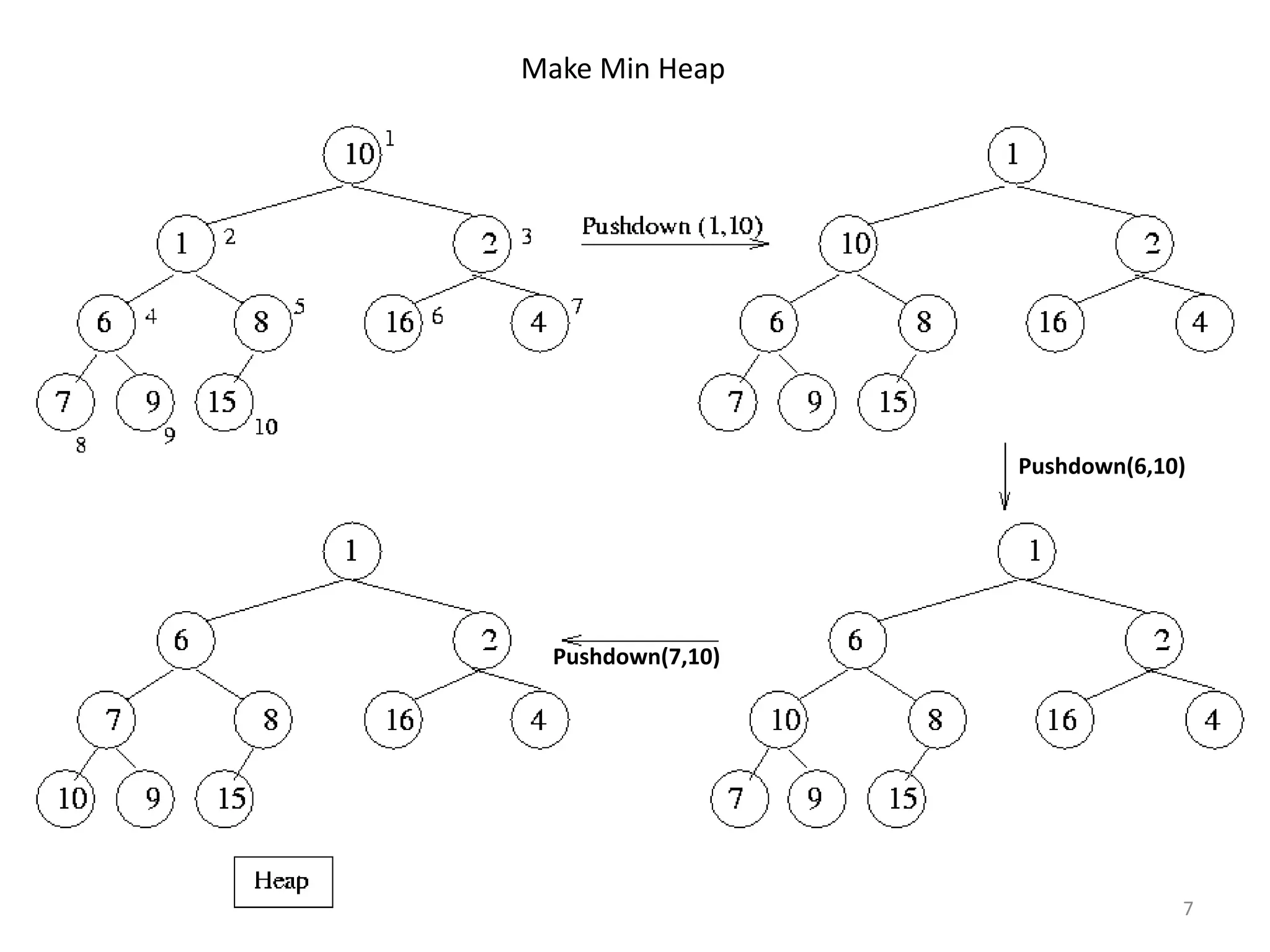
Make Min Heap
Pushdown(6,10)
Pushdown(7,10)
8
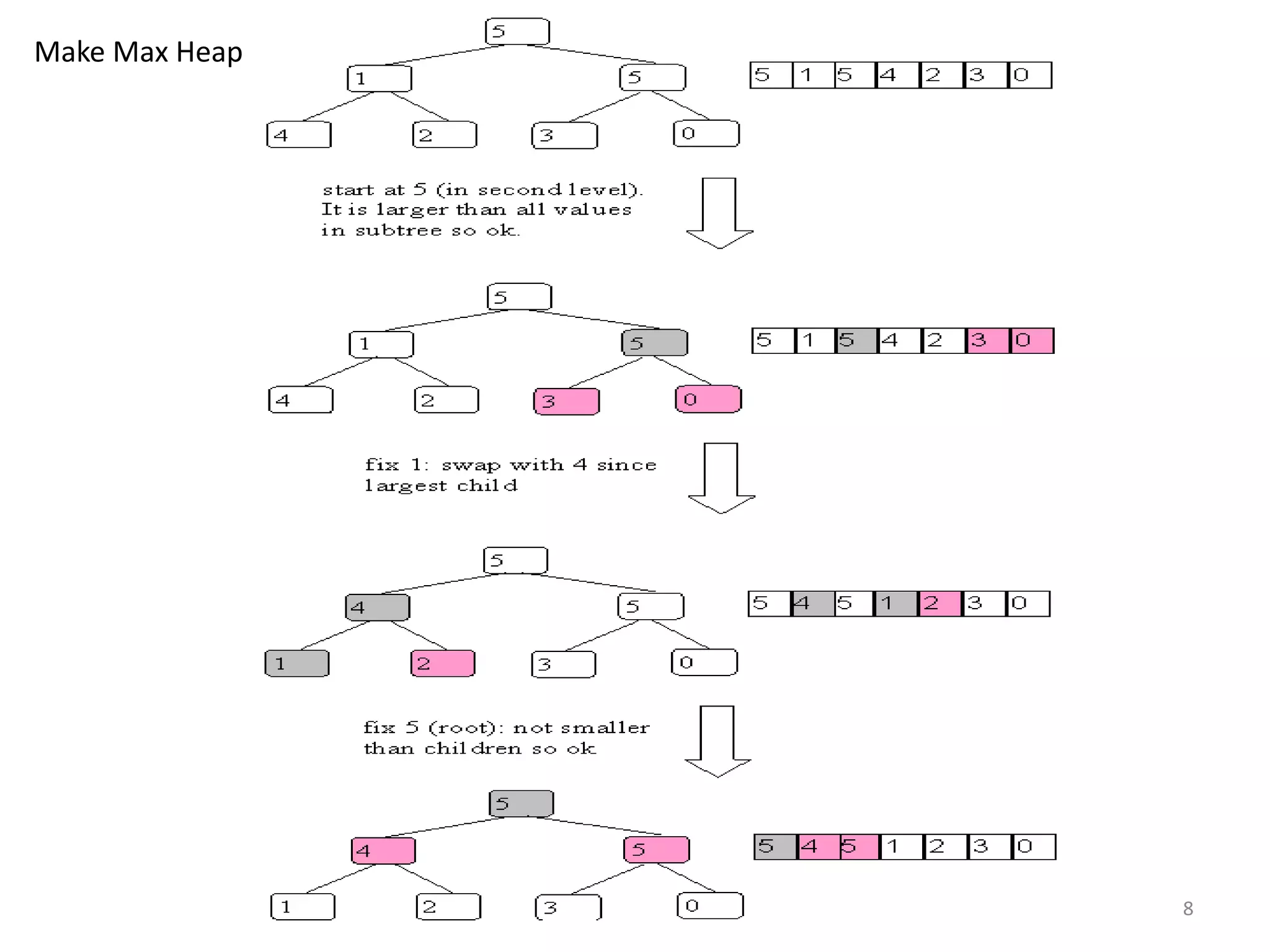
Make Max Heap
9
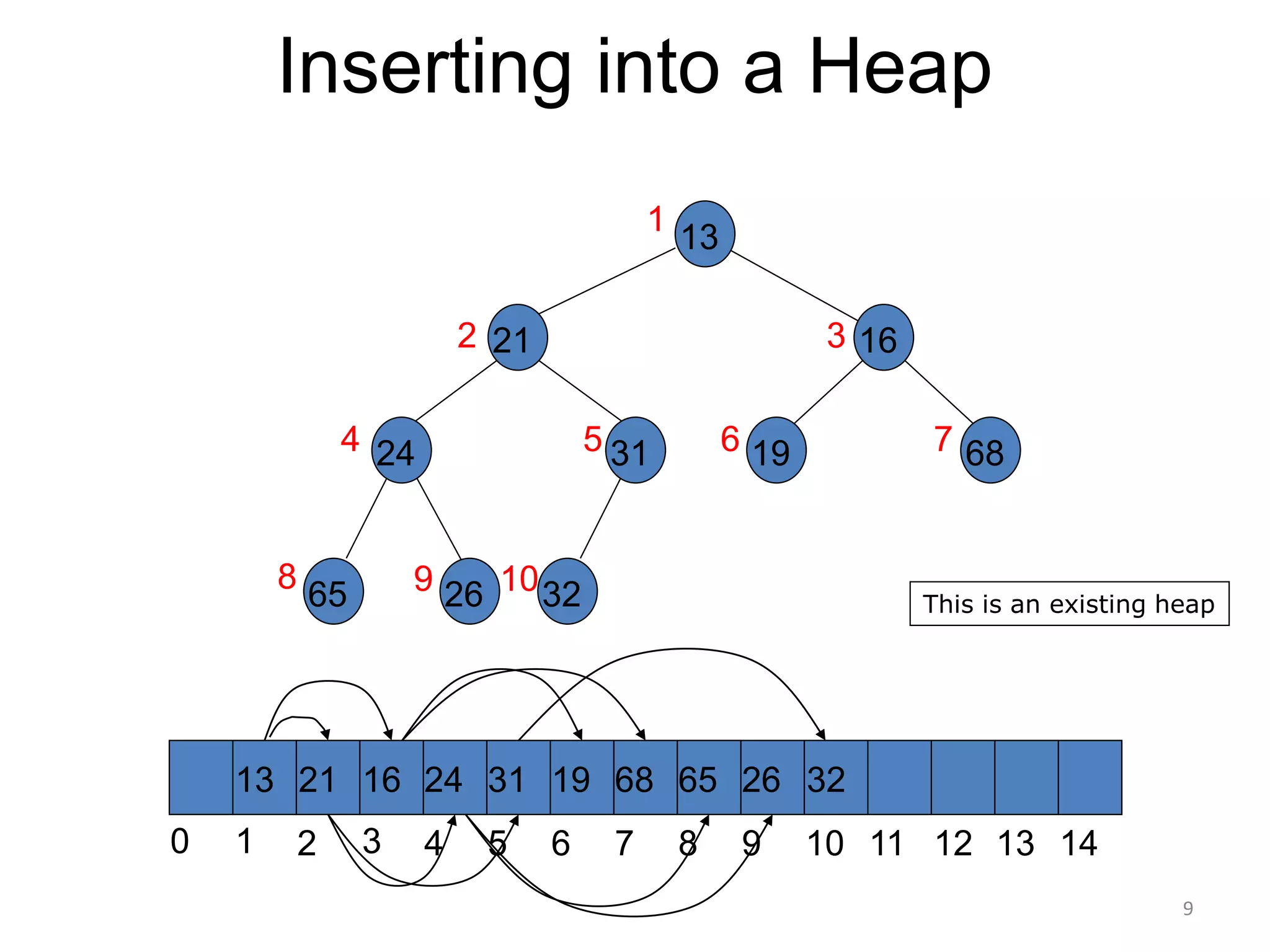
Inserting into a Heap
13
16
21
31
26
24
65 32
68
19
13 21 16 24 31 19 68 65 26 32
1 2 3 4 5 6 7 8 9 10 11 12 13 14
0
1
2 3
7
6
5
4
8 9 10
This is an existing heap
10
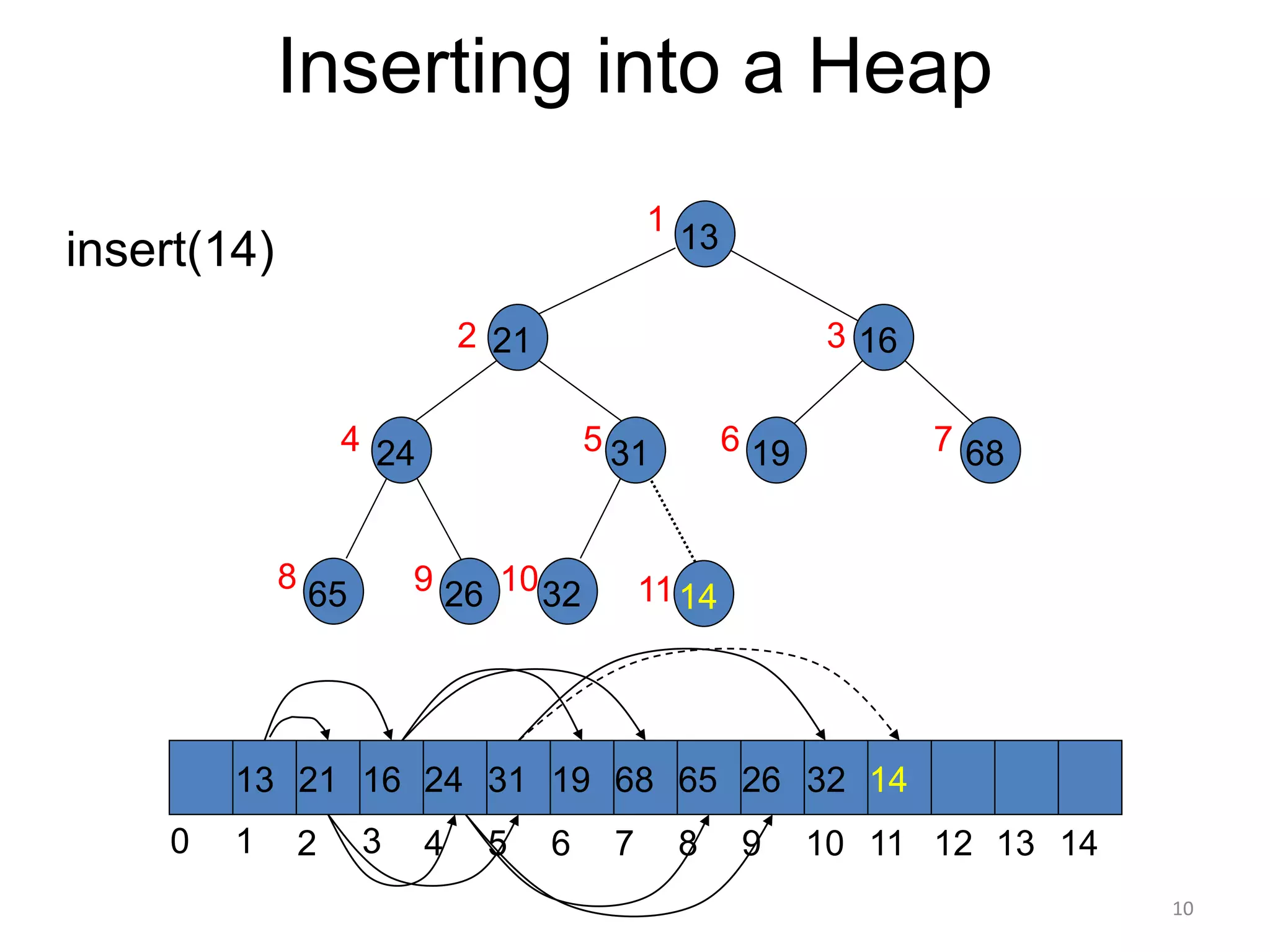
Inserting into a Heap
insert(14) 13
16
21
31
26
24
65 32
68
19
13 21 16 24 31 19 68 65 26 32
1 2 3 4 5 6 7 8 9 10 11 12 13 14
0
1
2 3
7
6
5
4
8 9 10
14
14
11
11
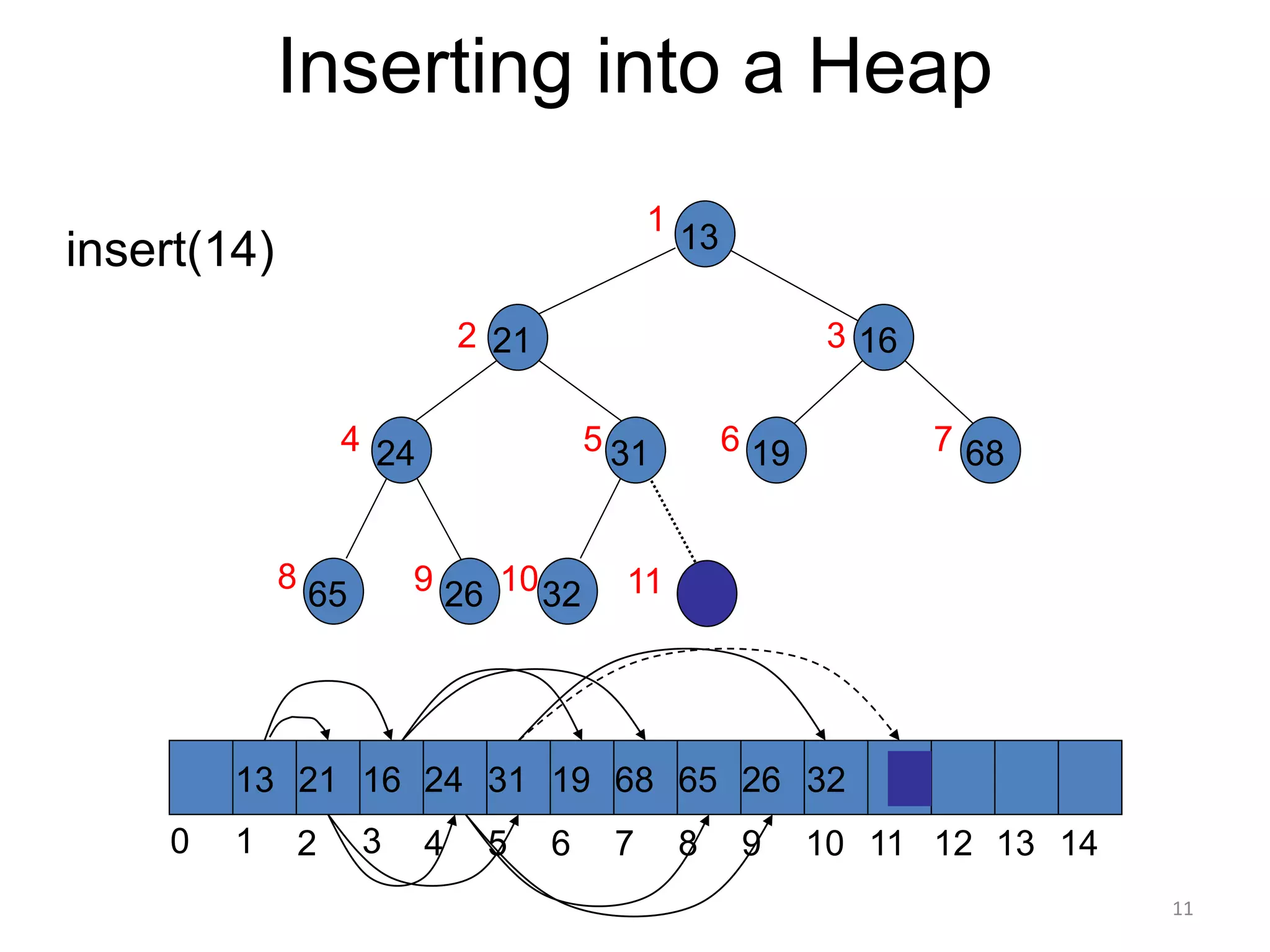
Inserting into a Heap
insert(14) 13
16
21
31
26
24
65 32
68
19
13 21 16 24 31 19 68 65 26 32
1 2 3 4 5 6 7 8 9 10 11 12 13 14
0
1
2 3
7
6
5
4
8 9 10 11
12
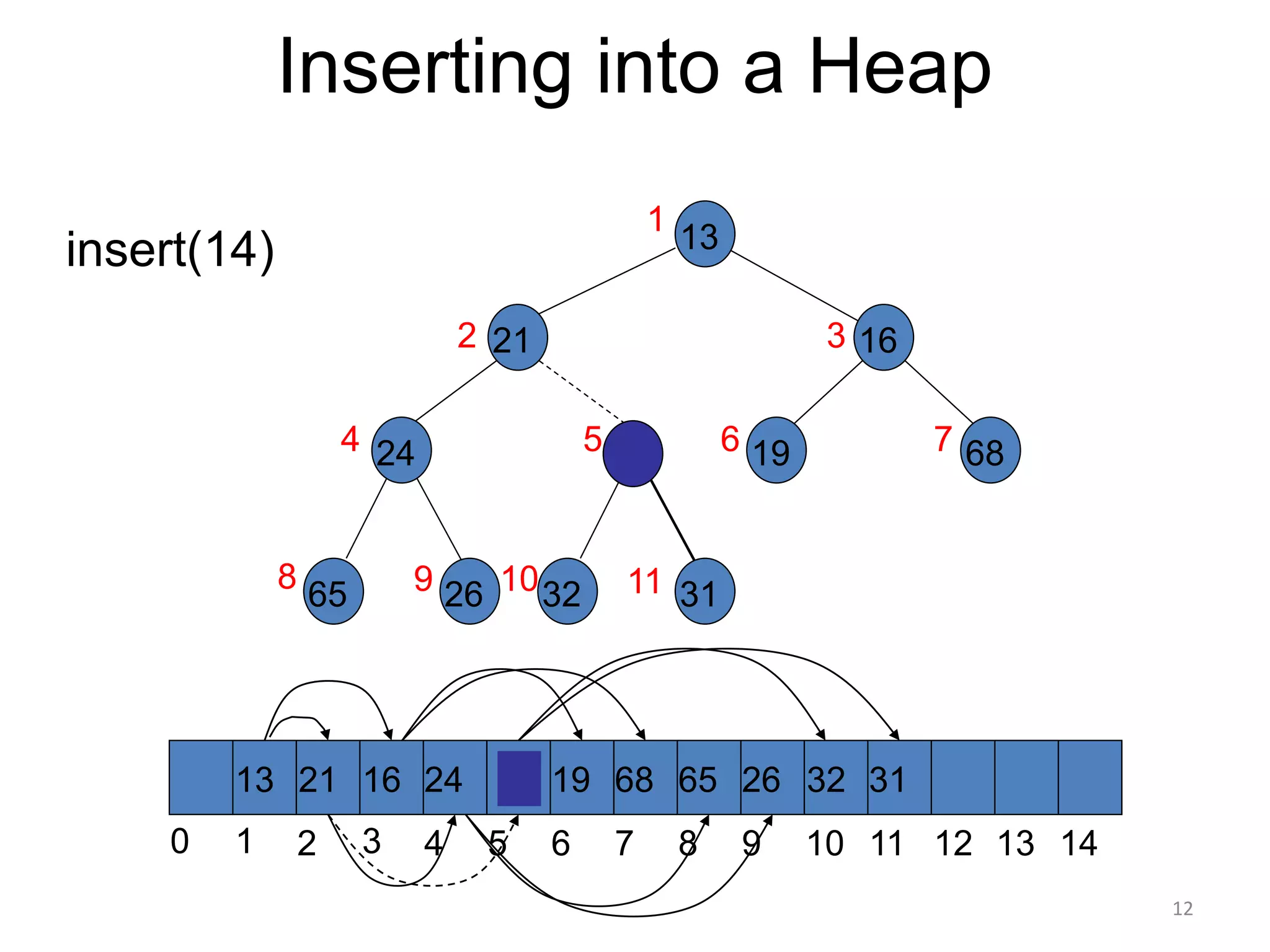
Inserting into a Heap
insert(14) 13
16
21
31
26
24
65 32
68
19
13 21 16 24 31
19 68 65 26 32
1 2 3 4 5 6 7 8 9 10 11 12 13 14
0
1
2 3
7
6
5
4
8 9 10 11
13
Inserting into a Heap
insert(14) 13
16
21
31
26
24
65 32
68
19
13 21
16 24 31
19 68 65 26 32
1 2 3 4 5 6 7 8 9 10 11 12 13 14
0
1
2 3
7
6
5
4
8 9 10 11
14
Inserting into a Heap
insert(14) 13
16
21
31
26
24
65 32
68
19
13 21
16 24 31
19 68 65 26 32
1 2 3 4 5 6 7 8 9 10 11 12 13 14
0
1
2 3
7
6
5
4
8 9 10 11
14
14
15
Inserting into a Heap
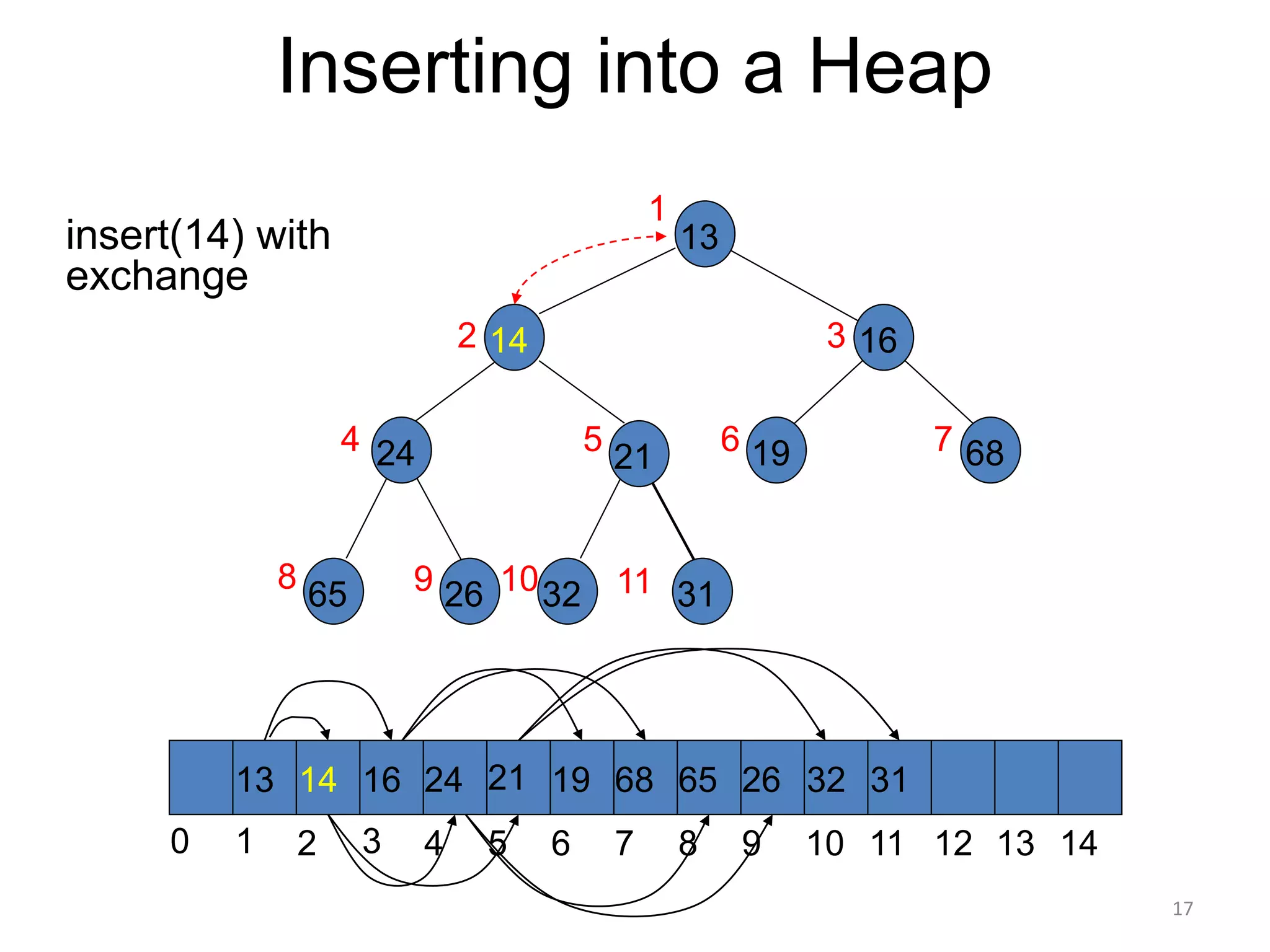
insert(14) with
exchange
13
16
21
31
26
24
65 32
68
19
13 21 16 24 31 19 68 65 26 32
1 2 3 4 5 6 7 8 9 10 11 12 13 14
0
1
2 3
7
6
5
4
8 9 10
14
14
11
16
Inserting into a Heap
insert(14) with
exchange
13
16
21
31
26
24
65 32
68
19
13 21 16 24 31
19 68 65 26 32
1 2 3 4 5 6 7 8 9 10 11 12 13 14
0
1
2 3
7
6
5
4
8 9 10
14
14
11
17
Inserting into a Heap
insert(14) with
exchange
13
16
21
31
26
24
65 32
68
19
13 21
16 24 31
19 68 65 26 32
1 2 3 4 5 6 7 8 9 10 11 12 13 14
0
1
2 3
7
6
5
4
8 9 10
14
14
11
18
Inserting into a Heap
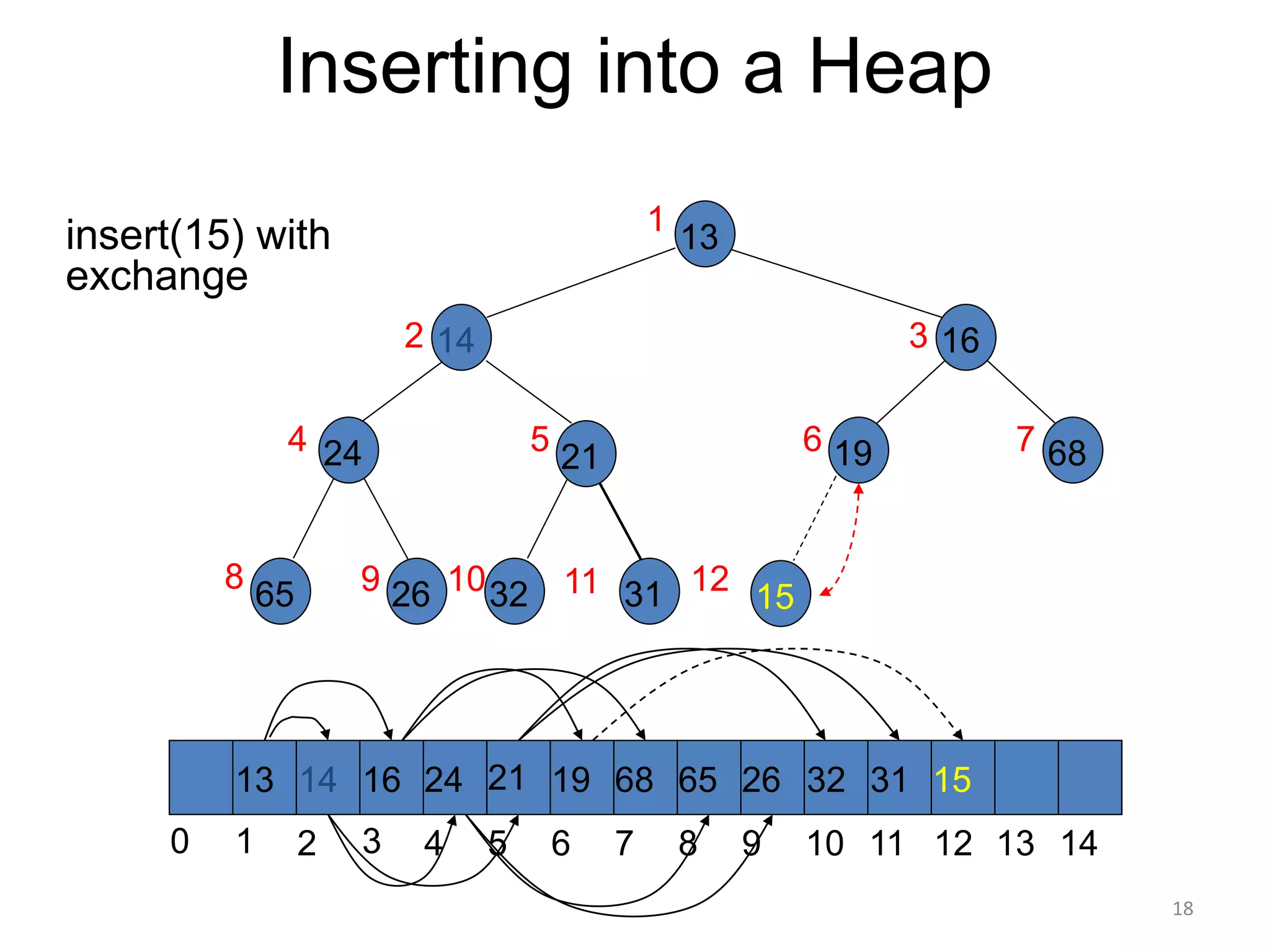
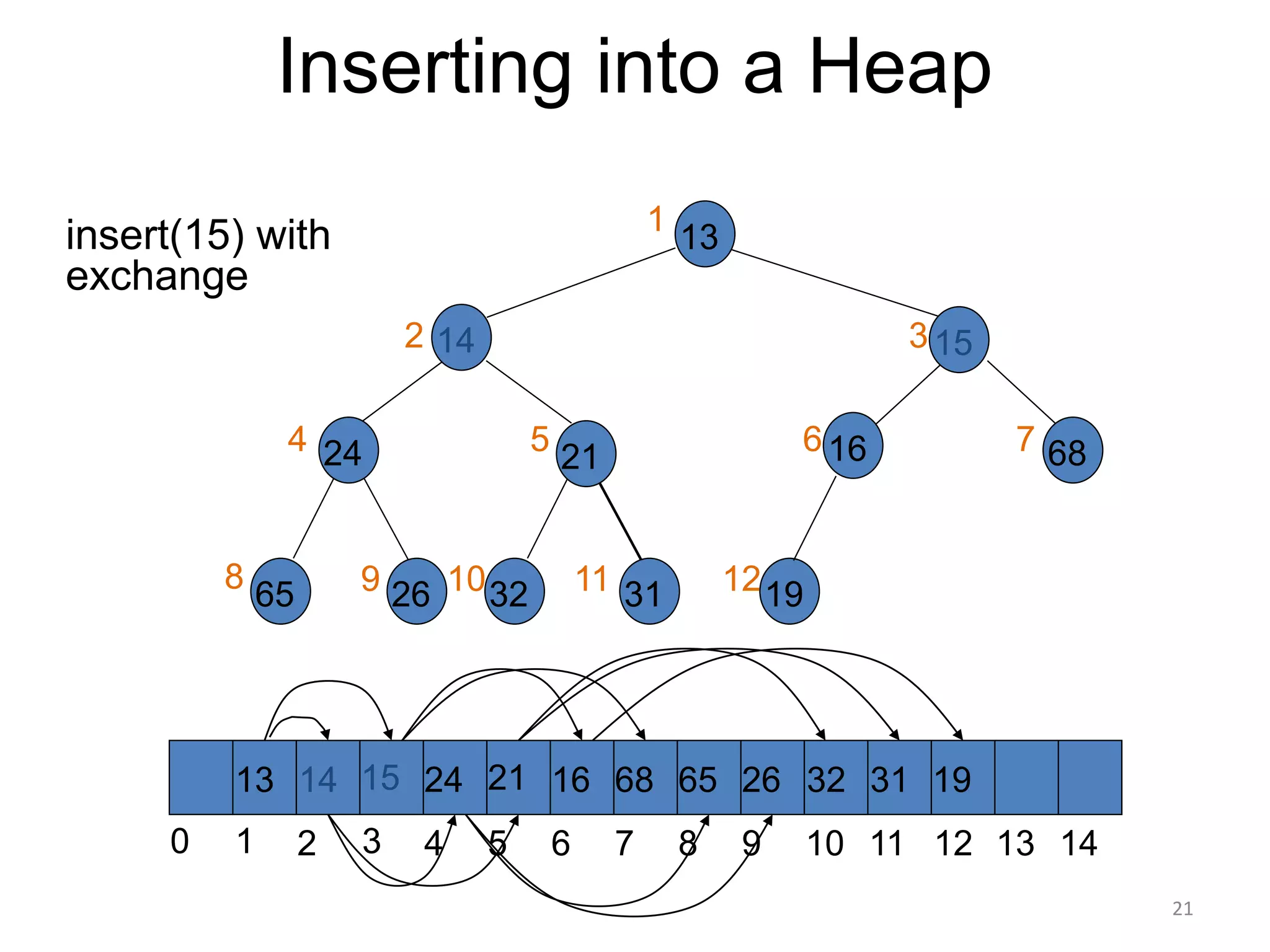
insert(15) with
exchange
13
16
21
31
26
24
65 32
68
19
13 21
16 24 31
19 68 65 26 32
1 2 3 4 5 6 7 8 9 10 11 12 13 14
0
1
2 3
7
6
5
4
8 9 10
14
14
11
15
15
12
19
Inserting into a Heap
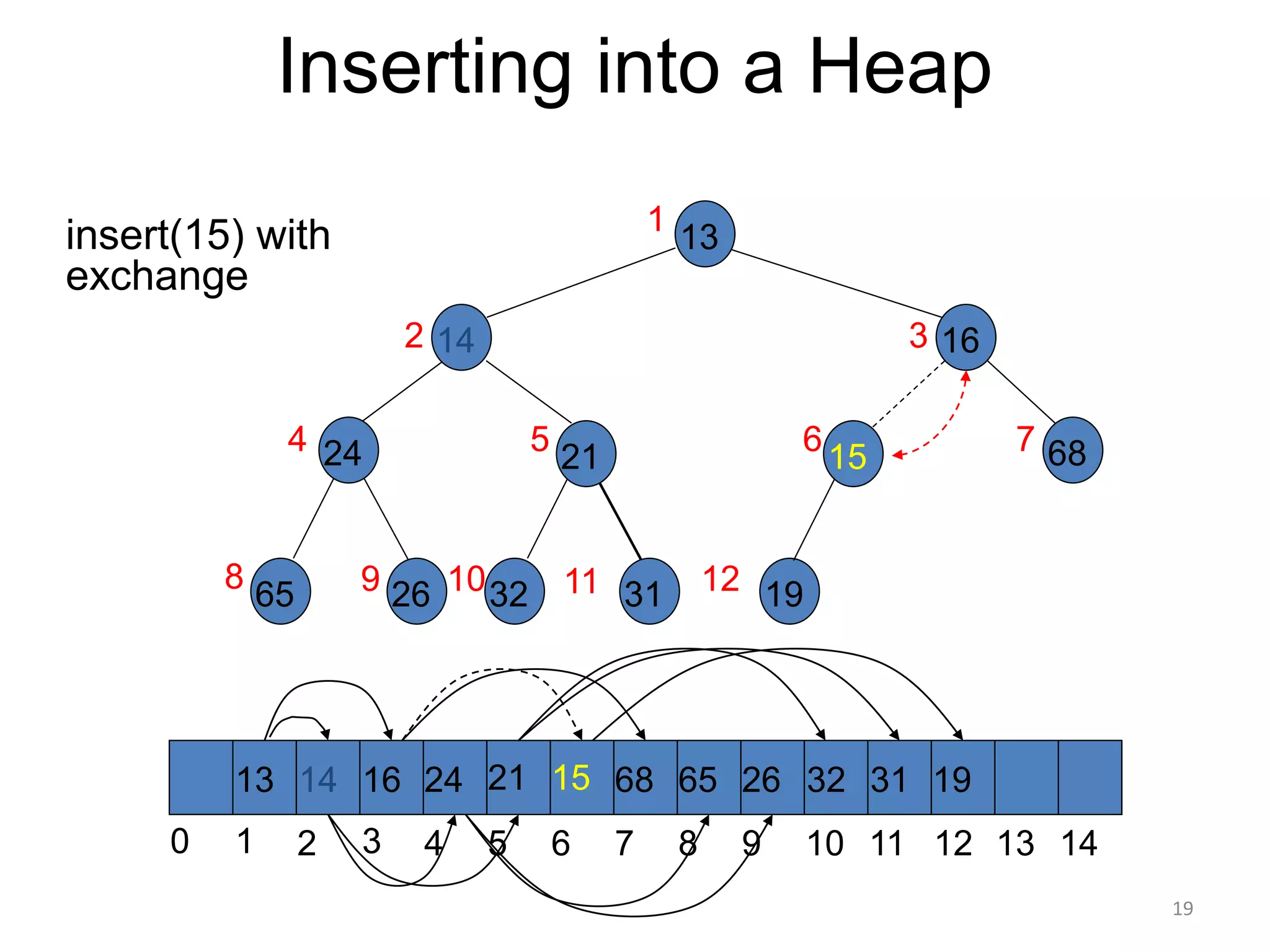
insert(15) with
exchange
13
16
21
31
26
24
65 32
68
19
13 21
16 24 31 19
68 65 26 32
1 2 3 4 5 6 7 8 9 10 11 12 13 14
0
1
2 3
7
6
5
4
8 9 10
14
14
11
15
15
12
20
Inserting into a Heap
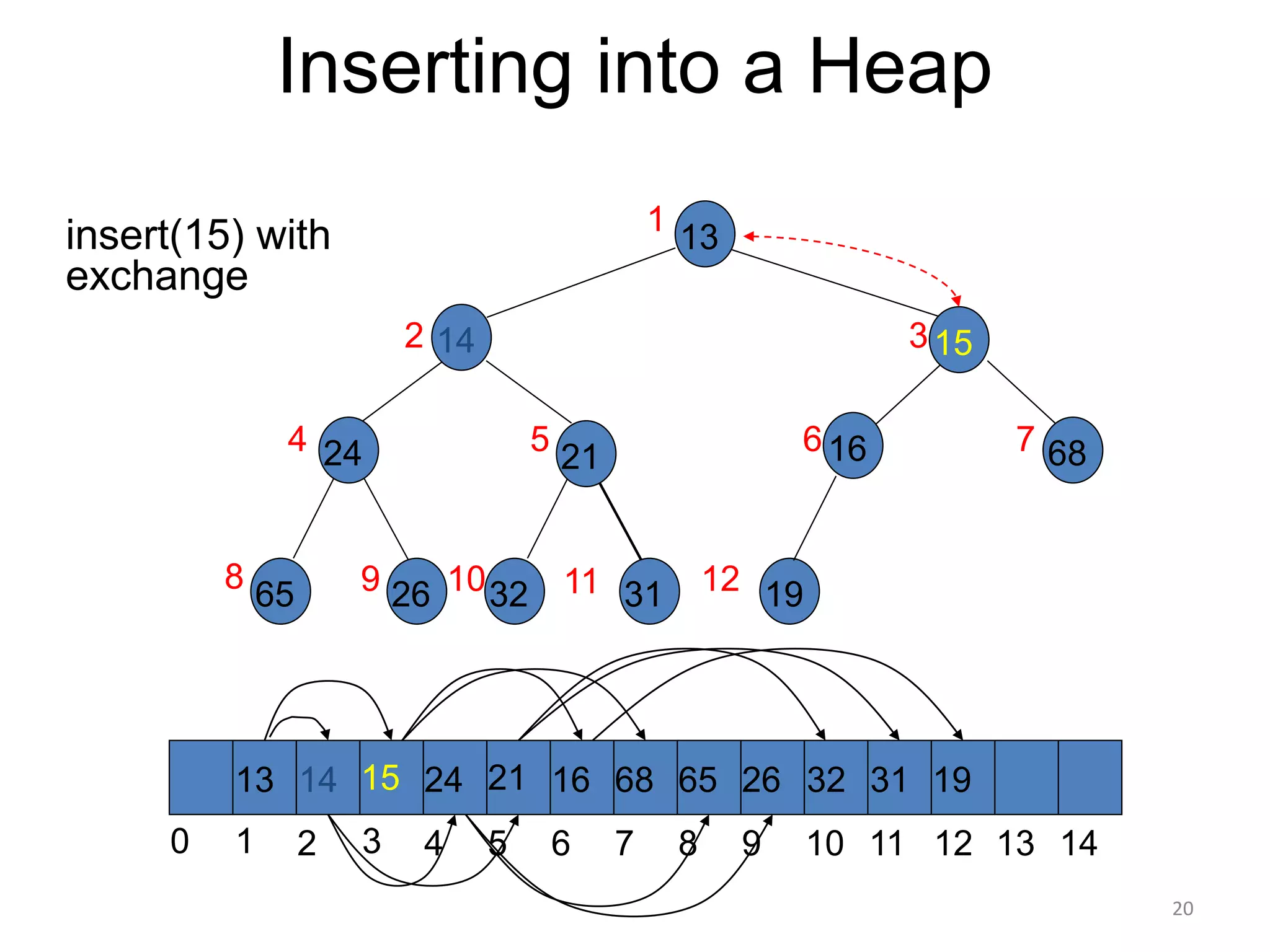
insert(15) with
exchange
13
16
21
31
26
24
65 32
68
19
13 21 16
24 31 19
68 65 26 32
1 2 3 4 5 6 7 8 9 10 11 12 13 14
0
1
2 3
7
6
5
4
8 9 10
14
14
11
15
15
12
21
Inserting into a Heap
insert(15) with
exchange
13
16
21
31
26
24
65 32
68
19
13 21 16
24 31 19
68 65 26 32
1 2 3 4 5 6 7 8 9 10 11 12 13 14
0
1
2 3
7
6
5
4
8 9 10
14
14
11
15
15
12
Inserting into a Heap
22
Max Heap
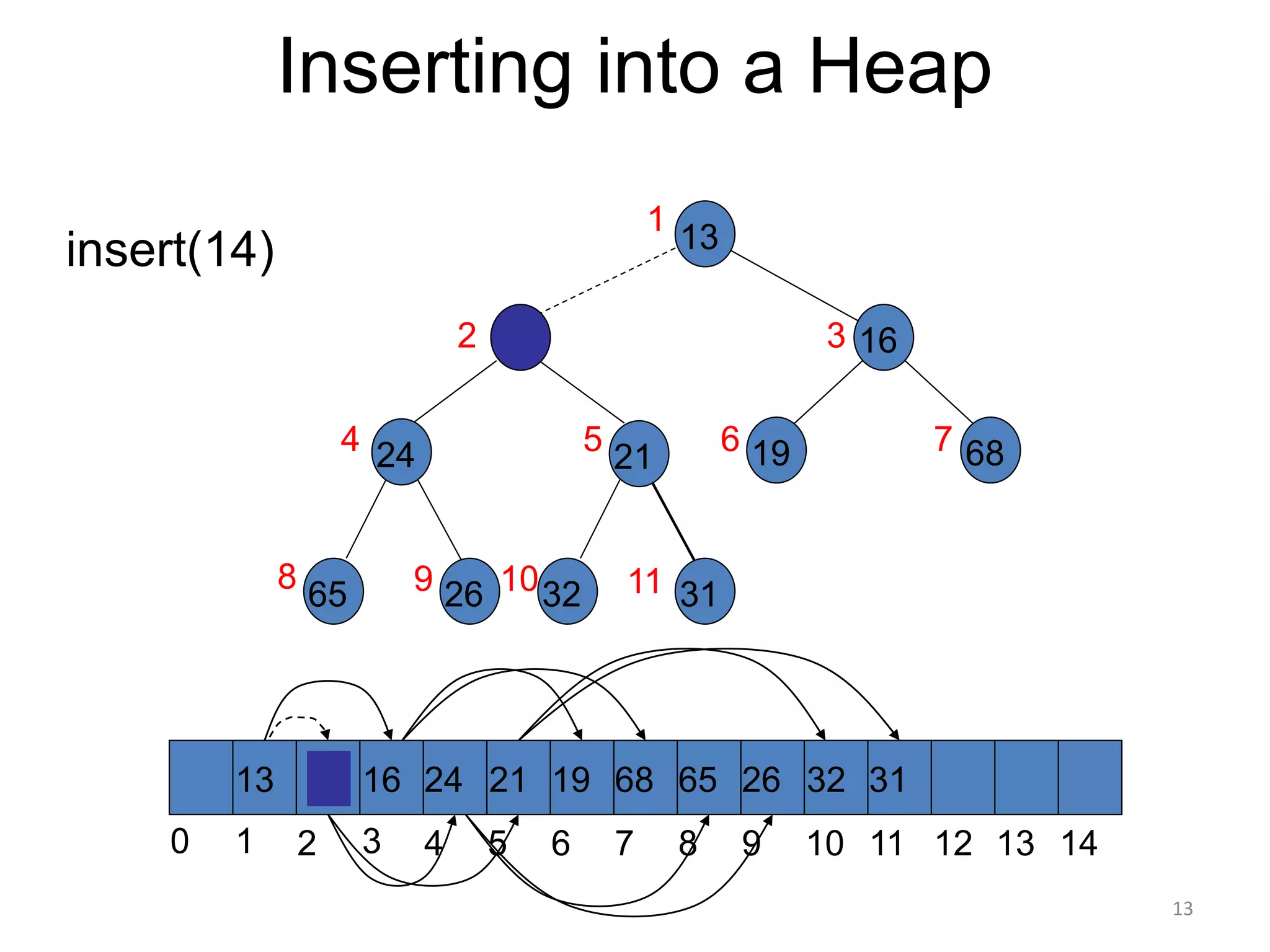
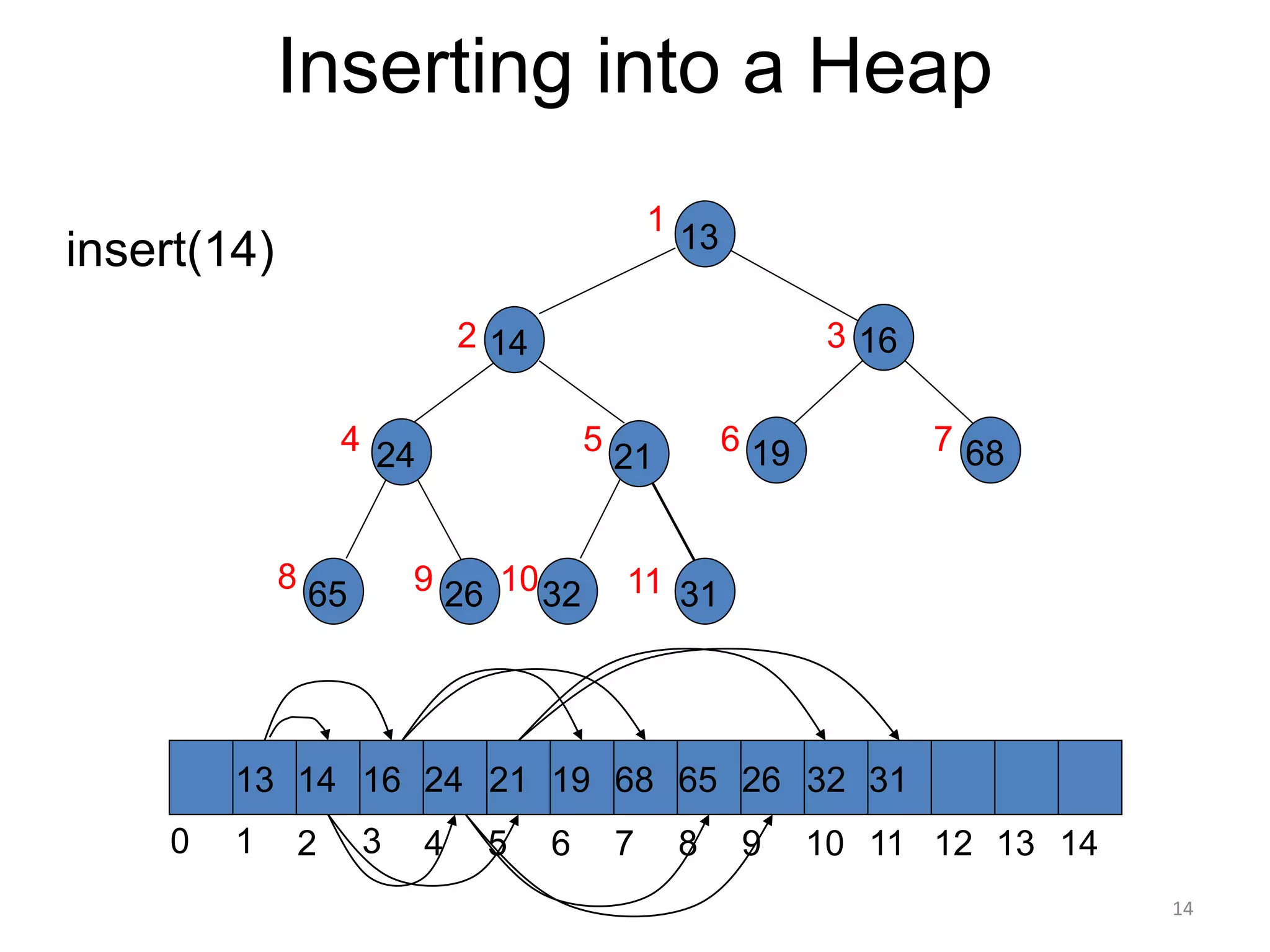
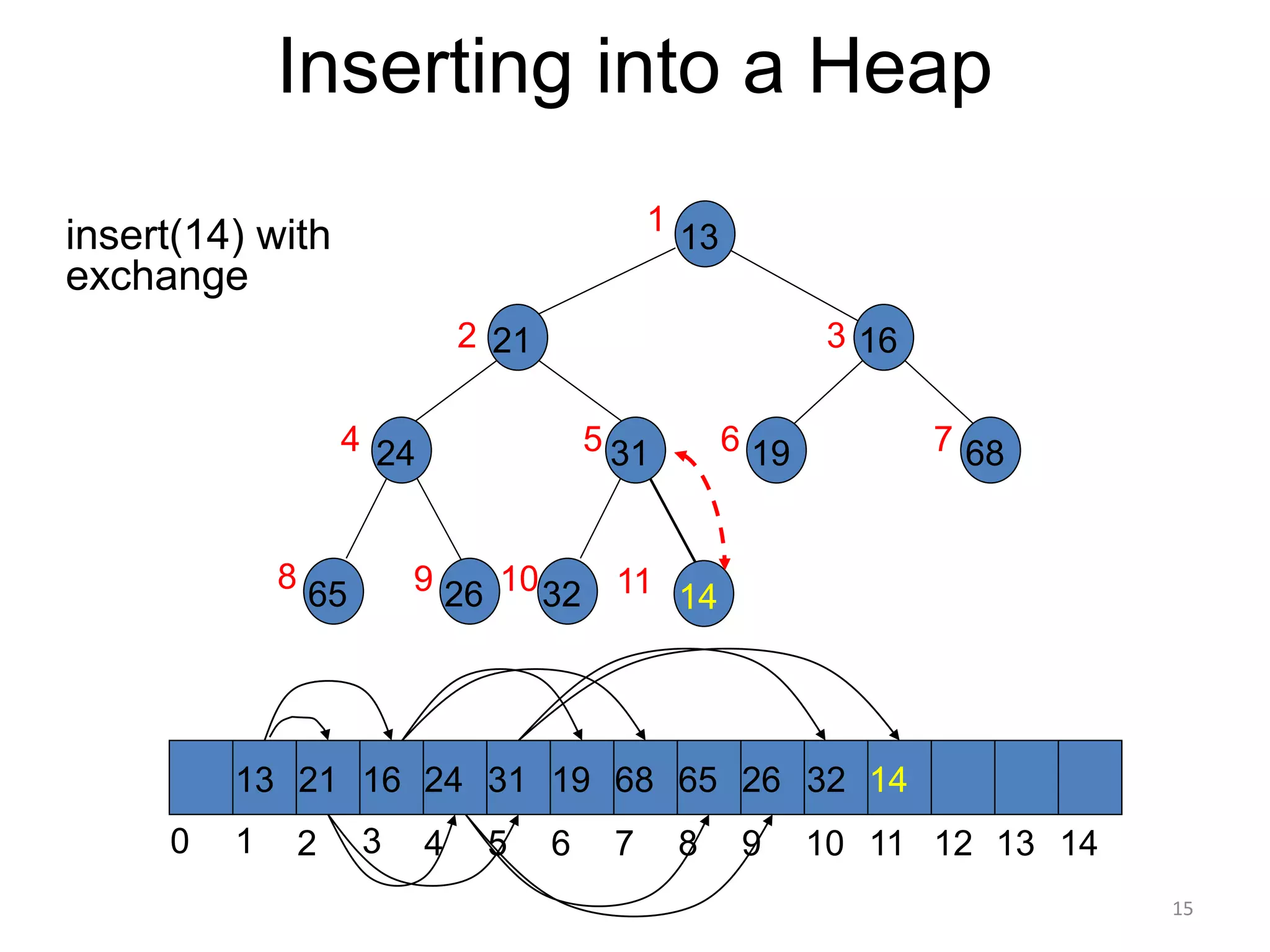
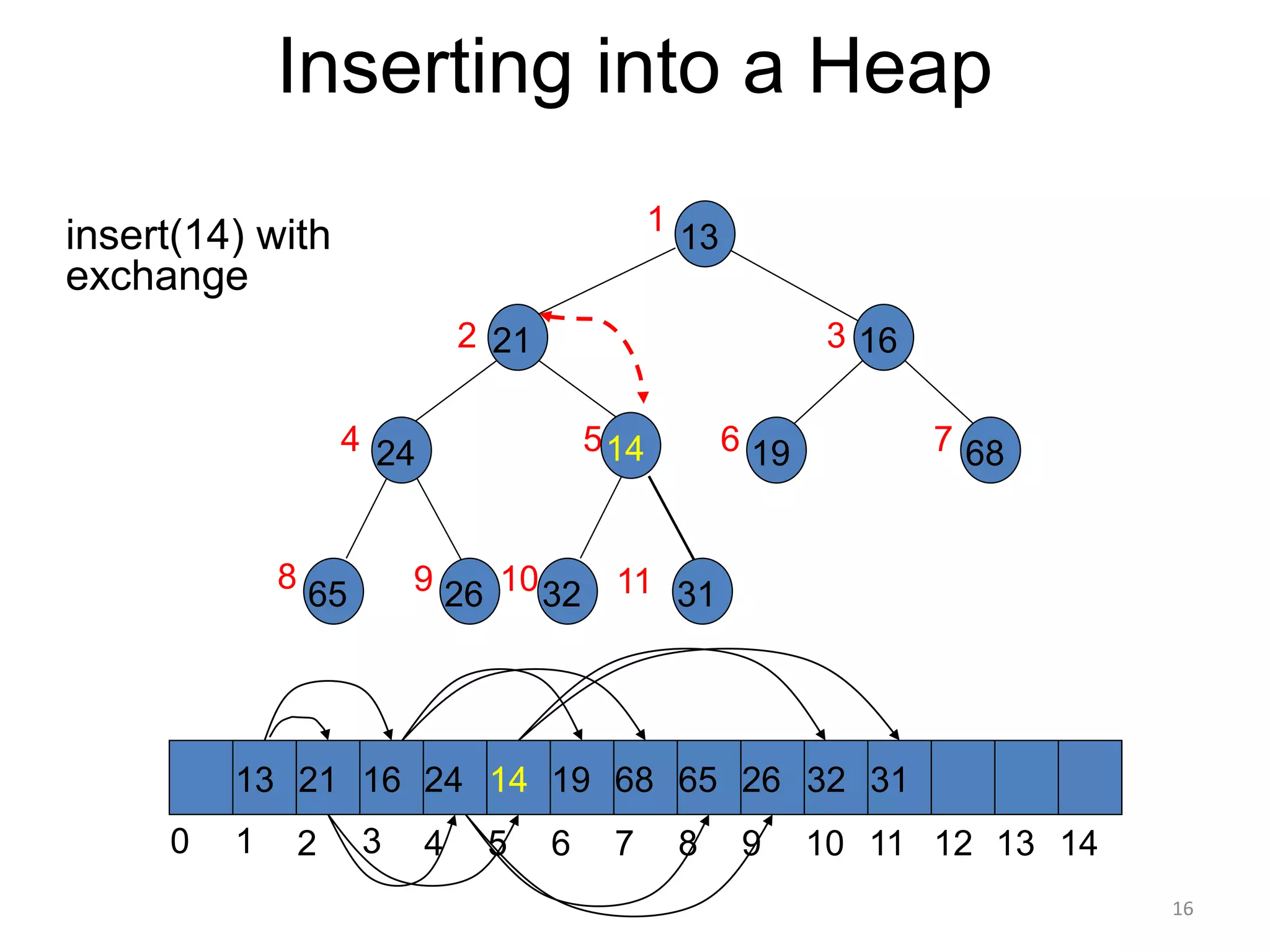
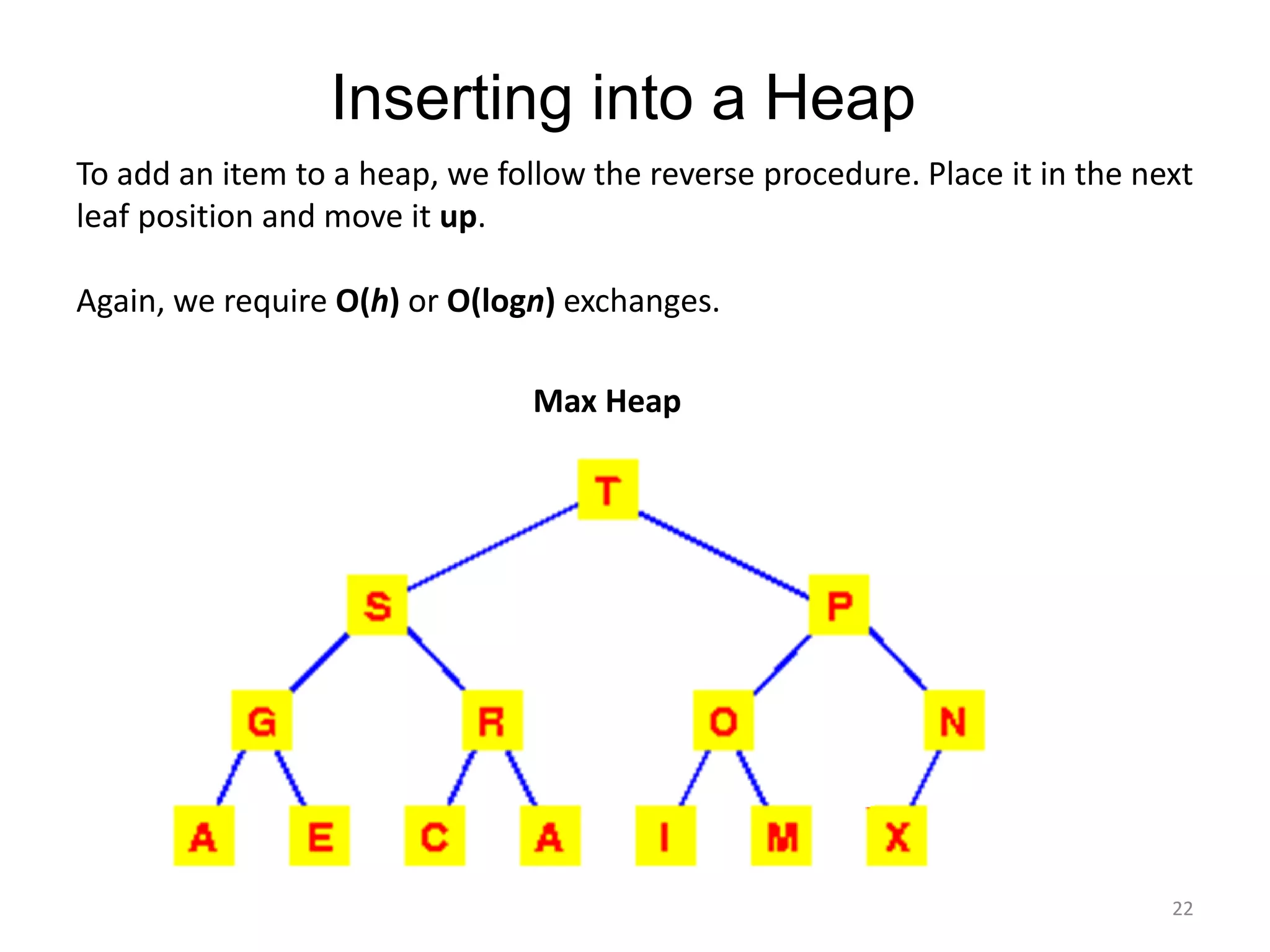
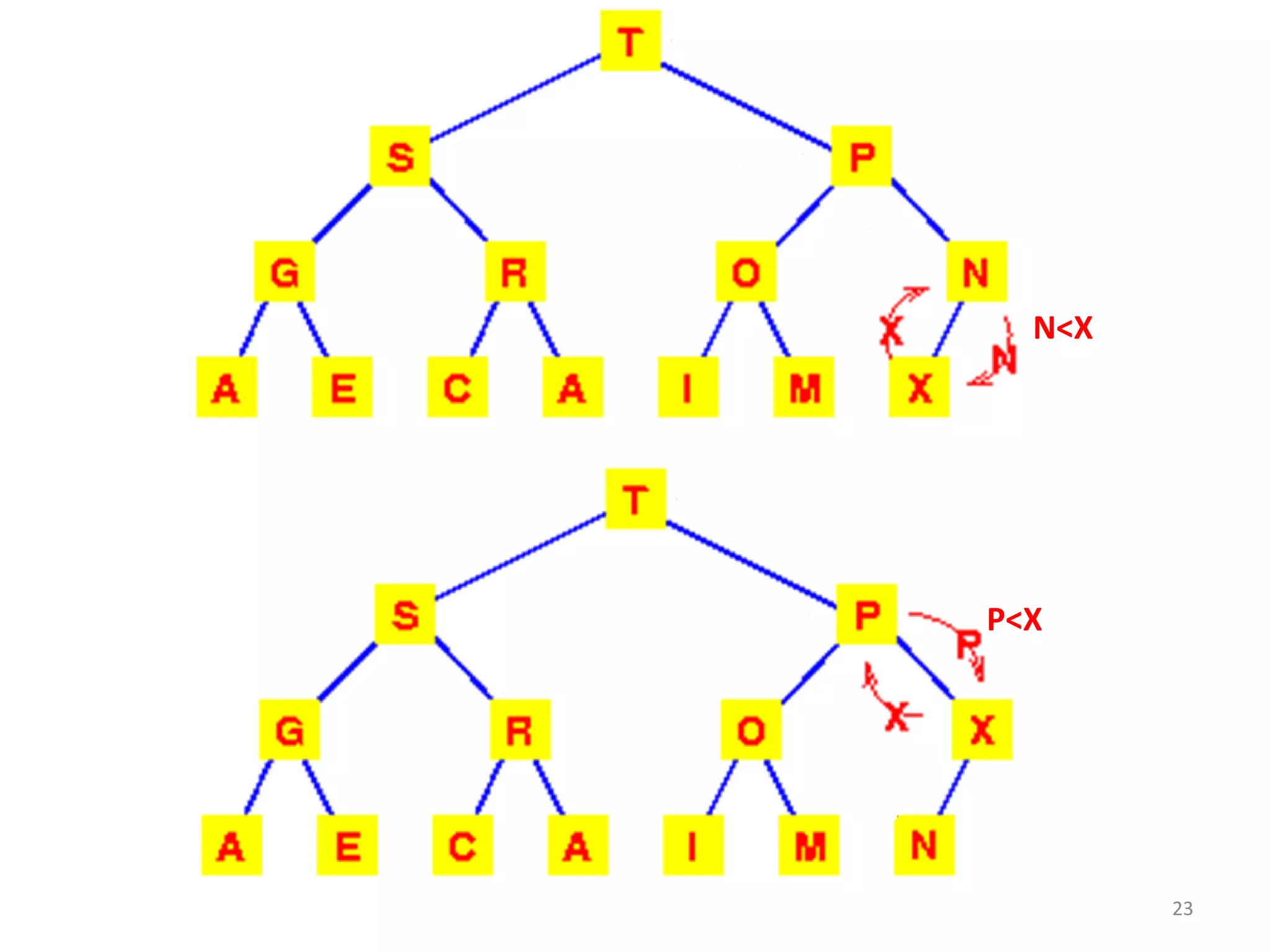
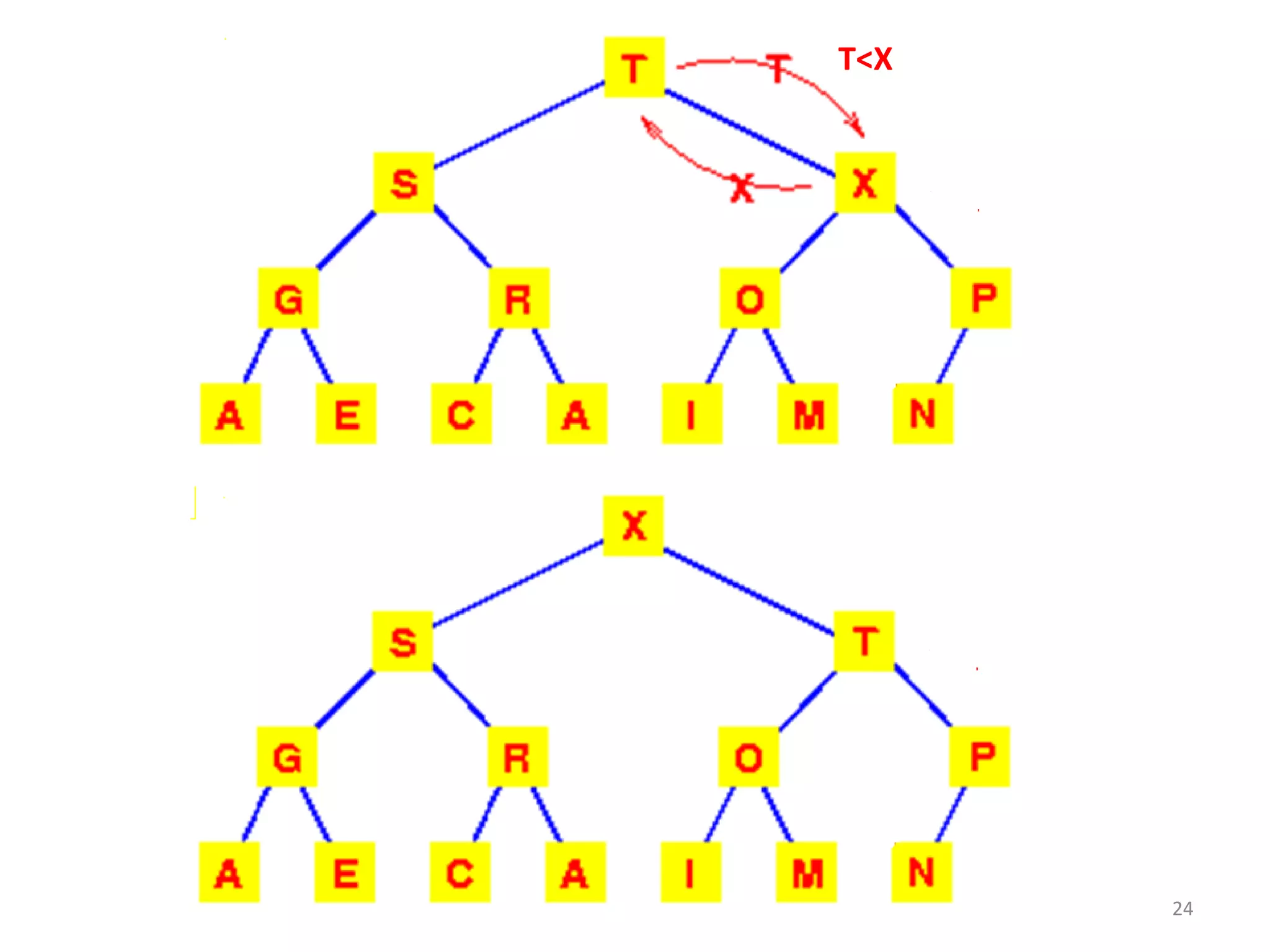
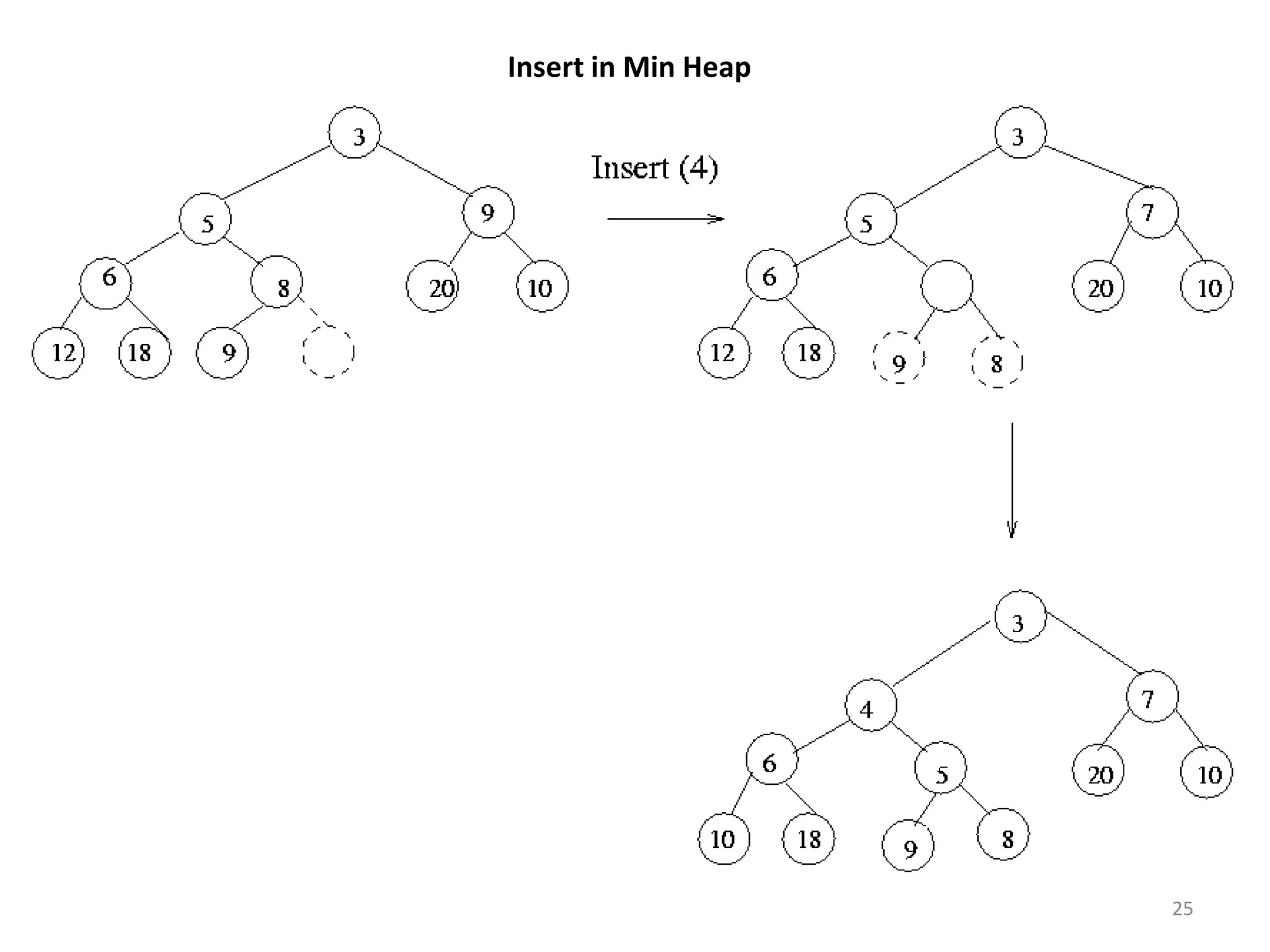
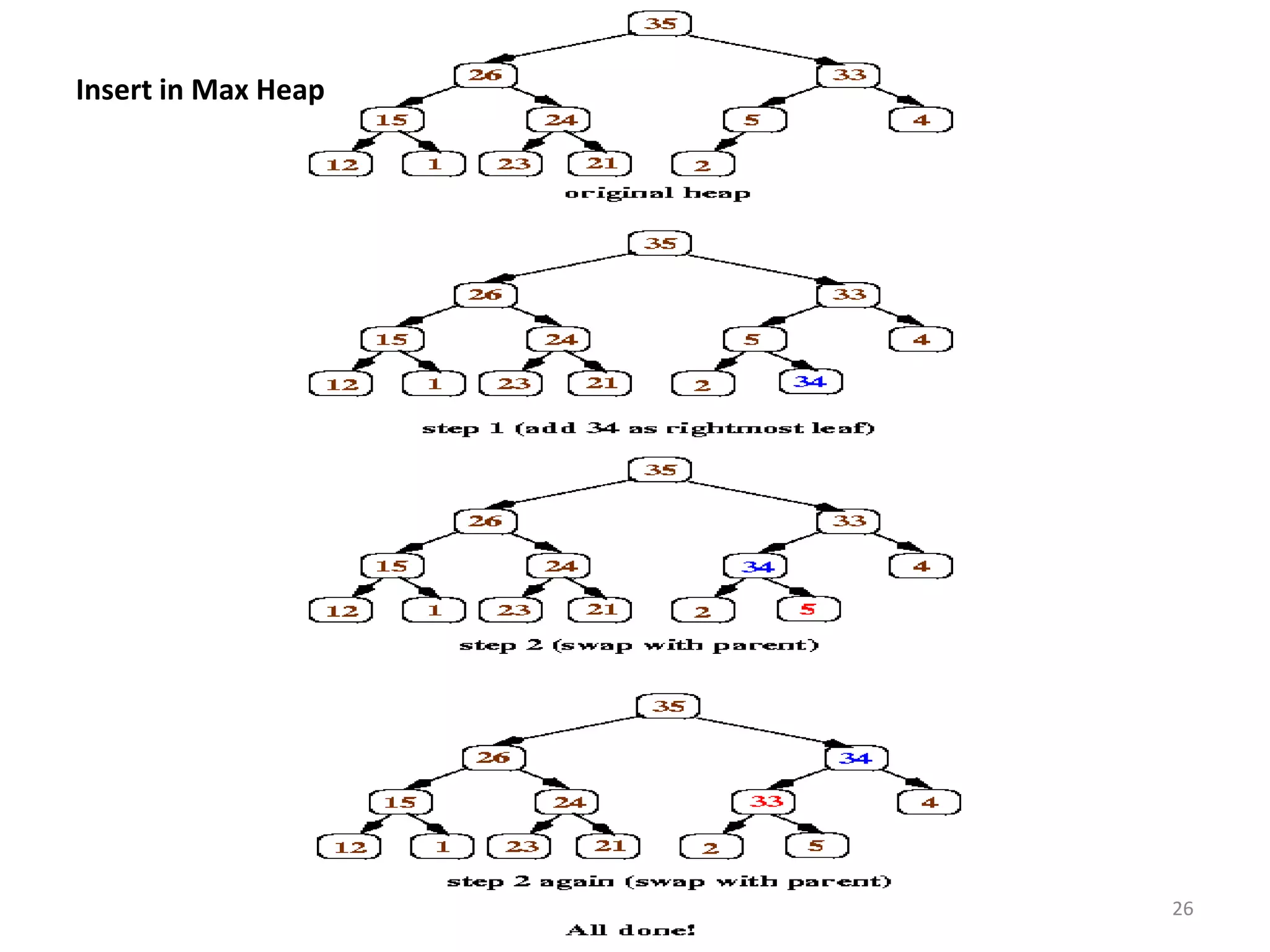
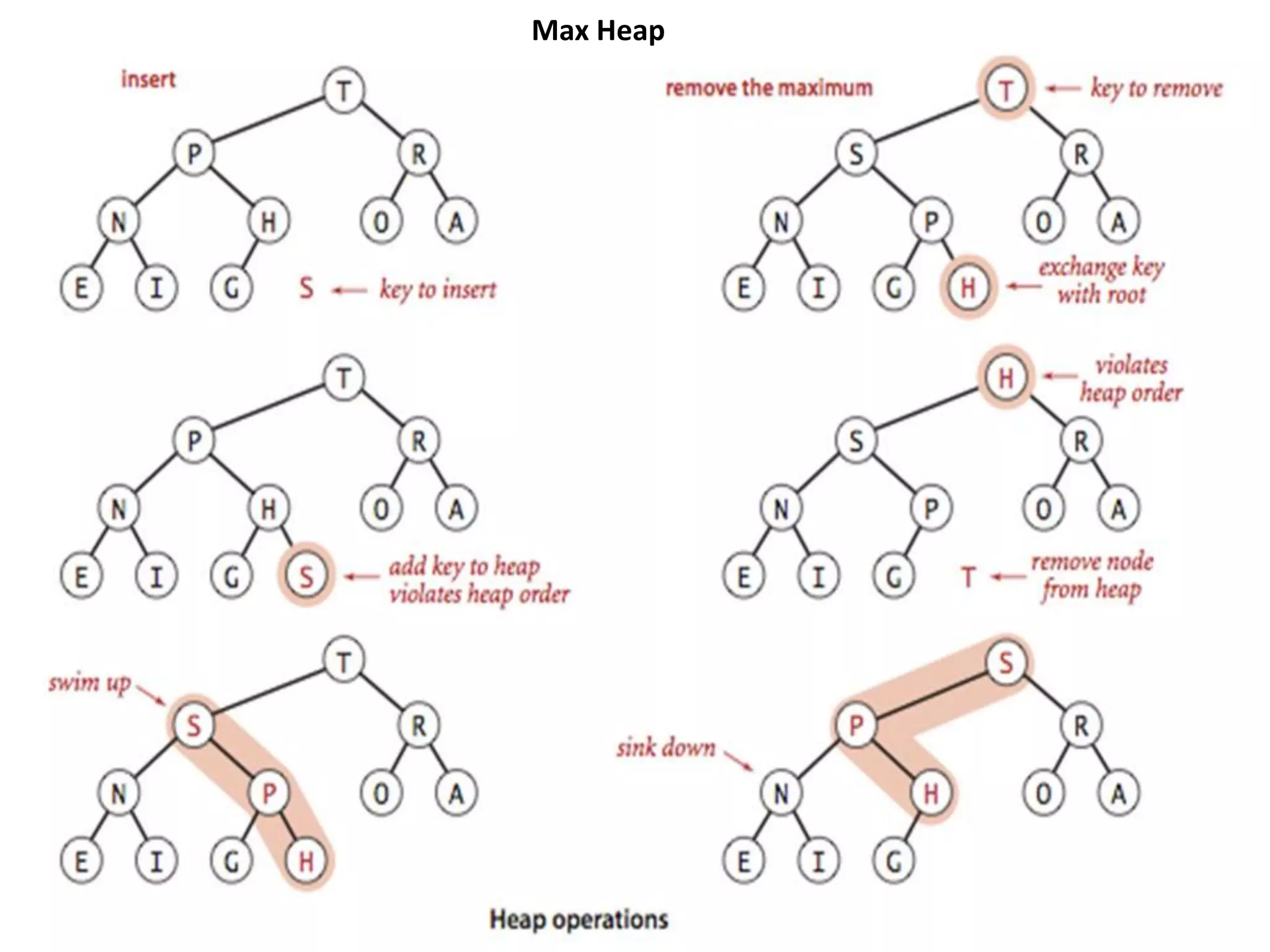
To add an item to a heap, we follow the reverse procedure. Place it in the next
leaf position and move it up.
Again, we require O(h) or O(logn) exchanges.
23
P<X
N<X
24
T<X
25
Insert in Min Heap
26
Insert in Max Heap
27
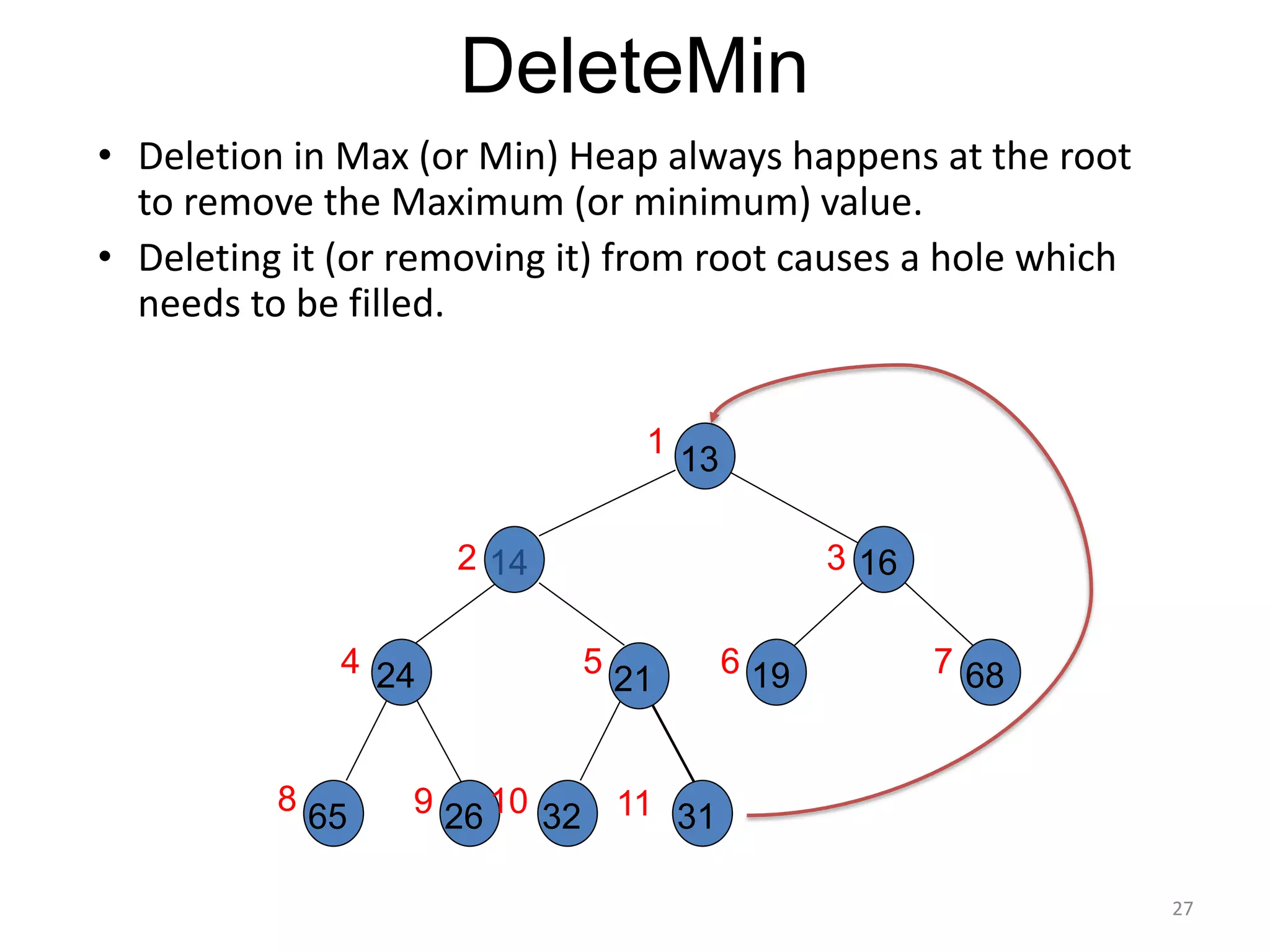
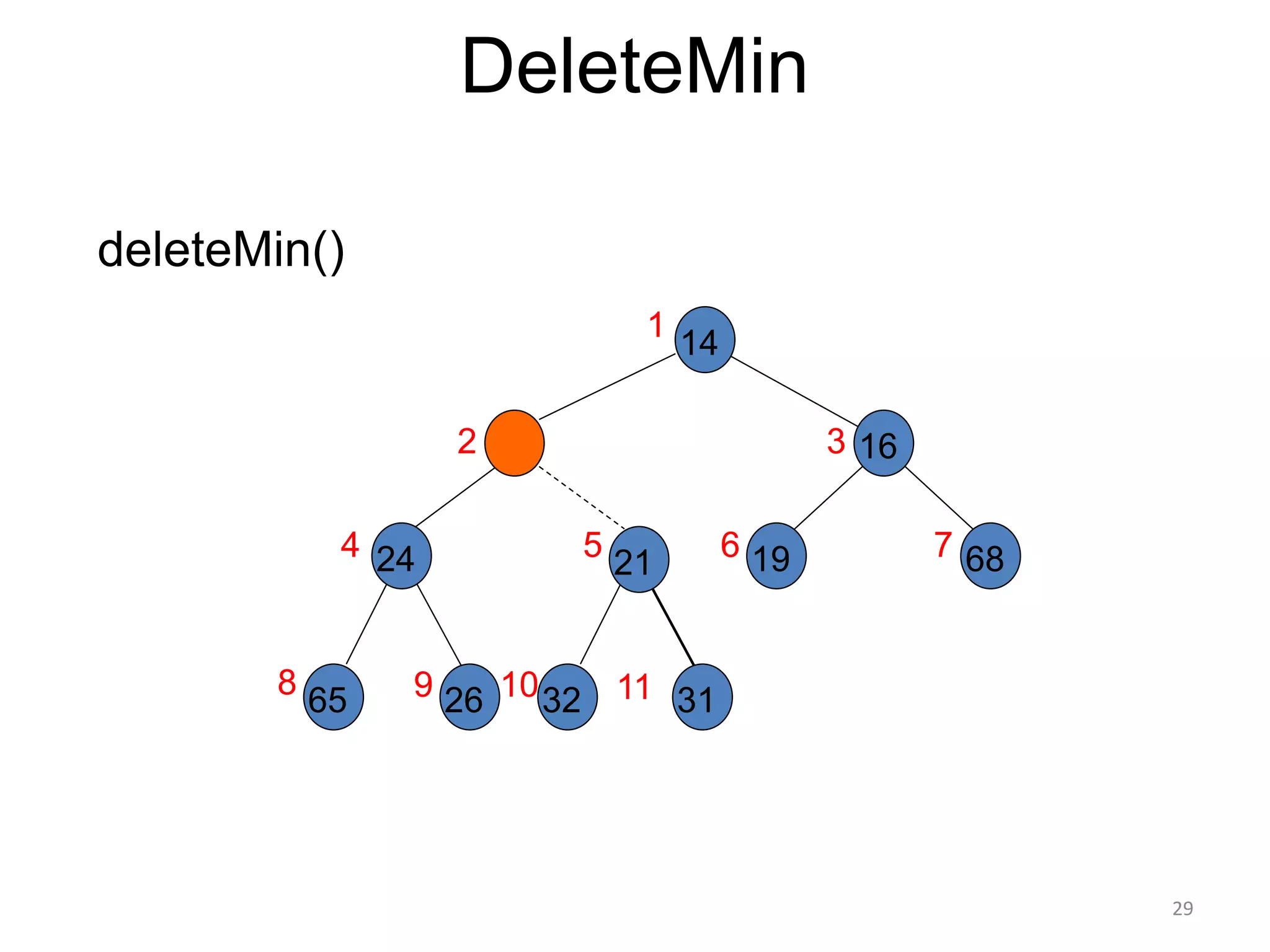
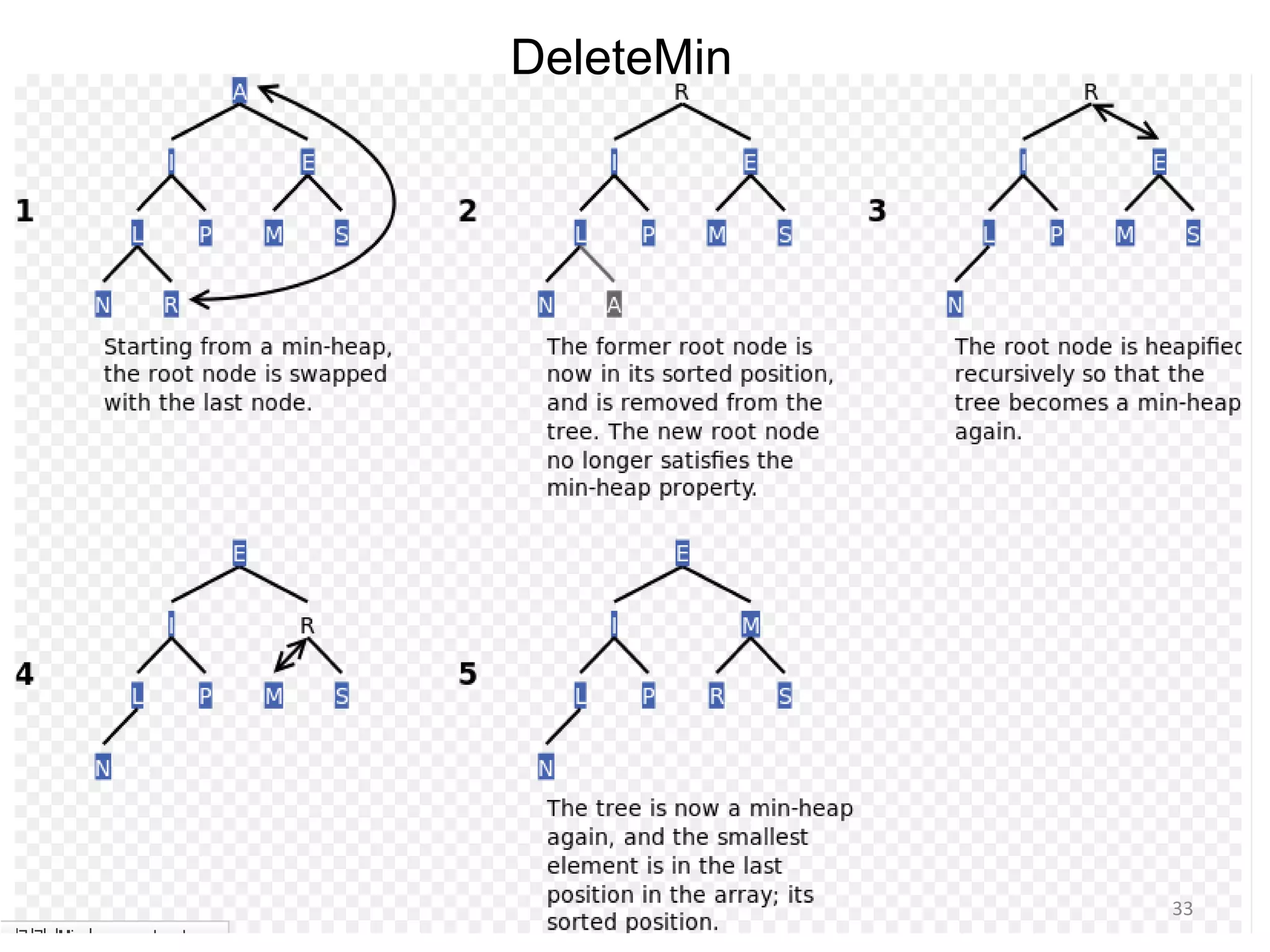
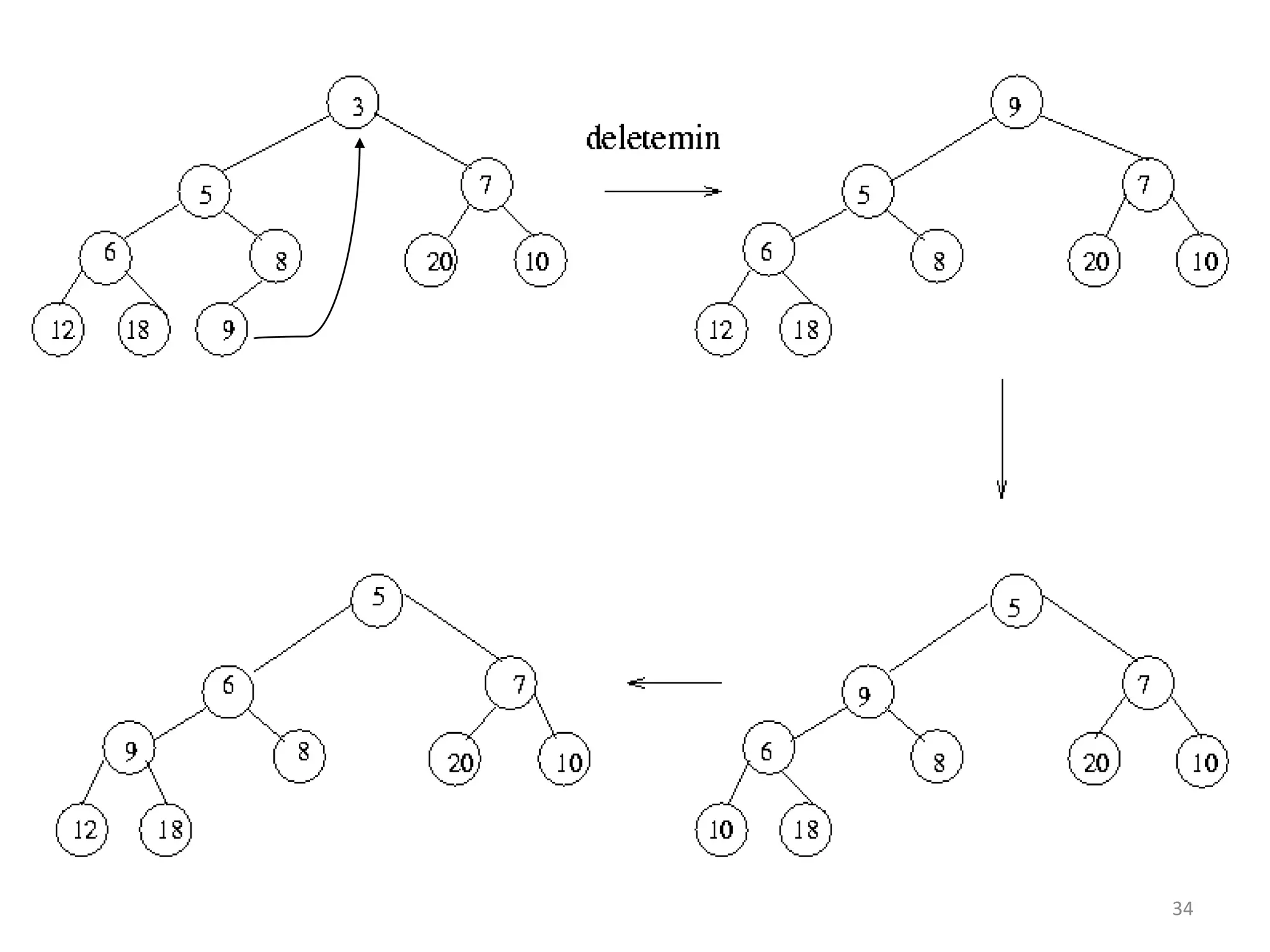
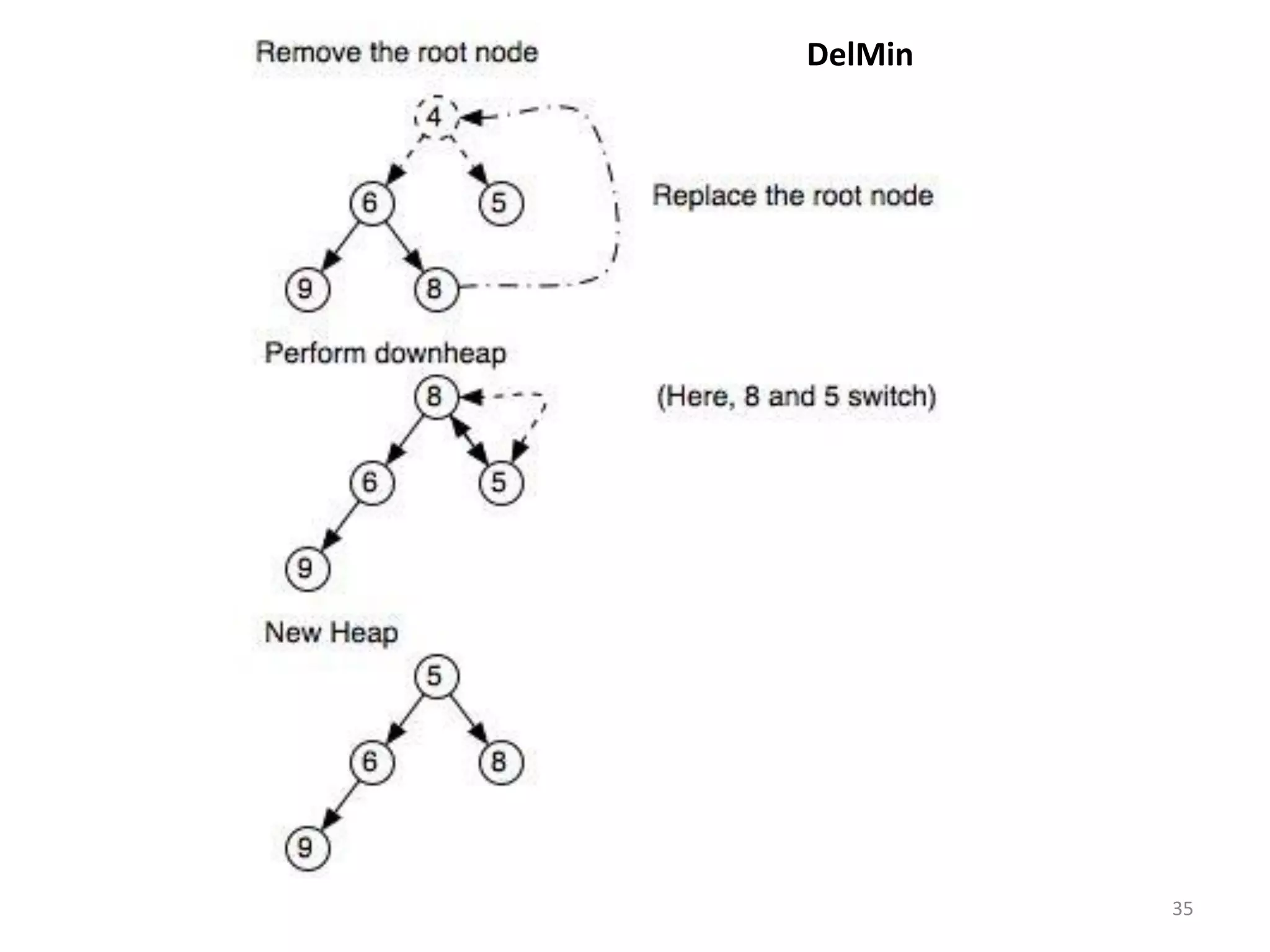
DeleteMin
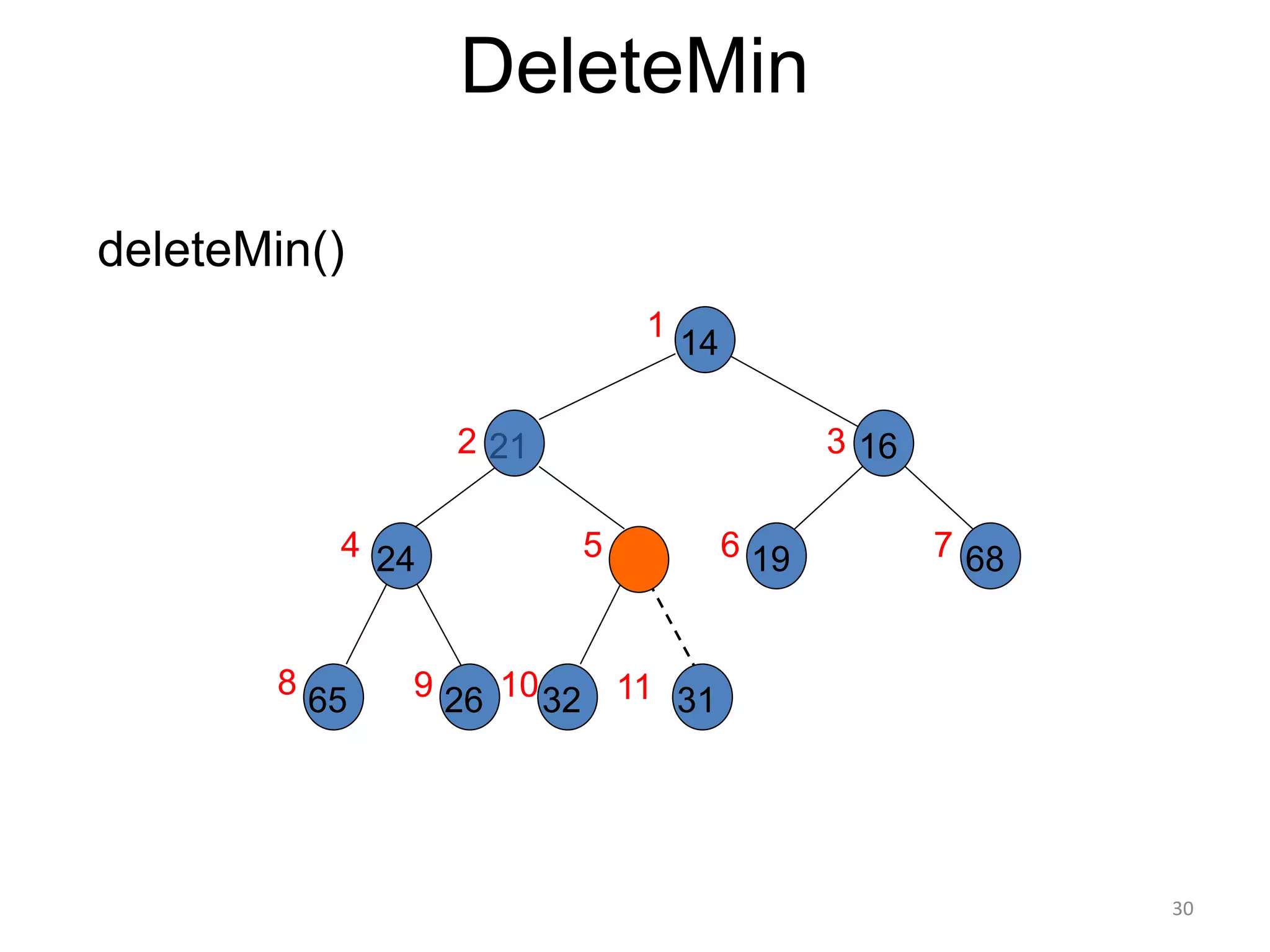
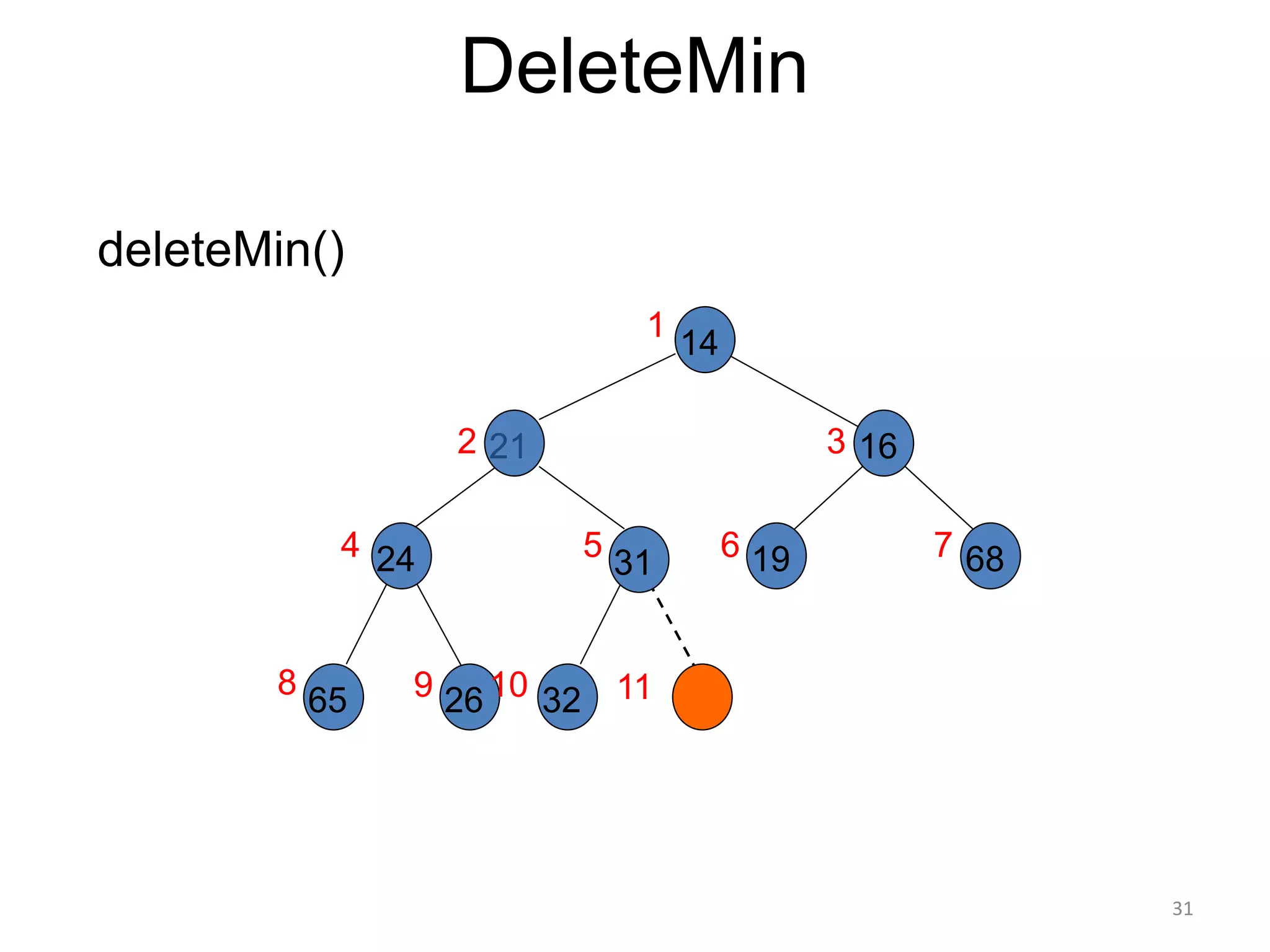
• Deletion in Max (or Min) Heap always happens at the root
to remove the Maximum (or minimum) value.
• Deleting it (or removing it) from root causes a hole which
needs to be filled.
13
16
21
31
26
24
65 32
68
19
1
2 3
7
6
5
4
8 9 10
14
11
28
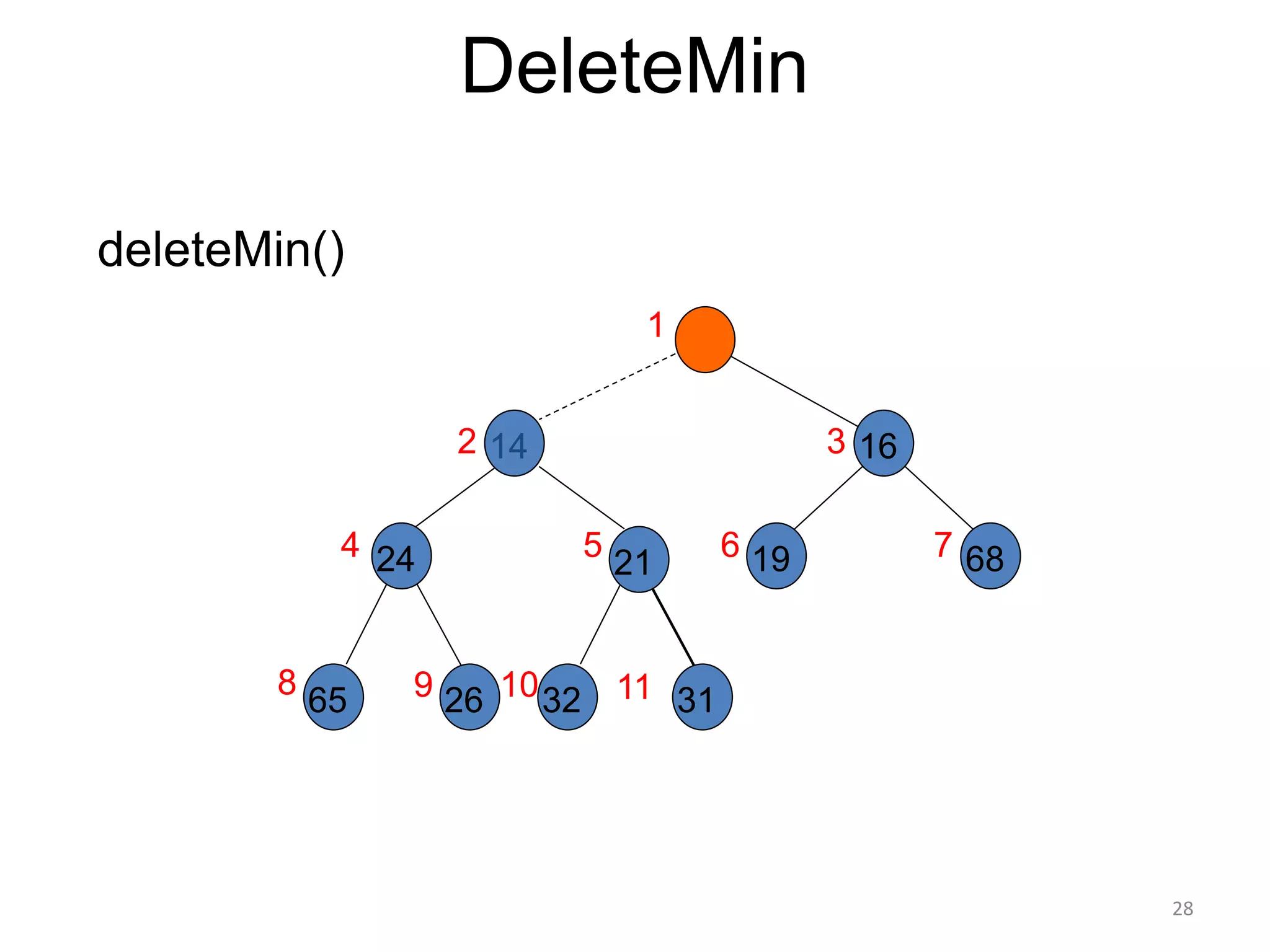
DeleteMin
deleteMin()
16
21
31
26
24
65 32
68
19
1
2 3
7
6
5
4
8 9 10
14
11
29
DeleteMin
deleteMin()
14
16
21
31
26
24
65 32
68
19
1
2 3
7
6
5
4
8 9 10 11
30
DeleteMin
deleteMin()
14
16
31
26
24
65 32
68
19
1
2 3
7
6
5
4
8 9 10
21
11
31
DeleteMin
deleteMin()
14
16
31
26
24
65 32
68
19
1
2 3
7
6
5
4
8 9 10
21
11
32
DeleteMin
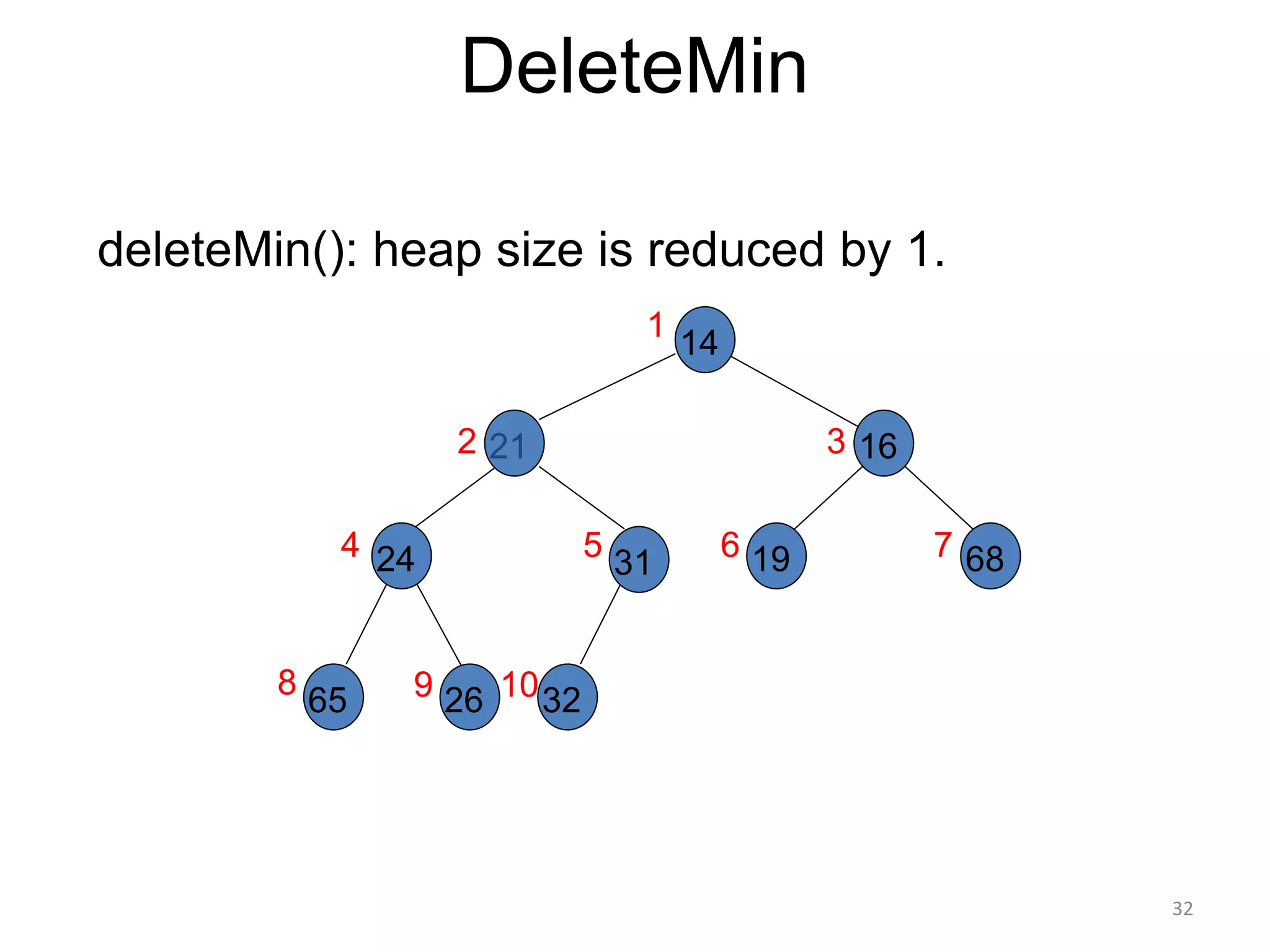
deleteMin(): heap size is reduced by 1.
14
16
31
26
24
65 32
68
19
1
2 3
7
6
5
4
8 9 10
21
DeleteMin
33
34
35
DelMin
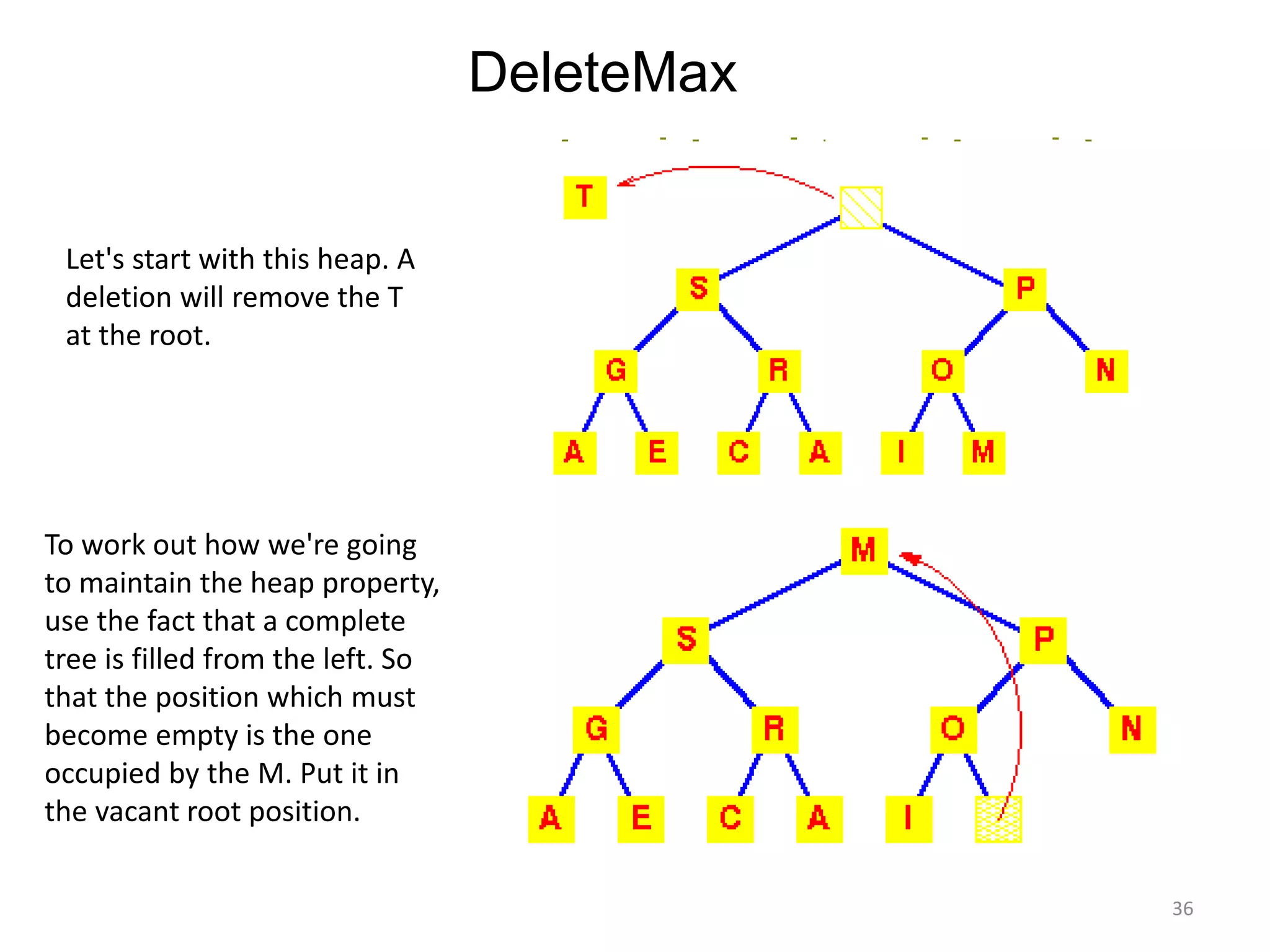
Let's start with this heap. A
deletion will remove the T
at the root.
To work out how we're going
to maintain the heap property,
use the fact that a complete
tree is filled from the left. So
that the position which must
become empty is the one
occupied by the M. Put it in
the vacant root position.
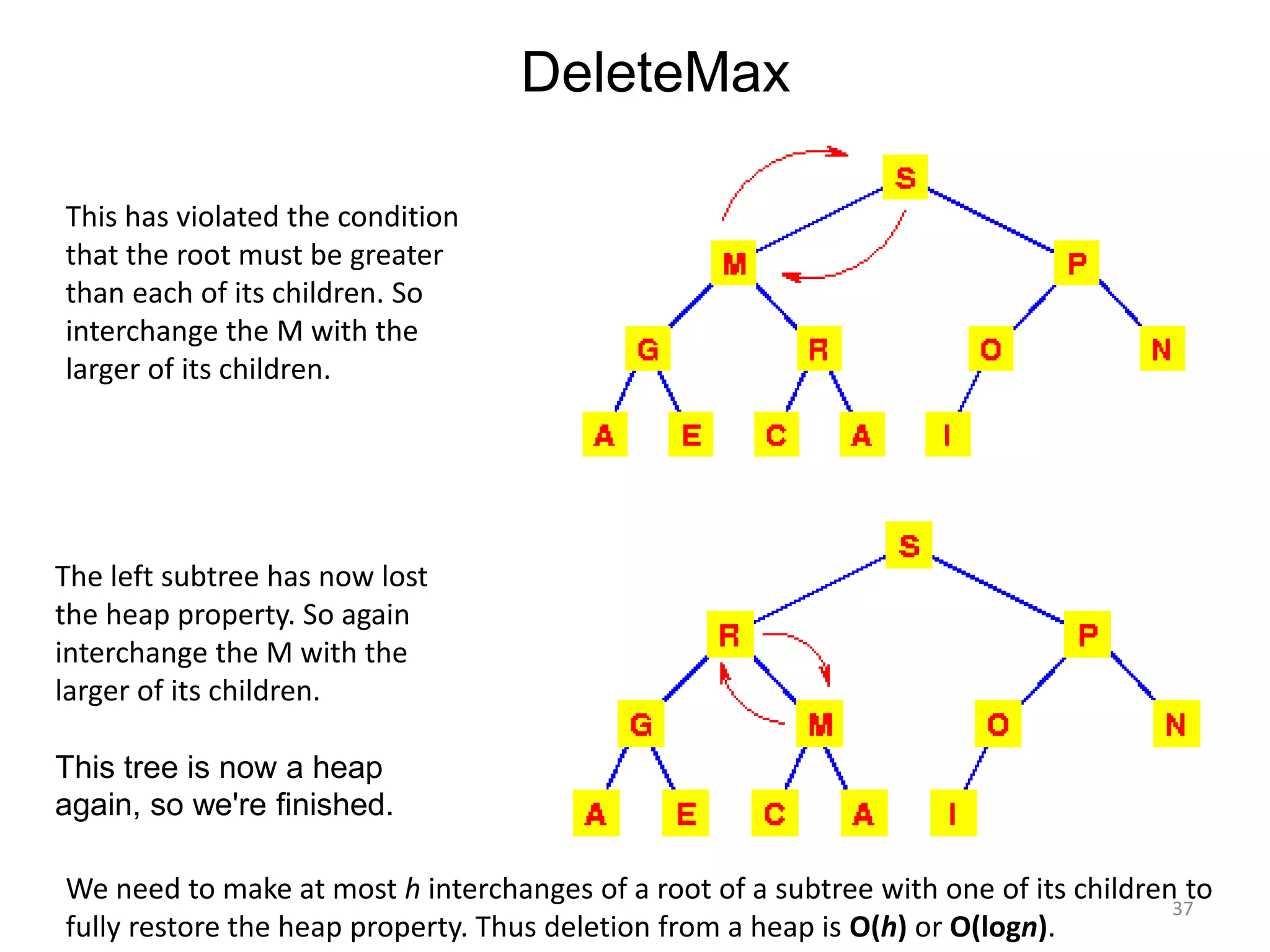
DeleteMax
36
This has violated the condition
that the root must be greater
than each of its children. So
interchange the M with the
larger of its children.
The left subtree has now lost
the heap property. So again
interchange the M with the
larger of its children.
This tree is now a heap
again, so we're finished.
DeleteMax
We need to make at most h interchanges of a root of a subtree with one of its children to
fully restore the heap property. Thus deletion from a heap is O(h) or O(logn).
37
38
BuildHeap
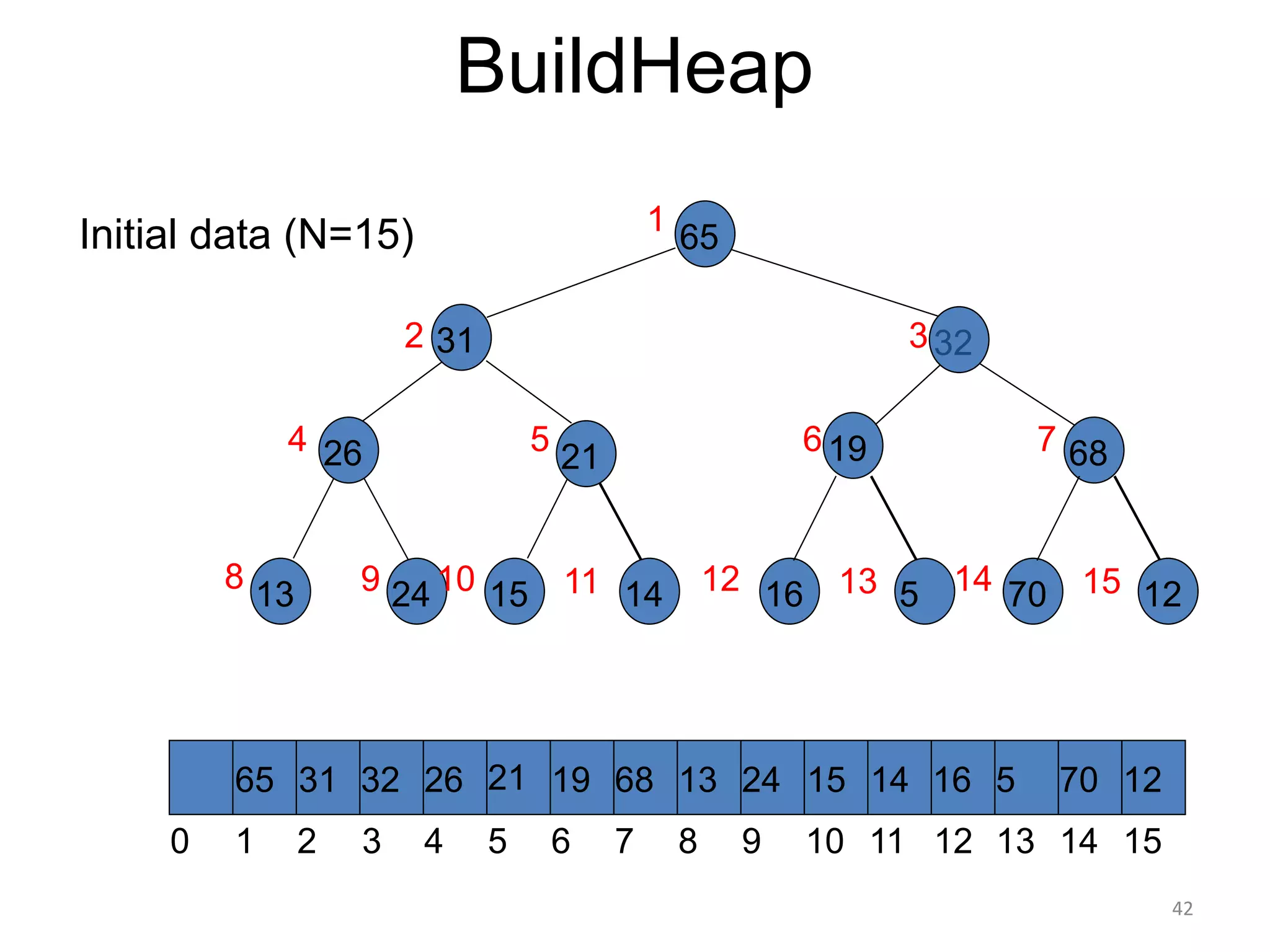
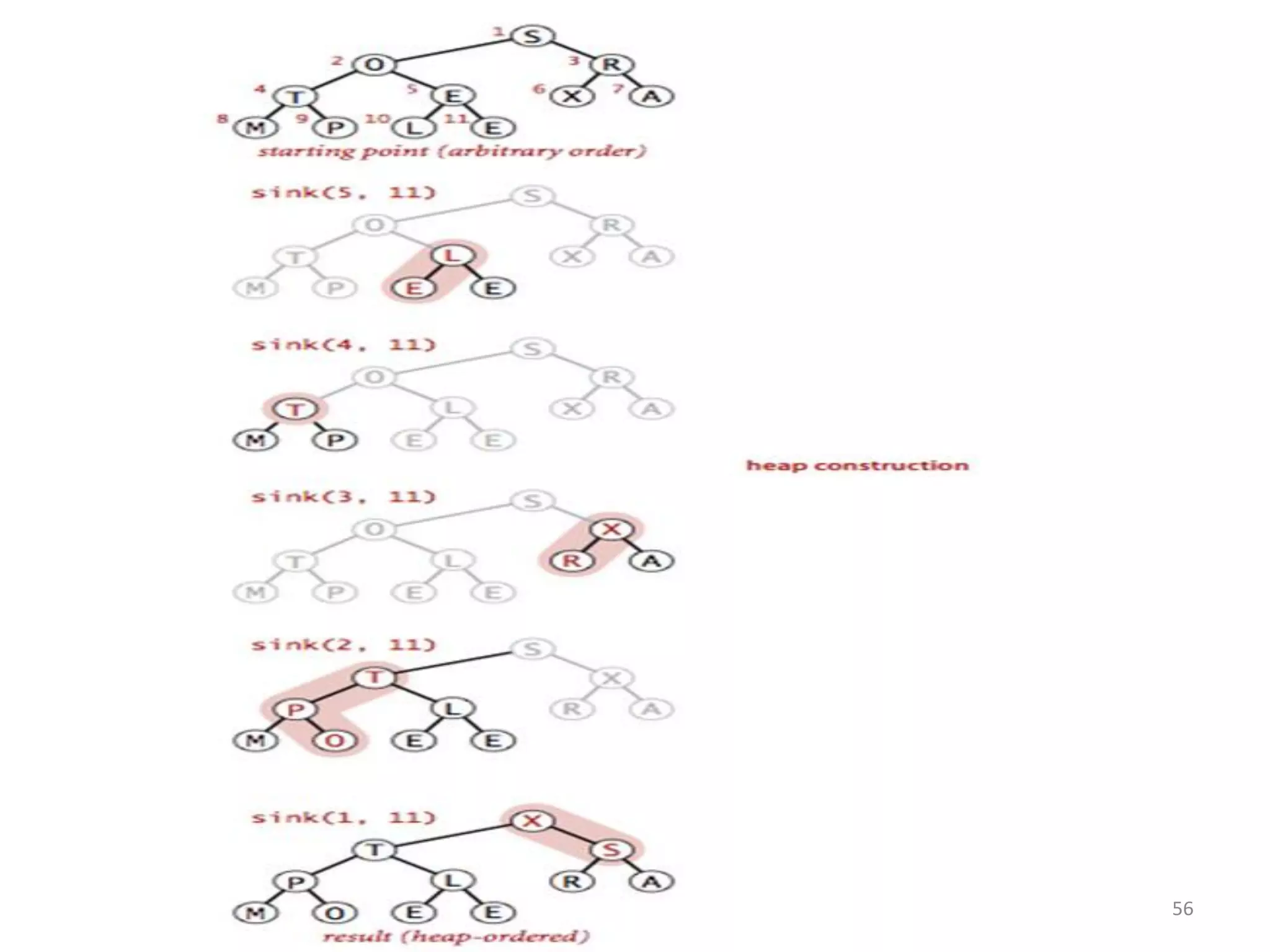
• Suppose we are given as input N keys (or
items) and we want to build a heap of the
keys.
• Obviously, this can be done with N
successive inserts.
• Each call to insert will either take unit time
(leaf node) or log2N (if new key percolates
all the way up to the root).
39
BuildHeap
• The worst time for building a heap of N
keys could be Nlog2N.
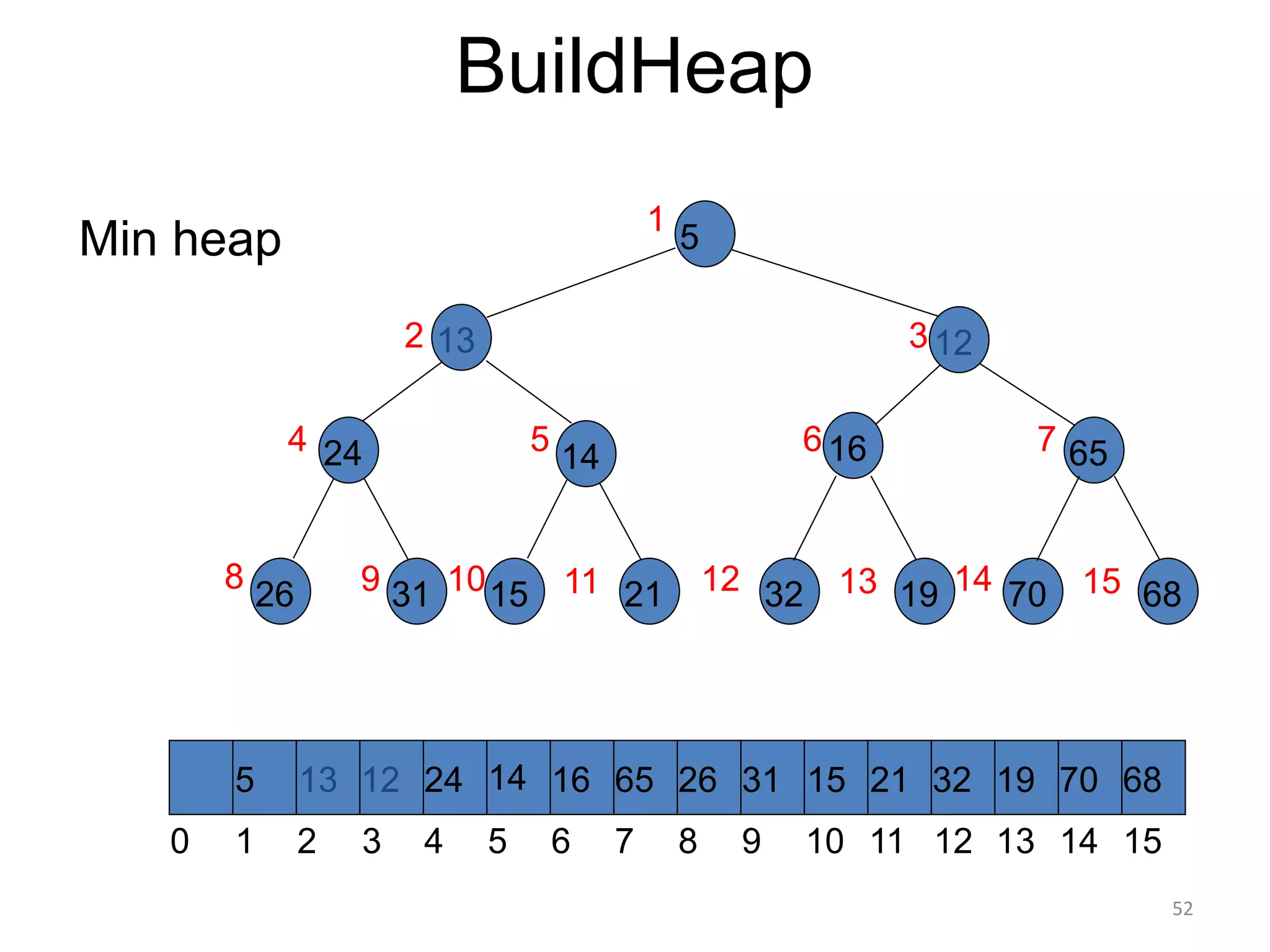
• It turns out that we can build a heap in
linear time.
40
BuildHeap
• Suppose we have a method
percolateDown(p) which moves down the
key in node p downwards.
• This is what was happening in deleteMin.
41
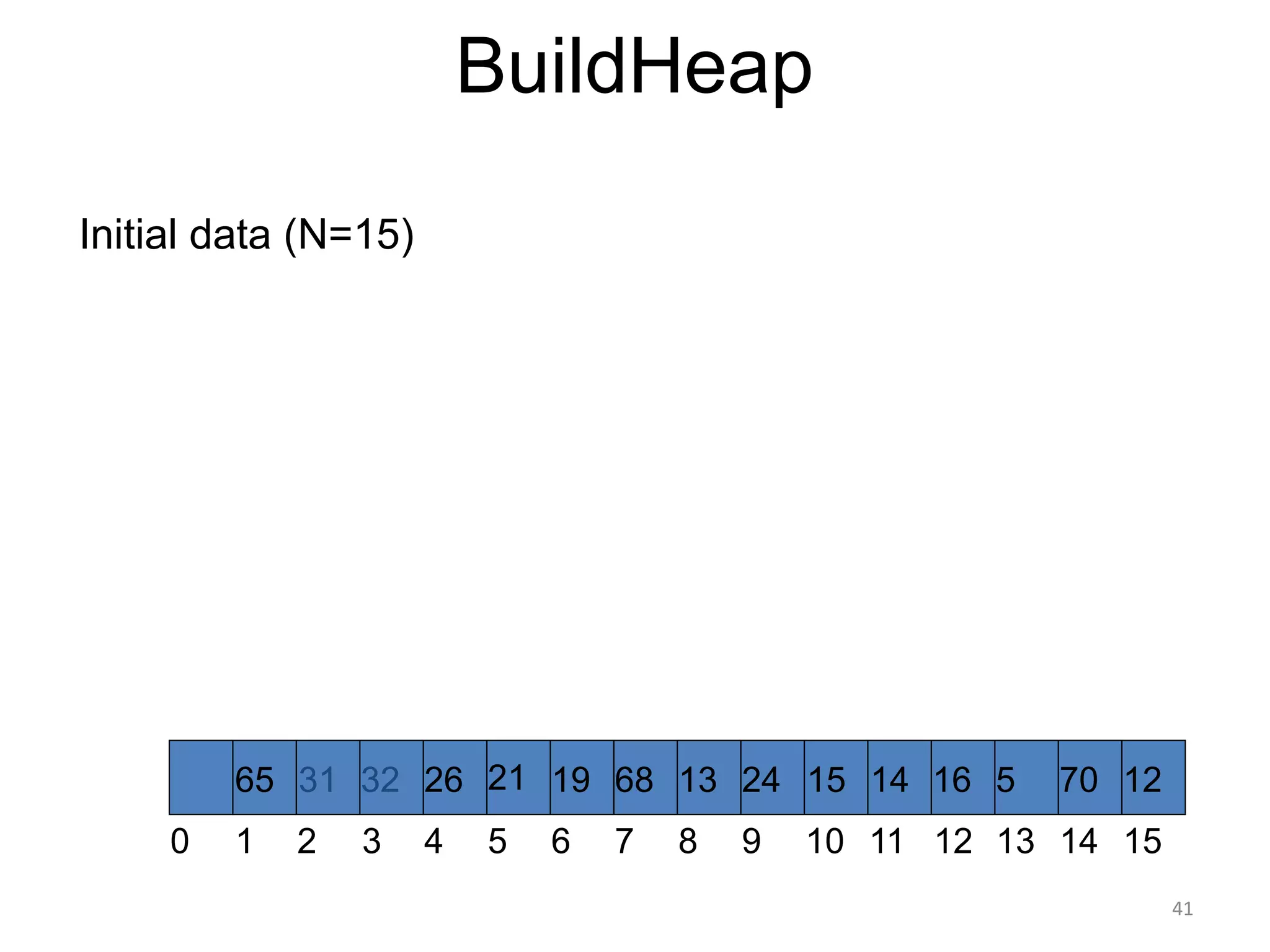
BuildHeap
Initial data (N=15)
65 21 19
26 14 16
68 13 24 15
1 2 3 5 6 7 8 9 10 11 12 13 14
0
31 32
15
4
5 70 12
42
BuildHeap
Initial data (N=15) 65
19
21
14
24
26
13 15
68
16
65 21 19
26 14 16
68 13 24 15
1 2 3 5 6 7 8 9 10 11 12 13 14
0
1
2 3
7
6
5
4
8 9 10
31
31
11
32
32
12
15
4
5
13 70
14 12
15
5 70 12
43
BuildHeap
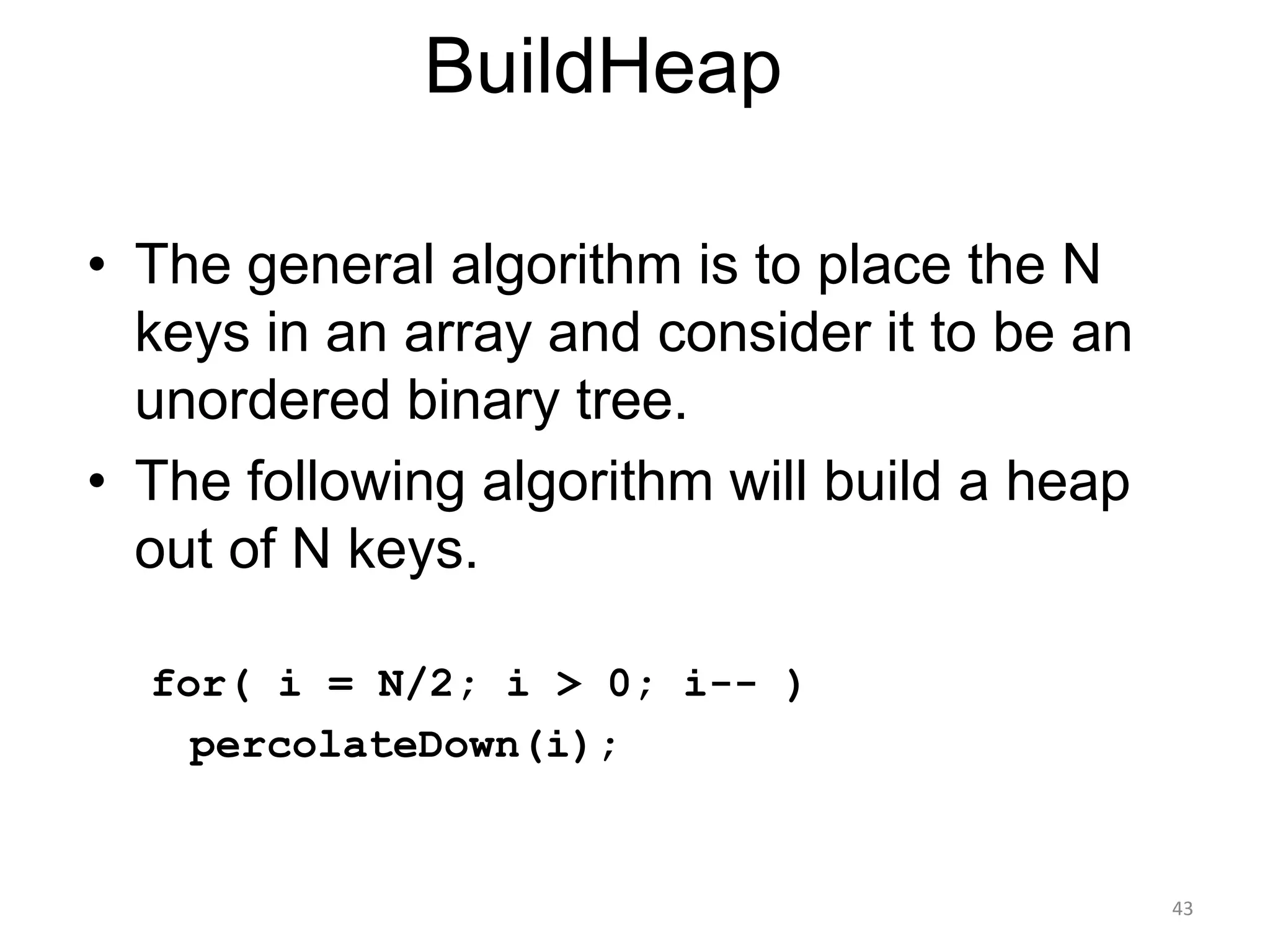
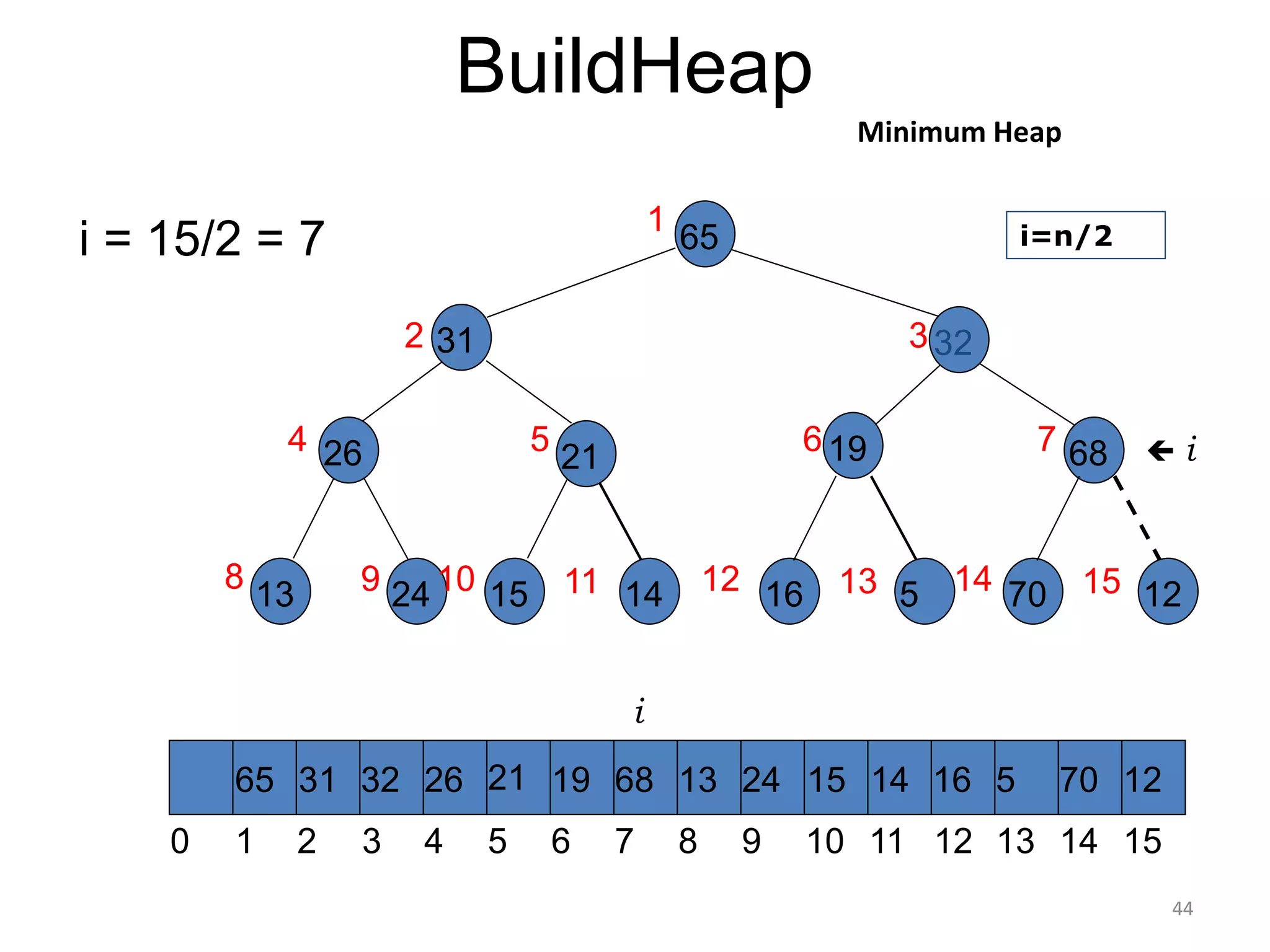
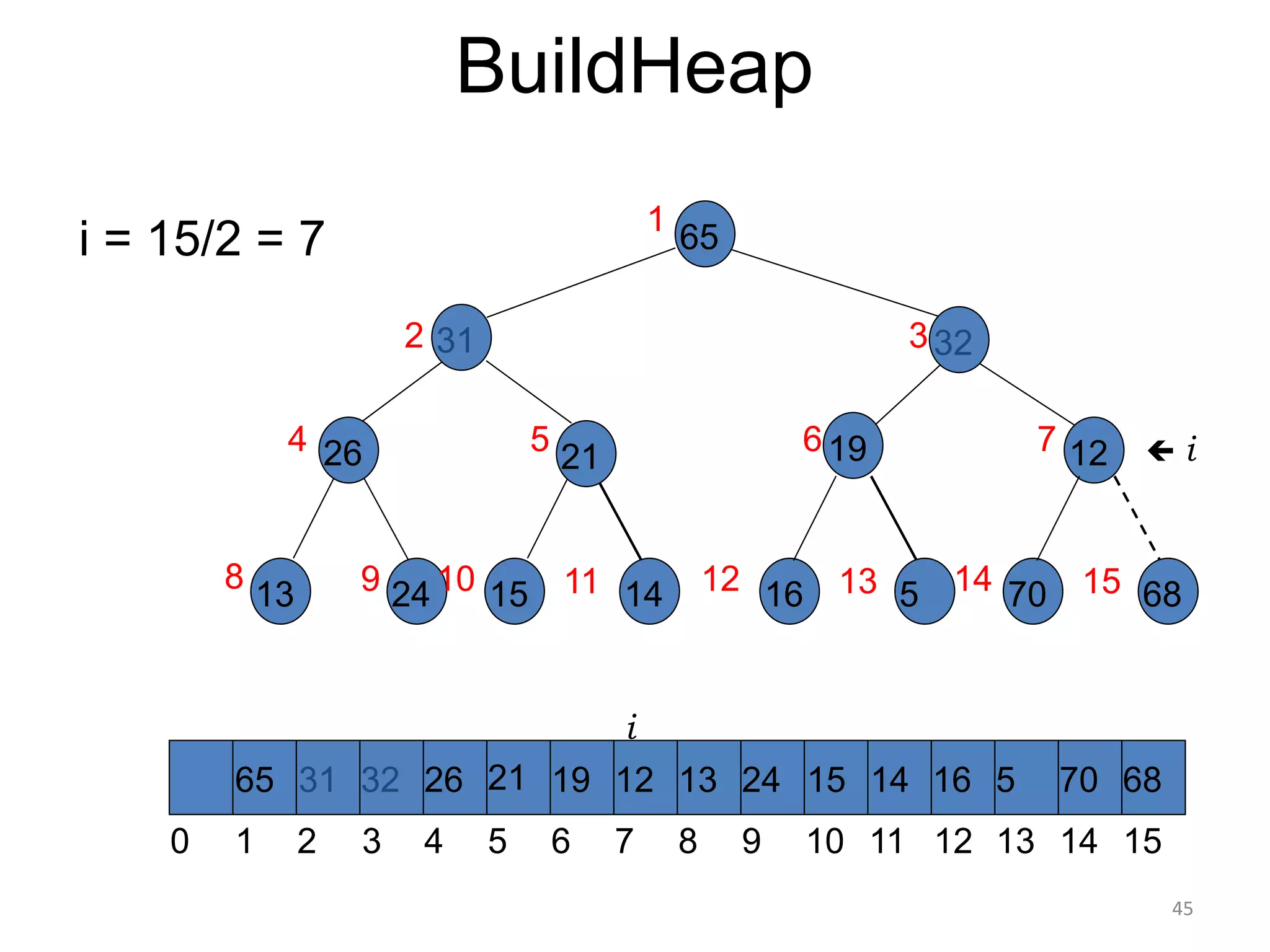
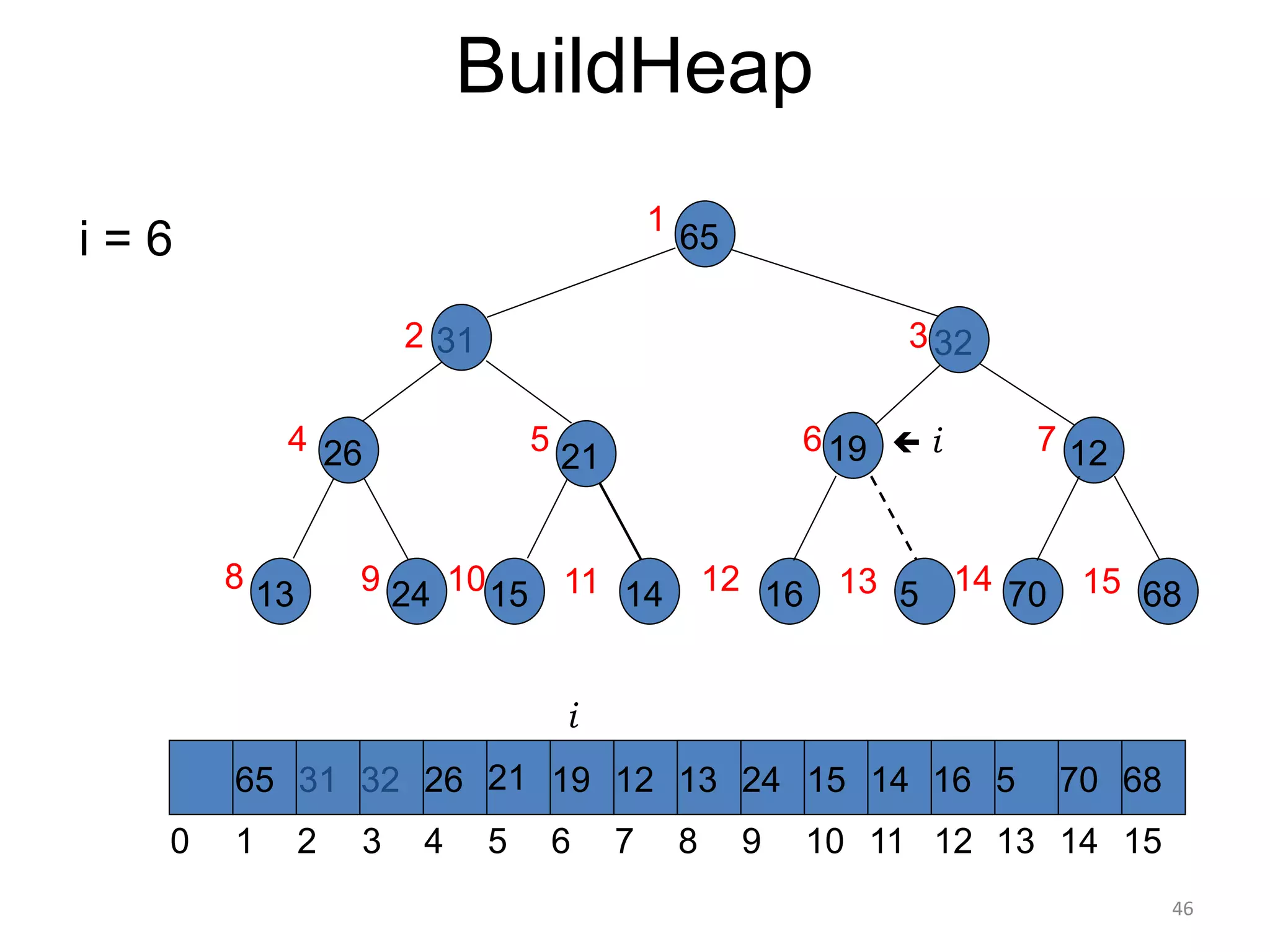
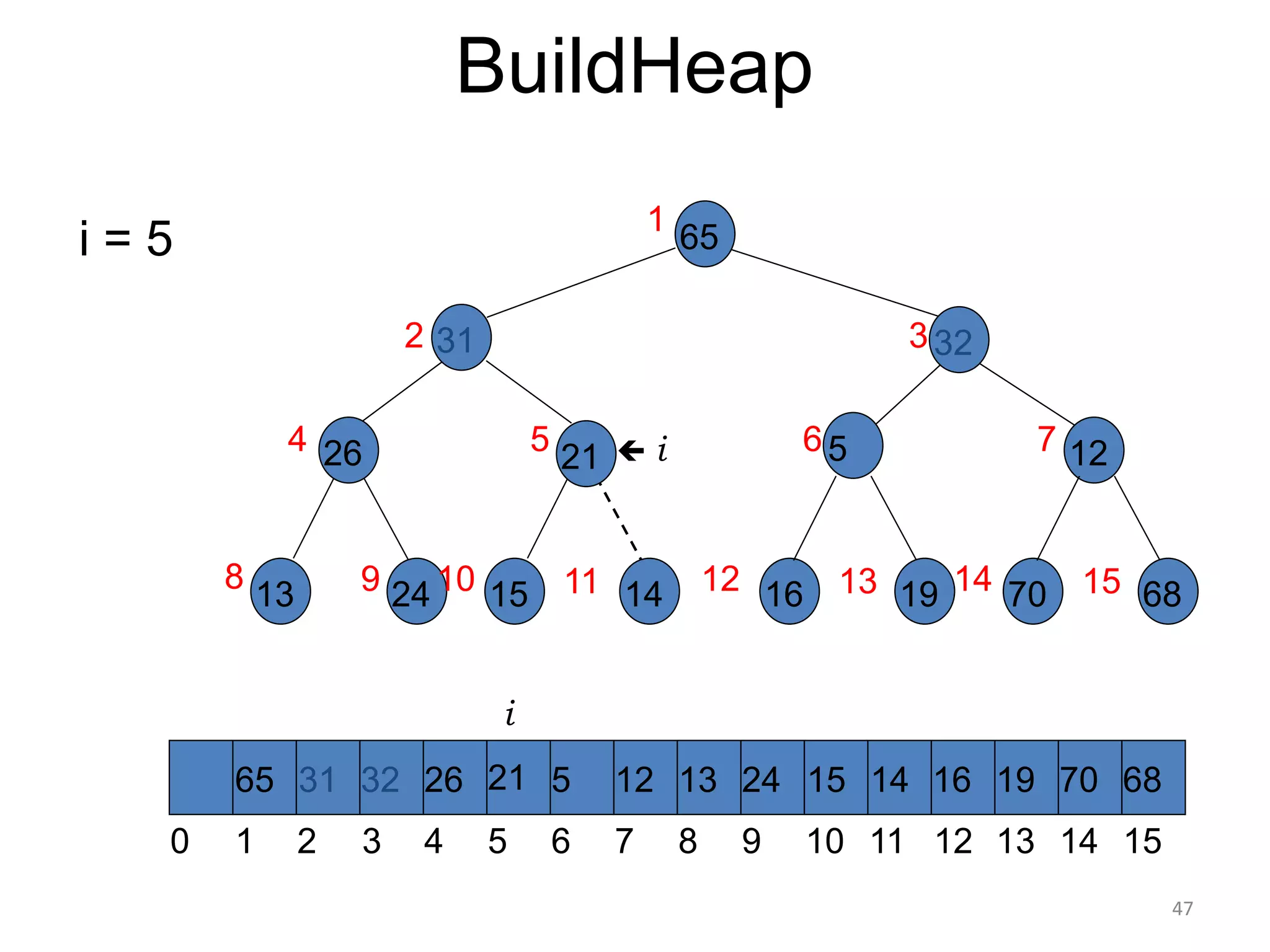
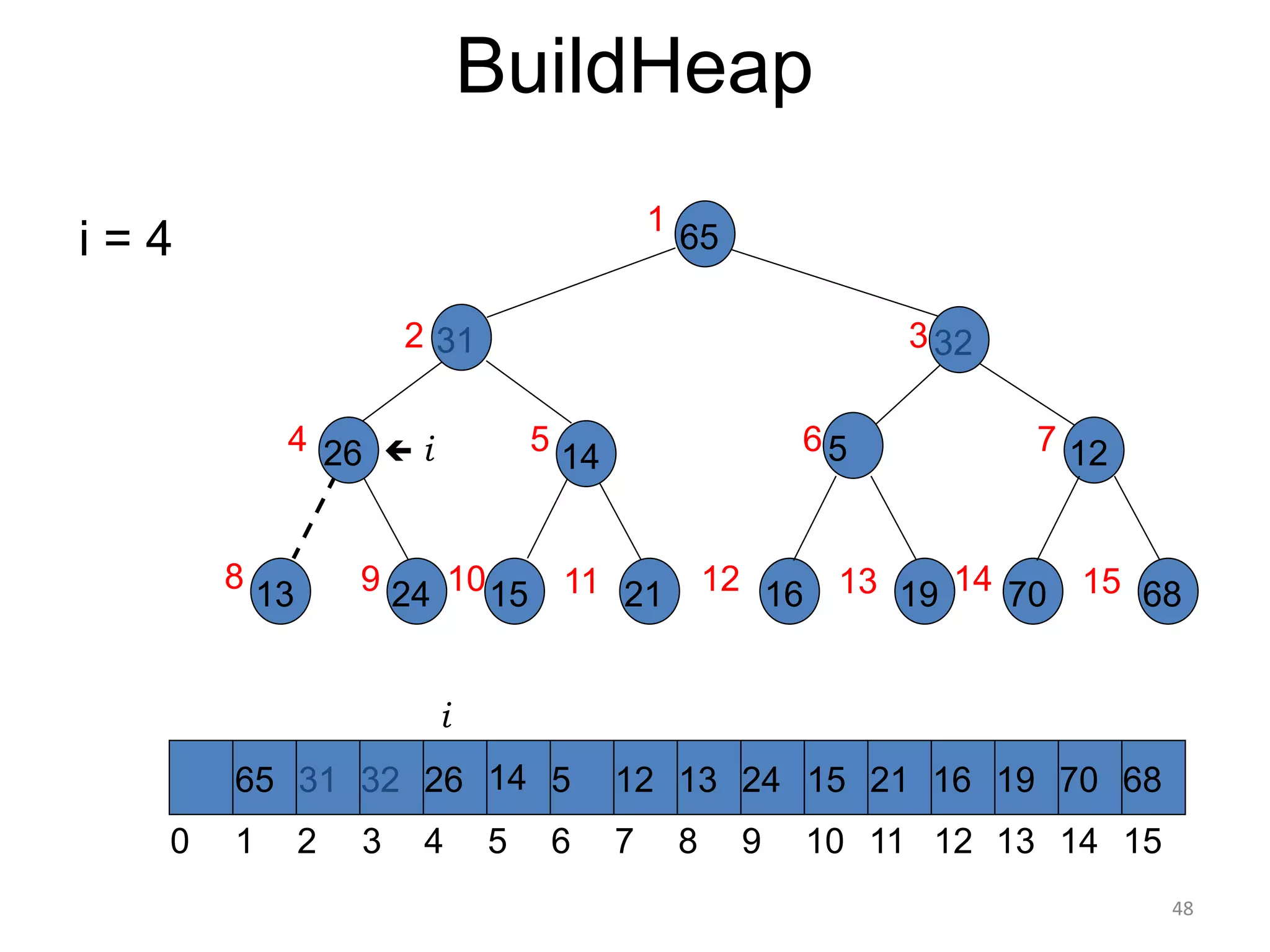
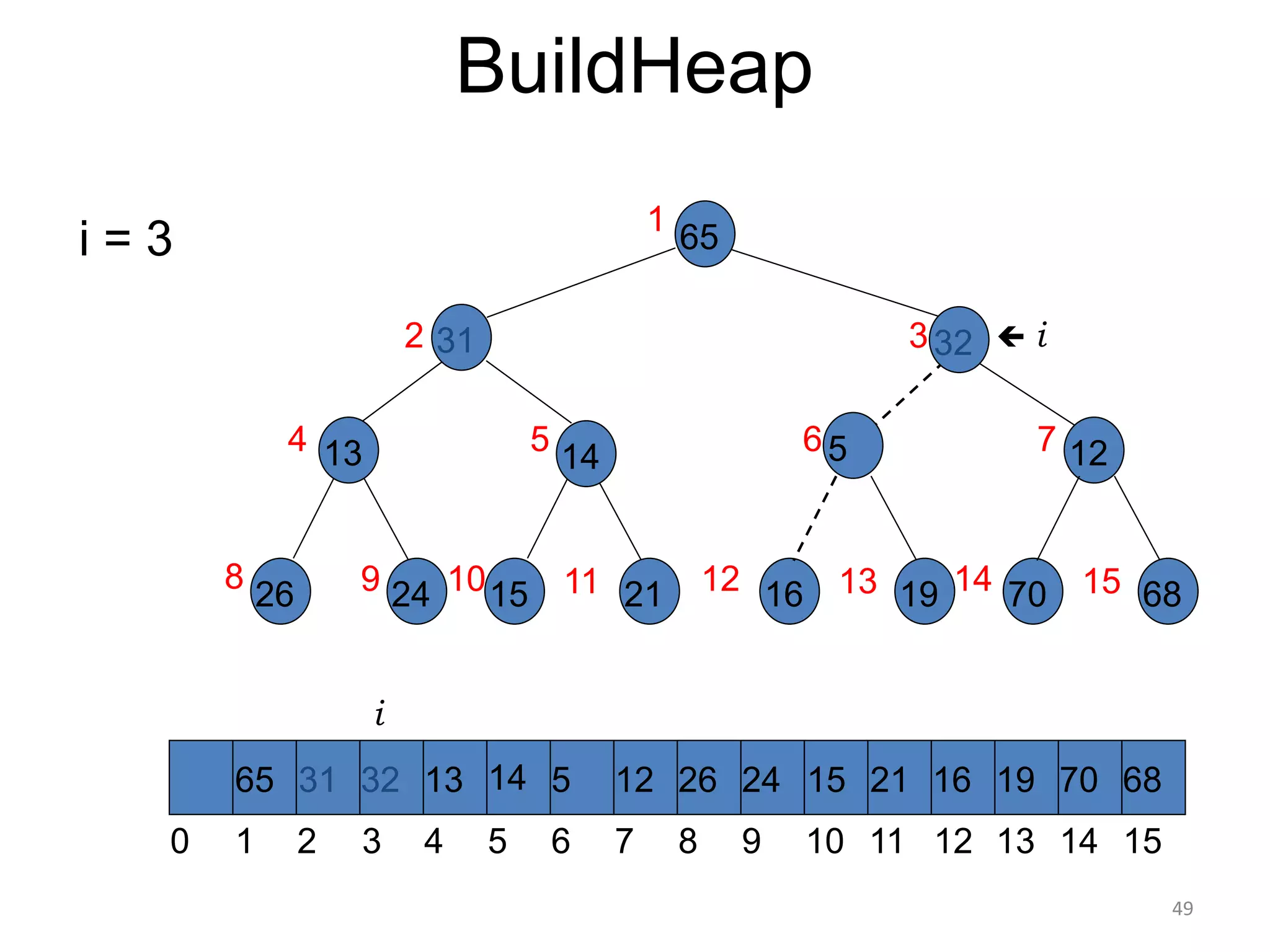
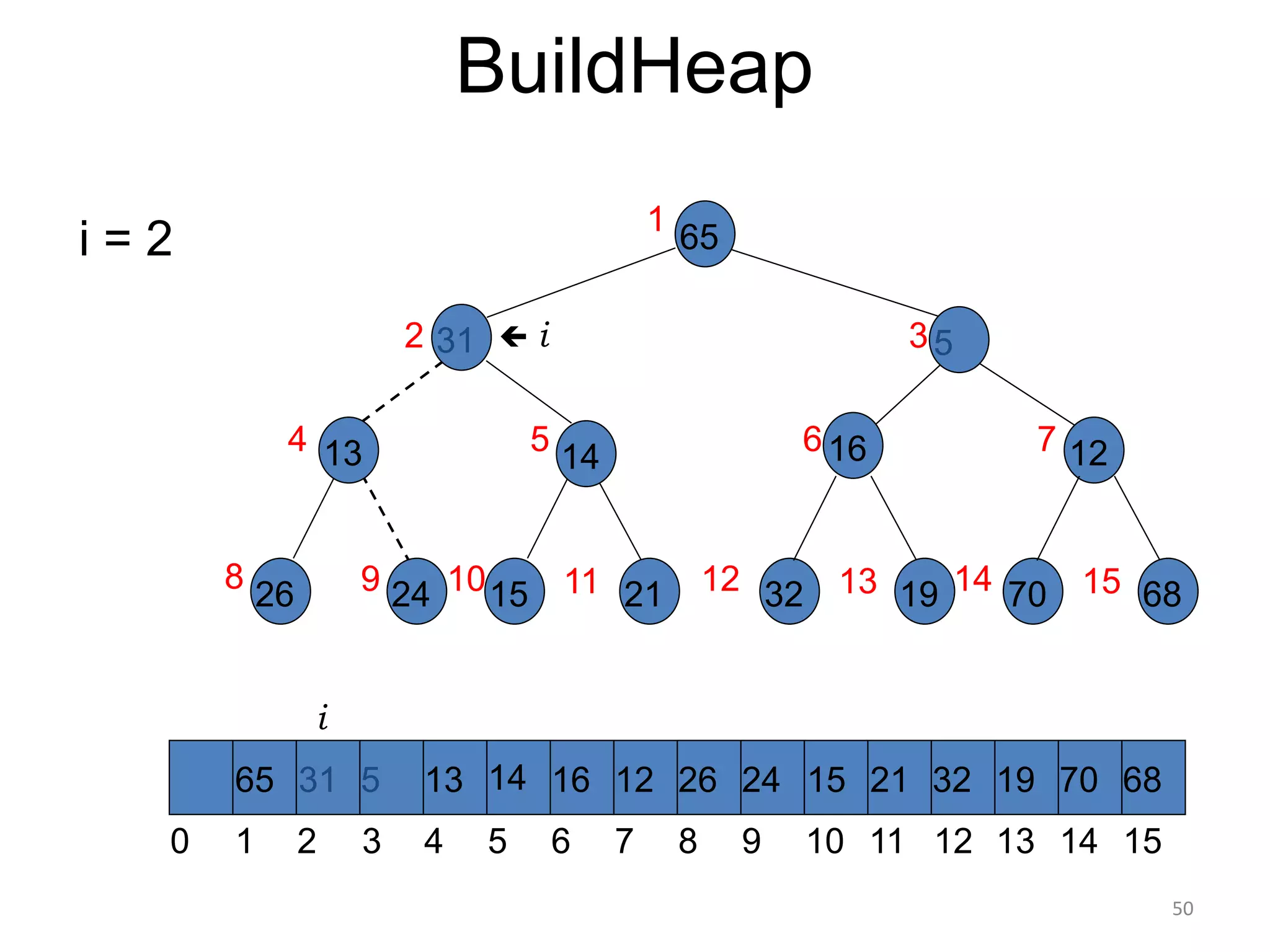
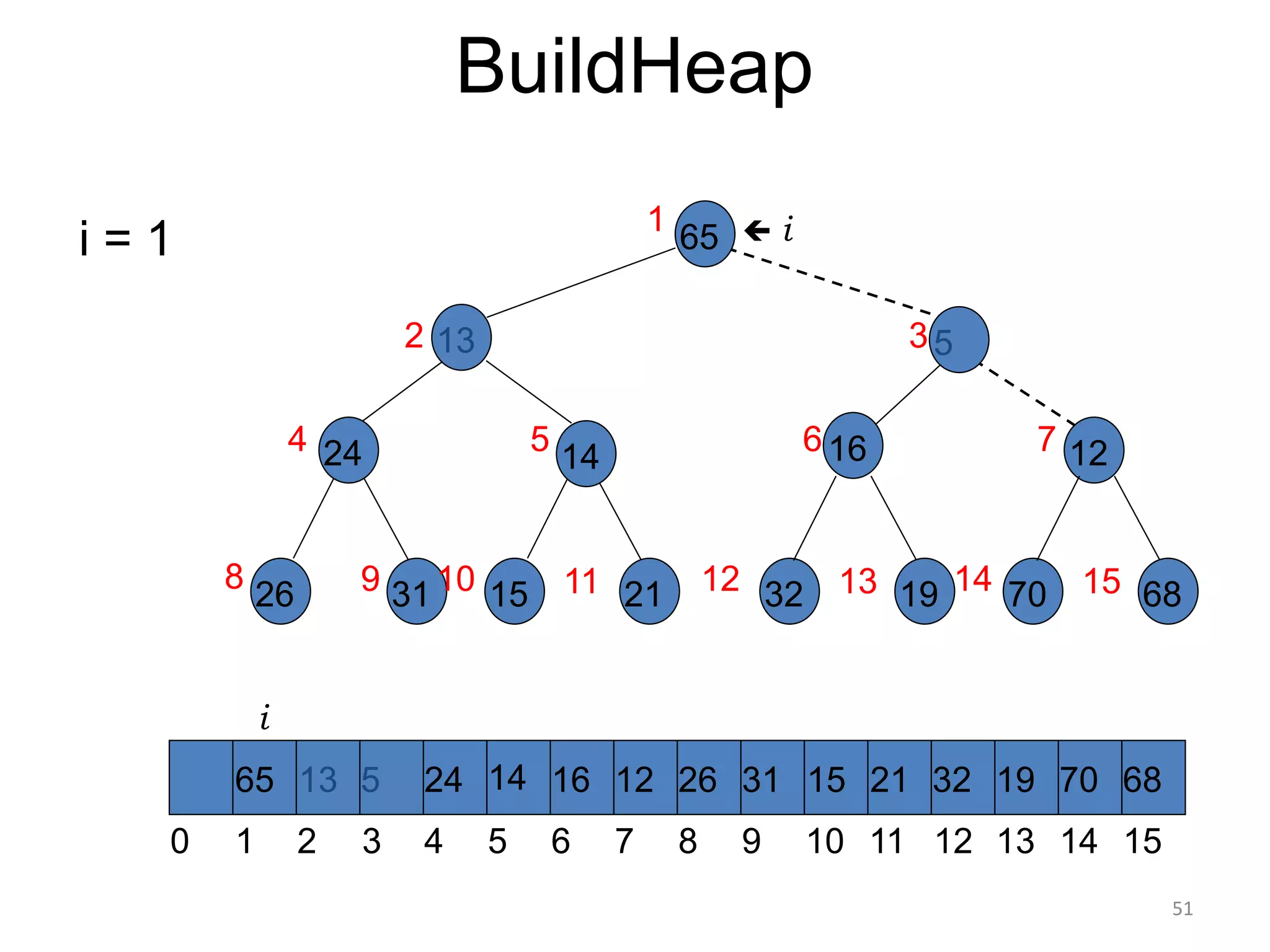
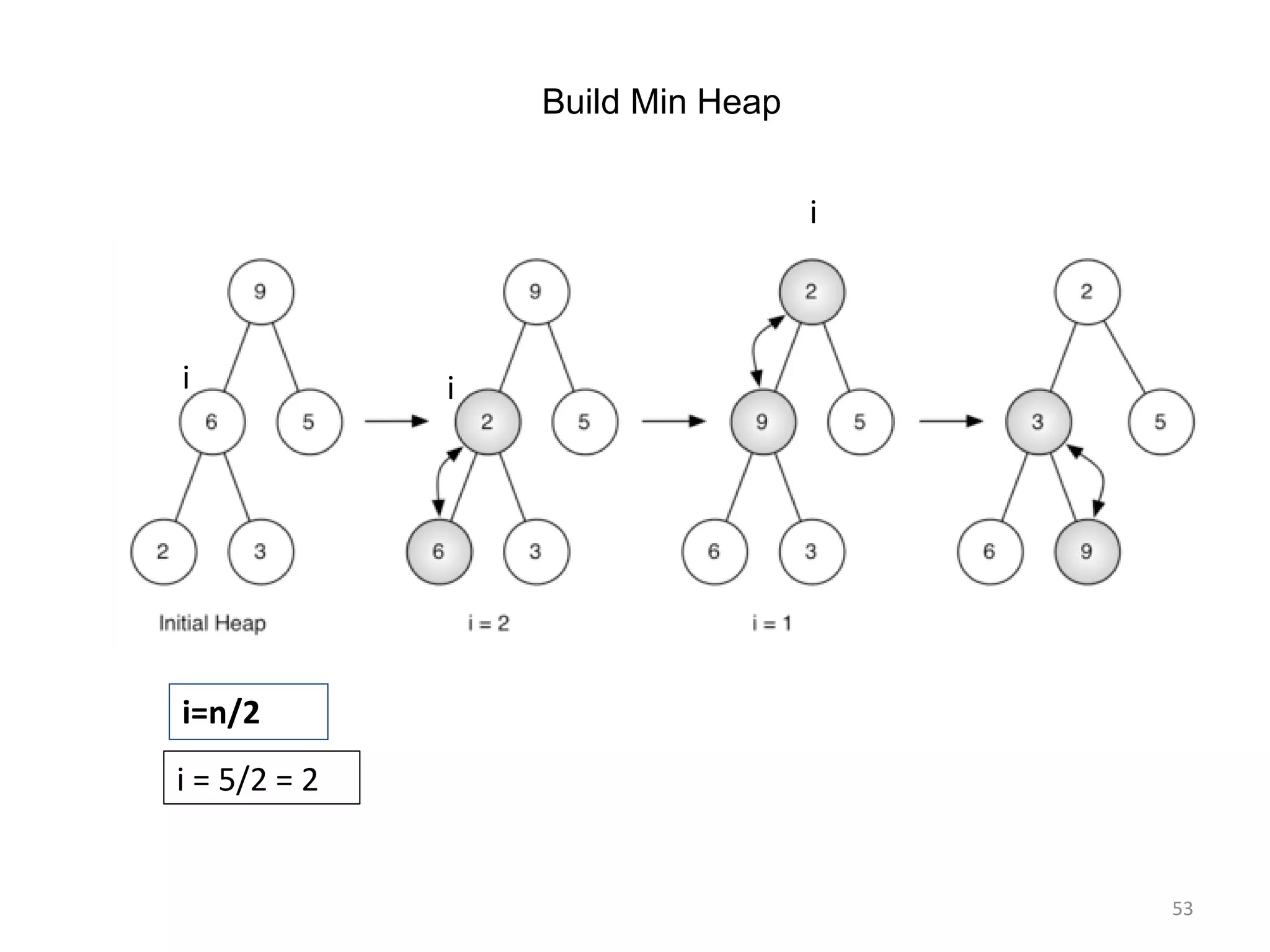
• The general algorithm is to place the N
keys in an array and consider it to be an
unordered binary tree.
• The following algorithm will build a heap
out of N keys.
for( i = N/2; i > 0; i-- )
percolateDown(i);
44
BuildHeap
i = 15/2 = 7 65
19
21
14
24
26
13 15
68
16
65 21 19
26 14 16
68 13 24 15
1 2 3 5 6 7 8 9 10 11 12 13 14
0
1
2 3
7
6
5
4
8 9 10
31
31
11
32
32
12
15
4
5
13 70
14 12
15
5 70 12
i
 i
i=n/2
Minimum Heap
45
BuildHeap
i = 15/2 = 7 65
19
21
14
24
26
13 15
12
16
65 21 19
26 14 16
12 13 24 15
1 2 3 5 6 7 8 9 10 11 12 13 14
0
1
2 3
7
6
5
4
8 9 10
31
31
11
32
32
12
15
4
5
13 70
14 68
15
5 70 68
i
 i
46
BuildHeap
i = 6 65
19
21
14
24
26
13 15
12
16
65 21 19
26 14 16
12 13 24 15
1 2 3 5 6 7 8 9 10 11 12 13 14
0
1
2 3
7
6
5
4
8 9 10
31
31
11
32
32
12
15
4
5
13 70
14 68
15
5 70 68
i
 i
BuildHeap
i = 5 65
5
21
14
24
26
13 15
12
16
65 21 5
26 14 16
12 13 24 15
1 2 3 5 6 7 8 9 10 11 12 13 14
0
1
2 3
7
6
5
4
8 9 10
31
31
11
32
32
12
15
4
19
13 70
14 68
15
19 70 68
i
 i
47
BuildHeap
i = 4 65
5
14
21
24
26
13 15
12
16
65 14 5
26 21 16
12 13 24 15
1 2 3 5 6 7 8 9 10 11 12 13 14
0
1
2 3
7
6
5
4
8 9 10
31
31
11
32
32
12
15
4
19
13 70
14 68
15
19 70 68
i
 i
48
BuildHeap
i = 3 65
5
14
21
24
13
26 15
12
16
65 14 5
13 21 16
12 26 24 15
1 2 3 5 6 7 8 9 10 11 12 13 14
0
1
2 3
7
6
5
4
8 9 10
31
31
11
32
32
12
15
4
19
13 70
14 68
15
19 70 68
i
 i
49
BuildHeap
i = 2 65
16
14
21
24
13
26 15
12
32
65 14 16
13 21 32
12 26 24 15
1 2 3 5 6 7 8 9 10 11 12 13 14
0
1
2 3
7
6
5
4
8 9 10
31
31
11
5
5
12
15
4
19
13 70
14 68
15
19 70 68
i
 i
50
BuildHeap
i = 1 65
16
14
21
31
24
26 15
12
32
65 14 16
24 21 32
12 26 31 15
1 2 3 5 6 7 8 9 10 11 12 13 14
0
1
2 3
7
6
5
4
8 9 10
13
13
11
5
5
12
15
4
19
13 70
14 68
15
19 70 68
i
 i
51
BuildHeap
Min heap 5
16
14
21
31
24
26 15
65
32
5 14 16
24 21 32
65 26 31 15
1 2 3 5 6 7 8 9 10 11 12 13 14
0
1
2 3
7
6
5
4
8 9 10
13
13
11
12
12
12
15
4
19
13 70
14 68
15
19 70 68
52
53
Build Min Heap
i
i i
i=n/2
i = 5/2 = 2
54
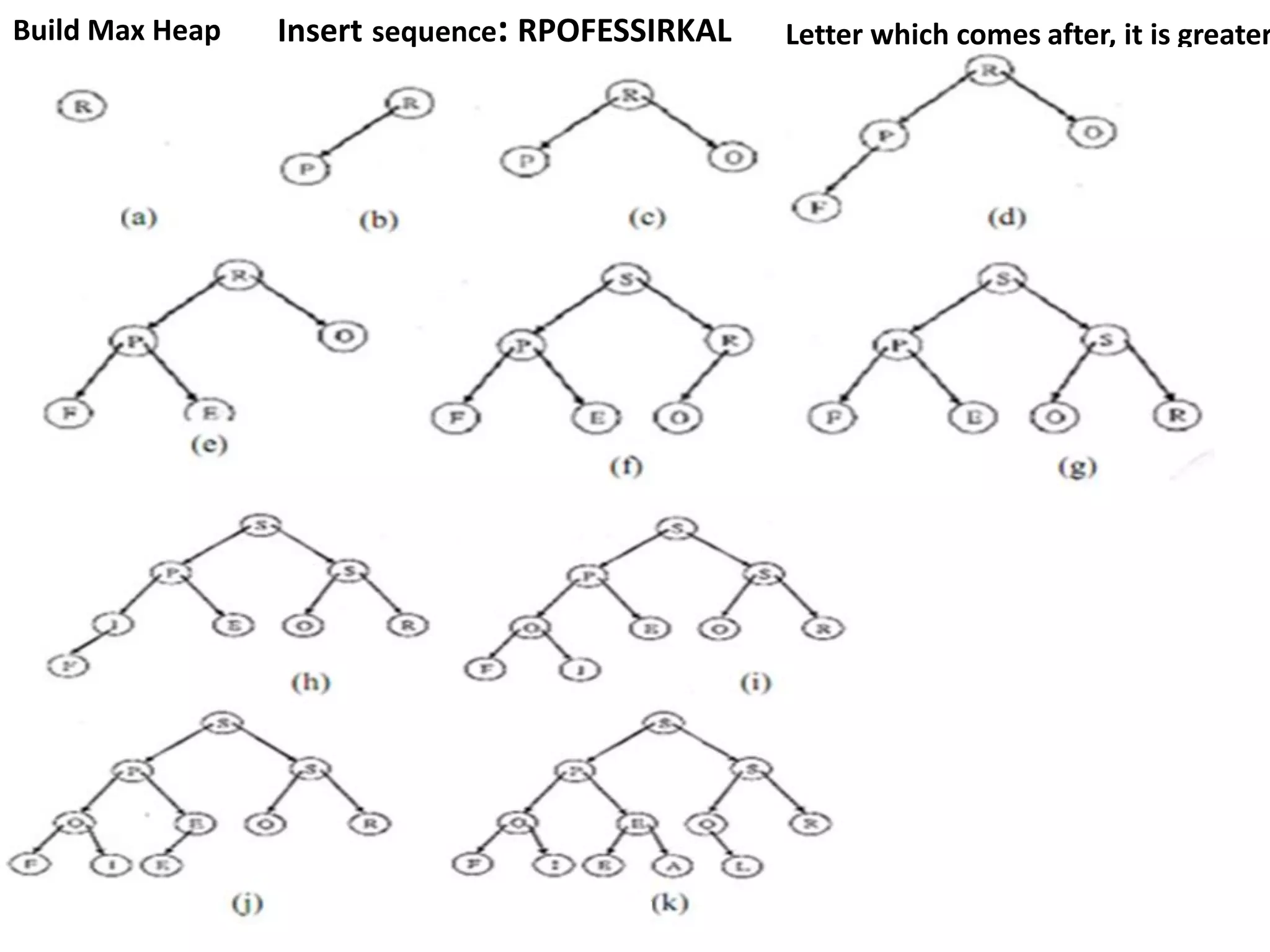
Build Max Heap Insert sequence: RPOFESSIRKAL Letter which comes after, it is greater
55
Max Heap
56
Other Heap Operations
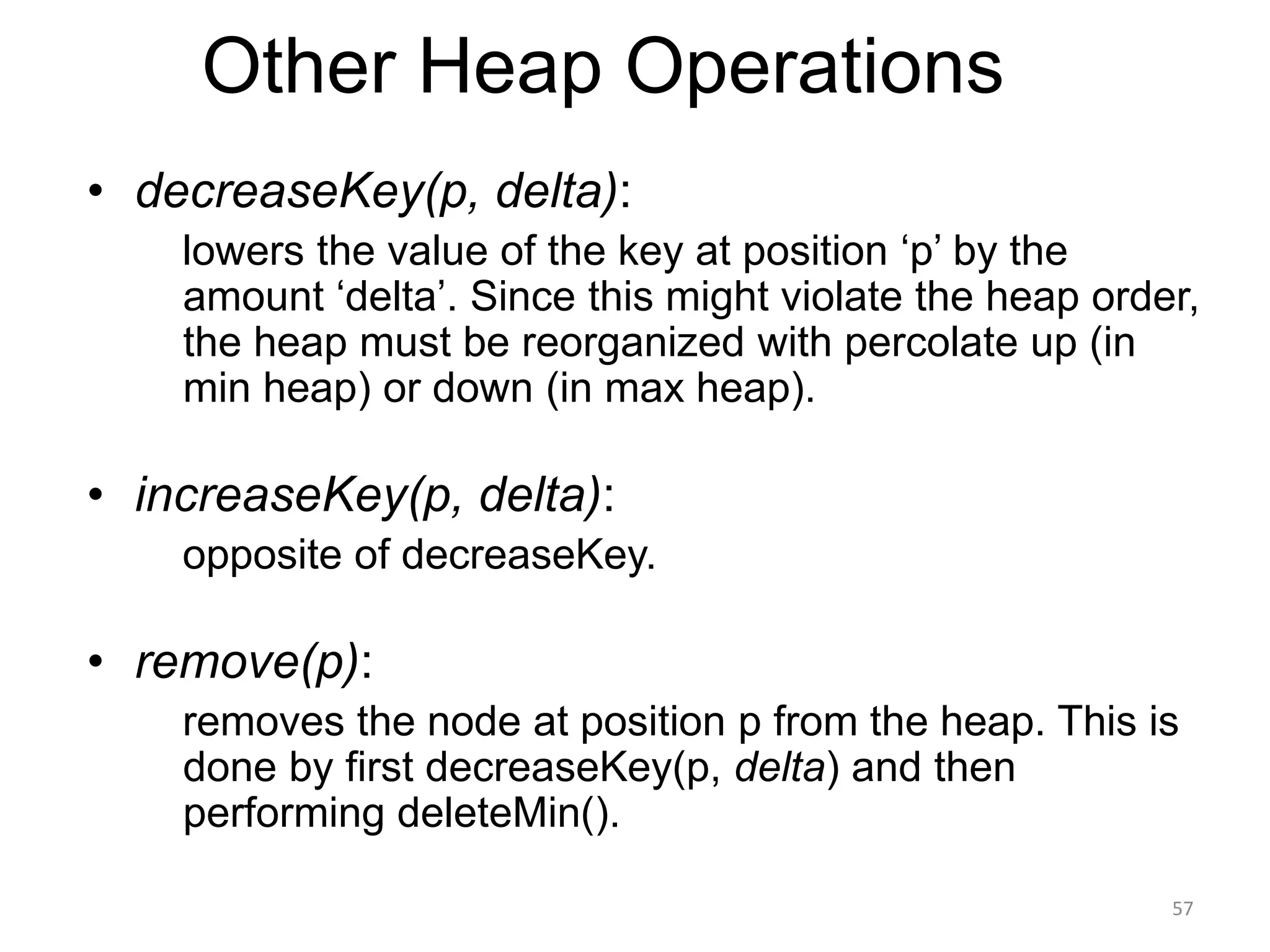
• decreaseKey(p, delta):
lowers the value of the key at position ‘p’ by the
amount ‘delta’. Since this might violate the heap order,
the heap must be reorganized with percolate up (in
min heap) or down (in max heap).
• increaseKey(p, delta):
opposite of decreaseKey.
• remove(p):
removes the node at position p from the heap. This is
done by first decreaseKey(p, delta) and then
performing deleteMin().
57

LEC 8-DS ALGO(heaps).pdf

  • 1.
    Data Structures &Algorithm CS-102 Lecture 8 Binary Heaps A priority Queue Data Structures Lecturer: Syeda Nazia Ashraf 1
  • 2.
    2 Heap • A heapis a complete binary tree that conforms to the heap order. • The heap order property: in a (min) heap, for every node X, the key in the parent is smaller than (or equal to) the key in X. • Or, the parent node has key smaller than or equal to both of its children nodes.
  • 3.
    3 Heap • Analogously, wecan define a max-heap, where the parent has a key larger than the its two children. • Thus the largest key would be in the root.
  • 4.
  • 5.
  • 6.
    6 Heap Not a heap:(min)heap property violated 13 19 21 31 26 6 65 32 68 16   19>16 6<21
  • 7.
  • 8.
  • 9.
    9 Inserting into aHeap 13 16 21 31 26 24 65 32 68 19 13 21 16 24 31 19 68 65 26 32 1 2 3 4 5 6 7 8 9 10 11 12 13 14 0 1 2 3 7 6 5 4 8 9 10 This is an existing heap
  • 10.
    10 Inserting into aHeap insert(14) 13 16 21 31 26 24 65 32 68 19 13 21 16 24 31 19 68 65 26 32 1 2 3 4 5 6 7 8 9 10 11 12 13 14 0 1 2 3 7 6 5 4 8 9 10 14 14 11
  • 11.
    11 Inserting into aHeap insert(14) 13 16 21 31 26 24 65 32 68 19 13 21 16 24 31 19 68 65 26 32 1 2 3 4 5 6 7 8 9 10 11 12 13 14 0 1 2 3 7 6 5 4 8 9 10 11
  • 12.
    12 Inserting into aHeap insert(14) 13 16 21 31 26 24 65 32 68 19 13 21 16 24 31 19 68 65 26 32 1 2 3 4 5 6 7 8 9 10 11 12 13 14 0 1 2 3 7 6 5 4 8 9 10 11
  • 13.
    13 Inserting into aHeap insert(14) 13 16 21 31 26 24 65 32 68 19 13 21 16 24 31 19 68 65 26 32 1 2 3 4 5 6 7 8 9 10 11 12 13 14 0 1 2 3 7 6 5 4 8 9 10 11
  • 14.
    14 Inserting into aHeap insert(14) 13 16 21 31 26 24 65 32 68 19 13 21 16 24 31 19 68 65 26 32 1 2 3 4 5 6 7 8 9 10 11 12 13 14 0 1 2 3 7 6 5 4 8 9 10 11 14 14
  • 15.
    15 Inserting into aHeap insert(14) with exchange 13 16 21 31 26 24 65 32 68 19 13 21 16 24 31 19 68 65 26 32 1 2 3 4 5 6 7 8 9 10 11 12 13 14 0 1 2 3 7 6 5 4 8 9 10 14 14 11
  • 16.
    16 Inserting into aHeap insert(14) with exchange 13 16 21 31 26 24 65 32 68 19 13 21 16 24 31 19 68 65 26 32 1 2 3 4 5 6 7 8 9 10 11 12 13 14 0 1 2 3 7 6 5 4 8 9 10 14 14 11
  • 17.
    17 Inserting into aHeap insert(14) with exchange 13 16 21 31 26 24 65 32 68 19 13 21 16 24 31 19 68 65 26 32 1 2 3 4 5 6 7 8 9 10 11 12 13 14 0 1 2 3 7 6 5 4 8 9 10 14 14 11
  • 18.
    18 Inserting into aHeap insert(15) with exchange 13 16 21 31 26 24 65 32 68 19 13 21 16 24 31 19 68 65 26 32 1 2 3 4 5 6 7 8 9 10 11 12 13 14 0 1 2 3 7 6 5 4 8 9 10 14 14 11 15 15 12
  • 19.
    19 Inserting into aHeap insert(15) with exchange 13 16 21 31 26 24 65 32 68 19 13 21 16 24 31 19 68 65 26 32 1 2 3 4 5 6 7 8 9 10 11 12 13 14 0 1 2 3 7 6 5 4 8 9 10 14 14 11 15 15 12
  • 20.
    20 Inserting into aHeap insert(15) with exchange 13 16 21 31 26 24 65 32 68 19 13 21 16 24 31 19 68 65 26 32 1 2 3 4 5 6 7 8 9 10 11 12 13 14 0 1 2 3 7 6 5 4 8 9 10 14 14 11 15 15 12
  • 21.
    21 Inserting into aHeap insert(15) with exchange 13 16 21 31 26 24 65 32 68 19 13 21 16 24 31 19 68 65 26 32 1 2 3 4 5 6 7 8 9 10 11 12 13 14 0 1 2 3 7 6 5 4 8 9 10 14 14 11 15 15 12
  • 22.
    Inserting into aHeap 22 Max Heap To add an item to a heap, we follow the reverse procedure. Place it in the next leaf position and move it up. Again, we require O(h) or O(logn) exchanges.
  • 23.
  • 24.
  • 25.
  • 26.
  • 27.
    27 DeleteMin • Deletion inMax (or Min) Heap always happens at the root to remove the Maximum (or minimum) value. • Deleting it (or removing it) from root causes a hole which needs to be filled. 13 16 21 31 26 24 65 32 68 19 1 2 3 7 6 5 4 8 9 10 14 11
  • 28.
  • 29.
  • 30.
  • 31.
  • 32.
    32 DeleteMin deleteMin(): heap sizeis reduced by 1. 14 16 31 26 24 65 32 68 19 1 2 3 7 6 5 4 8 9 10 21
  • 33.
  • 34.
  • 35.
  • 36.
    Let's start withthis heap. A deletion will remove the T at the root. To work out how we're going to maintain the heap property, use the fact that a complete tree is filled from the left. So that the position which must become empty is the one occupied by the M. Put it in the vacant root position. DeleteMax 36
  • 37.
    This has violatedthe condition that the root must be greater than each of its children. So interchange the M with the larger of its children. The left subtree has now lost the heap property. So again interchange the M with the larger of its children. This tree is now a heap again, so we're finished. DeleteMax We need to make at most h interchanges of a root of a subtree with one of its children to fully restore the heap property. Thus deletion from a heap is O(h) or O(logn). 37
  • 38.
    38 BuildHeap • Suppose weare given as input N keys (or items) and we want to build a heap of the keys. • Obviously, this can be done with N successive inserts. • Each call to insert will either take unit time (leaf node) or log2N (if new key percolates all the way up to the root).
  • 39.
    39 BuildHeap • The worsttime for building a heap of N keys could be Nlog2N. • It turns out that we can build a heap in linear time.
  • 40.
    40 BuildHeap • Suppose wehave a method percolateDown(p) which moves down the key in node p downwards. • This is what was happening in deleteMin.
  • 41.
    41 BuildHeap Initial data (N=15) 6521 19 26 14 16 68 13 24 15 1 2 3 5 6 7 8 9 10 11 12 13 14 0 31 32 15 4 5 70 12
  • 42.
    42 BuildHeap Initial data (N=15)65 19 21 14 24 26 13 15 68 16 65 21 19 26 14 16 68 13 24 15 1 2 3 5 6 7 8 9 10 11 12 13 14 0 1 2 3 7 6 5 4 8 9 10 31 31 11 32 32 12 15 4 5 13 70 14 12 15 5 70 12
  • 43.
    43 BuildHeap • The generalalgorithm is to place the N keys in an array and consider it to be an unordered binary tree. • The following algorithm will build a heap out of N keys. for( i = N/2; i > 0; i-- ) percolateDown(i);
  • 44.
    44 BuildHeap i = 15/2= 7 65 19 21 14 24 26 13 15 68 16 65 21 19 26 14 16 68 13 24 15 1 2 3 5 6 7 8 9 10 11 12 13 14 0 1 2 3 7 6 5 4 8 9 10 31 31 11 32 32 12 15 4 5 13 70 14 12 15 5 70 12 i  i i=n/2 Minimum Heap
  • 45.
    45 BuildHeap i = 15/2= 7 65 19 21 14 24 26 13 15 12 16 65 21 19 26 14 16 12 13 24 15 1 2 3 5 6 7 8 9 10 11 12 13 14 0 1 2 3 7 6 5 4 8 9 10 31 31 11 32 32 12 15 4 5 13 70 14 68 15 5 70 68 i  i
  • 46.
    46 BuildHeap i = 665 19 21 14 24 26 13 15 12 16 65 21 19 26 14 16 12 13 24 15 1 2 3 5 6 7 8 9 10 11 12 13 14 0 1 2 3 7 6 5 4 8 9 10 31 31 11 32 32 12 15 4 5 13 70 14 68 15 5 70 68 i  i
  • 47.
    BuildHeap i = 565 5 21 14 24 26 13 15 12 16 65 21 5 26 14 16 12 13 24 15 1 2 3 5 6 7 8 9 10 11 12 13 14 0 1 2 3 7 6 5 4 8 9 10 31 31 11 32 32 12 15 4 19 13 70 14 68 15 19 70 68 i  i 47
  • 48.
    BuildHeap i = 465 5 14 21 24 26 13 15 12 16 65 14 5 26 21 16 12 13 24 15 1 2 3 5 6 7 8 9 10 11 12 13 14 0 1 2 3 7 6 5 4 8 9 10 31 31 11 32 32 12 15 4 19 13 70 14 68 15 19 70 68 i  i 48
  • 49.
    BuildHeap i = 365 5 14 21 24 13 26 15 12 16 65 14 5 13 21 16 12 26 24 15 1 2 3 5 6 7 8 9 10 11 12 13 14 0 1 2 3 7 6 5 4 8 9 10 31 31 11 32 32 12 15 4 19 13 70 14 68 15 19 70 68 i  i 49
  • 50.
    BuildHeap i = 265 16 14 21 24 13 26 15 12 32 65 14 16 13 21 32 12 26 24 15 1 2 3 5 6 7 8 9 10 11 12 13 14 0 1 2 3 7 6 5 4 8 9 10 31 31 11 5 5 12 15 4 19 13 70 14 68 15 19 70 68 i  i 50
  • 51.
    BuildHeap i = 165 16 14 21 31 24 26 15 12 32 65 14 16 24 21 32 12 26 31 15 1 2 3 5 6 7 8 9 10 11 12 13 14 0 1 2 3 7 6 5 4 8 9 10 13 13 11 5 5 12 15 4 19 13 70 14 68 15 19 70 68 i  i 51
  • 52.
    BuildHeap Min heap 5 16 14 21 31 24 2615 65 32 5 14 16 24 21 32 65 26 31 15 1 2 3 5 6 7 8 9 10 11 12 13 14 0 1 2 3 7 6 5 4 8 9 10 13 13 11 12 12 12 15 4 19 13 70 14 68 15 19 70 68 52
  • 53.
    53 Build Min Heap i ii i=n/2 i = 5/2 = 2
  • 54.
    54 Build Max HeapInsert sequence: RPOFESSIRKAL Letter which comes after, it is greater
  • 55.
  • 56.
  • 57.
    Other Heap Operations •decreaseKey(p, delta): lowers the value of the key at position ‘p’ by the amount ‘delta’. Since this might violate the heap order, the heap must be reorganized with percolate up (in min heap) or down (in max heap). • increaseKey(p, delta): opposite of decreaseKey. • remove(p): removes the node at position p from the heap. This is done by first decreaseKey(p, delta) and then performing deleteMin(). 57