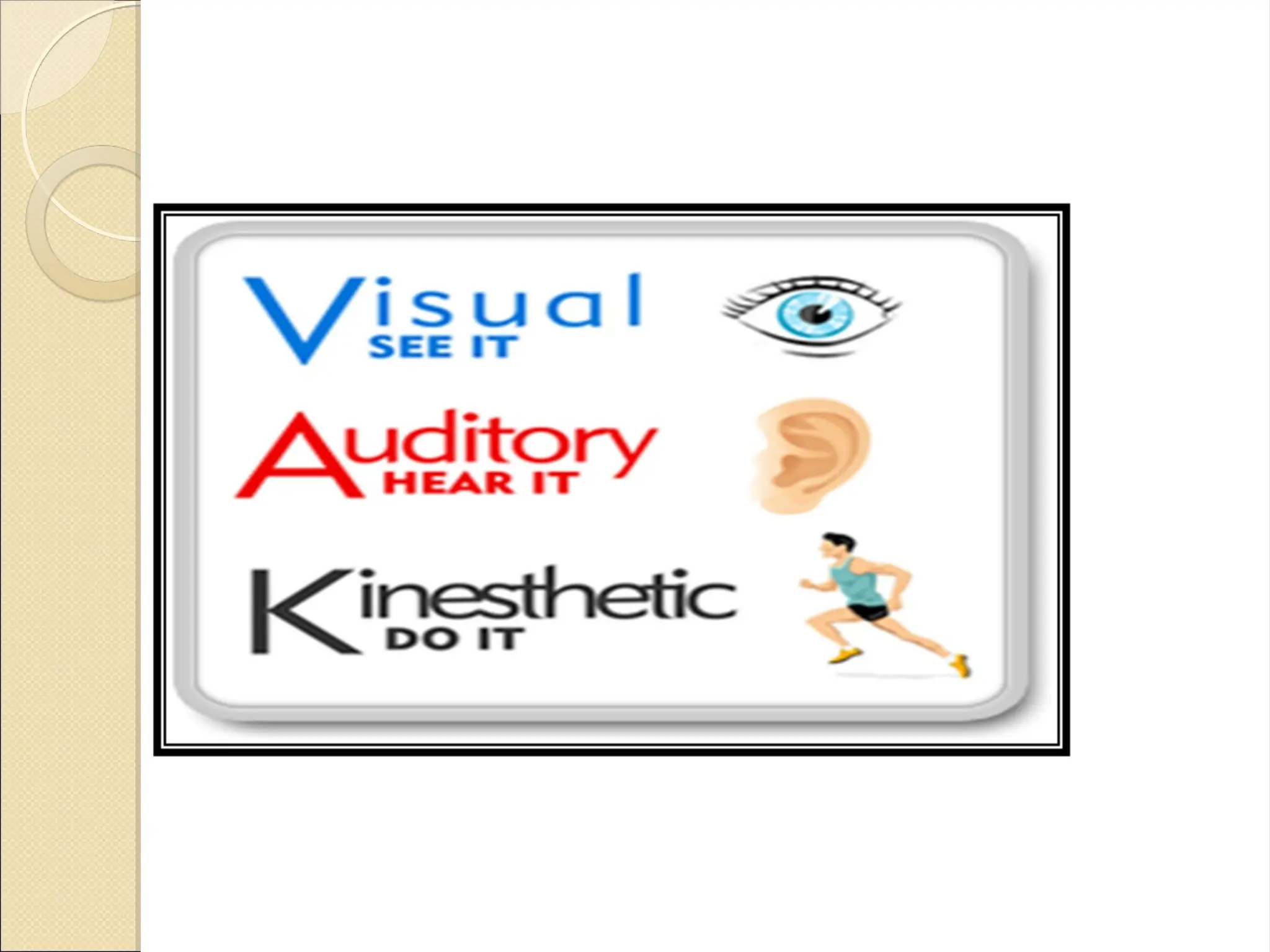
Learning Styles
Learning Styles
Prepared by:
 George Patton states that “if everybody is
thinking alike, then somebody is not thinking”
 « One size-fits all » is to be repudiated/ dropped out
One size does not fit all
- Students have:
 Different backgrounds
 A range of ability levels
 A variety and an assortment of learning profiles
 An abundance of interests and a mish-mash of
intelligences
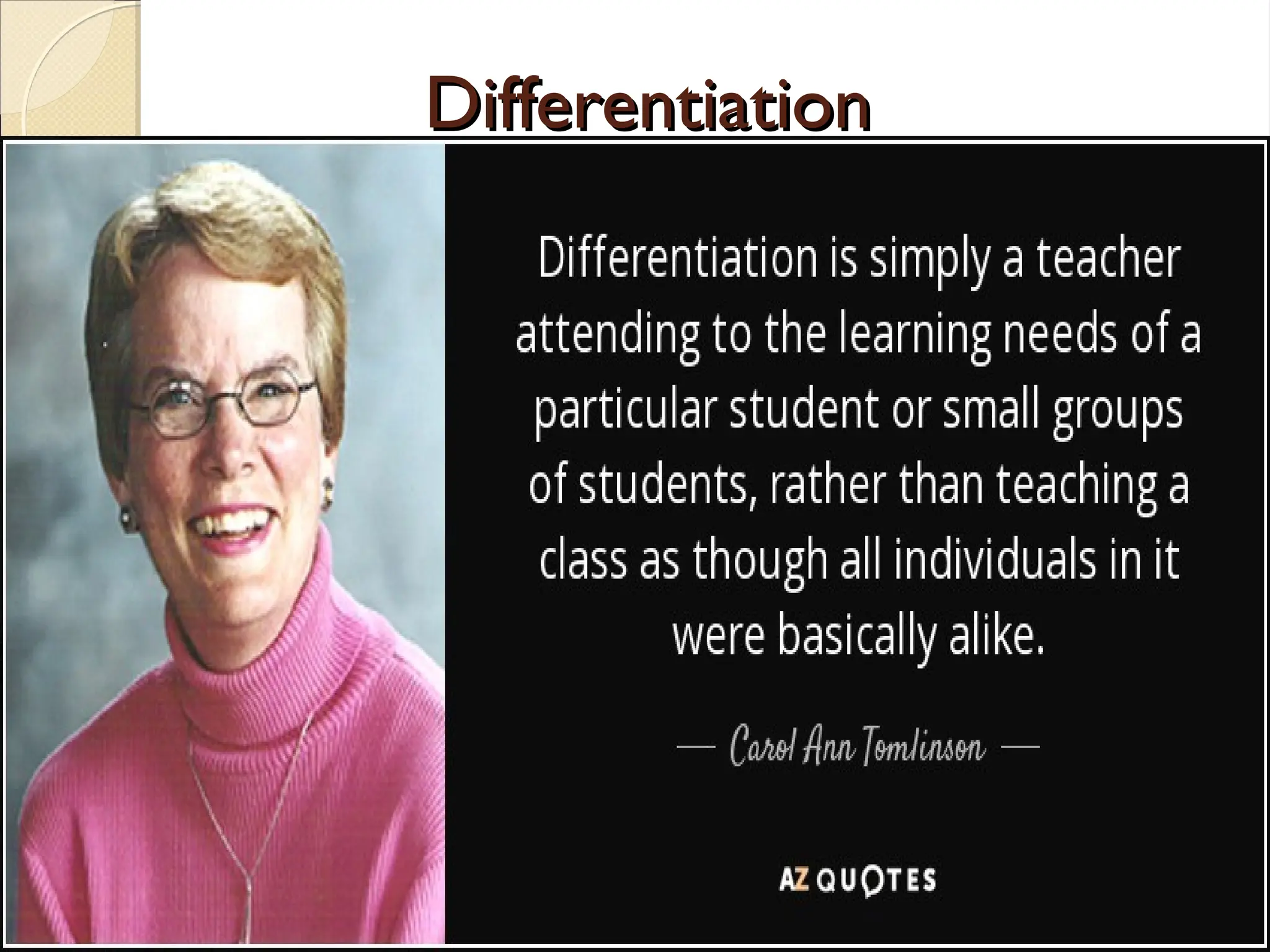
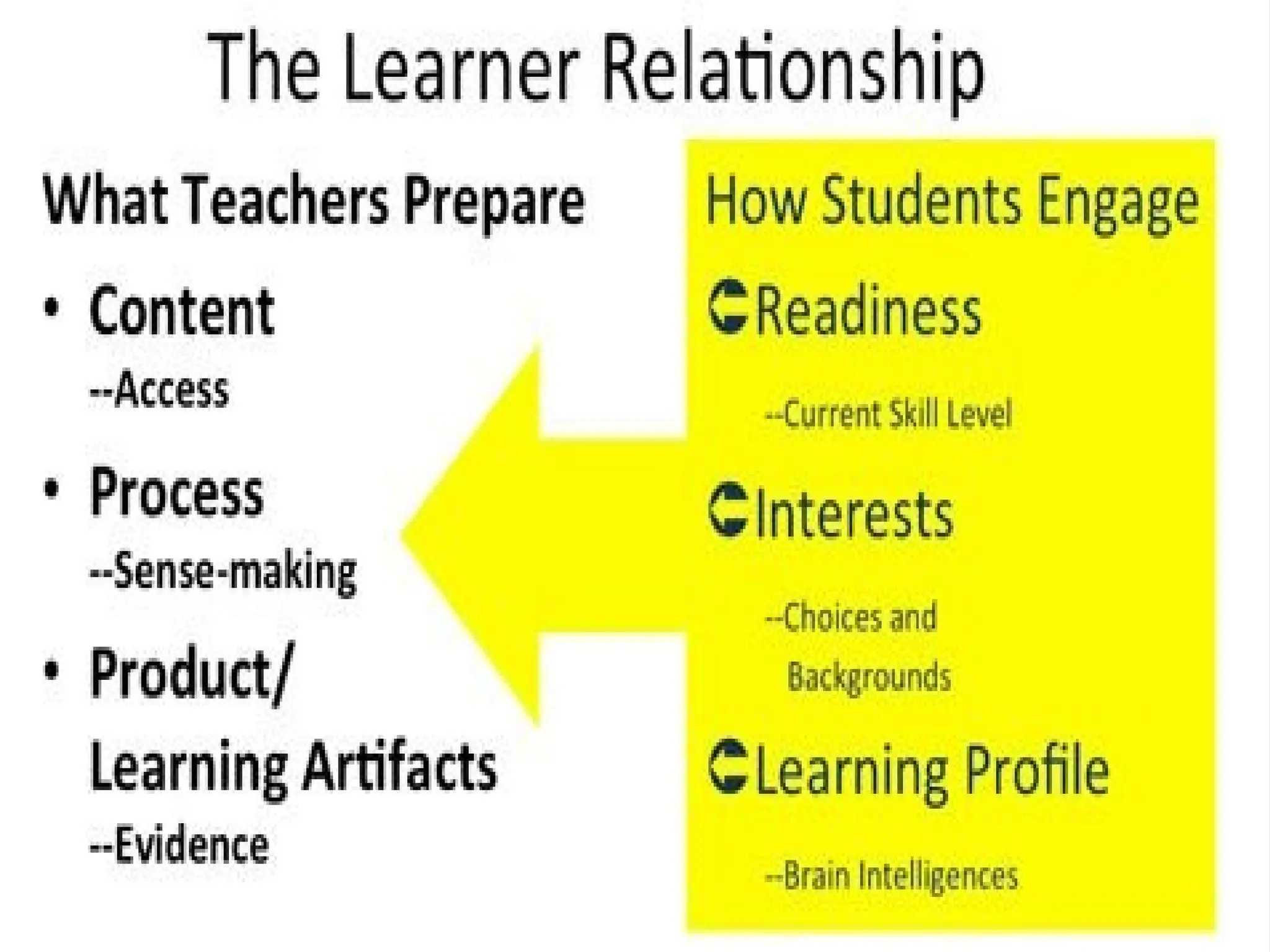
Differentiation
Differentiation
* Some lean to « Abstract Conceptualization »/others like « Concrete
Experience »
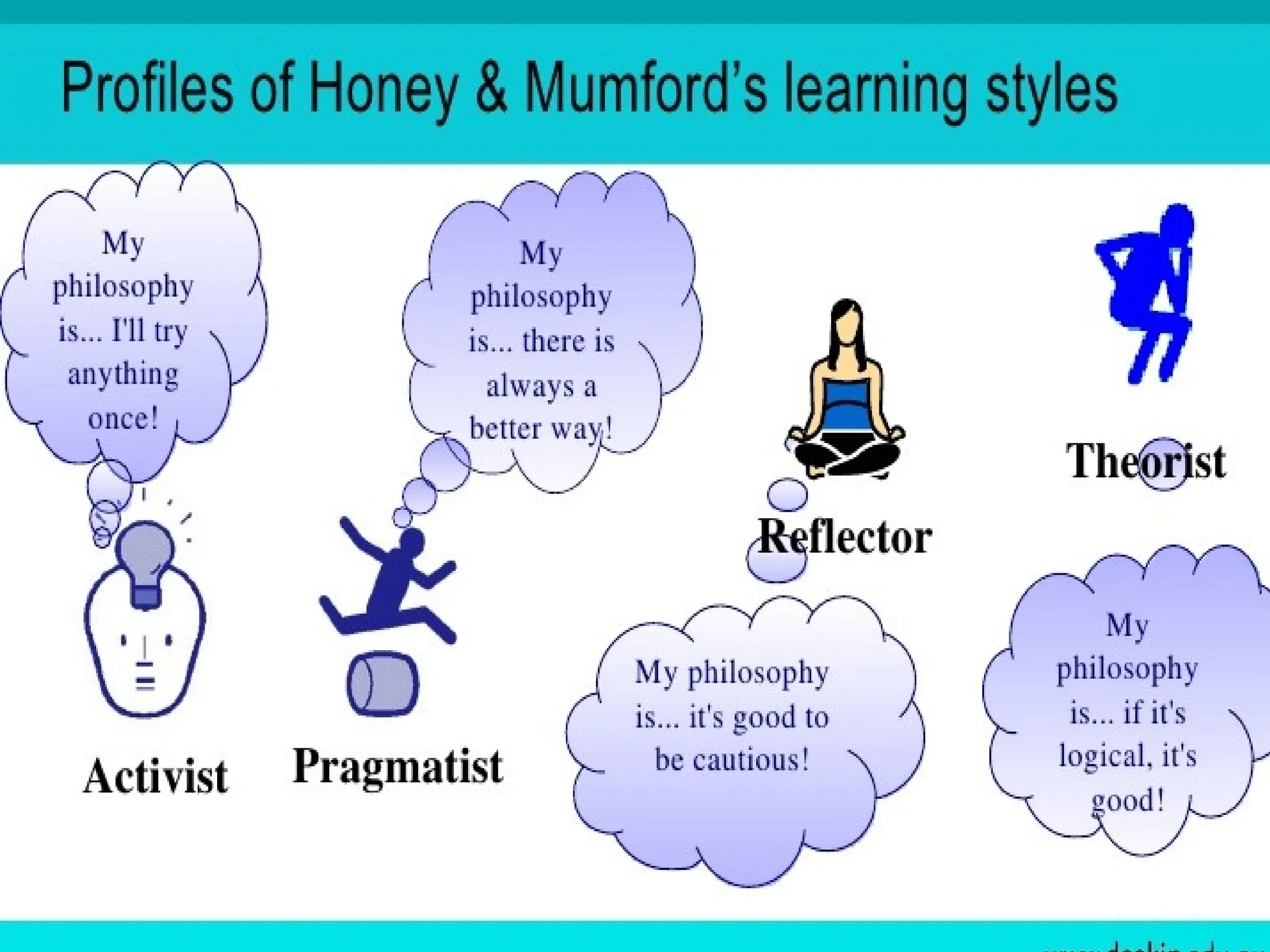
 Honey and Mumfred developed 4 categories of L.S.
Activists Reflectors Theorists Pragmatists
learn by doing and
participating
*involve themselves
fully in new
experiences
*Their philosophy is:
"I'll try anything
once". They tend to
act first and consider
the consequences
afterwards
*They use
brainstorming when
dealing with any
activity
*sometimes have dirty
learn by watching
others
*like to stand back
and ponder or
observe
experiences from
different
perspectives
*They take back seats
in meetings and think
before interacting
* Take time before
working towards
learn by fathoming
theoretical input
very clearly
*They need
concepts,
facts,models in
order to analyse or
synthesize any
conclusion
*They are skilled at
basic assumptions,
principles
*they abide by
rational and logical
*learn through
practical tips
*They are keen on
putting learning into
practice in the real
world
*They try new
ideas, theories and
techniques to see if
they work
*They are
experimenters
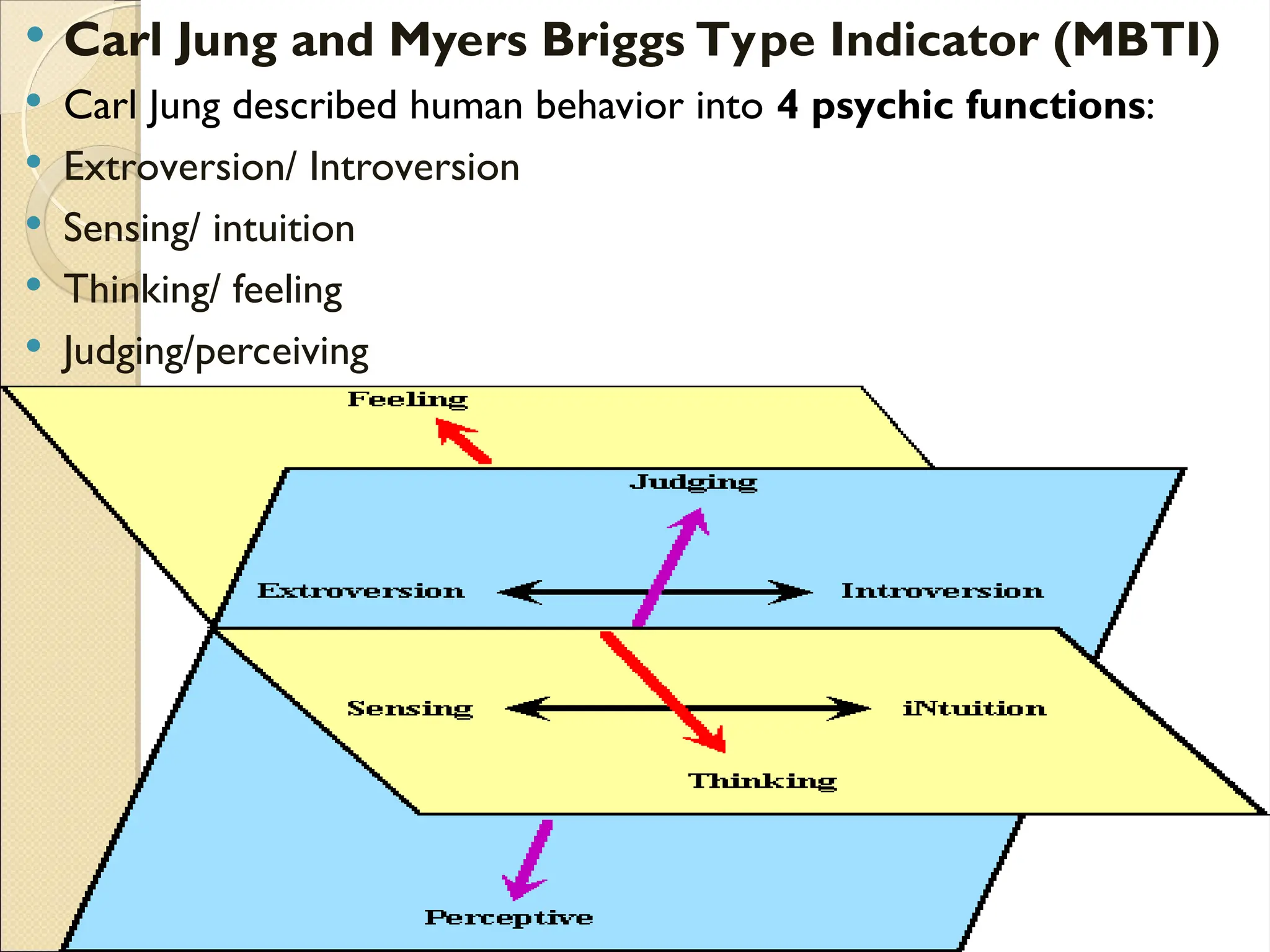
 Carl Jung and Myers Briggs Type Indicator (MBTI)
 Carl Jung described human behavior into 4 psychic functions:
 Extroversion/ Introversion
 Sensing/ intuition
 Thinking/ feeling
 Judging/perceiving
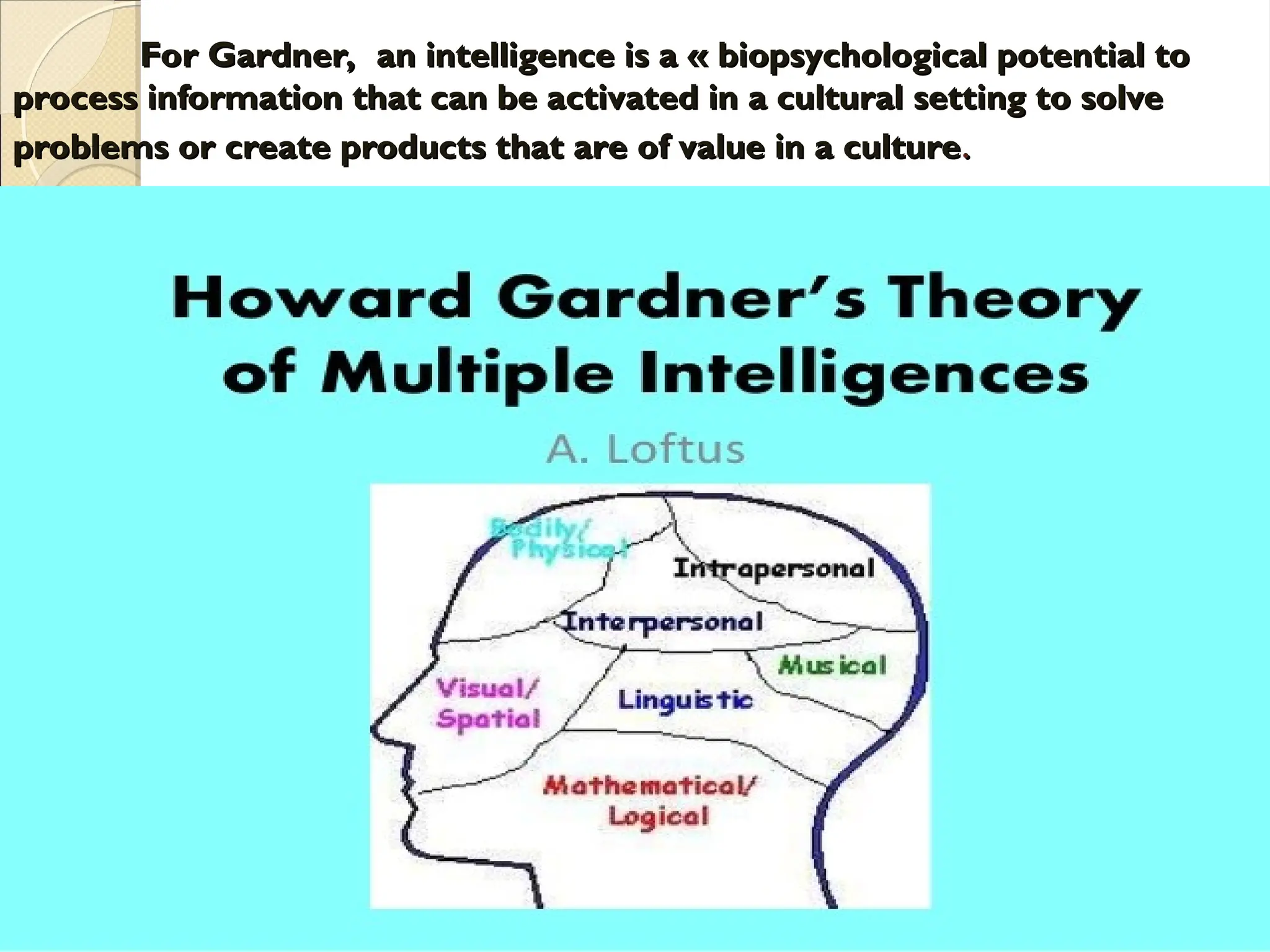
For Gardner, an intelligence is a « biopsychological potential to
process information that can be activated in a cultural setting to solve
problems or create products that are of value in a culture
problems or create products that are of value in a culture.
.
learning_styles_1 education revised_ppt.ppt

learning_styles_1 education revised_ppt.ppt

  • 1.
  • 2.
     George Pattonstates that “if everybody is thinking alike, then somebody is not thinking”  « One size-fits all » is to be repudiated/ dropped out One size does not fit all - Students have:  Different backgrounds  A range of ability levels  A variety and an assortment of learning profiles  An abundance of interests and a mish-mash of intelligences
  • 3.
  • 5.
    * Some leanto « Abstract Conceptualization »/others like « Concrete Experience »  Honey and Mumfred developed 4 categories of L.S. Activists Reflectors Theorists Pragmatists learn by doing and participating *involve themselves fully in new experiences *Their philosophy is: "I'll try anything once". They tend to act first and consider the consequences afterwards *They use brainstorming when dealing with any activity *sometimes have dirty learn by watching others *like to stand back and ponder or observe experiences from different perspectives *They take back seats in meetings and think before interacting * Take time before working towards learn by fathoming theoretical input very clearly *They need concepts, facts,models in order to analyse or synthesize any conclusion *They are skilled at basic assumptions, principles *they abide by rational and logical *learn through practical tips *They are keen on putting learning into practice in the real world *They try new ideas, theories and techniques to see if they work *They are experimenters
  • 9.
     Carl Jungand Myers Briggs Type Indicator (MBTI)  Carl Jung described human behavior into 4 psychic functions:  Extroversion/ Introversion  Sensing/ intuition  Thinking/ feeling  Judging/perceiving
  • 10.
    For Gardner, anintelligence is a « biopsychological potential to For Gardner, an intelligence is a « biopsychological potential to process information that can be activated in a cultural setting to solve process information that can be activated in a cultural setting to solve problems or create products that are of value in a culture problems or create products that are of value in a culture. .